
Your Toyota Tacoma’s evaporative emission control system, usually called the EVAP system, keeps gasoline vapor from escaping into the air. A loose fuel cap, damaged vapor hose, restricted vent path, faulty purge valve, or other EVAP problem can turn on the check-engine light even when the truck seems to drive normally.
Quick Answer
The Toyota Tacoma EVAP system stores fuel vapor in a charcoal canister and later sends it to the engine to be burned. If the check-engine light appears, read the trouble codes first, inspect and tighten the fuel cap, check visible hoses and wiring, and use model-year-specific procedures before testing valves or applying low-pressure smoke.
Key Takeaways
- A loose cap or damaged cap gasket is one of the easiest EVAP faults to check.
- A trouble code reports which system test failed. It does not automatically prove that the part named in the code description is bad.
- Purge faults, vapor leaks, vent restrictions, wiring faults, and pressure-sensor problems require different tests.
- Tacoma EVAP layouts and diagnostic procedures vary by model year, engine, and emissions certification.
- Use only an EVAP-rated, low-pressure smoke machine and follow the applicable Toyota repair information.
- Do not continue adding fuel after the pump automatically shuts off.
At a Glance
| Time Required | About 15 minutes for a cap and visual inspection; 30 to 60 minutes or more for professional scan-tool and leak testing |
| Difficulty | Beginner for cap and hose checks; advanced for valve commands, electrical tests, and smoke diagnosis |
| Tools Needed | OBD-II scanner, flashlight, inspection mirror, and the correct Toyota repair information; advanced testing may require a bidirectional scan tool, digital multimeter, and EVAP-rated smoke machine |
| Cost | A visual inspection may cost nothing; diagnostic and repair costs depend on the code, failed component, labor rate, and Tacoma model year |
Warning: Gasoline and fuel vapor are highly flammable. Work outside or in a properly ventilated repair area, keep sparks and flames away, and never use homemade smoke, unrestricted shop air, or pressure above the limit specified for your truck and test equipment. Stop driving and arrange professional service if you see wet fuel or smell a strong, persistent raw-fuel odor.
Understanding the Toyota Tacoma EVAP System Components

The EVAP system captures hydrocarbon vapor that forms inside the fuel tank. Instead of releasing that vapor into the air, the system stores it in an activated-charcoal canister. During suitable engine operating conditions, controlled airflow carries the stored vapor into the engine, where it is burned.
The exact layout depends on the Tacoma’s model year, engine, drivetrain, and emissions certification. First-generation trucks do not use the same valve names, plumbing, sensors, or self-test strategy as a 2024 or newer Tacoma. Use the Toyota manual for your specific model year before disconnecting a hose or testing a valve.
EPA research shows that tiny leaks in an aging fuel system can release far more vapor than an intact system, even when the vehicle still drives normally.
Main Tacoma EVAP Parts
| Component | What It Does | Possible Fault |
|---|---|---|
| Fuel tank, filler neck, and cap | Contain fuel and seal the vapor space | Loose cap, damaged gasket, corrosion, or a cracked filler connection |
| Vapor lines and fittings | Carry vapor between the tank, canister, valves, and engine | Cracks, impact damage, loose connections, or disconnected hoses |
| Charcoal canister | Temporarily stores fuel vapor | Cracked housing, liquid-fuel saturation, contamination, or internal restriction |
| Purge valve or purge VSV | Meters stored vapor into the intake when commanded | Stuck open, stuck closed, restricted flow, or an electrical fault |
| Vent valve, canister closed valve, or vent path | Controls fresh-air movement and helps seal the system for testing | Restriction, valve failure, wiring problem, water, dust, or impact damage |
| Pressure sensor or leak-detection hardware | Lets the engine computer evaluate pressure or vacuum changes | Biased reading, circuit fault, blocked sensing port, or failed test hardware |
Some Tacoma canister assemblies include a fresh-air filter or filtering section. Do not assume that this part is separately replaceable or scheduled for routine service. Confirm its construction and service procedure using the parts catalog and repair information for your VIN.
The Role of the Purge and Vent Valves in Emission Control
The purge and vent sides of the EVAP system work together, but they perform different jobs. Understanding that difference helps you avoid replacing a valve simply because its name appears in a trouble-code description.
How the Purge Valve Works
The purge valve controls the amount of stored vapor entering the engine. The engine control module normally commands purge only when operating conditions allow the engine to burn the vapor without upsetting the air-fuel mixture.
A purge valve that leaks while it should be closed may allow vapor or extra air into the intake. Depending on the truck and operating conditions, you may notice a rough idle, hard starting after refueling, extended cranking, unusual fuel-trim readings, or an EVAP purge-flow code.
A valve that remains closed or restricted may prevent the canister from clearing stored vapor. However, a purge-flow code can also result from a blocked hose, electrical problem, damaged connector, or incorrect pressure-sensor response.
How the Vent Side Works
The vent path lets clean air move through the canister during refueling and purge operation. It also allows the system to be sealed when the computer performs certain leak checks.
A restricted vent path can make the fuel nozzle shut off repeatedly because displaced tank air and vapor cannot move through the system normally. A valve that cannot seal may prevent the system from holding the pressure or vacuum needed for a monitor test.
Note: The Tacoma’s EVAP monitor does not run continuously. The engine computer waits for required conditions such as suitable temperature, fuel level, driving history, and key-off time. Exact enabling conditions vary by model year.
Common Toyota Tacoma EVAP Trouble Codes
Read stored, pending, and permanent codes before clearing anything. Save the freeze-frame information because it records operating conditions from the time the fault was detected.
The following are common generic code descriptions. Toyota may use additional subcodes, detection logic, or model-specific descriptions, so verify each code in the repair manual for your year.
| Code | General Meaning | Possible Areas to Check |
|---|---|---|
| P0441 | Incorrect purge flow | Purge valve, hoses, wiring, blockage, pressure response, or canister |
| P0442 | Small EVAP leak detected | Cap seal, small hose crack, fitting, valve seal, or canister housing |
| P0446 | Vent-control circuit or performance fault | Vent valve, circuit, connector, restricted vent path, or ECM command |
| P0451 | EVAP pressure-sensor range or performance fault | Sensor signal, wiring, blocked port, pressure changes, or tank hardware |
| P0452 or P0453 | Pressure-sensor circuit low or high input | Open circuit, short circuit, connector, sensor, or reference voltage |
| P0455 | Large leak or no expected purge flow | Missing or loose cap, disconnected hose, large crack, valve position, or purge-flow problem |
| P0456 | Very small EVAP leak detected | Cap gasket, pinhole leak, small fitting leak, valve seal, or canister seam |
Pro Tip: Do not order a purge valve, vent valve, or canister from the code description alone. Check the cap, hoses, connectors, command signals, pressure data, and leak-test results first.
[Amazon Products Picked for You]

Purge Solenoid
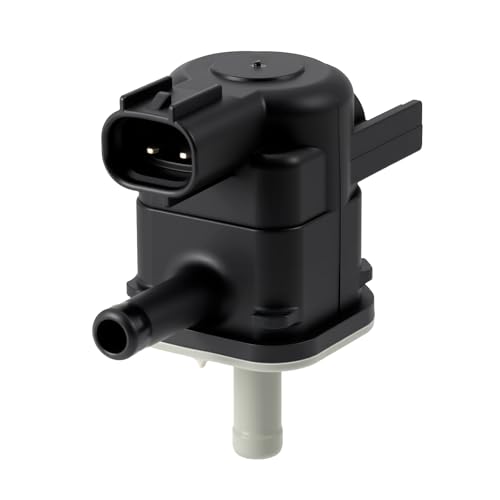
[Vehicle Fitment-1]- EVAP Vapor Canister Purge Valve Solenoid compatible with 2006-2013 Toyota Yaris, 2007-2015 Toyota Camry 2.5L, 2007-2010 Toyota Sienna, 2007-2014 Toyota Tundra, 2009-2013 Toyota Corolla 1.8L, 2009-2014 Toyota FJ Cruiser .0L, 2009-2018 Toyota Highlander 2.7L, 2009-2014 Toyota Matrix 1.8L, 2010-2018 Toyota 4Runner 4.0L, 2011-2015 Toyota Tacoma 4.0L, 2016-2018 Toyota Prius, 2016-2018 Toyota Prius V 1.8L
What to Watch Out For: Common Tacoma EVAP Problems
EVAP faults do not all feel the same. Many only turn on the malfunction indicator light, while others affect refueling or idle quality.
[Amazon Products Picked for You]


【Gas Cap Fuel Cap Replacement】77310-48020, 7731048020, Check The Part Number Before Your Order, It saves you the time of buying back and forth, and also helps you save money.

【REPLACEMENT PART NUMBERS】 - Replaces 77300-33070, 77300-47010 and 10839. Please verify the OE number on your original fuel cap before ordering.
Loose or Damaged Fuel Cap
A loose cap, cracked gasket, damaged sealing surface, or incorrect replacement cap can let vapor escape. Toyota’s 2024 Tacoma Quick Reference Guide says to tighten the cap until one click is heard and warns that an insufficiently tightened cap can illuminate the check-engine indicator.
Remove the cap only after the engine is off. Check the gasket for splits, flattening, hardening, or missing sections. Wipe dirt from the sealing surface, reinstall the cap correctly, and do not apply grease unless Toyota specifically calls for it.
Damaged Vapor Lines or Connections
Vapor hoses and plastic lines can crack, rub against nearby parts, pull loose, or suffer impact damage. Off-road driving, road debris, corrosion, previous fuel-tank work, and careless lifting can damage components mounted near the tank or canister.
Inspect only areas you can reach safely without crawling under an unsupported truck. Look for split hoses, disconnected fittings, damaged retaining clips, crushed lines, and loose electrical connectors.
Purge Valve Stuck Open or Closed
A purge valve stuck open may cause rough idle, hard starting, or extended cranking, especially after refueling. A valve that does not open may produce an incorrect-purge-flow code without obvious drivability symptoms.
Similar symptoms can come from vacuum leaks, fuel-delivery faults, ignition problems, or sensor errors. Test purge operation before replacing the valve.
Restricted Vent Path or Canister
Dust, mud, water, insect debris, a kinked hose, or internal canister damage can restrict airflow. A restricted vent path is more likely when the fuel nozzle repeatedly clicks off even though the tank is not full.
Liquid fuel entering the vapor system can also damage or saturate the canister. Avoid topping off after the nozzle’s first automatic shutoff.
Pressure Sensor, Wiring, or Connector Fault
A pressure code does not always mean the sensor itself has failed. Check the reference voltage, ground, signal circuit, connector condition, sensor port, and live-data response using the correct wiring diagram and test values.
Common Symptoms at a Glance
| Symptom | Possible EVAP Connection |
|---|---|
| Check-engine light with normal driving | Loose cap, small leak, valve-sealing problem, pressure fault, or circuit fault |
| Fuel nozzle repeatedly shuts off | Restricted vent path, kinked hose, blocked canister airflow, or filler-system fault |
| Rough idle or hard start after refueling | Purge valve leaking open, although non-EVAP faults remain possible |
| Fuel-vapor odor | Loose cap, damaged line, leaking fitting, cracked canister, or fuel-system leak |
| No noticeable symptom | Common with small EVAP leaks and some electrical or monitor faults |
Effective Diagnostic Techniques for Tacoma’s EVAP Problems
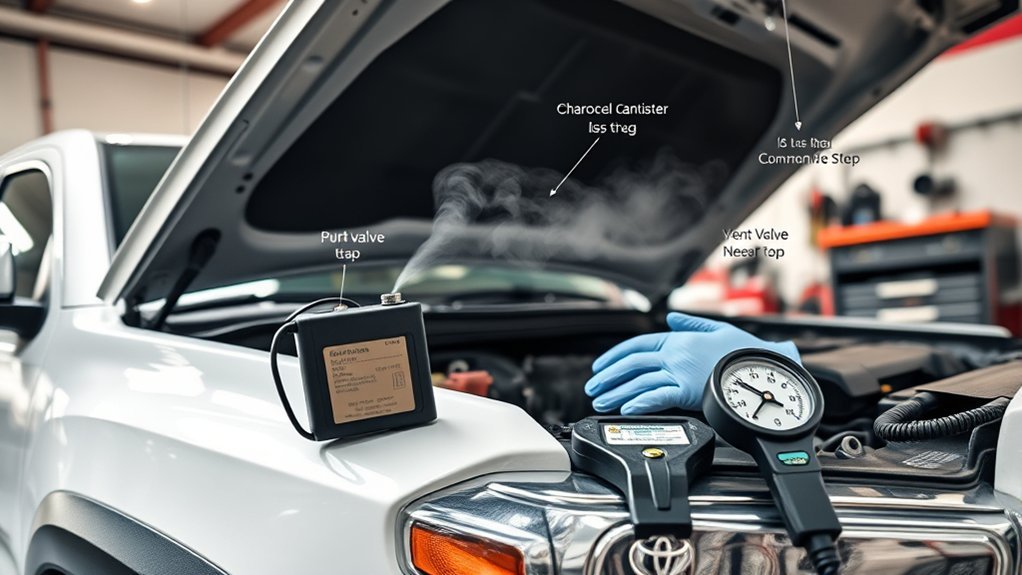
Accurate EVAP diagnosis follows a sequence. Begin with the code and simple inspections, then move to valve commands, electrical checks, and low-pressure leak testing only when needed.
[Amazon Products Picked for You]

HyperSmoke Technology – Creates Thick Visible Smoke for Easy Leak Testing. Adjustable Pressure. Infinite Smoke. Instant Warmup. Built-In Air Compressor Motor. OEM Approved Smoke Fluid. Designed and Engineered by AutoLine Pro USA, an American Team of Individuals bringing the latest innovation to you.

HyperSmoke Technology – Creates Thick Visible Smoke for Easy Leak Testing. Adjustable Pressure. Infinite Smoke. Instant Warmup. Built-In Air Compressor Motor. OEM Approved Smoke Fluid. Designed and Engineered by AutoLine Pro USA, an American Team of Individuals bringing the latest innovation to you.

HIGH PERFORMANCE, PREMIUM BUILD: Made in the USA. Solid Thick Metal Construction for durability. Equipped with our brand new AutoLine Pro Ceramic Smoke Coil and Top Rated Smoke Fluid that outputs LOTS OF SMOKE and last a Lifetime.
Scan the Truck Before Clearing Codes
- Read all stored, pending, and permanent codes. Other engine codes may affect EVAP monitor operation.
- Save freeze-frame data. Record fuel level, coolant temperature, ambient temperature, vehicle speed, and other available values.
- Check monitor status. An incomplete EVAP monitor is not proof of a fault by itself.
- Consult model-year information. Use Toyota’s code description, detection conditions, wiring diagram, and inspection sequence.
Vent Valve Testing Techniques
Begin with a visual inspection of the vent-side hoses, connectors, canister housing, and fresh-air path. Look for mud, water exposure, collision damage, crushed tubing, corrosion, and loose fittings.
A capable bidirectional scan tool may let a technician command the applicable vent or canister valve. Confirm that the command changes valve operation and system pressure as the repair manual specifies. An audible click alone does not prove that the valve seals or flows correctly.
If the valve does not respond, inspect its fuse or shared power circuit where applicable, connector terminals, wiring continuity, ground control, and coil resistance using Toyota’s values. Do not apply battery voltage directly unless the repair procedure specifically permits it.
Purge Valve Functionality Checks
Compare the commanded purge value with pressure data, fuel trims, idle quality, and actual airflow response. A valve that passes an electrical resistance test may still leak mechanically.
When the purge valve should be closed, unintended vacuum or flow through the valve can indicate leakage. When commanded open, the system should respond in the direction and range specified by Toyota. A blocked hose or canister can imitate a bad valve, so test the full path rather than the valve in isolation.
Smoke Machine Usage Tips
Use a professional smoke machine designed for EVAP systems. Follow its instructions and Toyota’s model-year procedure for connection point, valve state, fuel-level limits, and permitted pressure.
- Inspect for liquid fuel first. Do not introduce smoke into a system with an active liquid leak.
- Use the specified adapter. Depending on the truck, the connection may be at an approved service point, purge line, canister line, or filler-neck adapter.
- Seal the system correctly. Use a scan tool or the approved procedure to close the required valve or isolate the test section.
- Apply only regulated low pressure. Never use unrestricted compressed air.
- Watch for escaping smoke. Check the cap seal, hose joints, canister seams, valve connections, tank fittings, and accessible vapor lines.
- Confirm the finding. Smoke from a drain or vent that has not been commanded closed may be normal. Verify the valve state before calling it a leak.
Warning: Do not use a cigar, vape device, burning material, mineral-oil fogger not approved for automotive EVAP work, or a homemade heating element to create smoke. These methods can ignite fuel vapor or contaminate the system.
How the EVAP System Works During Refueling
As fuel enters the tank, air and vapor already inside the tank must move somewhere. The EVAP and onboard-refueling vapor-control paths direct much of that displaced vapor toward the charcoal canister instead of releasing it directly into the air.
Fuel Vapor Management
During normal refueling, the purge side remains separated from the intake while vapor moves through the tank’s venting path. The canister captures hydrocarbons, and filtered air exits through the system’s fresh-air side. Later, controlled purge airflow carries stored vapor into the engine.
| Component | Function During Refueling | What a Fault May Cause |
|---|---|---|
| Fuel tank and filler system | Accept fuel while routing displaced vapor toward the vent system | Spit-back, early nozzle shutoff, odor, or leakage |
| Vapor and vent lines | Carry displaced tank vapor and air | Hard refueling if kinked, crushed, disconnected, or blocked |
| Charcoal canister | Captures hydrocarbons from displaced vapor | Restricted airflow, odor, or monitor faults if damaged or saturated |
| Fresh-air or vent path | Allows the system to breathe through its designed path | Repeated pump shutoff when restricted |
| Purge valve | Normally prevents uncontrolled intake flow during refueling | Hard starting or rough running if it leaks open |
Vent Valve Operation
The vent side must allow normal airflow during refueling, yet it must also support a sealed-system test when commanded. The exact valve name and normal position vary among Tacoma generations.
If the nozzle clicks off repeatedly, do not assume the fuel pump is defective. Try another pump once, insert the nozzle correctly, and stop if fuel backs up. If the problem repeats at different stations, inspect the filler system, vapor hoses, canister airflow, and vent-control hardware.
Pro Tip: Stop filling when the nozzle automatically shuts off. Adding more fuel can force liquid into areas designed to handle vapor and may contribute to canister or refueling problems.
How to Test for Leaks in Your Tacoma’s EVAP System?
Use the following order to reduce false diagnoses and unnecessary parts replacement:
- Record the codes and freeze-frame data. Do this before disconnecting the battery or clearing the warning light.
- Inspect the fuel cap. Confirm that it is the correct cap, inspect its gasket, clean the sealing surface, and tighten it until the specified click is heard.
- Inspect accessible hoses and wiring. Look near the engine purge valve, fuel tank, filler neck, and canister area without working beneath an unsupported vehicle.
- Check live pressure data. With the key on and under the conditions specified by Toyota, look for a plausible sensor reading and response.
- Test purge operation. Check electrical control, unwanted leakage while closed, and system response while commanded open.
- Test the vent path. Confirm that it can flow when open and seal when commanded closed.
- Perform a regulated smoke test if needed. Introduce smoke at the approved connection and watch for smoke escaping at a specific seal, hose, fitting, valve, canister seam, or tank connection.
- Repair the confirmed fault. Replace damaged seals, hoses, wiring, or components using the correct part for the VIN.
- Clear codes only after repair. Then drive the truck normally and allow the EVAP monitor to complete under suitable conditions.
- Rescan the vehicle. Confirm that no pending code returns and that repaired connections remain dry and secure.
Note: Clearing an EVAP code does not repair the fault. It also resets readiness information, so the truck may need several normal trips before the EVAP monitor runs again.
Preventative Maintenance for a Healthy EVAP System
The EVAP system does not need arbitrary six-month valve tests or annual smoke tests. Follow the maintenance guide for your model year and inspect the system when a code, odor, refueling problem, or visible defect appears.
Toyota’s maintenance guidance includes visual inspection of fuel lines, fuel-system connections, the fuel-tank vapor vent hoses, and the fuel-cap gasket at specified maintenance intervals. The guide tells technicians to check for corrosion, cracks, damage, deterioration, and loose or leaking connections.
| Maintenance Task | When to Do It | Purpose |
|---|---|---|
| Tighten the fuel cap correctly | After every refueling stop | Maintains the intended vapor seal |
| Inspect the cap gasket and sealing surface | During the scheduled inspection and whenever an EVAP leak code appears | Finds cracks, hardening, dirt, and sealing damage |
| Inspect fuel lines, connections, and vapor vent hoses | At the intervals listed in the model-year Toyota maintenance guide | Finds corrosion, cracks, impact damage, loose fittings, and leaks |
| Inspect the canister and vent area | After underbody impact, deep mud, flooding, tank work, or repeated hard-refueling symptoms | Finds physical damage, contamination, and airflow restrictions |
| Read codes and perform directed testing | When the check-engine light, fuel odor, or refueling problem appears | Identifies the failed monitor and avoids guessing |
| Perform smoke or valve testing | Only when the diagnostic procedure calls for it | Confirms a leak, restriction, sealing fault, or valve-control problem |
For the applicable schedule, use Toyota’s 2024 Tacoma Warranty and Maintenance Guide, the 2019 Tacoma Warranty and Maintenance Guide, or the corresponding guide for your exact model year.
When to Call a Professional
Owner-level checks should stop at the cap, visible hoses, accessible connectors, and basic code retrieval unless you have the correct repair information and equipment.
Arrange professional diagnosis when:
- You see wet fuel or find an active liquid leak.
- A strong raw-fuel odor continues after the cap is tightened.
- The fuel nozzle repeatedly shuts off at different stations.
- The truck runs poorly after refueling.
- The code involves a pressure-sensor circuit, valve circuit, or multiple EVAP faults.
- The fuel tank, canister, or underbody components have impact damage.
- You need to lower the fuel tank or disconnect fuel-system fittings.
- The code returns after the cap and visible hoses pass inspection.
Frequently Asked Questions
What is the most common Toyota Tacoma EVAP problem?
No single failure is the most common across every Tacoma generation. Begin with the fuel cap and gasket because they are easy to check. Other frequent possibilities include cracked vapor hoses, purge-flow problems, vent restrictions, damaged wiring, canister faults, and pressure-sensor issues.
How does the Toyota Tacoma EVAP system work?
Fuel vapor travels from the tank to a charcoal canister, where activated carbon stores it. When operating conditions are suitable, the engine computer opens the purge path so airflow carries the vapor into the engine. The vent side controls fresh air and helps the computer check the system for leaks.
What are the symptoms of a bad EVAP system on a Toyota?
The check-engine light may be the only symptom. Depending on the fault, you may also notice a fuel-vapor odor, repeated fuel-nozzle shutoff, hard starting after refueling, extended cranking, or rough idle. Many small vapor leaks do not create a noticeable fuel-economy or performance change.
What concerns can an EVAP malfunction cause?
An EVAP fault can increase hydrocarbon emissions, turn on the check-engine light, prevent an emissions inspection from passing, create fuel odor, or interfere with refueling. A purge valve leaking open may also affect starting or idle quality.
Can a loose Tacoma gas cap turn on the check-engine light?
Yes. Toyota states that an insufficiently tightened fuel cap can illuminate the check-engine indicator. Inspect the gasket and sealing surface, then tighten the correct cap until the specified click is heard. A light that remains on may indicate another fault.
Will a Tacoma EVAP code clear by itself?
The warning light may turn off after the computer completes enough passing monitor tests, but stored or permanent code information can remain. If the fault is still present, the light will return. Read and document the code before clearing it.
Can you drive a Tacoma with an EVAP code?
A small vapor-leak code often does not make the truck immediately undriveable, but you should diagnose it because emissions increase and inspection may fail. Do not continue driving if you see liquid fuel, smell a strong persistent fuel odor, or experience severe hard starting or stalling.
Why does the gas pump keep clicking off while filling a Tacoma?
First try another pump and confirm that the nozzle is inserted correctly. If the problem happens repeatedly, the filler system, vapor hose, vent path, canister, or vent-control hardware may be restricted. Stop refueling if fuel backs up or spits from the filler neck.
Conclusion
Your Toyota Tacoma’s EVAP system protects the atmosphere by containing fuel vapor and sending it to the engine under controlled conditions. A check-engine light does not automatically mean the charcoal canister or a valve needs replacement. Read the codes, inspect the cap and visible connections, follow the model-year diagnostic procedure, and confirm the fault before buying parts.
You can safely handle basic cap and visual checks, but valve commands, circuit diagnosis, tank work, and smoke testing require proper equipment and fuel-system precautions. Correct diagnosis protects your truck, reduces unnecessary repairs, and restores the emissions monitor without guesswork.
Sources
- Toyota Manuals and Warranties – model-year-specific owner, warranty, and maintenance information
- 2024 Toyota Tacoma Quick Reference Guide – fuel-cap tightening and check-engine warning guidance
- 2024 Toyota Tacoma Warranty and Maintenance Guide – scheduled inspection of fuel-system and vapor-system components
- 2019 Toyota Tacoma Warranty and Maintenance Guide – fuel lines, vapor vent hoses, connections, and cap-gasket inspection guidance
- U.S. EPA Evaporative Emissions Research Overview – carbon-canister function, vapor leaks, and evaporative-emissions research
- U.S. EPA Evaluation of On-Board Diagnostic Effectiveness – EVAP trouble codes, OBD monitoring, and emissions significance
