Last updated: September 19, 2026 — technical guidance reviewed against Toyota service-information resources and U.S. EPA OBD readiness guidance.
The Toyota Tacoma EVAP system keeps gasoline vapor from escaping from the fuel tank and related plumbing. It stores vapor in a charcoal canister and later routes it into the engine when operating conditions allow. A loose fuel cap, cracked vapor line, leaking purge valve, vent-control problem, damaged canister, or electrical fault can set an EVAP code, but the code identifies the failed test or circuit rather than automatically proving which part is bad. Start diagnosis by saving the codes and freeze-frame data, then match the test procedure to the Tacoma’s exact model year and engine.
Quick Answer
The Toyota Tacoma EVAP system seals the fuel-vapor system, stores gasoline vapor in a charcoal canister, and later routes that vapor into the engine. Common faults include a loose fuel cap, cracked vapor hose, stuck purge valve, vent-control problem, damaged canister, or faulty pressure-sensing circuit. The exact valves, sensor arrangement, and leak-test strategy vary by model year, so diagnose the stored code with the correct Toyota service information before replacing parts.
Key Takeaways
- The EVAP system controls fuel vapor. It is only one part of the Tacoma’s larger emissions-control system.
- A fuel-tank pressure sensor measures pressure or vacuum, but it does not create vacuum or diagnose a leak by itself.
- A diagnostic code identifies the system, circuit, or monitor test that failed. It does not prove that a particular part needs replacement.
- Classify the code before testing: leak, purge-flow, vent-control, and pressure-sensor faults require different diagnostic paths.
- There is no universal mileage required to reset an EVAP monitor. The test runs only when model-specific conditions are met.
- Stop refueling when the pump first shuts off. Topping off can push liquid fuel into vapor-control components and damage the charcoal canister.
At a Glance
| Time Required | 10–30 minutes for basic cap, code, and visual checks; longer for professional leak testing |
| Difficulty | Beginner for preliminary checks; advanced for electrical diagnosis, valve testing, and smoke testing |
| Tools Needed | Flashlight and OBD-II scanner; model-specific service information, a bidirectional scan tool, multimeter, or approved smoke machine may be needed for deeper testing |
| First Step | Save all stored, pending, and permanent codes plus freeze-frame data before clearing anything |
| Cost | Basic inspection may cost nothing; repair cost depends on the failed hose, seal, valve, sensor, pump module, or canister |
Understanding the Purpose of the Toyota Tacoma Emissions System

Gasoline naturally produces hydrocarbon vapor inside the fuel tank. Releasing that vapor directly into the air would increase evaporative emissions, especially while the truck is parked or being refueled.
The Tacoma’s EVAP system routes fuel vapor through sealed lines to an activated-charcoal canister. The charcoal stores the vapor temporarily. When engine and driving conditions are suitable, the engine control module opens the purge path so the engine can burn the stored vapor.
The exact component names, locations, and test strategy can vary by model year, engine, drivetrain, market, and emissions certification. Use Toyota’s official manual lookup for owner information and Toyota Technical Information System for factory repair manuals, wiring information, service bulletins, and model-specific diagnostic procedures.
EVAP System Versus the Broader Emissions System
The EVAP system controls gasoline vapor from the fuel tank and refueling system. It does not directly perform the same job as the catalytic converter, air-fuel ratio sensors, oxygen sensors, exhaust-gas controls, or other tailpipe-emissions components.
A Tacoma can therefore have an emissions-related check-engine light that has nothing to do with an EVAP leak. Reading the stored diagnostic trouble code is the first step toward identifying which system needs attention.
The California Air Resources Board’s OBD program explains that onboard diagnostics monitor emissions-related components, illuminate a warning lamp when a qualifying fault is detected, and store information that supports diagnosis.
What Are the Key Parts of Your Tacoma’s EVAP System?
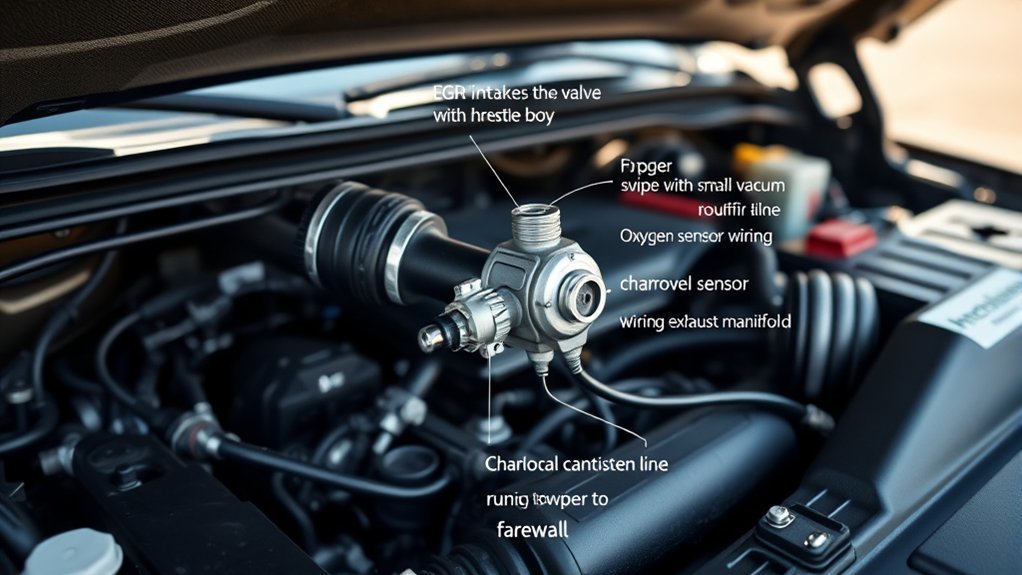
Your Tacoma may use some or all of the following components. The layout can differ between generations, so match replacement parts and procedures to the vehicle identification number, engine, emissions specification, and model year.
| Component | What It Does | Possible Fault Clues |
|---|---|---|
| Fuel tank and filler seal | Hold fuel and help maintain a sealed vapor system. | Fuel odor, visible damage, loose cap, damaged seal, or leak code. |
| Charcoal canister | Stores fuel vapor until the engine can purge it. | Fuel odor, restricted venting, repeated EVAP codes, or difficult refueling. |
| Purge valve | Controls vapor flow from the canister to the engine. | Rough idle, hard starting after refueling, incorrect purge-flow code, or abnormal fuel-trim response. |
| Vent or canister closed valve | Allows filtered air into the system or helps control sealing during a leak test, depending on system design. | System cannot complete the expected pressure response, difficult refueling, vent-control code, or failed leak test. |
| Fuel-tank pressure sensor | Reports pressure and vacuum changes to the control module. | Implausible scan data, sensor-circuit code, or a monitor that cannot evaluate the system correctly. |
| Vapor hoses and lines | Carry vapor between the tank, canister, valves, and engine. | Cracks, disconnected fittings, abrasion, rodent damage, or smoke escaping during testing. |
| Leak-detection or canister pump module | Creates or controls test conditions on Tacoma models equipped with this design. | Pump, valve, circuit, or monitor-performance codes. |
| Engine control module and OBD-II system | Commands valves, evaluates sensor data, runs monitors, and stores diagnostic information. | Check-engine light, pending or confirmed codes, freeze-frame data, or incomplete readiness monitor. |
[Amazon Products Picked for You]

Purge Solenoid
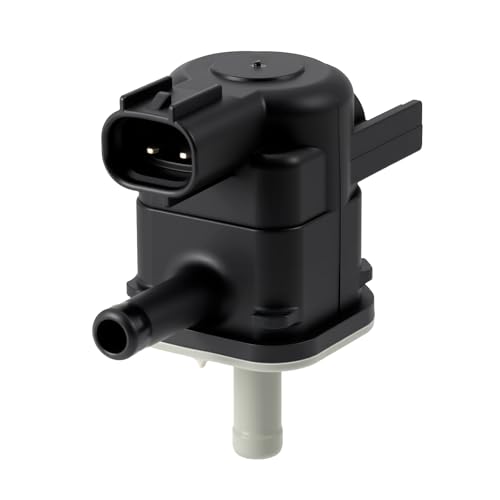
[Vehicle Fitment-1]- EVAP Vapor Canister Purge Valve Solenoid compatible with 2006-2013 Toyota Yaris, 2007-2015 Toyota Camry 2.5L, 2007-2010 Toyota Sienna, 2007-2014 Toyota Tundra, 2009-2013 Toyota Corolla 1.8L, 2009-2014 Toyota FJ Cruiser .0L, 2009-2018 Toyota Highlander 2.7L, 2009-2014 Toyota Matrix 1.8L, 2010-2018 Toyota 4Runner 4.0L, 2011-2015 Toyota Tacoma 4.0L, 2016-2018 Toyota Prius, 2016-2018 Toyota Prius V 1.8L
How Do Tacoma EVAP Designs Vary by Model Year?
Toyota has not used one universal EVAP layout across every Tacoma. Factory repair information for some earlier trucks describes separate vacuum switching valves for purge, canister closing, and pressure switching together with a vapor-pressure sensor. Other Tacoma systems use different valve arrangements or a canister pump module to help create and evaluate leak-test conditions.
This difference matters during diagnosis. A component name, wiring diagram, active-test command, or expected pressure response from one Tacoma generation may not apply to another. Identify the truck by VIN, model year, engine, and emissions specification before following a wiring diagram or ordering an EVAP valve. For model-specific repair information, use Toyota TIS or equivalent factory service information for the exact vehicle.
How the Tacoma EVAP System Works
- Vapor forms in the tank. Fuel temperature, movement, and refueling create gasoline vapor.
- The sealed plumbing directs vapor to the canister. Activated charcoal traps the hydrocarbons instead of allowing them to vent freely.
- The control module waits for suitable operating conditions. Purging must occur without upsetting combustion or idle quality.
- The purge valve opens in a controlled amount. Intake airflow draws stored vapor toward the engine.
- The engine burns the vapor. The control module adjusts fuel delivery as needed while monitoring engine operation.
- The OBD system checks system performance. Depending on the Tacoma design, it evaluates purge flow, valve operation, electrical circuits, pressure behavior, pump operation, and the system’s ability to seal.
How Does the Fuel Tank Pressure Sensor Help Detect Leaks?
The fuel-tank pressure sensor does not locate a leak or create vacuum by itself. It reports pressure or vacuum conditions to the engine control module. The control module compares those readings with the response it expects while commanding the purge valve, vent valve, canister pump, or other test components.
Sensor Functionality Overview
During an EVAP monitor, the control module may seal part of the system and create a controlled pressure or vacuum condition. The exact method depends on the Tacoma’s year and system design.
If pressure changes too quickly, fails to reach the expected level, or does not respond when a valve is commanded, the control module may store a pending or confirmed diagnostic code. The code describes the failed test or circuit. It does not automatically identify the part that must be replaced.
Note: A leak threshold may be described as the equivalent of a small opening. That measurement refers to leak size, not to the pressure resolution of the sensor. Applicable thresholds and monitor strategies vary by model year and emissions certification.
Leak Detection Process
A typical leak-monitor sequence follows this general pattern:
- The control module confirms that temperature, fuel level, battery voltage, engine status, and other enabling conditions are suitable.
- The system closes or commands the appropriate valves.
- Intake vacuum or a dedicated pump creates the required test condition.
- The fuel-tank pressure sensor reports how pressure changes over time.
- The control module compares the result with its programmed limits.
- If the test fails under the required conditions, the module stores diagnostic information and may illuminate the check-engine light.
Some tests may run while the engine is operating. Others may occur after shutdown or after a soak period. Do not assume that every Tacoma uses the same sequence.
Importance of Accurate Readings
A biased sensor, damaged wire, blocked reference path, stuck valve, or electrical fault can produce misleading results even when no hose is visibly cracked. That is why proper diagnosis compares sensor data with commanded valve operation instead of replacing the sensor based only on a leak code.
After a repair, verify that the pressure reading responds normally and that the EVAP readiness monitor completes without returning the code.
Does the EVAP System Improve Engine Efficiency?
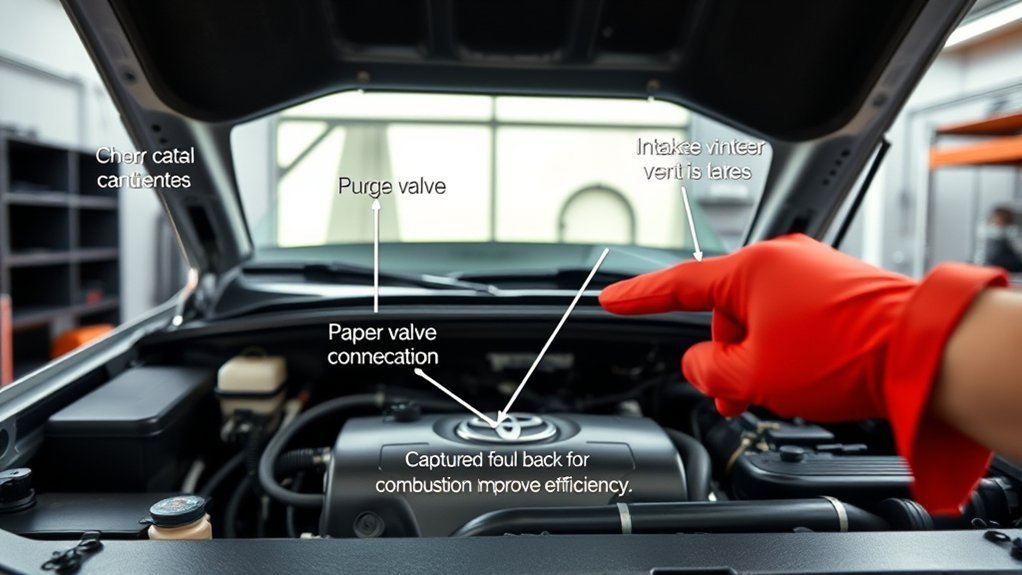
The EVAP system’s primary purpose is reducing evaporative hydrocarbon emissions. It captures fuel vapor that would otherwise escape and sends that vapor to the engine for combustion.
A properly operating system also helps the engine maintain predictable purge flow and idle quality. However, it should not be treated as a major fuel-economy feature. Many small EVAP leaks cause a check-engine light without producing an obvious change in mileage or performance.
A purge valve stuck open can have a greater effect on drivability. It may introduce excessive vapor or airflow at the wrong time, contributing to rough idle, difficult starting after refueling, or abnormal fuel-trim readings.
| System Action | Primary Result | Possible Drivability Effect |
|---|---|---|
| Stores vapor in the canister | Reduces vapor released to the air | Usually none when working normally |
| Controls purge flow | Allows stored vapor to be burned | Incorrect flow may affect idle, starting, or fuel trim |
| Seals and tests the system | Detects leaks and component faults | A small leak may cause only a warning light |
[Amazon Products Picked for You]

【VEHICLE FITMENT】 Compatible with Toyota Tacoma (2005-2016), 4Runner (2003-2012), Tundra (2005-2011), and FJ Cruiser (2007-2010). Fits models equipped with 2.7L L4 and...
Common Tacoma EVAP Issues and Diagnostic Clues
The following faults can cause Tacoma EVAP codes, but their frequency varies by generation, system design, and operating environment. Diagnose the system before ordering parts.
- Loose, damaged, or incorrect fuel cap: The sealing surface may not hold the required pressure or vacuum.
- Cracked or disconnected vapor line: Heat, road debris, abrasion, age, or previous repairs can damage hoses and fittings.
- Stuck purge valve: A valve stuck open may cause hard starting after refueling or rough idle. A valve stuck closed may prevent proper purge flow.
- Vent-valve, switching-valve, or canister-pump fault: A blocked, stuck, leaking, or electrically failed component may prevent the system from venting, sealing, or producing the expected pressure response.
- Damaged or saturated charcoal canister: Topping off the fuel tank or liquid-fuel intrusion can damage the canister.
- Fuel-tank pressure sensor or circuit problem: Incorrect data can prevent the control module from evaluating the monitor correctly.
- Fuel-tank, filler-neck, or seal damage: Corrosion, impact, or damaged gaskets can create a leak that is difficult to see.
[Amazon Products Picked for You]

【Diagnose Check Engine Light in Seconds – No Mechanic Needed】The FOXWELL NT301 OBD2 scanner instantly reads & clears engine fault codes (DTCs) with one click. Simply plug into the 16-pin DLC port, turn ignition on, and get accurate results within seconds—No prior car knowledge required. Save hundreds on dealership fees by knowing exactly what’s wrong before you visit a shop. The #1 choice car scanner for DIYers and car owners who want to take control of their vehicle’s health

【Advanced OBD2 Modes】Go beyond basic code reading! This scanner lets you run an EVAP system leak test and an O2 sensor performance check-two powerful diagnostic tools usually found only in professional-grade equipment. The O2 test helps fine-tune your air-fuel mixture for better gas mileage and lower emissions, while the EVAP test gives you insight into your fuel tank's seal and overall health

[Easy to Use—Work Out of the Box] + [FOXWELL 2026 New Version] FOXWELL NT604 Elite scan tool is the 2026 new version from FOXWELL, designed for car owners who want to figure out the cause of issues before fixing car problems by scanning common systems like ABS, SRS, engine, and transmission. The NT604 Elite obd2 scanner diagnostic tool comes with the latest software—no need to waste time downloading software first. Plug the scanner into the OBDII port with OBDII cable to start the diagnosis.
Common EVAP-Related OBD-II Codes
Code definitions and diagnostic details can vary by model year and scan tool. Use the applicable Toyota repair information before performing component tests.
| Code | General Meaning | What to Check |
|---|---|---|
| P0440 | General EVAP system malfunction | Related codes, cap seal, lines, valves, canister, and test data |
| P0441 | Incorrect purge flow | Purge valve sealing and command, hose routing, blockage, and pressure response |
| P0442 | Small EVAP leak detected | Cap seal, small hose cracks, fittings, valves, and approved leak-test results |
| P0446 | Vent-control circuit or system fault | Model-specific vent or switching valves, wiring, vent path, and pressure response |
| P0455 | Large or gross leak, or system unable to seal | Missing or loose cap, disconnected line, leaking valve, damaged canister, or other major sealing fault |
| P0456 | Very small EVAP leak detected | Fine cracks, seal surfaces, valve leakage, and approved smoke or low-pressure testing |
| P0450–P0454 | Fuel-tank pressure sensor circuit or signal fault family | Sensor signal, wiring, connector condition, reference voltage, ground, and model-specific specifications |
Which Tacoma EVAP Code Family Should You Diagnose First?
Start with the type of failure the control module detected, not with the part name you expect to replace. A leak code means the system did not hold the expected pressure or vacuum, while P0441 points toward purge-flow performance. A vent-control code such as P0446 requires model-specific checks of the vent or switching-valve circuit and pressure response. Pressure-sensor circuit codes require electrical and scan-data testing before a smoke test can prove anything about the sensor itself. If multiple codes are stored, Toyota service information may specify which code should be diagnosed first because one electrical or valve fault can cause a second leak-monitor failure.
| Code Family | Start With | Do Not Assume |
|---|---|---|
| Leak: P0442, P0455, P0456 | Fuel-cap seal, visible hoses and fittings, then an approved leak or smoke test | That the charcoal canister is automatically bad |
| Purge flow: P0441 | Purge-valve sealing, commanded operation, hose routing, blockage, and pressure response | That tightening the fuel cap will correct a purge-flow fault |
| Vent control: P0446 | Correct model-year diagram, valve or pump commands, vent path, wiring, and pressure response | That every Tacoma uses the same vent-valve arrangement |
| Pressure sensor: P0450–P0454 | Live sensor data, connector condition, reference voltage, ground, and signal circuit | That a leak code by itself proves the pressure sensor failed |
How to Diagnose a Tacoma EVAP Code
Warning: Gasoline vapor is flammable. Work outside or in a properly ventilated area, keep flames and sparks away, and do not smoke. Never pressurize the EVAP system with unrestricted ordinary shop air. Do not work beneath the truck unless it is supported by correctly rated equipment on a stable surface.
1. Read the Codes Before Clearing Them
Connect an OBD-II scanner and record all confirmed, pending, and permanent codes. Save freeze-frame information and check the EVAP readiness status.
Do not clear the codes before collecting this information. Clearing them erases useful evidence and resets readiness monitors without repairing the fault.
2. Check the Fuel Cap and Sealing Surface
For a leak-related code, confirm that the cap is present, correct for the truck, and tightened as directed. Inspect its seal for cuts, flattening, dirt, or fuel damage. Also inspect the filler-neck sealing surface.
A damaged cap can cause a leak code, but a leak code does not prove the cap is responsible. A cap inspection is also not a substitute for diagnosing a purge-flow, vent-control, or electrical circuit code.
3. Inspect Visible Hoses and Connectors
Look for disconnected lines, cracked rubber sections, broken plastic fittings, abrasion, corrosion, and rodent damage. Inspect wiring near the canister, purge valve, vent or switching valves, pressure sensor, and pump module where applicable.
Do not force brittle fittings apart. A connector damaged during inspection can create a new leak.
4. Review Symptoms and Live Data
Hard starting shortly after refueling or a rough idle may point toward a purge valve that is leaking when it should be closed. Difficult refueling may suggest restricted canister venting. These symptoms help choose a test but do not confirm a failed component by themselves.
Use scan data to review fuel-tank pressure response, purge command, fuel trims, and other available parameters. A bidirectional scan tool may also allow valve or pump commands on supported Tacoma systems. Compare every result with the diagnostic procedure for the exact model year and engine.
5. Use an Approved Smoke Test
A professional EVAP smoke machine or approved low-pressure tester introduces test vapor through the connection specified by the repair procedure. Escaping smoke can reveal leaks at hose joints, seals, valves, the canister, filler components, or the tank.
Testing pressure must remain within the equipment and manufacturer limits. Excess pressure can damage the fuel tank, seals, valves, or canister. A smoke test also cannot replace electrical diagnosis when the stored code identifies a sensor or control circuit.
Pro Tip: Check factory service information and wiring diagrams before condemning a canister or pump module. A damaged wire, poor connector contact, blocked filter, leaking hose, or valve that fails to respond to a command can produce similar symptoms.
6. Verify the Repair
After completing the repair, clear codes only when appropriate and follow the applicable Toyota confirmation procedure. Check that no pending code returns and that the EVAP readiness monitor eventually shows complete.
A monitor marked “not ready” does not automatically mean the system is faulty. It means the required self-test has not completed since codes were cleared, the battery was disconnected, or the control module lost diagnostic information. The U.S. EPA notes that non-continuous monitors require specific operating conditions and that the evaporative-system monitor can be especially difficult to complete because temperature and other enabling conditions affect when it runs. See the EPA’s OBD monitor readiness guidance.
Best Ways to Maintain Your Tacoma’s EVAP System
Regular Component Inspections
The EVAP system usually does not require scheduled replacement of valves or sensors. Practical maintenance focuses on preventing damage and responding to warning signs.
- Inspect exposed hoses and wiring after off-road use, underbody impact, fuel-tank work, or rodent activity.
- Keep the fuel-cap seal and filler-neck sealing surface clean.
- Use replacement parts that match the Tacoma’s year, engine, VIN, and emissions specification.
- Investigate a persistent fuel smell instead of masking it.
- Read a check-engine code before disconnecting the battery or clearing diagnostic information.
- Check the applicable warranty and maintenance guide because emissions coverage varies by component and certification.
Timely Leak Repairs
Repair cracked hoses, damaged seals, and faulty valves promptly. A small EVAP leak may not change how the truck drives, but it can keep the check-engine light on, prevent an emissions inspection from passing, and make it harder to notice a second fault that appears later.
Replace parts only after testing supports the diagnosis. A P0455 code, for example, may result from a loose cap, disconnected hose, leaking valve, damaged canister, or another large sealing fault.
Refueling Habits That Protect the System
Stop adding fuel when the pump nozzle first shuts off automatically. Continuing to top off can push liquid gasoline into vapor-control plumbing or the charcoal canister.
Do not use fuel level as a repair method. The EVAP monitor may require the tank to be within a model-specific range before it runs, so a nearly empty or completely full tank can delay readiness completion.
When to Seek Professional Service
Schedule professional diagnosis when you notice a strong or persistent gasoline smell, visible liquid fuel, damaged tank components, repeated codes after a cap inspection, difficult refueling, or drivability problems after filling the tank.
If the only symptom is a steady check-engine light from a small EVAP leak and the truck otherwise runs normally with no visible fuel leak or strong gasoline odor, an immediate tow is often unnecessary. However, a flashing check-engine light, active fuel leak, severe rough running, smoke, or strong vapor accumulation requires immediate attention.
Federal and state emissions rules, inspections, and warranty requirements can vary. EPA maintains current information about vehicle-emissions regulations and vehicle-emissions testing.
Frequently Asked Questions
How does the Toyota Tacoma EVAP system work?
It routes gasoline vapor from the fuel tank to a charcoal canister for temporary storage. When operating conditions are suitable, the purge valve allows the engine to draw in and burn the stored vapor. The OBD system also checks purge flow, valve operation, circuits, pressure response, and system sealing. The exact test method varies by Tacoma model year.
What components make up the Tacoma EVAP system?
Common components include the fuel tank, fuel cap or filler seal, charcoal canister, purge valve, vent or switching valves, vapor lines, fuel-tank pressure sensor, wiring, and the engine control module. Some model years also use a canister pump or dedicated leak-detection module.
What are common symptoms of a Toyota Tacoma EVAP problem?
Possible signs include a check-engine light, gasoline odor, hard or rough starting after refueling, repeated fuel-nozzle shutoff during refueling, or an EVAP readiness monitor that does not complete. Many small EVAP leaks cause no noticeable drivability symptom.
Can a loose fuel cap cause a Tacoma check-engine light?
Yes. A loose, damaged, dirty, or incorrect cap can prevent the EVAP system from sealing and may cause a leak-related code. However, the same leak code can also come from a hose, valve, canister, filler component, tank seal, pressure-sensor problem, or pump module.
What are common Toyota Tacoma EVAP codes?
Common generic codes include P0440 for a general EVAP malfunction, P0441 for incorrect purge flow, P0442 for a small leak, P0446 for a vent-control fault, P0455 for a large or gross leak, P0456 for a very small leak, and P0450 through P0454 for pressure-sensor circuit or signal faults. Confirm the exact definition and test procedure for the truck’s model year.
Does an EVAP code mean the charcoal canister is bad?
No. An EVAP code can be caused by the fuel cap, vapor hose, purge valve, vent or switching valve, pressure sensor, pump module, canister, wiring, connector, filler components, or tank sealing surfaces. Replace the canister only when the applicable diagnostic test supports that conclusion.
How many miles does it take to reset a Tacoma EVAP monitor?
No fixed mileage guarantees completion. The monitor may need a specific fuel level, ambient temperature, engine temperature, soak period, speed range, load, and drive pattern. Check readiness with a scanner instead of relying on a 50-mile or 100-mile rule.
Can you drive a Tacoma with an EVAP code?
A small EVAP leak often allows normal driving when the truck otherwise runs normally, but it should still be diagnosed. Stop driving and address the problem immediately if you see leaking fuel, smell strong gasoline vapor, experience severe rough running, see smoke, or have a flashing check-engine light.
Conclusion
Your Toyota Tacoma’s EVAP system controls gasoline vapor by sealing the fuel-vapor system, storing vapor in a charcoal canister, and purging it into the engine under controlled conditions. The pressure sensor supplies data, while valves, pumps where equipped, engine vacuum, and the control module create and evaluate the actual test conditions.
Start diagnosis by recording codes and freeze-frame data, then classify the fault as a leak, purge-flow, vent-control, or sensor/circuit problem. Check the fuel cap and visible hoses where appropriate, but use model-specific Toyota service information and an approved smoke, pressure, active, or electrical test when basic checks do not reveal the problem. Avoid replacing the canister, purge valve, pump module, or pressure sensor based on a code alone.
Sources
- Toyota Manuals and Warranties — model-specific owner manuals, maintenance guides, and emissions-warranty information
- Toyota Technical Information System — factory repair manuals, wiring diagrams, service bulletins, diagnostic information, and Techstream resources
- California Air Resources Board OBD Program — how onboard diagnostics monitor emissions-related systems and store fault information
- U.S. EPA OBD Monitor Readiness Guidance — readiness-monitor operation and EVAP-monitor completion considerations
- U.S. EPA Regulations for Emissions From Vehicles and Engines — current federal vehicle-emissions regulatory information
- U.S. EPA Vehicle and Fuel Emissions Testing — federal emissions testing and compliance information
