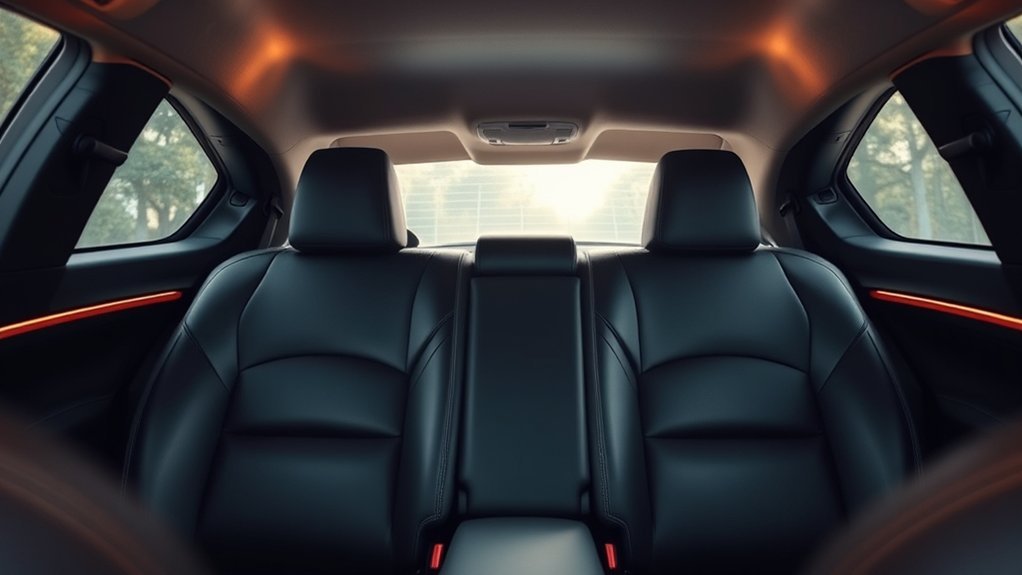
The U.S.-spec 2025 Toyota Camry has 38.0 inches of rear legroom, 37.6 inches of rear headroom, 55.7 inches of rear shoulder room, and 54.6 inches of rear hip room. That gives two adults useful space for regular travel, while three adults share a narrower center position. Toyota publishes the same 37.6-inch rear-headroom figure with and without the moonroof, although tall passengers should still test the seating position in person.
Last updated: September 19, 2026. Specifications and source links were rechecked against current manufacturer and safety-agency information.
Quick Answer
The U.S.-spec 2025 Toyota Camry provides 38.0 inches of rear legroom and 37.6 inches of rear headroom. Toyota lists that same rear-headroom figure with and without the moonroof. Two adults should have useful space for normal trips, while three adults will sit more closely together.
Key Takeaways
- The 2025 Camry has 38.0 inches of published rear legroom, a competitive figure for a midsize sedan.
- Two adults should fit more comfortably than three adults, especially on a long trip.
- Toyota lists 37.6 inches of rear headroom on LE, SE, XSE, and XLE, both with and without the moonroof.
- The 60/40-split rear seatback lets you carry longer cargo while preserving part of the back row.
- The Accord provides more measured rear legroom, while the comparable Altima provides less; the RAV4 is close on paper but offers a different, more upright seating position.
How Spacious Is the 2025 Toyota Camry’s Rear Seat?
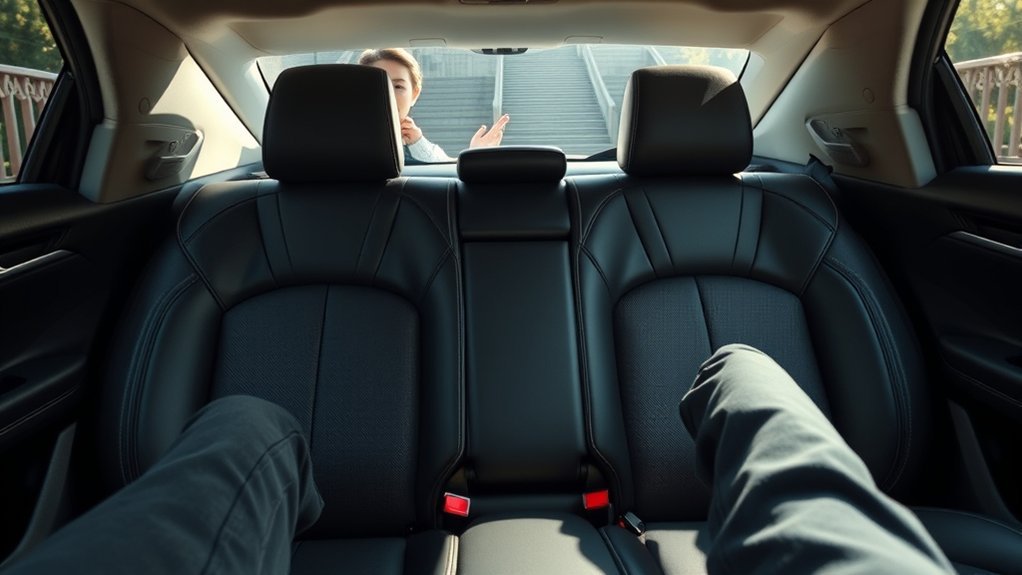
The 2025 Camry’s back row is suitable for daily commuting, family errands, and longer highway drives. Toyota’s official 2025 specifications list 38.0 inches of rear legroom, 37.6 inches of rear headroom, 55.7 inches of rear shoulder room, and 54.6 inches of rear hip room.
The two outer positions provide the most usable space. The center seat makes the Camry a five-passenger car, but the middle cushion is narrower and requires all three rear occupants to share the available shoulder and hip room. Three adults can ride in back, although two adults will usually be more comfortable on a long trip.
With 38.0 inches of rear legroom, the 2025 Camry is competitive for a midsize sedan, but the Honda Accord provides more measured rear knee room.
A published legroom number does not describe the whole seating experience. The front-seat position, front-seatback shape, rear-cushion height, passenger posture, footwear, and foot space beneath the front seats can all change how roomy the back row feels.
Note: These measurements refer to the U.S.-spec 2025 Camry. Toyota lists the same rear legroom, headroom, shoulder-room, and hip-room figures for LE, SE, XSE, and XLE, but equipment can differ by market and configuration.
2025 Toyota Camry Rear-Seat Measurements
Each cabin measurement describes a different part of passenger space. Legroom measures fore-and-aft clearance, while headroom concerns vertical clearance. Neither measurement captures seat width, cushion support, door access, or how far the front seats are moved rearward.
| 2025 Camry rear-seat feature | Published figure or configuration | What it means in practice |
|---|---|---|
| Rear legroom | 38.0 inches | Competitive knee space for many adult passengers |
| Rear headroom | 37.6 inches | Toyota lists the same rear figure with and without the moonroof |
| Rear shoulder room | 55.7 inches | More useful than legroom alone when judging three-across adult space |
| Rear hip room | 54.6 inches | Helps describe the lateral space shared across the rear bench |
| Seating capacity | Five people | Two adults generally fit more comfortably in back than three |
| Rear seatback | 60/40 split-folding | Combines passenger seating with space for longer cargo |
| Trunk volume | 15.1 cubic feet | Useful sedan cargo capacity, although item shape still matters |
| Rear passenger amenities | Rear air vents; one rear USB-A and one rear USB-C port | Improves comfort and device access during family trips |
Combined passenger-and-cargo totals are less helpful when judging the back seat because they merge spaces used for different purposes. Rear legroom, shoulder room, hip room, seat shape, headroom, door access, and the front-seat position provide a clearer picture of passenger comfort.
For the Camry’s full exterior and cabin-size context, see the Toyota Camry exterior dimensions guide.
How Much Rear Headroom Does the 2025 Camry Have?
Toyota lists 37.6 inches of rear headroom for every U.S.-spec 2025 Camry trim. The brochure shows 38.3/37.6 inches of front/rear headroom without a moonroof and 37.5/37.6 inches with a moonroof, so the published moonroof change is at the front rather than the rear.
The moonroof still changes the overall cabin measurement: Toyota lists 99.9 cubic feet of EPA passenger volume without it and 98.8 cubic feet with it. Published dimensions do not guarantee comfort, however. Seated height, posture, hair, the rear-cushion position, and the roofline near the door can change how much clearance a tall passenger perceives.
During a test sit, keep your back against the seat and check clearance above your normal head position. Also enter and exit through the rear door several times, because the roofline and door opening can matter even when the measured headroom is adequate.
Pro Tip: Adjust the front seat for the person who normally drives before evaluating the back row. Testing behind a front seat that has been moved unusually far forward can give a misleading impression of rear space.
How to Test the Camry’s Rear Seat Before Buying
A five-minute showroom check can reveal more than a specification sheet. Use the same front-seat position, passengers, and child restraints that the car will normally carry.
- Set the driver’s seat first. Adjust it for a normal driving position, including seat height, recline, and steering-wheel reach.
- Sit directly behind the driver. Check knee clearance without spreading your legs around the seatback.
- Check foot space. Make sure your shoes fit beneath or beside the front seat without forcing your ankles into an uncomfortable angle.
- Check head and thigh support. Sit upright and note roof clearance, cushion length, and whether the seat supports the backs of your thighs.
- Try the center position. Evaluate cushion width, foot placement, and how much the outer passengers must move aside.
- Enter and exit several times. Check the door opening, roofline, sill height, and whether you must twist excessively.
- Install your intended child restraint. Confirm the required recline angle, anchor access, buckle access, and front-passenger space.
- Test the trunk and folding seat. Bring a stroller, luggage, sports equipment, or another bulky item when possible.
[Amazon Products Picked for You]

Always Keep Your Baby in Sight: With a large mirror size and its convex shape, you’ll always be able to tell at a glance if your little one is doing okay. Plus, with a 360-degree joint it’s fully adjustable so you can angle it perfectly.

Clear and Wide View: Funbliss Rear Facing Car Seat Mirror provides a clear and wide view of your baby without distortion, ensuring safety on car journeys

【Ultra Wide Angle Design】 The Baby Car Mirror adopts a wide-angle design to ensure that parents can easily observe every movement of the baby in the back row while driving, without the need for frequent turning, increasing driving safety.
Child Seats and Family Practicality
The Camry can work well as a family sedan, but no cabin dimension guarantees that every infant seat, convertible seat, booster, or three-across combination will fit. Rear-facing restraints deserve particular attention because their shells and required recline angles can extend toward the front seats.
The Insurance Institute for Highway Safety rates the 2025 Camry’s LATCH ease of use as Good. IIHS lists two rear positions with complete LATCH hardware and a center position with a tether anchor but no lower anchors. The rating describes ease of use; it does not replace the child-restraint instructions or the Camry owner’s manual.
NHTSA recommends selecting a restraint that fits both the child and the vehicle. It also advises testing the intended seat in the car before buying when possible.
Warning: Install a child restraint with either the vehicle seat belt or the lower anchors, not both, unless the child-restraint and vehicle manufacturers specifically allow that method. Use the top tether with a forward-facing restraint when required and permitted.
- Install the intended child restraint before buying the car when possible.
- Confirm that a front passenger can maintain a safe seating position.
- Check that the restraint reaches the angle required by its manufacturer.
- Verify that the buckle, lower anchors, and tether anchor remain accessible.
- Do not assume that three child restraints will fit across the bench because the vehicle has three rear seating positions.
- Consider having the installation checked by a certified child-passenger safety technician.
For model-specific installation steps, lower-anchor limits, and tether guidance, see the Toyota Camry car-seat installation guide.
Rear air vents plus one rear USB-A and one rear USB-C port add useful everyday convenience for families. They do not change measured seating space, but they can improve comfort and device access on longer drives.
[Amazon Products Picked for You]

Compatible Models:Front car seat covers fit Toyota Rav4, Camry, Highlander, Corolla, Corolla Cross, Prius, Venza, Avalon(2-Pack)
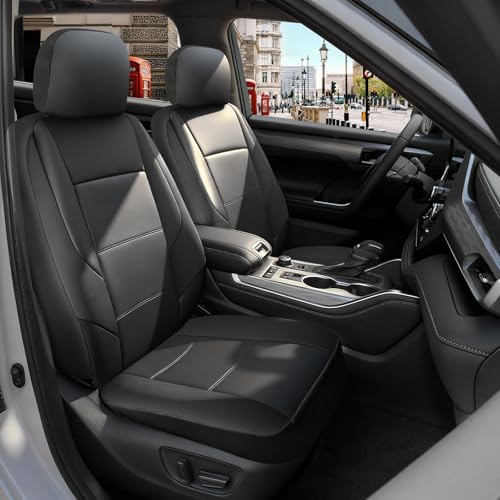
Compatible Models:Front car seat covers fit Toyota Rav4, Camry, Highlander, Corolla, Corolla Cross, Prius, Venza, Avalon(2-Pack)

MOST CAR OWNER'S OPTION WITH THE LUXURY PU LEATHER. Package Size: 15.74inch*11.81inch *3.93inch Weight:4.4LBS Per Package,11PCS Items Included. . One Set Package Including:2 front seats covers,2 backrest covers, 1 rear backrest cover, 1 rear bottom bench cover, 5 separate headrest covers, One bag of clips.
Real-World Rear-Seat Comfort: What Should You Expect?
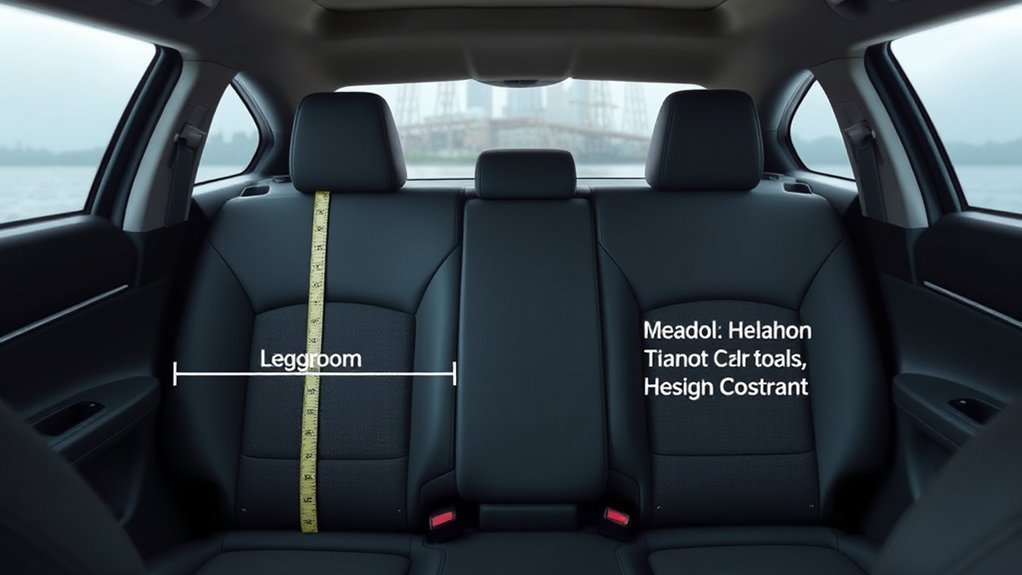
The published dimensions suggest that the outer rear seats should work well for two average-size adults. The 38-inch legroom figure provides a useful starting point, but each passenger should still check knee clearance, foot placement, cushion support, and the effect of the front-seat position.
The rear bench is less suitable for three full-size adults on a long journey. The center position is narrower, and every passenger must share the available lateral space. Three children, two adults with a smaller passenger, or three adults on a short trip may be more manageable than three large adults travelling for several hours.
Seat materials and contours differ by grade, and Toyota says the 2025 redesign included revised seat-cushion shape, density, and length. That does not make comfort universal, so a longer test drive is more useful than a brief showroom sit.
Rear-Seat and Cargo Flexibility
The 60/40-split rear seatback lets you fold one side while keeping the other side available for a passenger. This arrangement can help when carrying skis, flat-packed items, or other cargo that is too long for the 15.1-cubic-foot trunk alone. For the release procedure and pass-through details, see the Camry rear-seat folding guide.
Folding the smaller section preserves more seating, while folding the larger section creates a wider pass-through. However, the opening between the trunk and cabin is smaller than the rear opening of a hatchback or SUV. A bulky square item may not pass through even when its total volume appears to fit.
Before buying, test the actual items you expect to carry. Check the trunk opening, wheel-well intrusion, folded-seat angle, pass-through width, and whether the trunk hinges or rear shelf interfere with the load.
Secure long cargo so it cannot slide into the passenger area during sudden braking. Do not place items where they interfere with a child restraint, seat belt, airbag, or the driver’s rearward view.
How Does the Camry’s Rear Seat Compare With Competitors?
Among these 2025 models, the Camry’s 38.0 inches of published rear legroom sits between the Accord’s 40.8 inches and the Altima’s 35.2 inches. The 2025 RAV4 lists 37.8 inches, only 0.2 inch less than the Camry, but its taller body creates a different seating and entry geometry.
| Vehicle | Published rear legroom | Comparison with Camry |
|---|---|---|
| 2025 Toyota Camry | 38.0 inches | Baseline |
| 2025 Honda Accord | 40.8 inches | 2.8 inches more |
| 2025 Nissan Altima | 35.2 inches | 2.8 inches less |
| 2025 Toyota RAV4 | 37.8 inches | 0.2 inch less |
The RAV4 may feel more open to some passengers despite its slightly lower published legroom because its taller body allows a different seating position and entry geometry. In this four-vehicle comparison, the Accord has the largest published rear-legroom figure at 40.8 inches.
Manufacturer measurements may use different seating references, so small numerical differences should not be treated as a complete comfort ranking. Adjust the front seat to the same real-world position and sit in each vehicle before deciding.
Note: The links above are pinned to 2025 model-year manufacturer information where available. Measurement methods can still differ among manufacturers, so use the figures as a comparison aid rather than a complete comfort ranking.
[Amazon Products Picked for You]

【Rear Seat Filling Wedge Pillow】: The car rear seat booster cushion can fill the depression of the rear seat, improve the sitting posture, and enhance the comfort of resting and sleeping in the rear seat

Convertible car seat grows with your child from rear-facing harness (4-50 lb) to forward-facing harness (26.5-65 lb)

COMFORT AND SUPPORT - Made with high-density 100% pure memory foam, this car seat cushion offers unparalleled comfort and support. It quickly recovers to its original shape after use, avoiding deformation, and provides a soft yet firm seating experience. This seat cushion with back support pillow significantly reduces pressure on the buttocks, waist, and back, alleviating fatigue from long periods of sitting or driving
Frequently Asked Questions
How much rear legroom does a 2025 Toyota Camry have?
The U.S.-spec 2025 Toyota Camry has 38.0 inches of published rear legroom. Actual knee clearance also depends on the front-seat position, front-seatback shape, and each passenger’s body proportions.
Is the Toyota Camry suitable for tall rear passengers?
The 2025 Camry provides 38.0 inches of rear legroom and 37.6 inches of rear headroom. Tall-passenger comfort still depends on seated height, posture, and the front-seat position, so a test sit remains important.
How big is the back seat of a Toyota Camry?
The 2025 Camry seats three people in back and provides 38.0 inches of rear legroom, 37.6 inches of rear headroom, 55.7 inches of rear shoulder room, and 54.6 inches of rear hip room. Two adults should have practical space for regular travel; three adults share the narrower center position and lateral space.
Which has more rear legroom, the 2025 Camry or 2025 RAV4?
The 2025 Camry has 38.0 inches of rear legroom versus 37.8 inches in the 2025 RAV4, a 0.2-inch numerical difference. The RAV4’s taller body creates a different seating and entry geometry, so the small legroom gap does not predict which vehicle will feel roomier to every passenger.
Can a rear-facing child seat fit in a Toyota Camry?
Many rear-facing restraints can fit, but compatibility depends on the restraint’s shell, required recline angle, installation method, and the front passenger’s seat position. Test the intended restraint and follow both manufacturers’ instructions.
How much rear headroom does the 2025 Camry have, and does the moonroof change it?
Toyota lists 37.6 inches of rear headroom both without and with the moonroof. The moonroof reduces published front headroom from 38.3 to 37.5 inches, while the listed rear figure stays at 37.6 inches.
Can three adults fit in the Camry’s back seat?
Three adults can use the rear bench, but the center seat is narrower and all three passengers must share the available shoulder and hip space. It is more practical for short trips than for extended travel with three large adults.
Does the 2025 Camry’s rear seat fold down?
Yes. The 2025 Camry uses a 60/40-split folding rear seatback. You can fold either section to carry longer items while leaving the other section available for a passenger.
Conclusion
The 2025 Toyota Camry provides 38.0 inches of rear legroom, 37.6 inches of rear headroom, 55.7 inches of rear shoulder room, and 54.6 inches of rear hip room. Those figures make the rear seat practical for two adults or a family, while the narrower center position makes three-adult trips more dependent on passenger size and trip length.
The Honda Accord offers more measured rear legroom, while the comparable Altima offers less and the 2025 RAV4 is nearly equal on paper. Choose among them by testing more than one specification: set the front seats normally, sit in every position, install your intended child restraint, and bring any bulky cargo you regularly carry.
Sources
- Toyota 2025 Camry eBrochure — official rear headroom, legroom, shoulder room, hip room, passenger volume, trunk volume, seating capacity, rear-seat features, and USB-port specifications.
- Toyota USA Newsroom: 2025 Camry Launch — official seating, rear-vent, panoramic-roof, and cabin-design information.
- Honda Information Center: 2025 Accord vs. 2025 Altima — model-year-specific rear-legroom figures for both sedans.
- Nissan 2025 Altima Brochure — official 2025 Altima model information and specifications.
- Toyota: 2025 RAV4 vs. Honda CR-V — model-year-specific 2025 RAV4 rear legroom and other cabin dimensions.
- NHTSA Car Seats and Booster Seats — child-restraint selection, installation, tether, and vehicle-fit guidance.
- IIHS 2025 Toyota Camry Rating — LATCH ease-of-use rating and rear anchor layout.
