Last Updated: September 22, 2026
The Toyota Camry is a five-seat midsize sedan with two front seats and three rear seating positions. It works well for commuting, family errands, and road trips, but the rear center position is narrower than the two outer seats. Your actual comfort will depend on passenger size, trip length, model year, trim, and front-seat position.
Quick Answer
A Toyota Camry seats five people: two in front and three in back. Four adults will usually have the most comfortable long-distance layout because the rear middle seat is narrower and shares the available width with both outer passengers. For the 2026 U.S.-spec Camry, Toyota lists 38.0 inches of rear legroom, 55.7 inches of rear shoulder room, 54.6 inches of rear hip room, and 15.1 cubic feet of trunk space.
Key Takeaways
- The Toyota Camry has five designated seating positions.
- The two rear outer seats generally provide more usable space than the narrower middle position.
- The 2026 U.S. Camry has 38.0 inches of rear legroom, 55.7 inches of rear shoulder room, 54.6 inches of rear hip room, and a 15.1-cubic-foot trunk.
- Seat materials, power adjustments, heating, and ventilation vary by model year, trim, and option package.
- Never assume that three child restraints will fit safely just because the vehicle has five seating positions. Test the exact restraints and follow both instruction manuals.
Note: This guide uses the current 2026 U.S. Camry for specific measurements and equipment examples. Older Camrys and vehicles sold in other markets can have different dimensions, seat materials, anchor layouts, and features.
How Many People Fit in a Toyota Camry?
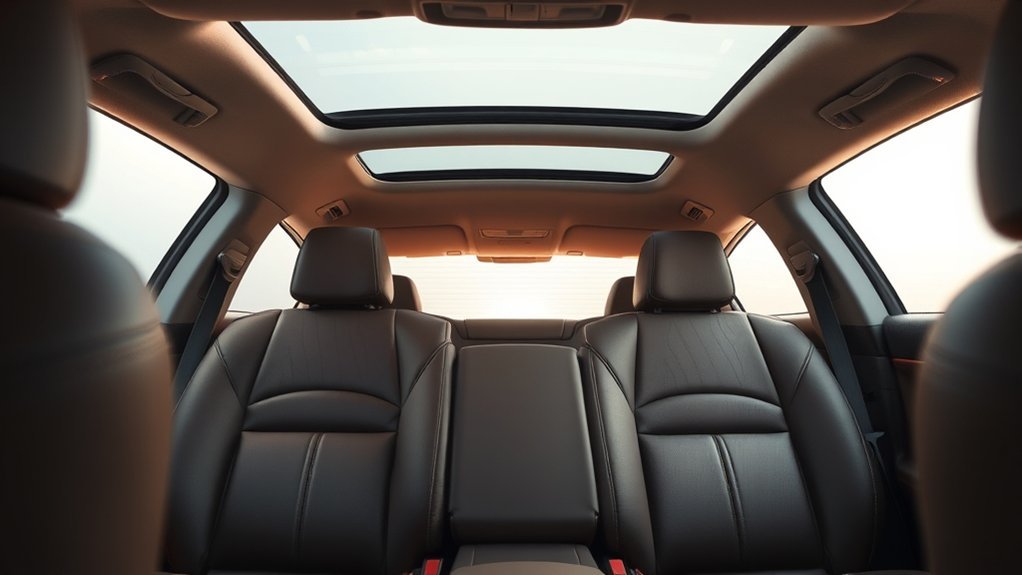
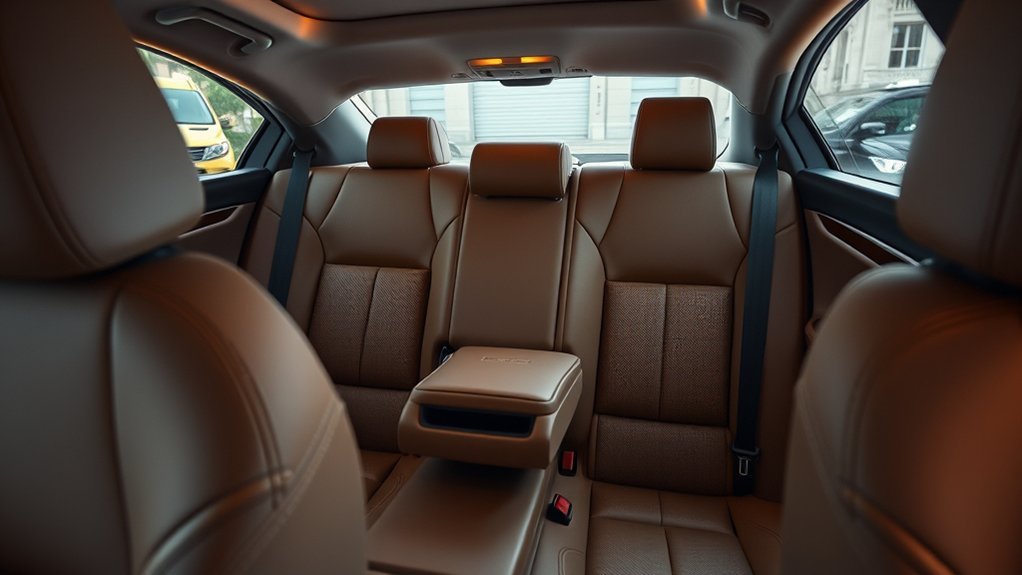
The Toyota Camry has two rows and five designated seating positions: the driver and one front passenger plus three rear passengers. The rear middle position provides the fifth seat, but all three people in back must share the rear bench’s available hip and shoulder room.
For the 2026 U.S. Camry, Toyota publishes the following key passenger and cargo measurements:
| Measurement | 2026 U.S. Camry | Why It Matters |
|---|---|---|
| Seating capacity | 5 | Two front positions and three rear positions |
| Front legroom | 42.1 in. | Shows the fore-aft space available to front occupants |
| Rear legroom | 38.0 in. | Helps indicate rear knee space behind the front seats |
| Rear headroom | 37.6 in. | Useful for evaluating clearance for taller rear passengers |
| Rear shoulder room | 55.7 in. | Shared across all three rear seating positions |
| Rear hip room | 54.6 in. | Helps explain why three adults sit closer together than two |
| Trunk capacity | 15.1 cu. ft. | Useful for luggage, groceries, and daily cargo |
| Rear seatback | 60/40 split-folding | Lets you trade part of the rear seating area for additional cargo length |
Those measurements explain the difference between rated capacity and real-world comfort. Two adults in the rear outer positions have the entire center area available between them. With three rear passengers, the same 55.7 inches of shoulder room and 54.6 inches of hip room must be shared across the full bench.
For daily school runs or short urban trips, three passengers can use the rear bench when everyone can sit correctly and buckle independently. For a long highway journey, four adults will usually be more comfortable than five because leaving the middle position empty gives the two rear passengers more personal space.
The Camry is rated for five people, but passenger size, front-seat position, and trip length determine whether five adults will be comfortable.
How Much Passenger Space Does a Camry Have?
The 2026 U.S. Camry provides 38.0 inches of rear legroom. Toyota also lists 55.7 inches of rear shoulder room and 54.6 inches of rear hip room. For a deeper breakdown of how those dimensions affect passenger fit, see the Toyota Camry rear-seat legroom and headroom guide.
Published dimensions provide a useful starting point, but actual knee and head clearance still depend on front-seat adjustment, passenger height, footwear, posture, and roof configuration. A tall driver who moves the seat far back will reduce the usable space behind that seat.
Before buying, place the driver’s seat in your normal position and then sit directly behind it. This gives you a more useful comfort test than reading a dimension alone.
Front-Seat Comfort
The front seats offer the most adjustment and personal space. Adjustment type varies by trim. Some Camrys use manual controls, while other versions add an eight-way power-adjustable driver’s seat, lumbar adjustment, memory settings, heating, or ventilation.
Check the exact window sticker or vehicle specification sheet instead of assuming that every Camry includes the same seat controls.
Rear-Seat Comfort
The rear outer positions generally provide the easiest arrangement for two adults because each passenger has a door-side seating position and the center space is left open. Rear-seat vents on the current U.S. Camry help circulate conditioned air, but feature availability on an older used Camry may differ.
The rear bench works well for children, teenagers, and two adults. Three adults can occupy the three designated seating positions, but the arrangement becomes tighter because all three occupants share the published rear shoulder and hip room.
What It’s Like to Sit in the Rear Middle Seat
The rear middle seat gives the Camry its fifth seating position, but it is usually the least spacious place in the cabin. The middle passenger sits between the contours of the two outer positions while sharing the rear bench’s total shoulder and hip room.
- The middle passenger may sit slightly higher than the outer passengers.
- The passenger should use the designated three-point seat belt correctly.
- Foot placement can be less natural because of the center floor area and the front console.
- Shoulder room becomes more limited when adults occupy both outer positions.
- The position is generally better suited to a smaller passenger or a shorter journey than the two outer seats.
Toyota lists 55.7 inches of rear shoulder room and 54.6 inches of rear hip room for the 2026 Camry. Those figures apply across the whole rear row, so a five-adult trip will feel different from carrying only two people in back.
Key Comfort Features of the Toyota Camry’s Seating
Camry seating equipment changes by year and trim. For 2026, the LE uses fabric seating, the SE and Nightshade use SofTex-and-fabric-trimmed seating, the XLE uses leather-and-Dinamica-microfiber trim, and the XSE uses leather-trimmed seating.
Depending on the trim and package, available comfort features can include:
- An eight-way power-adjustable driver’s seat
- Driver-seat lumbar support
- Heated front seats
- Ventilated front seats
- Driver-seat position memory
- A heated steering wheel
- Dual-zone climate control
- Rear-seat air vents
- A folding rear center armrest
Do not judge seat comfort from the trim name alone. Sit in the exact vehicle because upholstery, bolstering, seat adjustment, wheel-and-tire combinations, and suspension tuning can affect how the car feels to different occupants.
Fabric vs. SofTex and Leather: Which Is Right for You?
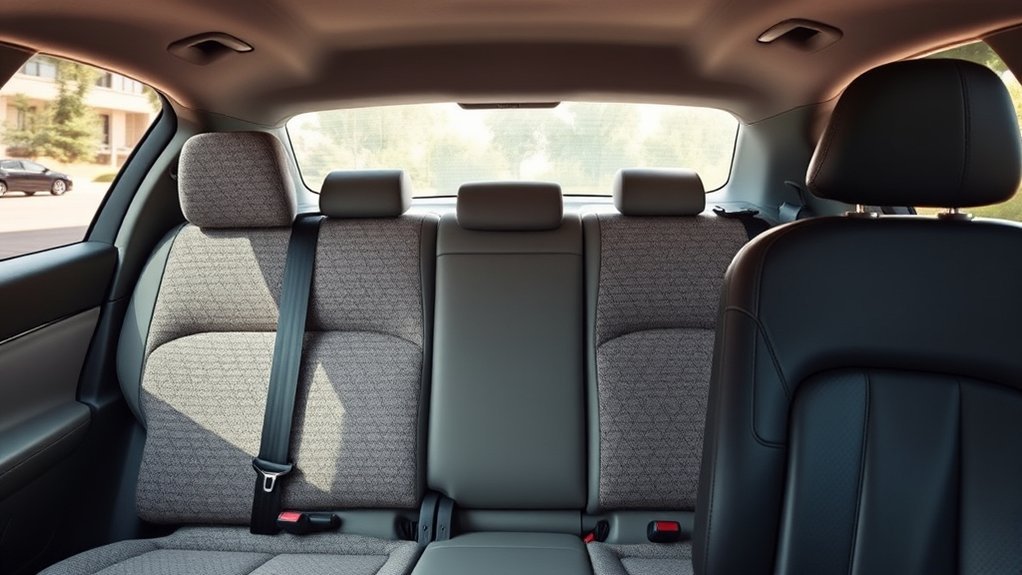
Toyota has used several seating materials across Camry generations. Depending on the year and trim, your choices may include fabric, SofTex-trimmed surfaces, microfiber inserts, leather-trimmed surfaces, or combinations of these materials.
Fabric Upholstery
Fabric often feels less hot after the car sits in direct sunlight and less cold during winter than a smooth non-fabric surface. Its texture can also provide more grip against clothing.
Its main drawback is that liquid and odors can penetrate the fibers. A fitted seat protector may help in a family vehicle, but it should never interfere with seat belts, airbags, occupant sensors, or child-restraint installation.
SofTex and Synthetic Trim
Synthetic-trimmed surfaces are generally straightforward to wipe after small spills and can provide a different look and feel from conventional fabric.
Use only cleaners approved for automotive upholstery and follow the vehicle-care instructions for the exact material. Strong solvents and abrasive brushes can discolor or damage interior surfaces.
Leather and Microfiber Trim
Leather-trimmed seating provides a different surface texture and appearance, while microfiber sections can add grip. Perforated areas used with ventilated seats require careful cleaning because liquid and debris can enter the openings.
Pro Tip: When comparing trims, sit in each material while wearing the type of clothing you normally drive in. Cushion shape, grip, bolstering, and adjustment range can affect comfort more than the upholstery label alone.
How Do the Camry’s Interior Dimensions Affect Comfort?
The 2026 Camry combines 38.0 inches of rear legroom with 55.7 inches of rear shoulder room and 54.6 inches of rear hip room. The legroom figure helps describe fore-aft space, while the shoulder and hip measurements help explain how much lateral room must be shared when three people occupy the rear row.
Published measurements cannot show exactly how your knees, shoulders, and head will fit. Seat height, cushion angle, torso length, front-seat position, and posture all affect perceived space.
Use these checks during a test drive:
- Set the steering wheel and driver’s seat before judging rear legroom.
- Sit behind both front seats because driver and passenger positions may differ.
- Check whether your knees touch the seatback.
- Confirm that your hair or head does not contact the roof liner.
- Fasten every occupied seat belt to check buckle access.
- If you regularly carry five people, test the rear row with all three intended passengers at the same time.
- Ride over an uneven road to evaluate cushion support and head movement.
Practical Tips for Maximizing Space in the Camry
The 2026 Camry provides 15.1 cubic feet of trunk capacity. You can use that space more effectively by organizing small items and folding part of the rear seat when you need additional cargo length. For more detail on usable cargo space and opening shape, see the Toyota Camry trunk-volume guide.
Optimize Cargo Organization
- Use a low-profile organizer to stop groceries and bottles from rolling.
- Keep emergency equipment against a trunk wall instead of in the center.
- Place heavier items low and close to the seatbacks.
- Do not stack cargo high enough to block rear visibility.
- Secure hard or heavy objects so they cannot enter the cabin during sudden braking.
The trunk opening and interior shape also matter. A bulky box can have less total volume than the trunk but still fail to pass through the opening. Measure the item and opening before relying on the published capacity.
Use the Folding Rear Seats
The 2026 Camry uses a 60/40 split-folding rear seatback. Folding one section can extend the loading area while preserving a rear seating position on the other side. Release procedures vary by generation, so see the Toyota Camry rear-seat folding guide for model-specific details.
The folded seatbacks may not create a completely flat floor. A step, slope, or narrow pass-through can make large furniture and rigid containers difficult to load.
Protect the seatbacks with a blanket when carrying objects with sharp edges. Keep cargo controlled and secure anything that could move forward during a sudden stop.
Can Three Car Seats Fit in a Toyota Camry?
Do not assume that three child restraints will fit safely across a Camry simply because the vehicle has three rear seating positions. Restraint width, shell shape, belt-path location, buckle access, front-to-back clearance, approved installation method, and the exact Camry generation all affect compatibility.
The 2025 Camry received a Good IIHS rating for LATCH ease of use, and the IIHS rating applies to 2025–2026 models. IIHS identifies two rear seating positions with complete LATCH hardware and a center seating position with a tether anchor but no dedicated lower anchors. That does not mean the center position cannot be used with a compatible restraint; it means you must follow the approved installation method in both manuals.
Warning: Never force three child restraints together, cover a buckle, borrow lower anchors from another seating position unless the vehicle and restraint instructions allow it, or combine lower anchors with a seat-belt installation unless both manufacturers specifically permit that setup. Follow the Camry owner’s manual and every restraint manufacturer’s instructions.
NHTSA advises parents to choose a restraint that fits both the child and the vehicle and notes that not all car seats fit in all vehicles. For a complete installation procedure, see the Toyota Camry car-seat installation guide.
How to Test a Three-Across Setup
- Record the year and trim of the Camry because rear-seat shapes and instructions can vary.
- Check the vehicle manual for approved lower-anchor, seat-belt, and tether positions.
- Check each child-restraint manual for installation, spacing, and contact rules.
- Install each restraint according to its approved method rather than relying on pressure from a neighboring restraint to hold it in place.
- For a tightly installed car seat, check movement at the belt path according to the restraint manufacturer’s instructions; NHTSA’s general installation guidance uses a limit of less than one inch side to side or front to back.
- Make sure every buckle, tether, belt path, and harness remains usable.
- Confirm that the front seats can remain in safe driving and passenger positions.
- Have the completed setup checked by a certified child passenger safety technician when possible.
A pair of child restraints plus one adult can also be uncomfortable or impractical if a restraint covers the center buckle or leaves too little usable shoulder room. Test the exact arrangement rather than estimating fit from vehicle width or restraint width alone.
Why the Toyota Camry Works for Families and Commuters
The Camry combines a five-person rating, useful rear legroom, a separate trunk, and a conventional two-row sedan layout. Those qualities can work well for commuters who occasionally carry coworkers and families that do not need a third seating row.
It is a practical match when you usually carry one to four people and prefer a sedan. It becomes less spacious when you regularly transport five adults, need several bulky child restraints, or carry tall cargo that would fit more easily through a hatchback or SUV opening.
Camry Seating Checklist Before You Buy
- Bring every regular passenger to the test drive when possible.
- Set the front seats to normal driving positions.
- Check knee, head, hip, and shoulder room in each rear position.
- If five people will travel regularly, test all three rear positions at the same time.
- Test entry and exit for older adults or passengers with limited mobility.
- Install your actual child restraints instead of judging by width alone.
- Fold the rear seats and measure the cargo opening for large items.
- Verify upholstery and comfort features on the exact vehicle’s window sticker.
Frequently Asked Questions
How big is the backseat of a Toyota Camry?
The 2026 U.S. Camry provides 38.0 inches of rear legroom, 37.6 inches of rear headroom, 55.7 inches of rear shoulder room, and 54.6 inches of rear hip room. Two adults generally have the easiest arrangement in the outer positions because three rear passengers must share the available width.
Can five people fit in a Toyota Camry?
Yes. The Camry has five designated seating positions: two in front and three in back. Five people can occupy those positions when everyone can sit and buckle correctly, but four adults usually have more space on a long trip because the rear middle position is narrower.
Can three car seats fit in the back of a Toyota Camry?
Do not assume a three-across setup will fit from seating capacity or restraint width alone. In the 2025–2026 Camry, IIHS identifies complete LATCH hardware in the two outer rear positions and a center tether anchor without dedicated lower anchors. Test the exact restraints and follow the Camry and restraint manuals for each installation position.
What is the seating capacity of the Camry?
The Toyota Camry’s seating capacity is five: the driver, one front passenger, and three rear passengers.
Do Toyota Camry rear seats fold down?
The 2026 Camry has a 60/40 split-folding rear seatback that extends the usable cargo length. Procedures and configurations on older Camrys can differ, and the resulting load surface may have a slope or step.
Do all Toyota Camrys have rear air vents?
The current 2026 U.S. Camry includes rear-seat vents with its dual-zone automatic climate-control system. Older model years and vehicles sold in other markets can differ, so check the equipment list for the exact vehicle.
Conclusion
The Toyota Camry seats five people, but rated capacity and long-distance comfort are not the same thing. In the 2026 model, Toyota lists 38.0 inches of rear legroom, 55.7 inches of rear shoulder room, and 54.6 inches of rear hip room. Two adults in the rear outer positions therefore have more personal space than three adults sharing the full bench.
If passenger fit matters to your purchase, set the front seats where the regular driver and passenger actually use them, then test every rear seating position. Families should install their exact child restraints before assuming that a three-across arrangement will work, and buyers should verify the equipment on the specific model year and trim they are considering.
Sources
- Toyota 2026 Camry overview — current U.S. trim, upholstery, climate-control, and seating-feature information
- Toyota Camry specifications and comparison data — current seating capacity, passenger dimensions, cargo capacity, and folding-seat information
- Insurance Institute for Highway Safety: 2025 Toyota Camry — LATCH ease-of-use rating and rear anchor layout applying to 2025–2026 models
- National Highway Traffic Safety Administration: Car Seats and Booster Seats — restraint selection, vehicle fit, installation, and inspection guidance
