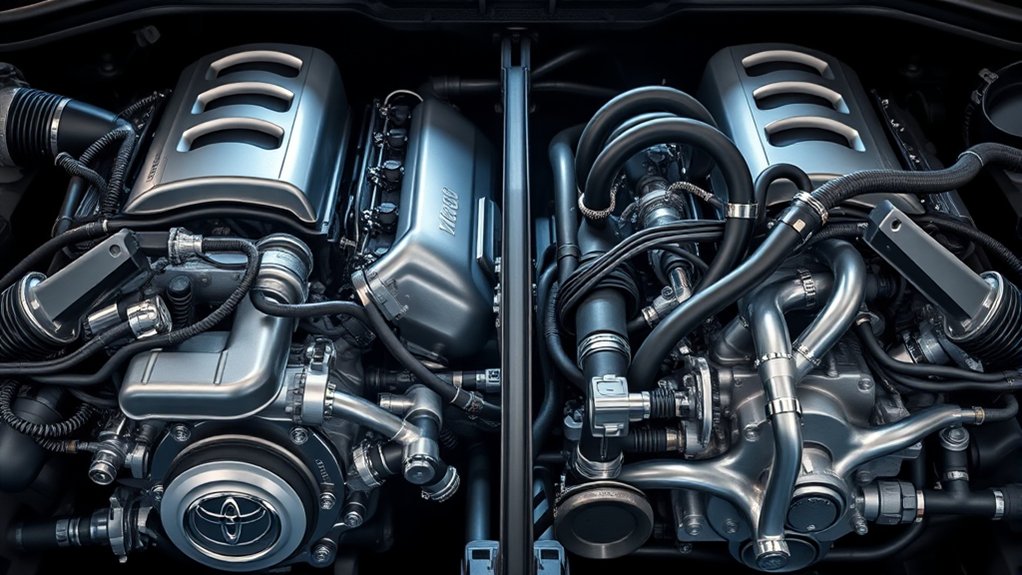
For many recent Toyota Camry engines, direct injection versus port injection is not an either/or choice: Toyota’s D-4S system uses both. Direct injection sprays fuel into the combustion chamber for precise fuel control and charge cooling. Port injection sprays fuel into the intake port near the intake valve, giving the engine another way to form the air-fuel mixture while also passing fuel across the valve area.
The exact setup still depends on the Camry’s year, engine, and market. Older Camrys and regional versions can use different fuel systems, so identify the exact engine before ordering injectors, pumps, or other fuel-system parts.
Last updated: September 22, 2026 — current Camry powertrain information and D-4S technical references were rechecked.
Quick Answer
Many recent Toyota Camry engines use D-4S dual injection, which combines direct injection and port injection. Direct injection sprays fuel into the combustion chamber, while port injection sprays fuel near the intake valves. The engine computer can use one system or both according to operating conditions. Port injection also gives fuel a path across the intake-valve area, reducing one of the main intake-deposit concerns associated with DI-only engines.
Key Takeaways
- Direct injection gives the ECU precise control over fuel delivered inside the combustion chamber, but DI-only engines do not wash fuel across the intake valves.
- Port injection sprays fuel upstream of the combustion chamber and gives fuel a path across the intake-valve area.
- Toyota’s D-4S system combines both methods, but its exact strategy changes with engine design, temperature, speed, load, and calibration.
- Do not assume every Camry uses the same fuel system. Check the model year, engine code, market, VIN information, or Toyota service data.
- Injector deposits and intake-valve deposits are not the same problem and may require different diagnosis or cleaning methods.
Which Toyota Camry Engines Use D-4S?
Toyota has used different fuel-injection systems across Camry generations and markets, so there is no single answer for every Camry ever sold. The verified examples below show why the model year and engine matter.
| Verified Camry Example | Engine / System | What the Source Confirms |
| 2018 U.S. Camry 2.5L | A25A-FKS / D-4S | An EPA/SAE benchmark identifies both port fuel injection and gasoline direct injection on the A25A-FKS. EPA/SAE Camry engine benchmark. |
| 2024 U.S. Camry | 2.5L four-cylinder and 3.5L V6 applications | Toyota identifies D-4S on the four-cylinder and D-4S on the available V6. Toyota USA 2024 Camry overview. |
| 2026 Canada Camry Hybrid | 2.5L Dynamic Force four-cylinder / D-4S dual injection | Toyota Canada lists D-4S Dual-Injection on every 2026 Camry Hybrid trim shown in its current lineup. Toyota Canada 2026 Camry. |
| 2026 U.S. Camry | 2.5L four-cylinder hybrid powertrain | Toyota USA identifies the 2026 Camry as an all-hybrid model. For parts or service work, confirm the exact market specification and engine through Toyota documentation or the VIN rather than assuming another market is identical. Toyota USA 2026 Camry. |
Scope note: This guide is a source-based technical explainer. It does not claim a hands-on engine teardown, injector flow test, or long-term ownership test.
Direct Vs. Port Injection: What You Need to Know
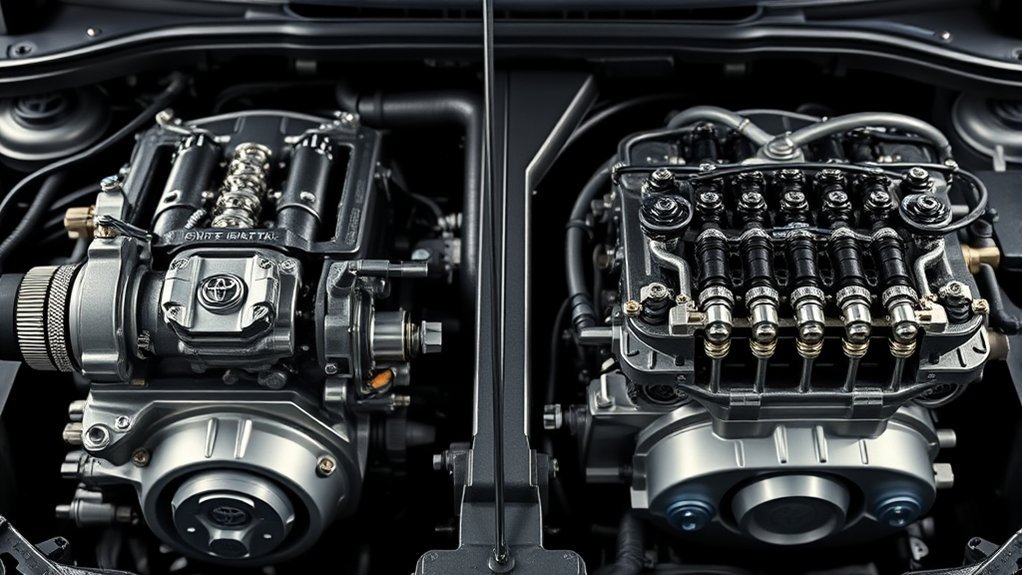
Direct injection, often called DI or GDI, sends fuel straight into the combustion chamber. This lets the engine computer control fuel timing and quantity very precisely. Direct injection can also cool the in-cylinder charge as fuel vaporizes, supporting knock control and higher-compression engine designs.
Port injection, often called PI or PFI, sprays fuel into the intake port near the intake valve. The fuel and air begin mixing before entering the cylinder. Because fuel passes across the intake-valve area, PFI provides a fuel-washing path that DI-only engines lack.
Toyota D-4S combines both systems. The engine has port injectors and direct injectors, and the ECU controls their operation according to the specific engine calibration and conditions such as temperature, speed, and load. D-4S therefore should not be reduced to a universal rule such as “port injection at low speed and direct injection at high speed.”
Note: Camry fuel systems vary by model year, engine, and market. A 4-cylinder Camry, V6 Camry, hybrid Camry, and non-U.S. Camry may not use the same injection setup. Always verify your exact vehicle before buying parts or planning service.
Advantages of Direct Injection in Engine Performance
Direct injection helps an engine meter fuel precisely inside the cylinder. The ECU can vary injection timing, quantity, and strategy as operating conditions change. This gives engineers more control over combustion than a fuel system that can inject only upstream of the intake valve.
Fuel vaporizing inside the cylinder also cools the charge. That cooling can improve knock resistance and is one reason direct injection can support high-compression engine designs when combined with the rest of the engine’s combustion strategy.
Direct injection is best understood as a combustion-control tool. It can support power and efficiency, but it also adds high-pressure fuel-system hardware and does not wash fuel across the intake valves.
The trade-off is complexity. DI systems require high-pressure fuel delivery and specialized injectors. In a DI-only engine, fuel also bypasses the back of the intake valves. SAE research describes intake-valve deposits as a known GDI concern because the normal PFI fuel-washing process is absent. SAE 2016-01-2252.
How Port Injection Helps Mitigate Carbon Build-Up
Port injection sprays fuel upstream of the combustion chamber, allowing it to pass across the intake-valve area before the mixture enters the cylinder. That fuel path can reduce the intake-valve deposit problem associated with engines that rely only on direct injection.
This does not mean port injection keeps every engine perfectly clean. Intake deposits can involve engine-oil material, PCV flow, operating conditions, engine wear, and other contaminants. The main distinction is that PFI restores a fuel-washing path that DI-only operation lacks.
Port injection helps reduce DI-related intake-valve concerns in several ways:
- It lets fuel pass over the intake-valve area before combustion.
- It provides another method of preparing the air-fuel mixture before it reaches the cylinder.
- It avoids the complete absence of intake-valve fuel washing found in a DI-only layout.
- It can work alongside direct injection in a dual-injection system such as Toyota D-4S.
The Toyota D-4S System: Combining Direct and Port Injection
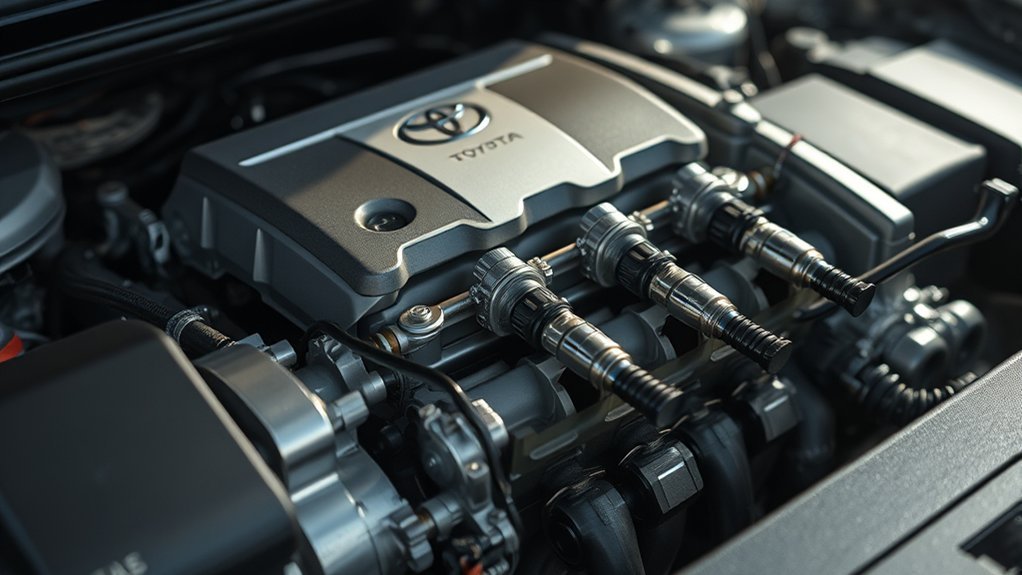
Toyota’s D-4S system uses both port and direct injectors. Toyota lists D-4S among the technologies in its Dynamic Force engine family together with high-speed combustion and multi-hole direct injectors. You can review Toyota’s technical overview here: Toyota Global Dynamic Force Engine overview.
In simple terms, D-4S gives the ECU more than one way to deliver fuel. Port injection provides upstream mixture preparation and a fuel path across the intake-valve area. Direct injection provides precise in-cylinder delivery and charge cooling. The exact split is calibration-specific rather than fixed across every Toyota engine.
A useful Camry-specific example comes from an EPA/SAE benchmark of the 2018 A25A-FKS. During that test program, both PFI and GDI were used in the low-load region, while GDI was used at high load. The study also found that injection mode changed with coolant temperature. That example shows why a universal “port at low RPM, direct at high RPM” description is too simplistic. Read the A25A-FKS benchmark.
For Camry owners, verification still matters. Check the exact engine and market through the owner’s manual, under-hood emissions label, VIN-based Toyota information, or factory service data before choosing fuel-system parts.
How D-4S Supports Fuel Efficiency
D-4S gives the engine computer more control over mixture preparation, but the injection system is only one part of overall efficiency. Compression ratio, combustion-chamber design, valve timing, exhaust-gas recirculation, thermal management, friction reduction, hybrid operation where applicable, and vehicle calibration also affect fuel consumption.
Toyota’s Dynamic Force technical information lists D-4S alongside high-speed combustion, high compression ratios, variable cooling, low-friction measures, and emissions-control technologies. It is therefore more accurate to treat D-4S as one element of the engine’s efficiency strategy rather than the sole reason for its fuel economy.
How D-4S Affects Carbon Build-Up
A major advantage of having port injectors available is the fuel path across the intake-valve area. SAE research on GDI engines identifies the lack of that fuel-washing process as an important factor in intake-valve deposit formation.
D-4S does not make all deposits impossible. Engine oil and PCV-related material can still contribute to deposits, and injector, ignition, airflow, or mechanical faults can create similar drivability symptoms. Diagnose the cause rather than assuming carbon buildup from symptoms alone.
How D-4S Chooses an Injection Strategy
The driver does not manually select port or direct injection. The ECU controls injection mode according to the engine’s calibration and operating conditions.
Depending on the engine, the ECU may use port injection, direct injection, or both. Temperature and load can also change the strategy. The 2018 Camry A25A-FKS benchmark is one documented example, but its exact map should not be assumed to apply unchanged to every D-4S engine or model year.
Comparing Direct Injection and Port Injection
Direct injection and port injection solve the fuel-delivery problem in different ways. DI emphasizes precise in-cylinder control and charge cooling. PFI offers upstream mixture preparation and fuel washing across the intake-valve area. D-4S combines both architectures so the ECU has more options.
| System | How It Works | Main Strength | Main Trade-Off |
| Direct injection | Sprays fuel directly into the combustion chamber. | Precise in-cylinder fuel control and charge cooling. | No fuel washing across intake valves during DI-only operation, plus high-pressure-system complexity. |
| Port injection | Sprays fuel into the intake port before the combustion chamber. | Upstream mixture preparation and a fuel-washing path across the intake-valve area. | Does not provide the same direct control over where and when fuel enters the cylinder. |
| Toyota D-4S | Uses both port and direct injectors under ECU control. | Gives the engine multiple fuel-delivery strategies while retaining an intake-valve fuel-washing path. | More components and a more complex diagnostic process than a port-only system. |
How Fuel Injection Affects Engine Efficiency
Fuel injection influences how fuel mixes with air, where evaporation occurs, how combustion is controlled, and how easily an engine can resist knock. DI, PFI, and D-4S approach those jobs differently, while the complete engine design determines the final fuel-economy result.
Fuel Atomization and Mixture Preparation
Atomization means breaking fuel into small droplets so it can vaporize and mix with air. Direct injection delivers fuel under high pressure inside the cylinder. Port injection introduces fuel upstream, giving the mixture time to form before entering the combustion chamber.
D-4S gives the ECU access to both delivery paths. The exact strategy is determined by the engine calibration rather than by one fixed rule that applies to every Toyota.
Charge Cooling and Knock Control
With direct injection, fuel vaporizing inside the cylinder can cool the incoming charge. That can improve knock resistance and help engineers use a higher compression ratio as part of the engine’s overall design.
Cooling and knock control also depend on valve timing, ignition timing, exhaust-gas recirculation, intake temperature, fuel octane, combustion-chamber design, and other factors. Injection strategy should not be treated in isolation.
Fuel Injection and Emissions Control
Modern engines manage emissions through a combination of fuel control, ignition strategy, oxygen or air-fuel-ratio sensors, catalytic aftertreatment, exhaust-gas recirculation where fitted, temperature control, and ECU calibration.
The EPA Automotive Trends Report tracks fuel-economy, emissions, and vehicle-technology trends and provides broader context for how powertrain technologies work together rather than independently.
What D-4S Feels Like in Daily Driving

D-4S mode selection is automatic. The driver does not choose between port and direct injection, and normal operation should not require any special input from the driver.
If a Camry develops rough idle, hesitation, misfires, hard starting, fuel odor, or reduced fuel economy, those symptoms do not prove that D-4S or carbon buildup is at fault. Ignition components, fuel pressure, injectors, vacuum leaks, sensors, airflow problems, and mechanical engine condition can create similar symptoms.
For a broader diagnostic path, see Toyota Camry rough idle causes and fixes. For general injector operation, cleaning, and failure diagnosis, see Toyota Camry fuel injection explained.
Maintenance Tips for Dual Injection Systems
You cannot manually control when a D-4S engine uses port injection, direct injection, or a combination of both. Maintenance should focus on the fuel, oil, ignition, intake, and emissions systems that allow the ECU to control combustion correctly.
- Use the fuel grade specified for your exact model and market.
- Where available, consider TOP TIER approved gasoline; the program sets detergent-performance standards intended to control fuel-system and engine deposits.
- Follow Toyota’s oil-change schedule and use the specified oil grade and specification.
- Replace scheduled ignition and filtration items according to the maintenance guide for the exact vehicle.
- Do not ignore rough idle, hesitation, misfires, hard starts, fuel odor, or warning lights.
- If intake deposits are suspected, diagnose the cause before buying cleaners or authorizing an induction service.
Injector cleaning is not the same as intake-valve cleaning. A fuel-tank additive travels through the fuel system. On a DI-only engine, tank fuel is injected inside the combustion chamber and therefore does not directly wash the back of the intake valves. D-4S engines also have port injectors, but a drivability problem still needs diagnosis before assuming deposits are the cause.
Warning: Direct-injection fuel systems operate at high pressure. Do not loosen high-pressure fuel lines, remove DI injectors, or open the high-pressure side without the correct training, tools, service information, and depressurization procedure.
Pro Tip: If you are unsure which system your Camry uses, start with Toyota documentation, then confirm the vehicle by VIN and engine code before ordering parts. Toyota provides manuals and warranty information here: Toyota Owners Manuals and Warranties.
How to Identify Which Injection System Your Camry Has
The safest way to identify your Camry’s injection system is to verify the exact year, engine, and market. Do not rely only on the model name “Camry,” because Toyota has used different engines and injection strategies across generations and regions.
- Check Toyota documentation: Start with the owner information and specifications for the exact model year and market.
- Check the under-hood emissions label: Use its engine-family information when matching factory service data.
- Use the VIN: A Toyota dealer or VIN-based Toyota parts/service system can identify the exact vehicle configuration.
- Confirm the engine code: The full engine code is more useful than displacement alone. For an explanation of common older Camry codes, see Toyota Camry engine codes explained.
- Verify before buying parts: Direct injectors, port injectors, pumps, fuel rails, seals, electrical connectors, and service procedures can differ.
When Carbon Build-Up May Need Attention
Intake-valve deposits do not always create obvious symptoms immediately. If deposits become severe enough to disrupt airflow or combustion, the engine may develop drivability problems.
Possible symptoms include:
- Rough or unstable idle
- Misfire codes or a flashing check-engine light
- Hesitation during acceleration
- Reduced fuel economy
- Hard starting
- Loss of smoothness at low speeds
None of these symptoms proves that carbon deposits are present. Spark plugs, ignition coils, injectors, fuel pressure, vacuum leaks, airflow sensors, purge-system faults, wiring, or mechanical engine problems can produce similar symptoms. Scan and test the vehicle before choosing a cleaning procedure or replacing parts.
Frequently Asked Questions
Does Toyota use direct or port injection?
Toyota uses different fuel-injection systems depending on the engine, model year, and market. Some engines use port injection, some use direct injection, and many newer engines use D-4S dual injection, which combines both.
Which is better, direct injection or port injection?
The systems have different strengths. Direct injection provides precise in-cylinder fuel control and charge cooling. Port injection provides upstream mixture preparation and a fuel-washing path across the intake-valve area. D-4S combines both approaches so the ECU can use more than one fuel-delivery strategy.
How do I know if my Camry is direct injection or port injection?
Verify the model year, market, full engine code, and VIN-based Toyota information. Do not assume the fuel system from the Camry name alone because Toyota has used different engines across generations and regions.
How does Toyota’s D-4S dual injection system work?
D-4S equips the engine with both port and direct injectors. The ECU controls their use according to the engine’s calibration and operating conditions. Depending on the engine and conditions, it may use direct injection, port injection, or both rather than following one fixed strategy.
Does the 2026 Toyota Camry use D-4S?
Toyota Canada lists the 2026 Camry Hybrid’s 2.5-liter Dynamic Force four-cylinder as D-4S Dual-Injection. Toyota USA lists the 2026 Camry as an all-hybrid 2.5-liter model. Because specifications and documentation can differ by market, verify the exact vehicle and VIN before buying injection-system parts or using a market-specific repair procedure.
Does D-4S prevent all carbon build-up?
No. D-4S restores a port-fuel path across the intake-valve area, reducing an important DI-only deposit concern, but engine oil, PCV-related material, operating conditions, wear, and other contaminants can still contribute to deposits.
Can fuel additives clean direct-injection intake valves?
A fuel-tank additive follows the fuel path. In a DI-only engine, fuel is injected directly into the cylinder, so the additive does not directly pass over the back of the intake valves. It may affect deposits in areas the treated fuel reaches, but injector cleaning and intake-valve cleaning should not be treated as the same service.
Conclusion
For many recent Camrys, the direct-versus-port question has a dual answer: Toyota D-4S uses both. Direct injection gives the ECU precise in-cylinder fuel control and charge cooling, while port injection provides upstream mixture preparation and a fuel path across the intake-valve area.
The exact fuel system still depends on the Camry’s year, engine, and market. Confirm the vehicle before ordering parts or following a service procedure. If your concern is rough running, misfires, or suspected deposits, diagnose the actual fault rather than assuming that direct injection or carbon buildup is automatically responsible.
Sources
- Toyota Canada: 2026 Camry — identifies the current 2.5-liter Dynamic Force Camry Hybrid engine as D-4S Dual-Injection.
- Toyota USA: 2026 Camry — supports the current U.S. all-hybrid Camry powertrain context.
- Toyota USA: 2024 Camry overview — supports D-4S use on verified U.S.-market four-cylinder and V6 applications.
- EPA/SAE: Benchmarking a 2018 Toyota Camry 2.5-liter A25A-FKS — supports the Camry-specific PFI/GDI architecture and documented injection-mode behavior.
- Toyota Global: Dynamic Force Engine overview — supports D-4S, compression-ratio, combustion, and engine-technology context.
- Toyota Owners: Manuals and Warranties — supports using vehicle-specific Toyota documentation.
- SAE International: Formation of Intake Valve Deposits in Gasoline Direct Injection Engines — supports the GDI intake-valve-deposit and fuel-washing discussion.
- TOP TIER Approved Fuel — supports detergent fuel-performance and deposit-control guidance.
- EPA Automotive Trends Report — supports broader fuel-economy, emissions, and vehicle-technology context.
