
A Toyota Camry alternator on an applicable non-hybrid model powers the 12-volt electrical system and recharges the battery while the engine runs. Common warning signs are a charging-system light, dim or flickering lamps, slow accessories, repeated battery discharge, and belt-area noise. Test the battery, belt, cables, grounds, fuses, charging output, voltage drop, and ripple before replacing the alternator. Camry Hybrid models use motor-generators and a DC-DC converter instead; the U.S. 2025 and 2026 Camry lineups are hybrid-only.
Quick Answer
On an applicable non-hybrid Toyota Camry, the alternator powers the 12-volt electrical system and recharges the battery while the engine runs. Warning signs include a charging light, dim lamps, slow accessories, belt-area noise, and repeated battery discharge. U.S. 2025 and 2026 Camrys are hybrid-only and do not use this conventional alternator.
Key Takeaways
- Confirm the Camry’s model year, market, and powertrain before looking for an alternator or following conventional charging-system instructions.
- U.S. 2025 and 2026 Camrys are hybrid-only; earlier Camry Hybrid models also do not use a conventional belt-driven alternator.
- A charging-system warning does not prove that the alternator itself has failed.
- Inspect and test the battery, drive belt, cables, grounds, fuses, connectors, and charging circuit before replacing parts.
- Use the VIN and original part number to match output, pulley, plug, regulator, and mounting details.
- Never disconnect a battery cable while the engine is running or reverse the polarity during testing or jump-starting.
Last updated: September 22, 2026 — rechecked U.S. 2025–2026 hybrid-only coverage, DENSO charging-system test guidance, replacement-cost data, internal links, and schema compliance.
At a Glance
| Time Required | About 15–30 minutes for preliminary visual, battery, warning-lamp, and multimeter checks |
| Difficulty | Beginner for visual checks; intermediate or professional for load, voltage-drop, ripple, and control-circuit testing |
| Tools Needed | Digital multimeter, flashlight, eye protection, gloves, battery tester or charger when available, and the correct model-year service information |
| Cost | No added cost if you already own the needed test equipment; shop diagnostic and replacement charges vary by vehicle and location |
Understanding the Function of an Alternator
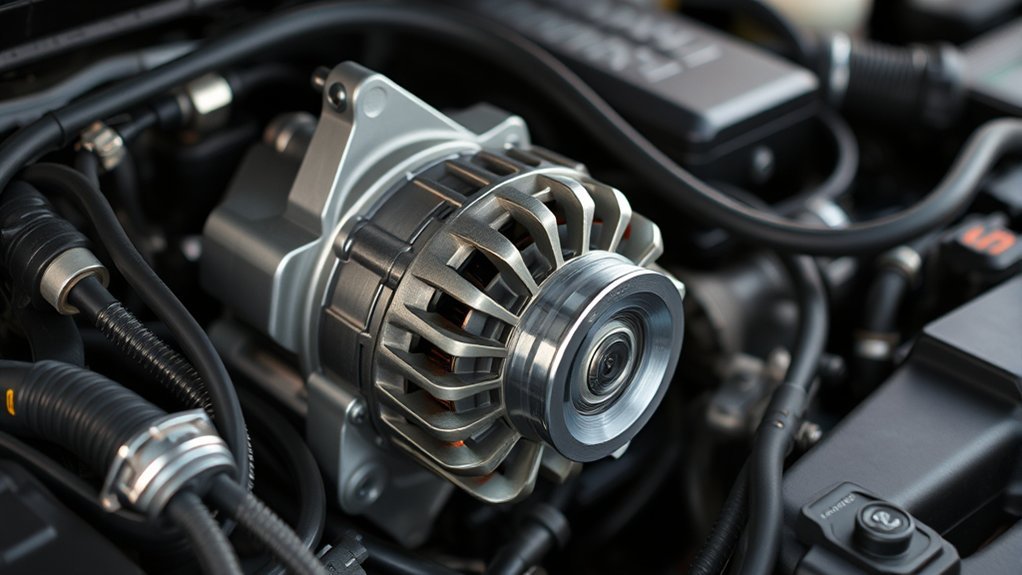
On a non-hybrid Toyota Camry with a conventional charging system, the engine turns the alternator through the serpentine belt. Inside the alternator, the rotor and stator generate alternating current. Diodes in the rectifier convert that output into direct current for the vehicle’s 12-volt electrical system.
The voltage regulator adjusts alternator output as engine speed, battery condition, temperature, and electrical demand change. According to DENSO’s alternator overview, the alternator supplies electrical loads and recharges the battery during normal driving. The battery can temporarily supply additional current when electrical demand exceeds alternator output.
The battery starts a conventional gasoline engine. After startup, the alternator supports the electrical system and restores the energy used during cranking.
The starter motor does not normally receive its cranking power directly from the alternator. It draws high current from the battery. A weak charging system can still cause later starting trouble because it may leave the battery undercharged.
Does Every Toyota Camry Have an Alternator?
No. Many earlier gasoline-only Camry models use a conventional belt-driven alternator. Camry Hybrid models use high-voltage motor-generators and a DC-DC converter to support the electrical system and maintain the 12-volt battery. For the hybrid power path, see our Camry Hybrid inverter and DC-DC converter guide. Toyota’s current U.S. Camry page describes the 2026 Camry as having an all-hybrid powertrain.
Which Camry Models Use a Conventional Alternator?
- U.S. 2025 and 2026 Camry: Hybrid-only; these vehicles do not use the conventional belt-driven alternator described in this guide.
- Earlier Camry Hybrid models: Use hybrid motor-generators and a DC-DC converter rather than a conventional alternator.
- Earlier gasoline-only Camry models: Commonly use a belt-driven alternator, but the design and specifications differ by year and engine.
- Camrys sold outside the United States: Powertrain availability may differ, so verify the vehicle by VIN, market, and engine.
Note: Before testing or ordering parts, select the exact year and model in Toyota’s manual lookup. Do not assume that instructions for one Camry generation, powertrain, or market apply to another.
Why Your Toyota Camry’s Alternator Is Essential
A working alternator supplies power for the ignition system, engine controls, fuel system, lights, climate-control electronics, infotainment system, and other 12-volt equipment after the engine starts. It also restores the battery charge used during startup.
If alternator output falls below the vehicle’s electrical needs, the battery begins supplying the shortage. The vehicle may continue running for a limited time, but its stored battery energy will fall. Lights can dim, accessories may slow, warning indicators may appear, and the engine may eventually shut off.
Excessive charging can also cause problems. A faulty regulator, sensing circuit, battery, or connection may allow overcharging that damages the battery or stresses electronic components. Diagnosis therefore needs to check for low, high, intermittent, and unstable output.
An alternator does not have one dependable replacement mileage. Heat, bearing wear, belt condition, fluid contamination, battery health, electrical demand, and connection resistance all influence its service life. Test the charging system when symptoms appear instead of replacing the alternator at an arbitrary mileage. For the lifespan question in more depth, see our Toyota Camry alternator lifespan guide.
Common Signs of a Failing Alternator
A failing alternator can produce several symptoms, but none proves that the alternator is the only cause. A weak battery, slipping belt, corroded cable, poor ground, blown fuse, damaged connector, parasitic draw, or charging-control fault can create similar behavior.
- Charging-system warning light: A battery-shaped or charging warning may remain on after startup or appear while driving.
- Dim or flickering lights: Headlights, interior lamps, or dashboard lighting may change brightness, especially at idle or when several accessories are operating.
- Slow electrical accessories: Power windows, blower motors, heated seats, or other equipment may operate more slowly than usual.
- Repeated battery discharge: A battery that tests healthy but repeatedly loses charge may not be receiving enough charging current, although an electrical draw while parked can cause the same complaint.
- Whining, grinding, or squealing: Noise near the belt drive may come from alternator bearings, a pulley, the tensioner, an idler, or the belt itself.
- Burning odor: A slipping belt, overheated terminal, damaged wiring, or an internal electrical fault may produce a hot-rubber or electrical smell.
- Engine hesitation or shutdown: Severe charging-system failure may reduce voltage to engine-control and fuel-system components after the battery becomes depleted.
- Hard starting or no start: The battery may lack enough stored energy after repeated undercharging.
DENSO lists warning-light illumination, dim or flickering headlights, slow accessories, abnormal noise, battery drainage, hard cranking, poor running, and possible stalling among signs of charging-system trouble. These symptoms should begin a diagnosis rather than trigger automatic alternator replacement.
If the dashboard warning is your main symptom, use our Toyota Camry charging-system warning light guide for a warning-specific diagnostic path. This article focuses on the broader alternator, testing, replacement, and fitment decision.
Diagnosing Alternator Issues in Your Camry
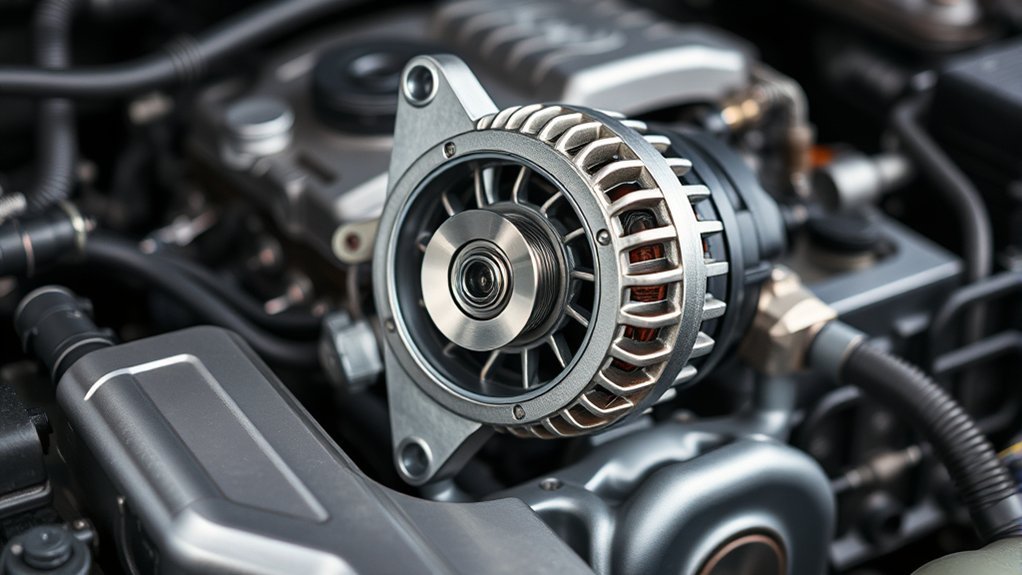
Use a symptom-led process before buying an alternator. Begin with safe visual checks, confirm that the battery can support valid testing, and compare every electrical measurement with the procedure and specifications for the exact Camry.
Warning: Never disconnect a battery cable while the engine is running. Do not reverse battery polarity or connect jump leads incorrectly, because voltage spikes or reverse current can damage alternator diodes and vehicle electronics. Keep loose clothing, jewelry, hair, hands, and test leads away from moving belts, fans, and pulleys. Do not perform conventional alternator procedures on hybrid high-voltage components.
[Amazon Products Picked for You]

[Replacement Numbers] 104210-2650, 1042102651, 104210-2651, 11516, 11516A, 11516N, 2100735, 210-0735, 2139298, 213-9298, 270600V060, 27060-0V060, 270600V06084, 27060-0V060-84, 2905542, 290-5542, A80542, A-80542, AL3367X, 1042102650
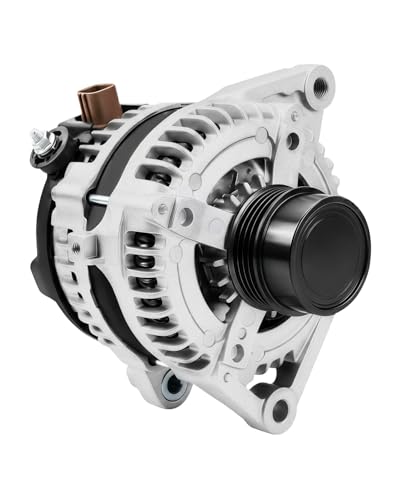
【Replacement Part Numbers】104210-2650, 1042102651, 104210-2651, 11516, 11516A, 11516N, 2100735, 210-0735, 2139298, 213-9298, 270600V060, 27060-0V060, 270600V06084, 27060-0V060-84, 2905542, 290-5542, A80542, A-80542, AL3367X, 1042102650, 90295768

[CAR BATTERY TESTER] You may wonder if the battery needs to be replaced or just needs recharging. Our car battery checker tell you the battery health by battery and alternator test. Save your trip and money by avoiding sending good batteries to car manufacturers.
1. Confirm the Model Year and Powertrain
Check the VIN, owner’s manual, engine compartment, or official parts catalog. Conventional-alternator instructions apply only when the Camry actually has a belt-driven alternator. Hybrid charging systems require hybrid-specific procedures, suitable diagnostic equipment, and appropriate high-voltage training.
2. Inspect the Battery, Belt, and Connections
With the engine off and cool, inspect the following:
- Battery terminals for looseness, corrosion, damaged clamps, or swollen cables
- Engine and body grounds for corrosion, looseness, or broken strands
- The serpentine belt for cracks, glazing, oil contamination, fraying, misalignment, or poor tension
- The alternator plug and output terminal for heat damage, corrosion, or looseness
- Nearby wiring for rubbing, melted insulation, unsupported sections, or previous repairs
- Relevant fuses and fusible links using the model-specific diagram
- Signs of oil or coolant leakage above or near the alternator and belt drive
A loose belt, open fusible link, damaged wire, or high-resistance connection can reduce charging performance even when the alternator itself is functional.
3. Check the Battery First
A weak, deeply discharged, or internally damaged battery can distort charging-system test results. Allow the battery to rest with the vehicle off before taking a state-of-charge reading. DENSO’s general troubleshooting guidance treats approximately 12.6 volts or above as a fully charged conventional 12-volt battery, but battery type, temperature, surface charge, and Toyota’s exact procedure must still be considered.
Charge and test the battery before condemning the alternator. If the battery cannot pass a proper conductance or load test, correct that issue and repeat the charging-system tests. If replacement is needed, verify fitment with our Toyota Camry battery group-size guide. Forcing an alternator to recharge a severely discharged or defective battery can create excessive heat and load.
4. Check the Warning Lamp and Charging Output
Before starting the engine, switch the ignition on according to the vehicle’s normal procedure and observe the charging or battery warning indicator. On applicable conventional systems, a lamp that fails to illuminate during its normal self-check may indicate a bulb, fuse, wiring, connector, or control-circuit problem rather than a failed alternator.
Next, connect a digital multimeter across the battery terminals with the correct polarity. Record the engine-off reading, start the engine, and record the running reading according to the service procedure. Then switch on electrical loads such as the headlights and cabin blower while watching for unstable or falling voltage.
Do not use one generic running-voltage number as a universal pass or fail limit. Temperature, battery condition, engine speed, electrical load, and computer-controlled charging strategy can change the reading. Compare battery-terminal and alternator-output measurements with Toyota’s exact specifications for the model year, engine, and test conditions.
5. Check Voltage Drop and Ripple
Normal voltage at the alternator does not guarantee that the battery receives it. Resistance in the positive cable or ground path can consume part of the charging voltage. A voltage-drop test measures that loss while current is flowing through the circuit.
DENSO’s general troubleshooting guidance treats a drop greater than about 0.2 volt on either the positive output side or negative ground side as a reason to inspect the related cables, terminals, and connections. Use this only as general guidance and follow Toyota’s model-specific service limits when they differ.
An AC-ripple or oscilloscope test can help identify failed diodes or stator-winding problems. Do not diagnose a failed rectifier from one low DC-voltage reading. Ripple testing, output testing, voltage-drop measurements, circuit checks, and service information provide a more reliable conclusion.
6. Scan for Codes and Confirm the Repair
Some Camry charging systems can store diagnostic information related to system voltage, control circuits, battery monitoring, or communication faults. Scan the appropriate modules when compatible equipment and service information are available.
After any repair, fully charge and retest the battery as needed, clear applicable codes, and verify the belt drive, connections, charging output, voltage drop, and warning-lamp operation. A replacement alternator should not be considered a confirmed repair until the original symptom is gone and the complete system passes its checks.
Pro Tip: Ask for the actual test results before approving an alternator replacement. Useful results include battery condition, charging output under load, positive- and negative-side voltage drop, warning-lamp operation, and AC ripple—not only a statement that “the alternator is bad.”
Alternator vs. Battery vs. Belt, Wiring, or Parasitic-Draw Problems
| Symptom | Possible Alternator Cause | Other Causes to Check |
|---|---|---|
| Charging warning while driving | Low, high, intermittent, or interrupted alternator output | Broken or slipping belt, wiring fault, fuse, fusible link, connector, ground, sensing circuit, or control fault |
| No start after sitting overnight | The battery may have remained undercharged | Aging battery, parasitic draw while parked, loose terminal, short trips, or starter fault |
| Battery goes dead only after the car sits | An alternator diode fault can sometimes contribute to an unwanted draw | Interior or trunk lamp, module that does not sleep, accessory wiring, battery defect, or another parasitic load |
| Squealing from the belt area | Seized or resistant alternator pulley or bearing | Worn belt, weak tensioner, idler pulley, misalignment, or fluid contamination |
| Lights change brightness | Unstable charging output or regulator fault | Battery connection, ground, lamp circuit, electrical load change, or normal computer-controlled charging behavior |
| New battery repeatedly discharges | Insufficient or intermittent charging output | Parasitic draw, frequent short trips, cable resistance, incorrect battery specification, or installation problem |
When to Stop DIY Testing
Stop testing and arrange professional service if you find smoke, melted wiring, a burning smell, a loose or wobbling pulley, severe grinding, exposed conductors, repeated blown fuses, unstable engine operation, or a battery that is hot, swollen, leaking, or frozen. Hybrid-system warnings or orange high-voltage cables also require hybrid-qualified service rather than conventional alternator work.
Toyota Camry Alternator Replacement: What to Expect
Once testing confirms that a conventional alternator has failed, replacement is a model-specific mechanical and electrical job. Access, belt routing, fastener locations, torque values, and connector details vary by Camry generation and engine, so use the service procedure for the exact VIN rather than a generic removal sequence.
- Confirm the diagnosis and part: Match the VIN, original part number, output specification, pulley, connector, regulator, and mounting points before disassembly.
- Prepare the vehicle safely: Park securely, let hot components cool, and disconnect the negative 12-volt battery cable according to the model-specific procedure.
- Relieve belt tension: Record the belt routing and release the serpentine belt using the correct tensioner method for that engine.
- Disconnect and remove the alternator: Protect the output terminal from shorting, release the electrical connector, remove the specified mounting hardware, and remove the unit without forcing nearby hoses, wiring, or cooling-system parts.
- Install and compare: Confirm the replacement matches the original unit, install it with the specified fastener torque and belt routing, and reconnect every terminal and connector securely.
- Charge and verify: Charge the 12-volt battery if needed, then recheck warning-lamp operation, charging performance, cable voltage drop, belt tracking, noise, and stored diagnostic information.
Scope: These are high-level stages, not model-specific removal instructions. Do not use them on Camry Hybrid high-voltage components. If the exact service procedure requires cooling-system, engine-mount, or other component removal, follow Toyota service information for that vehicle.
[Amazon Products Picked for You]

【Compatible Part Numbers】104210-3880, 1042103890, 104210-3890, 1042105330, 104210-5330, 11034, 11034A, 11034AN, 11034N, 12606, 12608, 139616, 139632, 2100549, 210-0549, 2100550, 210-0550, 2100614, 210-0614, 211034, 2-11034, 211088, 2-11088, 2139616, 213-9616, 270600H100, 27060-0H100, 270600H10084, 27060-0H100-84, 2706028270, 27060-28270, 270602827084, 27060-28270-84, 2706028350, 27060-28350, 270602835084, 27060-28350-84, 3342561, 334-2561, 3611034, 36-11034, 40052124, 400-52124, 40052124R

【Automotive Replacement Alternators Part Number】13754N, 13754, 111468, 1012119510, 1012119580, 9661219951, 2706003060, 2706074590, 270607459084, 400-52125, AND0187, 210-0187, LRA01750, 1-2080-01ND, 90-29-5235, 90-29-5677, 90-29-5677N.【Specifications】① Amperage: 80A; ② Voltage: 12V; ③ Rotation: CW(Clockwise); ④ Number of Grooves: 5-Groove Pulley; ⑤Fan Type: Internal; ⑥Regulator Type: Internal. 【Rigorous standards】Farrme 101211-9580 alternator 80A ensures exact fit, form, and function, adhering to OEM standards for reliability and performance, and is a direct replacement for your original part.

[COMPATIBLE VEHICLE] ---- Alternator fit for Toyota for Camry 2.5L 2012-2015 | for Toyota for RAV4 2.5L 2009-2012 | for Scion for tC 2.5L 2011-2016
How to Choose Between OEM and Remanufactured Alternators
Your best choice depends on exact fitment, rebuild quality, warranty support, availability, and total installed cost. Do not select an alternator only by engine size, advertised amperage, appearance, or a seller’s broad vehicle range.
[Amazon Products Picked for You]

【Alternator Fitment】- Automotive new alternator replacement for Toyota for Camry 2.5L 2010,for Toyota for Camry 2.5L 2011

FOR TOYOTA ALTERNATOR REPLACEMENT - For Camry Alternator Replacement 2007 2008 2009 [ L4 2.4L ]; For Corolla Alternator Replacement 2009 2010 [ L4 2.4L ]; For Matrix Alternator Replacement 2009 2010 2011 2012 2013 [ L4 2.4L ]
Step-by-step procedures written from a complete teardown and rebuild, giving you the confidence to tackle repairs at any skill level.
New OEM or OE-Quality Alternators
A new Toyota Genuine or reputable OE-quality alternator usually offers predictable connector, pulley, housing, regulator, and mounting compatibility when matched correctly. It may also include stronger dealer or manufacturer support. Verify whether the warranty covers only the part or also diagnostic and replacement labor.
Professionally Remanufactured Alternators
A high-quality remanufactured unit can be a practical option. Its reliability depends on how thoroughly the supplier rebuilds and tests it. A rigorous process includes complete disassembly, cleaning, inspection, replacement of components that do not meet specification, reassembly, and final testing. DENSO describes this controlled process for its own remanufacturing program.
DENSO also states that its cited program handles returns from vehicle manufacturers rather than individual retail customers. Use it as an example of a thorough process, not proof that every remanufactured alternator sold to consumers receives the same work.
A cheaply rebuilt unit may receive only the component needed to pass a limited bench test. Ask who rebuilt it, which components were inspected or replaced, whether it was tested under load, how the warranty works, and whether a core return is required.
How Much Does Toyota Camry Alternator Replacement Cost?
RepairPal’s U.S. estimate, updated September 3, 2026, places Toyota Camry alternator replacement at about $566–$876 before taxes, fees, location adjustments, and related repairs. The estimate varies by model year and does not apply to U.S. 2025–2026 Camrys as a conventional alternator job because those vehicles are hybrid-only. RepairPal’s Camry alternator estimate provides year-specific ranges.
Use a price estimate only after diagnosis confirms the alternator is the failed component. A weak battery, high-resistance cable, damaged belt or tensioner, blown fusible link, or parasitic draw can create similar symptoms and lead to an unnecessary replacement bill.
Replacement Alternator Checklist
- Match the full VIN, market, exact model year, engine, and powertrain.
- Compare the OE part number and any official superseding number.
- Confirm the electrical connector, regulator type, and output-terminal position.
- Match the pulley type, diameter, groove count, and offset.
- Compare the housing, mounting ears, bolt holes, brackets, and clearances.
- Match the vehicle’s specified output capacity and charging-control strategy.
- Check whether the unit includes a pulley or other required hardware.
- Review warranty terms, labor coverage, diagnostic requirements, and core-return conditions.
Toyota’s official parts catalog supports searches by full VIN and vehicle fitment, making it safer than relying on a generic four-cylinder, V6, or advertised-amperage rule.
Essential Features to Look for in a Replacement Alternator
A replacement alternator must fit physically, connect correctly, work with the charging-control system, and produce the output specified for the exact Camry. A unit that looks similar may still use a different pulley, plug, regulator, mounting offset, communication strategy, or output curve.
Amperage Output Requirements
Do not assume that every four-cylinder Camry requires one output rating or that every V6 requires another. Output can differ across model years, trims, markets, engines, and equipment packages. Use the VIN, original label, Toyota parts data, or model-specific service information.
A higher-output alternator does not continuously force its maximum current into the vehicle. Electrical components draw the current they need. However, a unit with a higher advertised rating is not automatically compatible. The regulator, wiring capacity, connector, pulley, belt drive, mounting design, idle output, and control strategy must also match.
Voltage Regulation Quality
The regulator must control output as engine speed, temperature, battery condition, and electrical demand change. Poor regulation can lead to undercharging, overcharging, flickering lamps, warning indicators, battery damage, or electronic faults.
Choose a unit from a supplier that publishes clear fitment data, performs meaningful output testing, provides traceable part numbers, and offers useful warranty support. Avoid relying only on an unloaded bench-test claim.
Physical and Electrical Fit
Compare the replacement with the removed unit before installation. Check the housing, pulley alignment, mounting points, connector location, terminal configuration, and clearance around the wiring harness. DENSO’s installation guidance recommends comparing these features and following the vehicle manufacturer’s belt-tension and fastener specifications.
How to Maintain Your Alternator for Longevity
You cannot prevent every internal failure, but routine charging-system care can reduce avoidable stress and reveal problems early.
- Inspect the drive belt: Replace a cracked, stretched, glazed, frayed, misaligned, or oil-soaked belt using the correct procedure.
- Maintain proper belt tension: A weak tensioner can allow slipping, while excessive tension can damage bearings.
- Keep connections clean and secure: Corroded battery terminals and grounds increase resistance and heat.
- Test an aging battery: A battery that cannot accept or retain charge may keep the alternator operating at a high load.
- Repair fluid leaks: Engine oil or coolant contamination can damage the belt, wiring, and alternator.
- Watch for heat damage: Discolored terminals, brittle insulation, or melted connectors need prompt repair.
- Avoid direct pressure washing: High-pressure water aimed at the alternator or electrical connectors can promote contamination and damage.
- Use suitable accessories: High-demand aftermarket equipment may require a professionally designed charging and wiring upgrade.
- Investigate warning signs early: Noise, unstable output, or repeated battery discharge can become a roadside failure.
Normal use of headlights, climate control, and factory accessories should not harm a healthy, correctly specified charging system. Problems arise when a component is already weak, connections have excessive resistance, the battery is defective, or added equipment exceeds the system’s design.
What to Do if the Charging System Fails

If the charging-system warning appears while you are driving, treat it as a system warning rather than proof that one part has failed. Toyota identifies the charging-system warning light as an indication of a charging-system malfunction and advises using the exact owner’s manual for model-specific meaning and response. For a focused decision path, see our Camry charging-system warning light guide.
| Sign | Recommended Action | Why It Matters |
|---|---|---|
| Charging warning stays on | Turn off nonessential electrical loads and move to a safe stopping location | The vehicle may be operating from limited stored battery energy |
| Lights rapidly dim or accessories stop | Stop safely and arrange roadside assistance | Engine-control voltage may soon become too low for continued operation |
| Burning smell, smoke, or loud grinding | Pull over, shut the vehicle off, and keep clear of moving or hot components | A seized pulley, slipping belt, overheated wire, or internal short may cause further damage or fire |
| Battery repeatedly goes dead | Test the battery, charging system, connections, and parasitic draw | Replacing the battery or alternator without diagnosis may not correct the cause |
Do not keep driving merely because the engine still runs. A conventional vehicle with little or no charging output can shut off after the battery loses enough energy. Steering effort, lighting, warning systems, and other functions may also be affected depending on the model.
After the vehicle reaches a safe location, have the complete charging system tested. A correct diagnosis may identify the alternator, battery, belt, tensioner, wiring, ground, fuse, fusible link, connector, parasitic draw, or another control-system component.
Replacement Safety and Final Checks
Alternator access and removal steps differ by Camry generation and engine. A qualified DIY repair requires the correct service information, tools, torque specifications, and belt-routing diagram. Disconnect the negative battery cable according to the vehicle-specific procedure before removing alternator wiring, and never work on a hybrid high-voltage system without proper training.
Before installing a replacement, compare it physically and electrically with the original unit. Inspect the belt, tensioner, wiring, terminals, and connectors. After installation, verify belt alignment, reconnect the wiring securely, charge the battery if needed, retest the complete charging system, and confirm that warning indicators remain off.
Frequently Asked Questions
How Do I Know if My Toyota Camry Alternator Is Bad?
Look for a charging-system warning, dim or flickering lights, slow accessories, repeated battery discharge, or unusual belt-area noise. These symptoms do not prove that the alternator is bad. Test the battery, belt, fuses, cables, grounds, connections, charging output, voltage drop, and ripple before replacing it.
What Does an Alternator Do and How Does It Work?
On a conventional non-hybrid Camry, the belt turns the alternator. Its rotor and stator generate alternating current, the rectifier converts it to direct current, and the regulator controls output. The alternator supports the 12-volt electrical system and recharges the battery after the engine starts.
What Are the Symptoms of a Bad Alternator?
Possible symptoms include a charging warning, dim or flickering lights, slow electrical accessories, hard starting after repeated undercharging, battery discharge, whining or grinding, a burning odor, poor running, and eventual engine shutdown. Similar symptoms can come from the battery, belt, wiring, grounds, fuses, connectors, or a parasitic draw.
What Does a More Powerful Alternator Do?
A correctly designed higher-output alternator can provide more available current when added equipment demands it. It does not fix a weak battery, damaged wiring, or poor grounds. Output rating alone does not establish compatibility, so the regulator, plug, pulley, mounting, belt drive, wiring capacity, idle output, and control strategy must also match.
Does a Toyota Camry Hybrid Have a Conventional Alternator?
No. Camry Hybrid models do not use the same conventional belt-driven alternator described for gasoline-only models. Their hybrid motor-generators and DC-DC converter support the electrical system and maintain the 12-volt battery. Use hybrid-specific Toyota service information for diagnosis.
Do 2025 and 2026 Toyota Camrys Have Alternators?
U.S. 2025 and 2026 Camrys are hybrid-only and do not use a conventional belt-driven alternator. Their hybrid motor-generators and DC-DC converter manage power generation and 12-volt battery support. Specifications in other markets should be checked by VIN and powertrain.
How Long Does a Toyota Camry Alternator Last?
There is no dependable replacement mileage. Heat, bearing condition, belt tension, battery health, fluid contamination, connection resistance, electrical demand, and driving conditions all affect service life. Test the charging system when symptoms appear rather than replacing the alternator solely because of age or mileage.
Can a Weak Battery Damage or Overwork an Alternator?
A deeply discharged or internally defective battery can keep a conventional alternator operating at a high output for an extended period, increasing heat and stress. Test and charge the battery before judging a replacement alternator or using the alternator to recover a severely discharged battery.
Can I Drive With the Charging-System Warning Light On?
Continuing to drive can leave you stranded if the vehicle is no longer maintaining the 12-volt system. Turn off nonessential electrical loads, move to a safe location, and consult the exact owner’s manual. Stop immediately if lights dim rapidly, the engine runs poorly, or you notice smoke, a burning smell, or loud mechanical noise.
How Much Does It Cost to Replace a Toyota Camry Alternator?
RepairPal’s U.S. estimate, updated September 3, 2026, is about $566–$876 before taxes, fees, location adjustments, and related repairs. Cost varies by model year, engine, labor rate, and replacement-part choice. U.S. 2025 and 2026 Camrys are hybrid-only, so this conventional alternator replacement estimate does not describe their charging-system repairs.
Can a Bad Alternator Drain a Camry Battery Overnight?
It can in some cases. A failed alternator diode can contribute to parasitic current draw while the engine is off, but an interior lamp, accessory, control module, wiring fault, or defective battery can do the same. Confirm the draw with proper testing before replacing the alternator.
Conclusion
Your Toyota Camry’s charging system is essential, but a warning light or dead battery does not automatically mean that an alternator has failed. First determine whether the vehicle has a conventional alternator or a hybrid charging system. U.S. 2025 and 2026 Camrys are hybrid-only, while applicable earlier gasoline-only models commonly use a belt-driven alternator.
For a conventional system, test the battery, belt, fuses, wiring, grounds, connectors, output circuit, and possible parasitic draw before replacing parts. If replacement is necessary, use the VIN and original part information to match the output, regulator, connector, pulley, housing, and mounting design. Correct diagnosis and fitment reduce unnecessary replacement, repeat battery failures, and unexpected roadside shutdowns.
Sources
- Toyota: 2026 Camry — confirms the current U.S. Camry’s all-hybrid powertrain.
- Toyota USA Newsroom: 2025 Camry Goes Exclusively Hybrid — confirms the U.S. 2025 Camry changed to an exclusively hybrid lineup.
- Toyota Owners: Warning Lights — supports vehicle-specific warning interpretation and Toyota’s general warning-color guidance.
- Toyota Owners: Manuals and Warranties — provides model-year and vehicle-specific owner information.
- Toyota Genuine Parts and Accessories — supports full-VIN parts and fitment searches.
- DENSO: Alternators — explains alternator operation, symptoms, fitment checks, installation, and post-repair testing.
- DENSO TechTip: Diagnosing Alternator Faults the Right Way — supports symptom-led diagnosis and checking the battery, belt, wiring, fuses, connections, and voltage drop before replacement.
- RepairPal: Toyota Camry Alternator Replacement Cost — provides a current U.S. repair-cost estimate by vehicle year.
