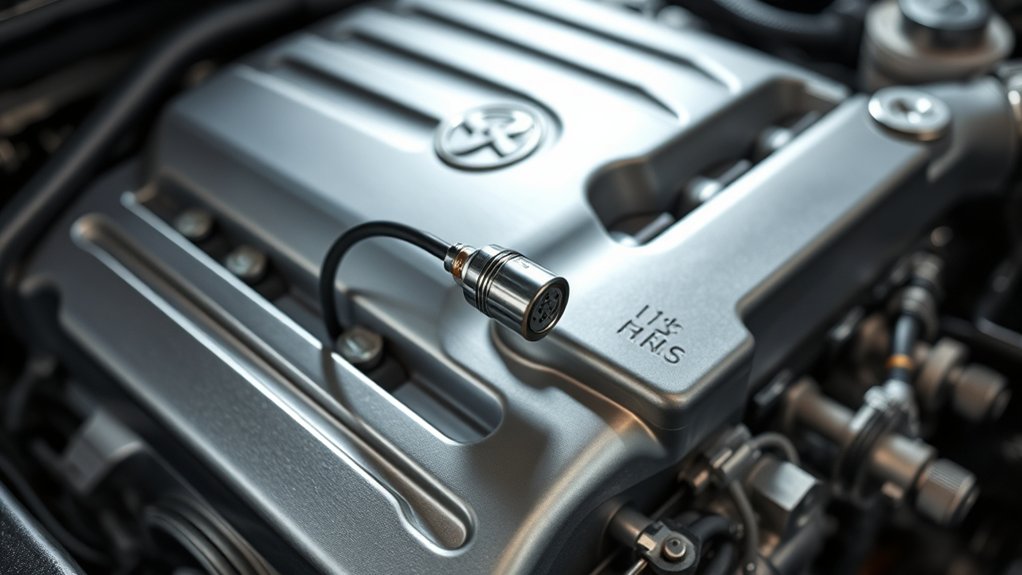
Your Toyota Camry’s knock sensor helps the engine computer protect the gasoline engine when combustion becomes unstable. A fault can turn on the check engine light, reduce power, or increase fuel use, but those symptoms do not prove the sensor itself has failed. Accurate diagnosis depends on the Camry’s model year, engine, wiring, stored trouble codes, and whether the vehicle is gasoline-only or hybrid.
Quick Answer
A Toyota Camry knock sensor detects engine-block vibration associated with abnormal combustion. The engine control module can then reduce ignition advance to limit knock. Common fault signs include a check engine light, reduced power, hesitation, or lower fuel economy. Scan the codes and inspect the circuit before replacing the sensor.
Key Takeaways
- A knock-sensor code identifies a problem in the monitored circuit or signal; it does not automatically prove the sensor is defective.
- P0325-series codes commonly relate to sensor 1, while V6 applications may also use P0330-series codes for a second bank.
- Do not use a universal resistance value. Toyota’s test method and specifications vary by engine and sensor design.
- Use the fuel grade listed in your Camry owner’s manual. Premium fuel is not a repair for a sensor or wiring fault.
- Persistent audible knock, overheating, severe power loss, or a flashing check engine light needs prompt professional attention.
At a Glance
| Time Required | About 15–30 minutes for an initial code scan and visual check; circuit testing or replacement may take several hours depending on access. |
| Difficulty | Basic for reading codes and inspecting visible wiring; intermediate to advanced for electrical testing and sensor replacement. |
| Tools Needed | OBD-II scanner, flashlight, and model-specific Toyota service information; a high-impedance multimeter or oscilloscope may be required for directed testing. |
| Cost | Varies widely by model year, engine, sensor count, local labor rate, intake-manifold access, and whether the confirmed fault is the sensor, connector, or harness. Get a VIN-specific written estimate before authorizing replacement. |
Understanding the Knock Sensor and Its Role in Engine Performance
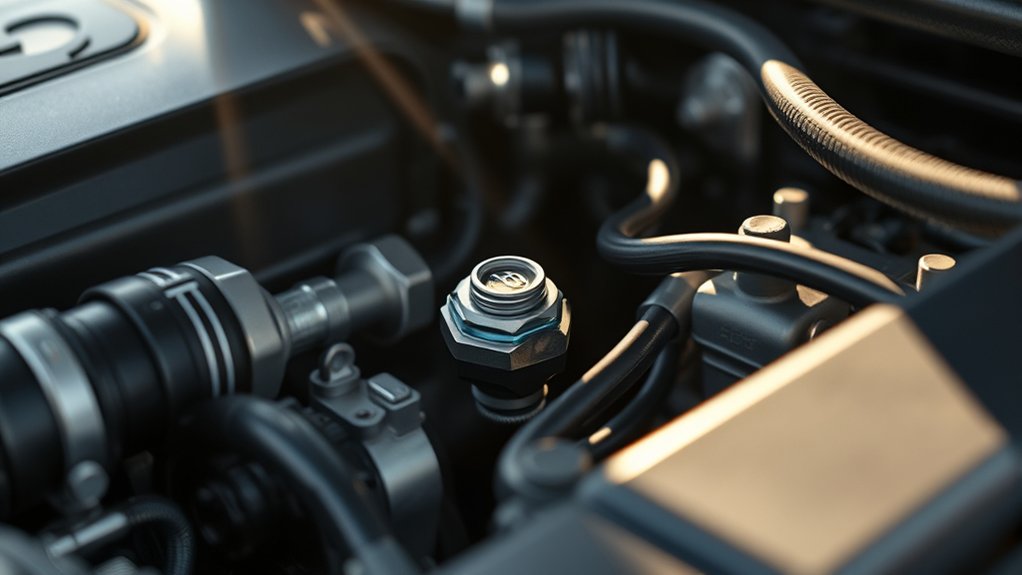
The knock sensor is mounted where it can detect specific engine-block vibrations. Its piezoelectric element converts those vibrations into an electrical signal for the engine control module, or ECM.
When the ECM recognizes a signal pattern consistent with spark knock, it can reduce ignition advance. Retarding the spark reduces or delays peak combustion pressure under the affected operating condition and helps protect the engine. Once conditions stabilize, the ECM can gradually restore normal timing.
This feedback allows the engine to adapt to changing load, temperature, and fuel conditions. However, the exact number of sensors, their location, connector design, and the ECM’s diagnostic strategy differ by Camry generation and engine. A hybrid Camry still has a gasoline engine, but its layout, operating strategy, and service precautions may differ from a gasoline-only model.
Note: Use your VIN to locate the correct Toyota owner’s manual and service information. A procedure for one Camry engine may not apply to another.
Knock-Sensor Fault vs. Actual Engine Knock
These are related but different problems. A knock-sensor circuit fault means the ECM cannot trust the sensor signal because of a sensor, connector, wiring, installation, or signal problem. Actual combustion knock is abnormal pressure-wave activity inside the cylinders and may occur even when the sensor circuit is working.
Low-octane fuel for an engine that requires more octane, overheating, excessive deposits, a lean mixture, incorrect ignition control, or a mechanical problem can cause real knock. Replacing the sensor will not correct those root causes.
A diagnostic trouble code points to the monitored circuit or signal—not automatically to a failed part.
Common Symptoms of a Faulty Knock Sensor
A knock-sensor circuit fault may change how the ECM controls ignition timing. The symptoms can be subtle, and many overlap with ignition, fuel, cooling, exhaust, or mechanical problems.
| Symptom | What You May Notice | Why It Needs Diagnosis |
|---|---|---|
| Check engine light | A stored code such as P0325, P0326, P0327, or P0328; V6 applications may also store P0330-series codes. | The code may be caused by the sensor, connector, harness, mounting, electrical interference, or another condition affecting the signal. |
| Reduced acceleration | Slower throttle response, hesitation, or less power under load. | The ECM may use conservative ignition timing when it cannot trust the knock signal. |
| Lower fuel economy | More fuel used over the same route or driving pattern. | Retarded timing can reduce efficiency, but tire pressure, weather, driving style, and other faults can cause the same change. |
| Pinging or knocking | A metallic rattle during acceleration or heavy load. | Actual combustion knock may come from incorrect fuel, overheating, deposits, a lean condition, or an ignition-control problem. |
| No obvious drivability change | The engine may sound and feel normal even though a code is stored. | The ECM may be compensating, or the fault may be intermittent. Freeze-frame data and a directed test are still needed. |
Warning: Do not assume a knock-sensor code means the sensor should be replaced. Loud persistent pinging, severe power loss, overheating, or a flashing check engine light can indicate a more urgent problem. Reduce load and arrange diagnosis.
Diagnosing Knock Sensor Issues: A Step-by-Step Guide
Use a structured process so you do not replace a good sensor while overlooking a damaged wire, loose connector, incorrect installation, or real engine-knock condition.
Before You Start
- Identify the vehicle: Record the VIN, model year, engine, and whether the Camry is hybrid or gasoline-only.
- Do not erase evidence: Read codes and save freeze-frame data before clearing codes or disconnecting the 12-volt battery.
- Work safely: Park on level ground, set the parking brake, let the engine cool, keep hands and tools away from moving parts, and follow hybrid precautions where applicable.
- Use the correct information: Obtain the Toyota wiring diagram, connector views, test procedure, and torque specification for the exact engine.
- Read all stored, pending, and permanent codes. Record freeze-frame data before clearing anything. Other codes for misfire, coolant temperature, fuel mixture, ignition, charging voltage, or communication can change the diagnosis.
- Confirm the complaint. Note when the light, noise, hesitation, or power loss appears, including engine temperature, speed, load, fuel grade, weather, and recent repairs.
- Check for real knock causes. Verify the correct fuel grade, normal coolant temperature, and absence of obvious misfire, lean-condition, or overheating symptoms.
- Inspect the accessible circuit. With the engine off and cool, check the connector and visible harness for broken locks, loose terminals, corrosion, oil or coolant contamination, rubbing, rodent damage, pinched wires, and previous repairs.
- Check service information for your exact Camry. Use Toyota’s wiring diagram, connector views, diagnostic flowchart, torque specification, and test values. Do not apply a generic resistance specification to every knock sensor.
- Test the circuit as directed. A technician may check continuity, shorts to power or ground, connector terminal tension, bias voltage, electrical noise, or the sensor waveform. The correct test depends on the circuit design.
- Repair, clear, and verify. Fix the confirmed cause, clear the codes, perform the required drive cycle or road test, and recheck for stored and pending codes. Confirm that readiness monitors and drivability return to normal.
Pro Tip: Toyota’s Technical Information System provides model-specific repair manuals, wiring diagrams, service bulletins, and diagnostic procedures for North American vehicles.
Common Knock-Sensor Codes
The following generic code families may appear, but applicability, wording, enabling conditions, and bank identification can vary by year and engine:
- P0325: Knock sensor 1 circuit malfunction.
- P0326: Knock sensor 1 circuit range/performance.
- P0327: Knock sensor 1 circuit low input.
- P0328: Knock sensor 1 circuit high input.
- P0330: Knock sensor 2 circuit malfunction on engines that monitor a second bank.
- P0331: Knock sensor 2 circuit range/performance.
- P0332/P0333: Knock sensor 2 circuit low or high input.
A circuit code does not identify the failed part by itself. The ECM may set a code for an open circuit, short, poor connection, abnormal signal, electrical interference, incorrect installation, or sensor failure. Bank and sensor labels must be interpreted with the Toyota repair manual for the exact engine.
DIY Checks vs. Professional Testing
A vehicle owner can usually read codes, record freeze-frame data, verify fuel grade, check coolant temperature, and inspect accessible wiring. Stop before removing major intake components or back-probing unfamiliar terminals unless you have the correct service procedure and equipment.
Professional testing is appropriate when the sensor is buried under intake components, the wiring diagram calls for voltage or waveform analysis, the fault is intermittent, multiple engine codes are present, or the vehicle is a hybrid with additional service precautions.
Diagnostic Mistakes to Avoid
- Replacing the sensor solely because P0325 or P0330 is stored.
- Clearing codes before saving freeze-frame and code-status information.
- Using a universal resistance specification found for another engine.
- Striking the engine or sensor as a “test” without a Toyota-approved procedure.
- Installing a sensor on a dirty surface or tightening it by feel instead of using the specified torque.
- Assuming premium fuel will repair an electrical fault.
Causes of Knock Sensor Failure and Prevention Strategies

Knock sensors can fail, but the surrounding circuit and installation deserve equal attention. Common causes include:
- Heat and repeated thermal cycling: Long-term exposure can weaken the sensor, connector, or nearby insulation.
- Harness damage: Chafing, rodent damage, pinched wires, corrosion, oil or coolant contamination, or poor routing can distort or interrupt the signal.
- Incorrect installation: Wrong torque, debris under the sensor, an unsuitable part, or poor contact with the engine block can affect sensitivity.
- Previous engine work: A connector may be left loose or a harness may be routed incorrectly after intake, cylinder-head, or cooling-system repairs.
- Electrical interference or grounding problems: A damaged shield, poor ground, charging-system fault, or wiring repair can introduce an abnormal signal on some designs.
- Actual abnormal combustion: Incorrect octane, overheating, excessive deposits, a lean mixture, or another engine fault can produce real knock activity.
Prevent problems by keeping the cooling and ignition systems in good condition, addressing warning lights promptly, and using the fuel grade specified in the owner’s manual. The U.S. government’s octane guidance recommends using the manufacturer-required rating; buying a higher grade than required is not a substitute for diagnosis.
Consequences of Ignoring Knock Sensor Issues
A stored knock-sensor fault can affect drivability, fuel use, emissions monitoring, and inspection readiness even when the engine sounds normal. The outcome depends on whether the problem is a false or missing signal, damaged wiring, or genuine combustion knock.
Engine Damage Risk
The ECM normally uses knock feedback to adjust ignition timing. If that feedback becomes unreliable, it may use a protective strategy that reduces power. A sensor fault alone does not guarantee engine damage, but persistent real knock can create damaging pressure and heat inside the cylinders.
Do not continue heavy acceleration, steep climbing, towing, or other high-load driving when you hear repeated metallic pinging. Check the required fuel grade, engine temperature, and stored codes, then arrange diagnosis.
Decreased Fuel Efficiency
Conservative ignition timing can reduce efficiency and acceleration. However, no single percentage or miles-per-gallon loss applies to every Camry. The effect depends on the engine, fault strategy, driving conditions, weather, and other maintenance issues.
Compare fuel use over several similar tanks rather than relying on one short trip. Confirm tire pressure, seasonal fuel, temperature, driving pattern, and other codes before blaming the knock sensor.
Emissions and Readiness Problems
An unresolved powertrain code may keep the malfunction indicator lamp on and can prevent emissions readiness monitors from completing. Clearing the code immediately before an inspection does not repair the fault and may leave the vehicle “not ready.” Complete the Toyota-specified verification drive after the repair.
Toyota Camry Knock Sensor Location and Replacement Difficulty
A knock sensor is attached directly to the engine block or another specified engine structure so it can detect combustion-related vibration. Exact placement differs by model year and engine. Inline-four engines usually monitor a single cylinder bank, while V6 configurations may use separate sensors or circuits for Bank 1 and Bank 2.
| Camry Configuration | What to Expect | Best Identification Method |
|---|---|---|
| Inline-four gasoline engine | The sensor is mounted to the engine structure, often on the intake side or in an area partly hidden by intake components. | Use the VIN, engine code, Toyota component-location diagram, and connector view. |
| V6 gasoline engine | Two monitored banks may be used, and access can require removal of upper intake components. | Confirm Bank 1/Bank 2 and sensor numbering in the Toyota repair manual before ordering parts. |
| Hybrid Camry | The gasoline engine still uses engine-management sensors, but packaging and operating conditions differ from gasoline-only versions. | Use hybrid-specific Toyota service information and follow all high-voltage safety instructions. |
Access may be straightforward on one engine and require removal of intake components on another. Because mounting torque and surface contact affect sensor operation, replacement should follow the exact Toyota procedure. Verify the part by VIN and avoid guessing based only on appearance.
Replacement Overview
- Confirm the sensor or its sub-harness is the failed component through directed testing.
- Save codes and data, then follow the Toyota procedure for battery disconnection, hybrid precautions, and component removal.
- Remove only the intake, brackets, or other parts specified for access; protect open intake passages from debris.
- Clean the specified mounting surface without damaging it, install the correct sensor or harness, and tighten it to the exact torque.
- Route and secure the harness as shown, reconnect every lock and ground, and reassemble with new seals or gaskets where Toyota requires them.
- Clear codes, check for leaks, complete the verification drive, and scan again for pending codes.
Warning: Intake removal can expose the engine to dropped hardware or debris, and hybrid models add high-voltage hazards. Do not continue beyond basic inspection without the correct procedure, tools, and training.
The Importance of Timely Knock Sensor Replacement
Replace the sensor only after testing confirms it is the cause. Prompt repair can restore normal ignition control, acceleration, fuel economy, and emissions monitoring. It also prevents repeated check engine lights and failed readiness checks.
A knock sensor is not normally replaced at a universal mileage interval. High mileage alone does not prove failure, and replacing it automatically at 100,000 miles can waste money. Diagnose the code, inspect the harness, and follow Toyota’s specifications for the exact vehicle.
During installation, keep the mounting surface clean, route the harness correctly, connect the lock fully, and use the specified torque. Too little or too much torque can change how the sensor responds.
Before paying for a repair, check the VIN for open safety recalls or service campaigns through Toyota’s recall and campaign lookup. A recall lookup does not replace diagnosis, and most knock-sensor faults are not automatically covered.
Maintaining Your Toyota Camry’s Knock Sensor for Longevity
The sensor itself does not need routine cleaning or adjustment. Preventive care focuses on the systems and conditions that affect combustion and the sensor circuit:
- Use the octane rating and fuel type listed in the owner’s manual.
- Maintain the cooling system to prevent overheating.
- Replace spark plugs and service ignition components at the scheduled interval for your model.
- Repair oil or coolant leaks that can contaminate connectors and wiring.
- Inspect exposed harness sections after major engine work or rodent damage.
- Investigate a check engine light instead of clearing it repeatedly.
- Keep records of codes, freeze-frame data, repairs, and the fuel used when symptoms occurred.
Toyota advises owners to consult the vehicle-specific manual for warning-light details and arrange service when needed. You can review common indicators on Toyota’s warning-light resource.
Can You Drive With a Bad Knock Sensor?
A steady check engine light with no unusual noise, overheating, or severe drivability problem may allow a short, gentle trip for diagnosis. Avoid heavy load, hard acceleration, high engine speed, steep climbing, and towing until the cause is known.
Stop driving and seek help if the light flashes, the engine overheats, power drops sharply, you smell fuel, the engine misfires strongly, or you hear persistent metallic knocking. Because the same symptoms can come from misfire, overheating, lean operation, or mechanical damage, a scan and inspection are safer than assuming the vehicle can be driven normally.
Frequently Asked Questions
What are the symptoms of a bad knock sensor on a Toyota Camry?
Possible signs include a check engine light, reduced acceleration, hesitation under load, lower fuel economy, or a pinging noise. Some vehicles have no obvious drivability change. These symptoms overlap with other faults, so read the codes and test the circuit before replacing the sensor.
What happens when a knock sensor goes bad?
The ECM may no longer receive a reliable knock signal. It can store a trouble code and use conservative ignition timing, which may reduce power and efficiency. The exact response varies by Camry year, engine, and calibration.
What is the main function of a knock sensor?
It detects engine-block vibration patterns associated with abnormal combustion. The ECM uses that information to adjust ignition timing and reduce damaging knock while maintaining as much performance and efficiency as conditions allow.
What does the ECM do when the knock sensor detects spark knock?
The ECM generally reduces ignition advance for the affected operating condition. When knock is no longer detected, it may gradually restore timing. The exact control strategy is programmed for the specific engine.
Does code P0325 always mean the knock sensor is bad?
No. P0325 identifies a fault in the knock sensor 1 circuit or signal. The cause may be the sensor, connector, wiring, installation, electrical interference, or another condition. Follow the Toyota diagnostic flowchart before buying parts.
Will premium gas fix a knock-sensor code?
No. Use the octane rating required by your owner’s manual. Higher-octane fuel may reduce real knock in an engine that requires or recommends it, but it cannot repair an open circuit, damaged connector, incorrect installation, or failed sensor.
Where is the knock sensor located on a Toyota Camry?
It is mounted to the engine structure, but the exact location varies by model year and engine. Some are partly hidden by intake components, and V6 engines may use separate bank circuits. Use the VIN and Toyota component-location diagram rather than relying on a generic photo.
Can I test a Camry knock sensor with a multimeter?
Sometimes a multimeter is used for directed circuit checks, but there is no universal resistance test for every Camry sensor. Depending on the design, Toyota may specify continuity, short-circuit, bias-voltage, terminal-tension, or waveform testing. Follow the exact repair manual.
How much does Toyota Camry knock-sensor replacement cost?
The total varies widely because some sensors are easy to reach while others require intake removal. Model year, engine, sensor count, local labor rate, gaskets, and harness repairs all affect the estimate. Ask for a VIN-specific diagnosis and itemized quote before approving replacement.
Will disconnecting the battery clear a knock-sensor code?
It may erase some stored information on some vehicles, but it does not repair the fault and can remove useful freeze-frame evidence. Permanent codes may remain until the ECM confirms the fault is gone through its required monitoring conditions.
Conclusion
Your Toyota Camry’s knock sensor is an important part of ignition control, but a warning light or performance change is only the start of the diagnosis. Identify the exact engine, save the scan data, inspect the circuit, check for real knock causes, and use model-specific Toyota procedures. Confirming the fault before replacement protects the engine and avoids unnecessary parts and labor.
Sources
- Toyota Technical Information System — factory repair manuals, wiring diagrams, service bulletins, diagnostics, and torque specifications.
- Toyota Manuals and Warranties — vehicle-specific owner’s manuals, fuel requirements, and maintenance guidance.
- Toyota Warning Lights — official guidance for warning indicators and model-specific manual access.
- Toyota Safety Recalls and Service Campaigns — VIN-based lookup for open campaigns.
- FuelEconomy.gov: Selecting the Right Octane Fuel — U.S. DOE and EPA guidance on octane, knock, and manufacturer fuel requirements.
- SAE Technical Paper 2014-01-1228 — research on fuel octane, knock, fuel economy, and carbon-dioxide effects.

