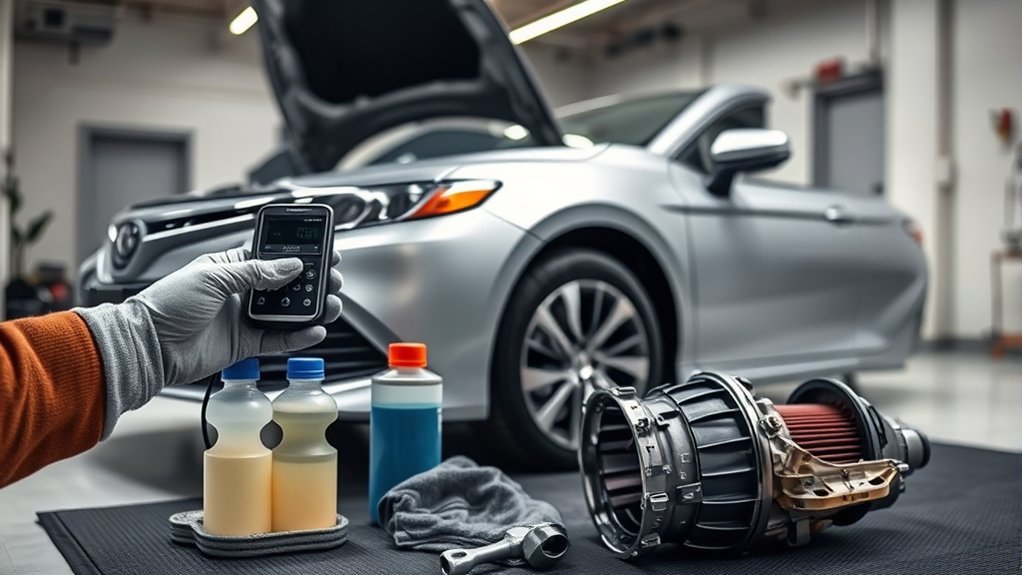
If your Toyota Camry shifts with a hard jolt, pauses before moving, raises engine speed without accelerating, or clunks when you select Drive or Reverse, begin by identifying the exact symptom and powertrain. Fluid loss, electronic faults, worn mounts, engine problems, software calibration, and internal transmission wear can feel similar, but they require different tests and repairs.
Quick Answer
A Toyota Camry may shift hard because of low or incorrect fluid, a leak, sensor or wiring faults, pressure-control or valve-body problems, outdated software, worn mounts, engine faults, or internal damage. Record when it happens, scan before clearing codes, check for leaks, and follow the factory information for the exact model year and powertrain.
Key Takeaways
- Identify the model year, engine, hybrid status, drivetrain, and transmission or transaxle before using repair advice.
- A harsh engagement, slipping, shift flare, shudder, and mount-related clunk are different symptoms.
- Some Camry powertrains use sealed components that require a temperature-controlled factory fluid-level procedure.
- A diagnostic code identifies a detected condition; it does not automatically prove that a named sensor or solenoid has failed.
- Stop driving if the vehicle slips badly, loses fluid, smells burnt, cannot engage a gear, or accelerates unpredictably.
At a Glance
| Time Required | About 15 to 30 minutes for symptom notes, code retrieval, and an external visual check; complete diagnosis may take longer |
| Difficulty | Beginner for observation and external checks; advanced for sealed-fluid service, electrical testing, hydraulic tests, or internal repair |
| Tools Needed | Owner’s manual, maintenance guide, flashlight, gloves, eye protection, notepad, and a Toyota-compatible scan tool |
| Cost | Owner observations may cost nothing; professional diagnosis and repair depend on the model year and confirmed fault |
Identify Your Camry’s Powertrain First
“Toyota Camry transmission” can refer to different systems. Before diagnosing a hard shift, record the model year, engine, whether the car is a hybrid, and whether it has front- or all-wheel drive. Use the VIN and the Toyota manuals and warranties page to locate information for the exact vehicle.
Conventional Automatic Versus Hybrid Transaxle
A conventional automatic transmission uses multiple gear ratios and may produce a distinct upshift, downshift, flare, or harsh engagement. A Camry Hybrid uses an electronically controlled transaxle that operates differently from a conventional stepped automatic. Engine speed can rise or fall without a traditional gear change, so a surge in engine sound alone does not prove that the hybrid transaxle is slipping.
Note: Do not assume that advice for one Camry generation applies to another. Fluid type, level-setting procedure, control software, transmission design, and maintenance requirements may differ even when the symptoms sound alike.
Common Symptoms of Hard Shifting in a Toyota Camry

Start by describing exactly what the Camry does. Drivers often use “hard shifting” for several different problems, but each pattern points the diagnosis toward a different test area.
- Harsh engagement: The car bangs or jerks when you select Drive or Reverse.
- Harsh upshift or downshift: You feel a sharp jolt during a specific gear change.
- Shift flare: Engine speed rises between gears before the next gear engages.
- Slipping: Engine speed increases, but vehicle speed does not rise as expected.
- Delayed engagement: The vehicle takes more than a brief moment to move after you select a gear.
- Shudder: A rapid vibration appears during acceleration, light throttle, or torque-converter operation.
- Clunk without a shift problem: Worn engine mounts, transmission mounts, axle components, suspension play, or other driveline parts can create a jolt even when the transmission is operating correctly.
A check engine light, master warning light, or transmission-related message may appear with the symptom. Poor fuel economy can also occur when slipping or an engine-control fault is present, but fuel economy alone does not confirm a transmission problem.
Quick Symptom Guide
| What you notice | First area to check |
|---|---|
| Bang when selecting Drive or Reverse | Idle quality, mounts, fluid level, hydraulic pressure, and control commands |
| Engine speed rises before the car accelerates | Fluid pressure, clutch holding ability, ratio data, solenoid control, and internal wear |
| Jolt occurs with an engine stumble | Misfire, fuel or ignition faults, throttle control, and mounts |
| Clunk occurs when getting on or off the throttle | Mounts, axle joints, driveline movement, and suspension play |
| Condition appears only when cold or only when hot | Fluid condition, temperature data, pressure control, wiring, calibration, and engine operation |
Warning: Stop driving and arrange a tow if the Camry cannot engage a gear, slips severely, leaks a noticeable amount of fluid, produces a burning smell, makes repeated grinding noises, or behaves unpredictably in traffic. Do not crawl under a vehicle supported only by a jack.
Common Causes of Hard Shifting
Hard shifting does not automatically mean the entire transmission has failed. The cause may involve fluid loss, electronic controls, software, engine operation, mounts, or internal hydraulic and mechanical parts.
The most useful clue is not simply that the Camry shifts hard. It is when the symptom occurs, which gear or operating condition triggers it, and whether engine speed changes before the jolt.
[Amazon Products Picked for You]
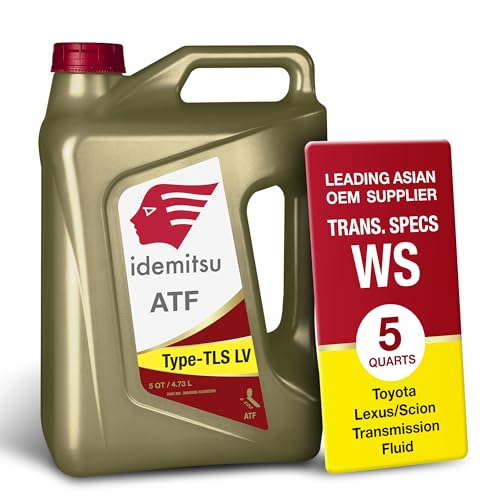
Optimized viscosity and advanced friction reducing additive technology provide exceptional fuel economy performance

Enhanced friction durability for smooth transmission performance

Automatic Transmission Fluid WS is a world-spec fluid specifically designed for sealed, automatic transmissions.
Low Fluid, Leaks, or Incorrect Fluid
Low transmission fluid usually results from a leak because the transmission does not consume fluid during normal operation. Low fluid can reduce hydraulic pressure, introduce air into the system, delay engagement, or cause slipping and harsh shifts.
Using a fluid that does not meet the specification for the exact transmission can also affect shift quality. Check the Toyota owner’s manual and maintenance guide for the model year before adding or replacing fluid.
Note: Some Camry transmissions and transaxles do not have a normal owner-service dipstick. The factory procedure may require the vehicle to be level, the fluid to be within a specified temperature range, and the level to be set through an overflow opening. Do not remove a plug or add fluid without the procedure for the exact powertrain.
Sensors, Wiring, Solenoids, and Control Problems
Vehicle-speed data, engine load, throttle input, temperature readings, wiring integrity, and control-module commands all affect transmission operation. A failed sensor, damaged connector, corroded terminal, poor ground, wiring fault, or abnormal control signal can change shift timing or pressure.
The 12-volt electrical system should also be checked when warning lights, communication faults, or several unrelated codes appear. Low voltage does not prove that the battery caused the shifting complaint, but unstable voltage or a weak connection can interfere with electronic diagnosis.
Shift solenoids control hydraulic passages inside many automatic transmissions. A solenoid problem may cause harsh shifts, delayed engagement, a stuck gear, or fail-safe operation. However, a solenoid-related code does not prove that the solenoid itself is defective. Wiring, connector condition, fluid pressure, valve-body wear, and control commands must also be tested.
Valve-Body or Internal Transmission Wear
The valve body directs pressurized fluid to the correct clutches and passages. Wear, contamination, a sticking valve, pressure loss, or an internal seal problem can create harsh or delayed shifts. Internal clutch wear may cause flare or slipping before a gear engages.
Grinding, persistent slipping, metal debris, or repeated loss of engagement requires professional testing. A fluid change cannot repair worn clutch material, a damaged bearing, a broken gear, or another failed internal part.
Engine and Driveline Problems That Feel Like Hard Shifting
An engine misfire, unstable idle, throttle-control fault, worn mount, damaged axle joint, or excessive driveline movement can feel like a transmission jolt. A technician should confirm that the engine runs smoothly and that the mounts, axles, and related components are secure before condemning the transmission.
A worn mount often causes visible movement or a clunk when torque changes. It does not automatically mean the transmission’s hydraulic system is shifting incorrectly.
Software, Adaptation, and Model-Specific Behavior
Some complaints may involve control-module calibration, learned shift values, or a model-specific service procedure. Check Toyota’s factory service information and current service bulletins for the exact year, engine, and transmission.
A recent battery disconnection, control-module replacement, repair, or software update may affect learned values. That does not mean every harsh shift only needs a relearn; the original fault must still be diagnosed.
Do not apply generic vacuum-modulator or kick-down-cable advice to a modern Camry. Most newer models use electronic engine and transmission controls. Those older components should be inspected only when the factory manual for a specific vehicle identifies them.
Why the Problem May Change With Temperature
A cold-only complaint may involve fluid viscosity, cold-engine idle, temperature-sensor data, pressure regulation, or calibration. A problem that appears only after the vehicle is fully warm may point toward pressure loss, heat-related wiring faults, or wear that becomes more noticeable as the fluid thins. Temperature is a diagnostic clue, not a diagnosis by itself.
Step-by-Step Diagnosis and Fixes
Use a structured process instead of replacing parts based on one symptom or code. The following steps help separate a minor external problem from an electronic, hydraulic, driveline, or internal fault.
- Identify the vehicle: Record the model year, engine, hybrid status, drivetrain, mileage, VIN, and any recent repairs, software work, or battery disconnections.
- Decide whether it is safe to drive: Tow the vehicle if it slips badly, cannot engage a gear, leaks heavily, smells burnt, makes severe mechanical noises, or cannot enter traffic safely.
- Write down the pattern: Note whether the problem occurs cold or warm, in Drive or Reverse, during acceleration, while slowing, or during one repeatable shift.
- Record operating conditions: Note road speed, engine speed, throttle position, outside temperature, warning lights, and whether the symptom changes after several minutes of driving.
- Scan before clearing anything: Record current, pending, history, and manufacturer-specific codes. Save available freeze-frame and live data.
- Check electrical basics: Look for loose battery terminals, damaged grounds, obvious connector damage, or several low-voltage and communication codes. Use proper testing rather than assuming the battery is the cause.
- Inspect for external leaks: Look for fresh fluid around the transmission, transaxle, cooler lines, seals, undertray, and parking area. Do not touch hot components.
- Check fluid only by the correct procedure: Use a dipstick only if the vehicle has one and the manual gives an owner procedure. Have a qualified technician check a sealed unit that requires temperature monitoring or an overflow-level procedure.
- Rule out engine and mount problems: Check for misfire symptoms, unstable idle, throttle faults, damaged mounts, axle problems, and excess driveline movement.
- Review factory information: Search the Toyota Technical Information System for repair manuals, service bulletins, wiring diagrams, diagnostic procedures, and calibration information. Also check the NHTSA recall database for U.S.-market vehicles.
- Repair the confirmed cause: The correct repair may involve stopping a leak, repairing wiring, replacing a tested sensor or solenoid, installing a mount, updating software, servicing the valve body, or repairing internal damage.
- Verify the result: Clear codes only after recording them, perform the required drive cycle or relearn procedure, and confirm that the original symptom no longer occurs.
Pro Tip: Do not erase codes or disconnect the battery before diagnosis. Clearing freeze-frame information and learned values can make an intermittent problem harder to reproduce and may temporarily change the symptom.
[Amazon Products Picked for You]

[Easy to Use—Work Out of the Box] + [FOXWELL 2026 New Version] FOXWELL NT604 Elite scan tool is the 2026 new version from FOXWELL, designed for car owners who want to figure out the cause of issues before fixing car problems by scanning common systems like ABS, SRS, engine, and transmission. The NT604 Elite obd2 scanner diagnostic tool comes with the latest software—no need to waste time downloading software first. Plug the scanner into the OBDII port with OBDII cable to start the diagnosis.

Comprehensive OBD2 Scanner with 16 Resets: The XTOOL D5S car code reader and vehicle reset tool provides an advanced diagnostic solution with 16 commonly needed reset functions, including Electronic Parking Brake Reset (EPB Reset), SAS, BMS Reset (Battery Test), Throttle Body Relearn, TPMS Reset, ABS Bleeding, Injector Coding, Gearbox Match, Suspension Adjustment, Headlight, Window Initialization, Crank Sensor Relearn and more. Equipped with CAN FD Protocol and FAC AutoAuth, the D5S obd2 scanner diagnostic tool ensures compatibility with a broad range of modern vehicles, allowing users to address common maintenance needs quickly. NOTE: Please Check the Compatibility before ordering.

CEL Doctor: The ANCEL AD310 is one of the best-selling OBD II scanners on the market and is recommended by Scotty Kilmer, a YouTuber and auto mechanic. It can easily determine the cause of the check engine light coming on. After repairing the vehicle's problems, it can quickly read and clear diagnostic trouble codes of emission system, read live data & hard memory data, view freeze frame, I/M monitor readiness and collect vehicle information
What Not to Do
- Do not add fluid until you know the correct specification and level-setting procedure.
- Do not open a fill, drain, or overflow plug on a hot or unsupported vehicle.
- Do not use a jack as the only support under the vehicle.
- Do not clear codes before saving them and their freeze-frame data.
- Do not replace a sensor or solenoid only because its name appears in a code description.
- Do not perform a stall test, hydraulic-pressure test, or driven-wheel test at home without the factory procedure, proper equipment, and required safety controls.
- Do not use an unverified additive as a substitute for diagnosis.
What a Fluid Service Can and Cannot Do
A transmission-fluid service may help when the fluid is low because of a repaired leak, the level is incorrect, the wrong fluid was installed, contamination is present, or replacement is required by the applicable maintenance schedule. It should not be treated as a guaranteed cure.
The correct method may be a drain-and-refill, pan and filter service, or another factory procedure. An exchange or “flush” should not be performed merely because the vehicle shifts hard. The shop should first confirm the fluid specification, condition, level procedure, and reason for service. Fresh fluid cannot repair failed wiring, a worn clutch, a damaged valve body, a broken bearing, or another mechanical failure.
Why There Is No Universal Camry Fluid Interval
Toyota’s maintenance requirements vary by model year and operating conditions. For example, the 2018 Camry Warranty and Maintenance Guide lists automatic-transmission-fluid replacement at 60,000 miles or 72 months for specified towing, car-top-carrier, heavy-loading, extensive-idling, taxi, police, or delivery use.
The 2026 Camry Warranty and Maintenance Guide also places transmission-fluid inspection or replacement within its maintenance charts and special-operating-condition requirements. These examples do not create a blanket interval for every Camry; use the guide for the exact vehicle.
Diagnostic Tools and What the Results Mean

A basic scan tool and careful observations can narrow the problem, but professional diagnosis may require Toyota-compatible data, electrical measurements, hydraulic-pressure tests, and controlled component commands.
[Amazon Products Picked for You]

【Professional 4 Systems Diagnostics】For DIYers addressing typical concerns like engine, transmission, ABS, and SRS, the TOPDON AD500 vehicle scanner provides specialized diagnostic solutions. It effortlessly interprets and eliminates fault codes and scrutinizes data streams, ensuring the prompt detection of issues. Note: Please charge the AD500 regularly to maintain battery performance and prevent power-on issues caused by prolonged periods of non-use.

[All System Diagnostics, Professional-Level Scanner] - BLCKTEC 460T is the ultimate OBD2 diagnostic tool for home mechanics and professionals. It supports all 10 OBD2 modes, reads and clears Engine/Transmission/ABS/SRS codes, performs All-System Diagnostics, offers workshop reset tools, and provides real-time live data. It helps you pinpoint issues, assess your car's condition, and prepare for SMOG checks with ease. NOTE: Function availability depends on your vehicle. Before you buy, be sure to use the Compatibility Checker on BLCKTEC website or contact our customer support to verify that the features you need are supported for your vehicle’s specific year, make, and model.

FREE LIFETIME SOFTWARE UPDATES – NO SUBSCRIPTION FEES: Buy the TOPDON AD600S once and keep it updated for years with free lifetime software updates via Wi-Fi—no recurring update fees or annual software subscription costs. Stay current with expanded vehicle coverage and software improvements. A smart-value OBD2 scanner diagnostic tool for DIYers, home mechanics, and technicians. *Wi-Fi is required for initial setup. after setup, most basic diagnostics can be used offline
Useful Tools for Initial Checks
- A scan tool that reads powertrain and manufacturer-specific Toyota codes
- The owner’s manual and year-specific maintenance guide
- A flashlight for external leak and mount inspection
- Gloves and eye protection
- A notepad or phone for recording temperature, speed, engine load, engine speed, and symptom timing
- A digital multimeter used by someone who understands safe automotive electrical testing
What the Scan Results Mean
A trouble code tells you which condition the control system detected. It may identify a circuit, an unexpected gear ratio, a pressure-control condition, a temperature problem, or missing sensor information. It does not automatically identify the failed part.
For example, a solenoid circuit code may result from a damaged wire, poor connector contact, failed control driver, or solenoid fault. A gear-ratio code may result from slipping, pressure loss, incorrect speed-sensor data, or internal wear. Follow the factory test sequence before replacing a component.
Codes beginning with “P07” often relate to transmission control, ratio, pressure, or circuit conditions, but the complete code and model-specific definition matter. Do not treat every P07xx code as proof that the transmission must be replaced.
Match the Symptom to the Likely Test Area
| Observed symptom | Areas to investigate |
|---|---|
| Hard engagement into Drive or Reverse | Fluid level, line pressure, mounts, idle quality, valve body, and control commands |
| Engine speed rises between shifts | Fluid pressure, clutch holding ability, ratio data, solenoid control, and internal wear |
| Jolt with an engine stumble | Misfire, fuel or ignition faults, throttle control, electrical supply, and mounts |
| Problem only when cold | Fluid condition, temperature data, pressure control, calibration, and cold-engine operation |
| Problem only after warming up | Hot fluid pressure, heat-sensitive wiring, valve-body leakage, and internal wear |
| Clunk when accelerating or releasing the throttle | Engine and transmission mounts, axle joints, driveline movement, and suspension play |
Check for Recalls, Campaigns, and Service Information
Use the 17-character VIN to check for unrepaired safety recalls. For U.S.-market vehicles, an NHTSA VIN search identifies applicable unrepaired recalls, while a year, make, and model search can show broader recall results, investigations, complaints, and manufacturer communications.
A recall result does not replace diagnosis, and a VIN search may not display completed recalls, every newly announced recall, or non-safety customer-support campaigns. Toyota’s own campaign lookup and factory service information should also be checked.
Hybrid Camry Safety
Warning: Camry Hybrid models contain dangerous high-voltage DC and AC systems. Do not touch orange wiring, high-voltage connectors, the service plug, inverter components, or the hybrid battery. Follow the safety precautions in the Toyota Camry Warranty and Maintenance Guide and leave high-voltage diagnosis to trained personnel.
A hybrid transaxle operates differently from a conventional stepped automatic. Describe the sensation accurately rather than assuming every surge, vibration, or engine-speed change is a gear shift.
What to Record Before a Repair Appointment
- VIN, model year, engine, hybrid status, drivetrain, and mileage
- Whether the symptom occurs during a cold start, after warming up, or at all temperatures
- The selected range or gear change involved
- Approximate road speed, engine speed, and throttle position
- Warning lights, messages, and all stored or pending codes
- Recent repairs, battery work, fluid service, software updates, or collision damage
- Any leak, odor, unusual noise, or change in fuel economy
- A safe video or written description of the symptom, without using a phone while driving
When to Seek Professional Help for Transmission Troubles
Arrange professional diagnosis when the symptom persists, affects vehicle control, or requires access to a sealed transmission or high-voltage hybrid system. Seek help promptly when you notice any of the following:
- Repeated slipping or engine-speed flare
- A long delay before Drive or Reverse engages
- A harsh bang during several gear changes
- A burning smell or visible fluid leak
- Grinding, rattling, whining, or another mechanical noise
- A warning light that returns after codes are cleared
- A fail-safe condition in which the vehicle remains in one gear
- Loss of acceleration or difficulty entering traffic safely
- Metal debris or abnormal material found during service
A qualified shop may compare input- and output-speed data, monitor commanded gear and pressure-control values, test wiring under load, command solenoids, verify fluid temperature and level, measure hydraulic pressure, inspect mounts, and follow Toyota’s factory diagnostic procedure.
Questions to Ask Before Authorizing a Major Repair
- What codes were stored, and what freeze-frame or live data supported the diagnosis?
- Was the fluid level checked using the correct temperature-controlled procedure?
- Were engine faults, mounts, axles, wiring, connectors, and power supply ruled out?
- Does a Toyota service bulletin, campaign, calibration, or factory test procedure apply?
- Were pressure, ratio, or commanded-component tests performed?
- What evidence shows that the valve body or internal transmission is faulty?
- Can the shop provide the fluid condition, test results, software level, and warranty terms in writing?
- If replacement is recommended, is the unit new, remanufactured, rebuilt, or used, and what relearn or programming is included?
Ask the shop to document the codes, test results, fluid condition, software level, and confirmed cause before authorizing a valve-body repair or complete transmission replacement.
Tips for Preventing Hard Shifting in a Toyota Camry
Follow the maintenance schedule for the exact Camry rather than a universal mileage rule. Toyota’s requirements can change by model year, powertrain, and driving conditions.
- Inspect for leaks: Check the parking area and transmission exterior during routine service.
- Use the specified fluid: Do not substitute a fluid based only on viscosity, color, or a general compatibility claim.
- Follow special-use requirements: Towing, heavy loading, car-top-carrier use, extensive idling, and other listed conditions may change the service schedule.
- Address warning lights early: Record codes before clearing them and repair engine-control faults that can affect shift behavior.
- Maintain the 12-volt system: Keep battery terminals and grounds secure and investigate repeated low-voltage or communication codes.
- Repair worn mounts: Excess drivetrain movement can create clunks and stress nearby components.
- Avoid unverified additives: An additive may alter friction characteristics without repairing the actual fault.
- Keep service records: Note the fluid specification, quantity, procedure, mileage, codes, test results, and any relearn or software work.
As the official examples show, the 2018 Camry maintenance guide and the 2026 Camry maintenance guide assign transmission-fluid service according to their own maintenance charts and operating conditions. Neither supports one blanket interval for every Camry.
Frequently Asked Questions
Why does my Camry shift hard?
Possible causes include low fluid from a leak, incorrect fluid, sensor or wiring faults, solenoid or valve-body problems, software calibration, worn mounts, engine misfires, and internal transmission wear. The model year, powertrain, and exact symptom determine which causes are most likely.
What can cause a transmission to shift hard?
Hydraulic-pressure problems, low or incorrect fluid, electronic-control faults, damaged wiring, faulty sensors, solenoid problems, valve-body wear, internal clutch damage, or incorrect control commands can cause harsh shifts. Engine, mount, axle, and driveline problems can create a similar jolt.
Do Toyota Camrys have transmission issues?
Any vehicle can develop transmission or transaxle problems as components age. A broad statement about every Camry is not useful because model years use different powertrains and controls. Check the VIN, maintenance history, codes, recalls, campaigns, and factory service information for the specific vehicle.
What are the first signs of a transmission going out?
Warning signs include delayed engagement, slipping, shift flare, repeated harsh shifts, shudder, fluid leakage, a burning smell, abnormal noise, or transmission-related trouble codes. These signs require diagnosis because some can also come from engine, mount, axle, or electrical problems.
Can a transmission-fluid change fix hard shifting?
It may help when fluid condition, an incorrect level, the wrong specification, or a maintenance requirement contributes to the symptom. It will not repair failed wiring, a damaged solenoid, worn clutch material, a defective valve body, or broken internal parts.
Should I flush a Camry transmission that shifts hard?
Do not choose a flush only because the vehicle shifts hard. Diagnose the cause first and use the service method specified for the exact transmission. A fluid exchange cannot correct worn clutches, pressure loss, damaged wiring, or broken mechanical parts.
Why does my Camry shift hard only when cold?
A cold-only complaint may involve fluid condition, cold-engine idle, temperature-sensor information, pressure control, wiring, or calibration. Record how long the symptom lasts and whether it disappears at a repeatable temperature so the correct system can be tested.
What does a P07xx transmission code mean?
P07xx codes generally relate to transmission control, pressure, ratio, temperature, or electrical conditions. The complete code and Toyota-specific definition must be checked. A code identifies the detected condition, not necessarily the component that should be replaced.
Does a Camry Hybrid shift gears like a regular automatic?
A Camry Hybrid transaxle does not operate like a conventional stepped automatic. Engine speed can change as the hybrid system balances engine and electric-motor output. A sudden vibration, warning message, loss of power, or abnormal mechanical noise still requires diagnosis.
Can I drive a Camry that shifts hard?
A mild, occasional shift should still be checked, but severe slipping, delayed engagement, fluid loss, grinding, a burning smell, or unpredictable acceleration makes continued driving risky. Arrange a tow when the vehicle cannot move, stop, or merge safely.
Conclusion
A Toyota Camry that shifts hard needs a careful diagnosis, not an automatic transmission replacement or a one-size-fits-all fluid service. Start by identifying the exact powertrain and symptom, recording trouble codes before clearing them, checking for external leaks, and ruling out engine, electrical, mount, axle, and driveline problems.
Use Toyota’s maintenance schedule and factory diagnostic information to confirm the correct fluid, service interval, level procedure, software guidance, and repair. Stop driving when the vehicle slips severely, loses fluid, smells burnt, makes serious mechanical noises, or cannot engage a gear safely. Early attention can prevent a small leak, wiring fault, mount problem, or control issue from becoming a more expensive repair.
Sources
- Toyota Manuals and Warranties — model-specific owner’s manuals, warranty information, and maintenance guides
- 2026 Toyota Camry Warranty and Maintenance Guide — maintenance charts, special-use transmission-fluid service, sealed-component inspection, and hybrid safety
- 2018 Toyota Camry Warranty and Maintenance Guide — model-year maintenance requirements and special-operating-condition fluid service
- Toyota Technical Information System — factory repair manuals, wiring diagrams, service bulletins, diagnostics, and ECU calibrations
- National Highway Traffic Safety Administration Recall Lookup — VIN recalls, investigations, complaints, and manufacturer communications for U.S.-market vehicles
