
If your Toyota Camry’s steering wheel shakes when braking, inspect the front brake rotors and their hub mounting surfaces first. The most common pattern is rotor lateral runout or disc thickness variation, often called “warped rotors.” Worn or uneven pads, a sticking caliper, incorrect wheel-fastener torque, hub rust, worn front-end parts, and tire or wheel problems can also create or amplify the vibration.
Last updated: September 11, 2026. This revision includes Toyota’s 2026 Camry maintenance guidance, Toyota brake-diagnosis guidance, current RepairPal cost estimates, and clearer ABS-versus-brake-shudder troubleshooting.
Quick Answer
If your Camry is smooth while cruising but the steering wheel shakes only when you brake, start with the front rotors, hub mounting surfaces, pads, and calipers. Rotor runout can lead to disc thickness variation, making braking force rise and fall as the wheel turns. If the Camry also vibrates without braking, check tires, wheel balance, wheel damage, bearings, and suspension before replacing brake parts.
Key Takeaways
- Steering wheel shake only while braking usually directs the first inspection toward the front brake rotors, pads, calipers, hubs, and front suspension.
- The phrase “warped rotors” commonly describes rotor runout or disc thickness variation, not necessarily a visibly bent rotor.
- If vibration continues when you are not braking, check tires, wheel balance, wheel runout, wheel bearings, and suspension.
- A brief pulse during an ABS event can be normal, but repeatable shaking during ordinary braking deserves inspection.
- Do not continue normal driving if braking performance worsens, the pedal becomes soft or sinks, the car pulls severely, you see a fluid leak or smoke, or you hear heavy grinding.
- A reliable repair measures rotor thickness and runout and checks the hub and caliper instead of replacing parts by guesswork.
At a Glance
| Time Required | A few minutes for symptom and visual checks; wheel-off measurements and repair time vary with the diagnosis |
| Difficulty | Basic symptom and visual checks are beginner-friendly; rotor runout, caliper, hub, and suspension diagnosis are best handled by a qualified technician |
| Tools Needed | Flashlight and tire pressure gauge for basic checks; safe lifting equipment, a torque wrench, micrometer, and dial indicator for deeper diagnosis |
| Current Cost Reference | RepairPal lists average Toyota Camry brake-pad replacement at $304–$368 and general brake-rotor replacement at $574–$698 before taxes, fees, location differences, and related repairs |
Why Does My Toyota Camry Steering Wheel Shake When Braking?

Your Camry’s steering wheel can shake during braking when braking force at a front wheel is no longer smooth and consistent. The first place to investigate is usually the front brake rotor and hub assembly, especially when the car drives smoothly until you press the brake pedal.
Drivers often call the condition “warped rotors,” but a more useful diagnosis separates rotor lateral runout and disc thickness variation. Lateral runout is side-to-side movement as the rotor turns. Over time, excessive runout can contribute to uneven rotor thickness. When the pads clamp a rotor with changing thickness or friction characteristics, braking torque can fluctuate and the vibration can travel through the steering knuckle and steering system.
The shake is often more noticeable when slowing from higher speeds because braking loads are greater and the cyclic vibration occurs more rapidly. If the vibration happens without touching the brake pedal, the diagnosis changes: tire balance, tire damage, wheel runout, wheel bearings, or suspension become stronger suspects.
Warning: Stop normal driving and arrange professional help if braking ability is reduced, the brake pedal sinks or feels unusually soft, the car pulls severely, you see brake-fluid leakage or smoke, you smell strong burning from a wheel, or you hear heavy metal-on-metal grinding. Follow the warning-light instructions in the owner’s manual for your exact Camry year.
What Does the Vibration Pattern Tell You?
When and where you feel the shake can narrow the first inspection area. These patterns are diagnostic clues, not proof that one part has failed.
| What You Feel | Likely Area to Check First | What It May Mean |
|---|---|---|
| Steering wheel shakes only when braking | Front rotors, pads, calipers, hub face, front suspension | Rotor runout, disc thickness variation, uneven braking force, caliper drag, or looseness in the front end |
| Brake pedal pulses during ordinary braking | Rotors, hub mounting, brake hardware | Disc thickness variation or rotor/hub runout is a strong possibility |
| Brief pulse during a hard or slippery-surface stop | ABS operation and road conditions | ABS can create temporary pedal, body, or steering vibration while it is actively controlling wheel slip |
| Vibration mainly through the seat or floor while braking | Rear brakes, rear wheels, tires, hubs | A rear brake or wheel issue may be contributing; vibration location alone is not a final diagnosis |
| Vibration at highway speed without braking | Tires, wheels, balance, wheel bearings, suspension | Unbalanced or damaged tire, wheel runout, bearing problem, or suspension wear |
| Grinding, scraping, or metal noise | Brake pads and rotors | Friction material may be severely worn or another brake part may be contacting the rotor |
| Car pulls left or right while braking | Calipers, pads, hoses, tires, suspension | Uneven braking force, tire condition, or front-end wear |
| Shake began immediately after brake or tire service | Wheel seating, lug torque, hub/rotor mating surfaces, rotor runout | A mounting or torque issue deserves checking before additional parts are replaced |
If the steering wheel is smooth while cruising and begins shaking each time you apply the brakes, diagnose the front brake and hub assembly before assuming the car simply needs an alignment.
Could ABS Pulsation Be Normal?
Yes, during an actual anti-lock braking event. Toyota owner guidance explains that the brake pedal can pulsate and vibration may be felt through the vehicle or steering while ABS is operating. That is different from a repeatable steering-wheel shake that occurs during ordinary braking on a dry road. If the vibration appears in routine stops, continues after the ABS event ends, or comes with a warning light or changed braking response, arrange an inspection. For model-specific instructions, use Toyota’s official manuals and warranties portal.
How Do Rotor Runout and Disc Thickness Variation Cause Brake Vibration?
Rotor lateral runout means the rotor face moves slightly side to side as it rotates. Disc thickness variation means the rotor is not the same thickness at every measured point. The two conditions are related but are not identical.
When runout exceeds the vehicle specification, the rotor can contact the pads unevenly as it turns. Over time, this can contribute to uneven wear and thickness variation. During braking, the pads then encounter changing rotor thickness or friction conditions, creating a repeating change in braking force that can be felt in the pedal or steering wheel.
Installation matters as much as the rotor itself. Rust or debris between the rotor and hub, improper wheel-fastener torque, excessive hub runout, bearing movement, or a dragging caliper can create or worsen the condition. Toyota has also issued technical guidance warning that incorrect lug-nut torque can contribute to brake-vibration concerns.
[Amazon Products Picked for You]

Qnkaa Dial Gauge Indicator : Measuring Range from 0-1". Resolution up to 0.001".

【Multifunctional Runout Gauge Set 】Neoteck disc brake rotor gauge is specially designed to allow the dial indicator to be firmly mounted on the brake disc to measure the warping of the disc brake. The innovative design of it allows the dial indicator to be securely installed in almost any location.Disc brake rotor gauge can help you check tire and wheel run-out, gear backlash and valve guide wear to improve your driving safety.

【Premium 0-1'' Digital Dial Indicator】 Features a high-precision dial indicator with ultra-fine 0.0005'' graduations for measuring minute variations. This professional-grade tool delivers lab-level accuracy in diagnosing brake disc flatness, ball joint wear, and gear backlash, ensuring your assessments are unequivocally reliable.
What Are the Symptoms of Rotor Runout or Disc Thickness Variation?
- Steering wheel shake while braking: Often directs the inspection toward the front rotors, hubs, brake hardware, or front suspension.
- Brake pedal pulsation: Can occur when changing rotor thickness or runout creates cyclic movement in the braking system.
- Vibration that becomes more noticeable after repeated braking: Heat may expose an existing rotor, pad, or caliper problem.
- Vibration that returns soon after brake work: Check mounting-surface cleanliness, rotor/hub runout, caliper operation, and wheel-fastener torque before assuming the new parts are defective.
What Causes Rotor Runout and Disc Thickness Variation?
| Cause | How It Creates Vibration | What to Check |
|---|---|---|
| Rotor lateral runout | The rotor does not rotate perfectly true to the hub, which can create uneven pad contact and contribute to thickness variation. | Measure runout with a dial indicator and compare it with the service specification for the exact Camry. |
| Disc thickness variation | The pads pass over areas of different thickness, creating cyclic changes in braking force. | Measure rotor thickness at the specified points with a micrometer. |
| Rust or debris on the hub face | The rotor may not seat squarely against the hub even when the rotor itself is new. | Inspect and clean the rotor-to-hub mating surfaces correctly. |
| Uneven or incorrect lug nut torque | Uneven clamping can contribute to rotor runout and brake-vibration complaints. | Use a calibrated torque wrench, the correct tightening pattern, and Toyota’s specification for the exact model year. |
| Sticking caliper piston or slide hardware | A dragging pad can generate excess heat and uneven wear at one wheel. | Inspect pad wear pattern, slide movement, piston condition, boots, and fluid leakage. |
| Repeated heavy braking and heat | High heat can worsen uneven friction, pad deposits, and existing rotor or caliper problems. | Inspect for heat damage and diagnose the cause instead of assuming heat alone bent the rotor. |
What Should a Shop Measure Before Replacing Rotors?
A good diagnosis should measure before it replaces. Toyota’s NHTSA-hosted front-brake service technical guidance tells technicians to measure disc thickness with a micrometer and lateral runout with a dial indicator. If runout is excessive, the guidance describes repositioning the rotor on the hub to find the position with the least runout. If excessive runout remains, bearing play and hub runout should also be checked.
The final repair depends on the exact Camry’s specification and condition. Replacement is appropriate when a rotor is below minimum thickness, cracked, severely damaged, or cannot be restored within specification. Resurfacing may be possible when enough material remains and the service procedure permits it.
Pro Tip: Do not authorize pads or rotors based on vibration alone. Ask for the pad measurements, rotor thickness and condition, runout result, and any evidence of caliper drag or hub problems. If one front rotor requires replacement for a wear or vibration problem, the shop should evaluate both sides of the axle and service the pads as a matched set when replacement is needed.
Can Brake Pads Cause a Camry to Shake When Braking?

Brake pads are not the only possible source of steering-wheel shake, but their wear pattern can reveal the root cause. Uneven inner-versus-outer wear, contaminated friction material, seized hardware, or a dragging caliper can create uneven braking force and can damage an otherwise serviceable rotor.
A pad that wears much faster on one side deserves more investigation than simply installing another set. A sticking slide pin, piston problem, hose issue, or mounting problem may be keeping one pad in contact with the rotor. That is why a complete brake inspection checks pad condition, caliper operation, rotor measurements, and the hub rather than pad thickness alone.
For a deeper explanation of wear limits and rotor inspection, see the Toyota Camry brake pad and rotor lifespan guide.
Toyota’s current Camry maintenance guidance says technicians should inspect brake linings and drums for scoring, burning, fluid leakage, broken parts, and excessive wear. It also says pads should be checked for excessive wear and discs for runout and excessive wear or leakage, with deteriorated or damaged parts replaced as needed. Toyota states that a qualified technician should perform these services. See the official 2026 Toyota Camry Warranty & Maintenance Guide.
How Can You Diagnose Camry Brake Vibration at Home?
You can narrow the pattern at home, but a visual check cannot measure rotor thickness variation, runout, hydraulic condition, or suspension play accurately. Brakes, steering, and suspension are safety systems, so use the following steps as triage rather than a substitute for professional diagnosis.
Step 1: Confirm Exactly When the Vibration Happens
- Only during ordinary braking: Start with the front rotors, hub mounting, pads, calipers, and front suspension.
- At highway speed without braking: Shift your first checks toward tire balance, tire damage, wheel runout, wheel bearings, and suspension.
- During braking and turning: Brakes may still be involved, but steering, wheel-bearing, and suspension play also deserve attention.
- Immediately after brake or tire service: Recheck wheel seating, fastener torque, hub and rotor mating surfaces, rotor runout, and installation details before buying more parts.
- Only during a hard stop on a slippery or loose surface: Brief ABS pulsation may be normal if no warning or braking problem remains afterward.
Step 2: Check for Urgent Brake Warning Signs
Stop normal driving and arrange service if you notice a clear loss of braking performance or another serious brake-system symptom:
- Red brake-system warning accompanied by an abnormal pedal or braking response
- Soft, sinking, or suddenly changed brake pedal
- Visible brake-fluid leakage
- Heavy grinding or metal-on-metal sound
- Smoke or a strong burning smell from a wheel area
- Severe pulling to one side while braking
- Rapidly worsening vibration or loss of steering stability
A standalone ABS warning also needs prompt diagnosis, but follow the instructions for the exact warning in your Camry owner’s manual rather than treating every dashboard brake-related light as the same fault.
Step 3: Inspect Brake Components Visually
Park on a flat surface, let the brakes cool fully, secure the vehicle, and use correctly rated jack stands at the approved lifting points if a wheel must be removed. Never put any part of your body under a vehicle supported only by a jack.
- Look through the wheel first. Use a flashlight to look for deep grooves, severe corrosion on the braking surface, obvious heat discoloration, cracks, or other visible damage.
- Compare visible pad condition. A wheel-off inspection is more reliable because the inner pad can wear differently from the outer pad.
- Look for leaks. Check around the caliper, hose, and wheel area for signs of brake fluid.
- Inspect the tires. Look for uneven wear, sidewall damage, tread distortion, or a visibly damaged wheel.
- Think about recent service. If the symptom began after a tire rotation or brake repair, ask the shop to verify wheel torque, rotor seating, hub cleanliness, and runout.
Note: Do not touch a rotor or caliper to judge temperature after driving. Brake components can remain hot enough to cause serious burns.
Step 4: Decide Whether Tires and Wheels Need Priority
Wheel balance is not the first suspect when the steering wheel is smooth until you press the brake pedal. It becomes much more relevant when the vibration exists at a repeatable road speed even with the brakes released.
- Inspect tires for uneven tread wear, damage, missing balance weights, or wheel damage.
- Check tire pressure when the tires are cold. Use the driver-door placard, not a universal PSI number. See the Camry tire pressure guide for the correct process.
- Have the wheels and tires balanced if the vibration occurs while cruising.
- If balancing does not solve a non-braking vibration, inspect wheel runout, wheel bearings, steering, and suspension.
If the Camry shakes mainly at freeway speeds even without the brakes applied, use the separate Toyota Camry highway-speed vibration guide. That is a different diagnostic path from a brake-only shudder.
Step 5: Measure Rotor Runout Only If You Have the Tools and Procedure
A dial indicator can measure lateral rotor movement, while a micrometer is used for rotor thickness measurements. The rotor must be secured correctly against the hub and the readings must be compared with the service specification for the exact model year and brake configuration. If you have not performed this procedure before, a qualified technician is the safer choice.
When Should You Get Professional Help?
Arrange professional diagnosis when the vibration is strong, begins suddenly, keeps getting worse, returns after recent brake work, or comes with noise, pulling, leakage, warning lights, overheating, or a change in pedal feel.
A useful brake-vibration diagnosis should include:
- Inner and outer brake-pad thickness and wear pattern on both front wheels
- Rotor thickness and surface condition
- Rotor lateral runout measurement
- Rotor-to-hub mounting-surface condition
- Caliper slide and piston operation
- Brake hose and line condition
- Wheel seating and fastener torque
- Wheel-bearing or hub play where applicable
- Front suspension, tie rods, ball joints, and control-arm bushings
If road-speed humming, roughness, or looseness accompanies the vibration, the Camry wheel-bearing symptoms guide explains how bearing symptoms differ from tire and brake problems.
You should also check whether your Camry has an open safety recall or service campaign. Toyota lets owners search at its official recall lookup page. Federal recalls and safety investigations can also be searched through the NHTSA safety issue database.
Should You Resurface or Replace Camry Brake Rotors?
Resurfacing removes a controlled amount of rotor material to restore the friction surfaces. Replacement installs another rotor. Neither choice should be made from steering-wheel shake alone. The rotor’s remaining thickness, runout, surface condition, cracking, heat damage, and the model-specific service limits determine the correct repair.
| Repair Path | When It May Make Sense | What Must Be Verified |
|---|---|---|
| Resurfacing | The rotor has enough material remaining, damage is correctable, and machining is allowed within the service specification. | Final thickness and runout must remain within specification; cracks or severe structural damage rule out simple resurfacing. |
| Replacement | The rotor is below its service limit, cracked, severely damaged, or cannot be corrected within specification. | The shop should still check the hub surface, runout, caliper operation, and wheel torque so the same vibration does not return. |
Do not overlook the mounting surface. A replacement rotor installed on corrosion or debris can still run out of true. If the vibration has already returned after one brake repair, ask specifically whether the hub, rotor runout, caliper movement, and wheel-fastener torque were checked.
[Amazon Products Picked for You]

PLEASE CONFIRM YOUR FITMENT: Using the Amazon Confirmed Fit bar at the top of the page or check the Product Description to confirm your vehicle fitment. This may be delivered in multiple boxes

PLEASE CONFIRM YOUR FITMENT: Using the Amazon Confirmed Fit bar at the top of the page or check the Product Description to confirm your vehicle fitment. This may be delivered in multiple boxes
PLEASE CONFIRM YOUR FITMENT: Using the Amazon Confirmed Fit bar at the top of the page or check the Product Description to confirm your vehicle fitment. This may be delivered in multiple boxes
How Much Does Camry Brake Repair Cost?
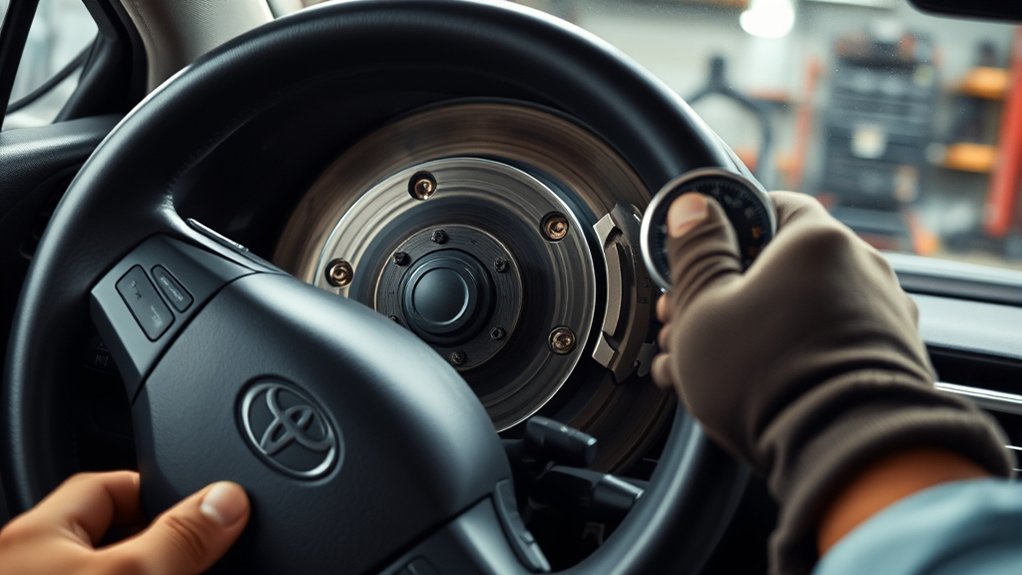
Cost depends on the Camry model year, local labor rate, parts choice, and the actual cause. A brake-only vibration may require pads, rotor machining or replacement, caliper work, or simply correction of an installation problem. If the shake is actually from tires, a wheel, a bearing, or suspension, the repair will be different.
RepairPal’s estimates were last updated September 3, 2026. Its Toyota Camry brake pad replacement estimate averages about $304 to $368. Its current general brake rotor replacement estimate is about $574 to $698. Both figures exclude taxes and fees, do not account for your location, and may not include related repairs.
Use those figures as planning references, not as a diagnosis or guaranteed quote. Before approving a larger brake repair, ask what measurements or visible damage justify each recommended part.
[Amazon Products Picked for You]
PLEASE CONFIRM YOUR FITMENT: Using the Amazon Confirmed Fit bar at the top of the page or check the Product Description to confirm your vehicle fitment. This may be delivered in multiple boxes
PLEASE CONFIRM YOUR FITMENT: Using the Amazon Confirmed Fit bar at the top of the page or check the Product Description to confirm your vehicle fitment. This may be delivered in multiple boxes

PLEASE CONFIRM YOUR FITMENT: Using the Amazon Confirmed Fit bar at the top of the page or check the Product Description to confirm your vehicle fitment. This may be delivered in multiple boxes
How Can You Reduce the Chance of Brake Shudder Returning?
The best prevention is correct installation plus early diagnosis when braking feel changes. Replacing a rotor without correcting the condition that caused runout, drag, or uneven wear can bring the vibration back.
- Follow Toyota’s inspection schedule. Brake linings, pads, discs, hoses, and related components need periodic inspection.
- Fix caliper or hardware problems with the brake job. A dragging pad can overheat and damage a replacement rotor.
- Keep rotor and hub mating surfaces clean during installation. A rotor must sit correctly on the hub.
- Use the correct wheel-fastener torque and tightening procedure. Improper clamping can contribute to runout and vibration.
- Manage heat on long descents. Use an appropriate lower drive range or engine braking when your Camry’s manual and conditions allow, rather than continuously riding the brake pedal.
- Pay attention after tire or brake service. A new vibration that appears immediately after service is useful diagnostic information.
- Do not ignore a small repeatable pulsation. Early measurement can reveal a mounting, rotor, or caliper issue before more parts are damaged.
Why Does Brake Vibration Sometimes Return After New Pads or Rotors?
Repeat vibration often means the previous repair treated the symptom but not the root cause. New rotors can develop the same complaint if the hub mating surface was not prepared correctly, rotor/hub runout was never checked, a caliper continues to drag, or the wheel was clamped incorrectly.
The useful question is not simply “Are the new rotors bad?” Ask what changed after the repair and what was measured. A return of the same brake shudder should trigger checks of rotor runout, hub runout or bearing play where applicable, caliper movement, pad wear pattern, mounting-surface cleanliness, and wheel-fastener torque.
This measurement-first approach is more reliable than repeatedly replacing pads and rotors until the vibration temporarily disappears.
Related Guides
Frequently Asked Questions
Why does my steering wheel shake when I brake my Toyota Camry?
If the shake happens only during braking, start with the front brake and hub assembly. Rotor lateral runout or disc thickness variation is a common pattern. Caliper drag, uneven pad wear, hub contamination, incorrect wheel-fastener torque, worn suspension parts, and tire or wheel problems can also contribute.
Is it safe to drive a Camry if the steering wheel shakes when braking?
A specific vehicle cannot be declared safe without inspection. Arrange service soon for any repeatable brake vibration. Stop normal driving if braking ability changes, the pedal becomes soft or sinks, the car pulls severely, you see fluid leakage or smoke, or you hear heavy grinding.
Can bad tires cause steering wheel vibration when braking?
Yes. Tire imbalance, damage, uneven wear, or wheel runout can create steering vibration and braking may make an existing vibration more noticeable. If the Camry shakes at highway speed even with the brake pedal released, inspect the tires and wheels before assuming the brakes are the only cause.
Why does my car shake when I brake but the brakes look fine?
A rotor can look smooth and still have excessive runout or thickness variation. Those conditions require measurement with the correct tools. The inspection should also cover the hub mounting surface, caliper operation, wheel-fastener torque, wheel bearings, and front suspension.
Why does my 2012 Camry shudder when I brake?
A 2012 Camry can shudder because of rotor runout or thickness variation, uneven pads, caliper drag, a mounting problem, tire or wheel issues, or worn steering and suspension parts. Age alone does not identify the failed part, so inspect and measure the brake, hub, wheel, and front-end components before replacing them.
Should I replace rotors and pads together?
Not automatically. The rotors should be measured and inspected when brake work is performed. Replace or resurface them only when their thickness, runout, damage, or surface condition requires it. Brake pads should be serviced as a matched set on the axle when replacement is needed.
Can ABS make the steering wheel or brake pedal vibrate?
Yes. During an actual ABS event, Toyota notes that vibration may be felt through the vehicle or steering and the brake pedal may pulsate. A repeatable shake during normal braking on a dry road is a different pattern and should be inspected.
Why did my Camry start shaking after brake or tire service?
Tell the shop exactly when the vibration began. Wheel seating, lug-nut torque, rust or debris on the hub, rotor seating, rotor runout, tire balance, or another installation-related condition should be checked before additional parts are replaced.
Conclusion
If your Camry’s steering wheel vibrates when braking, diagnose the pattern before buying parts. A brake-only steering-wheel shake commonly directs the first inspection toward front rotor runout, disc thickness variation, the hub mounting surface, pads, and calipers. Vibration that continues without braking points more strongly toward tires, wheels, bearings, or suspension.
The most useful next step is a measurement-based inspection: check pad wear, rotor thickness, rotor runout, hub condition, caliper operation, and wheel installation. Correcting the root cause is what prevents the same brake shudder from returning after another set of pads or rotors.
Sources
- Wagner Brake: Brake Pedal Pulsation and Disc Thickness Variation — explains lateral runout and disc thickness variation.
- Toyota 2026 Camry Warranty & Maintenance Guide — current manufacturer guidance for inspection of brake linings, pads, discs, runout, wear, leakage, and damaged parts.
- Toyota Tech Tip T-TT-0132-11 hosted by NHTSA — supports measuring disc thickness, rotor runout, hub/bearing checks, rotor positioning, and caliper inspection.
- Toyota Manuals & Warranties — official model-year owner-manual access, including ABS and warning-light instructions.
- Toyota Safety Recalls & Service Campaigns Lookup — official Toyota recall lookup.
- NHTSA Search Safety Issues — federal recall, investigation, and safety-issue search.
- RepairPal: Toyota Camry Brake Pad Replacement Cost — September 2026 Camry brake-pad cost estimate.
- RepairPal: Brake Rotor Replacement Cost — September 2026 general brake-rotor replacement estimate.
