Your Toyota Camry may use a serpentine belt or accessory drive belt to turn one or more engine accessories, but what that belt powers depends on the model year, engine, and hybrid system. Squealing, frayed ribs, a charging warning, or rising engine temperature can be serious, but you should identify your exact powertrain before replacing parts.
Quick Answer
A failing Toyota Camry serpentine or accessory belt may squeal, fray, glaze, slip, or lose ribs. Depending on the model, it can affect charging, cooling, or air conditioning. Check the exact year and engine first because newer hybrid Camrys use different accessory layouts than many older gasoline models.
Key Takeaways
- Confirm the Camry’s year, engine, and hybrid status before assuming which accessories are belt-driven.
- Squealing, chirping, fraying, missing ribs, contamination, and a belt that runs off-center all require prompt inspection.
- A new belt will not solve a seized pulley, weak tensioner, leaking fluid, or misaligned accessory.
- Stop driving if the engine overheats, the belt comes off, or a serious warning appears.
- Use the VIN, the correct routing diagram, and the model-specific Toyota maintenance information when selecting or replacing the belt.
At a Glance
| Time Required | About 10 minutes for a visual inspection. Replacement time varies by engine layout, access, and the condition of the tensioner and pulleys. |
| Difficulty | Easy for inspection; moderate for replacement. Some engines have limited access or special procedures. |
| Tools Needed | Flashlight, gloves, routing diagram, socket set, and the correct tensioner or belt-release tool for the vehicle. |
| Cost | Varies by model, engine, belt type, labor rate, and whether the tensioner, pulley, or leaking component also needs repair. |
Warning: Switch the vehicle fully off, keep the smart key away, and let the engine cool before inspecting the belt. Never place your hands, clothing, or tools near a moving belt or pulley. On a Camry Hybrid, do not touch orange high-voltage cables or components.
Why Your Toyota Camry’s Serpentine Belt Is So Important
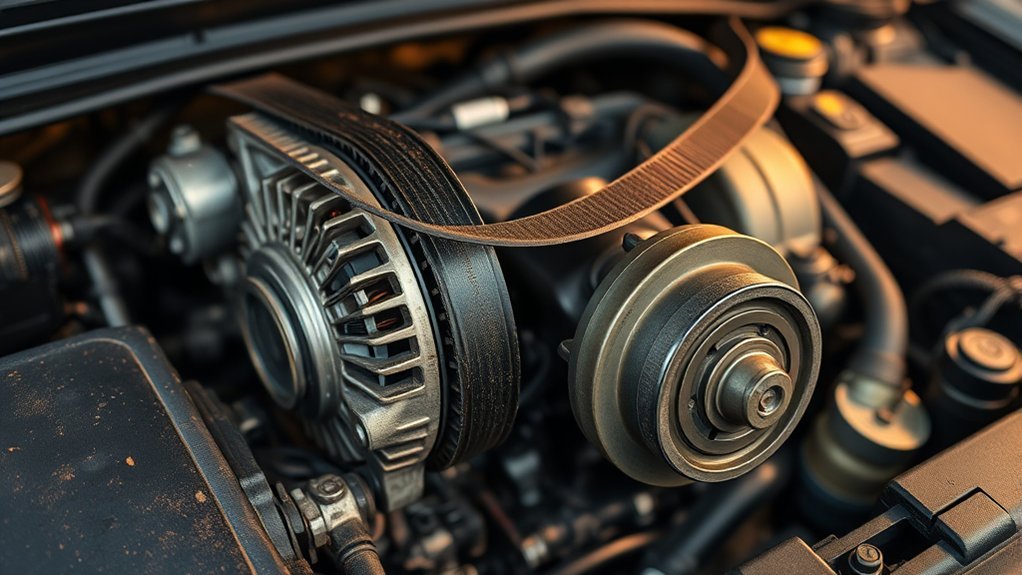
A serpentine belt transfers power from the engine’s crankshaft pulley to the accessories included in that engine’s belt routing. Depending on the Camry, those accessories may include an alternator, air-conditioning compressor, mechanical water pump, or hydraulic power-steering pump.
Those functions are not the same on every Camry. Many later models use electric power steering, and hybrid models may use electrically operated accessories instead of the belt-driven components found on older gasoline vehicles. Toyota describes the current U.S. Camry as having an all-hybrid powertrain, so owners should not assume that advice written for an older Camry applies to a newer one.
Confirm Your Camry’s Year, Engine, and Powertrain First
Before diagnosing or buying a belt, record the following information:
- Model year
- Gasoline or hybrid powertrain
- Engine size or engine code
- Vehicle identification number, or VIN
- Whether the vehicle uses electric or hydraulic power steering
- Which accessories appear in the belt-routing diagram
Use Toyota’s manual and warranty portal to find the information for the exact model. You can also enter the VIN in the official Toyota parts catalog to reduce the risk of ordering the wrong belt.
Note: “Serpentine belt,” “drive belt,” and “accessory belt” are often used interchangeably. Some engines use more than one belt, while some hybrid layouts differ substantially from conventional gasoline-engine systems.
Symptoms of Serpentine Belt Failure in Your Toyota Camry
A damaged belt may produce noise or visible wear before it fails. However, a belt symptom can also be caused by a tensioner, pulley, bearing, fluid leak, or accessory that is beginning to seize.
| Symptom | Possible Cause | Urgency |
|---|---|---|
| Brief squeal at startup | Slip, contamination, low tension, or high accessory load | Arrange an inspection soon |
| Repeated chirping | Pulley misalignment, rib-tracking problem, damaged pulley, or belt wear | Diagnose promptly |
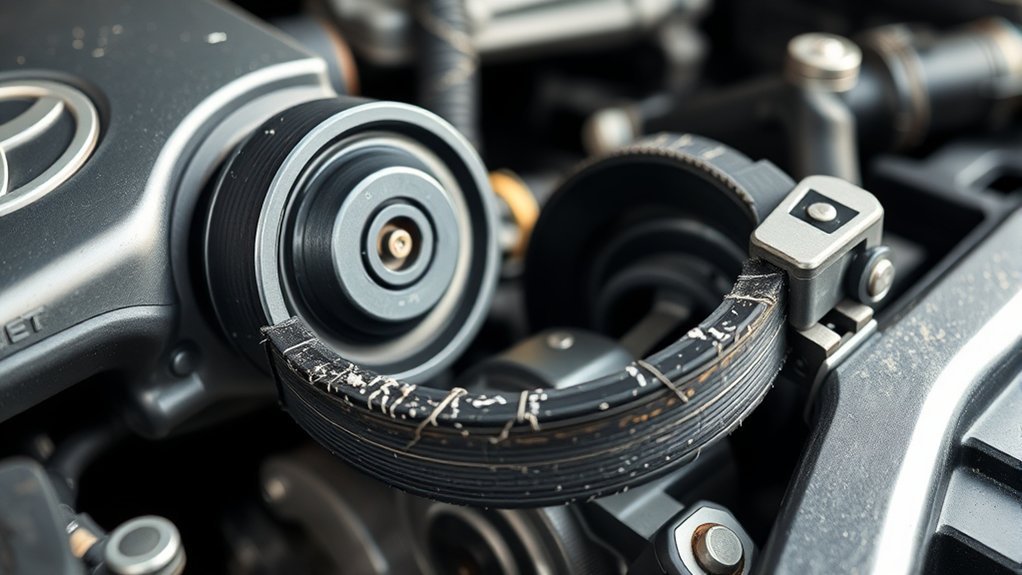
| Cracks, frayed edges, missing ribs, or exposed cords | Advanced belt damage or tracking problem | Avoid unnecessary driving and replace after diagnosis |
| Belt runs off-center or walks toward a pulley edge | Misalignment, damaged tensioner, bent bracket, or pulley fault | Stop and inspect before the belt comes off |
| Battery or charging warning | Loss of alternator drive on models with a conventional alternator, or another charging-system fault | Pull over safely and diagnose promptly |
| Rapidly rising coolant temperature | Possible loss of water-pump drive on an applicable engine, or a separate cooling-system problem | Stop and switch off the engine |
| Warm air from the vents with normal blower airflow | Possible compressor-drive problem on an applicable model, or another A/C fault | Inspect the belt and A/C system |
A noisy accessory drive does not automatically mean the belt is the only failed part. The tensioner, idler, pulley alignment, fluid leaks, and accessory bearings must also be checked.
How to Identify Squealing or Chirping Noises From the Belt
Listen to when the noise occurs and how it changes. Startup, acceleration, air-conditioning operation, wet weather, and electrical load can help narrow the cause, but sound alone cannot confirm the failed component.
Causes of Squealing Noises
A squeal is usually a continuous, high-pitched sound. Possible causes include:
- A belt slipping against one or more pulleys
- A weak or sticking automatic tensioner
- Oil, coolant, or another fluid on the belt
- An accessory that is difficult to turn
- An incorrect belt size
- Improper tension on a manually adjusted belt
- A polished or heat-damaged belt surface
Do not apply belt dressing as a repair. It can mask the noise temporarily without correcting the leak, tension, alignment, or bearing problem.
Causes of Chirping Noises
A chirp is often rhythmic and may increase with engine speed. Possible causes include:
- A pulley that is not aligned with the others
- A belt rib riding against a pulley flange
- A damaged or contaminated pulley groove
- A worn tensioner pivot or bearing
- A belt installed one groove out of position
- A bent accessory bracket
Importance of Early Detection
Early diagnosis can prevent the belt from leaving the pulleys, shredding, or damaging nearby wiring and hoses. It can also identify a failing tensioner or bearing before that component seizes.
Pro Tip: Record a short video of the sound from a safe distance with the hood open. Do not move the phone, your hands, or clothing close to the belt. The recording may help a technician compare the noise at startup, idle, and with the A/C selected.
Spotting Visible Signs of Wear on Your Serpentine Belt
Inspect the belt with the engine off and cool. Use a flashlight to examine both the smooth back and the ribbed side wherever they are visible.
Look for:
- Frayed edges or loose cords
- Sections of missing rib material
- Deep cracks or splits
- A shiny or heat-polished surface
- Uneven rib wear
- Rubber dust around the pulleys
- Oil, coolant, or other fluid contamination
- A belt that sits too high, too low, or off-center in a pulley
- A tensioner arm that appears crooked or near the end of its travel
Do not judge the belt by cracking alone. Some modern belt materials can lose rib material and grip without developing the dramatic surface cracks commonly seen on older belts.
If the belt is oily or wet with coolant, repair the leak before fitting a new belt. Installing a new belt without fixing the contamination source can cause repeat noise, swelling, softening, or early failure.
How a Failing Serpentine Belt Affects Engine Temperature
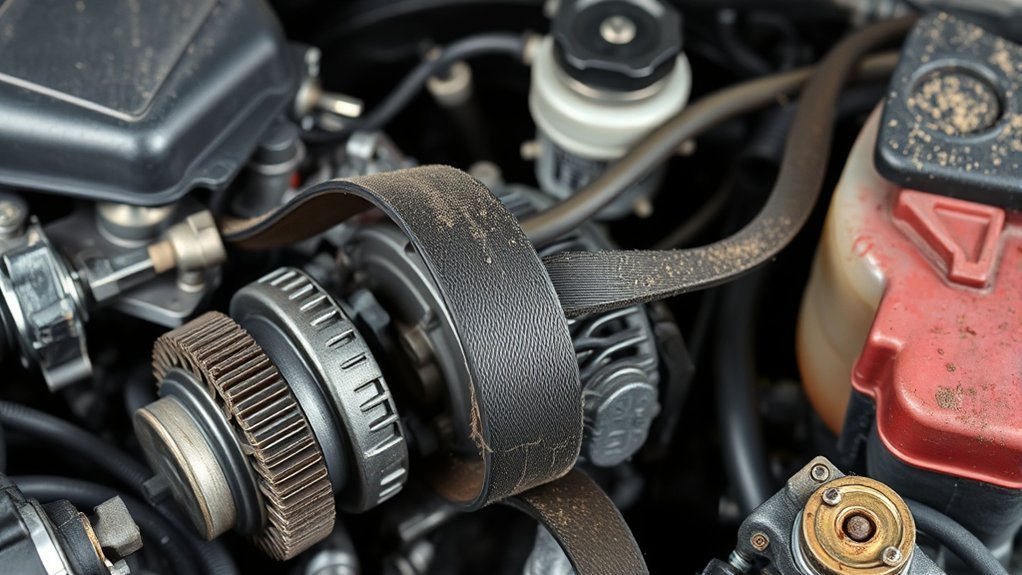
If your Camry’s engine uses a belt-driven water pump, a slipping, broken, or displaced belt can reduce or stop coolant circulation. The temperature gauge may rise quickly, and a warning message or red temperature indicator may appear.
Other Camry powertrains use different cooling-system layouts, so overheating does not prove that the belt is at fault. Low coolant, a leak, cooling-fan failure, thermostat trouble, radiator blockage, an electric-pump fault, or another problem may produce similar symptoms.
Warning: If the temperature rises into the hot range, steam appears, or an overheating warning is displayed, pull over safely and switch the engine or hybrid system off. Continuing to drive can cause severe engine damage. Do not open a hot radiator cap.
Diagnosing Power Steering and AC Issues From Belt Failure
Steering and climate-control symptoms must be matched to the actual equipment in your Camry. A symptom that points to belt failure on an older gasoline model may have a different cause on an EPS-equipped or hybrid vehicle.
Power Steering Symptoms
On a Camry with a belt-driven hydraulic power-steering pump, belt slip or breakage can make the steering much heavier, especially while parking or moving slowly. A whining pump, fluid leak, or foamy fluid may also be present.
Many later Camrys use electric power steering. These vehicles do not rely on a belt-driven hydraulic pump and normally do not have a conventional power-steering fluid reservoir. Heavy steering or an EPS warning on such a vehicle requires electrical and steering-system diagnosis rather than an automatic belt replacement.
AC Performance Issues
On a model with a belt-driven air-conditioning compressor, a slipping or missing belt can prevent the compressor from operating correctly. The blower may still move air through the vents, but the air may remain warm.
Weak airflow is a different symptom. It is more commonly associated with the cabin filter, blower motor, ducts, evaporator icing, or climate-control electronics. Hybrid Camrys may also use electrically driven climate-control components, so inspect the exact system before blaming the belt.
Dashboard Warnings That May Appear
A belt or accessory-drive failure may be accompanied by one or more warnings, depending on the model:
- Charging-system or battery warning
- High coolant-temperature warning
- Electric power-steering warning
- Master warning light
- Hybrid-system warning
- Check-engine light after an accessory or voltage-related fault
A battery-shaped warning does not simply mean that the battery is old. On a conventional charging system, it may indicate that the alternator is no longer producing the expected output. Use Toyota’s vehicle-specific warning-light information and the applicable owner’s manual to interpret the indicator.
When and How to Replace Your Toyota Camry’s Serpentine Belt
There is no single replacement mileage that applies to every Toyota Camry. Follow the maintenance guide for the exact model and replace the belt when the specified interval or its condition requires it.
Replacement is appropriate when the belt has severe fraying, missing ribs, exposed cords, deep splits, contamination that has damaged the material, or wear beyond the applicable inspection limit. A belt that has come off or been damaged by a seized component must not simply be reinstalled without diagnosing the cause.
Safe Replacement Process
- Identify the exact vehicle. Confirm the year, engine, powertrain, and VIN. Verify that the vehicle uses the belt being discussed.
- Obtain the correct belt. Match the replacement by VIN or exact engine, not by “Toyota Camry” alone.
- Find the routing diagram. Use the under-hood label or the model-specific repair information. Photograph the original routing before removal.
- Switch the vehicle off. Keep the key away, allow the engine to cool, and follow all hybrid precautions.
- Release belt tension correctly. Use the specified tool and tensioner point. Do not pry against plastic pulleys or accessories.
- Remove the old belt. Note any uneven wear, missing material, contamination, or damaged ribs that may reveal the underlying cause.
- Inspect the complete drive. Check the tensioner, idlers, pulley grooves, accessory bearings, brackets, and fluid leaks.
- Install the new belt. Follow the exact routing and leave the easiest accessible pulley until last.
- Check every groove. Make sure each rib is fully seated and the belt is centered on every pulley.
- Release the tensioner slowly. Confirm that the tensioner returns smoothly and does not sit at an abnormal angle.
- Perform a final visual check. Remove all tools and verify that no wires, hoses, or covers are touching the belt.
- Start and observe from a safe distance. Confirm that the belt tracks centrally without jumping, wobbling, chirping, or walking toward a pulley edge.
Note: Stop the engine immediately if the new belt runs off-center, flaps excessively, begins to shred, or produces severe noise. Recheck routing and inspect the tensioner and pulleys.
When to Replace the Tensioner or Pulleys
Replacing the belt alone may not solve the problem. The tensioner or a pulley may also need service when you find:
- Side-to-side pulley wobble
- Grinding, roughness, or looseness when a pulley is turned by hand with the belt removed
- A tensioner that binds, bounces, sits crooked, or moves through an unusually large range
- A pulley surface that is chipped, bent, or contaminated
- A belt that repeatedly walks off-center
- Fresh belt damage shortly after replacement
- An accessory that is difficult to rotate or appears seized
Do not spin pulleys aggressively or use compressed air to overspeed a bearing. A technician can measure alignment and inspect components that are difficult to access safely.
What to Do if the Belt Fails While Driving
- Keep a firm grip on the steering wheel and avoid sudden maneuvers.
- Watch the temperature display and warning lights.
- Turn off unnecessary electrical loads and climate control if it is safe to do so.
- Move out of traffic and stop in a safe place.
- Switch the engine or hybrid system off if the temperature rises, steam appears, or the belt is loose or tangled.
- Do not attempt to reinstall a hot, shredded, or displaced belt beside traffic.
- Arrange towing when cooling, charging, steering, or belt routing cannot be confirmed.
Even if the engine still runs, a loose belt can wrap around pulleys, damage wiring, strike hoses, or leave debris near the crankshaft seal. Continued driving may turn a relatively small repair into a larger one.
Frequently Asked Questions
What are the signs of a failing Toyota Camry serpentine belt?
Common signs include squealing, chirping, frayed edges, missing ribs, glazing, contamination, rubber dust, and a belt that runs off-center. Depending on the model, you may also see a charging warning, rising coolant temperature, or reduced A/C cooling. Confirm which accessories the belt actually drives before connecting a symptom to it.
What happens if the serpentine belt fails while driving?
The effects depend on the engine. A conventional alternator may stop charging, a belt-driven water pump may stop circulating coolant, and an older hydraulic steering system may lose assist. Pull over safely, watch for overheating, and arrange towing if the vehicle’s cooling or charging system is affected.
How much does it cost to replace a serpentine belt on a Toyota Camry?
The total depends on the year, engine, belt type, local labor rate, and access. The price increases if the tensioner, idler, pulley, leaking seal, or accessory must also be repaired. Request a VIN-based estimate rather than relying on one universal price range.
What are the visible signs of belt damage?
Look for fraying, loose cords, missing rib material, deep cracks, polished areas, uneven wear, contamination, and rubber debris. Also check whether the belt is centered on every pulley. Modern belt wear may not always produce obvious surface cracking.
Does every Toyota Camry have a serpentine belt?
No single belt layout applies to every Camry. The model has been sold with different gasoline engines and hybrid systems, and the accessories driven mechanically or electrically vary. Check the VIN, under-hood routing information, and the correct Toyota manual before buying parts.
Can I continue driving with a squealing belt?
A brief squeal does not reveal the exact cause, but it should not be ignored. Stop driving immediately if the belt is frayed, displaced, smoking, or accompanied by overheating, a charging warning, severe steering change, or grinding. Otherwise, arrange prompt inspection before the condition worsens.
Conclusion
A Toyota Camry serpentine-belt problem should be diagnosed by condition and by the exact vehicle configuration, not by mileage or sound alone. Inspect the belt, tensioner, pulleys, alignment, and nearby fluid leaks as one system. If the belt comes off, the engine overheats, or a serious warning appears, stop driving and arrange professional diagnosis.
The safest approach is to use the VIN, follow the correct Toyota maintenance and repair information, and verify that every pulley and accessory is operating properly before installing a replacement belt.
Sources
- Toyota Manuals and Warranties — model-specific owner, warranty, and maintenance information.
- Official Toyota Camry page — current Camry hybrid-powertrain information.
- Toyota Warning Lights — vehicle-specific indicator and owner’s-manual guidance.
- Toyota Genuine Parts catalog — VIN-based vehicle and parts selection.
