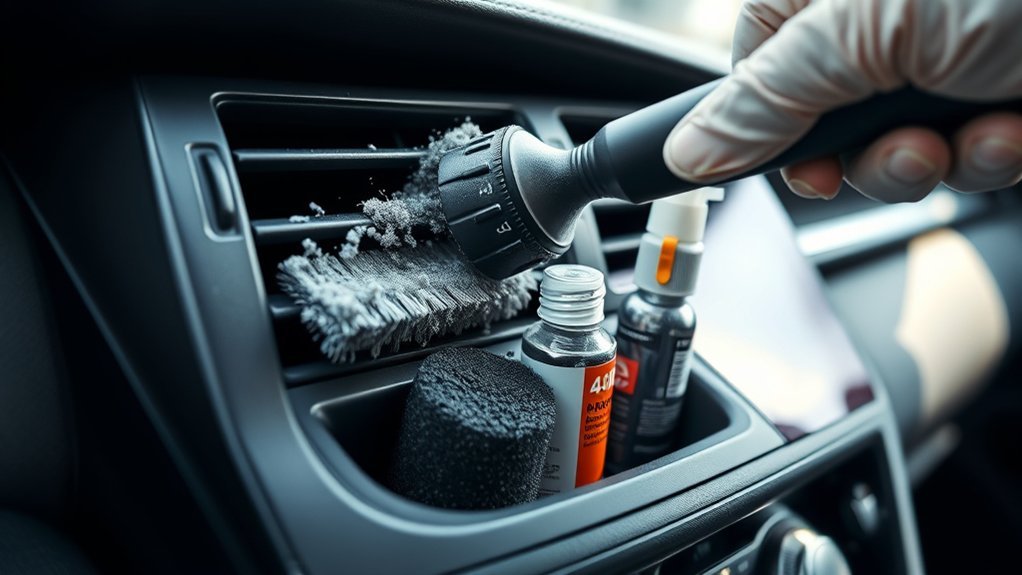
Dust on the dashboard louvers is usually easy to remove, but an odor coming from a Toyota Camry’s vents can have several causes. A dirty cabin air filter, leaves near the outside-air intake, damp carpet, or moisture around the air-conditioning evaporator may all contribute. The safest approach is to clean the visible vents first, inspect the filter, and diagnose the type of smell before applying any chemical product.
Quick Answer
To clean Toyota Camry air vents, turn the vehicle off, loosen dust with a soft detailing brush, and vacuum it away with a crevice tool. Wipe the louvers with a barely damp microfiber cloth. Replace the cabin air filter on the schedule for your model year. For musty odors, address moisture or have the evaporator serviced—do not flood the vents with cleaner.
Key Takeaways
- Use a soft brush, vacuum, and barely damp microfiber cloth for routine vent-louver cleaning.
- Do not spray a household disinfectant or large amount of liquid into the vents.
- A musty odor often requires moisture-source diagnosis; a new filter may help, but it cannot repair a clogged drain, wet carpet, or contaminated evaporator.
- Burning, electrical, fuel, exhaust, or sweet coolant-like odors require inspection rather than routine deodorizing.
At a Glance
| Time Required | About 20–30 minutes for the vents; allow 30–45 minutes if replacing the cabin air filter |
| Difficulty | Easy for surface cleaning; moderate if glove-box access is unfamiliar |
| Tools Needed | Soft detailing brush, microfiber cloth, vacuum with crevice tool, cotton swabs, and a flashlight |
| Cost | Approximately $0–$50, depending on the supplies already available and the replacement filter selected |
Warning: Do not spray bleach, ammonia, household disinfectant, fragrance oil, or an unapproved cleaner into the dashboard vents. Never mix cleaning products. Keep liquids away from switches and electronics, ventilate the cabin, and use an HVAC treatment only when its label explicitly permits automotive vent or evaporator application.
Why You Should Clean Your Air Vents in a Toyota Camry
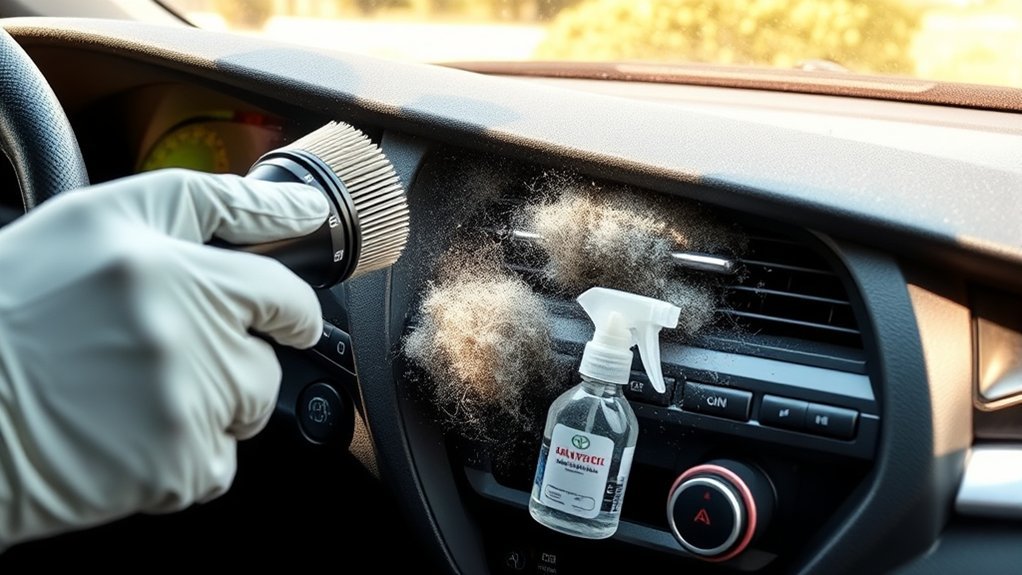
Cleaning the visible air-vent louvers removes dust that would otherwise be blown across the dashboard and cabin. It also makes the louvers easier to adjust and gives you an opportunity to notice weak airflow, unusual residue, or an odor that needs further diagnosis.
Surface cleaning can improve visible cleanliness, but it does not reach the entire heating, ventilation, and air-conditioning system. The evaporator, blower housing, ducts, filter compartment, outside-air intake, and condensate drain are hidden behind the dashboard. A recurring musty odor may therefore remain even when the louvers look spotless.
Moisture control is especially important when an odor appears damp or musty. The U.S. Environmental Protection Agency and Centers for Disease Control and Prevention both emphasize correcting moisture sources when dealing with mold or mildew. Cleaning the vent surface alone cannot correct wet carpet, a water leak, poor condensate drainage, or contamination on the evaporator.
A clean cabin air filter also supports normal airflow by trapping airborne particles before they enter the passenger compartment. However, filtration supplements source control and ventilation; it does not remove every pollutant or repair an active moisture problem.
Common Causes of Dust and Odors in Your Toyota Camry
Dust and odors do not all originate in the dashboard louvers. Identifying when the smell occurs and what it resembles will help you choose the correct response.
| Symptom | Possible Source | First Action |
|---|---|---|
| Dry, dusty smell in every mode | Dusty louvers, debris near the intake, or a loaded cabin air filter | Clean the louvers and inspect the filter and cowl area |
| Musty smell, especially after the AC starts | Moisture around the evaporator, drain, filter, carpet, or another damp area | Check for moisture, replace a dirty filter, and arrange evaporator or drain inspection if the odor persists |
| Stale food, smoke, pet, or fragrance odor | Interior fabrics, spills, floor mats, cargo, or a saturated filter | Remove the source and clean the interior before treating the HVAC system |
| Weak airflow | Loaded filter, obstruction, blower problem, or a door-actuator issue | Check the filter; seek service if airflow remains weak or uneven |
Leaves, pollen, and road dust can collect around the fresh-air intake near the base of the windshield. A neglected cabin air filter may then restrict airflow or release a dusty odor. Interior spills, wet floor mats, water intrusion, and damp upholstery can also circulate odors through the system even when the HVAC components are clean.
Recirculation mode is useful for rapid cooling and for temporarily limiting outside air during smoke, traffic fumes, or poor outdoor air quality. When outside conditions are acceptable, periodically selecting fresh-air mode can help exchange stale cabin air. Recirculation itself should not be treated as the sole cause of an odor.
Tools You’ll Need for Cleaning Air Vents
Routine surface cleaning requires only a few nonabrasive tools. Gather everything before starting so you do not have to leave dust loosened inside the louvers.
[Amazon Products Picked for You]

[Professional Detailing Brush Set] MVEQRRN Detailing Brushes Set Features 3 Soft Different Hair Bristles that are Gentle on Surfaces but can Cleaning on Dirt and Debris Grime .

【Professional Car Cleaning Kit】 The car detailing kit include natural wild boar hair detail brush * 1, soft hair brush * 1, fiber brush * 1, ultra soft detail brush * 1, dual head vent brush * 1, car cleaning gel * 1,organizer bag * 1. Different brush heads are designed for specific areas of the car. These brushes excel in reaching even the smallest crevices that car wash sponges or towels may miss, providing a thorough and meticulous cleaning experience

🚗【Professional 26 Pcs-in-1 Car Cleaning Kit】 The complete and decent car detailing kit equipped with 5 * detailing brush set, 4 * drill brushes, 3 * wire brush, 2 * vent cleaning brush, 1 * wheel brush, 1 * tire brush, 1 * detachable handle, 4 * of strong water absorption cloth cover and a 100ml spray bottle, 1 * dash duster brush, 1 * towel, 1 * car wash mitt, 1 * storage bag. Excellent completion of all works required for external and internal details! A gift for car buffs. Best gifts for men, dad, father's day gifts tool.
Essential Cleaning Supplies
- Soft detailing brush: Use clean, flexible bristles that will not scratch the louver finish.
- Microfiber cloth: Use one dry cloth and, if needed, a second cloth that is only barely damp.
- Vacuum with a crevice tool: Hold it near the vent while brushing so loosened dust is removed instead of pushed deeper into the duct.
- Cotton swabs or foam detailing swabs: Use these for narrow edges and corners without forcing them into the duct.
- Flashlight: Inspect the vent openings, filter compartment, and footwell for debris or moisture.
Recommended Tools List
The following items are optional:
- Low-pressure compressed air: Use only in short, controlled bursts while holding the vacuum nearby. Keep the nozzle back from the louvers and avoid driving dust farther into the system.
- Replacement cabin air filter: Confirm the correct part for the Camry’s model year, trim, powertrain, and market before opening the glove-box area.
- Interior-safe cleaner: Apply a small amount to the cloth rather than spraying it directly at the vent.
- Automotive HVAC treatment: Use only if the product label specifically authorizes the intended automotive evaporator or HVAC application.
Note: A fragrance spray can mask an odor temporarily, but it will not correct a damp evaporator, blocked drain, wet carpet, coolant leak, or electrical problem.
Step-by-Step Guide to Cleaning Air Vents
-
Park safely and turn the vehicle off. Park on a level surface, select Park, set the parking brake, and switch off the engine, fan, and climate controls before cleaning the louvers.
-
Remove loose dashboard debris. Wipe or vacuum the surrounding dashboard first so dust does not fall back onto the cleaned vent.
-
Position the vacuum beside the vent. Fit the crevice tool and hold it close to the louver opening without pressing against or bending the slats.
-
Brush each louver gently. Move the brush along the face and edges of each slat while the vacuum captures loosened dust. Adjust the vent angle so both sides are accessible.
-
Wipe the surfaces. Use a dry microfiber cloth first. For stuck-on residue, apply a small amount of interior-safe cleaner to the cloth or swab. The material should be barely damp, not wet.
-
Use compressed air only when necessary. Apply brief, low-pressure bursts from a safe distance while vacuuming. Do not insert the nozzle deeply or blast delicate louvers.
-
Clean the outside-air intake area. With the vehicle off, remove loose leaves and debris from the cowl area at the base of the windshield. Do not remove trim or reach into moving wiper components unless the owner’s manual provides a procedure.
-
Inspect the cabin air filter. Check the filter if it is due for service, visibly loaded, damp, damaged, or associated with weak airflow or a dusty odor.
-
Test the system. Open the doors or windows, start the vehicle in a ventilated location, select fresh-air mode, and run the fan from low to higher speeds. Confirm that airflow is even and listen for rattling or debris.
Pro Tip: Keep the vacuum nozzle beside the brush throughout the cleaning process. This captures dust at the vent face instead of pushing it into the duct, where the fan may blow it back later.
If the visible louvers are clean but a musty smell returns whenever the AC starts, the source is probably deeper than the vent face. Continue with the odor and filter checks below rather than repeatedly adding cleaner to the louvers.
How to Neutralize Odors After Cleaning
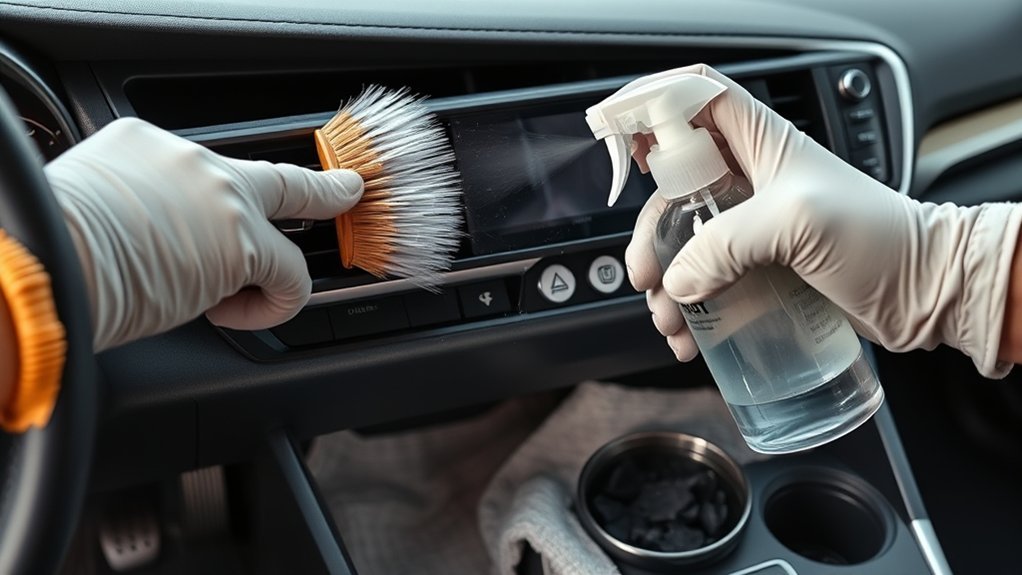
After removing visible dust, neutralize odors by correcting their source rather than covering them with fragrance.
- Remove cabin odor sources: Empty food containers, clean spills, dry wet mats, inspect under the seats, and check the trunk and upholstery.
- Inspect the cabin filter: Replace a dirty, damp, damaged, or overdue filter with the correct size and orientation.
- Ventilate the vehicle: When outdoor air quality and weather permit, open the doors or windows and run the fan in fresh-air mode.
- Dry residual AC moisture: After extended air-conditioning use, turning the AC compressor off while leaving the fan running for the last few minutes of a drive may help reduce residual surface moisture. This is a preventive habit, not a repair for a clogged drain or contaminated evaporator.
- Use only a label-approved treatment: If using an automotive HVAC or evaporator cleaner, follow its exact application, ventilation, personal-protection, drying, and re-entry instructions.
- Escalate persistent odors: If the smell returns quickly, have the evaporator case, drain, filter housing, and interior water-leak points inspected.
Warning: Stop using the HVAC system and arrange prompt inspection if the odor smells like burning plastic, hot wiring, fuel, exhaust, or sweet coolant. Move to fresh air and stop in a safe place if fumes cause dizziness, headache, nausea, eye irritation, or breathing difficulty.
How Your Cabin Air Filter Affects Air Quality
The cabin air filter traps particles entering through the climate-control system. As it loads with dust, pollen, leaves, and other debris, airflow may decrease and a stale or dusty smell may become more noticeable.
Filter Maintenance Importance
The current 2026 U.S. Toyota Camry Warranty & Maintenance Guide lists cabin air filter replacement at 10,000-mile intervals. Toyota also notes that heavy traffic, dirt roads, and urban, desert, or dusty operating conditions may require more frequent replacement.
That interval should not be treated as universal for every Camry ever sold. Check the maintenance guide for the exact model year and market through Toyota’s owner-manual portal. Replace the filter sooner when it is wet, damaged, heavily loaded, or contributing to restricted airflow.
Toyota’s 2026 U.S. Camry maintenance guide lists cabin air filter replacement at 10,000-mile intervals and advises more frequent service in heavy traffic or dusty conditions.
Filter Type Impact
A standard particulate filter is designed mainly to capture airborne particles. An activated-carbon or charcoal-infused filter may also reduce some odors and gaseous contaminants, depending on its construction and condition.
A carbon filter is not a cure for every smell. It cannot repair a coolant leak, remove standing water, unblock a drain, dry wet carpet, or clean biological residue from an evaporator. Choose a filter that fits correctly and meets the vehicle or filter manufacturer’s requirements rather than selecting one solely because it is labeled “odor eliminating.”
Replacing Your Cabin Air Filter
Many Toyota Camry cabin filters are accessed behind the glove box, but the release method and surrounding components can vary by model year. Consult the owner’s or maintenance manual before forcing the glove box, damper, tabs, or filter cover.
Replacing a loaded cabin air filter can restore airflow and reduce recirculated dust, but persistent moisture or unusual chemical odors still require source diagnosis.
- Confirm the replacement filter: Verify the year, trim, powertrain, market, dimensions, and any directional markings.
- Empty the glove box: Remove loose objects so they do not fall when the compartment is lowered.
- Release the glove box carefully: Follow the model-specific procedure for the side stops and any damper arm.
- Remove the filter cover: Note how its clips or tabs engage before pulling on it.
- Observe the old filter’s orientation: Photograph the installed direction before removal if the markings are difficult to see.
- Remove the old filter slowly: Keep it level to avoid dropping leaves and dust into the blower housing.
- Clean loose debris: Use a vacuum at the accessible housing opening. Do not pour or spray liquid into the compartment.
- Install the new filter: Follow the filter and vehicle instructions for orientation. Do not crush, fold, or leave gaps around the frame.
- Reassemble and test: Refit the cover, glove box, stops, and damper, then test airflow at several fan speeds.
Note: An arrow labeled “UP” points upward. An arrow labeled “AIR FLOW” points in the direction air travels through the filter, which may not be upward. Follow the wording on the replacement filter and the vehicle’s instructions rather than assuming both arrows mean the same thing.
[Amazon Products Picked for You]
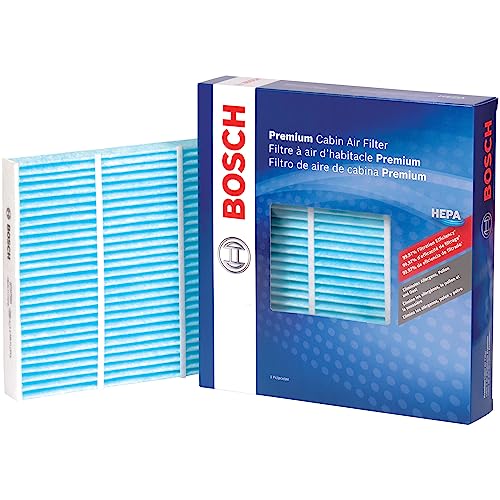
High Efficiency Particulate Cabin Air Filters Are Designed To Trap Microscopic Pollutants Including Pollen, Mold And Common Allergens

[Vehicle Fitment]: For Toyota: 4Runner (2010-2024), Avalon (2005-2018), Camry (2007-2017), Corolla (2009-2019), Corolla iM (2017-2018), Highlander (2008-2019), Land Cruiser (2008-2011,2013-2021), Matrix (2009-2014), Mirai (2016-2020), Prius (2010-2015), Prius C (2012-2019), Prius Plug-In (2012-2015), Prius V (2012-2018), RAV4 (2006-2018), Sequoia (2008-2022), Sienna (2011-2020), Tundra (2007-2021), Venza (2009-2016), Yaris (2007-2018).

[Vehicle Fitment]: Replacement for Toyota: Avalon (2019-2022), Camry (2018-2025), Corolla (2019-2025), Corolla Cross (2022-2025), CROWN (2023-2024), C-HR (2018-2022) [IMPORTANT: Fits Japan Built Models ONLY, VIN starts with 'J'],Highlander (2020-2025), Prius (2016-2025), Prius AWD-E (2019-2022), Prius Prime (2017-2024), RAV4 (2019-2025), RAV4 Prime (2021-2024), Sienna (2021-2025), Venza (2021-2024), Grand Highlander (2024-2025), GR Corolla (2023-2025).
How to Prevent Future Odors in Your Toyota Camry
Odor prevention depends more on moisture and source control than on a particular cabin temperature. Use these habits:
- Keep the interior dry: Remove wet umbrellas, dry floor mats, and investigate damp carpet instead of allowing it to air-dry indefinitely inside the vehicle.
- Clear the cowl area: Remove leaves and organic debris near the outside-air intake before they decompose or obstruct drainage.
- Follow the filter schedule: Check the exact Toyota guide for the model year and shorten the interval under dusty or high-traffic conditions.
- Use recirculation selectively: Recirculate during rapid cooling or poor outside-air conditions, then use fresh-air mode when conditions permit.
- Reduce residual AC moisture: When practical, switch the AC compressor off and leave the fan operating briefly near the end of a drive.
- Repair water intrusion: Door-seal, windshield, sunroof-drain, body-drain, heater-core, or AC-drain problems should be corrected promptly.
- Avoid masking products: Heavy fragrance can combine with the original odor and make diagnosis more difficult.
Automatic climate control can be used for comfort, but no narrow temperature setting guarantees odor prevention. A dry interior, unobstructed drainage, a serviceable filter, and a clean intake are more meaningful preventive measures.
Tips for Maintaining Fresh Air in Your Toyota Camry
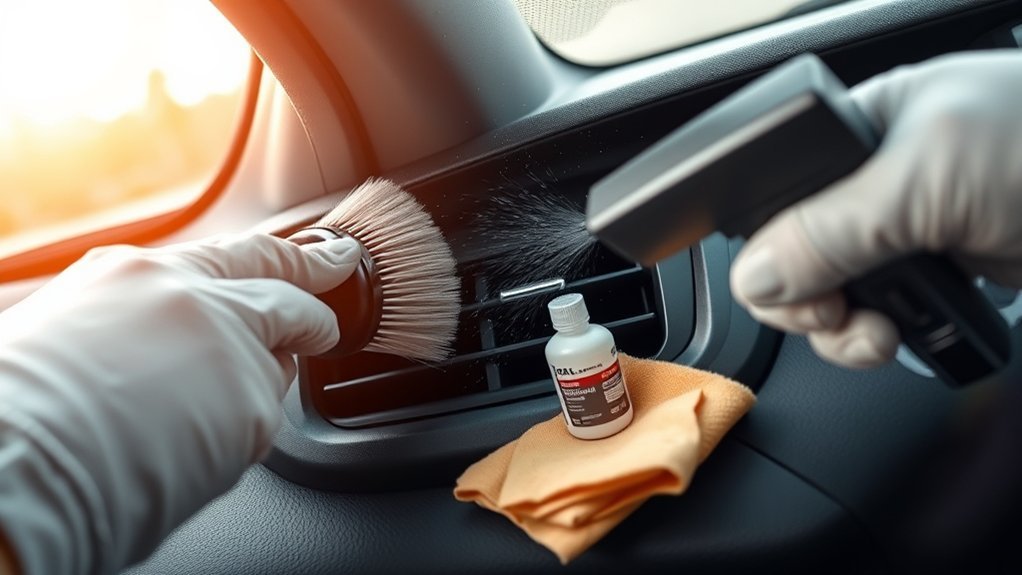
Maintaining fresh cabin air requires several small tasks rather than a single deodorizing product. Combine filter maintenance with interior cleaning, moisture control, and regular inspection of the intake and drainage areas.
Regular Cabin Filter Replacement
Record the filter’s installation date and mileage. Inspect it at the interval stated in the maintenance guide, and replace it sooner if airflow drops or the filter becomes wet, damaged, or unusually dirty. Make sure the replacement seats fully in the housing so air cannot bypass the filter media.
Use Charcoal Air Filters
An activated-carbon filter can be useful where traffic fumes or ordinary cabin odors are a concern. Choose a reputable, correctly fitting filter and follow its own replacement instructions. Once the carbon media is saturated, its odor-reduction performance declines even if the filter does not look completely blocked.
Do not expect a charcoal filter to neutralize a continuing leak, damp evaporator, wet carpet, smoke-contaminated upholstery, or decomposing debris. Correct the source first.
Control Humidity Levels
Remove wet items promptly and allow damp interior materials to dry fully. When weather and outdoor air quality permit, ventilate the cabin after carrying wet passengers, pets, or gear. If moisture repeatedly appears on the passenger-side floor or the windows fog excessively, inspect for water intrusion or an HVAC drainage problem.
Troubleshooting Persistent Odor Issues in Air Vents
Use the timing and character of the odor to decide whether routine cleaning is appropriate.
| Odor or Symptom | Likely Area to Check | Recommended Response |
|---|---|---|
| Dusty smell in heat, vent, and AC modes | Vent louvers, cabin filter, blower area, and cowl intake | Clean visible surfaces, remove intake debris, and inspect or replace the filter |
| Musty smell strongest just after AC startup | Evaporator, condensate drain, damp filter, or wet interior materials | Check for moisture and arrange model-appropriate evaporator or drain service if drying and filter replacement do not resolve it |
| Water on the passenger-side floor | AC drain, body leak, windshield seal, door seal, or heater core | Have the source inspected promptly; do not probe the drain aggressively or allow the carpet padding to remain wet |
| Sweet smell, greasy film, or unexplained coolant loss | Cooling system or heater core | Obtain professional inspection; avoid prolonged exposure to the vapor |
| Burning plastic or electrical smell | Blower motor, resistor or control module, wiring, debris, or another electrical component | Switch the HVAC off and arrange urgent inspection; stop driving if smoke, heat, or an active electrical fault is present |
| Fuel or exhaust odor | Fuel, engine, exhaust, sealing, or ventilation problem | Move to fresh air, stop in a safe location, and obtain urgent inspection rather than masking the smell |
| Weak or uneven airflow after filter replacement | Incorrect filter installation, obstruction, blower fault, or air-door actuator | Recheck filter fit and orientation; seek service if the problem remains |
On a warm, humid day, an operating AC system normally produces condensate, which may drip beneath the vehicle. The absence of a visible drip does not by itself prove a blockage, but a musty smell combined with wet carpet, water sloshing, or repeated interior moisture warrants inspection.
A technician may need to inspect the drain outlet, evaporator housing, blower, heater core, body seals, and water-entry points. Use a Toyota dealer or a qualified automotive HVAC technician when access requires dashboard disassembly or when the cause cannot be identified safely.
[Amazon Products Picked for You]
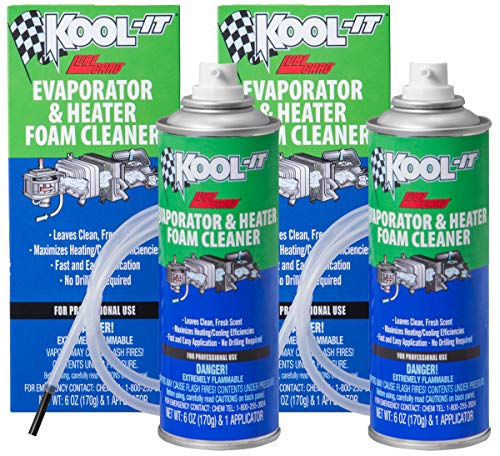
Leaves a clean, fresh scent

Source Odor Reduction for Stubborn Smells: Car Evaporator Cleaner generates dense foam that penetrates deep into evaporator fins to target dirt and common odor sources, including musty, sour, smoke, pet, and food smells. Instead of simply covering unpleasant scents, the formula works to address odor buildup at the source, supporting consistent indoor air comfort when the car AC is running. Suitable for DIY car owners, ride-hailing drivers, and used car dealers for routine interior AC maintenance

Related Guides
Frequently Asked Questions
How do I get rid of a bad smell in my car air vents?
Identify the odor before treating it. Clean the visible vent louvers, remove interior odor sources, inspect the cabin air filter, and check for damp carpet or intake debris. A musty smell that returns after AC use may require evaporator or drain inspection. Burning, fuel, exhaust, or sweet coolant-like odors need professional diagnosis.
How do I clean dust out of Toyota Camry vents?
Turn the vehicle and fan off. Hold a vacuum crevice tool beside the vent while loosening dust with a soft detailing brush. Wipe the louver surfaces with a dry or barely damp microfiber cloth. Use controlled compressed-air bursts only when necessary, and avoid pushing tools or liquid deep into the duct.
How do I remove a dusty smell from the AC?
Clean the louvers and exterior intake area, then inspect the cabin air filter. Replace a loaded or damp filter with the correct part. If the odor is musty rather than dry and dusty, check for moisture and have the evaporator or drain inspected when the smell returns after cleaning.
Why does my air vent smell like dust?
Common causes include dusty louvers, a loaded cabin air filter, leaves or pollen near the outside-air intake, and dust disturbed inside the blower area. Start with surface cleaning and filter inspection. Persistent weak airflow, rattling, or recurring debris may indicate an obstruction that needs professional service.
Can I spray disinfectant directly into Toyota Camry vents?
Do not spray an ordinary household disinfectant directly into the vents. It may not be approved for inhalation through an HVAC system and can leave residue or expose electronics to moisture. Use a barely damp cloth for visible surfaces. Apply an internal HVAC product only when its label specifically authorizes that automotive use.
How often should I replace a Toyota Camry cabin air filter?
The 2026 U.S. Camry maintenance guide lists replacement at 10,000-mile intervals and advises more frequent replacement under dusty or heavy-traffic conditions. Check the guide for your exact model year and market, and replace the filter sooner if it becomes wet, damaged, heavily loaded, or restrictive.
Conclusion
To clean Toyota Camry air vents safely, remove visible dust with a soft brush, vacuum, and barely damp microfiber cloth. Keep unapproved liquids out of the ducts, inspect the cabin air filter, and clear loose debris near the outside-air intake. When an odor returns after cleaning, diagnose the source instead of masking it. Musty odors may require moisture or evaporator service, while burning, fuel, exhaust, electrical, or coolant-like smells require prompt professional inspection.
Sources
- Toyota 2026 Camry Warranty & Maintenance Guide — supports the current U.S. cabin air filter maintenance interval and severe-condition guidance.
- Toyota Owner’s Manuals and Warranty Information — provides model-year-specific owner and maintenance publications.
- U.S. Environmental Protection Agency: Mold and Health — supports moisture-source control and careful wording about possible mold-related symptoms.
- Centers for Disease Control and Prevention: Mold — supports moisture correction, ventilation, product-label compliance, and cleaner-mixing precautions.
- U.S. Environmental Protection Agency: Guide to Air Cleaners — supports the general principle that filtration supplements source control and ventilation rather than replacing them.
