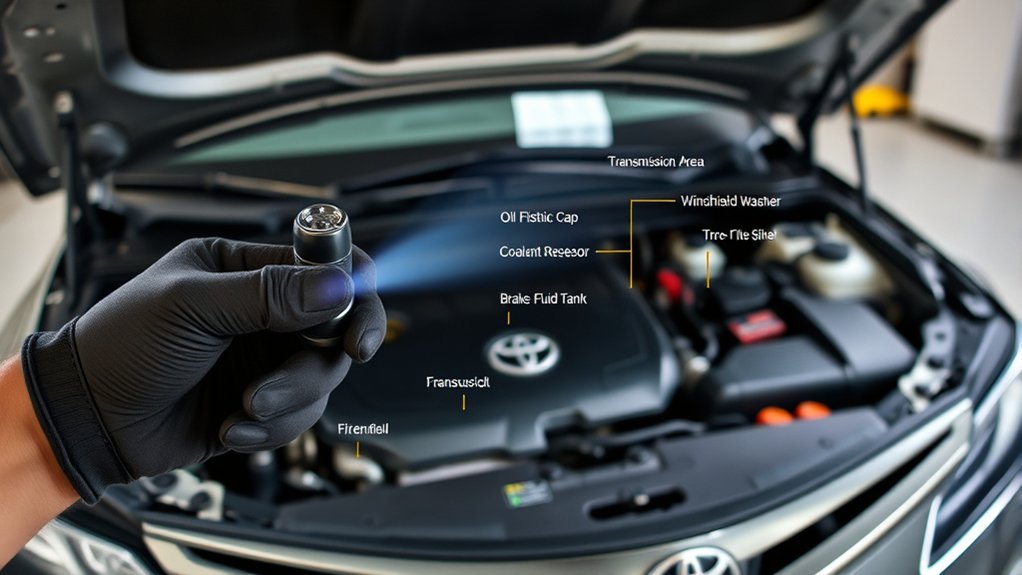
Checking the fluids in your Toyota Camry is a simple way to spot leaks, low levels, and maintenance problems before they become expensive repairs. The exact fluids, specifications, and service intervals vary by model year and powertrain, so use this guide for safe inspections and confirm all replacement requirements in the owner’s manual for your specific Camry.
Quick Answer
Toyota Camry owners should routinely check the engine oil, engine coolant, brake fluid, and windshield washer fluid. Older models may also have hydraulic power-steering fluid. Transmission fluid and hybrid inverter coolant often require model-specific procedures, so inspect for leaks and follow the exact Toyota maintenance guide before opening or servicing those systems.
Key Takeaways
- Check the engine oil about once a month and before a long trip, using level ground and the procedure in your owner’s manual.
- Inspect coolant only when the engine is completely cold, and never remove a hot radiator or coolant-reservoir cap.
- Low brake fluid can indicate worn brake pads or a leak; do not simply top it off without finding the cause.
- Many Camrys have sealed transmissions with no owner dipstick. Transmission service intervals vary by year and driving conditions.
- Use the exact fluid specification listed for your Camry. Color alone does not confirm compatibility.
At a Glance
| Time Required | 10–20 minutes for a basic visual inspection |
| Difficulty | Beginner for owner-checkable reservoirs; professional service may be required for sealed systems |
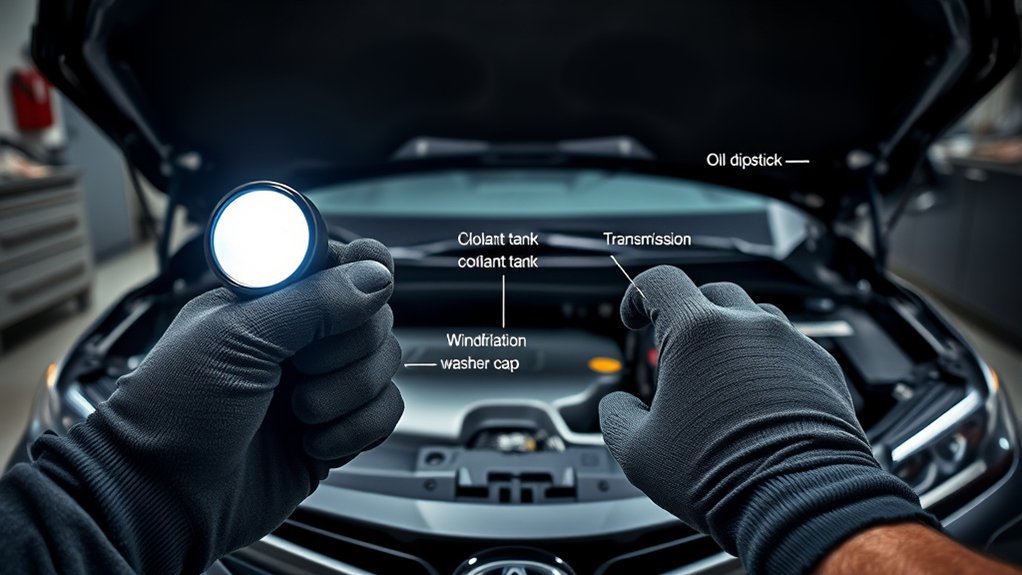
| Tools Needed | Owner’s manual, clean lint-free cloth or paper towel, flashlight, gloves, and the correct fluid if topping off is permitted |
| Cost | Free for inspection; typically $5–$30 for an approved top-off fluid, depending on type and quantity |
Warning: Let the vehicle cool completely before inspecting the cooling system. Never remove a radiator or pressurized coolant cap while the engine is hot. On a hybrid Camry, do not touch orange high-voltage cables, connectors, warning-labeled components, or the hybrid service plug.
Understanding the Importance of Fluid Checks in Your Camry
Fluids lubricate moving parts, transfer hydraulic pressure, control temperature, clean the windshield, and protect internal components. A low level may indicate ordinary consumption, an overdue service, worn components, or an active leak. Catching the change early can help prevent overheating, poor braking, transmission damage, or reduced visibility.
Toyota’s current maintenance guidance separates ongoing owner checks from scheduled service. For example, the 2026 Camry guide recommends checking the engine-oil level monthly and obtaining scheduled maintenance every 5,000 miles or six months, whichever comes first. That does not mean every fluid must be replaced at every service. Replacement intervals depend on the fluid, model year, elapsed time, mileage, and operating conditions.
Before inspecting your Camry, park on a level surface, set the parking brake, switch the vehicle off, and allow hot components to cool. Keep loose clothing and jewelry away from belts, fans, and other moving parts. Electric cooling fans can sometimes operate even when the engine is not running.
Pro Tip: Photograph the reservoirs and dipstick reading during each monthly check. Comparing dated photos can reveal a slow decline that is difficult to notice from memory.
Essential Toyota Camry Fluids to Monitor
The fluids you can inspect depend on the age and configuration of your Camry. Use the table below as a starting point, then confirm reservoir locations and fluid specifications in the correct Toyota manual.
| Fluid | What It Does | Owner Check |
|---|---|---|
| Engine oil | Lubricates, cools, cleans, and protects internal engine parts | Check the dipstick monthly where equipped and before long trips |
| Engine coolant | Controls engine temperature and protects the cooling system | View the cold level through the reservoir; do not open a hot system |
| Inverter/intercooler coolant | Cools applicable hybrid or electrified power-system components | Identify the correct reservoir in the manual and inspect only when cold |
| Brake fluid | Transfers pedal force through the hydraulic brake system | View the reservoir level and inspect for leaks or a change in pedal feel |
| Transmission fluid | Lubricates and cools transmission or transaxle components | Check for external leakage; use the model-specific procedure if a dipstick is provided |
| Power-steering fluid | Provides hydraulic steering assistance on equipped older models | Inspect only if the vehicle has a hydraulic reservoir; many newer Camrys use electric steering |
| Windshield washer fluid | Cleans the windshield and supports clear visibility | Top off with climate-appropriate washer fluid as needed |
Note: Do not choose a fluid only by its color. Different products can share a color but use incompatible additives. Match the specification printed in the applicable Toyota owner’s manual or on the reservoir cap.
How to Check Your Brake Fluid Level Safely
The brake-fluid reservoir is usually mounted near the rear of the engine compartment on the driver’s side, but its exact location varies. With the Camry parked on level ground and switched off, locate the translucent reservoir using the owner’s manual.
- Clean the area first. Wipe dust away from the outside of the reservoir and cap so debris cannot enter the brake system.
- Read the level through the reservoir. It should normally sit between the marked minimum and maximum lines. Do not remove the cap merely to view the level.
- Look for an unexpected drop. A gradual decline can occur as brake pads wear, but a rapid or very low reading may indicate a leak.
- Inspect the visible condition. Cloudiness, particles, obvious contamination, or an unusual dark appearance warrants professional inspection. Color alone cannot measure the fluid’s moisture content or boiling point.
- Check how the pedal feels. A soft, sinking, or spongy brake pedal requires prompt diagnosis.
Do not automatically fill a low reservoir to the maximum line without determining why the level fell. Overfilling can create a spill when new brake pads push fluid back toward the reservoir, and brake fluid can damage painted surfaces.
Warning: Do not drive if the red brake warning remains on, the brake pedal feels unusually soft or sinks, braking performance has changed, or brake fluid is visibly leaking. Have the vehicle transported for inspection when safe braking is in doubt.
Toyota’s U.S. Camry maintenance schedules call for inspecting brake-fluid level and condition during applicable services. They do not support one universal replacement interval for every Camry. Fluid replacement should follow the correct model-year guide, professional test results, contamination findings, or repair requirements.
[Amazon Products Picked for You]

Test the car brake fluid quality quickly to check whether it’s qualified, which can remind you to change the brake fluid when necessary to avoid traffic accident

Durable and Corrosion-Resistant : Featuring a corrosion-resistant probe, this brake fluid tester is designed for long-lasting performance. The durable construction ensures that the tool remains effective over time, even with frequent use, making it a reliable addition to your maintenance toolkit

Crystal Clear Readings: This brake fluid tester features a 1.77 inch HD color screen. It can accurately detect 0% - 4% brake fluid water content, and accompanied by a three - level green/yellow/red ladder status indication. Whether in bright or dim light conditions, you can clearly read the values
Tips for Inspecting Coolant Condition and Levels
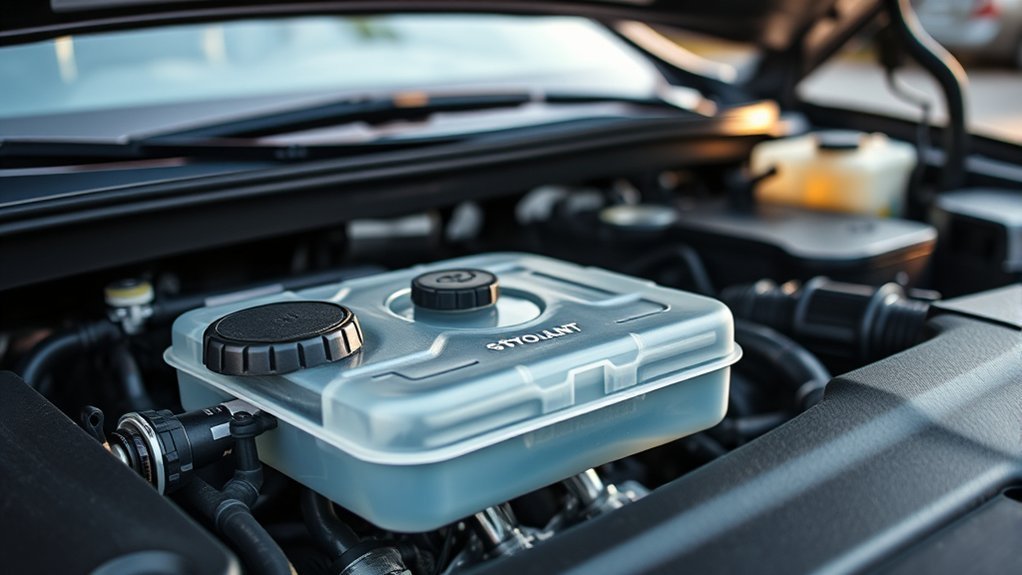
Check coolant only after the engine has cooled completely. View the level through the translucent reservoir and compare it with the cold minimum and maximum marks described in your manual. A slightly low level may require the approved coolant, but a recurring loss indicates a leak that should be diagnosed.
Use a flashlight to look for:
- A level below the cold minimum mark
- Crusty residue around the reservoir, cap, hose connections, radiator, or water-pump area
- Cloudiness, floating debris, sludge, or an oily film
- Cracked hoses, swelling, damp areas, or a sweet coolant odor
- Temperature warnings or repeated overheating
Do not perform a “feel test,” put a finger into the reservoir, or open the system while hot. If oil is suspected in the coolant, or coolant appears in the engine oil, stop treating the issue as a simple top-off. Cross-contamination can indicate an internal engine or cooling-system fault.
Many Camrys specify Toyota Super Long Life Coolant or an equivalent coolant with a particular chemistry. Do not assume that any green, orange, red, or pink coolant is compatible. Mixing incompatible coolant can reduce corrosion protection and create deposits.
Replacement intervals vary. As one current example, Toyota’s 2026 U.S. Camry guide lists initial applicable engine/intercooler coolant replacement at 100,000 miles or 120 months, followed by 50,000 miles or 60 months. Applicable inverter/intercooler coolant has a separate initial interval. Older model years may use different schedules, so the vehicle’s own guide controls.
[Amazon Products Picked for You]
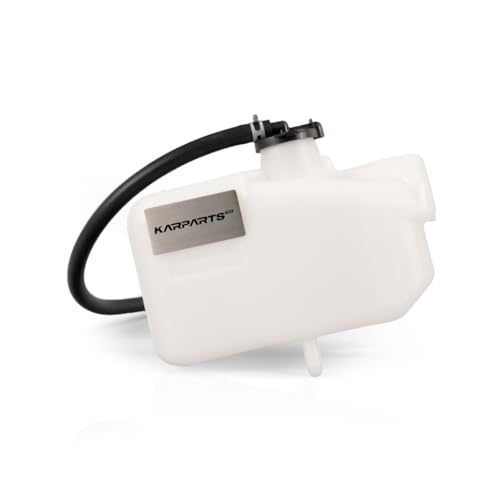
Exact fit to OEM#: 1647074360 and Partslink#: TO3014110

[Compatible Models] The engine coolant reservoir tank is compatible with Toyota Avalon 2013-2018, compatible with Toyota Camry 2012-2017, compatible with Lexus ES350 2016-2018.

Fit for Toyota Avalon 2013-2018, Camry 2012-2017
Oil Changes and Level Checks: What to Know
Engine oil is the fluid most Camry owners should check routinely. Toyota’s 2026 maintenance guide specifically recommends checking the oil level once a month. Check it sooner if the oil-pressure warning appears, you notice a leak, the engine has a history of oil consumption, or you are preparing for a long trip.
A maintenance reminder tells you when scheduled service may be due; it does not replace a physical oil-level check.
[Amazon Products Picked for You]

Replacement Part Number: 917-396; 153010H012

【Replace Part Number】This oil dipstick replaces: 15301-28031, 1530128031.

Compatible With: This engine oil dipstick is compatible with Toyota Camry 2002-2006 and Toyota Solara 2002-2006.
How to Read a Toyota Camry Oil Dipstick
- Park on level ground, set the parking brake, and switch the engine off.
- Follow the waiting time in your owner’s manual so oil can drain back into the oil pan. Avoid checking immediately after hard driving.
- Remove the dipstick, wipe it clean with a lint-free cloth, and insert it fully.
- Pull it out again and hold it level. Read where the oil film falls between the low and full marks.
- If the level is low, add only the exact oil viscosity and specification approved for your engine.
- Add a small amount at a time, wait briefly, and recheck. Do not overfill.
Oil color alone does not determine whether an oil change is due. Modern detergent oil can darken while still performing normally. Follow the model-year maintenance schedule, elapsed-time limit, mileage limit, and special-operating-condition rules.
For the 2026 Camry, Toyota states that the oil and filter should be replaced after 12 months or 10,000 miles under the specified normal schedule, with 5,000-mile or six-month replacement under listed special conditions such as primarily driving on dirt or dusty roads or repeatedly making very short trips below freezing. Other Camry years and engines may differ.
Pro Tip: Keep a record of the oil specification, brand, mileage, and date used at each change. That makes it easier to identify consumption and confirm that the correct viscosity was installed.
Why Transmission Fluid Guidance Must Be Model-Specific
Transmission fluid lubricates, cools, and supports hydraulic or electronic operation inside the transmission or transaxle. However, checking it is not the same on every Camry.
Camrys With a Transmission Dipstick
Some older models provide an owner-accessible dipstick and require the fluid to be checked under specific conditions, which may include a particular operating temperature, engine state, and gear-selection sequence. Follow that manual exactly. A reading taken under the wrong conditions can appear falsely high or low.
Camrys With a Sealed Transmission
Many later Camrys use a sealed transmission without an owner dipstick. Level verification may require removing a service plug while the fluid is within a specified temperature range. That procedure is best left to a qualified technician with the correct fluid, equipment, and service information.
For example, the 2026 U.S. Camry maintenance chart calls for automatic-transmission-fluid inspections at specified normal-service intervals and lists replacement under qualifying special operating conditions. It does not establish the original article’s universal 60,000–80,000-mile replacement rule for every owner.
Watch for symptoms that justify inspection:
- Red, reddish-brown, or oily fluid under the center or front of the vehicle
- Delayed engagement when selecting Drive or Reverse
- Harsh, slipping, flaring, or inconsistent shifts
- Whining, humming, or other new transmission noises
- A burnt odor or transmission warning message
Fluid color can provide a clue, but it is not a complete condition test. Do not add a “universal” transmission fluid. Use only the Toyota-specified product for the exact transmission.
Key Insights on Newer Models’ Power Steering
Many newer Toyota Camrys use electric power steering rather than a belt-driven hydraulic pump. An electric system does not have a conventional power-steering-fluid reservoir, so there is no fluid for the owner to check or replace.
Older Camrys may use hydraulic power steering. If your vehicle has a clearly labeled reservoir, inspect it according to the owner’s manual and use only the specified fluid. Never pour power-steering fluid into a brake, coolant, or transmission reservoir.
Electric Power Steering Benefits
- No hydraulic-fluid maintenance: Electric assistance eliminates a traditional pump, hoses, and reservoir.
- Fewer fluid-leak points: There is no hydraulic steering circuit to seep or lose fluid.
- Variable assistance: The control system can adjust steering assistance according to vehicle speed and operating conditions.
Maintenance-Free Fluid System Overview
“No steering fluid” does not mean the steering system requires no attention. Have the vehicle inspected if the steering becomes unusually heavy, inconsistent, noisy, off-center, or accompanied by a warning light. Steering gear, linkage, boots, alignment, tires, sensors, wiring, and control components can still require service.
Maintaining Your Vehicle’s Hydraulic Systems
The brake system is the main owner-visible hydraulic system on every Camry. Depending on the model, the vehicle may also have a hydraulic power-steering system or transmission components that rely on pressurized fluid internally. These systems must use the correct fluid because seal materials, viscosity requirements, and additive packages differ.
Essential Hydraulic Fluid Types
- Brake fluid: Inspect the reservoir level and visible condition. Keep the cap and surrounding area clean, and investigate a low level rather than repeatedly topping it off.
- Transmission fluid: Inspect for leaks and follow the model-specific service procedure. Do not open a sealed transmission casually.
- Power-steering fluid: Relevant only to Camrys equipped with hydraulic steering. Newer electric systems have no steering-fluid reservoir.
Regular Inspection Frequency
A practical routine combines monthly owner checks with Toyota’s scheduled service intervals. The current 2026 guide recommends scheduled maintenance every 5,000 miles or six months, but individual replacement intervals differ.
| Fluid or System | Suggested Owner Routine |
|---|---|
| Engine oil | Check monthly, before a long trip, and after any oil warning or suspected leak |
| Coolant reservoirs | Inspect when the engine is cold during monthly checks and before long trips |
| Brake fluid | View during monthly checks and have level and condition inspected at scheduled service |
| Transmission | Look for leaks regularly; follow the exact inspection and replacement chart for the model year |
| Power steering | Inspect the reservoir only on hydraulic-equipped models; investigate any steering change immediately |
| Washer fluid | Check whenever spray weakens and before severe weather or a long trip |
The Role of Windshield Washer Fluid in Vehicle Maintenance
Windshield washer fluid is easy to overlook, but clear visibility is essential in rain, snow, dust, road salt, and insect-heavy conditions. Locate the reservoir by its windshield-and-spray symbol and add washer fluid formulated for your climate.
- Use a proper cleaning formula: Washer fluid removes oily road film and debris more effectively than plain water.
- Choose freeze protection where needed: A winter-rated product helps prevent the reservoir, lines, and nozzles from freezing.
- Avoid overfilling: Leave the amount of space directed by the reservoir design and reinstall the cap securely.
- Investigate weak spray: A low level, clogged nozzle, frozen line, damaged hose, failed pump, or electrical fault may be responsible.
Do not use engine coolant or household glass cleaner in the washer reservoir. Some household products can harm paint, rubber, plastics, or the washer system.
How to Identify a Possible Fluid Leak
If you find a spot beneath the Camry, note its location, texture, color, odor, and whether it returns after the vehicle is moved. Do not touch an unknown fluid with bare skin, taste it, or crawl beneath a vehicle supported only by a jack.
- Clear water near the passenger side: Often normal air-conditioner condensation.
- Dark brown or black oily fluid: May be engine oil.
- Red or reddish-brown oily fluid: May be transmission fluid on some vehicles.
- Pink, red, or other brightly colored watery fluid with a sweet odor: May be coolant, but color varies.
- Clear to amber slippery fluid near a wheel or brake component: Could be brake fluid and requires immediate attention.
- Blue, green, orange, or purple watery fluid near the front: May be washer fluid, depending on the product used.
Color is only a clue because products vary and leaked fluid can collect dirt. A technician may need to clean the area, add approved ultraviolet dye, or pressure-test the system to locate the source.
When to Call a Mechanic for Fluid Maintenance
Arrange professional inspection promptly when you notice any of the following:
- A red brake warning, soft pedal, sinking pedal, or visible brake-fluid leak
- An overheating warning, steam, coolant odor, or repeated coolant loss
- An oil-pressure warning or an engine-oil level that falls rapidly
- A transmission leak, delayed engagement, slipping, harsh shifting, or a burnt odor
- Steering that suddenly becomes heavy, erratic, noisy, or accompanied by a warning
- Milky engine oil, oily coolant, or other evidence that fluids are mixing
- A large puddle, an unknown leak, or fluid contacting hot exhaust components
Stop driving as soon as it is safe if the vehicle is overheating, oil pressure is lost, braking is impaired, steering assistance changes suddenly, or a major leak develops. Continuing to drive can turn a serviceable problem into engine, transmission, brake, or safety-system damage.
Responsible Fluid Handling and Disposal
Automotive fluids should not be poured onto the ground, into a storm drain, or into household plumbing. Collect used oil in a clean, leak-proof container and take it to a participating repair facility, retailer, recycling center, or local household-hazardous-waste program. Keep coolant, brake fluid, transmission fluid, and mixed waste separate unless your local facility instructs otherwise.
Clean small spills promptly with an absorbent material and follow local disposal rules. Keep all fluids away from children and animals; coolant can be especially dangerous if swallowed.
Related Guides
Frequently Asked Questions
What fluids should I check in a Toyota Camry?
Most owners should routinely inspect the engine oil, engine coolant, brake fluid, and windshield washer fluid. A hybrid may also have a separately identified inverter or intercooler coolant reservoir. Older Camrys may have hydraulic power-steering fluid, while many later models use electric steering. Transmission checks depend on whether the vehicle has a dipstick or sealed unit.
How do I read a Toyota Camry oil dipstick?
Park on level ground, switch the engine off, and wait as directed by the owner’s manual. Remove the dipstick, wipe it clean, insert it fully, and pull it out again. The oil film should be between the low and full marks. Add the approved oil gradually and recheck rather than overfilling.
Can I check Toyota Camry transmission fluid at home?
You can follow the manual’s procedure if your Camry has an owner-accessible transmission dipstick. Many later models use a sealed transmission that requires a temperature-controlled service procedure and does not provide a normal dipstick. For a sealed unit, inspect for leaks and have the level or condition checked by a qualified technician.
Can I mix different coolant colors in my Camry?
Do not use color as the compatibility test. Add only the coolant specification approved for your exact model and system. If the installed coolant is unknown, contaminated, or incompatible, have the system evaluated instead of creating an unverified mixture.
Should I top off low brake fluid myself?
A minor level change can accompany brake-pad wear, but a low or rapidly falling level can indicate a leak. Do not repeatedly top off the reservoir without identifying the cause. If braking feels different, a warning is on, or fluid is leaking, do not drive until the system is inspected.
What does Toyota Camry 90,000-mile service include?
There is no single 90,000-mile package that applies to every Camry. Required work depends on the model year, elapsed time, engine or hybrid system, drivetrain, previous maintenance, and special operating conditions. Use Toyota’s manuals portal or the warranty and maintenance guide for the vehicle’s exact year and VIN before approving a generic service package.
Conclusion
Regular Toyota Camry fluid checks do not require advanced mechanical skill, but they do require the right conditions and the correct model-year information. Check engine oil routinely, inspect coolant only when cold, watch the brake-fluid level, maintain washer fluid, and look for leaks. Treat sealed transmissions, hybrid cooling systems, brake faults, and unexplained fluid loss as professional-service items.
The most important rule is to follow the specification and schedule for your exact Camry rather than relying on a universal mileage number. A brief monthly inspection, combined with Toyota’s scheduled maintenance, can reveal small problems before they affect reliability or safety.
Sources
- Toyota 2026 Camry Warranty & Maintenance Guide — current U.S. maintenance intervals, monthly oil-level guidance, fluid inspections, coolant schedules, transmission service conditions, and hybrid safety.
- Toyota 2024 Camry Warranty & Maintenance Guide — model-year comparison, coolant specification, sealed-transmission guidance, and special operating conditions.
- Toyota Manuals and Warranties — official portal for selecting the correct owner’s manual and maintenance guide by vehicle.
- U.S. Environmental Protection Agency: Managing, Reusing, and Recycling Used Oil — safe collection and recycling guidance for used motor oil.
