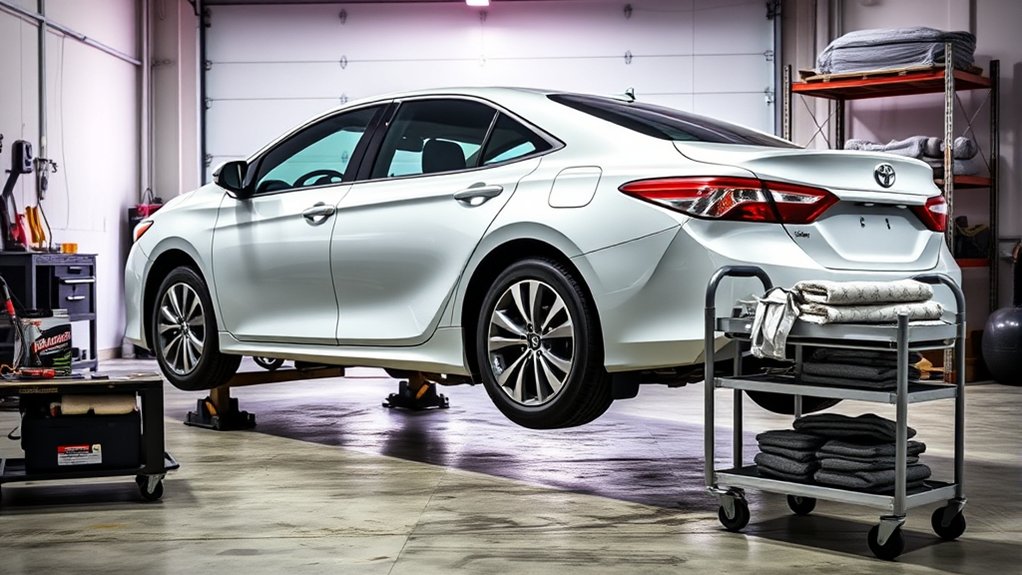
To store a Toyota Camry long-term, start with the exact model year and powertrain, then prepare the battery, tires, fuel, fluids, brakes, interior, and storage space for the expected duration. Older gasoline Camrys and current U.S. Camry Hybrids do not have identical storage procedures, so model-year Toyota guidance should override generic advice. The steps below cover cleaning, moisture control, pest prevention, scheduled inspections, and a safe return to service.
Last updated: September 11, 2026 — updated with Toyota’s 2025–2026 Camry Hybrid long-term storage guidance.
Quick Answer
To store a Toyota Camry long-term, clean and dry it, follow the exact model-year instructions for fluids and battery care, prepare the fuel when appropriate, protect the tires, prevent pests, and inspect the car regularly. For 2025–2026 U.S. Camry Hybrids, Toyota’s long-term-storage guidance also includes scheduled HV-battery maintenance, vehicle movement, A/C operation, and brake use. Before driving again, remove all storage barriers, check for leaks, restore normal tire pressure, and test the brakes.
Key Takeaways
- Use the owner’s manual for your Camry’s exact year and powertrain before disconnecting the battery, checking fluids, or lifting the vehicle.
- For 2025–2026 U.S. Camry Hybrids, follow Toyota’s model-specific long-term-storage schedule rather than relying only on generic car-storage advice.
- Keep the car clean, completely dry, protected from moisture, and stored on a stable surface.
- Use the driver-door tire placard for normal driving pressure; any Toyota storage-only pressure applies only to the models and conditions covered by that bulletin.
- Do not use mothballs as rodent repellents. Remove food, block accessible entry routes, inspect regularly, and use only label-approved pest-control methods.
- Before restarting, remove every exhaust or intake cover, inspect for nests and leaks, restore correct road-use tire pressure, and test the brakes at low speed.
At a Glance
| Time Required | Several hours for cleaning, drying, inspection, and setup; longer if maintenance or professional service is due |
| Difficulty | Moderate; battery, lifting, brake, leak, and hybrid-system concerns may require a professional |
| Tools Needed | Tire gauge and inflator, cleaning supplies, compatible battery maintainer, wheel chocks, flashlight, gloves, cover, and inspection log |
| Cost | Varies with supplies already owned, battery equipment, required maintenance or professional service, insurance, and paid storage |
How to Store a Toyota Camry Long-Term: What Matters First
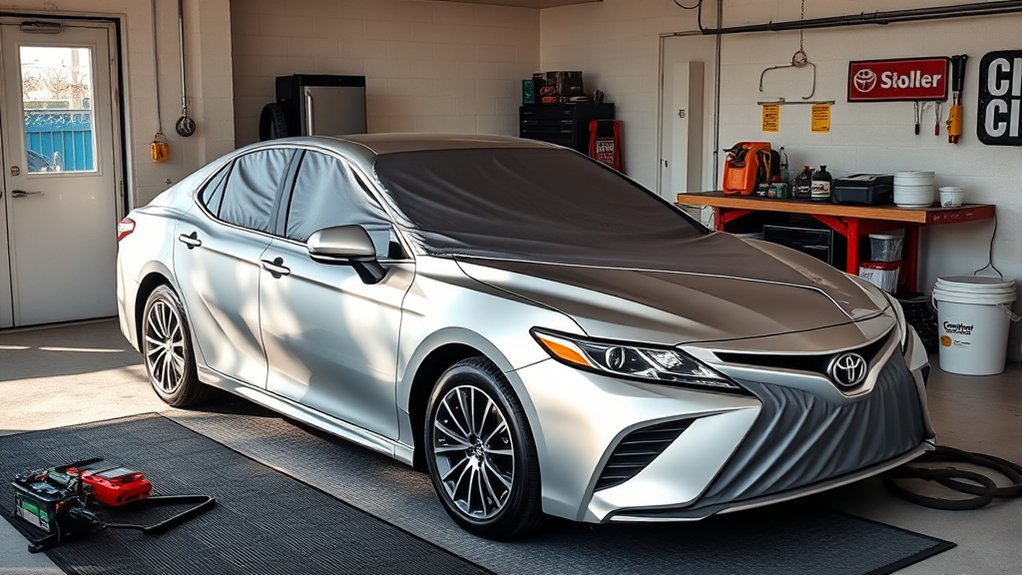
A parked car continues to age. The 12-volt battery loses charge, tire pressure changes with temperature, rubber and plastic components remain exposed to heat and ozone, moisture can collect on metal surfaces, and rodents may enter an undisturbed vehicle. Fuel quality can also decline during an extended inactive period.
Preparation reduces those risks, but there is no universal length of time during which a Camry can sit without issues. A recently serviced car in a dry, secure garage has different needs from a car stored outside through heat, freezing weather, salt air, or heavy rain.
Tire-safety baseline: NHTSA TireWise recommends checking all tires, including the spare when equipped, at least monthly when cold. For normal road use, use the cold pressure on the vehicle’s Tire and Loading Information label or in the owner’s manual, not the maximum pressure molded into the tire sidewall.
Check Your Camry’s Model Year and Powertrain First
Camry maintenance procedures vary by model year, trim, battery location, and powertrain. Before preparing the vehicle, retrieve the correct Toyota owner’s manual and maintenance guide by year, model, or VIN.
Confirm the following before beginning:
- Whether the Camry is gasoline-only or hybrid.
- The specified engine oil, coolant, brake fluid, and maintenance intervals.
- The 12-volt battery location and approved charging or disconnection procedure.
- The tire pressure listed on the driver-door Tire and Loading Information label.
- The designated lifting and support points if the vehicle will be raised.
- Any procedures required after reconnecting the 12-volt battery.
Warning: A hybrid Camry has a high-voltage traction system in addition to its 12-volt battery. Do not open the traction battery, disconnect orange high-voltage cables, or attempt high-voltage service. The NHTSA hybrid-safety guidance states that traction-battery service requires specialized training and equipment.
2025–2026 U.S. Camry Hybrid: Follow Toyota’s Current Storage Schedule
The U.S. 2025 Camry began the current all-hybrid generation, and Toyota’s long-term-storage service bulletins specifically include the 2025 and 2026 Camry HV. These bulletins are written for dealer and off-site storage, so use them together with the exact model-year owner’s manual and Toyota service information rather than applying every procedure to an older Camry.
For reference, see Toyota T-SB-0023-24 Rev1 for 2025 vehicles. Toyota’s 2026 T-SB-0002-26 Rev1 supersedes the earlier 2026 storage bulletin and includes the 2026 Camry HV; a secondary copy is available in the NHTSA-indexed bulletin record.
| Storage item | Toyota guidance for covered 2025–2026 Camry Hybrids |
|---|---|
| 12V battery | Toyota’s dealer-storage schedule calls for 12V battery maintenance after 60 days and then every 30 days. Its service procedure also addresses disconnecting the negative ground cable to reduce storage drain. Owners should confirm the exact battery-access and reset procedure before disconnecting it. |
| HV battery | When an HEV is unused for 30 days or more, Toyota calls for monthly HV-battery maintenance. The 2025 procedure keeps the vehicle in READY for 30 minutes in open air or with approved exhaust extraction; a 30-minute drive is an alternative. |
| Tires | Check pressure monthly. Toyota’s covered storage bulletin specifies 43 psi for storage only. Before normal road use, return the tires to the cold pressure specified on the Camry’s Tire and Loading Information label. |
| Engine/hybrid system and movement | Every six weeks. Toyota’s procedure includes periodic engine/hybrid operation and moving the vehicle at least 30 feet to lubricate driveline components and change the tire contact area. |
| A/C compressor | At least monthly. For an electrified vehicle, Toyota specifies READY mode, A/C on, blower set to High, and at least one minute of operation under the bulletin procedure. |
| Brake rotors | At least every eight weeks, drive in a safe area and use the brakes normally to reduce heavy rotor-surface rust buildup. |
Important: These Toyota bulletin procedures are model-year-specific dealer/off-site storage guidance. Do not use the 43-psi storage value, battery-disconnection procedure, or scheduled operating routine as a blanket rule for every older Camry. Follow the information applicable to your exact vehicle.
Choose the Right Storage Location
An enclosed, dry, secure garage is usually the best storage location. Climate control is helpful but not essential when the building stays dry, ventilated, and free from large temperature swings. Avoid areas with known flooding, roof leaks, standing water, fertilizer, road salt, chemical vapors, or active rodent infestations.
If the Camry must remain outdoors:
- Choose firm, well-drained pavement rather than grass, soil, or a surface that settles.
- Avoid parking beneath damaged trees, construction debris, sprinklers, or roof runoff.
- Use a fitted outdoor cover designed to resist ultraviolet light and precipitation while allowing trapped moisture to escape.
- Check local rules, lease terms, neighborhood restrictions, and storage-facility requirements.
- Increase inspection frequency after storms, temperature extremes, or high winds.
Note: Do not cover a wet or dirty vehicle. After applying any paint protectant or wax, follow that product’s curing instructions and make sure the paint, seams, wheel wells, and underbody are fully dry before installing the cover. Trapped grit and moisture can damage the finish.
Step-By-Step Vehicle Cleaning Process
A thorough cleaning removes salt, food, dirt, plant material, and moisture-holding debris before the car becomes difficult to inspect.
Clean and Dry the Exterior
- Wash the body with automotive soap, including the lower doors, rocker panels, wheels, and wheel wells.
- Rinse the underbody if it has been exposed to road salt, mud, sand, or coastal spray.
- Dry the paint, door jambs, trunk channels, fuel-door area, mirrors, trim seams, and wheels with clean microfiber towels.
- Allow hidden seams and the underbody to dry before moving the car into its final storage position.
- Apply a paint protectant or wax according to the product instructions.
Clean the Interior
- Remove all food, drink containers, gum, pet treats, tissues, paper bags, and trash.
- Vacuum the seats, carpets, trunk, console, seat tracks, and spaces beneath the seats.
- Clean hard surfaces with products intended for automotive interiors.
- Allow shampooed carpets or upholstery to dry completely before closing the car.
- Condition leather only with a product approved for automotive leather.
- Remove valuables, registration copies not needed in the vehicle, electronics, aerosol cans, and temperature-sensitive items.
Pro Tip: Photograph the exterior, interior, odometer, tire condition, and storage space after preparation. The photos create a useful condition record for inspections and possible insurance claims.
Check Fluids Before Storage
Fluid preparation should follow the maintenance schedule rather than a blanket instruction to fill every reservoir. Use only the specifications in the owner’s manual.
- Engine oil: Change the oil and filter if service is due, nearly due, or the oil has been in use under severe conditions. A recent oil change normally does not need to be repeated solely because the car is being stored.
- Coolant: Check the level only when the system is cool. Use the Toyota-specified coolant and do not mix incompatible coolant types.
- Brake fluid: Confirm that the level is within the marked range. Do not simply add fluid if it is unexpectedly low; worn pads or a hydraulic leak may require inspection.
- Windshield-washer fluid: Use a product appropriate for the lowest expected temperature.
- Transmission fluid: Do not assume it is owner-serviceable. Some Camrys require a specific temperature and service procedure for an accurate level check.
- Power steering: Do not look for or add power-steering fluid unless the exact model-year manual identifies a serviceable hydraulic system and reservoir.
Prepare the Fuel System
For a gasoline or hybrid Camry that will remain parked for several months, use fresh fuel and follow the owner’s manual and any fuel-stabilizer label. Do not overfill the tank into the filler neck. If a compatible stabilizer is used, add the measured amount before the final drive and operate the vehicle as directed by the product so treated fuel reaches the fuel system.
Do not add unapproved solvents, alcohol treatments, oil, or multiple fuel additives. If the fuel is already stale, contaminated, or several months old, ask a qualified technician whether it should be removed rather than treating it after deterioration has occurred.
Set the Parking Position and Secure the Vehicle
Park on a level, stable surface and place the transmission in Park. Long-term parking-brake recommendations can differ by vehicle and storage condition. On a level private surface, the owner’s manual or a Toyota service professional may permit leaving the parking brake released to reduce the chance of the brake remaining stuck; properly sized wheel chocks must then prevent movement. Never release the parking brake on a slope or anywhere the car could roll.
For the covered 2025–2026 vehicles, Toyota’s dealer-storage bulletin directs technicians not to apply the parking brake and to disable electronic parking-brake Auto mode during storage. That is model-specific storage guidance, not permission to leave an unsecured vehicle on a slope or other unsafe surface.
- Close the windows, moonroof, doors, trunk, hood, and fuel door after the interior is dry.
- Keep at least one mechanical key or emergency-entry method accessible outside the vehicle.
- Record where keys, wheel-lock keys, battery-terminal tools, and alarm instructions are stored.
- Confirm whether disconnecting the battery will affect the alarm, remote access, garage security, or storage-facility rules.
- Do not leave the smart key immediately beside the vehicle, where repeated communication may increase battery use.
How to Prevent Tire Damage During Storage
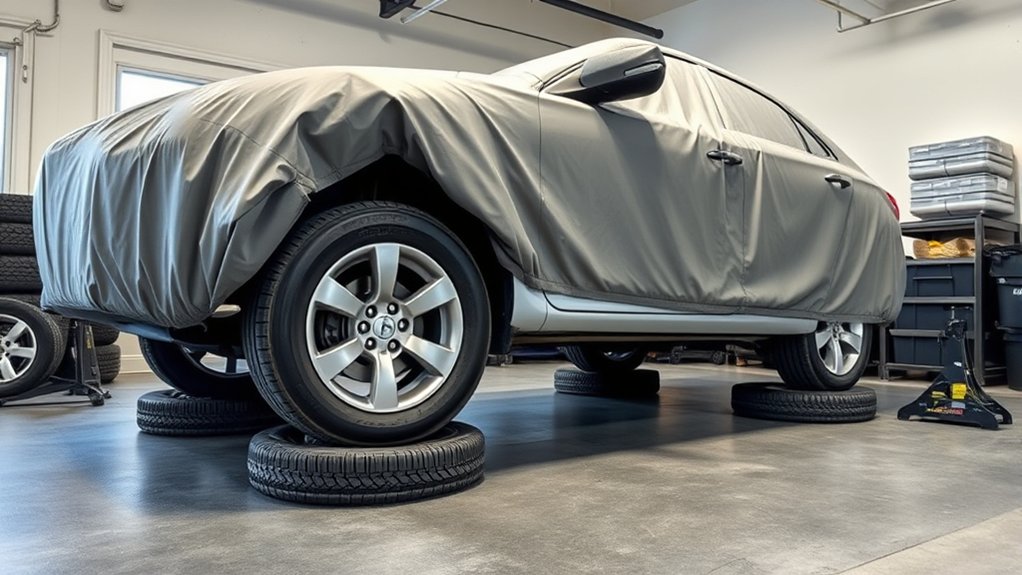
Tires can lose pressure, develop temporary flat spotting, and continue aging while the car is parked. The safest plan begins with the correct model-year storage procedure and regular inspection.
Inflate Tires Properly
For normal driving, set all tires to the cold pressure on the driver-door Tire and Loading Information label or in the model-year manual. Do not use the maximum pressure molded into the tire sidewall as the vehicle’s normal road setting. NHTSA recommends checking cold tire pressure at least monthly with an accurate gauge.
The 43-psi value in Toyota’s covered 2025–2026 long-term-storage bulletin is explicitly a storage-only value. Do not apply it automatically to an older Camry, and restore the correct driver-door placard pressure before returning the vehicle to normal road use.
- Check for cuts, bulges, exposed cords, cracking, embedded objects, or an unexplained pressure loss.
- Record each tire’s pressure at the start of storage.
- Check the spare tire if the vehicle has one.
- Recheck pressure after major temperature changes.
- Have a tire professional inspect any tire that repeatedly loses air.
Use Jack Stands Only When Appropriate
Most routine storage does not require placing a Camry on stands. Tire cradles designed for the vehicle’s weight or periodic safe repositioning can reduce flat spotting without unloading the suspension.
If the vehicle will be raised, use only properly rated automotive jack stands on a level, solid surface and at the exact support points specified for the model year. Support all required corners correctly. Never rely on a hydraulic jack alone, and never use loose lumber, concrete blocks, bricks, buckets, or other improvised supports.
Owners who are not experienced with lifting and supporting vehicles should have a qualified shop prepare the car or leave it on its tires.
Reposition the Tires Occasionally
If the car remains on its tires and the storage location allows safe movement, reposition it enough to place a different part of each tire on the floor. A small movement of only an inch or two may not meaningfully change the contact patch. Keep the path clear, confirm tire pressure first, and never move or operate a gasoline or hybrid vehicle in a poorly ventilated enclosed space.
For covered 2025–2026 Camry Hybrids, Toyota’s storage schedule calls for engine/hybrid-system operation and vehicle movement every six weeks, including moving the vehicle at least 30 feet under the bulletin procedure.
This is not the same as a scheduled front-to-rear tire rotation. Follow Toyota’s maintenance schedule for actual tire rotations after the vehicle returns to service.
How to Care for Your Battery While in Storage
The correct storage method depends on the 12-volt battery type, condition, location, nearby electrical outlet, alarm requirements, and Camry model year. A weak battery should be tested before storage rather than expected to recover through charging.
Disconnect the Negative Terminal When Appropriate
Disconnecting the 12-volt battery’s negative terminal can reduce vehicle-related parasitic drain, but it may also disable the alarm, remote entry, clock, memory settings, connected services, and other systems. Some procedures may be required after reconnection.
Before disconnecting it:
- Read the exact Toyota procedure.
- Turn the vehicle fully off and keep the key away from the car.
- Confirm how the doors and trunk can be opened with no 12-volt power.
- Wear eye protection and remove metal jewelry.
- Do not allow a tool to bridge the battery terminal to body metal.
- Do not confuse the 12-volt battery with the hybrid traction battery.
Use a Compatible Battery Maintainer
A quality automatic maintainer can keep the 12-volt battery charged without the continuous high output of a basic charger. The device must be compatible with the battery chemistry and capacity and must be connected exactly as the Toyota and maintainer instructions specify.
- Use a maintainer intended for long-term connection.
- Keep cords away from water, sharp edges, hot components, and pinch points.
- Do not use damaged extension cords or adapters.
- Provide the ventilation required by the battery and charger manufacturers.
- Check the maintainer indicator and cable condition during monthly inspections.
Do not leave an old manual charger connected indefinitely unless its manufacturer explicitly approves that use.
Store a Removed Battery in a Suitable Place
If the 12-volt battery is removed, keep it upright in a cool, dry, ventilated location away from flames, sparks, children, pets, and direct sunlight. Protect the terminals from accidental short circuits and maintain the charge according to the battery manufacturer’s instructions.
Extreme heat accelerates battery aging, while a discharged battery is more vulnerable to damage in freezing conditions. Inspect for swelling, cracks, leakage, loose posts, or heavy corrosion before charging or reinstalling it.
Essential Tools for Vehicle Storage
Gather supplies before moving the Camry into its final position:
- Accurate tire-pressure gauge and suitable inflator
- Automotive wash soap, microfiber towels, vacuum, and interior cleaner
- Flashlight or inspection lamp
- Disposable or washable gloves and eye protection
- Compatible automatic 12-volt battery maintainer
- Correctly sized wheel chocks
- Tire cradles, if used
- Fitted breathable indoor cover or weather-resistant outdoor cover
- Metal mesh or another removable barrier for accessible pest entry points
- Bright reminder tags for every covered opening
- Notebook or digital inspection log
- Model-year owner’s manual and maintenance guide
A jack and jack stands belong on the list only when the user is trained to lift the vehicle safely and the equipment is properly rated.
Methods to Protect Against Pests During Storage
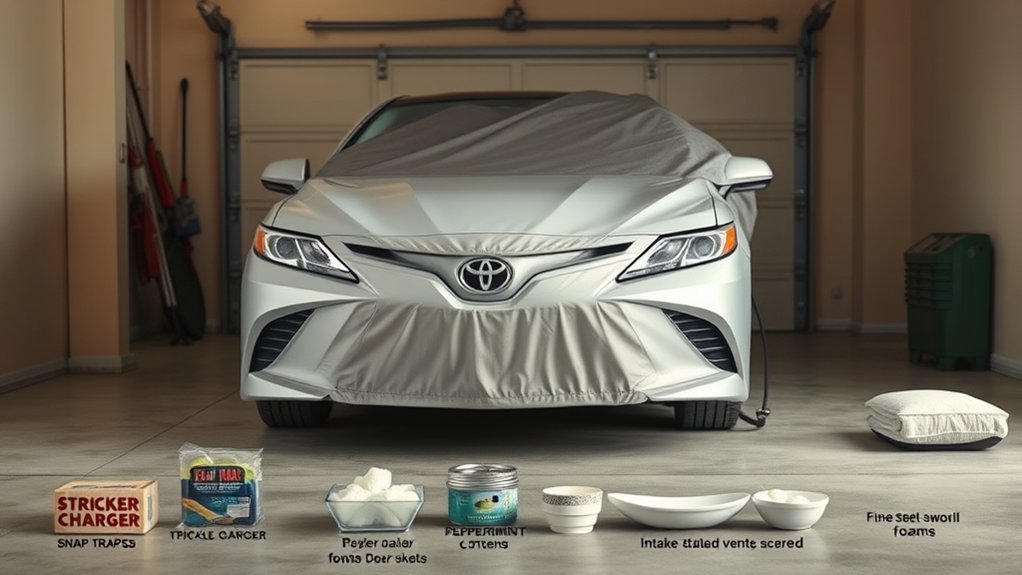
Rodents can damage wiring, insulation, filters, upholstery, and stored belongings. Prevention should focus on sanitation, exclusion, monitoring, and safe pest-control methods rather than strong-smelling household products.
Block Accessible Openings Securely
- Remove all food and food-scented waste from the vehicle and storage room.
- Clean spilled seed, pet food, trash, cardboard, and nesting material from the surrounding area.
- Inspect the exhaust outlet, cowl area, engine bay, cabin-air intake, trunk, wheel wells, and damaged body seals.
- Use a removable metal screen or other suitable barrier where it can be installed without damaging the vehicle.
- Do not push material deep into an exhaust pipe, intake, drain, or mechanical component.
- Attach a bright tag to the steering wheel and to every blocked opening so nothing is forgotten at restart.
- Inspect traps and entry barriers regularly.
Use Only Label-Approved Pest-Control Products
Do not place mothballs in or around the Camry as a rodent repellent. The National Pesticide Information Center explains that mothballs are insecticides intended for specific labeled uses, are not wildlife repellents, and can harm people, pets, and wildlife when misused in the open.
Dryer sheets, peppermint scents, soap, and similar home remedies should not replace physical exclusion and inspection. When traps or rodenticides are needed, use only products labeled for the exact location and pest, keep them inaccessible to children and animals, and follow all disposal directions. A licensed pest-control professional is the safer choice for an established infestation.
Clean Rodent Contamination Safely
If droppings, urine, nests, or a dead rodent are found, do not immediately sweep, vacuum, or blow the material with compressed air. Follow the CDC vehicle inspection and rodent-cleanup procedure: ventilate the vehicle, wear gloves, wet contaminated material with an appropriate disinfectant, allow the required contact time, and remove it without creating airborne dust.
Inspect the air intake and filters before starting the vehicle. Replace a contaminated filter, and consult a mechanic if wiring, ducts, insulation, or inaccessible engine-bay areas have been damaged.
Best Covers for Your Toyota Camry
The best cover is fitted to the Camry, clean on the inside, and suitable for the storage environment.
- Indoor storage: Choose a soft, breathable cover that keeps dust off while allowing residual moisture to escape.
- Outdoor storage: Choose a weather-resistant, ultraviolet-resistant cover with secure straps and breathable construction.
- Fit: A loose cover can flap against the paint. A cover that is too tight can stress mirrors, trim, and seams.
- Inner surface: Use a clean, paint-safe lining without exposed rough seams or hardware.
- Maintenance: Remove the cover during inspections and clean it according to its care instructions.
Never place plastic sheeting directly against the paint. It can trap condensation and abrade the finish.
How to Optimize Your Insurance for Vehicle Storage
Notify your insurer before changing how or where the Camry is stored. Ask whether the policy offers storage, laid-up, reduced-mileage, or comprehensive-only options. Comprehensive coverage generally addresses non-collision losses such as theft, fire, flood, vandalism, and falling objects, but deductibles, exclusions, and availability vary.
Do not cancel or reduce coverage until you have checked:
- Your loan or lease agreement
- State liability and registration requirements
- License-plate surrender or non-operation procedures
- The storage facility’s insurance conditions
- Whether anyone will move or drive the car
- Coverage for weather, animals, rodents, flooding, and personal property
The Texas Department of Insurance auto-insurance guide, for example, explains that comprehensive coverage addresses theft and several non-collision losses and that lenders commonly require collision and comprehensive coverage while money is owed. Requirements in another state or policy may differ.
Keep dated photos, service receipts, storage contracts, inspection notes, and written confirmation of any policy change.
Monthly Storage Inspection Checklist
Check the Camry at least monthly, or more frequently after severe weather or evidence of pests. If your model year has a Toyota long-term-storage procedure, add its required intervals to the inspection calendar rather than relying only on this general checklist.
- Look beneath the car for fresh oil, coolant, fuel, brake-fluid, or water leaks.
- Check cold tire pressure and inspect for cracking, bulges, or deformation.
- Confirm that the car has not shifted and that wheel chocks remain secure.
- Inspect the cover for trapped moisture, grit, tears, and wind damage.
- Look for droppings, tracks, chewed material, nests, or moved barriers.
- Check the battery maintainer, cables, outlet, and extension cord.
- Inspect the storage room for water, roof leaks, condensation, chemical spills, and security problems.
- Record the date, observations, pressure readings, and corrective actions.
- For a covered 2025–2026 Camry Hybrid stored 30 days or longer, perform the applicable monthly HV-battery maintenance procedure.
- For a covered 2025–2026 Camry Hybrid, operate the A/C according to Toyota’s monthly storage procedure.
- For a covered 2025–2026 Camry Hybrid, schedule engine/hybrid-system operation and vehicle movement every six weeks and brake-rotor rust-prevention driving at least every eight weeks.
Avoid random five-minute starts followed by immediate shutdown. They may not recharge the battery adequately or remove moisture from the exhaust and engine oil. For 2025–2026 U.S. Camry Hybrids, Toyota instead provides a scheduled storage routine that includes monthly HV-battery maintenance, engine/hybrid-system operation and vehicle movement every six weeks, monthly A/C operation, and brake use every eight weeks. Follow the exact model-year procedure, and never run a gasoline or hybrid vehicle in a closed or poorly ventilated space.
What Should I Do If I Notice Issues During Storage?
- Fluid leak: Identify the fluid if it can be done safely. Do not start or drive the car when fuel, brake fluid, a large coolant loss, or an unknown major leak is present.
- Low tire: Inspect for damage and inflate only when the tire appears serviceable. A tire that repeatedly loses pressure needs professional evaluation.
- Battery problem: Stop charging a battery that is swollen, leaking, excessively hot, cracked, or producing an unusual odor. Keep sparks and flames away.
- Rodent evidence: Ventilate, inspect, and disinfect using CDC guidance before sweeping, vacuuming, or starting the vehicle.
- Chewed wiring: Do not energize the vehicle until a qualified technician has inspected the damage.
- Mold or damp interior: Find and correct the moisture source before cleaning and closing the car again.
- Rust or brake binding: Arrange an inspection if corrosion is heavy, the wheels will not move normally, or a brake remains applied.
- Alarm or electrical activity: Check the 12-volt battery and storage method rather than repeatedly jump-starting the vehicle.
How to Return Your Camry to Service
Do not simply uncover the Camry and start driving. Use this restart sequence:
- Remove the cover and inspect the body, windows, tires, and area beneath the car.
- Open the doors, hood, and trunk in a well-ventilated area and check for odors, moisture, droppings, nests, and chewed material.
- Remove every screen, plug, steel-wool barrier, tag, wheel chock, charger lead, and storage accessory.
- Inspect the exhaust outlet, air intakes, cabin filter, engine-air filter, belts, hoses, wiring, and engine bay.
- Check engine oil, coolant, brake-fluid level, and washer fluid according to the owner’s manual.
- Restore all tires to the correct cold road-use pressure on the driver-door Tire and Loading Information label and inspect each tire for damage.
- Reconnect or reinstall the 12-volt battery using the correct Toyota procedure, or disconnect the maintainer before startup as instructed.
- Confirm that no warning labels, tools, rags, or pest barriers remain in the engine compartment.
- Start the vehicle or place a hybrid Camry in READY mode according to the owner’s manual. Watch for warning lights, leaks, smoke, abnormal smells, or unusual noises.
- Test the brake pedal before moving. If it feels soft, sinks, or does not build normal resistance, do not drive.
- Move at walking speed and test the brakes in a safe private area.
- Drive gently until the vehicle reaches normal operating condition. Avoid immediate high speed, hard acceleration, or heavy braking.
- Schedule service if warning lights remain on, the tires vibrate, the brakes bind, fluids leak, or the vehicle does not operate normally.
Related Guides
Frequently Asked Questions
How do I prepare a Toyota Camry for long-term storage?
Clean and dry the car, complete any due maintenance, prepare the fuel system, protect the tires, choose the correct 12-volt battery method, remove food, prevent pests through exclusion, document the vehicle’s condition, and inspect it regularly. Use the exact model-year Toyota manual and applicable service guidance because current Camry Hybrids have additional storage procedures.
How long can a Camry be stored without being driven?
There is no universal problem-free period. A battery can discharge, tire pressure can fall, pests can enter, and moisture or brake-surface rust can develop during storage. For current Camry Hybrids, Toyota provides scheduled maintenance beginning within the first one to two months, so use the exact model-year procedure rather than relying on a single maximum storage period.
How should I leave a Toyota Camry for six months?
Complete due maintenance, prepare the fuel according to the manual and stabilizer label, use the correct 12-volt battery strategy, protect the tires, control moisture and pests, confirm insurance requirements, and arrange scheduled inspections. A 2025–2026 Camry Hybrid also needs its applicable Toyota storage-maintenance schedule followed during those six months.
Should I put my Camry on blocks or jack stands for storage?
Not usually. Correct storage pressure, tire cradles, and safe periodic repositioning are simpler options for routine storage. If the car must be raised, use properly rated automotive stands at Toyota-specified support points on a level solid surface. Never use bricks, concrete blocks, loose wood, or a jack as the only support.
Should I start the engine every few weeks?
Do not use random short starts followed by a few minutes of idling. Follow the exact model-year storage procedure instead. For covered 2025–2026 Camry Hybrids, Toyota specifies monthly HV-battery maintenance, engine/hybrid-system operation and vehicle movement every six weeks, monthly A/C operation, and brake use every eight weeks.
Can I disconnect the battery on a hybrid Camry?
The 12-volt battery is separate from the high-voltage traction battery. Toyota’s long-term dealer-storage guidance for covered current models includes disconnecting the 12-volt battery ground cable to reduce drain, but access, alarm behavior, system resets, and reconnection procedures vary by model year. Never disconnect orange high-voltage components or attempt traction-battery service yourself.
Is indoor storage better than outdoor storage?
A dry, secure garage usually offers better protection from sunlight, precipitation, wind, falling debris, theft, and large temperature swings. Outdoor storage can still work when the surface drains well, the car is fully prepared, a fitted breathable outdoor cover is used, and inspections are performed more frequently.
What should I do with a 2025 or 2026 Camry Hybrid stored for more than 30 days?
Follow the exact Toyota long-term-storage guidance for the model year. The applicable schedule includes monthly HV-battery maintenance after 30 days of inactivity, monthly tire and A/C checks, engine/hybrid-system operation and vehicle movement every six weeks, and brake-rotor rust-prevention driving at least every eight weeks.
What tire pressure should I use while a Camry is in storage?
For normal road use, use the cold pressure on the driver-door Tire and Loading Information label. Toyota’s long-term-storage bulletin for covered 2025–2026 models specifies 43 psi for storage only. Do not apply that storage-only value to an older Camry without applicable Toyota guidance, and restore the door-placard pressure before normal driving.
Conclusion
Long-term Toyota Camry storage is safest when it is treated as a complete process rather than a collection of generic tricks. Match every battery, tire, fluid, parking, and scheduled-operation step to the exact model year; keep the vehicle clean and dry; use evidence-based pest prevention; inspect it on schedule; and complete a careful pre-start check before returning to the road.
For a 2025–2026 U.S. Camry Hybrid, put Toyota’s scheduled HV-battery, tire, A/C, movement, and brake checks on a calendar before storage begins. For an older Camry, use the procedures specified for that model year rather than assuming the current Hybrid schedule applies.
Sources
- Toyota Manuals and Warranties — model-year owner’s manuals, maintenance requirements, battery procedures, fluid specifications, and lifting information
- Toyota T-SB-0023-24 Rev1: Long-Term Vehicle Storage Guidelines — 2025 model-year storage schedule, including Camry HV battery, tire, movement, A/C, brake, and 12V procedures
- Toyota T-SB-0002-26 Rev1 / NHTSA ID 11034812 — secondary record of Toyota’s current 2026 long-term-storage bulletin, including 2026 Camry HV
- NHTSA TireWise — cold tire pressure, monthly inspections, vehicle placard pressure, tire aging, and tire-safety guidance
- NHTSA Electric and Hybrid Vehicle Safety — distinction between 12-volt and high-voltage batteries and the need for trained traction-battery service
- CDC: How to Clean Up After Rodents — vehicle ventilation, inspection, disinfection, filter checks, and safe cleanup procedures
- National Pesticide Information Center: Mothballs — proper mothball use, toxicity, and why mothballs are not wildlife repellents
- Texas Department of Insurance Auto Insurance Guide — comprehensive coverage, lender requirements, exclusions, and policy considerations
