If your Toyota Camry shows an oil warning, the symbol or message matters. A red oil-can light usually points to low engine oil pressure and needs immediate action. A low oil level message means the engine may not have enough oil, while a maintenance reminder is not the same warning. Use the steps below to protect the engine and decide whether it is safe to continue.
Quick Answer
If the red oil-pressure warning appears while driving, pull over safely and shut off the engine. Check the oil level after the engine rests. Add the exact oil specified for your model if the level is low. If the level is normal, the warning stays on, or the engine makes noise, do not drive. Arrange a tow and professional diagnosis.
Key Takeaways
- A red oil-can warning is an oil-pressure emergency, not a routine reminder.
- Low oil level can cause low pressure, but a normal dipstick reading does not prove the engine has safe oil pressure.
- Use the viscosity and oil standard listed in your Camry’s model-year manual or on the oil filler cap.
- Do not keep driving if the warning remains, the engine knocks or ticks, or you see a major leak.
- Check for recalls by VIN if the instrument display is blank, unreliable, or missing warnings.
At a Glance
| Time Required | About 10 to 20 minutes for a safe stop, visual check, and dipstick reading |
| Difficulty | Easy for checking and topping up; professional diagnosis is required for a persistent pressure warning |
| Tools Needed | Lint-free cloth or paper towel, funnel, gloves, and the correct engine oil if needed |
| Cost | The level check is free; oil, towing, testing, and repairs vary by location and cause |
Warning: Do not continue driving with a red low-engine-oil-pressure warning. Oil pressure can be lost even when the dipstick shows oil. Continued operation may damage bearings, camshafts, timing components, or the complete engine.
What the Oil Warning in Your Camry Means
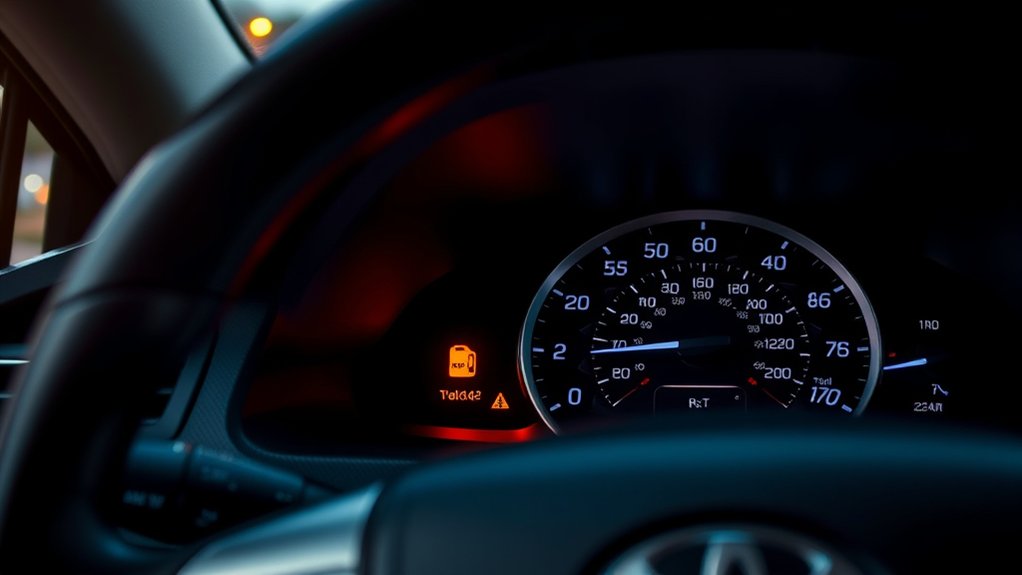
Toyota identifies red dashboard icons as conditions that need immediate attention, including low engine oil pressure. However, Camry model years and display layouts differ, so read the exact message and check the symbol before deciding what to do.
| Alert | What It Usually Means | What You Should Do |
|---|---|---|
| Red oil-can light or low engine oil pressure message | The lubrication system may not be building enough pressure. | Pull over safely, shut off the engine, check the level, and do not drive if the warning remains. |
| Low engine oil level message | The measured or estimated oil quantity may be below the expected range. | Check the dipstick as soon as it is safe and add the correct oil if needed. |
| Maintenance required reminder | Scheduled service is due based on time or mileage. | Book the required maintenance. It is not the same as a red pressure warning. |
| Check engine light | The engine or emissions control system detected a fault. | Follow the owner’s manual. This light does not replace the oil-pressure warning. |
Use the Toyota owner’s manual lookup to confirm the warning wording, oil-check procedure, oil capacity, and viscosity for your exact model year and engine.
What Should You Do If the Oil Warning Light Comes On?
- Move out of traffic. Ease off the accelerator, turn on the hazard lights if needed, and stop on a safe, level surface.
- Shut off the engine. Do not leave it idling while you inspect the car.
- Look for obvious trouble. Check for a large oil puddle, fresh oil under the engine, smoke, a burning smell, or loud ticking, knocking, or grinding.
- Let the oil drain back. Wait at least five minutes, or follow the time stated in your model-year manual.
- Check the dipstick. If the level is below the low mark, add the specified oil in small amounts and recheck it.
- Restart only when the level was low and you corrected it. If there is no major leak or abnormal noise, start the engine briefly after topping up. If the dipstick was already in range, or if the red warning stays on or returns, shut the engine off and arrange a tow.
- Arrange a tow when the cause is unclear. A normal oil level with a pressure warning can point to a sensor fault, blocked oil flow, pump problem, or internal engine wear.
Pro Tip: Keep a quart of the correct oil, a clean funnel, gloves, and paper towels in the trunk. Write the viscosity and specification on a label so you do not guess during a roadside stop.
Checking Your Oil Level: A Step-by-Step Guide
- Park on level ground. A slope can make the dipstick reading look higher or lower than it is.
- Turn off the engine and wait. Allow at least five minutes for hot oil to return to the oil pan. Follow any different instruction in your manual.
- Open the hood and locate the engine-oil dipstick. Do not confuse it with another service point.
- Pull the dipstick out and wipe it clean. Use a lint-free cloth or clean paper towel.
- Insert it fully, then remove it again. Hold it level and read both sides.
- Check the marked range. The oil should be between the low and full marks. If one side is smeared, use the clearer side or repeat the check.
- Add oil slowly if needed. Remove the oil filler cap and add a small amount through a clean funnel. Wait, recheck, and stop before the level goes above the full mark.
- Secure everything. Reinstall the dipstick and filler cap, wipe away spills, and check beneath the vehicle for leaks.
Note: Oil color alone does not tell you whether the oil is worn out. Follow the maintenance schedule, and seek service if the oil looks milky, contains metal particles, smells strongly of fuel, or the level rises without oil being added.
Can You Drive With a Low Oil Warning?
Whether you can drive depends on the exact alert:
- Red low-oil-pressure warning: No. Stop and shut off the engine. Driving even a short distance can turn a minor fault into major engine damage.
- Low oil level message with no pressure warning: Check the level before continuing. Add the specified oil if it is low. If the level drops again, inspect for leaks or oil consumption.
- Maintenance required reminder: You can normally drive while arranging service, but do not delay the maintenance listed for your mileage and operating conditions.
A full dipstick does not cancel a red oil-pressure warning. Oil quantity and oil pressure are related, but they are not the same measurement.
Common Causes of Low Engine Oil Pressure in Your Camry
Low Oil Level
Leaks, oil consumption, an underfilled oil change, or a loose drain plug can leave too little oil in the pan. During braking, turning, or acceleration, the pickup may draw air and the warning may flicker.
A Problem After Recent Service
If the warning appeared just after an oil change, check for an incorrect oil quantity, a loose filter or drain plug, a damaged filter seal, the wrong filter, or oil spilled onto hot parts. Shut the engine off if the warning is red.
Wrong Oil or Restricted Oil Flow
Oil that does not meet the engine’s required viscosity or performance standard can affect lubrication, especially at cold start or high temperature. A clogged filter, sludge, debris, or a restricted pickup screen can also reduce flow. The American Petroleum Institute advises drivers to follow the vehicle manufacturer’s recommendation before selecting an API oil category.
Faulty Oil Pressure Sensor or Wiring
A failed pressure switch, damaged connector, shorted wire, or instrument-circuit fault can turn on the warning when mechanical pressure is acceptable. A technician should test the circuit and verify actual pressure rather than replacing parts by guesswork.
Oil Pump, Relief Valve, or Internal Engine Wear
A worn oil pump, stuck pressure-relief valve, excessive bearing clearance, or another internal fault can lower pressure even when the oil level is correct. These conditions need prompt diagnosis.
Overfilled or Aerated Oil
Too much oil can be whipped into foam by moving engine parts. Aerated oil may not build stable pressure. If the dipstick is above the full mark, do not add more oil. Have the excess removed correctly.
Potential Risks of Ignoring the Low Oil Warning

Low oil pressure reduces the protective oil film between moving parts. If you continue driving, possible results include:
- Rapid bearing and camshaft wear: Metal surfaces can contact each other when lubrication fails.
- Timing-system damage: Components that depend on pressurized oil may stop working correctly.
- Overheating and seizure: Friction and heat can rise until the engine locks up.
- A denied repair claim for maintenance-related damage: A warranty is not automatically voided by one warning light, but maintenance records matter. The FTC explains that a manufacturer may deny coverage for damage caused by a defective part or improper work and may request maintenance records.
Diagnosing a Warning When the Oil Level Is Normal
If the dipstick level is correct but the red warning appears, do not assume it is a harmless sensor problem. A proper diagnosis may include:
- Checking for stored diagnostic trouble codes and freeze-frame data, while recognizing that low oil pressure may not always set a useful code.
- Inspecting the oil-pressure sensor, connector, wiring, and instrument display.
- Installing a mechanical pressure gauge and comparing the reading with Toyota’s service specification at the required oil temperature and engine speed.
- Confirming the oil viscosity, filter part number, oil level, and recent service history.
- Inspecting the oil pan, pickup screen, pump, pressure-relief valve, and internal bearing clearances when test results point to a mechanical fault.
This work is best handled by a qualified technician because the correct pressure specification and test method depend on the Camry’s year and engine.
Addressing Oil Leaks in Your Camry
A leak can lower the oil level until pressure drops. Look for fresh wet oil rather than old, dusty residue. Common leak areas include:
- Valve cover gasket areas
- Oil filter and filter sealing surface
- Drain plug and sealing washer
- Oil pan and oil pan sealant
- Front and rear crankshaft seals
- Timing cover joints and other engine-specific sealing points
Oil can travel along covers and splash shields, so the lowest wet point is not always the source. A technician may clean the engine, add approved ultraviolet dye, or use another tracing method to find a slow leak.
Warning: Never crawl under a vehicle supported only by a jack. Use properly rated stands on solid, level ground, or leave underbody inspection to a repair shop.
Preventive Maintenance Tips
| Tip | What to Do |
|---|---|
| Inspect the oil level | Check monthly, before long trips, and shortly after an oil change. |
| Watch for leak signs | Investigate fresh spots, smoke, or a burning-oil smell. |
| Use the correct oil | Match the viscosity, quality standard, and capacity in the model-year manual. |
| Keep service records | Save invoices and note the date, mileage, oil type, and quantity added. |
Software, Sensor, and Recall Checks
A false warning is possible when a pressure sensor, oil-level sensor, connector, wiring circuit, or instrument display fails. However, you should treat a red pressure warning as real until mechanical oil pressure has been tested.
Some 2025 Camrys were included in a combination-meter campaign involving a display that may fail to show important information at startup. That issue is not proof that a lit oil-pressure warning is false. Use Toyota’s VIN recall and service-campaign lookup or the NHTSA recall lookup to check your specific vehicle.
How to Prevent Future Oil Warning Lights
- Check the level regularly. A monthly check can reveal gradual oil use before the level becomes critical.
- Recheck after service. Inspect the level and the ground beneath the car after an oil change.
- Use the exact specified oil. Newer and older Camrys do not all use the same viscosity. Read the filler cap and model-year manual rather than relying on a general list.
- Follow the correct maintenance schedule. Oil-change timing varies by model year, oil specification, mileage, time, and severe operating conditions.
- Fix leaks and consumption early. Repeated top-ups without finding the cause can allow a small problem to become serious.
- Respond to unusual sounds. Ticking, knocking, grinding, or a sudden change in engine sound with an oil warning needs immediate attention.
When to Seek Professional Help for Oil Issues
Arrange professional service or towing when:
- The red warning stays on after the oil level is corrected.
- The dipstick level is normal but the pressure warning appears.
- The engine ticks, knocks, rattles, grinds, smokes, or loses power.
- You see a large or fast oil leak.
- The warning appeared immediately after an oil change.
- The oil is milky, smells strongly of fuel, contains metal, or is above the full mark.
- The warning flickers repeatedly at hot idle, during turns, or under braking.
- The instrument display is blank, resets, or shows inconsistent warnings.
Keep photos of the warning, the dipstick reading, oil spots, and service receipts. This information can help a technician reproduce the fault and can support a warranty claim when coverage applies.
Frequently Asked Questions
Does a Toyota Camry tell you when the oil is low?
Depending on the model year and equipment, your Camry may show a low oil level message, a red low-oil-pressure warning, or both. These alerts do not mean the same thing. Confirm the symbol and wording in your model-year owner’s manual.
Can I drive with the red oil warning on?
No. Pull over safely and shut off the engine. Check the oil level, but do not continue driving if the level is normal, the warning remains, or the engine makes unusual noise. Have the car towed for diagnosis.
Can I just add oil if the dipstick is low?
You can add the exact oil specified for your Camry in small amounts until the level is within the marked range. Do not overfill. If the level becomes low again, find the leak or oil-consumption cause instead of relying on repeated top-ups.
Why is the oil warning on when the dipstick is full?
The engine may have low oil pressure despite having enough oil. Other possibilities include a faulty pressure sensor, wiring fault, wrong filter, restricted oil flow, oil-pump problem, internal wear, or an instrument-display issue. Actual pressure should be tested with the correct procedure.
Why does the oil light flicker at idle or during turns?
Flickering can happen when the oil level is low, pressure is marginal at hot idle, oil moves away from the pickup during a turn, or the sensor circuit is failing. Stop, check the level, and arrange testing if the warning returns.
Is the maintenance required light the same as the oil-pressure light?
No. The maintenance reminder tells you scheduled service is due. The red oil-can warning indicates a possible loss of engine oil pressure and requires an immediate safe stop.
Conclusion
A Camry oil warning deserves a precise response. Stop immediately for a red oil-pressure alert, verify the oil level, and do not keep driving when the warning remains or the engine sounds abnormal. Use the oil and service schedule listed for your exact model year, repair leaks early, and have actual oil pressure tested when the dipstick reading does not explain the warning.
Sources
- Toyota Owners: Dashboard Warning Lights – explains that red icons, including low engine oil pressure, require immediate attention.
- Toyota Owners: Manuals and Warranties – provides model-year instructions, fluid specifications, and warning descriptions.
- American Petroleum Institute: Oil Categories – supports using the manufacturer-required oil performance category.
- Toyota Recall and Service Campaign Lookup – checks open campaigns by VIN or license plate.
- National Highway Traffic Safety Administration: Recall Lookup – checks recalls, investigations, complaints, and manufacturer communications.
- Federal Trade Commission: Auto Warranties and Service Contracts – explains maintenance records and when warranty coverage may be denied for caused damage.
