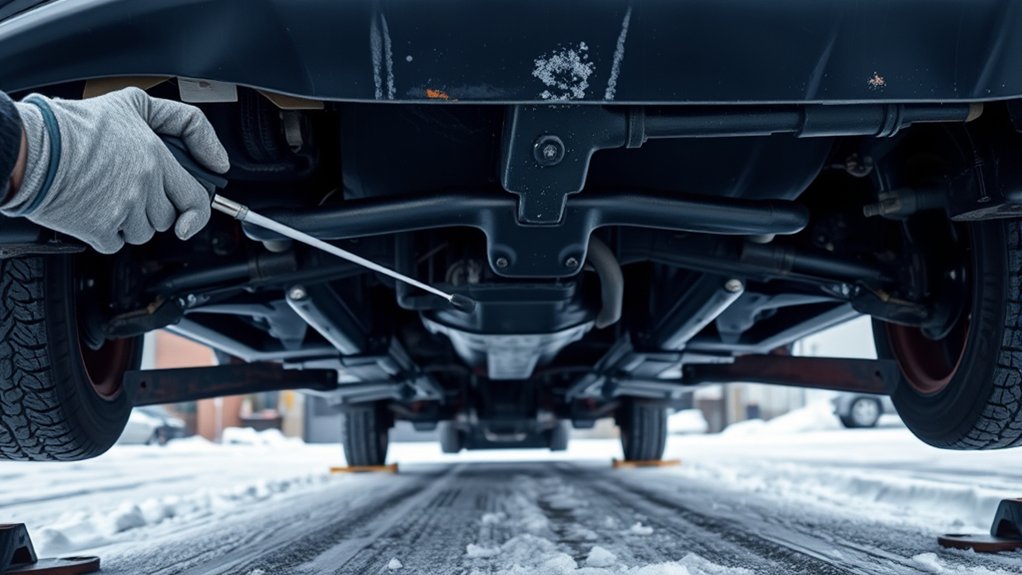
Winter road salt, brine, moisture, and damaged protective coatings can expose a Toyota Camry’s undercarriage to corrosion. The most reliable defense is a repeatable routine: remove salt, inspect vulnerable areas, repair damage, apply compatible protection when it is appropriate, and check the underside again throughout winter and after the salting season.
Quick Answer
Protect a Toyota Camry’s undercarriage from winter rust by rinsing away salt and brine, keeping drains and wheel wells clear, inspecting factory coatings and metal, repairing damage before it spreads, and applying a compatible rust inhibitor only to a properly prepared surface. Recheck the underside during winter and in spring.
Key Takeaways
- Rinse the underbody and wheel wells after meaningful salt or brine exposure, using an above-freezing period or heated wash bay.
- Inspect seams, subframes, mounting points, brake and fuel lines, fasteners, shields, drains, and damaged factory coating.
- Do not hide loose scale, perforation, leaks, or weakened structural areas beneath undercoating.
- Choose a product by its surface-preparation rules, exclusions, compatibility, curing requirements, and reapplication schedule—not by brand name alone.
- Keep coatings away from tires, brakes, hot exhaust parts, sensors, connectors, labels, drains, and hybrid high-voltage components.
- Check the Toyota warranty and maintenance guide for your exact model year and market before applying an aftermarket product.
At a Glance
| Time Required | About 30 to 60 minutes for washing and inspection; several hours when drying, masking, and applying a coating |
| Difficulty | Easy for routine washing and visual checks; moderate for safe DIY preparation and coating |
| Tools Needed | Underbody wash or hose attachment, car-wash soap, flashlight, gloves, eye protection, drying time, masking materials, and an optional compatible rust inhibitor |
| Cost | Low for washing and inspection; moderate for DIY treatment; higher when corrosion needs professional repair |
Why Rust Protection Matters for Your Toyota Camry
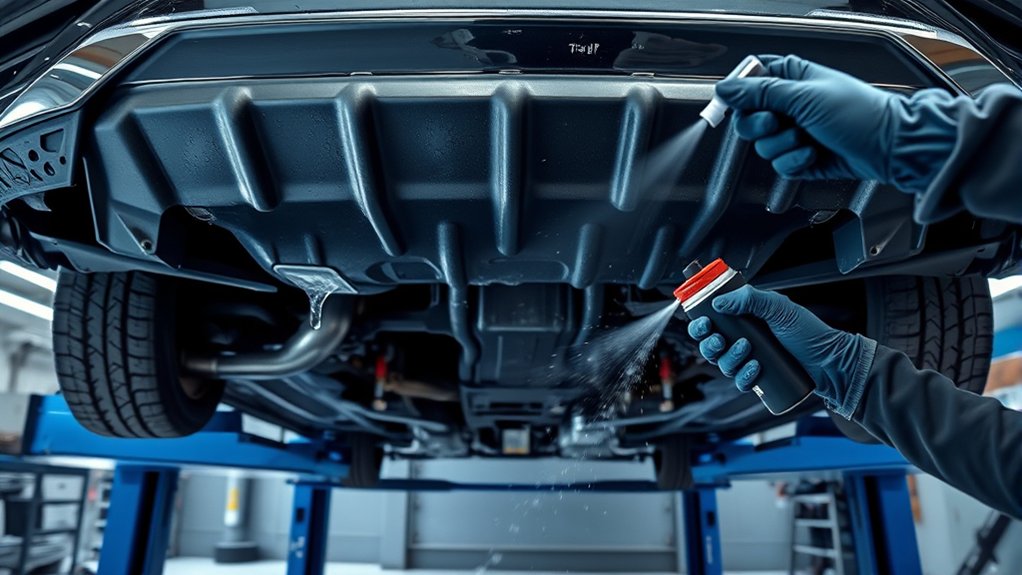
Road crews use salt and brine to improve winter traction, but chloride residue can remain on your Camry’s underbody after the road dries. When chloride salts, moisture, oxygen, and exposed metal are present together, corrosion can progress faster on damaged coatings, fasteners, seams, lines, and other vulnerable surfaces. The U.S. Environmental Protection Agency identifies road salt as corrosive to cars, trucks, bridges, and roads.
Your Camry already has factory-applied corrosion protection, but stone chips, scraping, age, previous repairs, trapped debris, and repeated salt exposure can weaken it. Additional treatment may be useful when you drive often on salted roads, plan to keep the vehicle for many years, or find damaged coating during an inspection. It is not automatically necessary for every vehicle or climate.
Before applying an aftermarket coating, check the Toyota manuals and warranties portal for your exact model year and country. Toyota’s U.S. overview lists rust-through coverage for corrosion perforation of sheet metal, but the applicable warranty booklet—not a general web page—controls the terms, exclusions, and coverage for a specific vehicle.
The strongest rust defense is not one permanent coating. It is a repeatable cycle: clean, dry, inspect, repair, protect, and recheck.
Understanding How Rust Develops on Your Vehicle
Rust forms when iron or steel reacts with oxygen and moisture. Salt does not create rust by itself, but dissolved chloride salts increase the conductivity of moisture and can speed electrochemical corrosion. Dirt and packed road debris make the problem worse when they hold salty moisture against seams, ledges, and damaged metal.
| Factor | Why It Matters | Action to Take |
|---|---|---|
| Moisture | Allows corrosion to continue on exposed metal | Dry the vehicle after cleaning and correct blocked-drain or trapped-water problems |
| Road salt or brine | Speeds corrosion and can collect in seams and wheel wells | Rinse the underbody after meaningful exposure |
| Chipped paint or damaged coating | Leaves metal with less protection | Repair the damaged finish with a surface-compatible system |
| Packed dirt and debris | Retains moisture and hides deterioration | Clean wheel wells, shields, seams, and ledges thoroughly |
| Loose scale or perforation | May indicate advanced material loss | Arrange professional assessment before applying a coating |
Corrosion does not progress at one predictable rate. Climate, mileage, salt concentration, parking conditions, prior repairs, drainage, coating damage, and cleaning frequency all affect how quickly it develops. A fixed claim such as “rust appears within a few years” is therefore not useful for every Camry.
Decide What Your Camry Needs Before Coating
Start by identifying the surface condition. Washing, spot repair, flexible inhibitor, and structural repair solve different problems. Covering every brown area with one product can trap contamination or make later inspection harder.
| What You Find | Best Next Step | Do Not |
|---|---|---|
| Sound factory coating with salt residue | Wash, dry, and reinspect; added coating may not be needed | Spray over dirt, salt, or standing water |
| Small chip or scrape with stable surrounding material | Clean and repair with a product approved for that exact surface | Assume exterior touch-up paint matches every underbody coating |
| Light surface rust without flaking or deep pitting | Prepare and treat only as directed by the chosen repair or inhibitor system | Seal contamination beneath a hard film |
| Flaking scale, perforation, swollen seams, damaged mounts, or heavily pitted lines | Obtain professional inspection and repair assessment | Grind, probe, or coat over a safety-critical component |
| Leak, warning light, abnormal braking, or fuel odor | Stop treating it as routine rust prevention and arrange service | Drive until the cause is identified when safety may be affected |
Winter Rust-Prevention Plan for Your Camry
1. Prepare Your Camry Before Winter
Begin with a clean, dry vehicle before regular road-salt use starts. Use a bright flashlight to inspect rocker-panel seams, wheel wells, subframes, suspension mounting areas, underbody shields, fasteners, brake and fuel lines, and any point where the factory coating appears scraped, lifted, or missing.
- Remove mud, leaves, and packed debris from accessible ledges and wheel-well areas.
- Confirm that visible drain openings are clear rather than sealed by dirt or coating.
- Repair paint chips on painted body panels with a compatible touch-up system.
- Have loose scale, perforation, swollen seams, damaged lines, weakened mounting areas, or leaks inspected before applying rust inhibitor.
- Read the product label, safety data sheet when available, and model-year Toyota guidance before beginning.
- Do not remove underbody panels, drill access holes, or open sealed cavities unless the vehicle and product instructions specifically authorize the work.
Note: Touch-up paint is suitable for small chips on compatible painted exterior surfaces. The underside may use different primers, seam sealers, anti-chip materials, and factory coatings. Match the repair product to the surface instead of covering every damaged area with ordinary body paint.
2. Wash After Road-Salt Exposure
Rinse the underbody after substantial salt, brine, or salty-slush exposure. There is no universal Camry wash interval: conditions matter more than a rigid calendar. Heavy white residue, packed slush, repeated storm driving, or frequent travel on treated highways calls for quicker cleaning than one short trip on a mostly dry road.
- Let hot exhaust parts cool before washing.
- Use a touchless underbody cycle, undercarriage attachment, or broad hose spray to loosen residue.
- Rinse wheel wells, subframes, crossmembers, seams, shields, and other areas that collect splash.
- Keep a pressure-washer nozzle at a controlled distance and use a wide fan rather than a concentrated jet.
- Avoid directing forceful water into damaged coatings, electrical connectors, sensors, vents, or openings.
- Allow water to drain and the vehicle to dry. Drive cautiously and apply the brakes gently a few times in a safe area to clear normal surface moisture from the rotors.
Warning: Never work beneath a Camry supported only by a jack. Use correctly rated jack stands at approved lift points or a professional vehicle lift. Keep water and rustproofing products away from tires, brake rotors and pads, hot exhaust parts, catalytic converters, moving components, sensors, connectors, labels, drain openings, and hybrid high-voltage cables or components. Follow the product label and your Toyota manual.
3. Inspect Again During Winter
Check the underside after a hard impact, deep-snow contact, road-debris strike, or scraping event. Look for a fresh tear in the coating, a loose shield, exposed metal, a blocked drain, or a seam that now holds debris. Early repair is usually simpler than waiting for corrosion to spread beneath a damaged edge.
4. Complete a Spring Cleanup
Once regular salting ends, give the underbody a thorough rinse and inspection. Spring is a useful time to remove residue from hidden ledges, check whether an inhibitor has thinned or washed away, and photograph questionable areas. Photos taken from the same angle each year make changes easier to recognize.
Signs Your Camry’s Undercarriage Needs Attention
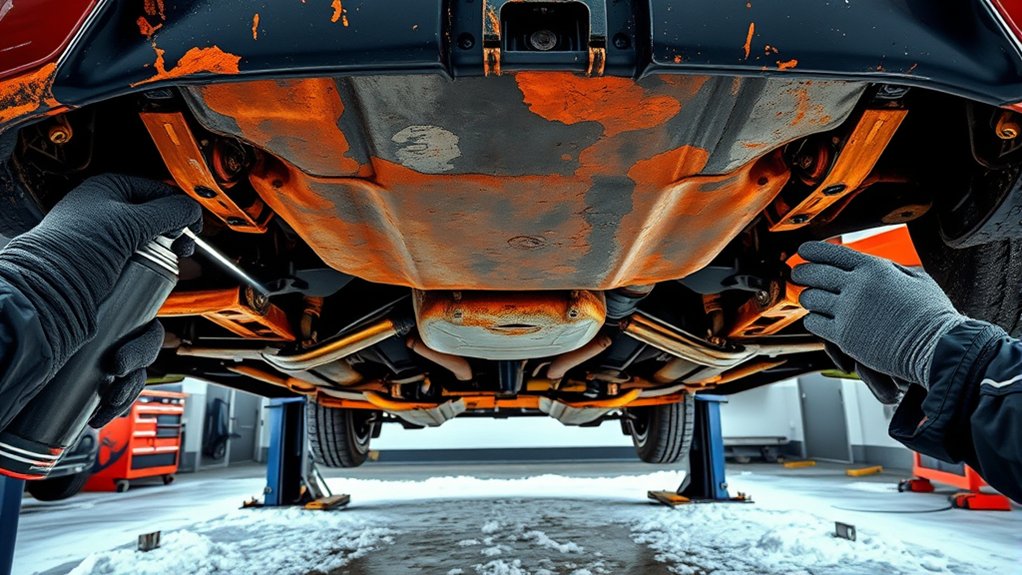
A small orange stain on a fastener is different from deep scaling on a structural mount or corrosion on a brake line. Judge the location, depth, and material loss rather than treating every brown mark as the same problem.
- Light surface rust: Thin discoloration without swelling, flaking, deep pitting, or material loss. Schedule cleaning and surface-appropriate treatment before it advances.
- Flaking or layered scale: Rust that lifts in sheets or breaks away may indicate meaningful metal loss. Have the component evaluated.
- Perforation: Holes, crumbling edges, or metal that deforms under light professional probing require repair assessment, not cosmetic coating.
- Swollen seams or bubbling coating: Corrosion may be progressing beneath paint, seam sealer, or underbody material.
- Corroded brake or fuel lines: Heavy pitting, wetness, staining, fuel odor, or a confirmed leak needs immediate professional attention.
- Loose mounts, shields, or fasteners: Rattling can have many causes, but a rust-weakened attachment point must be repaired.
Poor handling, reduced fuel economy, clunking, or a fluid leak is not a reliable standalone rust diagnosis. Each can have unrelated causes. If handling changes suddenly, a warning light appears, braking feels abnormal, fuel is smelled, or brake fluid or fuel may be leaking, stop treating the problem as routine rust maintenance and obtain professional inspection.
Note: Do not scrape, hammer, grind, drill, or puncture a brake line, fuel line, structural member, hybrid battery enclosure, orange high-voltage cable, or unfamiliar underbody component to “test” its strength. A trained technician can evaluate severity without creating additional damage.
How to Choose the Best Undercoating for Rust Prevention
No single coating is best for every Camry. Compare how a product handles the existing surface, seams, abrasion, heat, reapplication, cleaning, and later inspection. The label should identify where the material may and may not be used, the required preparation, the application temperature, the curing or settling time, and any compatibility limits.
Key Undercoating Product Types
| Type | Potential Advantages | Limitations and Checks |
|---|---|---|
| Oil- or lanolin-based inhibitor Examples include Fluid Film and WoolWax products. |
Can creep into seams and remain flexible instead of forming a rigid shell. | May remain tacky, collect grime, thin in high-splash areas, soften some existing coatings, and require regular inspection or reapplication. |
| Wax- or cosmoline-style coating | Can form a firmer protective film when correctly applied to a prepared surface. | Preparation and later removal may be more involved. Cracks, missed areas, and damaged edges still require inspection. |
| Rubberized or asphaltic coating | May provide abrasion and sound-control benefits on compatible, clean, stable surfaces. | A hard film can hide corrosion if applied over moisture, loose rust, contamination, or an unsuitable existing coating. |
| Professional oil-spray service Krown is one commercial example. |
A trained applicator may have wands, lifts, masking materials, and equipment for seams and enclosed areas. | Results depend on preparation, technician coverage, product formula, drilling policy, exclusions, warranty terms, and the required return schedule. |
Brand names alone do not establish which product will perform best. Compare the exact formula, technical instructions, compatibility statements, reapplication interval, cleanup method, installer procedure, and warranty conditions.
Safe DIY Setup Before Spraying
- Work in the ventilation and temperature range required by the product instructions.
- Wear the gloves, eye protection, respiratory protection, and protective clothing stated on the label or safety data sheet.
- Keep ignition sources away from flammable vapors or aerosols.
- Protect the floor and nearby property from overspray, and follow local rules for wastewater, residue, and container disposal.
- Do not spray in an attached living space or beneath a vehicle that is not securely supported.
- Stop if you cannot positively identify a component or cannot mask an excluded area.
Application Methods and Techniques
- Review instructions first. Confirm that the coating is intended for automotive underbody use and is compatible with the existing surface.
- Inspect the vehicle. Identify loose rust, leaks, damaged components, open drains, hot areas, brakes, tires, sensors, wiring, labels, and hybrid equipment.
- Clean thoroughly. Remove salt, mud, loose dirt, grease, and debris according to the coating manufacturer’s preparation directions.
- Allow complete drying. Do not trap wash water, condensation, or ice beneath a coating.
- Repair active damage. Loose scale, perforation, weakened mounts, damaged safety lines, and leaks need appropriate treatment or professional repair before covering.
- Mask excluded parts. Protect brakes, tires, exhaust components, connectors, sensors, labels, drains, and other prohibited areas.
- Apply a controlled film. Use the thickness, temperature range, ventilation, curing time, and equipment specified on the label.
- Inspect the result. Check for missed areas, blocked openings, overspray, drips, or contact with prohibited parts before driving.
Pro Tip: Take clear photos before cleaning, after the surface dries, and after treatment. These images document existing damage, make future comparison easier, and help you confirm whether a coating is thinning, cracking, or lifting.
Troubleshooting Common Rustproofing Problems
| Problem | Response |
|---|---|
| Coating washed away or looks thin | Let the area dry, inspect for exposed metal, and renew only as the product instructions allow. |
| Hard coating cracks, bubbles, or lifts | Do not seal over the defect. Have the edge and underlying surface assessed and repaired with a compatible system. |
| Drain opening is blocked | Do not force tools into an unfamiliar opening. Follow the vehicle and product instructions or have a technician clear it safely. |
| Overspray reaches brakes, tires, exhaust, sensors, or high-voltage parts | Do not drive until the affected area is handled according to the product manufacturer and, when safety-critical parts are involved, a qualified technician. |
| Rust appears beneath a coating | Treat it as hidden deterioration rather than a cosmetic flaw. Arrange inspection before adding more material. |
Long-Term Maintenance Considerations
Undercoating is a maintenance item, not a permanent substitute for cleaning and inspection. Check it after winter, after underbody impacts, and at the interval stated by the product manufacturer. Flexible oil or lanolin films may need frequent renewal in high-splash areas. Harder wax or rubberized films may last longer in some locations, but any crack, bubble, or lifted edge deserves attention.
Use a washing method that removes salt without unnecessarily stripping the chosen treatment. If a car wash uses strong detergent or high pressure, inspect the coating afterward. Never assume that an underbody is protected simply because the visible film is thick.
Practical Strategies for Long-Term Winter Rust Control
- Remove salt consistently: Prioritize the underbody, wheel wells, seams, subframes, and accessible areas behind shields where residue collects.
- Repair chips promptly: Seal small damage with a surface-compatible repair system before corrosion spreads beneath the edge.
- Keep the cabin dry: Rubber floor mats help contain snow and salty water inside the vehicle. Empty and dry them regularly so moisture does not reach the carpet and interior seams. Mats do not directly protect the external undercarriage.
- Park where the vehicle can dry: A clean, ventilated space helps moisture evaporate. Whatever the temperature, do not leave packed salty slush and standing water trapped against the vehicle.
- Use a cover carefully: A breathable, correctly fitted cover may reduce exterior exposure when placed on a clean, dry car. It does not remove underbody salt and can trap moisture when used on a wet or dirty vehicle.
- Do not sacrifice road safety: Avoid freshly treated roads when a safe alternative is practical, but never choose a hazardous route solely to reduce salt exposure.
- Keep maintenance records: Save photos, invoices, product names, application dates, and inspection findings.
- Check safety recalls: Enter the VIN in the official NHTSA recall lookup for U.S. vehicles and follow Toyota’s instructions for any open safety campaign.
Related Guides
Frequently Asked Questions
What is the best way to protect a car’s underside from winter rust?
Use a combined routine rather than relying on one product. Rinse away salt, keep drain areas clear, inspect coating damage, repair exposed surfaces, and apply a compatible inhibitor only after the underside meets the product’s preparation requirements. Reinspect during winter and after the salting season.
Can rustproofing be done during winter?
Yes, but the surface must meet the product’s temperature, cleanliness, and dryness requirements. Applying coating over salt, wet debris, ice, or loose rust can trap contamination or reduce adhesion. A heated professional facility may be the safer choice during freezing weather.
Is undercarriage rust protection worth it for a Toyota Camry?
It can be worthwhile when the car faces frequent salt exposure, has damaged factory coating, or will be kept for many years. A Camry in a mild climate with sound factory protection may need only regular cleaning and inspection. Check the model-year warranty guide before choosing an aftermarket treatment.
Can you rubberize the underside of a car to prevent rust?
A compatible rubberized coating can protect suitable, properly prepared surfaces, but it is not a universal cure. Applying a hard film over moisture, salt, loose scale, or active corrosion can conceal damage. Preparation, drainage, exclusions, and future inspection remain essential.
How often should you wash a Camry’s undercarriage in winter?
Wash after meaningful salt or brine exposure instead of following one rigid interval. Heavy residue, repeated storm driving, or packed salty slush calls for quicker cleaning. Use an above-freezing period or heated wash bay, then allow the vehicle to drain and dry.
Can you apply undercoating over existing rust?
Only when the exact product allows it and the surface has been prepared as directed. Do not coat over salt, moisture, loose scale, perforation, leaks, or weakened components. Advanced rust needs inspection and repair before any cosmetic covering.
Is rustproofing different for a Camry Hybrid?
The same cleaning and inspection principles apply, but hybrid models have high-voltage components and model-specific underbody hardware that must not be sprayed, drilled, opened, or disturbed. Follow the exact Toyota manual and use a qualified technician when component identification or access is uncertain.
When is professional rustproofing the better choice?
Choose professional service when the underside has flaking scale, perforation, leaks, damaged lines or mounts, extensive panels that must be removed, or components you cannot identify. Professional application can also be useful when freezing weather prevents proper cleaning and drying at home.
Conclusion
Protecting a Toyota Camry from winter rust depends more on consistent maintenance than on finding one permanent coating. Remove road salt, inspect vulnerable parts, repair damage before covering it, and use only products that match the surface, model-year guidance, and application conditions. When you find flaking scale, perforation, weakened mounts, corroded safety lines, abnormal braking, fuel odor, or leaks, arrange professional inspection instead of hiding the problem beneath undercoating.
Sources
- U.S. Environmental Protection Agency: Winter Road Salt Fact Sheet — supports the explanation of road salt’s corrosive effects on vehicles and infrastructure.
- Toyota Manuals and Warranties — provides model-year manuals, maintenance guides, and current U.S. warranty overview information.
- National Highway Traffic Safety Administration Recall Lookup — allows owners of U.S. vehicles to check a VIN for unrepaired safety recalls.
- Fluid Film Automotive Applications — provides a manufacturer example of a lanolin-based flexible inhibitor and its compatibility cautions.

