
The best zoom camera should bring distant subjects closer without making you carry a bag of lenses. The catch in 2026 is that several once-popular long-zoom models in this roundup are now discontinued, so seller condition and warranty matter as much as focal length.
Among the linked products we could still verify as a current buy, the Sony RX100 VII is the current pick because it combines a 1-inch stacked sensor, fast autofocus and a 24–200mm equivalent zoom in a pocketable body. This roundup no longer has a verified Best value pick because the other three linked models are legacy or discontinued.
We checked linked ASINs, manufacturer specifications, current model status, owner feedback trends and recall records. We do not claim hands-on testing.
Best Zoom Cameras Compared
| Product | Best for | Zoom range | Sensor | Weight |
|---|---|---|---|---|
| Legacy bridge-camera comparison | 16x, 25–400mm equivalent | 20.1MP 1-inch MOS | 1.79 lb with battery and card | |
|
Premium
|
Pocketable speed and travel | 8x, 24–200mm equivalent | 20.1MP 1-inch stacked CMOS | 10.7 oz with battery and card |
| Legacy pocket superzoom comparison | 40x, 24–960mm equivalent | 20.3MP 1/2.3-inch CMOS | 10.5 oz with battery and card | |
| Legacy action and wildlife setup | 25x, 24–600mm equivalent | 20.1MP 1-inch stacked CMOS | 2 lb 6.7 oz with battery and card |
Current-status note: Only the Sony RX100 VII remains verified here as a current model. The Panasonic FZ1000 II, Canon PowerShot SX740 HS and Sony RX10 IV are retained below because the source article included them, but they should be treated as legacy comparisons rather than current recommendations.
1. Panasonic FZ1000 II
Bottom line: The Panasonic FZ1000 II remains a capable 1-inch bridge camera on paper, but it is now a legacy model and is no longer broadly available new. Treat it as a used or remaining-stock comparison rather than a current top pick.
- Zoom range: 16x, 25–400mm equivalent, useful from landscapes to moderate telephoto
- Sensor: 20.1MP 1-inch MOS, larger than typical pocket superzoom sensors
- Video: 4K recording, useful for detailed travel and family clips
- Weight: 1.79 lb with battery and card, substantial bridge-camera handling
The 25–400mm equivalent lens covers wide scenes, portraits and moderate wildlife without a lens change. Its 1-inch sensor gives it a larger imaging area than small-sensor travel superzooms.
Panasonic also provided RAW capture, a viewfinder, a free-angle touchscreen, optical stabilization, Wi-Fi and Bluetooth. Those features still make sense for general photography, but current condition and warranty now deserve more attention than the original feature list.
- 20.1MP 1-inch sensor
- 25–400mm equivalent zoom covers many everyday subjects
- RAW capture and 4K recording
- Electronic viewfinder and articulated touchscreen
- Legacy model that is no longer broadly available new
- Much larger than a pocket camera
- 400mm equivalent reach is shorter than many superzooms
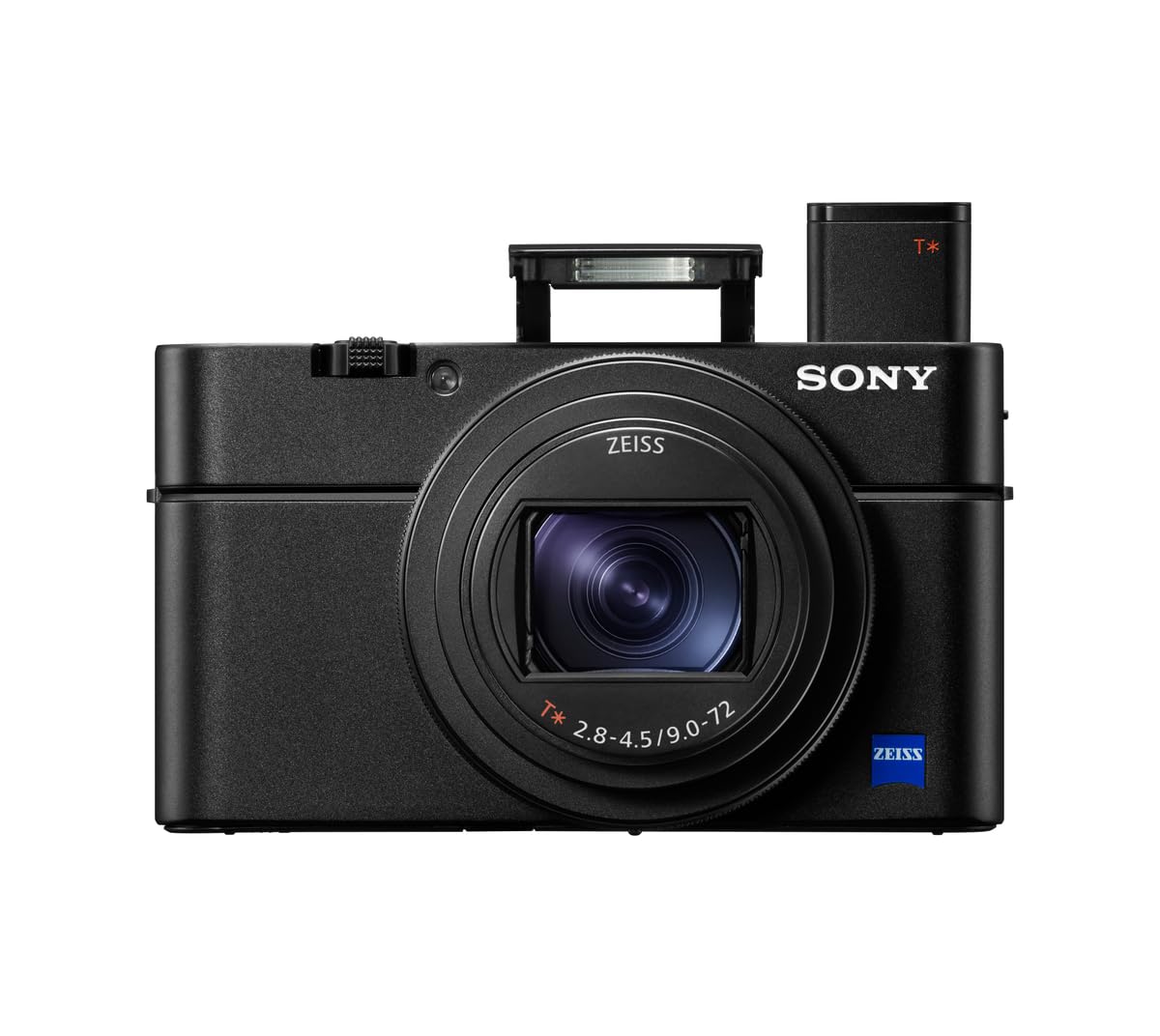
2. Sony RX100 VII
Bottom line: The Sony RX100 VII is the strongest current choice among these linked cameras when you want fast autofocus and 1-inch-sensor image quality in a small body. Its main limitation is the 200mm equivalent telephoto end.
- Zoom range: 8x, 24–200mm equivalent, versatile for travel and events
- Sensor: 20.1MP 1-inch stacked CMOS, supports fast readout and tracking
- Video: 4K recording with microphone input, useful for compact video rigs
- Weight: 10.7 oz with battery and card, easy to carry daily
The 24–200mm equivalent lens covers landscapes, street photography, portraits, family events and moderate action. Sony’s real-time tracking and eye autofocus are especially useful when your subjects do not stay still.
Continuous shooting reaches up to 20 fps, and the camera supports RAW files, 4K video and an external microphone. You give up the 400mm, 600mm or 960mm reach of larger or small-sensor superzooms, but the body is much easier to carry.
- 20.1MP 1-inch stacked sensor
- Fast tracking autofocus and up to 20 fps shooting
- Small body with a useful 24–200mm equivalent lens
- RAW, 4K video and microphone input
- 200mm equivalent telephoto end is limited for distant wildlife
- Small battery benefits from carrying a spare
- Compact controls can feel crowded compared with a bridge camera
3. Canon PowerShot SX740 HS
Bottom line: The Canon PowerShot SX740 HS delivers unusually long 24–960mm equivalent reach in a compact body, but Canon now lists the model as discontinued. Treat it as a legacy travel-zoom option rather than a current recommendation.
- Zoom range: 40x, 24–960mm equivalent, reaches very distant daylight subjects
- Sensor: 20.3MP 1/2.3-inch CMOS, enables the compact 40x lens
- Video: 4K recording, suitable for casual travel clips
- Weight: 10.5 oz with battery and card, easy to pack
The SX740 HS was designed for travelers who valued reach more than large-sensor image quality. Its 40x zoom runs from a useful 24mm-equivalent wide angle to 960mm equivalent at the telephoto end.
It also includes optical stabilization, Wi-Fi, Bluetooth and a 3-inch screen that tilts upward 180 degrees. The camera records JPEG rather than RAW files and has no built-in electronic viewfinder, which limits flexibility for more advanced shooting.
- 40x optical zoom reaches 960mm equivalent
- Compact 10.5 oz shooting weight
- 4K recording and wireless connectivity
- 180-degree tilting rear screen
- Discontinued model
- Small sensor is less suited to dim light
- No RAW capture or built-in viewfinder
4. Sony RX10 IV
Bottom line: The Sony RX10 IV still has an impressive 24–600mm equivalent lens and fast shooting specifications, but production has ended and the linked Amazon offer is a renewed bundle. Use it as a legacy comparison rather than a current recommendation.
- Zoom range: 25x, 24–600mm equivalent, broad reach for action and wildlife
- Sensor: 20.1MP 1-inch stacked CMOS, larger than small-sensor superzooms
- Video: 4K recording, plus high-frame-rate Full HD modes
- Weight: 2 lb 6.7 oz with battery and card, substantial to carry
The RX10 IV pairs its 1-inch stacked sensor with a fixed 24–600mm equivalent f/2.4–4 lens. It supports RAW files, fast hybrid autofocus and continuous shooting up to 24 fps.
That combination made it useful for wildlife, sports, airshows and outdoor events without changing lenses. The trade-off is size and weight, and the exact Amazon link in this article now points to a renewed bundle rather than a standard new-camera listing.
- 24–600mm equivalent f/2.4–4 lens
- 20.1MP 1-inch stacked sensor
- Fast hybrid autofocus and up to 24 fps bursts
- RAW support and 4K recording
- Production has ended
- Linked Amazon listing is a renewed bundle
- 2 lb 6.7 oz shooting weight is heavy for travel
Which Zoom Camera Should You Buy?
- You want a pocketable current camera: get the Sony RX100 VII.
- You want a 1-inch sensor without carrying a bridge camera: get the Sony RX100 VII.
- You need more than 200mm equivalent reach: compare current-generation bridge or travel-zoom cameras instead of relying on the discontinued long-zoom models retained here.
- You want simple new-camera warranty coverage: verify that the exact listing is new and manufacturer-authorized before ordering.
How We Chose
- Exact product match: we checked each linked ASIN against the model or bundle it currently represents.
- Decision-making specifications: we prioritized focal range, sensor size, video capability, weight, autofocus features and file formats.
- Current status: manufacturer product pages and major retailers were checked for discontinuation or availability changes.
- Real-world context: owner feedback trends were used only when repeated across independent non-Amazon sources, and safety or recall records were also checked.
How to Choose the Right Zoom Camera
Start With Focal Range
A 24–200mm equivalent lens covers travel, portraits, street photography and many family events. Longer 400mm to 600mm ranges make distant wildlife and sports easier to frame, while 900mm-plus superzooms prioritize reach over sensor size. Choose the shortest range that comfortably covers your real subjects.
Compare Sensor Size
A 1-inch sensor is substantially larger than a typical 1/2.3-inch compact sensor. That usually gives you more flexibility in lower light and when editing files. Smaller sensors remain useful because they allow much longer zoom ratios in smaller bodies.
Look at Autofocus and Burst Shooting
Autofocus matters more than maximum zoom when you photograph moving people, pets or sports. The Sony RX100 VII pairs real-time tracking with up to 20 fps shooting, making it the strongest current action-oriented option among the linked products.
Consider Weight and Handling
A pocket camera is easier to carry all day, but its buttons and grip are smaller. A bridge camera gives you a deeper grip, viewfinder-friendly handling and more room for physical controls, but it takes up much more bag space.
Check Video and Audio Features
4K resolution is only one part of a useful video setup. Also check autofocus behavior, stabilization, screen movement, microphone support and battery needs. The Sony RX100 VII adds a microphone input while remaining small enough for travel.
Plan for Long-Lens Support
Image stabilization helps with camera shake, but it cannot solve every problem at long focal lengths. A monopod, tripod, bean bag or other stable support can improve consistency when framing distant stationary subjects, especially in lower light.
Check Condition, Warranty and Seller Details
This matters more with older cameras. Listings can mix new, renewed, used, imported and accessory-bundle versions under similar names. Confirm the exact condition, seller, warranty, charger, battery and return terms before ordering.
Mistakes to Avoid When Buying a Zoom Camera
- Buying the largest zoom number automatically: choose focal range around your subjects, not the biggest specification.
- Ignoring sensor size: understand the image-quality trade-off that makes extreme compact zoom ranges possible.
- Assuming an old model is still new: check manufacturer status and the exact seller condition.
- Ignoring carrying weight: a camera you leave at home has little value, regardless of its specifications.
- Comparing only 4K labels: also check autofocus, audio, stabilization and screen design.
FAQs
Is a Bridge Camera Better Than a Compact Zoom Camera?
A bridge camera is better when you value a deeper grip, larger controls, viewfinder use and steadier long-lens handling. A compact zoom camera is better when carrying size matters more. Neither format is automatically superior; your subject distance, travel style and willingness to carry a larger body should decide which one fits.
Zoom vs. Sensor Size: Which Matters More?
Zoom matters more when your subjects are regularly far away, while sensor size matters more when image quality, lower-light shooting and editing flexibility are priorities. A small sensor can support an extreme zoom in a compact body. A larger sensor usually trades some reach for stronger overall image quality and flexibility.
Do I Need a Tripod for a Zoom Camera?
No, you do not need a tripod for every shot. Modern stabilization can help you shoot handheld in good light. A tripod or monopod becomes more useful near the long end of the zoom, during lower-light shooting, or when photographing stationary distant subjects where precise framing matters more than mobility.
Are Zoom Cameras Good for Video?
Yes, a zoom camera can work well for video when its autofocus, stabilization and lens range suit your subject. The Sony RX100 VII adds 4K recording and a microphone input in a compact body. For long-distance video, compare current bridge-camera models with greater telephoto reach.
Can a Zoom Camera Replace a Mirrorless Camera?
Yes, it can replace a mirrorless system when convenience and an all-in-one lens matter more than interchangeable lenses. Mirrorless cameras still provide a broader choice of lenses, larger-sensor options and a clearer upgrade path. A fixed-lens zoom camera reduces the amount of gear you need to carry and manage.
What Should I Check on an Amazon Camera Listing?
Check the exact model, condition, seller, warranty, region, battery, charger, accessories and return policy before ordering. Older camera listings often combine new, renewed, used, imported and bundle offers. The Sony RX10 IV link in this article, for example, currently represents a renewed bundle rather than a standard new-camera listing.
Final Verdict: Best Zoom Camera
Among the products linked in this roundup, the Sony RX100 VII is the only model we could still verify as a current product rather than a discontinued legacy camera. It is the best zoom camera here for buyers who value portability, fast autofocus and 1-inch-sensor performance more than extreme telephoto reach.
This roundup no longer has a verified Best value pick because the other linked models are discontinued; the Sony RX100 VII is also the current premium compact option.
| Product Name | Image | Optical Zoom | Sensor | Weight | Best For | Amazon |
|---|---|---|---|---|---|---|
| Panasonic LUMIX FZ1000 II 20.1MP Digital Camera |
 |
16x, 25–400mm equivalent | 20.1MP 1-inch MOS | About 1.8 lb with battery and card | General travel and bridge-camera versatility | Check Details |
| Sony RX100 VII Premium Compact Camera |
 |
8x, 24–200mm equivalent | 20.1MP 1-inch stacked CMOS | 10.7 oz with battery and card | Premium pocket travel and fast autofocus | Check Details |
| Canon PowerShot SX740 HS Digital Camera |
 |
40x, 24–960mm equivalent | 20.3MP 1/2.3-inch CMOS | About 10.5 oz with battery and card | Pocketable travel zoom in good light | Check Details |
| Sony Cyber-Shot DSC-RX10 IV Digital Camera |
 |
25x, 24–600mm equivalent | 20.1MP 1-inch stacked CMOS | About 2.4 lb with battery and card | Wildlife, sports, and hybrid shooting | Check Details |

