
You read and write more code, documents, and chat threads than ever, so the screen you choose matters. A portrait-capable monitor can show more lines at once, reduce scrolling, and keep reference material visible while you work.
This guide compares two portrait-friendly monitors that balance vertical workspace, resolution, color quality, connectivity, and ergonomics. The ASUS ProArt PA278CV suits buyers who want a practical 27-inch QHD pivot monitor, while the BenQ PD3205U is a larger 4K option for creative work and spacious desks.
Affiliate disclosure: This article contains affiliate links. We may earn a commission from qualifying purchases at no additional cost to you.
Quick Verdict
Choose the ASUS ProArt PA278CV for the best balance of size, portrait ergonomics, USB-C connectivity, and color accuracy. Choose the BenQ PD3205U when you want a larger 31.5-inch 4K workspace with creator-focused controls and 90W USB-C power delivery.
Top Picks
|
Category |
Product |
Why It Stands Out |
|---|---|---|
|
🏆 Best Overall Portrait |
QHD clarity, ±90° pivot, accurate color, and 65W USB-C |
|
|
🎨 Best Large 4K Creative |
31.5-inch 4K canvas, 90° pivot, 90W USB-C, and creator tools |
[Amazon Products Picked for You]

OLED Self-Luminous Display: Upgraded OLED technology with advanced luminous materials eliminates the need for a traditional LCD backlight. Each pixel emits light independently, delivering ultra-delicate details, vivid color accuracy, and stunning contrast (deep blacks + bright highlights). Perfect for professional creators, designers, and anyone craving cinema-like visual quality on the go

2026 Innovative 4K Touch Portable Monitor: The innovative 4K touchscreen combines ultra clear 4K resolution with responsive 10-point touch, all within a frameless ultra-thin frame. This is the first product to bring desktop level clarity and finger precision control into a mobile workspace, redefining the way you interact with high-definition content anywhere

Ultra-Portable 4K OLED Mobile Screen: Elevate your mobile workspace with this 15.6 Inch 4K (3840 x 2160) OLED portable monitor; featuring individually lit pixels, it delivers the ultimate contrast and color for work nomads and creative professionals
Selection Criteria
We prioritized monitors that genuinely support portrait productivity through a pivot-capable stand, suitable height adjustment, and a panel size that remains practical when rotated vertically.
We also compared native resolution, panel type, color coverage, USB-C power delivery, DisplayPort options, downstream ports, stand adjustment, VESA support, and desk-space requirements. For creative work, factory calibration and supported color spaces mattered; for everyday productivity, readable text, cable management, and ergonomic flexibility mattered more.
We also checked the supplied Amazon listings and current manufacturer documentation. Products that were not currently purchasable through the supplied Amazon listing were removed rather than kept as recommendations. Stock can change, so confirm the latest listing details before purchasing.


Best for: Buyers who want a conventional 27-inch vertical monitor for coding, documents, office work, photo editing, and color-aware creative tasks.
The PA278CV is the easiest all-around recommendation in this roundup for a traditional portrait setup. Its 27-inch WQHD panel provides a useful balance between text clarity and workspace, while the stand supports ±90-degree pivot for true portrait use.
Why You’ll Like It
You get 100% sRGB and 100% Rec.709 coverage, quoted color accuracy below Delta E 2, Calman verification, a 75Hz maximum refresh rate, and USB-C with up to 65W power delivery. DisplayPort output also supports daisy-chaining compatible monitors.
Consider Before Buying
The 2560 × 1440 resolution is not as dense as 4K, and 65W charging may be insufficient for larger performance laptops under heavy load. Buyers who only need basic office use may also be paying for color-focused features they will not fully use.
Versatility
Flip it vertically for code, documents, web pages, or page layouts, then return it to landscape for photo editing, spreadsheets, and video timelines. It also works well in a multi-monitor setup because of its DisplayPort daisy-chain support.
Design
The slim-bezel black and silver design fits office and studio desks. The stand supports height, tilt, swivel, and ±90-degree pivot adjustment, while VESA support gives you the option of using a compatible monitor arm.
Key Benefits
- 27-inch 2560 × 1440 IPS panel with a 75Hz maximum refresh rate
- 100% sRGB and Rec.709 coverage with ΔE < 2 color accuracy
- Calman Verified and factory calibrated
- USB-C with up to 65W power delivery
- Pivot, swivel, tilt, height adjustment, and VESA mounting
- DisplayPort output supports compatible daisy-chain setups
Check Current Amazon Availability
Best for: Designers, editors, and productivity users who want a large 31.5-inch 4K monitor that can rotate into portrait mode.
The PD3205U gives creative professionals a large 31.5-inch 4K canvas with factory calibration, 99% sRGB and 99% Rec.709 coverage, and workflow tools such as the Hotkey Puck G2. Its stand supports 90-degree pivot, but the screen becomes very tall in portrait orientation, so it suits spacious desks better than compact setups.
Why You’ll Like It
The monitor combines color-focused presets, Pantone and Calman validation, KVM functionality, Picture-in-Picture, Picture-by-Picture, and USB-C with video, data, and up to 90W power delivery. The large panel is also comfortable for side-by-side windows when used in landscape.
Consider Before Buying
A 31.5-inch screen becomes extremely tall in portrait orientation, so check desk depth, overhead clearance, and preferred viewing distance. It is built around creator productivity and accurate SDR work rather than high-refresh gaming.
Versatility
Use it in landscape for editing, CAD/CAM, large spreadsheets, and multi-panel creative apps, then pivot it for long layouts, code, posters, or vertical media. Picture-in-Picture and Picture-by-Picture can help when working with more than one source.
Design
The understated gray finish and narrow bezels suit professional studios and home offices. The adjustable stand and Hotkey Puck keep frequent position and setting changes manageable despite the monitor’s large size.
Key Benefits
- 31.5-inch 3840 × 2160 4K IPS display
- 99% sRGB and 99% Rec.709 coverage with Delta E ≤ 3
- Factory calibrated, Pantone Validated, and Calman Verified
- USB-C carries video, audio, data, and up to 90W power
- 90-degree pivot, height adjustment, swivel, tilt, and VESA mounting
- Hotkey Puck G2, KVM, Picture-in-Picture, and Picture-by-Picture
Check Current Amazon Availability
How to Choose a Vertical Monitor
[Amazon Products Picked for You]

Ultra-Portable & Featherlight Design: Weighing only 1.6 lbs and measuring a mere 0.3 inches thin, this 14-inch portable monitor is as light as your laptop. Slip it effortlessly into your computer bag for business trips or travel, instantly boosting your productivity anywhere.

Important Notice: This 23.8 inch monitor does not auto-rotate. Screen orientation depends entirely on the source device's output signal. If your device does not support rotation, the display will remain in landscape mode. For portrait mode, ensure your connected PC/device has rotation capability in its display settings.
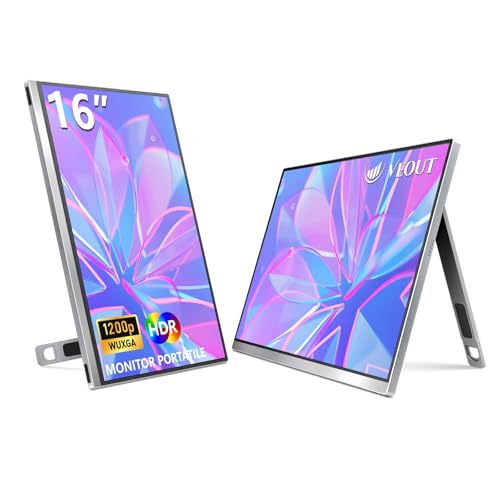
16” IPS Display with 16:10 Golden Ratio - 11% More Content, Vivid Colors Featuring a 16-inch IPS screen with 1920×1200 resolution, this portable monitor offers 11% higher content display efficiency than 15.6-inch models—perfect for viewing more Excel rows, code lines, or design drafts without constant scrolling. Equipped with 100% sRGB color gamut and 1200:1 contrast ratio, it delivers rich, true-to-life colors and sharp details, meeting the needs of both daily use and professional tasks like photo retouching.
Start With Resolution and Screen Size
A 24- to 27-inch monitor is usually easier to position vertically on a typical desk. A 31.5-inch model provides more workspace but becomes much taller in portrait mode. At 27 inches, QHD offers a practical balance of text clarity and usable workspace, while 4K gives finer detail if your operating-system scaling is set appropriately.
Check the Stand, Pivot Direction, and VESA Support
Confirm that the included stand pivots to the orientation you want and provides enough height to prevent the lower edge from touching the desk. VESA support is useful when the stock stand cannot place the screen at a comfortable eye level. A monitor arm must be rated for the display’s weight and VESA pattern.
Match USB-C Power to Your Laptop
USB-C can carry video, data, and power through one cable, but wattage matters. A 65W connection may be enough for many thin-and-light laptops, while higher-performance systems may need 90W or their original charger. Your laptop must also support display output over USB-C for a one-cable video connection.
Measure Your Desk Before Rotating
Portrait orientation changes the physical footprint of a monitor. Check desk depth, overhead shelves, webcam placement, cable clearance, viewing distance, and whether the stand can raise the panel high enough to rotate without touching the desktop.
Before You Buy
- Confirm the stand supports portrait pivot and enough height adjustment.
- Check the monitor’s VESA pattern if you plan to use an arm.
- Match USB-C charging wattage to your laptop’s power needs.
- Measure vertical clearance, especially for a 31.5-inch screen.
- Confirm your computer supports the monitor’s native resolution and preferred connection.
FAQ
Are Vertical Monitors Good for Coding?
Yes. Portrait displays can show more lines of code, logs, documentation, and chat without constant scrolling. They are especially useful as a secondary screen beside a landscape monitor, and they can also work as a primary display for text-heavy workflows.
How Do I Set Up a Portrait Monitor?
Place the screen so the upper portion is near eye level, rotate it with a pivot-capable stand or properly rated VESA arm, and select the 90-degree orientation in your operating system. Then adjust scaling, font smoothing, brightness, and application layouts so text remains readable.
What Should I Look For When Buying a Vertical Monitor?
Prioritize native resolution, screen size, pivot range, height adjustment, VESA compatibility, text clarity, and the ports your computer supports. USB-C power delivery is useful for a one-cable laptop setup, while IPS panels generally provide consistent viewing angles when the screen is rotated.
Is 27 Inches Too Large for Portrait Mode?
For many desks, 27 inches is a practical size for portrait use. A 31.5-inch monitor can also work, but it needs more vertical clearance, more viewing distance, and a stable stand or arm rated for the display.
Can Every Monitor Be Rotated Vertically?
No. The panel may technically display a rotated image, but the included stand might not pivot, the ventilation or port layout may be awkward, and the monitor may be too heavy for an existing arm. Check the manufacturer’s mechanical specifications and VESA pattern before rotating or mounting it.
Is QHD or 4K Better for a Vertical Monitor?
QHD is a strong fit for a 27-inch portrait monitor when you want clear text without aggressive scaling. A 4K display offers finer detail and more pixel workspace, but it can make interface elements too small unless your operating system uses scaling. Screen size, viewing distance, and your applications matter as much as raw resolution.
Wrapping Up
A good vertical monitor reduces scrolling, keeps long-form content visible, and makes code, documents, research, and communication easier to manage. The best choice depends on how much desk space you have, the resolution you prefer, your laptop’s USB-C power needs, and whether you also do color-sensitive creative work.
The ASUS ProArt PA278CV is the strongest all-around choice here for a traditional 27-inch portrait setup, with QHD resolution, accurate color, flexible ergonomics, and 65W USB-C. Choose the BenQ PD3205U when you want a larger 31.5-inch 4K workspace, 90W USB-C, and creator-focused tools and you have enough desk and vertical clearance.
| Product Name | Image | Screen Size | Resolution | Connectivity | Special Highlights |
|---|---|---|---|---|---|
| ASUS ProArt Display PA278CV 27-inch WQHD (2560 × 1440), 100% sRGB/Rec.709, ΔE < 2, Calman Verified, USB-C, DisplayPort daisy-chain, and pivot stand |
 |
27 Inches | 2560 × 1440 WQHD | USB-C (65W), DisplayPort, HDMI, USB hub |
|
| BenQ PD3205U 31.5-inch 4K UHD designer monitor |
 |
31.5 Inches | 3840 × 2160 4K UHD | USB-C (90W), DisplayPort, HDMI, USB hub |
|
This roundup is reader-supported. When you click through affiliate links, we may earn a referral commission on qualifying purchases.
