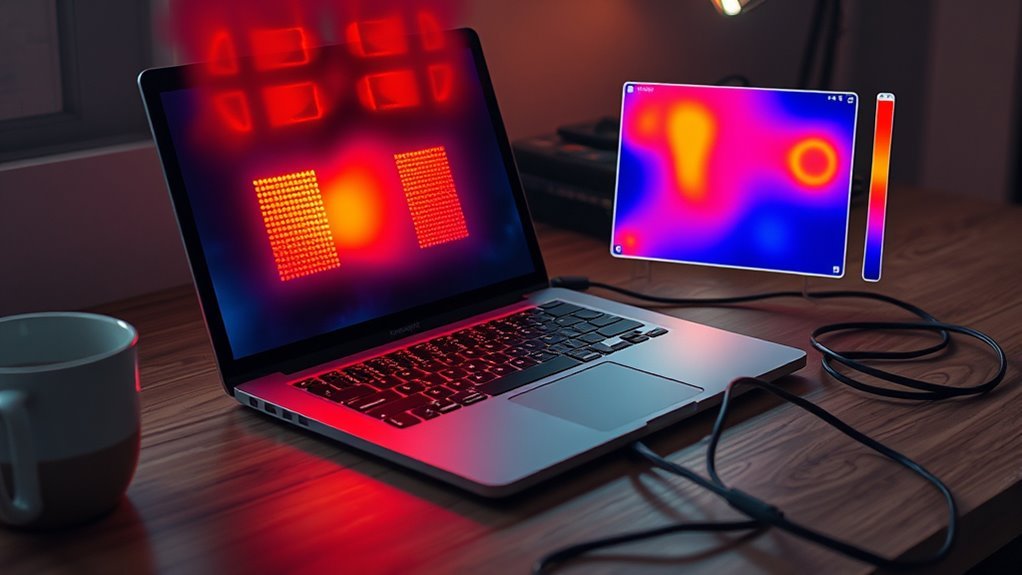
A laptop can tolerate more heat than many users expect, but only to a point. Under heavy load, temperatures in the 70–85°C range are usually acceptable, while brief peaks near 90°C may still be within normal limits for a gaming system. Beyond that, performance drops and long-term stress increase. The critical question is where safe operation ends and damage begins, and the answer depends on several factors.
How Hot Can a Gaming Laptop Get?
Gaming laptops typically operate at 70–85°C under heavy load, a range that is generally considered safe for sustained performance. In this band, CPU temperatures remain within safe temperature ranges for most gaming laptops, allowing steady clock behavior without immediate thermal intervention.
Brief excursions toward 90°C may occur during intense scenes, but sustained operation above that point increases the likelihood of thermal throttling and accelerated wear. CPU limits generally sit near 90–95°C, while GPUs can tolerate short peaks around 90°C, yet these figures are not targets for routine use.
Heat accumulation is often driven by poor ventilation, dust buildup, and elevated ambient conditions, each of which reduces thermal headroom. Regular maintenance, including vent cleaning and cooling pads, helps preserve liberated, high-performance operation by keeping gaming laptops inside safe temperature ranges and preventing avoidable stress on core components.
Safe Gaming Laptop Temperature Ranges
Safe gaming laptop operation typically falls within 70°C to 85°C under heavy load, a range that supports sustained performance without immediate thermal intervention. Within this band, CPU temperature remains within acceptable stress limits, while brief excursions toward 90°C can occur during intense sessions.
Sustained readings above 90°C signal high temperatures that may trigger thermal throttling, reduce frame stability, or force shutdowns. Idle behavior is also informative: CPUs and GPUs generally rest near 30°C to 50°C, indicating an efficient cooling system.
For GPUs, short peaks to 90°C remain tolerable, but persistent elevation is not. To preserve safe operation and user autonomy, routine maintenance matters: clean vents, remove dust, and reapply thermal paste when performance degrades.
These measures help maintain thermal headroom, protect components, and keep the system operating in a controlled, predictable range.
Why Gaming Laptops Run Hot
Gaming laptops run hot because high-performance CPUs and GPUs draw substantial power during sustained gameplay, converting much of that energy into heat.
Their slim chassis constrains airflow and limits the surface area available for dissipation, reducing cooling capacity relative to thicker systems.
When high frame rates, poor ventilation, or dust buildup further restrict heat removal, internal temperatures can rise rapidly toward damaging levels.
High Performance Heat
High-performance laptops commonly operate at 70–85°C under heavy load, a range that reflects the thermal demands of modern CPUs and GPUs rather than immediate failure. In this temperature band, heat output from gaming workloads is expected. Slim chassis, dense components, and restricted airflow reduce dissipation, so the system works near its limit without surrendering mobility.
- A graphics core driving a rendered battlefield
- A slim vent channel strained by dense silicon
- A warm desk surface amplifying trapped air
- A throttled clock speed under sustained load
When overclocking or max settings increase heat output, readings can approach 90°C. Above that point, thermal throttling may appear, cutting performance to prevent damage.
Hot rooms and soft surfaces intensify the burden, exposing how freedom in portable power depends on disciplined thermal margins.
Cooling Limits Explained
Because gaming laptops pack high-output CPUs and GPUs into slim enclosures, their cooling systems operate near practical limits during sustained load. Heat rises quickly when demanding games push frame rates high, and 70–85°C is typically normal. | Temp | Meaning | Risk | |—|—|—| | 70–85°C | Expected load | Low | | 90°C+ | Sustained stress | Throttling | | 100°C+ | Critical zone | Damage | | Slim chassis | Limited airflow | Higher heat | | Proper care | Clean fans, thermal paste | Stability |
The narrow chassis restricts airflow, so dissipation trails generation. Ambient warmth and poor ventilation intensify the problem, sometimes driving components above safe limits. Regular maintenance, including fan cleaning and thermal paste renewal, restores efficiency. With proper care, users can keep thermal behavior controlled, preserve performance, and resist avoidable damage.
Common Causes of Laptop Overheating
Laptop overheating typically results from two broad factors: excessive internal heat generation and reduced heat dissipation.
Hardware heat load rises with overclocking, demanding applications, and inadequate thermal transfer, while poor cooling conditions such as dust buildup, blocked vents, and high ambient temperatures restrict airflow.
When these stresses combine, internal temperatures can exceed safe operating limits and accelerate component wear.
Hardware Heat Load
A substantial hardware heat load is a primary driver of laptop overheating, especially in gaming systems that pair high-end CPUs and GPUs with compact thermal envelopes.
The CPU and graphics silicon convert electrical power into thermal energy, stressing heat transfer pathways and elevating sustained temperatures during heavy workloads. Slim chassis geometries narrow airflow margins, so peak output accumulates faster than it can escape.
Overclocking further amplifies power draw, while demanding games at high frame rates sustain continuous thermal load. Dust in vents and fans can worsen the internal bottleneck, raising component temperature and reducing operational freedom.
- Red-hot GPU core under load
- CPU package saturating its thermal limit
- Fan blades coated with dust
- Heat pipes glowing with residual strain
Poor Cooling Conditions
Poor cooling conditions often drive laptop temperatures upward by restricting heat removal at the system level. Dust in fans and air vents reduces airflow, allowing heat to accumulate around the CPU and GPU.
Placement on beds, couches, or other soft surfaces can seal the intake openings, so convection cannot function effectively. In warm, poorly ventilated rooms, the chassis absorbs ambient heat and the cooling system struggles to maintain equilibrium.
Under extended periods of heavy processing, these limits can push components beyond 90°C, entering warning or danger zones. If thermal paste has degraded or was applied poorly, transfer from the chips to the heat sink weakens further.
The result is accelerated thermal stress, diminished performance, and a narrower margin for safe, autonomous use.
Signs Your Laptop Is Too Hot
Temperatures consistently above 90°C often indicate a laptop cooling problem severe enough to trigger thermal throttling or an automatic shutdown. When the system runs hot, the first signs of overheating usually appear in performance and acoustics, not just numbers.
Frequent frame rate drops during gaming show thermal throttling as the processor reduces speed to protect itself. Loud fan noise suggests the cooling assembly is working at maximum output yet still failing to exhaust heat. Physical hotspots on the chassis, especially near the keyboard or underside, reveal that internal components are becoming dangerously warm.
- A game stutters as scenes load.
- Fans roar like a small turbine.
- The palm rest feels sharply warm.
- The system suddenly cuts power.
Unexpected shutdowns or crashes are critical warnings, because they indicate temperatures high enough to risk permanent damage. Recognizing these patterns gives users the freedom to intervene before heat destroys performance, reliability, and hardware lifespan.
How to Check Laptop Temperature
Temperature checks are best performed with dedicated monitoring tools such as HWMonitor, Core Temp, or NZXT CAM, which display real-time CPU and GPU readings without guesswork. For anyone studying how to check laptop temperature, these utilities provide the clearest baseline for monitoring temperatures under idle and load conditions. They reveal whether the system remains within safe operating ranges or is approaching thermal stress.
A second method is entering BIOS or UEFI during startup, where idle temperatures can be viewed before the operating system loads. This helps isolate background software effects and gives a more direct hardware reading.
Regular monitoring temperatures during gaming, rendering, or compilation is essential because sustained heat can trigger throttling, reduce performance, and shorten component life. Most gaming laptops should stay below 85°C under heavy load, while readings above 90°C signal a critical zone requiring immediate attention and careful evaluation of workload, ventilation, and system health.
How to Cool a Laptop Fast
To cool a laptop quickly, the most immediate step is to move it onto a hard, flat surface so the vents are unobstructed and airflow can circulate properly; soft materials such as beds or couches trap heat and accelerate thermal buildup.
Next, close unnecessary applications and background processes that generate heat, reducing processor load and freeing thermal headroom for immediate relief. Use a Cooling Pad if available, because built-in fans can lower surface and component temperatures by 5-10°C.
- A laptop lifted above a desk, vents exposed to open air.
- A cooling pad sending visible streams of cool airflow beneath the chassis.
- A clean vent grille cleared of dust by compressed air.
- A temperature monitor displaying a rapid drop below critical levels.
For faster control, a user may also reduce CPU or GPU voltage through undervolting, which cuts power draw and heat output. Monitoring software such as HWMonitor helps confirm whether temperatures remain under 90°C.
How to Prevent Heat Damage Long Term
Long-term heat damage is best prevented through consistent maintenance and temperature control: laptop vents and fans should be cleaned every 3–6 months to remove dust that restricts airflow, and the system should be monitored with software tools to keep CPU and GPU temperatures below 85°C during gaming and other heavy workloads. This discipline reduces thermal stress and preserves autonomy from premature hardware decline.
| Action | Interval | Effect |
|---|---|---|
| Clean vents | 3–6 months | Restores airflow |
| Reapply thermal paste | 2–3 years | Improves transfer |
| Use cooling pad | As needed | Lowers 5–10°C |
| Hard surface use | Always | Prevents blockage |
Proper ventilation matters because Limited Space for Cooling intensifies power consumption and heat. Fans and heatsinks must move energy efficiently; if they cannot, throttling and component wear accelerate. Cooling pads and hard surfaces improve airflow, while fresh thermal paste sustains contact quality. Together, these controls extend service life without sacrificing performance.
Frequently Asked Questions
What Temperature Is Too Hot for a Laptop?
Too hot for a laptop is generally above 90°C for the CPU or GPU, with 100°C representing a critical threshold.
At those levels, thermal throttling begins, performance declines, and component stress rises sharply.
Effective cooling solutions, including unobstructed vents and clean fans, help maintain safe operation.
Routine laptop maintenance—dust removal, thermal paste checks, and monitoring loads—preserves thermal freedom, extending hardware life and reducing the risk of sudden shutdowns or degradation.
Is 90 C Too Hot for a CPU?
Yes—90°C is generally too hot for a CPU under sustained load.
Nearly 90% of modern laptop processors will begin thermal throttling near this point, reducing performance to limit heat. Prolonged exposure at 90°C can accelerate CPU lifespan degradation and increase instability risks.
Effective cooling solutions, including improved airflow, dust removal, and undervolting, are essential to keep temperatures below 85°C and preserve reliable, self-directed performance.
What Temperature Will Damage a Laptop?
A laptop is damaged when internal temperatures remain above 95°C, with critical risk rising near 100°C.
Thermal management techniques, including improved airflow and laptop cooling solutions, can keep CPUs and GPUs below 85°C under load.
Prolonged overheating accelerates wear, throttling, and shutdowns.
Signs of overheating issues include fan surges, lag, and abrupt power loss.
Precise monitoring protects hardware autonomy and preserves performance, especially during sustained, demanding workloads.
Is 80 C Too Hot for a CPU Laptop?
80°C is generally too hot for a laptop CPU during sustained use, as thermal throttling may begin and performance can decline.
While not immediately destructive, repeated operation at this level can reduce laptop lifespan. It signals a need for better cooling solutions, such as cleaner vents, improved airflow, or fresh thermal paste.
Monitoring temperatures with software allows early intervention, preserving reliable operation and keeping the machine free from avoidable heat stress.
Conclusion
In the thermal ballet of a gaming laptop, heat is both fuel and foe. Operating near 70–85°C is generally acceptable, while brief surges to 90°C may occur under strain; beyond that, throttling and hardware wear begin to shadow performance. Vigilant monitoring, clean vents, and disciplined cooling practices act as the chassis’s armor, preserving stability. Ultimately, temperature control is not optional—it is the quiet boundary between peak output and premature damage.
