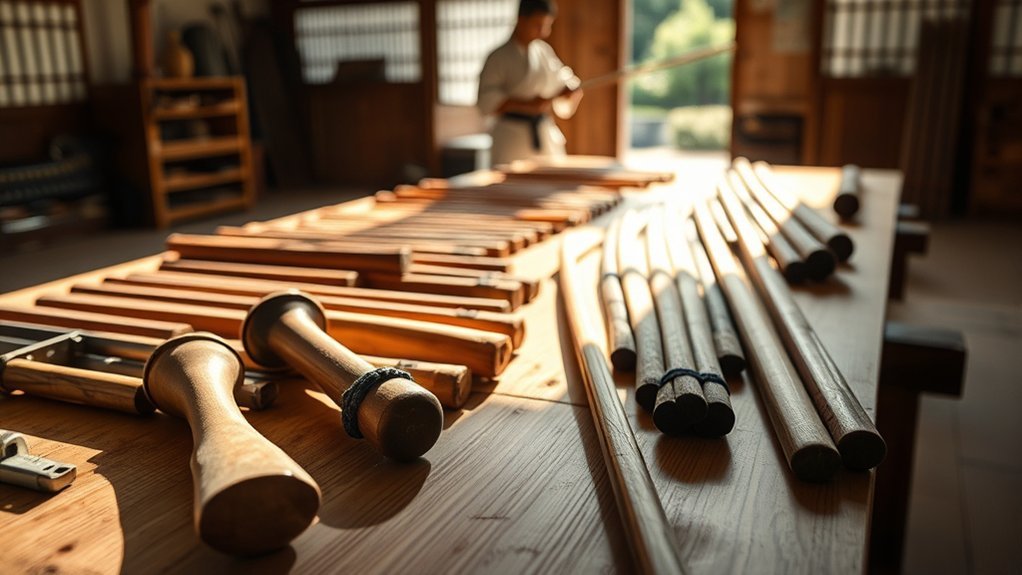
Wooden weapon parts offer several advantages over metal options in martial arts training. They provide enhanced safety through reduced injury risks, thanks to their forgiving nature upon impact. The ergonomic design of hardwoods like hickory and white oak improves grip and control, facilitating effective technique development. Additionally, these materials minimize splinter risks and allow practitioners to train with impactful strikes. Such benefits establish a solid foundation for skill progression, paving the way for further insights into their applications.
Introduction to Wooden Weapons in Martial Arts
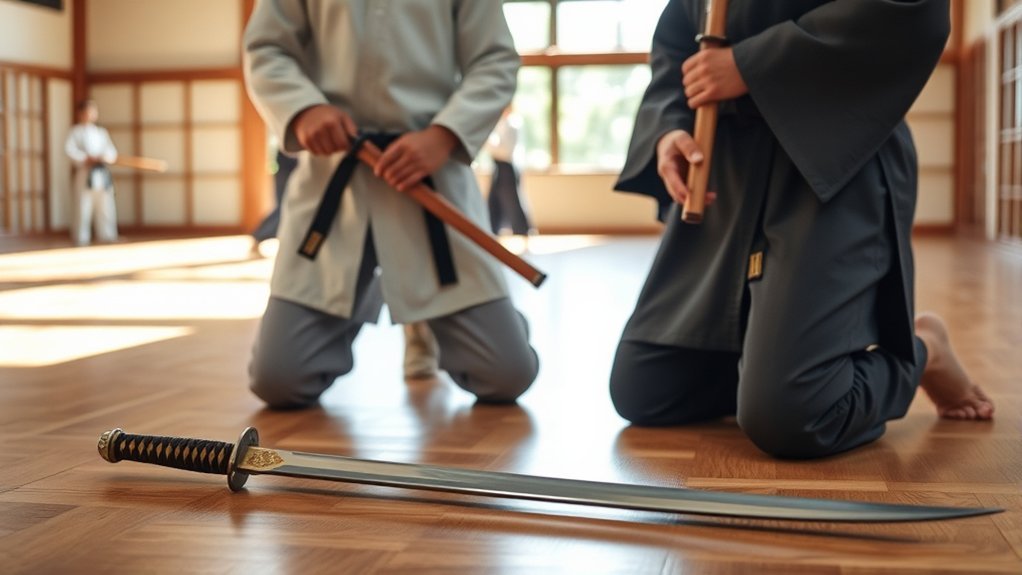
Wooden weapons serve as fundamental tools in various martial arts disciplines, offering practitioners a means to hone their skills with safety and efficacy. The wood used, such as hickory and Japanese white oak, is selected for its exceptional durability and shock absorption qualities, essential for impact training. This choice of material allows for a balance that enhances precision and control, critical components in mastering weapon dynamics.
Moreover, wooden weapons like bokken and tonfa present a safer alternative for sparring situations, greatly reducing the risk of injury while still providing realistic training experiences. The weight and flexibility of wood further facilitate a deeper understanding of movement and adaptability in combat scenarios.
Additionally, these weapons reflect cultural craftsmanship and historical techniques, connecting modern practitioners to traditional martial arts lineage, thereby enriching their training experience and personal growth.
The Advantages of Wooden Weapons in Training
Utilizing wooden weapons in martial arts training offers a myriad of advantages that enhance the practitioner’s experience and skill development.
Primarily, wooden weapons like bokken and staffs provide a safer training alternative, greatly reducing the risk of injury compared to their metal counterparts. The weight and balance of hardwoods, such as hickory and white oak, facilitate improved grip and handling, which are essential for mastering proper techniques.
Additionally, training with wooden weapons allows practitioners to experience impactful strikes while minimizing serious injury risk, fostering a more effective learning environment. These weapons are forgiving upon contact, leading to less damage during sparring and ensuring durability for long-term practice.
The versatility in design, including octagonal grips, enhances ergonomics and comfort, which further contributes to productive training sessions.
Enhancing Skill Development Through Wooden Weapons
Training with wooden weapons considerably enhances skill development in martial arts by providing practitioners with a unique combination of safety and functionality. The superior shock absorption of materials like hickory allows for improved control and technique, fundamental for mastering striking methods. This quality minimizes injury risk while fostering proper impact transfer, essential for effective maneuvers.
Moreover, wooden weapons facilitate a deeper understanding of weight distribution and balance, which are crucial for executing techniques in combat scenarios. Practicing with wooden swords, such as bokken, permits safe sparring, enabling learners to refine their skills without the severe injury risks associated with metal alternatives.
Additionally, the craftsmanship involved in wooden weapon creation cultivates a connection between the practitioner and their tools, promoting mindfulness and discipline within martial arts practice.
Ultimately, wooden weapons serve as an invaluable asset in the journey toward martial proficiency and personal liberation.
Safety Benefits of Wooden Weapons Compared to Metal Alternatives
In the context of martial arts practice, the safety advantages of wooden weapons over their metal counterparts are significant. Wooden weapons are less likely to inflict severe injuries, making them ideal for training environments.
Their reduced weight facilitates quicker movements, promoting safer drills while minimizing the risk of excessive force during contact. Additionally, wooden weaponry typically has a lower risk of splintering compared to metal, which can shatter and create sharp shards that pose further hazards.
Training with wooden weapons allows practitioners to hone their skills without the life-threatening risks associated with metal alternatives, fostering a safer learning atmosphere.
Consequently, many martial arts schools advocate for the use of wooden weapons, especially for beginners, to diminish the likelihood of accidents while still providing effective training experiences.
This focus on safety ultimately enhances the martial arts journey, allowing practitioners to explore their skills in a more liberated manner.
Selecting the Best Wood Types for Martial Arts Weapons
Selecting the appropriate wood type for martial arts weapons is essential to maximizing performance and safety. Several factors must be considered when choosing the ideal material:
- Durability and Strength: Hardwoods like hickory and white oak excel in shock absorption and resistance to breaking, ensuring longevity during rigorous training.
- Weight Considerations: Lighter woods such as rattan facilitate speed and agility, making them suitable for training, while heavier options like Brazilian cherry deliver greater impact in combat.
- Grain Density: Dense, tight-grained woods minimize the risk of splintering, contributing to a safer training environment.
- Aesthetic Appeal: Woods like purpleheart provide both durability and striking visual qualities, enhancing the overall weapon experience.
Ultimately, hickory is favored for its balanced characteristics, combining hardness and flexibility, making it a prime choice for practitioners seeking liberation through effective martial arts training.
Frequently Asked Questions
Why Are Guns No Longer Made of Wood?
Guns are no longer made of wood primarily due to the superior consistency, lower costs, and enhanced performance of synthetic materials, despite wood’s durability and shock absorption properties, which remain valuable in specific applications.
What Does God Say About Weapons?
Like a double-edged sword, God’s teachings on weapons emphasize divine protection and moral restraint. Scripture advocates for peace, urging believers to transform instruments of violence into tools for healing and community, fostering liberation and reconciliation.
What Type of Wood Is Commonly Used for Gun Handles?
Commonly used woods for gun handles include walnut for durability, hickory for shock absorption, maple for fine grain, ash for lightweight resilience, and exotic woods like rosewood for unique aesthetics, enhancing both grip and appearance.
What Weapons Are Made of Wood?
Wooden materials serve as the foundation for various weapons, including nunchakus, bo staffs, and bokken. Their blend of durability and aesthetic appeal contrasts with metal, offering a unique balance between tradition and practicality in martial arts.
Conclusion
In conclusion, the use of wooden weapon parts in martial arts training serves as a bridge between tradition and safety. By prioritizing skill development and minimizing injury risks, these tools cultivate a deeper understanding of techniques. Like a well-crafted bow that releases an arrow with precision, wooden weapons enhance the practitioner’s journey, fostering both physical and mental growth. Ultimately, selecting the right wood type further elevates the training experience, ensuring practitioners can hone their skills effectively and safely.
