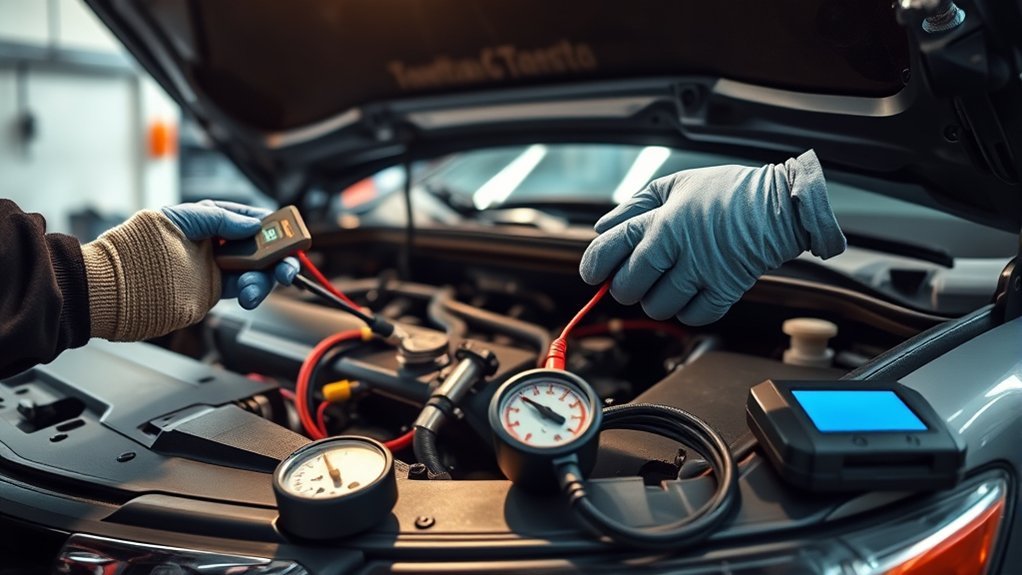
If your Toyota Camry cranks but won’t start, the starter is turning the engine, but combustion is not beginning or continuing. The most common diagnostic paths involve fuel delivery, ignition spark, injector command, engine-position signals, the immobilizer, low cranking voltage, or a mechanical problem such as lost compression or incorrect timing. The correct tests depend on your Camry’s model year, engine, and whether it is a gasoline or hybrid model.
Quick Answer
When a Toyota Camry cranks but won’t start, first check the fuel level, warning lights, battery connections, fuses, and security indicator. Then scan for trouble codes and verify engine-speed data, fuel delivery, spark, and injector command. Use model-specific Toyota specifications because fuel pressure and testing procedures vary by year and engine.
Key Takeaways
- A normal crank-no-start is different from a single click, no crank, slow crank, or Camry Hybrid no-READY condition.
- Scan for stored and pending trouble codes before disconnecting the battery or replacing parts.
- A fuel-pump sound does not prove that fuel pressure and volume are correct.
- Fuel-pressure specifications and test connections vary by Camry year and engine.
- Do not open direct-injection fuel lines or probe hybrid high-voltage components.
At a Glance
| Time Required | 15–45 minutes for basic checks; longer for fuel-pressure, wiring, compression, or timing diagnosis |
| Difficulty | Basic to advanced, depending on the failed test |
| Tools Needed | Flashlight, OBD-II scan tool, digital multimeter, spark tester, and model-specific service information |
| Cost | About $0–$100 for basic testing tools; repair costs depend on the confirmed fault |
First, Confirm What Your Camry Is Doing
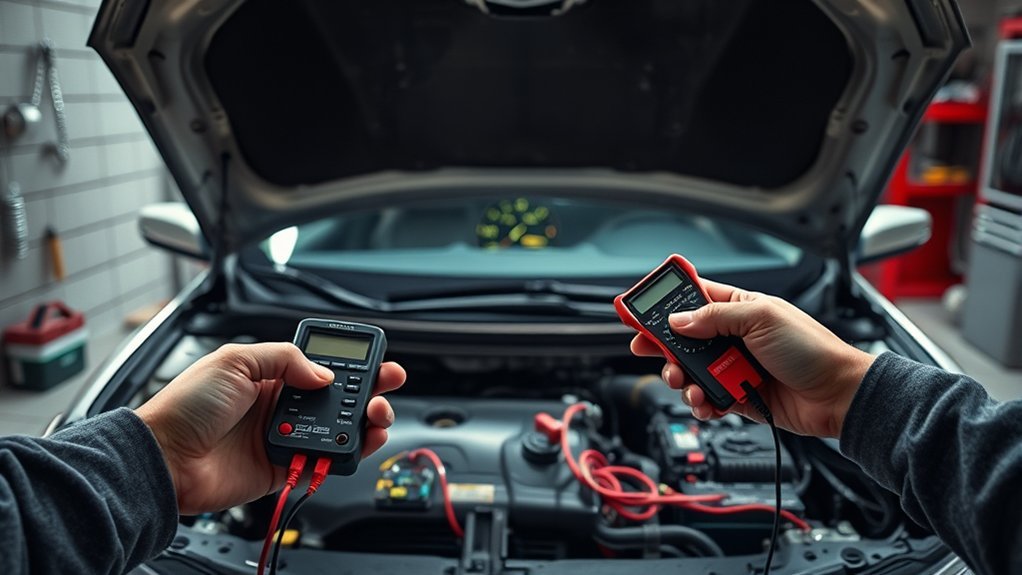
A true crank-no-start means the engine rotates when you turn the key or press the start button, but it does not begin running. Listen carefully before choosing a diagnostic path.
| What You Notice | Diagnostic Direction |
|---|---|
| Engine turns at normal speed but never fires | Check codes, immobilizer status, fuel delivery, spark, injector command, sensor data, compression, and timing. |
| Engine turns slowly or unevenly | Test the 12-volt battery, terminals, cables, grounds, starter current, and possible mechanical resistance. |
| One click, repeated clicks, or no engine rotation | This is a no-crank condition. Check the battery, starter circuit, park/neutral input, brake or clutch input, and starter motor. |
| Engine starts and immediately dies | Check the immobilizer, fuel pressure, air metering, electronic throttle system, and stored codes. |
| Camry Hybrid does not show READY | Check 12-volt power, key recognition, brake-pedal input, messages, and hybrid control codes. Do not treat this exactly like a conventional starter-system problem. |
Warning: Work outdoors or in a well-ventilated area, keep sparks and flames away from gasoline, and do not loosen fuel fittings on a hot engine. Never open direct-injection fuel lines. On a Camry Hybrid, do not touch orange high-voltage cables or open traction-battery or inverter components.
Common Causes of a Toyota Camry Crank-No-Start
A gasoline engine needs the correct amount of air and fuel, a strong spark at the correct time, adequate compression, and valid control-system inputs. A failure in any of these areas can prevent your Camry from starting.
- Low or interrupted fuel delivery: An empty tank, failed pump, electrical fault, restricted pickup, contaminated fuel, leaking injector, or incorrect pressure can prevent combustion.
- No ignition spark: Faulty coils, plugs, power supplies, wiring, sensors, or engine-control faults can stop spark production.
- No injector command: The injectors may have power but receive no computer-controlled pulse because of an immobilizer, wiring, sensor, or control-module issue.
- Crankshaft or camshaft signal loss: Missing or implausible position data can prevent correct spark and injection timing.
- Immobilizer or key-recognition fault: The engine may crank but fail to start or may start and stop.
- Low cranking voltage: A battery can turn the engine yet allow voltage to fall too low for reliable module, coil, injector, or fuel-pump operation.
- Mechanical failure: Low compression, incorrect valve timing, a damaged timing component, or internal engine damage can cause a no-start.
Step-by-Step Toyota Camry No-Start Diagnosis
[Amazon Products Picked for You]

CEL Doctor: The ANCEL AD310 is one of the best-selling OBD II scanners on the market and is recommended by Scotty Kilmer, a YouTuber and auto mechanic. It can easily...
1. Complete the Basic Checks
Begin with the items that require no disassembly:
- Confirm there is enough fuel in the tank. Do not rely only on the fuel gauge if the vehicle is parked on a steep slope or the gauge has behaved strangely.
- Make sure the correct key or registered smart key is present.
- Try starting in Neutral as well as Park if the vehicle is an automatic, while keeping the brake firmly applied.
- Inspect the battery terminals and main grounds for looseness, heavy corrosion, heat damage, or broken cables.
- Check the engine-control, EFI, ignition, fuel-pump, and related fuses identified in the owner’s manual or fuse-box diagram.
- Look for disconnected intake ducts, damaged wiring, rodent damage, or recently disturbed connectors.
Use Toyota’s manual and maintenance-guide selector to find the fuse locations, warning indicators, starting procedure, and maintenance information for your exact model year.
2. Scan for Trouble Codes Before Disconnecting the Battery
Connect an OBD-II scan tool and record all stored, pending, and permanent codes. Also save freeze-frame data when available. Codes related to crankshaft position, camshaft position, immobilizer authorization, fuel pressure, throttle control, or system voltage can narrow the diagnosis.
Watch the engine-speed or RPM reading while cranking. If the scan tool continues to show zero RPM, the engine-control module may not be receiving a valid crankshaft-position signal. However, a nonzero reading does not prove that every timing signal is correct.
Pro Tip: Photograph the trouble codes and freeze-frame information before clearing anything. Disconnecting the battery too early can erase clues and reset learned values.
3. Check Battery Condition and Cranking Speed
If the engine turns normally, the starter has completed its main job, but the battery and cables can still affect starting. Watch for dimming lights, an unusually slow or uneven cranking sound, hot cable ends, or a scan tool that disconnects during cranking.
Use a digital multimeter or battery tester to check:
- Battery state of charge before cranking
- Voltage while the engine is being cranked
- Voltage drop across the positive cable
- Voltage drop between the battery negative terminal and engine ground
Compare the results with the test procedure for your battery type and vehicle. Recharge and retest a discharged battery before condemning the fuel or ignition system.
4. Check the Security Indicator and Key Recognition
Observe the security indicator before and during the start attempt. A rapidly flashing or abnormal security light, a key-not-detected message, or an engine that starts and immediately stops can suggest a key-recognition or immobilizer problem.
- Move other keys, access cards, and electronic devices away from the registered key.
- Try a known-good spare key if one is available.
- For a smart-key model, follow the backup starting procedure in the owner’s manual if the key battery may be weak.
- Do not replace the fuel pump or engine computer solely because the vehicle will not start while the security system is reporting a fault.
Toyota recommends selecting the exact vehicle or consulting its owner’s manual when interpreting warning lights and indicators.
5. Check Fuel Delivery Safely
Turn the ignition on and listen near the rear of the vehicle for brief pump operation, but do not treat silence or a humming sound as a final diagnosis. Pump behavior and control strategy vary by model.
Continue with these checks:
- Inspect the fuel-pump and EFI fuses.
- Use a scan tool to check fuel-system codes and available pressure data.
- Confirm pump power, ground, control, and current using the correct wiring diagram.
- Measure low-side fuel pressure only with the specified adapter and procedure.
- Compare the result with the exact specification for the model year, engine, and fuel system.
Note: There is no reliable universal 30–50 psi specification for every Toyota Camry. Newer engines may use more than one fuel-pressure circuit, and the high-pressure side of a direct-injection system is not a general DIY test point.
If you need factory pressure specifications, wiring diagrams, connector views, or diagnostic procedures, use the Toyota Technical Information System or have a qualified technician perform the test.
6. Check the Ignition System for Spark
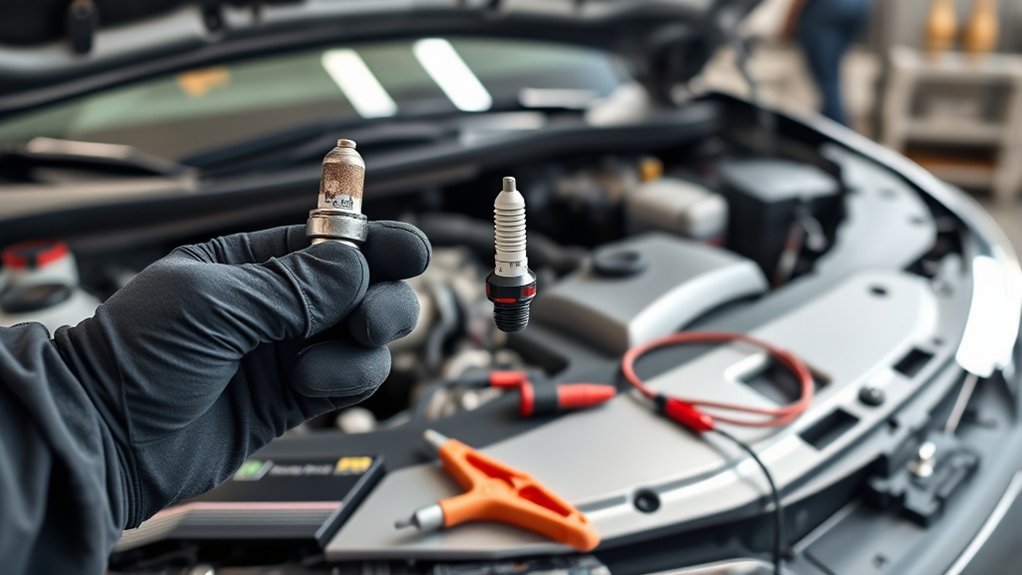
Use an approved spark tester rather than holding a plug or coil near the engine. Test more than one cylinder when practical because a single failed coil usually causes a misfire rather than a complete no-start.
- No spark on every tested cylinder: Check ignition power, fuses, grounds, crankshaft and camshaft signals, immobilizer status, wiring, and engine-control commands.
- Spark on some cylinders only: Inspect the affected coils, plugs, connectors, and wiring.
- Weak or inconsistent spark: Check cranking voltage, plugs, coils, grounds, and signal integrity.
- Wet or fuel-fouled plugs: The engine may be flooded, the spark may be missing, or an injector may be leaking.
Replace spark plugs according to the maintenance guide for your exact engine. Ignition coils normally should be tested and replaced when defective rather than changed on a universal mileage schedule. Use Toyota Genuine or reputable OE-equivalent components that match the exact application.
7. Check Injector Power and Pulse
An injector needs both the correct electrical supply and a switching command. Depending on the circuit, a simple power check may not prove that the engine-control module is commanding injection.
A technician may use a noid light, oscilloscope, current probe, or scan-tool test to determine whether injector pulse is present. The result helps separate the diagnostic paths:
- Spark but no injector pulse: Investigate immobilizer authorization, crank or cam signals, injector power, wiring, and computer control.
- Injector pulse but no fuel delivery: Check pump operation, pressure, fuel quality, restrictions, and injector flow.
- Fuel and injector pulse present: Continue to spark quality, compression, timing, and air-control checks.
Resolving Fuel-Injector Problems
A leaking injector may lower residual pressure, flood an intake port or cylinder, create a rich mixture, contaminate the engine oil with fuel, or cause hard starting after the vehicle sits. A restricted injector can reduce fuel flow, but one restricted injector alone normally causes a misfire rather than preventing every cylinder from starting.
Possible injector checks include:
- Comparing injector electrical resistance when the factory procedure specifies it
- Listening for consistent injector operation with a mechanic’s stethoscope
- Performing an injector balance or flow test
- Checking for fuel-pressure loss after shutdown
- Inspecting spark plugs for one unusually wet cylinder
Fuel-system pressure must be relieved before removing port injectors. Replace damaged seals and lubricate new O-rings only with a product approved by the applicable repair procedure. Direct-injection injectors, pipes, and high-pressure components require specialized procedures and should not be opened casually.
[Amazon Products Picked for You]

Upgraded Universal Fuel Injector Tester and Cleaner Tool Kit---Operates injectors individually to diagnose fuel delivery problems on petrol vehicles with electronic fuel injection, such as blockage, leakage, damage, and burnout of the injectors. The included 8-size cleaning adapters combined with the tester pulse mode can quickly clean the injectors. TURN OFF THE ENGINE BEFORE USE.
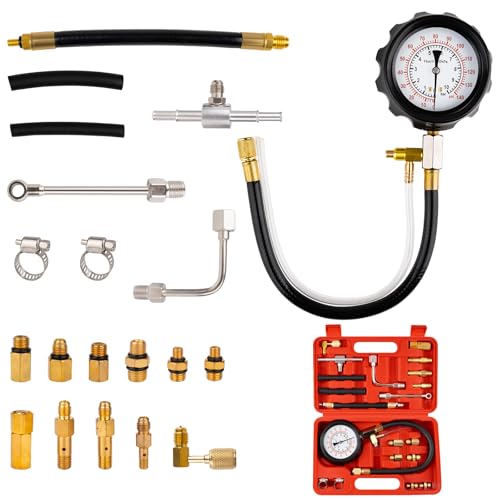
Compatibility Note: For further confirmation of specific model compatibility, refer to the vehicle owner's manual or contact a professional technician. Excludes Fo/rd, K/I/A, Bo/s/ch, C/I/S Je/tro/nic, G//M Th/rot/tle Bo/dy Systems, A/cu/ra, J/ee/p, B/M/W, Ni/s/san, and To/yo/ta fuel systems. Not compatible with small/non/standard S/chra/der vallves, high/pre/ssure direct in/ject/ed engines, or die//sel injection pumps. Verify your vehicle’s vallve size and pressure specs before purchase

Fuel Injector Noid Light Test Kit: Check that injectors are receiving injection signals from ECU/PCM/PMU/AARP/NATO/NASA, plug these into injector connectors, idle air control etc. to troubleshoot any electrical problems
Checking Electrical Components and Engine Sensors
If fuel and ignition components appear functional, check the circuits that allow the engine-control module to calculate timing and authorize starting.
- EFI and ignition relays: Check command, power supply, terminal condition, and voltage under load.
- Crankshaft-position sensor: Inspect engine-speed data, related codes, wiring, and signal quality.
- Camshaft-position sensors: Check synchronization data and related circuit codes.
- Engine grounds: Inspect the battery-to-body and engine-to-body ground paths.
- Mass-airflow and intake system: Look for disconnected ducts, severe air leaks, contamination, or damaged wiring.
- Electronic throttle system: Check for a stuck throttle plate, related codes, or abnormal throttle data without forcing the plate against its mechanism.
Do not replace a sensor based only on a code containing that sensor’s name. A circuit code may be caused by wiring, connector damage, a shared power supply, incorrect timing, or another component that makes the sensor reading implausible.
[Amazon Products Picked for You]
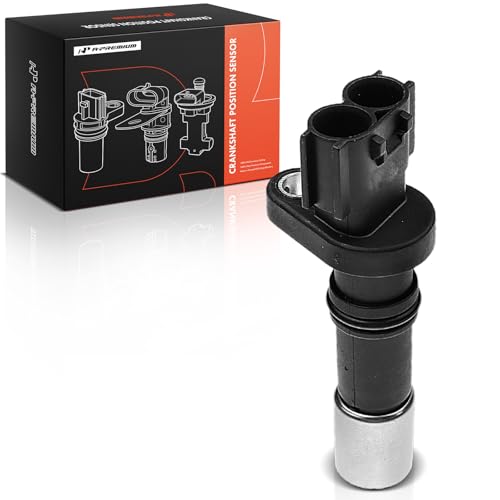
[Vehicle Fitment-1]: Compatible with Lexus CT200h 2011-2017 L4 1.8L, ES300h 2013-2018 L4 2.5L, NX300h 2015-2020 L4 2.5L; Compatible with Pontiac Vibe 2009-2010 L4 1.8L; Compatible with Scion iM 2016 L4 1.8L, tC 2011-2015 L4 2.5L, xD 2008-2014 L4 1.8L

[Vehicle Fitment]: Compatible with Lexus HS250h 2010-2012; Pontiac Vibe 2009-2010; Scion tC 2005-2010, xB 2010-2013---Fits for L4 2.4L DOHC Engine Only

[Vehicle Fitment]: This crank crankshaft position sensor compatible with Toyota & Camry RAV4 2.5L 2010 2011 2012 2013 2014 2015 2016 2017, Corolla & Prius 1.8L 2009 2010 2011 2012 2013-2022, Prius V 1.8L 2012-2018, Highlander 2.7L 2009-2019, Matrix 1.8L 2009-2014, Avalon 2.5L 2013-2018, Sienna 2.7L 2011-2013, Venza 2009-2016 2.7L | Scion tC 2.5L 2011-2015, xD 1.8L 2008-2014 | Lexus CT200h 1.8L 2011-2017, ES300h 2.5L 2013-2018, NX300h 2.5L 2015-2021 | Pontiac Vibe 1.8L 2009-2010, More model details, please refer to the pictures and description
When the Starter or Battery Is Still Relevant
If the engine rotates at a steady, normal speed, a completely failed starter motor is unlikely to be the reason it will not fire. Starter-system diagnosis becomes more important when cranking is slow, intermittent, noisy, or absent.
Investigate the battery and starter circuit when you notice:
- Rapid clicking instead of engine rotation
- A single click with no rotation
- Slow cranking that improves with a properly connected jump source
- Heavy dimming of the lights
- Smoke, heat, or a burning smell near a cable or terminal
- A starter that spins without turning the engine
Do not crank continuously for long periods. Use short attempts and allow the starter and cables to cool between attempts.
Check Compression and Mechanical Timing
If the engine has fuel, injector pulse, and spark but still will not start, check whether it can compress the mixture and whether spark and valve events occur at the correct time.
Mechanical warning signs include:
- Cranking that suddenly sounds faster or more even than normal
- Very low or uneven compression readings
- Backfiring through the intake or exhaust
- Camshaft and crankshaft correlation codes
- A no-start immediately after overheating, timing-system work, or an abnormal mechanical noise
A relative-compression test can identify uneven cylinders quickly, but a mechanical compression test, leak-down test, borescope inspection, or timing inspection may be needed. Stop cranking if you hear grinding, knocking, or other severe mechanical noise.
Check for Open Recalls and Service Campaigns
Before paying for a major fuel-system, electrical, or control-module repair, check the vehicle’s 17-character VIN. Campaign eligibility is VIN-specific and cannot be determined reliably from the model name alone.
- Use the Toyota Safety Recall and Service Campaign lookup.
- Use the NHTSA recall lookup to check for unrepaired safety recalls.
If an open campaign appears, contact a Toyota dealer and provide the VIN and campaign information before authorizing related repairs elsewhere.
When to Seek Professional Help
Arrange professional diagnosis when basic checks do not identify the fault or when the work requires pressurized fuel, advanced electrical testing, immobilizer registration, mechanical timing inspection, or hybrid-system service.
Stop DIY diagnosis and request assistance when:
- You smell strong gasoline or see a fuel leak.
- The engine is flooded repeatedly or fuel may be entering the oil.
- The vehicle has no spark and no injector pulse.
- Crankshaft and camshaft data do not synchronize.
- Compression is low or the cranking sound changes suddenly.
- Wiring, connectors, or control modules show water, heat, collision, or rodent damage.
- A Camry Hybrid displays a hybrid-system warning or does not enter READY after basic 12-volt and key checks.
- The same parts have already been replaced without solving the problem.
A qualified technician can use Toyota wiring diagrams, factory diagnostic procedures, bidirectional controls, waveform testing, fuel-pressure equipment, and immobilizer functions to confirm the cause before replacing expensive parts.
Preventative Maintenance for Reliable Starting
You cannot prevent every sensor or electrical failure, but routine inspection can reduce avoidable starting problems.
- Test the 12-volt battery when cranking becomes slower, after repeated discharges, or as the battery ages.
- Keep the battery terminals and main grounds clean, tight, and protected from corrosion.
- Replace spark plugs at the interval listed for the exact model year and engine.
- Repair misfires, charging-system warnings, hard starts, and fuel odors promptly.
- Keep water, oil, and rodents away from exposed wiring and fuse boxes.
- Use the correct fuel and avoid running the tank repeatedly to an extremely low level.
- Do not apply a generic fuel-filter replacement interval. Follow the model-specific Toyota maintenance guide.
- Scan and document warning codes before disconnecting the battery.
- Check the VIN periodically for newly issued recalls or service campaigns.
Related Guides
Frequently Asked Questions
Why is my Toyota Camry turning over but not starting?
The engine may be missing fuel pressure, ignition spark, injector pulse, crankshaft or camshaft data, immobilizer authorization, compression, or correct mechanical timing. Scan for codes and confirm the symptom before replacing parts.
Can a weak battery cause a Camry to crank but not start?
Yes. A weak battery may still rotate the engine while voltage falls too low for reliable module, fuel-pump, injector, or ignition operation. Check cranking speed, battery condition, terminal connections, and cable voltage drop.
How can I tell if the Toyota Camry fuel pump is bad?
Pump noise alone is not enough. Confirm electrical command, power, ground, current, pressure, and fuel delivery with the correct procedure for the vehicle. Compare all measurements with the exact factory specification.
Should I use starting fluid to test a Camry that will not start?
Starting fluid is not recommended as a first-line test for a general DIY diagnosis. It creates a fire risk and may provide misleading results. Use scan data, spark testing, injector-pulse testing, and approved fuel-pressure procedures instead.
Why does my Camry start and then immediately die?
A start-and-die condition can involve the immobilizer, falling fuel pressure, air-metering faults, electronic throttle problems, or an electrical supply that drops out after the start command. Check the security indicator, codes, and live data.
What does a flashing security light mean when the Camry will not start?
The meaning depends on the model year and indicator pattern. An abnormal security light can indicate that the key is not recognized or that the immobilizer system has a fault. Try a registered spare key and consult the exact owner’s manual.
Why will my Camry Hybrid not show READY?
Possible causes include a weak 12-volt battery, unrecognized smart key, brake-pedal input fault, open interlock, control-system code, or hybrid-system problem. Do not probe orange high-voltage wiring. Read the messages and hybrid codes or seek qualified service.
Conclusion
When your Toyota Camry cranks but won’t start, diagnose the symptom in a fixed order rather than replacing likely-sounding parts. Record the codes, verify battery voltage and cranking speed, check the security system, and then determine whether the engine has fuel delivery, spark, injector command, and compression. Use the specifications for your exact model year and engine, especially when testing fuel pressure or electronic controls. Seek professional help when the fault involves leaking fuel, direct injection, immobilizer programming, mechanical timing, or a hybrid-system warning.
Sources
- Toyota Manuals and Warranties — model-specific owner’s manuals, warranty information, and maintenance guides
- Toyota Technical Information System — factory repair manuals, wiring diagrams, service bulletins, diagnostics, and Toyota service information
- Toyota Warning Lights — model-specific warning-light and indicator guidance
- Toyota Safety Recall and Service Campaign Lookup — Toyota VIN-based campaign information
- National Highway Traffic Safety Administration Recall Lookup — official U.S. VIN-based safety-recall search
