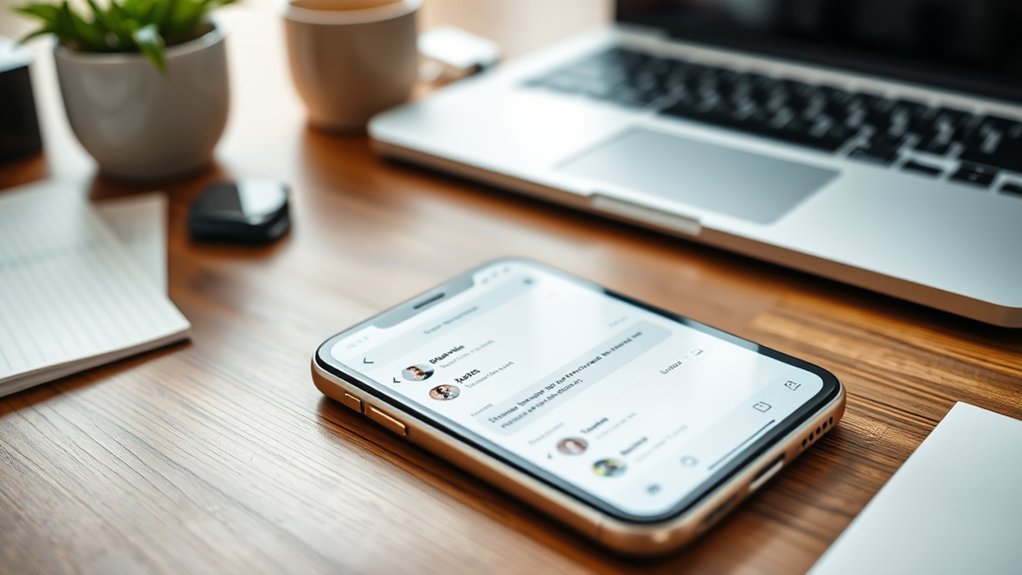
If Messages shows two or more iMessage threads for the same person, the conversations are often tied to different iMessage addresses, such as a phone number in one thread and an Apple Account email address in another. The most reliable fix is to choose a consistent address for new conversations, confirm your Apple Account and phone-number settings across devices, and start a new conversation from the preferred address when an older thread uses a different identity.
Quick Answer
To fix multiple iMessage threads, go to Settings > Apps > Messages > Send & Receive on iPhone and choose one preferred address under Start New Conversations From. On Mac, use Messages > Settings > iMessage. Existing threads do not automatically merge, so you may need to start a new conversation.
Key Takeaways
- A phone number and Apple Account email can act as different iMessage identities and may lead to separate conversation threads.
- On current iOS versions, check Settings > Apps > Messages > Send & Receive.
- On Mac, check Messages > Settings > iMessage and use a consistent address for new conversations.
- Changing the starting address affects new conversations; it does not merge the history of existing threads.
- If you use Messages in iCloud, deleting a conversation can also remove it from your other devices using Messages in iCloud.
At a Glance
| Time Required | About 5–15 minutes for the settings checks |
| Difficulty | Easy |
| Tools Needed | Your iPhone, iPad, or Mac and access to your Apple Account |
| Cost | Free |
Why iMessage Splits Conversations
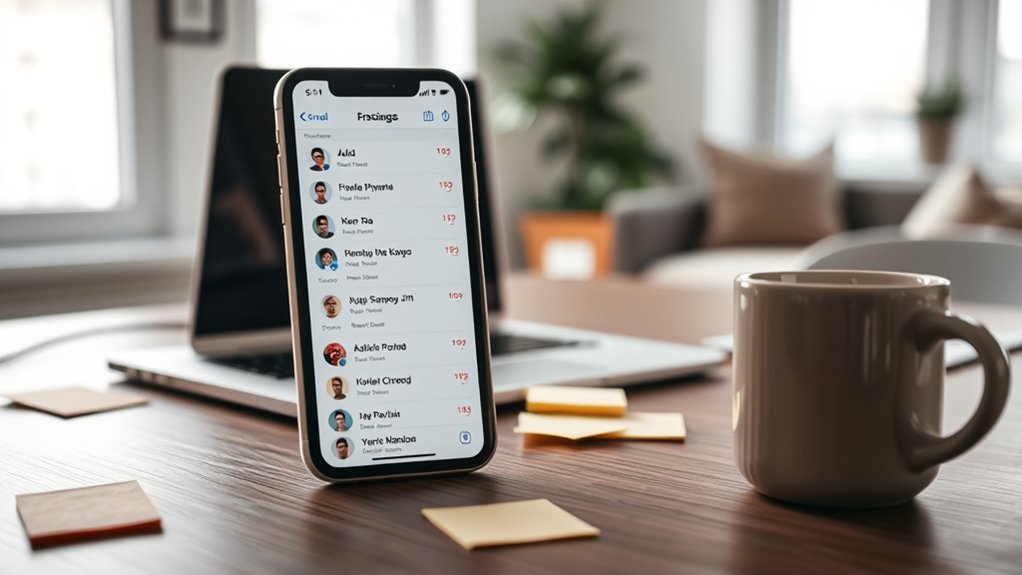
iMessage can receive messages through more than one address. For example, an iPhone user may be reachable through a mobile number and one or more email addresses associated with an Apple Account. Those addresses can represent different messaging routes even when they belong to the same saved contact.
A split often becomes noticeable after a new device is set up, after the address used to start new conversations changes, or when one device uses a phone number while another starts messages from an email address. Apple specifically lists conversations appearing as separate threads as a problem that can occur after setting up a new device.
The important distinction is between the addresses at which you can receive iMessages and the address selected under Start New Conversations From. You can remain reachable at more than one address while still choosing one preferred identity for new outgoing conversations.
Changing the address used to start new conversations does not combine the history of two existing iMessage threads. It mainly helps keep future conversations consistent.
Check Your iMessage Send Address
The first check is the address your device uses when you create a new iMessage conversation. Apple’s current iPhone instructions place this setting under Settings > Apps > Messages > Send & Receive.
| Device | Current path |
|---|---|
| iPhone or iPad | Settings > Apps > Messages > Send & Receive |
| Mac | Messages > Settings > iMessage |
| Main check | Start New Conversations From |
| Goal | Use one preferred starting identity consistently |
Apple’s current instructions for changing the sender identity are available in Apple Support’s guide to choosing a phone number for new Messages conversations.
Note: Older iOS releases may show Messages directly in the main Settings list rather than under Settings > Apps. The important destination is still the Send & Receive screen.
Fix Multiple iMessage Threads on iPhone
Start by checking which phone number and email addresses are enabled for iMessage, then verify the identity selected for new conversations.
[Amazon Products Picked for You]

High-quality materials: The SIM card removal tool is made of high-quality alloy metal steel, which is lightweight and difficult to bend. Durable and long-lasting. (Note: The SIM card removal tool is small in size and has a pointed bottom; Keep them away from children to avoid accidental swallowing or accidental injury.)

What you get: 10 identical steel SIM ejector needles, one standard size that fits the eject hole of any phone or tablet with a physical SIM slot, so a spare is always within reach

1. SELECTED MATERIALS: Sim card removal tool are made of high-quality stainless steel, the hardness of the needle is strengthened, not easy to bend, sturdy and durable
Check Send And Receive
- Open Settings.
- Tap Apps.
- Tap Messages.
- Make sure iMessage is turned on.
- Tap Send & Receive.
- Under the addresses where you can receive iMessages and reply, confirm that your intended phone number and email addresses are correct.
- Under Start New Conversations From, select the phone number or email address you want to use consistently for new conversations.
If you normally identify yourself through your iPhone number, selecting that number as the starting address can help prevent new conversations from unexpectedly beginning under your Apple Account email instead.
Match Starting Address
Check the same setting on any other Apple device you use for Messages. A Mac or iPad that starts new conversations from a different address can make your messaging identity less consistent.
However, changing this setting does not rewrite an existing conversation. Apple states that if an existing conversation was started with an email address and you switch to your phone number, you need to start a new conversation to use the phone number instead.
Pro Tip: After correcting the setting, create one fresh message to the contact from the preferred identity. Keep the older threads until you have confirmed that new replies are staying in the conversation you want to use.
Check Dual-SIM or New-Device Settings
If the split began after moving to a new iPhone, changing carriers, adding an eSIM, or using two phone lines, verify the active line before doing more invasive troubleshooting.
- Open Settings and check your cellular or mobile-service settings.
- Make sure the phone line you want to use is turned on.
- If you have multiple SIMs or eSIMs, confirm the intended number is active.
- Return to Settings > Apps > Messages.
- Turn iMessage off and back on if the issue started during device setup.
- Open Send & Receive and select the intended phone number.
This follows Apple’s current troubleshooting guidance for cases where conversations appear as separate threads after a new device is configured. See Apple’s Messages troubleshooting guide.
Fix Multiple iMessage Threads on Mac
On current macOS versions, open the Messages app and choose Messages > Settings > iMessage. This replaces the older “Messages > Preferences > Accounts” wording found in older guides.
[Amazon Products Picked for You]
![MixPad Multitrack Recording Software for Sound Mixing and Music Production Free [Mac Download]](https://m.media-amazon.com/images/I/51kaO82jYOL._SL500_.jpg)
Mix an audio, music and voice tracks

The 2ID card software streamlines various card production tasks such as ID card design, printing, and encoding.
![MixPad Free Multitrack Recording Studio and Music Mixing Software [Download]](https://m.media-amazon.com/images/I/71ltIxIuz1L._SL500_.jpg)
Create a mix using audio, music and voice tracks and recordings.
Check Message Address
In the iMessage settings, review You can be reached for messages at. These are the phone numbers and email addresses where your Mac can receive iMessages.
You do not have to disable every secondary receiving address simply to prevent split conversations. Receiving at multiple valid addresses is supported. The more important setting for new outgoing chats is Start new conversations from.
Update Mac Settings
- Open the Messages app on the Mac.
- Choose Messages > Settings.
- Click iMessage.
- Confirm you are signed in to the intended Apple Account.
- Review the phone numbers and email addresses under You can be reached for messages at.
- Choose the preferred phone number or email under Start new conversations from.
- Use the same preferred identity you selected on your other Apple devices whenever practical.
Apple documents these controls in the Messages User Guide for Mac.
Prevent Future Threading
| Action | Why it helps |
|---|---|
| Choose one preferred starting address | Keeps new outgoing conversations consistent |
| Use the intended Apple Account on your devices | Avoids unintended account differences |
| Check settings after changing devices or SIMs | Catches identity changes early |
| Keep old threads until the new setup is verified | Prevents unnecessary message loss |
Deleting an old thread does not reconcile or merge its history with another thread. Correcting the settings primarily prevents the same problem from continuing in future conversations.
Use the Same iMessage Address Everywhere
Using one preferred starting address across your Apple devices makes your outgoing iMessage identity more predictable.
- Choose the phone number or Apple Account email you want to use for new conversations.
- On iPhone or iPad, check Settings > Apps > Messages > Send & Receive.
- On Mac, check Messages > Settings > iMessage.
- Confirm your intended Apple Account is being used on the devices involved.
- Review these settings again after changing phones, SIMs, email addresses, or Apple Account configuration.
Remember that “same address everywhere” refers to the identity you choose to start your own new conversations. It does not mean every participant in a conversation should have the same phone number or email address.
Delete Duplicate iMessage Threads
Once new messages are consistently going to the thread you want to keep, you can remove an unwanted duplicate if you no longer need its history.
Warning: If Messages in iCloud is enabled, deleting a conversation on one device is reflected on your other devices using Messages in iCloud. Save any important information before deleting a thread.
| Step | What to do |
|---|---|
| 1 | Confirm the preferred new thread is working |
| 2 | Save any messages, photos, or attachments you still need |
| 3 | Swipe left on the unwanted conversation in the Messages list |
| 4 | Tap Delete and confirm |
On current iPhone software, deleted messages and conversations normally remain in Recently Deleted for up to 30 days, where they can be recovered before permanent removal. Apple’s deletion instructions are available in the iPhone User Guide.
If you use Messages in iCloud, Apple explains that sending, receiving, and deleting changes stay synchronized across enabled devices. See Apple’s Messages in iCloud guide.
Deleting an old conversation is therefore a cleanup step, not a technique for merging two iMessage histories.
Fix Split Threads in Group iMessage Chats
A group can also appear in separate threads when the identities used for one or more participants differ. For example, one group may address a participant through a phone number while another version uses that person’s Apple Account email.
Each participant should use their own valid contact information; participants should not attempt to select the same phone number or email address as one another.
- Review the participants in each version of the group and look for a person represented by a different phone number or email address.
- Ask participants who recently changed devices or numbers to check their own Send & Receive settings.
- If the existing groups remain separate, create a fresh group conversation using the intended contact identity for each person.
- Keep the old group conversations until everyone confirms that the new group is receiving replies correctly.
- Use inline replies and mentions for organization inside a busy group, but remember that those features do not merge separate group threads.
Also verify that nobody was removed from or left the group if the problem is missing messages rather than a true duplicate-thread issue.
If iMessage Still Creates New Threads
If separate threads continue after you align the starting address, work through these checks in order.
- Update your devices. Install the latest available iOS, iPadOS, or macOS update supported by the device.
- Check the active phone line. This is especially important after moving to a new phone or using multiple SIMs/eSIMs.
- Verify Send & Receive. Make sure the intended number or email is selected and the preferred address is used under Start New Conversations From.
- Check your Apple Account. Make sure the intended account is signed in on the devices that should share your Messages setup.
- Toggle iMessage after a new-device setup issue. Apple recommends turning iMessage off and back on in certain new-device troubleshooting cases before selecting the correct phone number again.
- Check the contact card. Remove obsolete phone numbers or email addresses if they make it difficult to tell which identity you are messaging. Contact labels themselves are not a documented iMessage routing control.
- Start a new conversation. If an older thread was created using the wrong sender identity, a fresh conversation may be necessary after correcting the setting.
Note: Messages in iCloud keeps message changes synchronized across your devices, but it does not combine two separate conversations that were created under different messaging identities.
If your phone number does not appear or cannot be selected in Send & Receive, Apple provides additional sign-out and sign-in steps for Messages and FaceTime. Follow Apple’s instructions rather than repeatedly deleting conversations.
[Amazon Products Picked for You]

XTRA STRONG MAGNETS: Featuring an array of powerful neodymium N52 magnets, our dual phone case utilizes ultrasonic microinjection technology. Backed by industrial-strength 3M adhesive, it securely holds two phones together. Double Phone Holder

Master Your Essentials with Dual-Layer Organization: Tired of bulky wallets? This sleek minimalist wallet is designed for the modern woman on the go. With two-layer smart storage, it neatly holds multiple cards, cash, coins, a SIM card and ejector tool—all in one compact space. The side quick-access slot lets you slide out your most-used card instantly, so you never fumble at checkout. Perfect for keeping daily necessities organized and accessible

【Compatibility Model】: Specifically designed for iPhone 16e/iPhone 17e (6.1 inch) ONLY, Before purchasing, Please confirm your phone model, Pls NOTE: [ NOT included any separate screen protector and camera lens protector]This case can also be the valentine's mother's day father's day labor day halloween christmas day gift for men, women, boys, or girls
Frequently Asked Questions
Why do I have two text threads for the same person on my iPhone?
One conversation may be associated with the person’s phone number while another uses an email address, or your own iMessage sender identity may have changed after a device or settings change. Check Settings > Apps > Messages > Send & Receive and use one preferred address for new conversations.
Can you have multiple iMessage group chats with the same people?
Yes. Separate group conversations can exist even when they appear to involve the same people. A person’s phone number in one group and email address in another can also make the participant identities technically different. If needed, create one fresh group using the intended address for each participant.
Why do I have two separate conversations with the same person in Messages on Android?
That is a different issue from iMessage. Android messaging apps such as Google Messages can use RCS, SMS, and MMS, and conversation behavior may also be affected by phone-number changes, SIM changes, contact records, or messaging-app state. Check the contact’s current number and the app’s RCS settings before deleting either conversation.
Can I merge multiple iMessage threads into one?
Messages does not provide a built-in command that merges two existing conversation histories. Correct the address under Start New Conversations From, then begin a fresh conversation if necessary. Keep or delete the older threads separately after saving anything important.
Conclusion
Multiple iMessage threads usually come down to messaging identities rather than the contact’s displayed name. Check Settings > Apps > Messages > Send & Receive on iPhone and Messages > Settings > iMessage on Mac, then use one preferred address for new conversations. If an existing conversation was created under another address, do not expect the histories to merge automatically—start a new conversation when necessary and keep old threads until you have saved anything important. New-device, multi-SIM, and Apple Account settings are the next places to check if the problem continues.
Sources
- Apple Support — If your iPhone sends text messages from your email address — current Send & Receive path and guidance about starting a new conversation after changing the sender identity.
- Apple Support — If you can’t send or receive messages on your iPhone or iPad — new-device, multi-SIM, iMessage toggle, and separate-thread troubleshooting.
- Apple Messages User Guide — Set up Messages on Mac — current macOS iMessage settings, reachable addresses, and Start New Conversations From.
- Apple iPhone User Guide — Delete messages and attachments — deleting conversations and the Recently Deleted recovery period.
- Apple iCloud User Guide — Keep your messages up to date with iCloud — synchronization of messages and deletions across devices.
- Google Messages Help — How RCS chats work — RCS, SMS, and MMS context for the Android FAQ.
