
No. The 2026 RAV4 PHEV does not hold its full 324 horsepower at every battery state. That peak output is most likely with a full charge, when the electric motors can contribute at maximum. As charge drops, the system shifts toward gas-electric hybrid operation and power may taper slightly. Performance remains smooth and predictable, but sustained peak output depends on battery state, temperature, and driving demand. More detail explains how the system manages those changes.
Key Takeaways
- The 2026 RAV4 PHEV can deliver 324 horsepower when the battery is fully charged.
- As battery charge drops, peak power may taper and the system relies more on the gasoline engine.
- Strongest acceleration and responsiveness occur with a fully charged battery.
- Regular charging helps preserve maximum horsepower and efficiency over time.
- Even at lower charge, seamless hybrid transitions keep performance consistent and predictable.
Does the 2026 RAV4 PHEV Keep 324 Horsepower Low on Charge?
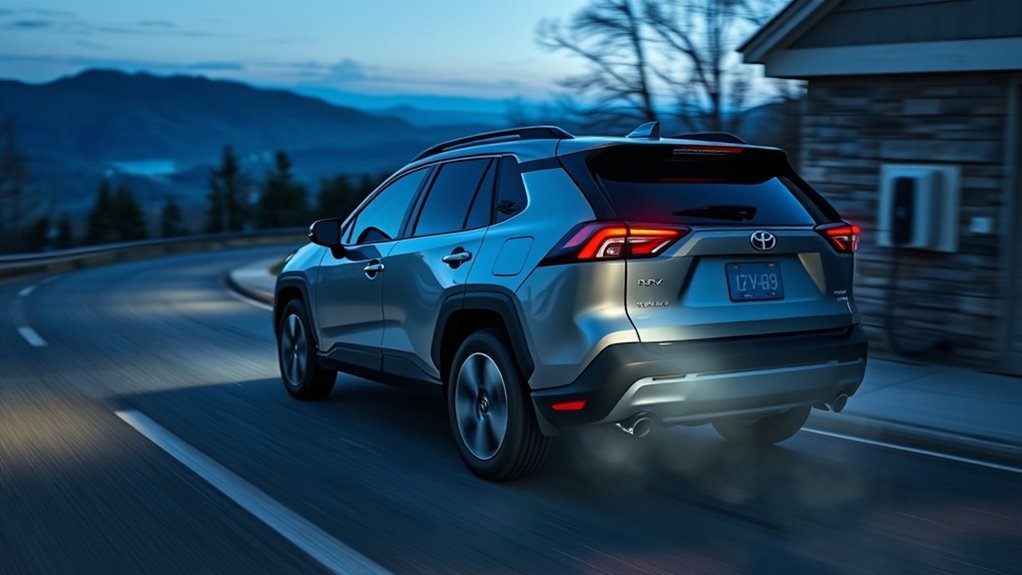
No, the 2026 RAV4 PHEV does not necessarily hold its full 324 horsepower when the battery charge drops. With a full battery charge, the powertrain can deliver the rated 324 horsepower and strong acceleration.
As charge declines, output may taper, and response can feel less immediate. The hybrid system still coordinates electric and gasoline sources, so the vehicle remains usable as a gas-electric hybrid, but peak performance is less likely to persist under low charge conditions.
As charge declines, output may taper, and response can feel less immediate.
This behavior reflects how power reserve and energy management interact, not a defect. Regular charging helps preserve maximum horsepower and efficiency, keeping the platform closer to its intended operating state.
For drivers seeking freedom from reduced responsiveness, maintaining a higher battery charge is the practical path. The result is a vehicle that can still function efficiently, yet its most vigorous performance depends on adequate electrical energy available.
How the RAV4 PHEV Delivers Power in Hybrid Mode?
In hybrid mode, the 2026 RAV4 PHEV maintains its 324 combined horsepower by blending a 2.5-liter four-cylinder engine with three electric motors through a coordinated power management system.
The gas engine and electric motors are balanced to preserve power delivery while optimizing efficiency, allowing the system to allocate torque where it is most useful. This arrangement supports strong performance and smooth shifts between propulsion sources, so output remains consistent as conditions change.
Regenerative braking also feeds energy back into the battery during deceleration, reducing waste and helping sustain electric assistance. The result is a hybrid mode strategy that keeps the drivetrain responsive without forcing a tradeoff between capability and efficiency.
What 324 Horsepower Means in Daily Driving?
The 2026 RAV4 PHEV’s 324 horsepower translates into strong everyday performance, with 0 to 60 mph acceleration in 5.4 seconds and confident merging capability in traffic.
In routine use, the hybrid powertrain supports a balanced performance and fuel economy profile, giving the driver responsive thrust without sacrificing efficiency on a daily commute.
Seamless shifts between electric and gas operation reduce interruption, so power delivery feels controlled rather than abrupt.
Standard all-wheel drive helps distribute traction across wet pavement, gravel, or uneven surfaces, improving stability and confidence in changing conditions.
The driving experience is thus practical and capable, not merely quick.
The same output also supports a towing capacity of up to 3,500 pounds, adding utility for trailers or recreational equipment.
How Acceleration Changes When the Battery Is Charged?
Acceleration is strongest when the 2026 RAV4 Plug-In Hybrid’s battery is fully charged, because the electric motors can add instant torque to the gasoline engine and help deliver the model’s maximum 324 horsepower. In that state, acceleration is measured at 0 to 60 mph in 5.4 seconds, reflecting the full cooperation of electric and hybrid systems.
As battery charge falls, the vehicle remains a hybrid, but output can taper because the gasoline engine carries more of the load. The change is not abrupt; the shift stays seamless, preserving predictable performance while reducing urgency.
Regenerative braking restores charge during driving, which can recover some electric support and improve subsequent acceleration. For drivers who value freedom from hesitation, the charged battery is the key factor that releases the sharpest response, while a depleted battery still leaves usable, efficient mobility, though with less force and a more engine-led character.
How the RAV4 PHEV Handles Passing and Merging?
Passing and merging benefit from the 2026 RAV4 PHEV’s 324-horsepower hybrid system, which delivers quick, predictable response in traffic. The full 324 horsepower remains available for passing, so the vehicle can complete overtakes without hesitation.
A 0 to 60 mph time of 5.4 seconds supports strong acceleration when entering fast lanes or closing gaps. The standard all-wheel drive improves traction and stability, especially on damp pavement or uneven on-ramps, helping merging feel controlled rather than exposed.
Its hybrid powertrain shifts between electric and gas output smoothly, keeping power delivery steady under load. Regenerative braking also assists by conserving energy and maintaining momentum through stop-and-go conditions.
Together, these systems produce a measured, efficient drive that supports decisive lane changes and highway entry. For drivers seeking freedom from delay, the RAV4 PHEV offers responsive movement without requiring constant planning or compromise.
Which 2026 RAV4 PHEV Trim Feels Quickest?
Among the 2026 RAV4 PHEV trims, the GR Sport is the one most likely to feel quickest because its sport-oriented tuning sharpens response and handling.
It still shares the full 324 horsepower with the rest of the PHEV lineup, so the difference is not peak output but calibration. Steering, suspension, and throttle mapping give the GR Sport a more immediate character, which can make the driving experience feel more urgent and liberated.
The SE trim may seem especially brisk in city use, since its 54-mile all-electric range supports smooth electric launches and instant torque.
The XSE adds another practical edge through its 11-kW onboard charger, helping it return to full performance sooner after charging.
Yet every trim records about 5.4 seconds to 60 mph. That means perceived quickness depends mostly on chassis tuning, not power.
Does Cold Weather Reduce RAV4 PHEV Power?
Yes—cold weather can reduce the 2026 RAV4 PHEV’s usable electric power. Lower temperatures alter battery chemistry, limiting immediate power output from the electric powertrain.
The vehicle still carries 324 horsepower in normal conditions, but freezing air can suppress the portion delivered to the wheels, especially during hard acceleration. Electric range, estimated at 48 to 52 miles, may fall sharply as the pack warms slowly and resistance rises.
Freezing temperatures can trim usable power and sharply reduce the RAV4 PHEV’s electric range.
Cabin heating also draws energy, further reducing efficiency and narrowing the distance available in all-electric operation. In practical terms, the vehicle remains capable, yet its response may feel muted until the battery reaches a more favorable temperature.
For drivers seeking liberated mobility, the key point is that winter does not erase the system’s rated capability; it temporarily constrains usable performance. As temperatures recover, power output and acceleration improve, and the electric powertrain operates closer to its intended efficiency.
How Regenerative Braking Helps Keep It Charged?
Regenerative braking in the 2026 RAV4 Plug-In Hybrid captures kinetic energy during deceleration and converts it into electrical charge for the battery.
In stop-and-go traffic, this energy recapture is frequent and helps reduce battery depletion while improving overall efficiency.
The added charge supports electric-only driving, complements acceleration performance, and contributes to the vehicle’s extended driving range.
Regenerative Braking Basics
During braking and deceleration, the 2026 RAV4 PHEV’s regenerative system captures otherwise lost kinetic energy and converts it into electricity to recharge the battery.
This regenerative braking process works within the hybrid system to support electric-only range, protect efficiency, and preserve driving range without external charging. It contributes to energy conservation by reducing reliance on friction brakes and lowering component wear.
The combined power output remains available because battery replenishment supports seamless delivery of 324 horsepower during normal use.
- Captures motion energy
- Recharges the battery
- Extends electric-only range
- Reduces brake wear
- Supports combined power
Energy Recapture In Traffic
In stop-and-go traffic, the 2026 RAV4 PHEV’s regenerative braking system repeatedly converts braking energy into electricity instead of wasting it as heat. This energy recapture supports battery charge in the 18.1 kWh lithium-ion pack, helping preserve electric range in daily congestion.
By recovering kinetic energy each time the driver slows, regenerative braking reduces dependency on gasoline and improves fuel economy without altering the PHEV’s horsepower output during acceleration. The shift between electric and hybrid modes remains seamless, allowing recovered energy to feed back into propulsion when needed.
For drivers seeking mobility with less dependence on fuel systems, this mechanism strengthens the electric driving experience and extends useful operation between plug-in sessions. In traffic, efficiency becomes a practical form of autonomy.
Charge Benefits In Driving
Battery management benefits directly from regenerative braking, which converts deceleration into electrical energy and returns it to the 18.1 kWh lithium-ion pack while the vehicle is moving. This process helps preserve battery charge, supporting 324 horsepower when demand is high and the pack remains adequately filled.
- regenerative braking reduces reliance on the gas engine
- electric-only operation is extended in traffic
- driving range is replenished during routine braking
- efficiency improves through energy recapture
- fuel consumption declines as charging losses are reduced
In practice, performance stays responsive while liberation from frequent refueling increases. By sustaining battery charge, the system supports electric-only travel for roughly 48–54 miles, depending on conditions.
The result is measured, efficient motion with less wasted energy and lower fuel consumption.
What Changes RAV4 PHEV Power Over Time?
RAV4 PHEV power can change over time as the hybrid battery ages and loses capacity, which may reduce the system’s ability to sustain peak output.
Weather conditions, especially cold temperatures, can further limit battery performance and shorten effective range, affecting acceleration support.
Driving style also matters, since frequent hard acceleration and repeated high-demand operation can increase battery strain and alter delivered horsepower.
Battery Age And Capacity
Although the 2026 RAV4 PHEV is rated at 324 horsepower when fully charged, battery age and repeated use can gradually reduce capacity, which may lower electric-only range and shift more of the workload to the gasoline engine.
Lithium-ion batteries lose capacity through charge cycles, so performance depends on usage history and charging habits. The hybrid system still preserves mobility, but less stored energy can mean earlier gasoline power assistance.
Regular charging and maintenance help limit decline and keep output near specification.
- battery age
- capacity
- electric-only range
- charging
- performance
This design supports practical freedom, yet it is not immune to degradation.
Over time, reduced capacity can slightly alter responsiveness, efficiency, and the balance between electric and gasoline operation.
Weather And Range Impact
Even as the 2026 RAV4 PHEV is rated at 324 horsepower under ideal conditions, weather and driving conditions can reduce usable performance over time.
Cold weather lowers battery efficiency, cutting electric range and limiting electric power during launch and passing. As battery capacity declines with age, less energy is available to support the hybrid system, which can reduce overall performance.
Terrain variations, especially steep grades, increase load and may force greater gasoline-engine contribution, further narrowing electric range.
These effects do not erase the rated output, but they change how often it is accessible in real use. For drivers seeking autonomy from energy waste, the key issue is not peak horsepower alone, but how consistently the vehicle delivers performance across climate, route, and time.
Driving Style Effects
Driving habits can shape how consistently the 2026 RAV4 PHEV delivers its 324 horsepower over time. The vehicle’s rated output remains available under ideal conditions, yet driving style, maintenance, and external factors influence performance and efficiency.
Aggressive acceleration and repeated high-speed operation increase energy demand, stress battery capacity, and can soften power delivery.
- Smooth throttle use supports efficiency.
- Regenerative braking recovers energy during stops.
- Proper charging helps preserve battery capacity.
- Regular maintenance limits degradation.
- Cold weather can reduce effective output.
With disciplined driving style, the PHEV can sustain its capability longer. Neglect, by contrast, may shorten battery life and lower available horsepower.
Why the RAV4 PHEV Still Feels Strong at Low Charge?
The 2026 RAV4 PHEV still feels strong at low charge because its 324-horsepower hybrid system combines a 2.5-liter four-cylinder engine with three electric motors, allowing consistent power delivery as battery state of charge drops. Its electric-only range of 48-54 miles supports efficient urban use before the gas-electric hybrid mode engages. Seamless shifts preserve performance, so torque arrives without noticeable interruption. Regenerative braking recovers energy during deceleration, helping maintain usable reserve and supporting efficiency. Even when unplugged, the system remains calibrated for responsive acceleration and steady passing power.
| Attribute | Effect |
|---|---|
| 324 horsepower | Sustained output |
| Hybrid system | Balanced propulsion |
| Electric-only range | Battery conservation |
| Regenerative braking | Energy recovery |
| Gas-electric hybrid | Reliable performance |
Frequently Asked Questions
How Much Horsepower Does the 2026 Toyota RAV4 PHEV Have?
It has 324 horsepower. Engine performance benefits from hybrid advantages, fuel efficiency, and AWD driving experience. Maintenance tips matter, while competitor comparison, market trends, and consumer reviews indicate strong value for liberation-minded drivers.
How Long Will the 2026 RAV4 Hybrid Battery Last?
Like a patient engine of time, the 2026 RAV4 hybrid battery should last over 10 years. Battery lifespan depends on driving habits, charging efficiency, and battery maintenance; warranty coverage reduces replacement costs, limiting performance impact and supporting environmental benefits.
How Long Can a Toyota Hybrid Sit Undriven?
A Toyota hybrid can sit undriven about two weeks before battery maintenance tips matter; beyond that, hybrid vehicle longevity depends on ideal storage conditions, driving habits impact, charging frequency guidelines, tire pressure management, fluid level checks, seasonal care advice.
How to Break in a 2026 RAV4 Hybrid?
A 2,000-mile break in procedure is advised; engine performance benefits from gentle initial mileage. Owner experiences show hybrid technology responds best to moderate driving habits, routine maintenance tips, and steady fuel efficiency before full load.
Conclusion
The 2026 RAV4 PHEV is designed to retain its 324 horsepower rating even when the battery is low, because the gasoline engine and hybrid system continue to provide propulsion. In practice, output may feel slightly less immediate under heavy demand, cold conditions, or sustained high-speed driving, but the vehicle remains capable. Its power delivery is more like a reserve tank than a fading battery, preserving strong everyday performance and confident passing ability.
