
On a 2010 Toyota Camry, stalling or low idle after battery disconnection and reconnection usually occurs because the ECU loses learned idle and fuel trim data. The engine should be started cold with all accessories off and allowed to warm until the cooling fans cycle. Full idle relearn may take 50 to 100 miles of mixed driving. If stalling continues, battery connections, charging voltage, vacuum leaks, and throttle body values should be checked. Additional steps follow.
2010 Camry Stalls After Battery Reconnect
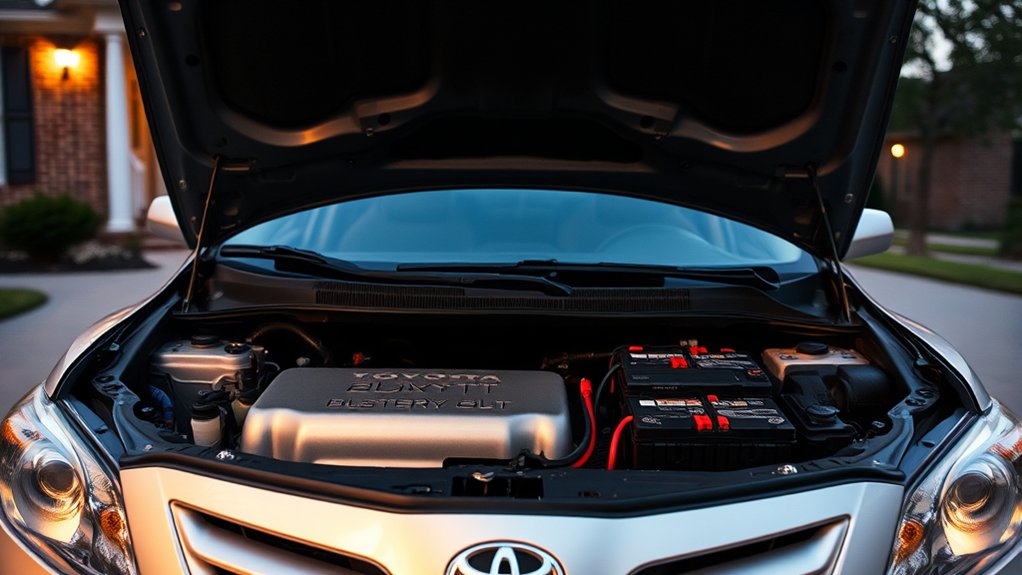
After the battery is disconnected and reconnected on a 2010 Toyota Camry, the engine may stall because the engine control module must relearn idle parameters that were reset when power was lost. This condition commonly appears after a battery reconnect and does not immediately indicate failure.
The procedural objective is to let the control system regain stable idle settings without interference.
A practical method is to start the engine with all electrical loads switched off, allowing airflow and throttle control to settle. As coolant temperature rises, radiator fans should cycle on and off, confirming normal warmup behavior during adaptation.
Extended driving, ideally 50 to 100 miles with fewer stops, gives the module time to refine fuel and air corrections. This process can free the owner from premature parts replacement and unnecessary concern.
If the Camry stalls repeatedly, observation of idle behavior is advised before intrusive repair decisions, since many vehicles stabilize gradually as relearning progresses under normal operating conditions.
What Normally Resets After Reconnection
Battery reconnection on a 2010 Toyota Camry commonly resets several learned and user-stored functions, not just idle control. After power restoration, the ECU may begin a reset cycle that clears adaptive fuel trim memory and other short-term learned values. This does not indicate failure; it indicates temporary loss of stored calibration data and the need for orderly reprogramming or reinitialization procedures.
- Radio presets and clock settings often return to factory defaults after disconnect.
- Stored diagnostic trouble codes may clear, delaying confirmation of intermittent faults.
- Power window auto-up/down logic may require reinitialization by fully cycling each window.
- The anti-theft system may need a reset sequence before normal operation resumes.
A methodical post-reconnection check frees the owner from guesswork. The technician typically verifies accessory memory, scans for returning faults, confirms window function, and checks security status.
Such steps restore baseline operation efficiently, with fewer surprises during subsequent driving and ownership.
Why Idle Drops After Battery Power Loss
After battery power loss, the ECU memory reset can clear learned idle parameters, causing a temporary drop in idle speed on a 2010 Toyota Camry.
The idle relearn process is typically initiated with a cold start and all electrical accessories switched off, allowing the control system to recalibrate as engine temperature rises.
If throttle body adjustment values do not reestablish normal idle after 50 to 100 miles of driving, inspection of related faults such as vacuum leaks or sensor errors is indicated.
ECU Memory Reset
Disconnecting and reconnecting power clears the 2010 Toyota Camry’s ECU memory, which removes learned idle targets and fuel trim corrections. As a result, idle speed may briefly fall while the ECU begins a relearning process and rebuilds idle settings from live operating data. This condition is typically procedural, not immediately symptomatic of mechanical failure.
- Stored fuel trim compensation is erased.
- Idle control values return to baseline.
- Electrical loads can disrupt early recalibration.
- Stabilization often occurs within 50–100 miles.
A diagnostic approach favors patience. During initial operation, the engine should be allowed to run with accessories switched off, reducing interference while adaptive calculations restart.
Temporary idle fluctuation after battery reconnection is common. The vehicle’s computer must regain equilibrium before further repair decisions are made, preserving owner confidence and mechanical independence.
Idle Relearn Process
In many cases, a temporary idle drop occurs because the engine control module must rebuild its idle strategy once power loss erases adaptive memory. The first step is a cold start with accessories off; make sure headlights, blower, and defroster remain disabled. As coolant temperature rises, radiator fans should cycle normally, confirming the relearn routine is progressing.
| Condition | Driver Feeling |
|---|---|
| Low initial idle | Concern, then patience |
| Fans cycle on/off | Reassurance, control |
| Stable idle with AC load | Relief, liberation |
After warm-up, Turn on the AC to apply load and verify recovery. If idle quality improves and remains stable, recalibration is advancing correctly. Complete confirmation often requires 50-100 miles of mixed driving, allowing the module to restore adaptive control without unnecessary intervention and confidence.
Throttle Body Adjustment
Low idle following battery power loss usually reflects erased adaptive memory rather than an immediate mechanical failure.
In a 2010 Toyota Camry, disconnection can clear learned idle data, causing rpm to dip until recalibration occurs. Throttle body adjustment is not always manual; often the control module must relearn airflow values through a structured warm-up and drive cycle, independent of Apple CarPlay features.
- Start engine cold, keep accessories off, and allow full operating temperature.
- Observe idle stability before shifting into gear or applying steering load.
- Drive normally for 50-100 miles so adaptive parameters can repopulate.
If stalling persists, inspect throttle plate deposits or actuator faults.
This procedure restores control without guesswork, giving the owner freedom from unnecessary parts replacement. Persistent instability may justify cleaning or throttle body replacement.
How to Do a Camry Idle Relearn
A proper Camry idle relearn begins after the battery has been disconnected by starting the engine cold with all electrical loads switched off. This isolates Electrical system impact and allows the control module to rebuild baseline idle data without interference.
During Engine warm up, the engine should be left undisturbed at idle so rpm can settle naturally. These Idle adjustment techniques help restore stable operation after power loss.
As coolant temperature rises, idle speed should gradually correct itself and become steady. The radiator fans should cycle on and off, confirming normal temperature management and proper sensor response.
After stabilization, the air conditioning can be switched on briefly to verify that idle compensation responds to added load without stumbling or excessive fluctuation. If behavior remains uneven, immediate mechanical adjustment is not yet justified.
The vehicle computer requires additional operating time, including normal driving over roughly 50 to 100 miles, to complete recalibration before further diagnosis begins.
How Long Idle Relearn Usually Takes
Although initial idle correction often begins within the first warm-up cycle, full Camry idle relearn usually requires several driving cycles and roughly 50 to 100 miles of operation after battery disconnection. This interval allows the engine control module to recalibrate airflow, fuel trim, and throttle response without premature intervention.
For owners seeking liberation from guesswork, disciplined observation matters more than immediate correction.
- Start the engine cold and allow idle changes as coolant temperature rises normally.
- Keep lights, blower motor, audio, and other electrical loads switched off.
- Confirm radiator fans cycle on and off, verifying normal operating temperature attainment.
- Expect stabilization only after repeated trips, not a single stationary warm-up session.
From a diagnostic standpoint, this timeline supports effective idle adjustment techniques, measured engine performance tuning, and practical battery management strategies.
If instability persists before the mileage window closes, further action is usually premature. Patience remains the procedural requirement during adaptation.
How to Fix Low Idle in a 2010 Camry
Begin with the relearn procedure: after battery reconnection, a 2010 Camry that idles too low often requires the engine control module to restore its idle strategy before any repair is attempted.
The vehicle should be started cold with all electrical loads off, then allowed to warm fully without interruption. This frees the module to rebuild idle air control values, stabilize throttle position response, and reestablish baseline fuel trim corrections.
During warm-up, radiator cooling fans should cycle on and off, confirming normal temperature control and giving the computer a complete operating range for adaptation.
Afterward, the car should be driven through mixed conditions for 50 to 100 miles so the module can refine idle behavior under real loads.
If the low idle remains after relearn and road adaptation, a technician should inspect for vacuum leaks or inaccurate sensor input. Those faults can distort calculated airflow and prevent the commanded idle speed from returning to specification consistently.
What to Check If It Still Stalls
If the 2010 Camry still stalls after the idle relearn period, the next checks should focus on basic electrical stability and charging performance. The procedure begins with confirming clean, tight battery terminals, since corrosion or looseness can interrupt battery voltage and derail stabilizing idle after reconnection.
If stalling persists after idle relearn, start by confirming stable battery connections and consistent charging system performance.
Initial cold starts should be performed with lights, blower motor, and accessories off, reducing load while the engine control module recalibrates idle strategy.
- Inspect battery terminals for looseness, corrosion, or poor ground contact.
- Verify alternator output; charging voltage should be near 13.4 volts at idle.
- Observe whether idle speed remains abnormally low after several minutes.
- Note whether stalling occurs only during cold start or under accessory load.
If these checks show normal battery voltage and charging behavior, continued stalling warrants organized electrical diagnostics. A technician can then evaluate whether adjustment is still occurring or whether another basic fault is interfering with consistent idle control after power loss.
When It’s More Than Idle Relearn
When low idle, rough running, or stalling continue after the normal relearn period and 50 to 100 miles of mixed driving, the condition should no longer be treated as idle adaptation alone. At that stage, diagnosis shifts from relearn expectations to fault isolation.
The technician should verify whether battery impact has exposed another weakness in charging or connection integrity.
Inspection should begin with battery terminals, ground points, and alternator belt tension. Any looseness, slip, or voltage instability can intensify stalling symptoms and prevent stable idle control.
Initial startup conditions also matter; excessive electrical loads during first restart can distort recalibration. If the engine still hunts, dips, or dies after proper drive cycles, idle fluctuation causes must be traced beyond memory loss alone.
The procedural objective is liberation from guesswork: confirm charging performance, connection security, and mechanical drive condition before assigning blame to software adaptation.
Persistent roughness after these checks indicates a broader fault path requiring systematic testing.
How to Prevent Repeat Battery Reconnect Issues
Preventing repeat battery reconnect issues in a 2010 Toyota Camry typically begins with battery terminal maintenance, including verifying tight connections and removing any corrosion that could disrupt voltage stability.
The idle relearn procedure should then be supported by starting the engine with all electrical accessories off and allowing the control module to recalibrate over approximately 50 to 100 miles of normal driving.
Electrical system checks should also include testing battery condition and alternator output, with persistent symptoms indicating the need for professional diagnosis of the charging and control systems.
Idle Relearn Procedure
A proper idle relearn procedure is often required after the battery is disconnected because the ECU must rebuild its stored idle parameters. This supports idle behavior analysis, basic ECU tuning techniques, and resolution of cold start challenges after power loss.
- Start the engine cold with all accessories off.
- Allow full warm-up until cooling fans cycle on and off.
- Switch on air conditioning to add controlled engine load.
- Drive 50–100 miles with minimal stopping for recalibration.
This sequence lets the control system adapt fuel, airflow, and load compensation without interference. The fan cycle confirms temperature-based correction activity, while A/C engagement verifies idle stability under demand.
Extended driving helps the computer relearn more accurately, giving the operator freedom from repeated stalls, surging, or unstable idle after reconnection.
Battery Terminal Maintenance
Many repeat battery reconnect problems trace back to neglected terminal maintenance rather than a failed component. Proper battery corrosion prevention begins with removing surface buildup using baking soda mixed with water, then brushing terminals and clamps until conductive metal is exposed.
These terminal cleaning techniques restore low-resistance contact and reduce repeat post-reconnect disruptions.
After cleaning, the clamps should be tightened to manufacturer-secure fitment so vibration cannot create intermittent loss. A light coating of dielectric grease should then be applied to block moisture and slow future oxidation.
For durable connection maintenance tips, battery cables should also be inspected for fraying, stiffness, or cracked insulation, since damaged cable ends undermine otherwise clean terminals. Terminal protectors or covers further shield the connection from dirt and moisture, supporting reliable reconnection freedom over time.
Electrical System Checks
Several electrical system checks help isolate the conditions that commonly cause repeat battery reconnect issues in a 2010 Toyota Camry. A disciplined sequence reduces guesswork and restores dependable operation after service.
- Perform terminal cleaning and verify clamps are tight, preventing corrosion-related intermittency.
- Conduct voltage testing with a multimeter; battery resting voltage should measure 12.4 to 12.7 volts.
- Confirm alternator output at idle and with accessories on; charging voltage should remain 13.8 to 14.4 volts.
- Complete a wiring inspection for looseness, abrasion, or damage across grounds, cables, and connectors.
After reconnection, the vehicle computer should be reset through normal driving for at least 50 miles.
That recalibration process helps free the system from unstable idle, warning lights, and erratic electrical behavior after power loss.
Frequently Asked Questions
My Toyota Bluetooth Keeps Disconnecting and Reconnecting. What Could Be Causing This?
Likely causes include device compatibility issues, outdated phone or vehicle firmware, misconfigured pairing settings, or signal instability. Recommended Bluetooth interference solutions include rebooting, re-pairing, checking updates, and isolating conflicting nearby wireless devices for independence.
What Is the Most Common Problem With a Toyota Camry?
The most common problem involves Common electrical problems, especially battery, alternator, and sensor faults. Toyota reliability issues also include oil consumption and transmission wear. Following Camry maintenance tips helps drivers diagnose faults early and maintain dependable operation.
How Do I Disconnect Toyota Connected Services?
A universe of control begins by opening the Toyota app or infotainment settings, accessing Toyota services, initiating the Disconnect process, confirming termination, reviewing subscription terms, and consulting support for precise Reconnect methods when autonomous access is restored.
Why Does My Phone Keep Getting Disconnected From My Car?
The phone disconnects because of Bluetooth interference solutions, phone compatibility issues, or incorrect settings. A technical diagnosis should include rebooting the iPhone, verifying software update tips, and testing cable, pairing, and vehicle system configurations.
Conclusion
In most cases, a 2010 Toyota Camry that stalls after battery disconnect is reacting to lost idle memory rather than major component failure. A proper idle relearn usually restores stable operation, but persistent low idle requires inspection of throttle body deposits, vacuum leaks, and sensor input. Significantly, even a small vacuum leak can reduce idle speed enough to trigger stalling because normal warmed idle is typically only about 650 to 750 rpm, leaving little operating margin after power loss.
