
If your 2010 Toyota Camry stalls after a battery disconnect, the engine computer may have lost the idle adjustments it learned over time. Carbon deposits around the electronic throttle plate can make this change more noticeable. Before replacing parts, you can check the idle relearn process and look for simple electrical or airflow problems.
Quick Answer
A 2010 Toyota Camry may idle too low or stall after battery reconnection because the engine computer loses learned idle settings. For the 2.5L engine, allow the fully warmed engine to idle for five minutes with accessories off. If stalling continues, inspect throttle-body deposits, battery connections, intake leaks, and charging performance.
At a Glance
| Time Required | Five minutes of warm idling for the 2.5L engine, plus warm-up time and a safe road test. |
| Tools Needed | None for basic idle learning. A multimeter and OBD-II scanner help with further diagnosis. |
2010 Camry Stalls After Battery Reconnect
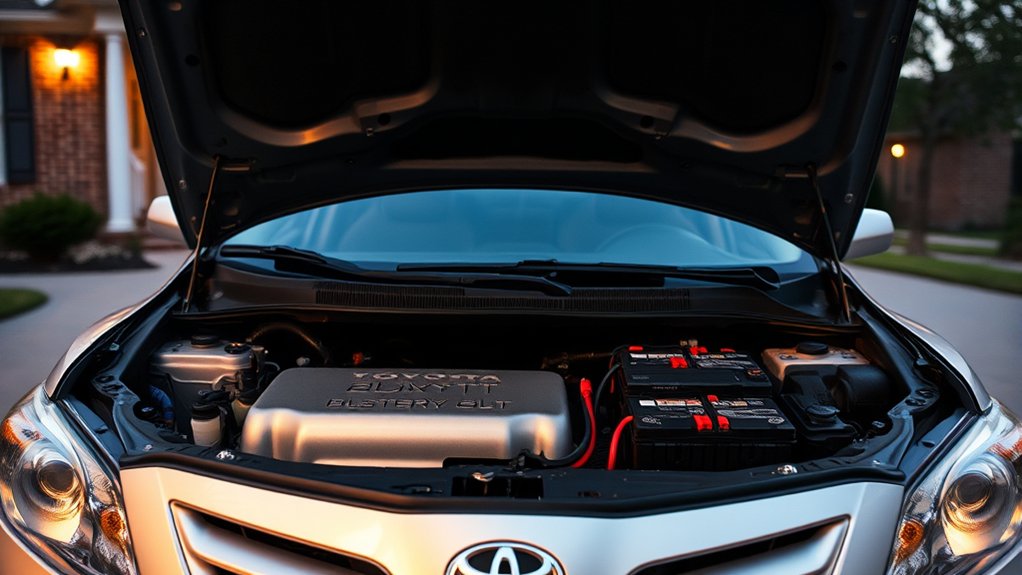
A 2010 Toyota Camry can develop a rough or unusually low idle immediately after its battery is disconnected. The engine control module (ECM) loses learned settings that previously helped it manage airflow at idle.
The problem may appear when starting the car, stopping at a traffic light, shifting into Drive, or switching on the air conditioning.
Toyota addressed this exact condition in its technical guidance for poor idle after a 12-volt power interruption. The guidance includes the 2010 Camry among affected vehicles and recommends inspecting the throttle body for excessive deposits.
A dirty throttle body is especially important because the ECM may previously have learned to compensate for restricted airflow. Once power is lost, that correction may disappear.
Some vehicles regain a stable idle after the computer relearns its settings. Others need throttle-body cleaning or repair of a separate fault.
The main distinction is whether the idle improves after proper warm-up or whether the engine continues to stall. Repeated stalling is not something to ignore while waiting for additional driving miles.
What Normally Resets After Reconnection
Disconnecting the battery can erase stored electronic settings on a 2010 Camry. Some changes affect engine operation, while others involve convenience features.
The exact effects depend on the vehicle’s equipment and how long its electrical power was interrupted.
- Idle learning: The ECM can lose learned electronic throttle and idle-speed control values.
- Fuel trim adjustments: Adaptive corrections may need to be rebuilt during normal engine operation.
- Diagnostic trouble codes: Disconnecting power may clear stored codes, making an earlier intermittent problem harder to identify.
- Clock and audio settings: The clock, radio presets, or other memory functions may need attention.
- Power windows: Check automatic window operation. Battery replacement alone does not necessarily require window initialization on the 2010 Camry.
- Security system: Confirm that the key, immobilizer, and any installed alarm operate normally after reconnection.
Toyota explains in its battery disconnection and reconnection guidance that some electrical systems require vehicle-specific checks or initialization after power is restored.
Check the affected features separately. A clock that needs resetting and an engine that stalls may share the same battery-disconnect event without requiring the same repair.
Why Idle Drops After Battery Power Loss
Idle speed can fall after battery disconnection because the ECM has lost its learned airflow corrections. The engine must rebuild its idle settings using information from sensors and the electronic throttle system.
A throttle body with carbon buildup makes this process harder. Even with no major mechanical failure, the engine may receive too little air at idle and begin to stumble.
ECU Memory Reset
The engine control unit, also called the ECM or ECU, adjusts the throttle opening to maintain a steady idle. On the 2010 Camry, electronic throttle control manages this airflow rather than a traditional manually adjusted idle screw.
Before the battery was disconnected, the computer may have learned corrections for engine wear, throttle deposits, and normal changes in operating conditions.
After a power interruption:
- Learned idle-speed control values may be erased.
- The ECM begins rebuilding its airflow and fuel corrections.
- Idle speed may dip when the engine first starts.
- Added loads, such as air conditioning, may expose an unstable idle.
The 2010 Camry 2AR-FE service information confirms that disconnecting the negative battery terminal clears learned idle-speed control values.
It also explains that idle learning occurs after the engine has warmed up and idled for five minutes.
Idle Relearn Process
Idle relearning allows the ECM to adjust airflow as the engine reaches normal operating temperature. The system should gradually maintain a steadier idle without accelerator input.
These observations help distinguish normal adaptation from a fault that needs repair.
| Condition | What It Suggests |
|---|---|
| Idle starts low but becomes steady after warm-up | Learned idle control may be recovering. |
| Idle dips slightly when A/C is switched on, then recovers | The ECM is compensating for added engine load. |
| Engine keeps stalling after warm-up | Check throttle deposits, intake leaks, and electrical faults. |
Cooling fans may turn on and off during normal temperature control. However, a complete fan cycle is not a required sign that idle learning has succeeded.
The more useful test is whether the fully warmed engine can maintain a steady idle with accessories off and respond normally when an electrical or air-conditioning load is added.
Throttle Body Adjustment
A dirty throttle body is one of the main mechanical conditions to investigate when a Camry stalls after battery power loss.
The throttle plate controls how much air enters the engine. Carbon deposits around its edges can restrict the small amount of airflow needed at idle.
Battery disconnection does not create these deposits. Instead, it can remove the learned correction that previously helped the engine idle despite them.
Toyota recommends the following approach when excessive deposits are found:
- Inspect the throttle plate and surrounding bore for buildup.
- Use a clean rag sprayed with throttle-plate cleaner to remove deposits.
- Keep cleaning chemicals away from sensitive electronic throttle components.
- After cleaning, allow the engine to reach full operating temperature.
- Let the warmed engine idle for at least three minutes.
Warning: Toyota specifically warns against spraying cleaning chemicals directly into the throttle body. Cleaner can travel through the throttle shaft and damage the throttle motor or position sensor. Do not force the electronic throttle plate or attempt manual idle-screw adjustments.
Cleaning should come before replacing an otherwise functional throttle body. If the throttle actuator or position sensor is faulty, however, cleaning alone will not solve the problem.
How to Do a Camry Idle Relearn
You can attempt a basic 2010 Camry idle relearn without a scan tool. The main goal is to let the engine warm up and stabilize without unnecessary electrical loads.
The following procedure focuses on gasoline-powered Camry models, especially the 2.5L four-cylinder.
- Park safely. Park outdoors or in a well-ventilated area. Apply the parking brake and place an automatic transmission in Park or a manual transmission in Neutral.
- Turn off accessories. Switch off the air conditioning, blower, rear defroster, audio system, and other electrical loads that are not needed for safe operation.
- Start the engine. Start normally without pumping the accelerator. Allow the engine to run while observing its idle behavior.
- Allow full warm-up. Wait until the engine reaches normal operating temperature. Do not use radiator fan cycling as the only indicator.
- Let the engine idle. For the 2010 Camry 2.5L engine, allow five minutes of idling after warm-up, with accessories switched off.
- Check load compensation. Once the engine is stable, briefly turn on the air conditioning and observe whether idle speed recovers after the added load.
- Perform a short road test. If the engine remains stable and the car is safe to drive, check its behavior during normal acceleration, deceleration, and stops.
A successful relearn should produce a steady warm idle without repeated hunting, shaking, or stalling. The engine should also handle normal accessory loads without dying.
If the Camry stalls during the stationary procedure, do not assume that more driving is necessary. Move to the diagnostic checks below.
For a 2010 Camry Hybrid, the gasoline engine may stop automatically as part of normal hybrid operation. Use the Hybrid-specific service procedure rather than treating every engine shutdown as a conventional idle problem.
How Long Idle Relearn Usually Takes
Initial idle relearning can occur during a single warm-up session. For the 2010 Camry 2.5L engine, service information describes idle learning after the warmed engine has idled for five minutes.
Additional fuel and airflow adaptation may continue during normal driving, but there is no verified requirement to drive exactly 50 to 100 miles before investigating repeated stalling.
The correct timing also depends on what work was performed.
- Battery disconnected only: Warm the engine and allow the required idle-learning period, then check for stable operation.
- Throttle body cleaned: Toyota’s technical guidance calls for at least three minutes of warm idling after cleaning.
- Additional driving: A short road test helps confirm normal throttle response and stable idle at stops.
- Stalling continues: Inspect likely faults instead of waiting through an arbitrary mileage target.
The correct warm idle speed varies with the engine and transmission.
For the 2010 Camry equipped with the 2.5L four-cylinder engine, Toyota engine service specifications list 610–710 rpm for automatic models and 650–750 rpm for manual models.
Those figures apply under controlled testing conditions, including a warmed engine, transmission in Neutral, air conditioning off, and cooling fans off.
The 3.5L V6 uses different service specifications. Do not apply the four-cylinder values to every Camry engine.
Also remember that a dashboard tachometer may not show small RPM differences accurately. A diagnostic scan tool provides a more useful reading when exact idle speed matters.
How to Fix Low Idle in a 2010 Camry
Fixing low idle starts with identifying whether the problem comes from lost learned settings or restricted airflow. The most effective approach is to check simple causes before replacing sensors or engine components.
After completing the warm-idle procedure, use this troubleshooting order:
- Confirm battery connections. Check that both battery clamps are secure and that the ground cable has a sound connection.
- Inspect the air intake duct. Look for loose clamps, disconnected hoses, damaged rubber, or openings after the mass airflow sensor.
- Check the throttle body. Look for a ring of carbon or other heavy deposits around the throttle plate.
- Clean deposits correctly. Follow Toyota’s rag-applied cleaner guidance when buildup is present.
- Repeat the warm-idle check. Let the engine stabilize after cleaning and confirm that it handles the A/C load.
- Scan for trouble codes. If low idle persists, check for engine-control, airflow, and misfire faults.
Do not disconnect the battery repeatedly just to force another reset. That may erase useful diagnostic information without fixing the underlying cause.
When an engine continues to run poorly after throttle-body cleaning, a technician may need to examine mass airflow sensor readings, unmetered intake air, fuel delivery, or electronic throttle operation.
What to Check If It Still Stalls
If your 2010 Camry continues stalling after idle relearning, check electrical stability and the air intake system. Loose battery connections or low charging output can create symptoms that resemble an idle-control problem.
If stalling persists after proper warm-up, verify the battery connections and charging system before replacing engine-control components.
These checks help narrow the diagnosis:
- Battery terminals: Inspect for corrosion, loose clamps, cracked terminals, or damaged cables.
- Ground connections: Look for loose or corroded connections between the battery, engine, and vehicle body.
- Resting battery voltage: On the 2.5L model, a fully charged battery has a service reference of about 12.6–12.8 volts at 68°F (20°C).
- Charging voltage: Toyota’s 2.5L charging-system specification is 13.2–14.8 volts during its prescribed no-load test at 2,000 rpm.
- Air intake: Inspect vacuum hoses, the intake duct, PCV connections, and air-filter condition.
- Stalling pattern: Record whether the problem happens only when cold, after warming up, when shifting into gear, or with the A/C operating.
The voltage figures above come from the 2010 Camry 2AR-FE charging-system service data.
A reading near 13.4 volts at idle is not, by itself, proof that the alternator is good or bad. Charging voltage changes with operating conditions and electrical demand.
For accurate testing, use the specified engine speed and test conditions. A qualified technician can also conduct battery load and charging-system tests.
Once the battery and charging system pass inspection, further diagnosis should focus on airflow, throttle response, and returning fault codes.
When It’s More Than Idle Relearn
Continued stalling after warm idle learning suggests the issue may be more than erased computer memory. A mechanical, electrical, or sensor problem may be interfering with the ECM’s ability to control idle speed.
Some common warning signs include:
- The engine repeatedly stalls while in Drive or Reverse.
- Idle speed stays unusually low after the engine is fully warm.
- The engine surges or shakes even with accessories switched off.
- A Check Engine light appears or returns after battery reconnection.
- Starting becomes difficult despite a properly charged battery.
- Stalling begins when the A/C or other electrical loads are applied.
An OBD-II scan can help identify the next test. For example, code P050A concerns cold-start idle air control on the 2.5L engine.
Other fault codes may indicate intake-air measurement problems, incorrect air-fuel mixture, or engine misfires.
However, a missing code does not automatically mean the vehicle is healthy. Battery disconnection can erase stored diagnostic information, and some engine monitors need time or specific conditions to run again.
A technician may need to review live engine data, including engine speed, coolant temperature, throttle position, fuel trims, and airflow readings.
Note: If your Camry repeatedly stalls while driving or approaching intersections, stop using it until the cause is diagnosed. A vehicle that loses engine power unexpectedly can create a traffic hazard. Arrange professional inspection or towing rather than attempting a long relearn drive.
How to Prevent Repeat Battery Reconnect Issues
Preventing repeat problems starts with keeping the battery connections clean and the charging system healthy. It also helps to inspect the throttle body before assuming every rough idle is caused by a failed component.
Good battery maintenance cannot prevent all learned settings from being cleared when power is disconnected. However, it can reduce avoidable electrical interruptions and help identify existing faults.
Idle Relearn Procedure
After future battery service, allow the engine to establish stable idle control before returning to normal driving.
A few simple checks make the process easier:
- Confirm that the battery was installed correctly and all connections are secure.
- Start with unnecessary electrical accessories switched off.
- Allow the gasoline engine to reach normal operating temperature.
- Give the ECM the appropriate warm-idle learning period.
- Confirm normal idle behavior before attempting a road test.
For the 2.5L engine, the five-minute warm-idle guidance provides a clear starting point. If the throttle body was cleaned, follow the cleaning-related idle procedure as well.
There is no need to perform unrelated accelerator-pedal sequences or repeatedly reset the ECM without a model-specific reason.
Battery Terminal Maintenance
Clean battery terminals provide a reliable electrical connection and reduce the chance of intermittent power loss. Corrosion, loose clamps, and damaged cables should be corrected before they cause starting or charging problems.
To maintain the connections safely:
- Turn off the ignition and all electrical accessories.
- Inspect the battery case, cables, and terminals for visible damage.
- If cleaning requires disconnecting the battery, remove the negative cable first.
- Use an appropriate terminal brush or battery-cleaning product to remove corrosion.
- For external corrosion, a small amount of baking-soda solution may help neutralize acid residue. Keep the solution away from battery openings.
- Dry the cleaned parts, reconnect the terminals correctly, and tighten them securely.
- Apply terminal protectant or a light protective coating to exposed external surfaces after the electrical connections are secure.
Wear eye protection and suitable gloves when cleaning battery corrosion. Never place grease between the bare metal contact surfaces before tightening the clamps.
Also inspect cable ends for cracked insulation, stiffness, broken strands, or heavy corrosion beneath the covering.
A clean battery post will not compensate for a damaged ground cable or loose connection elsewhere in the system.
Electrical System Checks
Periodic electrical inspections help identify developing battery and alternator problems before they affect the ECM or other vehicle systems.
Include the following items during routine maintenance:
- Battery condition: Test the battery if it struggles to crank the engine or repeatedly loses charge.
- Alternator operation: Check charging performance if the battery warning light appears or voltage readings are abnormal.
- Drive belt: Inspect the alternator belt system for damage, slipping, or unusual noises.
- Wiring: Look for loose grounds, worn insulation, and damaged engine-bay connectors.
- Airflow system: Inspect the intake duct and throttle body when rough idle or stalling symptoms develop.
If the vehicle develops an intermittent problem, scan for stored codes before disconnecting the battery again. Preserving that information can make diagnosis more effective.
When battery connections are secure, charging performance is normal, and the throttle body is clean, persistent stalling deserves a complete engine diagnostic inspection.
Key Takeaways
- Toyota specifically identifies throttle-body deposits as a possible cause of poor idle after battery power loss.
- The 2010 Camry 2.5L service information describes idle learning after five minutes of warm idling.
- A fixed 50–100-mile waiting period is not necessary before investigating persistent stalling.
- The four-cylinder automatic’s specified warm idle is 610–710 rpm under the stated service-test conditions.
- Charging problems, vacuum leaks, and sensor faults need separate diagnosis when idle learning does not restore normal operation.
Frequently Asked Questions
My Toyota Bluetooth Keeps Disconnecting and Reconnecting. What Could Be Causing This?
Repeated Bluetooth disconnects usually point to a phone, pairing, or audio-system issue, not engine idle learning. Restart both devices, remove old pairings, then pair the phone again. If the problem began after the battery was disconnected, check whether the radio lost saved settings.
What Is the Most Common Problem With a Toyota Camry?
There is no single most common problem across every Camry engine and model year. For a 2010 Camry that starts stalling right after battery service, lost idle learning and throttle-body deposits are more useful first checks than replacing parts based on general reliability lists.
How Do I Disconnect Toyota Connected Services?
Toyota Connected Services subscriptions are managed through supported Toyota accounts and vehicles. A 2010 Camry generally does not have the modern connected-services features found on newer models. Canceling an app subscription will not fix low idle or stalling after battery reconnection.
Why Does My Phone Keep Getting Disconnected From My Car?
If a wired connection drops, inspect the cable and port first. For Bluetooth, remove and recreate the pairing, check for software updates, and test another phone. Phone connection problems should be diagnosed separately from the engine restarting or stalling.
Can a Dirty Throttle Body Cause Stalling After a Battery Change?
Yes. Deposits can restrict airflow near the electronic throttle plate. When the battery is disconnected, the engine computer may lose the learned correction that helped it idle around those deposits. Toyota specifically recommends checking for buildup when poor idle follows a power interruption.
Do I Need to Drive 100 Miles for a Camry Idle Relearn?
No. A fixed 100-mile drive is not required by the Toyota guidance reviewed here. The 2010 2.5-liter service information describes idle learning after the engine is warm and has idled for five minutes. A short, safe road test can confirm whether the idle stays stable.
Is It Safe to Drive a Camry That Keeps Stalling?
No. Repeated stalling can remove engine power when you need to move through traffic. If the car dies in gear or at intersections, stop driving it and arrange diagnosis or a tow. Do not wait for more miles of relearning to solve a safety problem.
Conclusion
A 2010 Toyota Camry that stalls after battery disconnection may be struggling with lost idle settings, especially if deposits have restricted airflow through the throttle body. Begin with proper warm-idle learning, then inspect the throttle body and basic electrical connections if the problem remains.
Persistent stalling should lead to diagnosis, not repeated battery resets or unnecessary parts replacement. A stable warm idle, normal response to accessory loads, and safe operation during a short road test are the best signs that the problem has been resolved.
Sources
- Toyota Tech Tip T-TT-0362-15: Poor idle after a 12-volt power interruption, throttle-body inspection, cleaning precautions, and warm-idle guidance.
- 2010 Toyota Camry 2AR-FE Service Manual — P050A: Idle learning after battery power loss and cold-start idle control diagnostics.
- Toyota Camry 2AR-FE Engine Service Information: Engine idle-speed specifications and testing conditions.
- Toyota Camry 2AR-FE Charging-System Specifications: Battery and alternator voltage reference values.
- Toyota Collision Pros — Disconnecting and Reconnecting a Toyota Battery: Electrical-system checks and vehicle-specific initialization considerations after battery service.

