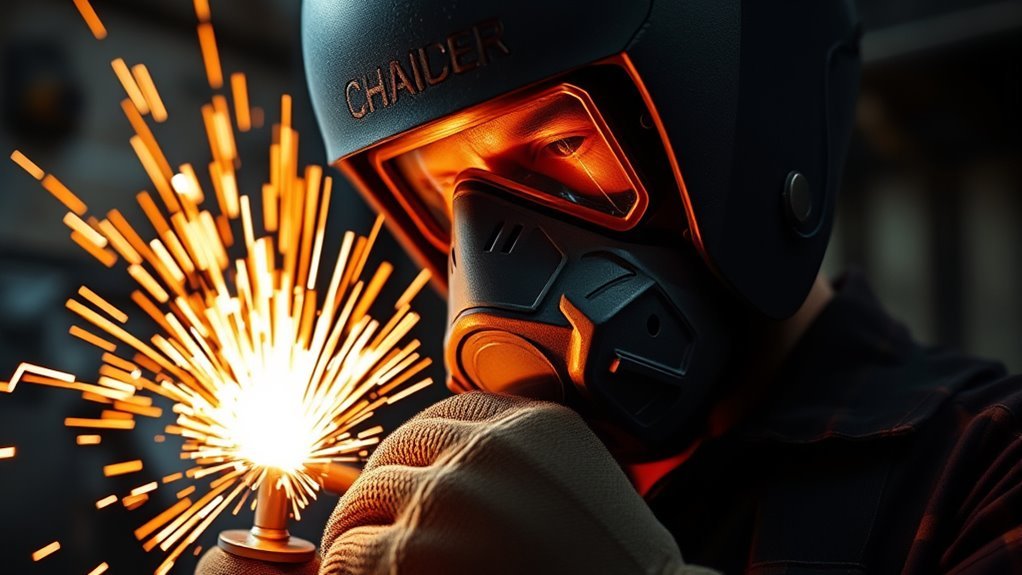
Welding respiratory protection matters because welding can generate fine metal fumes as well as gases such as ozone and nitrogen oxides. A cup-shaped mask is not automatically adequate simply because a weld is short or produces little visible smoke. Protection depends on the metal, process, coatings, ventilation, exposure level, respirator approval, and fit. Stainless steel, aluminum, galvanized metal, painted surfaces, and confined spaces can each change the hazard significantly.
Quick Answer
A cup-style respirator may be suitable only when it is an approved particulate respirator, fits correctly, and provides enough protection for the identified welding-fume exposure. Particulate masks such as FFP3 devices do not automatically protect against ozone, gases, vapors, oxygen deficiency, or unknown atmospheres. Ventilation and fume extraction should be used before relying on respiratory protection alone.
Key Takeaways
- The shape of a mask does not determine its protection level; certification, filter type, fit, and the actual contaminant matter.
- Particle filters capture welding fume particles but do not automatically protect against gases or vapors.
- Local exhaust ventilation should capture welding fume at the source whenever practical, with respiratory protection added when engineering controls do not adequately control exposure.
- Stainless steel can generate hexavalent chromium, while some aluminum arc-welding processes can generate significant ozone.
- Tight-fitting respirators require proper fit testing, and the wearer should perform a user seal check each time the respirator is put on.
- Air-purifying respirators must not be used as the solution for an oxygen-deficient, unknown, or immediately dangerous atmosphere.
What Makes Welding Respiratory Protection Necessary
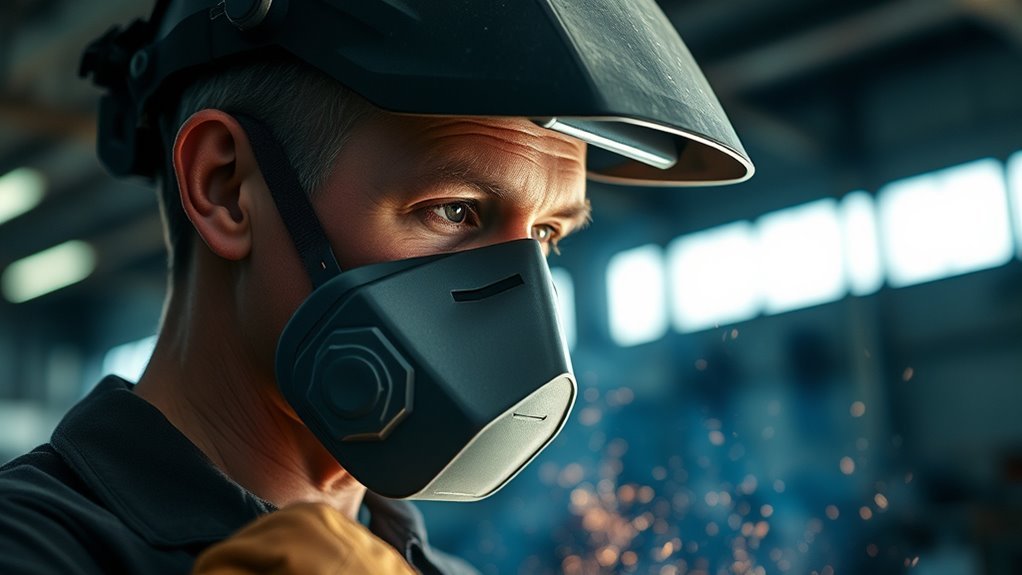
Welding processes can generate fine metal fumes along with gases and other airborne contaminants. The exact mixture depends on the welding process, electrode or filler, base metal, surface coatings, shielding gas, heat input, and ventilation.
Common welding-fume constituents can include iron, manganese, chromium, nickel, aluminum, zinc, and other metals. Welding can also generate gases such as ozone and nitrogen oxides. Some contaminants cause short-term irritation or metal fume fever, while repeated exposure to certain welding emissions can contribute to serious respiratory, neurological, and cancer risks.
The International Agency for Research on Cancer has classified welding fumes as carcinogenic to humans. NIOSH also advises reducing exposure to welding emissions through engineering controls and appropriate respiratory-protection practices.
Respiratory protection should be selected for the actual contaminant and exposure level—not by mask shape, visible smoke, or how short the welding job appears.
The preferred approach is to reduce the hazard first. Use a lower-fume process where practical, position the welder away from the plume, and capture fumes with local exhaust ventilation near the source. Respiratory protection is then used when those controls do not reduce exposure enough or when the task requires additional protection.
Warning: An air-purifying respirator or PAPR does not create oxygen. Do not use one as the solution for an oxygen-deficient, unknown, or immediately dangerous to life or health atmosphere. Confined-space welding requires atmospheric assessment, appropriate ventilation, and the respiratory equipment required by the applicable safety program.
When a Cup-Style Welding Respirator May Be Enough
A cup-shaped respirator may sometimes be appropriate for welding-fume particles, but the word “cup” describes its shape rather than its protective capability. A nuisance dust mask and a certified filtering-facepiece respirator can look similar while providing very different levels of protection.
In the United States, workplace respirators should be NIOSH Approved and selected under the employer’s respiratory-protection program when such protection is required. FFP3 and P3 are commonly encountered in European and British guidance. These systems use different certification frameworks and should not be treated as interchangeable labels.
When Cup Masks Work
A cup-style filtering facepiece can be considered when the identified hazard is primarily particulate, the respirator is approved for that hazard, its protection factor is adequate for the measured or reasonably estimated exposure, and it fits the wearer correctly.
| Condition | Cup-Style Particulate Respirator | Reason |
|---|---|---|
| Known particulate welding fume | May be suitable | Only if approved and adequate for the exposure |
| Unknown contaminant | Do not assume adequate | The hazard must be identified first |
| Ozone or hazardous gas | Particulate-only mask is inadequate | Gas-specific protection may be required |
| Organic vapor | Particulate-only mask is inadequate | Requires the correct vapor cartridge or another suitable system |
| Oxygen-deficient or IDLH atmosphere | Not suitable | Requires appropriate atmosphere-supplying respiratory protection |
| Poor face seal | Not suitable | Leakage bypasses the filter |
Short duration alone does not make a welding operation safe. Brazing, for example, may involve fluxes or filler metals that introduce additional hazards. Painted, galvanized, plated, oily, or solvent-contaminated material can also produce contaminants that a particulate-only respirator was never designed to remove.
Fume Exposure Limits
There is no single exposure number that makes every type of welding fume safe. The relevant limit depends on the substances present. Employers may need to evaluate individual contaminants such as manganese, chromium, nickel, lead, cadmium, or ozone.
For example, the OSHA permissible exposure limit for hexavalent chromium, or Cr(VI), is 5 micrograms per cubic meter as an 8-hour time-weighted average. Stainless-steel welding is an important potential source of occupational Cr(VI) exposure.
NIOSH’s 2026 welding guidance also highlights manganese exposure. The amount can change substantially with welding wire, electrode, base metal, process, ventilation, and whether the work takes place in a confined space.
The practical lesson is simple: do not choose a respirator solely from the length of the weld or how much smoke can be seen. Visible smoke is not a reliable measure of respiratory risk.
Choose Better Protection
Respirator selection should match both the contaminant and the required protection level.
| Respiratory Hazard | Protection to Consider |
|---|---|
| Particulate welding fume only | Approved filtering facepiece or reusable respirator with an appropriate particulate filter |
| Particles plus identified gas or vapor | Respirator with the correct combination filter/cartridge or another approved system for both hazards |
| Long-duration welding | A properly selected PAPR or other powered/air-fed welding system may improve comfort and protection |
| Unknown, oxygen-deficient, or IDLH atmosphere | Appropriate supplied-air or SCBA configuration under the applicable respiratory-protection program |
Note: A higher-efficiency particulate filter does not become a gas filter simply because it captures very small particles. Particles, gases, and vapors are different respiratory hazards and may require different filtration media.
What Cup Masks Miss: Gases, Ozone, and Fine Dust
A properly approved particulate respirator can capture very small airborne particles, including welding fume, but a particulate filter does not automatically remove gases or vapors. This distinction is especially important because welding can generate ozone, nitrogen oxides, carbon monoxide under some conditions, and contaminants from paints, cleaners, coatings, and fluxes.
- Ozone: Arc welding can generate ozone, particularly where intense ultraviolet radiation interacts with oxygen in the surrounding air.
- Nitrogen oxides: Arc processes can generate irritating nitrogen oxides.
- Organic vapors: Paints, degreasers, solvents, or coatings near hot work can introduce vapor hazards that a particulate-only mask will not remove.
- Oxygen displacement: Shielding gases can contribute to dangerous oxygen deficiency in enclosed spaces.
- Metal fume: Even when a particulate respirator can filter the particles, it must provide adequate protection for the actual concentration and fit the wearer properly.
Some reusable respirators accept combination cartridges designed for specified particles and gases or vapors. They must still be selected for the exact contaminant, concentration, operating conditions, and service-life requirements. Cartridge replacement should follow the manufacturer’s instructions and the workplace change schedule rather than waiting for the wearer to smell a contaminant.
How to Get a Better Seal From Your Cup Mask
A tight-fitting respirator can perform only as intended when its sealing surface makes proper contact with the face. The mask should sit over the nose, mouth, and chin as directed by the manufacturer, with straps positioned correctly and the nose area adjusted where the design permits.
Do not add homemade foam, tape, silicone, or other materials to the respirator to improve its seal unless the respirator manufacturer specifically provides or approves that component. Modifying a respirator can change its fit or interfere with its certification.
Improving Cup Mask Fit
There are two different checks that are often confused: fit testing and a user seal check.
- Formal fit test: For a tight-fitting workplace respirator covered by OSHA requirements, fit testing is required before initial use, when a different facepiece model or size is used, and at least annually thereafter.
- User seal check: The wearer performs this each time the respirator is put on, following the manufacturer’s procedure or the applicable OSHA method.
- Facial hair: Hair or stubble that crosses the sealing surface can prevent an adequate seal.
- Other PPE: Welding helmets, safety glasses, hearing protection, and straps should not interfere with the respirator seal.
- Condition: Disposable respirators that are damaged, dirty, wet, deformed, or difficult to breathe through should be replaced according to manufacturer instructions.
Pro Tip: A seal check is not a substitute for a formal fit test. Think of the fit test as confirming that a particular model and size can fit the wearer, while the seal check confirms that the respirator appears properly seated each time it is worn.
Achieving A Tighter Seal
Do not simply tighten the straps as hard as possible. Excessive tension can make a respirator uncomfortable and may distort some facepieces. Follow the manufacturer’s fitting sequence and use the model and size that passed the required fit test.
| Control | Purpose |
|---|---|
| Correct model and size | Match the facepiece to the wearer’s face |
| Correct strap position | Maintain even facepiece contact |
| Clean sealing surface | Reduce interference with the face seal |
| Clean-shaven sealing area | Prevent hair from breaking the seal |
| User seal check | Check seating every time the respirator is worn |
| Regular inspection | Find damage, deformation, or worn components |
A damaged disposable respirator should be removed from service. Reusable respirators should be inspected, cleaned, stored, and maintained according to the manufacturer’s instructions and the workplace respiratory-protection program.
Why Aluminum and Stainless Need More Protection
Aluminum and stainless steel deserve extra attention because they can create different respiratory hazards, but the required protection should still be based on the specific process and exposure rather than the metal name alone.
Stainless steel welding can expose workers to chromium and nickel compounds. Hexavalent chromium is particularly important because it is a recognized carcinogenic respiratory hazard, and OSHA regulates occupational Cr(VI) exposure.
Aluminum welding can generate aluminum-containing particulate. Some arc-welding processes used on aluminum can also produce substantial ozone because of the intense ultraviolet energy generated by the arc.
| Material or Condition | Important Respiratory Concerns | Control Focus |
|---|---|---|
| Mild steel | Iron-containing fume, manganese, other process-dependent contaminants | LEV plus suitable RPE where required |
| Stainless steel | Chromium, possible Cr(VI), nickel, manganese | Exposure assessment, LEV, suitable respiratory protection |
| Aluminum | Aluminum-containing particulate and possible ozone | Fume extraction plus evaluation of ozone and particulate exposure |
| Galvanized metal | Zinc oxide fume and metal fume fever risk | Remove exposure at source and use appropriate respiratory protection |
| Painted or plated metal | Potential lead, cadmium, chromium, decomposition gases, or other coating products | Identify coating before hot work and use hazard-specific controls |
Because coatings and contaminants can dominate the respiratory hazard, welders should know what is on the workpiece before applying heat. Removing coatings must also be done safely, since grinding, blasting, or chemical stripping may introduce additional exposures.
Best Welding Respirators for Tough Jobs
There is no single “best” welding respirator for every job. The right choice depends on the contaminants, concentration, work duration, ventilation, required protection factor, compatibility with the welding helmet, and whether the atmosphere contains enough oxygen.
Filtering facepiece respirators are lightweight and simple, but particulate-only versions do not protect against gases or vapors.
Reusable elastomeric half-mask respirators can accept replaceable particulate filters and, when the respirator is approved for them, specific gas/vapor or combination cartridges. They still require a proper face seal.
Full-face air-purifying respirators can provide additional face and eye coverage and, when properly selected and fit-tested, may provide a higher level of respiratory protection than a half-mask. They must remain compatible with the welding shield and must use filters or cartridges suitable for the identified hazard.
Powered air-purifying respirators, or PAPRs, are commonly integrated with welding helmets and can reduce breathing resistance during long jobs. The exact protection depends on the approved PAPR configuration. A PAPR is still an air-purifying device and does not make an oxygen-deficient atmosphere safe.
Supplied-air respirators receive breathing air from a separate source. Certain supplied-air or SCBA configurations are required where an atmosphere is oxygen-deficient, immediately dangerous to life or health, or otherwise unsuitable for an air-purifying respirator.
For demanding welding, the most useful comparison is therefore not brand versus brand. It is whether the respirator is approved for the actual hazard, delivers the required level of protection, fits the worker, remains compatible with welding PPE, and can be worn correctly for the full task.
Where to Buy the Right Welding Respirator
A welding respirator should be purchased from a reputable industrial-safety distributor, welding supplier, or manufacturer that provides complete certification and replacement-part information.
- Verify approval: In the United States, look for a genuine NIOSH approval and confirm that the exact facepiece, filter, cartridge, or PAPR configuration is approved for the intended use.
- Match the hazard: Do not buy from a generic “welding mask” label alone. Determine whether protection is needed for particulate, gas, vapor, or a combination.
- Check welding-helmet compatibility: The respirator must fit without being displaced by the helmet, eye protection, or other PPE.
- Confirm replacement supplies: Reusable systems need readily available filters, cartridges, batteries, seals, and other approved parts.
- Check sizing and fit-test options: Tight-fitting respirators should be available in enough models and sizes to obtain an acceptable fit.
- Treat reviews as secondary evidence: User reviews can help assess comfort and durability, but they do not establish occupational protection or certification.
FFP3 terminology is commonly used under European standards, while U.S. workers should look for the relevant NIOSH-approved configuration. Do not assume that similar-looking products have equivalent certification.
Frequently Asked Questions
What Do Welders Wear to Protect Their Lungs?
Welders may use approved filtering facepieces, reusable half-mask or full-face respirators, PAPRs, or supplied-air systems depending on the hazard. Respiratory protection should supplement engineering controls such as local exhaust ventilation rather than replace effective fume capture.
Why Do Welders Drink Milk After Welding?
Drinking milk after welding is a traditional folk remedy, not proven respiratory protection. Milk does not stop welding fume from entering the lungs and has not been shown to prevent metal fume fever or welding-related cancer. Exposure should instead be controlled through ventilation, safer work practices, and correctly selected respiratory protection.
Do You Need Respiratory Protection When Welding?
It depends on the welding process, metal, coatings, location, ventilation, contaminant concentration, and applicable workplace rules. Engineering controls such as local exhaust ventilation should be used first. Respiratory protection is required when those controls do not adequately control exposure or when the specific hazard and regulation require it.
What Is a Respiratory Welder Mask?
The phrase usually refers to a respirator worn with, or integrated into, welding face protection. It may be a filtering facepiece, reusable respirator, PAPR welding helmet, or supplied-air system. The protection provided depends on its certification, filter or cartridge, face seal, and approved configuration.
Is an N95 Mask Enough for Welding?
Do not assume that an N95 is enough simply because the job produces visible particulate. An N95 is a particulate-filter class and does not protect against gases or vapors. Whether a particular NIOSH-approved respirator is adequate depends on the contaminant, concentration, required protection factor, fit, and workplace respiratory-protection program.
Can You Use a PAPR or Cup Mask for Confined-Space Welding?
Not automatically. Air-purifying respirators, including PAPRs, depend on the surrounding atmosphere and do not supply oxygen. A confined space must be evaluated for oxygen level and hazardous contaminants. Oxygen-deficient, unknown, or IDLH conditions require the atmosphere-supplying respiratory protection and entry procedures specified by the applicable safety program.
Conclusion
Welding respiratory protection should be chosen from the hazard outward, not from the mask inward. A certified cup-style particulate respirator may be appropriate for some particulate exposures, but its shape does not prove that it is adequate, and a particulate filter does not automatically protect against ozone, gases, vapors, or oxygen deficiency.
Use process controls and local exhaust ventilation to reduce welding fume at the source. When respiratory protection is needed, select equipment approved for the contaminants and exposure level, make sure tight-fitting respirators pass the required fit testing, and perform the prescribed user seal check each time the respirator is worn. Stainless steel, aluminum, coated metals, confined spaces, and long welding sessions deserve particular attention because they can introduce hazards that a basic particulate mask cannot address.
Sources
- Occupational Safety and Health Administration — Respiratory Protection Standard, 29 CFR 1910.134; respirator selection, fit testing, face seals, IDLH atmospheres, and supplied-air requirements.
- National Institute for Occupational Safety and Health — Welding Fumes and Manganese; current welding-fume composition, manganese exposure, and confined-space concerns.
- Occupational Safety and Health Administration — Hexavalent Chromium guidance and 29 CFR 1910.1026; stainless-steel welding hazards and the Cr(VI) exposure limit.
- National Institute for Occupational Safety and Health — A Guide to Air-Purifying Respirators; particulate, gas/vapor, oxygen-deficiency, and respirator-selection principles.
- UK Health and Safety Executive — Controlling the Risks From Welding; local exhaust ventilation, FFP3/P3 particulate protection, powered RPE, and welding-gas limitations.
- International Agency for Research on Cancer — IARC Monographs Volume 118, Welding, Molybdenum Trioxide, and Indium Tin Oxide; carcinogenic-hazard evaluation of welding fumes.

