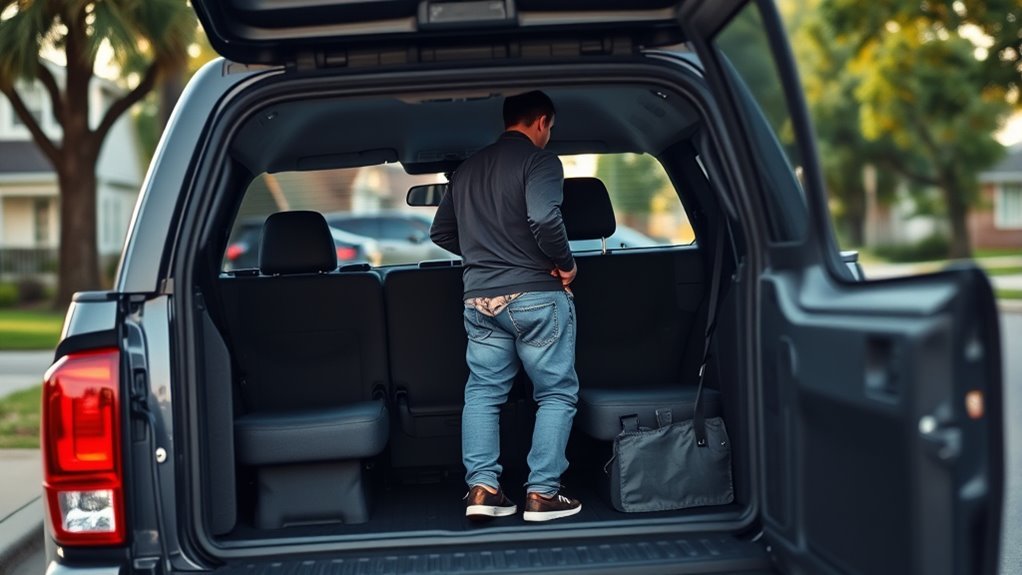
For the current fourth-generation Toyota Tacoma, cabin width is more generous than the original draft suggested. The key measurement is 56.8 inches of front hip room; Double Cab models add 56.3 inches of rear hip room. The Double Cab seats five, while the current XtraCab seats only two and uses the space behind the front seats for storage. Model year matters because 2023-and-older Tacomas use different cabin dimensions.
Quick Answer
For the 2024–2026 fourth-generation Toyota Tacoma, front hip room is 56.8 inches. Double Cab models add 56.3 inches of rear hip room and seat five, while the XtraCab seats only two and has no rear seat. Hip room is competitive for a midsize truck, but rear legroom and seat design also shape real-world comfort.
Key Takeaways
- Current fourth-generation Tacoma models provide 56.8 inches of front hip room.
- The Double Cab has 56.3 inches of rear hip room, 33.7 inches of rear legroom, and seating for five.
- The current XtraCab seats two; it has storage behind the front seats rather than a rear passenger bench.
- The often-quoted 58.3-inch front and 57.8-inch rear figures are shoulder-room measurements, not hip room.
- Seat comfort depends on hip room, legroom, headroom, seat design, and adjustment range, so a test sit remains worthwhile for taller or wider drivers.
What Is Tacoma Hip Room?
Tacoma hip room is the side-to-side space available around an occupant’s hips at the seating position. According to Toyota’s fourth-generation specifications, the Tacoma provides 56.8 inches of front hip room. A Double Cab has 56.3 inches in the rear.
Hip room is useful when judging whether two front occupants or three rear passengers will feel crowded side to side, but it does not describe the entire seating experience. A driver can have adequate hip room yet still feel cramped because of limited knee clearance, headroom, seat-cushion shape, steering-wheel position, or the center console.
That distinction matters in the Tacoma because several measurements are close numerically. Current models have 58.3 inches of front shoulder room and 57.8 inches of rear shoulder room, while hip room is 56.8 and 56.3 inches. Mixing those two measurements creates an inaccurate picture of cabin width.
Current Tacoma Double Cab dimensions: 56.8 inches of front hip room and 56.3 inches of rear hip room.
Hip Room vs. Shoulder Room and Legroom
Hip room measures width near the seat cushion. Shoulder room measures cabin width higher up around the occupants’ shoulders, while legroom measures the available fore-and-aft space for the legs. These measurements answer different comfort questions.
| 2024–2026 Tacoma measurement | Front | Double Cab rear |
|---|---|---|
| Hip room | 56.8 in. | 56.3 in. |
| Shoulder room | 58.3 in. | 57.8 in. |
| Legroom | 41.8 in. | 33.7 in. |
| Headroom without moonroof | 39.7 in. | 38.4 in. |
Note: These measurements apply to the current fourth-generation Tacoma. Toyota completely redesigned the truck for the 2024 model year, so dimensions from a 2023-or-older Tacoma should not be mixed with 2024–2026 specifications.
Tacoma Hip Room by Cab Style
Current Tacoma cab choice changes passenger capacity much more than it changes front-seat width. Both the XtraCab and Double Cab use the same published 56.8-inch front hip-room measurement. The important difference is what sits behind the front seats.
[Amazon Products Picked for You]

Compatible Models:Front car seat covers fit toyota tacoma models ( 2005-2026 SR5,SR, TRD Sport, TRD Off-Road,TRD Pro, Limited Double & Crew Cab Access)

Perfect Fit for Tacoma GAS Double Cab 2024–2026(Gas Only):Custom-designed for Toyota Tacoma GAS 2024 2025 2026 Double Cab SR, SR5, TRD Sport, TRD Off-Road, and Limited (Not Fit Hybrid & Electric & TRD Pro Seat). These seat covers hug every curve of your seats—no gaps, no shifting. Compatible with factory features including airbags, seatbelts, and headrests. Fits like factory—but better looking

Tailored for 2024 2025 2026 4th Gen Tacoma Double Cab - These seat covers are custom made for the 4th generation Toyota Tacoma Double Cab models from 2024 to 2026, including popular trims like SR5, TRD Sport, TRD Off - Road, Limited, and SR. Please note, they are Not suitable for TRD PRO, Access Cab, or Hybrid models.
Double Cab Hip Space
The Double Cab is the passenger-focused configuration. It seats up to five people and adds a genuine second row with 56.3 inches of hip room, 57.8 inches of shoulder room, 38.4 inches of headroom, and 33.7 inches of legroom.
| Double Cab area | Measurement |
|---|---|
| Front hip room | 56.8 in. |
| Rear hip room | 56.3 in. |
| Rear legroom | 33.7 in. |
| Seating capacity | 5 |
For buyers carrying children, coworkers, or adult passengers regularly, Double Cab is therefore the relevant Tacoma configuration. Its advantage is not extra front hip room; it is the usable second row.
XtraCab Fit
The fourth-generation XtraCab takes a different approach. Toyota describes it as a two-seat configuration with a storage area behind the front seats. There is no rear bench and therefore no rear hip-room specification for passengers.
The XtraCab still has 56.8 inches of front hip room, 58.3 inches of front shoulder room, 41.8 inches of front legroom, and 39.7 inches of front headroom. Its six-foot bed and lockable interior storage make it better suited to buyers who prioritize equipment and cargo over carrying people in the cabin.
This is an important distinction from older Tacoma Access Cab layouts, which did offer small rear seating positions. A shopper comparing used and new trucks should always confirm the model year before comparing cabin measurements.
Tacoma Hip Room in the Front Seats
Current Tacoma front hip room is 56.8 inches. That measurement is consistent across the fourth-generation cab layouts in Toyota’s published specification table.
For everyday driving, 56.8 inches provides reasonable side-to-side room for a midsize pickup. The more important comfort variables for an individual driver may be the shape of the seat bolsters, center-console clearance, steering-wheel position, and whether the chosen trim has manual or power seat adjustment.
Front legroom is 41.8 inches, while front shoulder room is 58.3 inches. Those figures should be considered together rather than treating hip room as a complete measure of fit.
Tacoma Hip Room in the Rear Seats
Rear passenger hip room applies to the Double Cab, where Toyota lists 56.3 inches. The cabin also provides 57.8 inches of rear shoulder room and 33.7 inches of rear legroom.
The hip-room number itself is competitive, but rear legroom is more likely to influence comfort for tall adults because front-seat position directly affects knee clearance. Three people can be seated across the rear bench, although real-world comfort depends on passenger size and whether child restraints are installed.
The current XtraCab should not be included in rear-seat comparisons because it has no rear passenger seat.
Tacoma Hip Room for Taller Drivers
For a tall driver, 56.8 inches of hip room is only one part of the fit equation. The current Tacoma also provides 41.8 inches of front legroom and up to 39.7 inches of front headroom in configurations without a moonroof. Some moonroof-equipped Double Cab versions have less front headroom.
Torso length, inseam, hip width, preferred steering-wheel distance, and seatback angle can make two drivers of the same height experience the truck differently. That is why height alone cannot determine whether a Tacoma will feel cramped.
Pro Tip: During a test sit, adjust the seat and steering wheel first, then check knee clearance at the center console, thigh support, headroom, pedal reach, and visibility. If you regularly carry adults, leave the driver’s seat in your normal position and test the rear seat behind it.
| Fit factor | What to check |
|---|---|
| Hip room | 56.8 in. front; check console and door clearance |
| Legroom | 41.8 in. front; confirm comfortable pedal reach |
| Headroom | Up to 39.7 in.; moonroof-equipped versions can differ |
| Seat adjustment | Manual or power setup depends on trim/package |
Does Tacoma Hip Room Affect Long Trips?
Hip room can influence long-trip comfort, especially for wider occupants, but it should not be evaluated alone. Seat cushion support, legroom, seatback angle, lumbar adjustment, road surface, and driving time can matter just as much.
The current Tacoma’s front seats have substantially more legroom than the Double Cab rear seat, so front occupants generally have more freedom to reposition their legs. Rear passengers have 33.7 inches of legroom, making seat position in front of them especially important.
Front Seat Comfort
Front-seat comfort starts with 56.8 inches of hip room, 58.3 inches of shoulder room, and 41.8 inches of legroom. The seat itself then determines how usable that space feels.
Current Tacoma equipment is not limited to one adjustment system. Toyota lists manually adjustable front seats on some configurations and available or standard power-adjustable seating on higher trims and packages. Buyers concerned about posture or long-distance comfort should compare the exact seat fitted to the truck they intend to buy.
- Check hip and thigh clearance against the console and door.
- Confirm that the seat cushion supports the thighs without pressure behind the knees.
- Adjust the steering wheel before judging legroom.
- Compare manual and power-seat configurations when available.
- Check headroom separately if the truck has a moonroof.
Rear Passenger Space
The Double Cab rear seat combines 56.3 inches of hip room with 33.7 inches of legroom. The width is respectable for the midsize-truck class, but taller adults may pay more attention to knee and foot space than to hip room.
Front-seat position also matters. Sliding the driver or front passenger seat rearward reduces the usable knee space behind it, even though the published rear hip-room measurement does not change.
For families, child-seat width and installation position can also change how much usable bench space remains for other passengers. Anyone planning frequent five-person trips should test the actual seating arrangement before purchasing.
Tacoma Hip Room vs. Other Midsize Trucks
Compared with current midsize pickups for which matching manufacturer specifications are readily available, the Tacoma sits between the Ford Ranger and Honda Ridgeline for hip room. Model year and cab style must be matched carefully because different configurations can produce different measurements.
| Truck | Front hip room | Rear hip room |
|---|---|---|
| Toyota Tacoma Double Cab, current generation | 56.8 in. | 56.3 in. |
| 2026 Ford Ranger SuperCrew | 55.9 in. | 54.1 in. |
| 2026 Honda Ridgeline | 59.1 in. | 56.6 in. |
The Tacoma therefore provides more front and rear hip room than the 2026 Ranger SuperCrew but less than the 2026 Ridgeline. The Nissan Frontier and Chevrolet Colorado are also relevant midsize competitors, but specifications should be compared by the same model year and equivalent cab style rather than mixing figures from different configurations. Nissan publishes current Frontier configurations on its official specification page.
Hip room alone should not decide the comparison. For example, a competing truck may have more hip room but less headroom, a different seating position, or a seat shape that does not suit a particular driver.
Tacoma Seat Adjustability and Comfort
Seat adjustment varies substantially across the current Tacoma range. Some configurations use six-way manually adjustable front seats, while selected packages and upper grades add heated or ventilated power-adjustable front seats.
Toyota’s current equipment listings include available eight-way power-adjustable driver and front-passenger seats with additional lumbar adjustment on selected grades. Limited, Trailhunter, and TRD Pro configurations also use more feature-rich seat systems, depending on model year and equipment.
That means a buyer should not assume that every Tacoma has the same seating ergonomics simply because the published hip-room dimensions match.
[Amazon Products Picked for You]

Breathable Car Seat Cushion: Adopt mesh material, comfortable and breathable. It provides SUPERIOR AIR CIRCULATION AND BREATHABILITY to prevent sweating and keep you cool. Designed for people who sit or drive long hours
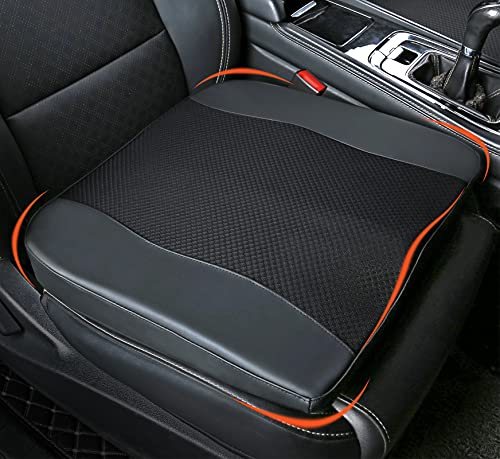
COMPLETE COMFORT — We shaped our seat cushion for car seat driving using a ‘W’ shape, an ergonomically considered design to promote correct driving posture and relieve the pains of sitting over long periods

COMFORT AND SUPPORT - Made with high-density 100% pure memory foam, this car seat cushion offers unparalleled comfort and support. It quickly recovers to its original shape after use, avoiding deformation, and provides a soft yet firm seating experience. This seat cushion with back support pillow significantly reduces pressure on the buttocks, waist, and back, alleviating fatigue from long periods of sitting or driving
Manual Seat Limits
Manual seats can still provide a comfortable driving position, but they generally offer fewer fine adjustments than the Tacoma’s available power-seat configurations.
- Base configurations may use six-way manual adjustment.
- Driver lumbar adjustment is available on current seating configurations.
- Power front seats are available or standard on selected higher trims and packages.
- Seat equipment should be checked on the exact VIN or window sticker rather than assumed from the cab style.
- Hip-room dimensions remain separate from seat-adjustment capability.
For a taller or wider driver, the useful question is therefore not simply “Does the Tacoma have enough hip room?” but “Can this specific seat be positioned comfortably within the available cabin space?”
Long Drive Comfort
Long-drive comfort depends on the combination of cabin dimensions and seat setup. A 56.8-inch hip-room measurement may be ample for one driver but less comfortable for another if the seat bolsters, console, or preferred driving position reduce usable space.
Drivers planning frequent highway trips should test the actual trim they intend to purchase, especially when deciding between a basic manual seat and an available power-adjustable setup.
The same principle applies to passengers. A Double Cab provides real rear seating, but rear legroom remains 33.7 inches. A short showroom test with the front seats placed in their normal driving positions gives a better indication of rear comfort than hip-room numbers alone.
Tacoma Trims With More Cabin Space
Changing Tacoma trim does not create more published hip room. The current truck’s cabin dimensions are primarily determined by the cab architecture, while trim level changes seat materials, adjustability, heating, ventilation, and other comfort equipment.
The Double Cab is the choice for buyers who need a second row and seating for five. The XtraCab seats two and turns the area behind the front seats into utility storage.
- Double Cab: five seats and a usable second row.
- XtraCab: two seats with dedicated rear-cabin storage.
- Front hip room: 56.8 inches in current published specifications.
- Double Cab rear hip room: 56.3 inches.
- Higher trims/packages: can improve seat adjustability and materials without increasing the basic published hip-room dimension.
For buyers focused on passenger comfort, the practical upgrade is therefore choosing the right cab and seat configuration rather than expecting a higher trim to make the cabin physically wider.
[Amazon Products Picked for You]

Expand Driving Vision - The height of the driving position is increased by 2.5 inches, and apparently by using our car seat cushions for driving could expand the vision and help the driver see more clearly. The car seat cushions for short people could also promote right posture and correct spinal alignment for a good driving. We also add a non-slip bottom to keep the car seat pad in place

Cool and Breathable: This TPR cold gel has the property of greatly reducing the heat conduction and so on. It is not affected by the high temperature of the environment in the hot summer. It quickly conducts body heat away. With the breathable fabric and honeycomb ventilation structure, air can circulate freely inside the cushion, taking away heat and keeping it cool. You can say goodbye to the hot seat and enjoy a cool and cozy driving time in the hot summer.

Ergonomic Design for Superior Comfort and Support: Unique U-shaped cutout suspends your tailbone, reducing pressure points and relieving pain, while the contoured shape promotes proper posture and spinal alignment to alleviate lower back discomfort from prolonged sitting
Is Tacoma Hip Room Enough for You?
For many midsize-truck shoppers, 56.8 inches of front hip room is a practical amount of width. In the Double Cab, 56.3 inches of rear hip room also compares well with some direct competitors.
Still, published dimensions cannot account for body shape or preferred driving posture. Wider drivers may care about console and door clearance, while taller drivers may be more sensitive to legroom, seat height, and headroom.
Hip room tells you how wide the seating area is; it does not tell you whether the seat, steering wheel, pedals, and surrounding cabin will fit your body comfortably.
If rear-passenger use matters, test the Double Cab with the front seats positioned exactly where the regular driver and passenger would use them. If rear seating is unnecessary, the XtraCab offers the same published front hip room while trading the rear bench for secure interior storage.
Frequently Asked Questions
Which Tacomas should you stay away from?
There is no single Tacoma model year that every buyer should automatically avoid. Certain 2016–2017 Tacoma vehicles were subject to a crankshaft-position-sensor safety recall, but a recall affecting certain vehicles is not the same as declaring every truck from those years unreliable. For a used Tacoma, check the VIN for open recalls, review maintenance and repair records, and get a pre-purchase inspection.
What is the best time of year to buy a Toyota Tacoma?
There is no guaranteed best month to buy a Tacoma. Pricing depends on local inventory, factory incentives, dealer targets, trim availability, and demand. Compare out-the-door quotes from several dealers and judge the final transaction price rather than assuming that Black Friday, a holiday weekend, or tax-refund season will automatically produce the lowest price.
What is the rarest Tacoma color?
Toyota does not publish enough production-by-color data to identify one Tacoma paint color as the universally rarest. Colors also change by model year and trim. Lunar Rock, for example, was introduced as a special TRD Pro color for 2021, while newer TRD Pro model years have used other exclusive colors. Without production totals, calling one shade the rarest is speculative.
What year Tacoma should you stay away from?
A model year alone is not enough to decide whether a used Tacoma is a bad purchase. NHTSA documented a safety recall involving certain 2016–2017 Tacoma vehicles, but recall status can be checked and remedies may already have been completed. Evaluate the specific VIN, service history, condition, mileage, accident history, and inspection results instead of rejecting every truck from one model year.
Conclusion
The current Toyota Tacoma provides 56.8 inches of front hip room, while the Double Cab adds 56.3 inches in the rear. Those figures make its cabin competitive among midsize pickups, but hip room should be considered alongside legroom, headroom, seat shape, and adjustment range. Choose the Double Cab when rear passengers matter; choose the two-seat XtraCab when interior storage and utility are the priority. Most importantly, compare measurements from the correct Tacoma generation and test the actual seat configuration before buying.
Sources
- Toyota 2024 Tacoma eBrochure — official hip room, shoulder room, legroom, headroom, cab, and seating specifications.
- Toyota 2026 Tacoma Brochure — current trim, cab, seating, and seat-adjustability information.
- Toyota Tacoma — current model and XtraCab/Double Cab information.
- 2026 Ford Ranger Specifications — manufacturer hip-room comparison.
- 2026 Honda Ridgeline Specifications — manufacturer hip-room comparison.
- NHTSA Recall Lookup — VIN-specific recall verification for used Tacoma purchases.
