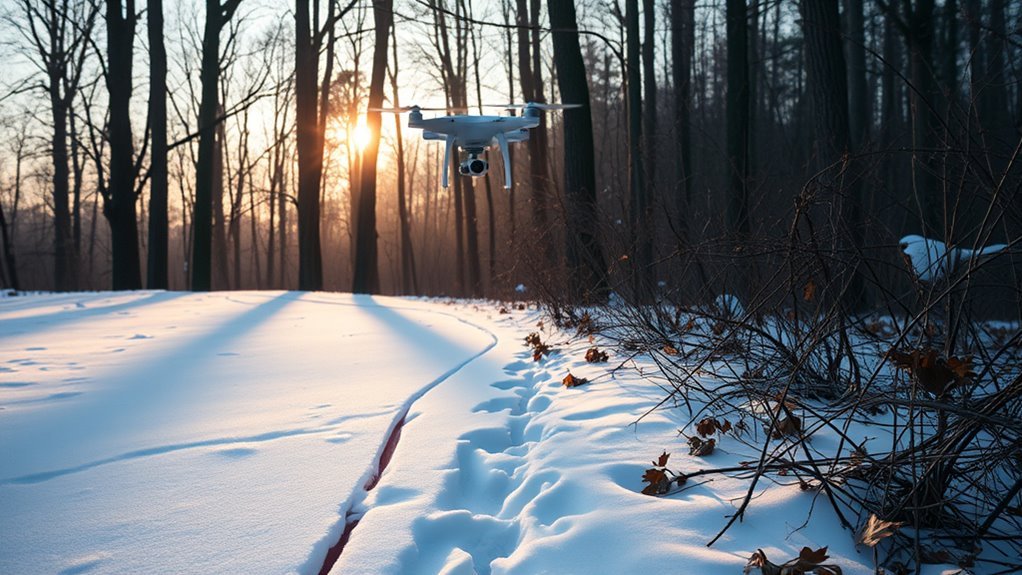
In 2025, drone use to find a wounded deer is legal in some states, but only for post-shot recovery and never for scouting or pursuing live game. Rules vary sharply by jurisdiction, and some states require permits while others prohibit drone-assisted recovery outright. Thermal drones can improve tracking efficiency and reduce ground disturbance. Hunters must verify state wildlife laws before flying. The details below show where it is allowed, restricted, or changing.
Key Takeaways
- Drone use to find a wounded deer is legal in some states, but rules vary widely by jurisdiction.
- Recovery after a shot may be allowed, while scouting or locating live deer is usually prohibited.
- Some states require permits or special authorization for drone-based deer recovery.
- Texas bans hunting-related drone use, while Wisconsin allows regulated post-shot recovery.
- Thermal drones can help recover wounded deer faster, but hunters must follow local wildlife laws exactly.
Can You Use a Drone to Find a Wounded Deer?
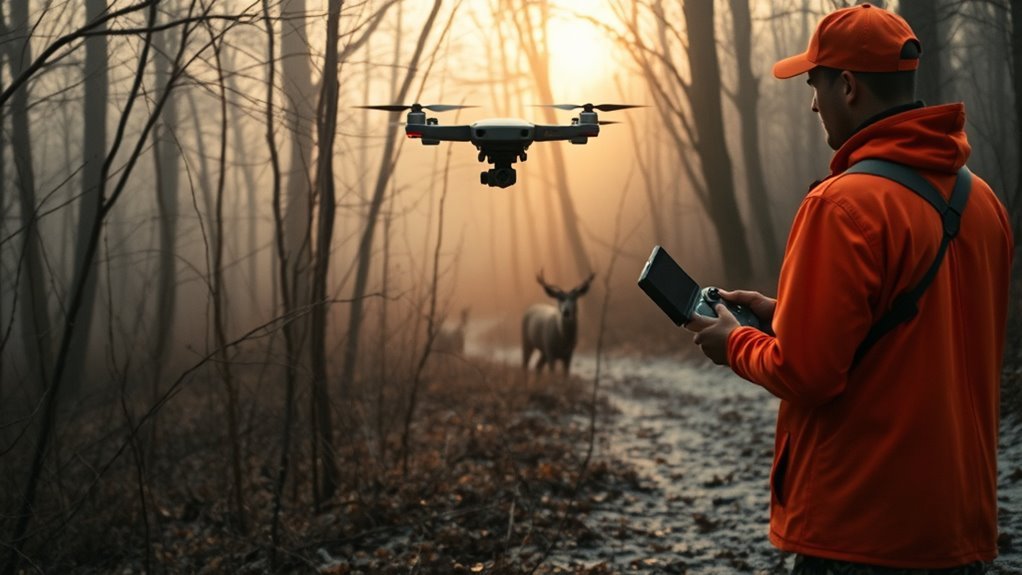
Yes—drones can be used to locate a wounded deer in many states, but legality depends on local wildlife regulations and must be verified before deployment.
A drone fitted with thermal imaging can scan cover quickly, distinguish a live deer from a dead one, and direct recovery with far greater efficiency than ground search alone. This capability can reduce waste, limit uncollected carcasses, and improve the practical outcome of a hunt.
Yet the same method is not universal; some jurisdictions allow it, while others impose strict prohibitions, making state-specific compliance essential. Effective use also depends on pilot skill, battery endurance, and terrain conditions.
Where permitted, local recovery groups may provide trained operators and coordinated response. For hunters seeking a more liberated and less wasteful practice, the drone is a precise recovery tool, but only within the lawful limits governing deer recovery.
What the 2025 Deer Recovery Drone Laws Say?
As of 2025, state drone-recovery rules for wounded deer differ sharply, with some jurisdictions permitting use under wildlife-agency guidelines and others, including Texas, prohibiting it outright.
Many laws distinguish recovery from hunting activity, allowing drones only for locating and retrieving downed game, not for scouting, tracking live deer, or gaining tactical advantage.
Where permitted, operators may still face permit requirements, DNR compliance rules, and enforcement risk if the drone is used beyond the narrow recovery exception.
State Drone Recovery Rules
State drone recovery rules in 2025 remain highly jurisdiction-specific, with legality depending on both wildlife regulations and aviation requirements. For drone recovery, operators must verify state statutes, DNR guidance, and airspace limits before launch.
Thermal drones are increasingly used to locate wounded deer efficiently, reducing search time and environmental disturbance.
- Wisconsin permits post-shot recovery under defined DNR rules.
- Texas bars drone use for hunting-related purposes.
- Pennsylvania proposals seek clearer recovery authority and reduced waste.
- Many states require permits in game lands or wildlife management areas.
Compliance preserves lawful access to technology while supporting ethical deer recovery. Objective review of local rules is essential, because the same flight can be lawful in one state and prohibited in another.
Hunting Versus Recovery Limits
Although drone-assisted deer recovery is legal in some states, 2025 rules sharply distinguish post-shot recovery from hunting, and that distinction controls whether thermal aircraft use is permitted.
In jurisdictions such as Wisconsin, a drone may be deployed only after a lawful shot, for locating a wounded animal and confirming its condition. That framework defines the hunting versus recovery limits: the aircraft may assist retrieval, but not locate, pursue, or pressure live game.
Using thermal imaging can reduce search time and identify whether a deer is dead or still moving, yet that capability remains lawful only within recovery rules.
Texas prohibits aircraft use outright, while Pennsylvania has sought clearer language. The governing principle is simple: technology may aid recovery, but not expand hunting power.
Permits And Enforcement Risks
Once the recovery-only boundary is understood, the next issue is authorization and legal exposure.
In 2025, drone use for deer recovery is state specific, and permits may be required before launch. Hunters in permissive jurisdictions must follow wildlife-agency limits, using drones only to locate wounded game, never to pursue live animals.
Texas represents the stricter model: unauthorized use can trigger Class A misdemeanor liability under the Federal Airborne Hunting Act.
- Verify state rules.
- Confirm permit requirements.
- Restrict flights to recovery.
- Document compliance to reduce enforcement risks.
Public debate continues because clear definitions can preserve lawful recovery while preventing surveillance abuse.
For those seeking practical freedom, legal precision is the safeguard.
Where Deer Recovery Drones Are Legal?
Legality for deer recovery drones varies sharply by jurisdiction, and operators must follow the specific game, aviation, and wildlife rules in each state.
In Wisconsin, drone pilots may legally use thermal aircraft to assist in locating downed game after a shot, provided state conditions are met.
Texas is the opposite: Texas Parks and Wildlife regulations prohibit wildlife recovery by drone, and violations may trigger misdemeanor charges.
Texas prohibits wildlife recovery by drone, and violations may lead to misdemeanor charges.
Pennsylvania remains restrictive; current law treats drones much like motorized vehicles, so hunting and tracking with them is still illegal, although reform proposals are under review.
Alabama shows a more permissive practical model through community networks such as the Alabama Drone Deer Recovery Group, which connects hunters with licensed drone pilots for recovery work.
These examples show that legality is state-specific, not national.
Hunters seeking lawful recovery should verify local statutes, agency guidance, and any licensing or operational limits before deployment.
How Thermal Drones Locate Wounded Deer?
Thermal drones locate wounded deer by detecting infrared heat signatures that remain visible on the animal’s body after the shot.
Using drones with thermal sensors, operators can scan fields, timber, and cover without entering the recovery zone, preserving scent trails and reducing ground disturbance.
The system distinguishes live from deceased animals by comparing heat intensity and shape, giving a precise status assessment before retrieval.
In open terrain, the platform can survey large areas rapidly, improving efficiency and shortening recovery time.
- Infrared imagery identifies heat contrast in low visibility.
- Flight paths cover broad acreage with minimal delay.
- Heat analysis helps separate live animals from carcasses.
- Legal deployment follows state wildlife authority guidelines.
In jurisdictions such as Wisconsin, regulated use supports lawful recovery while keeping the method technical, restrained, and oriented toward effective field autonomy.
When a Drone Works Better Than Tracking Dogs?
A drone can outperform tracking dogs when speed, visibility, and terrain all work against ground-based recovery. In that context, a drone to find a wounded deer is most effective when thermal imaging must deliver immediate status confirmation.
It can distinguish live from dead animals faster than handlers can interpret tracks, and it can do so across swamp, brush, and other difficult terrain. Using a drone also reduces disturbance: quiet flight and remote observation limit pressure on the deer, which lowers the chance of further movement.
Thermal sensors can penetrate dense foliage, exposing animals concealed in thick vegetation where dogs may lose efficiency. For hunters operating under legal recovery rules, such as in Wisconsin for post-fatal shot recovery, the platform adds a compliant, high-reach method.
In practical terms, drones provide range, speed, and visual access that ground tracking often cannot match.
What You Can’t Do With a Deer Recovery Drone?
A deer recovery drone is subject to legal limits that prohibit its use for active hunting or locating live deer in many jurisdictions.
Federal and state rules, including restrictions such as those in Texas, generally bar aerial scouting and tracking without specific authorization.
These constraints are intended to prevent unfair advantage and preserve established hunting standards.
Legal Hunting Limits
Although drones can assist with post-shot recovery in some jurisdictions, they cannot be used to locate or pursue live deer during active hunting in most states, including Texas and Pennsylvania. A drone operator must treat legal hunting limits as binding, not optional, because misuse can trigger wildlife violations and federal penalties.
- Texas prohibits drone-assisted wildlife recovery during hunting and may impose Class A misdemeanor charges under the Federal Airborne Hunting Act.
- Pennsylvania restricts launch and landing on state game lands.
- Many states authorize drones only for recovery of deceased animals, not tracking live targets.
- Local permits and aviation rules remain mandatory.
These limits preserve fair access, reduce technological overreach, and keep hunting within lawful, ethical boundaries.
No Live Deer Scouting
Those legal limits also define what a deer recovery drone cannot do: it may not be used to locate live deer or scout game before or during a hunt.
In many states, this restriction preserves fair chase and blocks unfair advantages gained through drones. Agencies generally permit Wounded Deer Recovery only after a shot, when the animal must be found, not before it is pursued.
Using aerial search to pattern live deer can also fall under motorized-vehicle restrictions in hunting rules. Violations may trigger fines or misdemeanor charges, making compliance a practical necessity.
The technical boundary is clear: recovery supports ethics, while scouting live animals undermines them. Freedom in hunting depends on respecting that line.
How to Hire a Deer Recovery Drone Service?
To hire a deer recovery drone service, hunters should first verify that the operator complies with applicable regulations, including state guidance such as Wisconsin DNR rules that permit drone use for post-fatal shot recovery. This establishes lawful drone deer recovery and confirms responsible use of drones.
- Confirm FAA remote pilot certification and insurance coverage.
- Review field experience, client feedback, and specialization in thermal recovery.
- Ask which thermal imaging system, resolution, and battery endurance are used.
- Verify service radius, response time, and peak-season availability.
A technically competent provider should describe scan altitude, search pattern, and data handling with precision.
Thermal capability matters because sensor quality affects detection range and target separation in cover. Availability should be tested in advance, since rapid deployment improves the odds of locating a downed deer before conditions degrade.
A clear contract, transparent pricing, and documented operating limits indicate a service that supports practical freedom in the field.
Why Deer Recovery Ethics Still Matter?
Even when a drone service is legally permitted and technically capable of locating a wounded deer, the ethical limits of its use still require careful attention.
Deer recovery with aerial sensors can support humane outcomes, yet it also raises concerns about fair chase and misuse. Thermal imaging may identify a target too efficiently, which can blur the boundary between legitimate recovery and prohibited scouting. For this reason, ethical standards must define a narrow purpose: finding an injured animal after a lawful hunt, not assisting pursuit of live game.
Thermal imaging can aid humane deer recovery, but ethical use demands a narrow purpose: recovery, not scouting.
Opponents note that dependence on drones can erode fieldcraft, restraint, and long-standing traditions that protect wildlife from over-automation. Advocates for responsible use consequently treat technology as a constrained aid, not a replacement for judgment.
Clear recovery protocols preserve hunting integrity, reduce abuse, and keep innovation aligned with respect for animals and freedom in the field.
Which Deer Recovery Drone Laws Could Change Next?
Which deer recovery drone laws may change next depends largely on how states balance recovery efficiency with fair chase protections.
Pennsylvania may move first, as Senator Jarrett Coleman plans to reintroduce legislation in 2025 to legalize drone use for recovering downed game animals. Texas could also face pressure to revise its current prohibition, while Wisconsin’s regulated model may serve as a benchmark.
The likely trend is narrower authorization, limiting use to post-shot recovery and forbidding tracking.
- Define legal use as recovery only, not pursuit.
- Require operator identification, time limits, and logging.
- Permit using drones after a confirmed shot opportunity.
- Align state rules with future federal amendments if technology proves reliable.
Public input from hunters and legislators will shape these changes.
Community engagement remains central because ethical hunting depends on clear boundaries. If lawmakers draft precise statutes, drone use can expand without eroding fair chase.
Frequently Asked Questions
Is It Legal to Use a Drone to Recover a Deer?
It depends on jurisdiction; drone regulations differ widely. Some states permit deer recovery under strict rules, while others ban it entirely. Hunters should verify state and federal law, and follow hunting ethics.
How to Find a Wounded Deer With No Blood Trail?
Without a blood trail, a systematic grid search targets thick brush, swamps, and secluded cover; thermal imaging and aerial surveying can locate heat signatures. If available, tracking dogs should be deployed quickly, before the deer moves farther.
How Much Does It Cost to Hire a Drone to Find a Deer?
It typically costs $150–$500 per hour to hire a drone to find a deer, with drone technology and aerial photography raising rates; thermal packages, multiple flights, and long searches can push costs higher.
What Is the Average Success Rate of Drone Deer Recovery?
Average drone deer recovery success often exceeds 90% in favorable regions, where drone technology and skilled operators improve outcomes. Terrain, weather, injury severity, and hunting ethics influence results, while legal use reduces unrecovered deer.
Conclusion
In 2025, drone-assisted deer recovery remained a practical tool where local laws allowed, especially when thermal imaging improved search efficiency. However, legal limits, privacy rules, and wildlife regulations still constrained use in many areas. Hunters and recovery teams had to verify state-specific requirements before deployment. Used correctly, drones could reduce search time and suffering, but they were not a silver bullet. Ethical handling and compliance continued to shape responsible recovery practices as regulations evolved.
