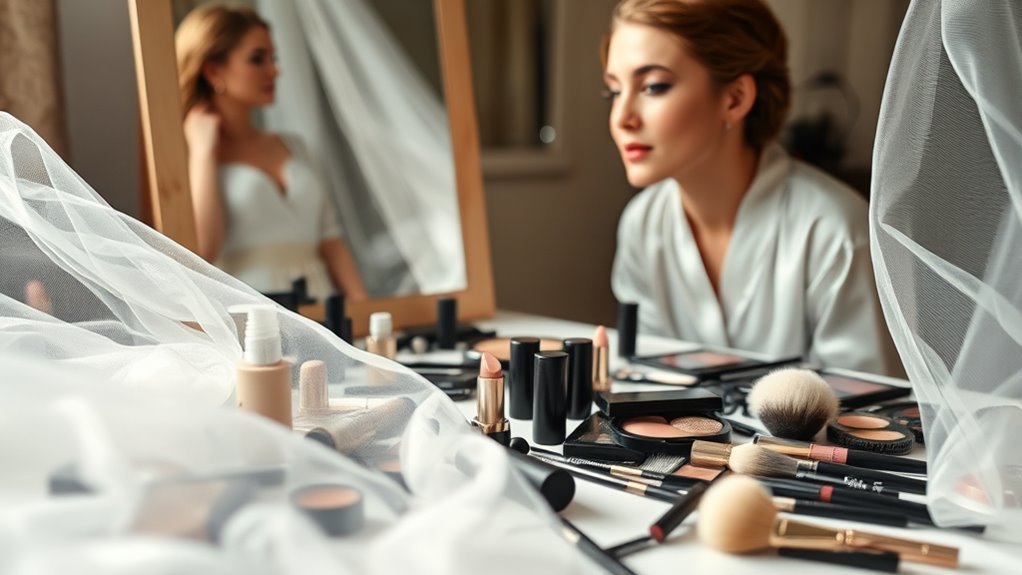
Wedding makeup should do more than look pretty. It needs to last through heat, tears, photos, and a long celebration while matching the bride’s skin type and wedding setting. Hydrated skin, the right primer, and a foundation that avoids flashback all matter. Waterproof mascara, long-wear formulas, and a small touch-up kit help maintain the look. A trial, ideally with a pro or careful DIY test, makes the final choice easier and smarter, and there is more to take into account.
Key Takeaways
- Choose long-lasting, waterproof makeup that suits your skin type and wedding weather.
- Match foundation to your undertone and test shades in natural light to avoid flashback.
- Use hydrating or mattifying primers based on whether your skin is dry or oily.
- Schedule a trial 2 to 3 months before the wedding to refine products and the final look.
- Keep a touch-up kit with lipstick, blotting papers, setting spray, and a compact mirror.
Know What Wedding Makeup Needs to Do
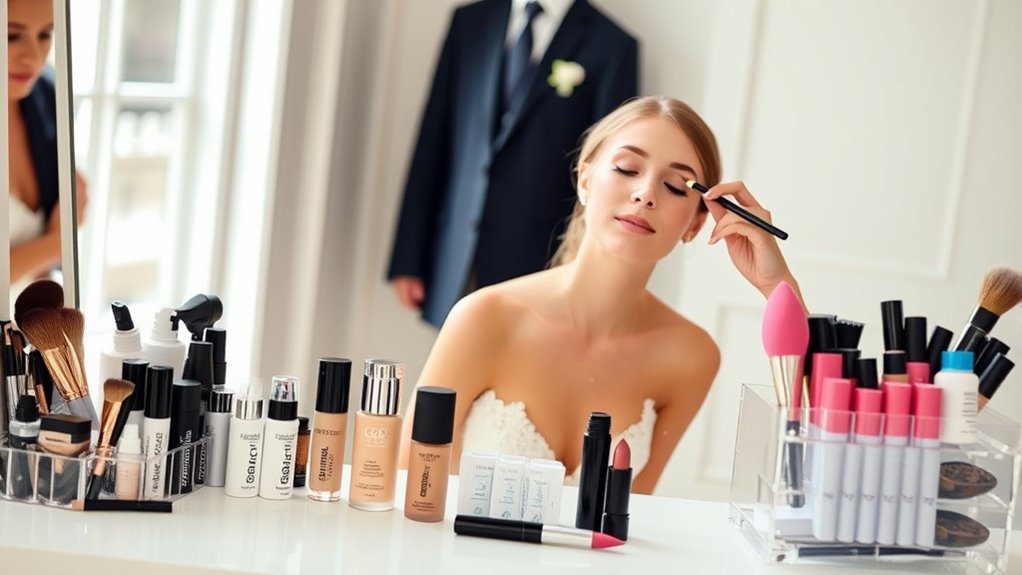
Wedding makeup must do more than simply look polished at the ceremony; it should hold up from the early morning preparations through the final reception, staying long-lasting, waterproof, and sweat-resistant even in heat or humidity.
A well-planned look supports freedom: fewer touch-ups, less worry, and more space to enjoy the day. The best wedding makeup also works with the dress, venue lighting, and wedding theme, so photographs feel cohesive and current.
Preparation matters, too. Hydrated, smoothed skin gives makeup a cleaner finish and better wear, making the canvas as important as the color story.
Hydrated, smoothed skin creates the cleanest finish and the longest-lasting wedding makeup.
Trial sessions help a professional makeup artist refine technique, test products, and align the final result with the bride’s preferences. That process turns wedding makeup into a deliberate style choice, not a last-minute fix, and guarantees the face reads beautifully from vows to dance floor.
Match Wedding Makeup to Your Skin Type
Matching wedding makeup to skin type starts with knowing whether the complexion is oily, dry, combination, or sensitive.
The right formula can then be chosen—matte for shine control, hydrating for dryness, or hypoallergenic for easily irritated skin.
Testing wear time under real conditions helps guarantee the look stays smooth, flattering, and photo-ready throughout the celebration.
Know Your Skin Type
Skin type is the quiet starting point of wedding makeup that lasts, photographs well, and feels comfortable from ceremony to reception.
For bridal makeup, identifying whether skin is oily, dry, combination, or sensitive helps narrow choices that support natural radiance without compromise. Oily skin often benefits from matte coverage and powder to temper shine.
Dry skin tends to look fresher with hydrating, cream-forward makeup that preserves softness.
Combination skin needs strategic balance: oil control in the T-zone, moisture on the cheeks.
Sensitive skin calls for hypoallergenic, fragrance-free options that respect boundaries. A patch test weeks before the wedding adds protection, revealing possible reactions early.
With that clarity, the makeup selection process feels less restrictive and more self-directed.
Choose Right Formula
The right formula acts as the bridge between skincare and lasting bridal polish, helping makeup stay comfortable and camera-ready from vows to after-party.
To choose the right formula, match foundation to skin type: matte for oily complexions, hydrating for dry skin, and lightweight blends for combination skin. This keeps coverage modern, breathable, and resilient without feeling heavy.
A primer can refine the finish, too; mattifying versions calm shine, while illuminating ones bring a fresh, liberated glow.
Waterproof mascara and eyeliner remain smart choices for humid weather or emotional ceremonies, resisting smudges with ease.
For accuracy, review shades in natural light, then patch test new products a week ahead to avoid irritation and confirm compatibility.
Test Wear Time
Wedding makeup should be tested for wear time well before the big day, with formulas chosen to suit oily, dry, or combination skin for the most reliable finish.
To test wear time, the look should be worn for several hours in similar heat and humidity, revealing how it moves from ceremony to reception. Long-wear and waterproof products help resist fading, smudging, and transfer, while a primer matched to skin type can improve grip and longevity.
A patch test also protects against surprise irritation or breakouts.
- Oily skin: seek matte, long-wear finishes.
- Dry skin: choose hydrating formulas with smooth adhesion.
- Combination skin: balance control and comfort with targeted primer.
This practical trial lets beauty choices stay free, polished, and true under pressure.
Build Your Wedding Skincare Routine
Planning a wedding-ready complexion works best when the skincare routine begins at least six months ahead, allowing enough time to target concerns like dryness, acne, and uneven tone with intention.
A steady skin-care routine built early gives the skin space to adapt, while monthly facials can support clarity and luminosity without drama.
Three to six months before the wedding, retinoids may be introduced to refine texture and tone, ideally with a dermatologist’s guidance for a personalized approach.
Around three months out, AHAs and BHAs can address hyperpigmentation and dullness, though irritation should be watched closely.
In the final weeks, the focus should shift to hydration, barrier support, and soothing formulas that keep the complexion calm.
That restraint helps create a smooth, resilient canvas for the makeup trial and the actual ceremony, offering a polished finish that feels free, modern, and fully intentional on the day itself.
Choose the Right Primer for Wedding Makeup
With the skin-care routine set to support a calm, balanced complexion, the next step is choosing a primer that can refine that work into a flawless makeup base. A well-chosen primer helps makeup glide on smoothly, last longer, and resist settling into fine lines or pores, giving the skin a polished finish without feeling restrictive.
- Oily skin often benefits from a mattifying primer.
- Dry skin usually looks better with hydrating formulas.
- Silicone can create a silky finish, while glycerin adds moisture.
A trial run is essential: testing the primer with foundation and other products during the makeup rehearsal helps reveal how the formulas interact and prevents surprises on the wedding day.
For outdoor ceremonies, a primer with SPF adds another layer of protection, supporting the skin while keeping the look fresh.
The right primer should feel like freedom in a bottle, working quietly so the face can glow with confidence, comfort, and ease.
Pick Foundation That Won’t Flash Back
Selecting the right foundation shade is essential, since formulas that are too light or overly reflective can create a flashback effect in wedding photos.
A matte, photo-ready finish tested under both natural light and camera flash helps guarantee the complexion stays true and polished.
A trial run before the big day can confirm that the makeup reads evenly on skin and in high-definition lighting.
Choose the Right Shade
The right foundation shade can make wedding makeup look seamless in person and in photos, especially when flash photography is involved. For a makeup done look that feels effortless, the foundation shade should match the skin’s undertone, not just its surface tone. A flashback-free label is a smart filter, but the finish matters too.
- Test the shade in natural light for the truest match.
- Choose matte formulas to reduce shine and help prevent flashback.
- Patch test days before the event for comfort and confidence.
Long-wear formulas support a full day of celebration without constant touch-ups, allowing the bride to move freely and stay present.
When the shade is right, the result feels polished, modern, and fully unforced.
Test for Camera Flash
A flawless foundation match should also hold up under a camera flash, since certain formulas can leave a pale cast that is invisible in daylight but obvious in photos.
For bridal makeup, a matte finish is usually the safest choice, because dewy or highly reflective products can trigger flashback. Foundations labeled flashback-free are worth prioritizing, especially those with silica, which helps absorb excess light and control shine.
Heavy SPF in makeup can also reflect flash, so lighter formulas often photograph better. Before the wedding day, test the foundation with a camera flash in similar lighting and on skin.
A translucent setting powder can then lock everything in and support a smooth, liberated look that stays seamless from aisle to album.
Test Long-Wear Wedding Makeup Before the Big Day
Testing long-wear wedding makeup at least a month before the big day gives enough time to judge how well it holds up under real-life conditions and whether it suits the skin type.
For a wedding day, the Best Makeup should feel effortless, not restrictive, and a trial run reveals whether the formula stays comfortable for hours. Waterproof foundations and smudge-proof eyeliners are smart choices, but performance matters more than labels.
- Wear the full look for several hours.
- Check how it reads in daylight and indoor lighting.
- Finish with a long-lasting setting spray.
This testing phase can expose fading, creasing, or irritation before the event, allowing adjustments without pressure.
It also shows whether the finish photographs cleanly and supports a fresh, liberated appearance from ceremony to last dance.
Choose Products for Heat, Humidity, or Cold
Weather and season should shape the product lineup as much as the overall makeup look, especially when the ceremony may bring heat, humidity, or cold. For a wedding, smart buying protects artistry and ease. In humid air, long-wearing, waterproof foundations and setting spray help lock in polish. In cold weather, hydrating primers and cream formulas keep skin supple and prevent a flat finish. Warm climates call for lightweight, buildable powders, never heavy layers that cake when sweat rises. Testing products in similar conditions before the day reveals whether they truly endure.
| Condition | Product Focus |
|---|---|
| Humid | Waterproof base |
| Hot | Light powder |
| Cold | Hydrating primer |
| Dry | Cream textures |
| Test | Realistic wear |
Blotting papers can support shine control without disturbing the look, preserving freedom and freshness throughout the celebration.
Pack a Wedding Day Touch-Up Kit
A well-packed wedding day touch-up kit keeps beauty polished from the ceremony to the last dance.
Lipstick, blotting papers, a mini setting spray, and a compact mirror are practical must-haves for quick refreshes and confident on-the-go checks.
For extra assurance, some brides also arrange for a makeup artist to provide timely on-site touch-ups.
Touch-Up Essentials
Keeping a wedding day touch-up kit close at hand helps preserve a polished look from the ceremony through the last dance. Thoughtful touch-up essentials support confidence and ease, allowing makeup to stay fresh without interrupting the celebration throughout the day.
A slim kit can be both practical and elegant, aligning with modern preferences for effortless beauty and freedom of movement.
- Lipstick for a quick color refresh
- Blotting papers to manage shine
- Mini setting spray for lasting wear
A compact mirror keeps adjustments precise and photo-ready. For those seeking extra assurance, an on-site makeup artist can refine details discreetly and professionally.
The result is a look that remains vibrant, adaptable, and ready for every candid moment.
Wedding Day Must-Haves
Building on a polished touch-up routine, a wedding day kit works best when it is compact, practical, and easy to reach.
For the wedding date, it should hold lipstick for fast color refreshes, blotting papers to manage shine, and a mini setting spray to preserve makeup through ceremony photos and dancing. A small mirror makes discreet checks simple between the vows and reception.
Bobby pins and hair ties help address unexpected hair shifts without disrupting the look. A travel-sized perfume adds freshness and confidence while mingling with guests.
If extra coverage may be needed, a lightweight concealer can quietly handle blemishes or under-eye areas.
On the big day, these essentials support freedom, ease, and a polished finish.
Decide Between a Makeup Artist and DIY
One of the first decisions in wedding beauty planning is whether to hire a professional makeup artist or handle the look independently. A professional usually charges $100 to $300, but that fee can buy calm, expertise, and a finish that reads effortlessly on camera.
DIY may feel more liberating and budget-friendly, yet it demands solid technique, quality products, and enough time to work without rushing. The right choice often depends on how much control, convenience, and polish matter.
- A makeup artist can tailor products to skin type and preferred style, including the skin underneath.
- DIY offers freedom, but inexperienced hands may need more time to match a refined result.
- Professionals often complete the look in 1.5 to 2 hours, easing schedule pressure and pre-wedding stress.
For some, paying for expertise is a practical luxury; for others, creating the look personally feels more authentic and empowering.
Plan a Wedding Makeup Trial
A wedding makeup trial helps turn a general beauty idea into a finish that feels polished, personal, and camera-ready. It is best scheduled two to three months before the wedding so the artist remains available and there is room for refinements.
Bringing reference photos gives the makeup artist a clear read on preferred tones, textures, and finishes. Wearing a white or ivory top during the makeup trial helps show how the look will sit beside the dress and on camera.
It also makes sense to test several products and finishes to find what suits the skin type and lasts through ceremonies, portraits, and long celebrations. The trial is not only technical; it also builds trust and a comfortable rhythm with the artist.
With regular facials and clear communication about likes and dislikes, the final look can feel effortless, modern, and fully aligned with personal freedom.
Frequently Asked Questions
What Is the 30-5 Rule for Weddings?
The 30-5 rule allocates 30% of a wedding makeup budget to a makeup artist and 5% to personal products, supporting bridal beauty, smooth wedding timelines, and a liberated, polished look that lasts all day.
What Is the 2/3 Rule for Makeup?
The 2/3 rule for makeup places two-thirds of emphasis on the eyes, symbolizing a spotlight, while one-third balances lips and face. It guides foundation finishes and color matching, creating a polished, liberated, camera-ready bridal look.
What Is the Best Concealer for Bridal Makeup?
The best bridal makeup concealer is long-wearing, lightweight, and buildable, with hydrating ingredients and a finish suited to skin tones. Among concealer types, matte suits oily skin, radiant suits dry skin, ensuring flattering, liberated photos.
What Are Some Mistakes to Avoid in Wedding Makeup?
Mistakes to avoid include skipping trials, ignoring skin prep, overloading powder, and chasing fleeting trends. Like a compass in fog, thoughtful color choices, tested products, and weather-aware formulas keep bridal makeup radiant, free, and enduring.
Conclusion
Wedding makeup succeeds when it is chosen like a well-fitted gown: beautiful, but tailored to the day’s demands. A 2024 bridal beauty survey found that nearly 70% of brides regretted skipping a trial or testing products in event lighting. The smartest approach is simple—match products to skin, weather, and photography, then refine everything in advance. When the aisle moment arrives, the face should look effortless, luminous, and ready to last from vows to final dance.
