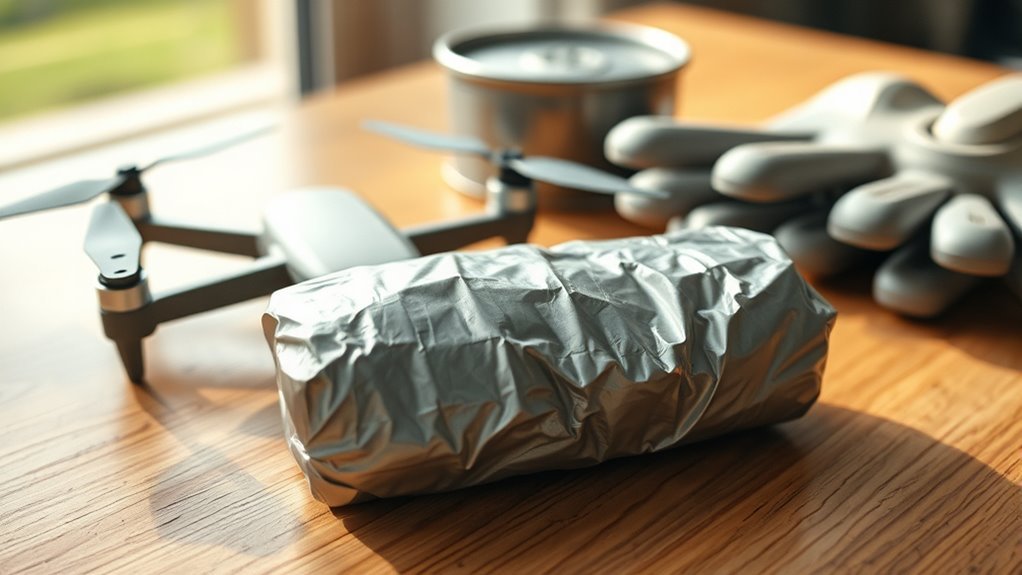
A swollen drone battery is a clear warning sign, not a cosmetic defect. It usually points to internal cell damage, instability, and a higher risk of fire during use or charging. Signs can include puffing, casing distortion, heat, or a chemical odor. The battery should be taken out of service at once and handled as hazardous waste. What happens next depends on storage, transport limits, and disposal rules.
Is a Swollen Drone Battery Safe to Fly?
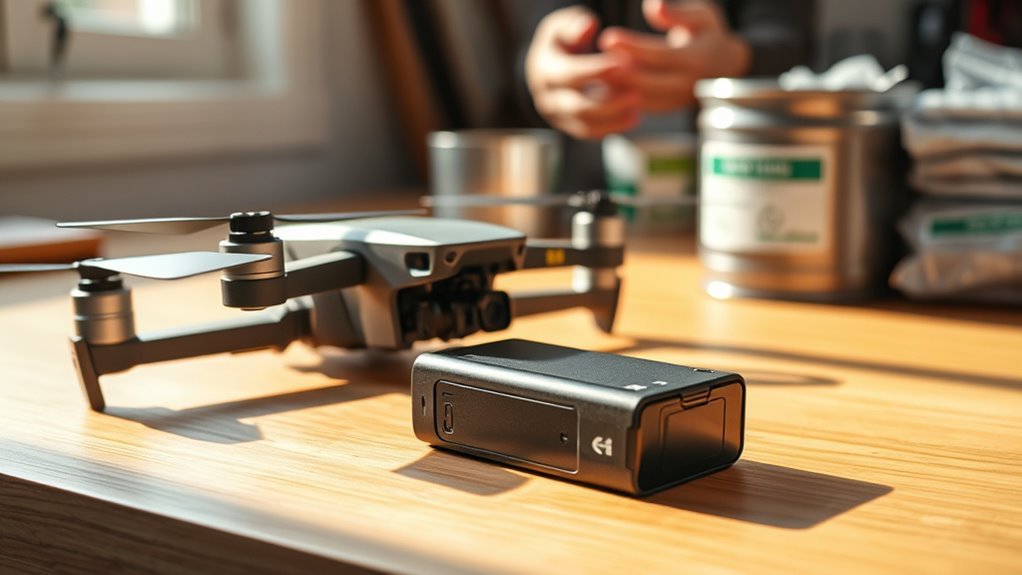
No, a swollen drone battery is not safe to fly. A swollen battery indicates internal damage, and continued use can escalate into fire, rupture, or explosion during operation.
No, a swollen drone battery is not safe to fly; internal damage can lead to fire, rupture, or explosion.
Visible deformation, opened seams, or any loss of normal casing shape require immediate cessation of flight and charging. Heat buildup and unusual odors are additional warning signs that the cell is compromised and may fail unpredictably.
The battery should be removed from the drone, isolated from other equipment, and handled as a hazardous item. Proper safety measures include documenting its condition and contacting DJI or local authorities for disposal guidance.
This approach preserves operational freedom by preventing unnecessary risk to the pilot, bystanders, and property. A cautious response is not excessive; it is the minimum technical standard when dealing with a swollen battery.
If doubt exists, the battery should remain grounded until qualified disposal instructions are obtained.
What Causes a Drone Battery to Swell?
A swollen drone battery is typically the result of internal degradation rather than a cosmetic defect. In a Lithium-based battery, swelling usually indicates gas generation inside sealed cells. This can arise from overcharging, which drives unwanted chemical reactions, or from manufacturing defects that leave the battery chemically unstable.
Excessive heat during flight or charging can also weaken internal separators and accelerate breakdown. Deep discharge below safe voltage is another cause; once a Lithium-based battery is driven too low, its materials may deteriorate irreversibly and produce gas. Age matters as well: each charge cycle slowly erodes performance, and older cells are more prone to expansion.
Physical trauma, such as a crash or hard drop, can damage the casing, admit moisture, and trigger further reactions that lead to swelling and leakage. These mechanisms reflect a battery losing structural integrity, and they warrant cautious handling and removal from service.
How to Spot a Swollen Drone Battery
Visible deformation is the most immediate sign of a swollen drone battery, with bulging or puffing indicating internal damage and elevated safety risk. A careful inspection can also reveal opened seams, seepage, or an unusual odor, each of which counts among the clearest signs of damage.
Heat that seems abnormal to the touch, especially when compared with neighboring cells or prior use, should be treated as a serious warning. If the battery no longer sits flush in its compartment, or if impact marks are present, it should be regarded as compromised rather than merely worn.
Inspection should occur before and after flights, because swelling can intensify rapidly and become a fire hazard. Any visible change in shape, temperature, or condition should be documented to support later disposal and safety decisions.
For those seeking autonomous, responsible flight, recognizing a swollen drone battery early preserves equipment, airspace, and personal safety.
Stop Using and Charging the Battery
Visible swelling, opened seams, leakage, unusual heat, or odor indicate critical battery damage and require immediate cessation of both use and charging.
The battery should be isolated from aircraft and other equipment at once, with no attempt to force it into a device.
Before handling ends, its condition should be documented with photographs and notes, then proper disposal guidance should be obtained from DJI or local authorities.
Visible Swelling Signs
Any visible swelling, deformation, or seam separation in a drone battery indicates a critical safety fault and warrants immediate removal from use and charging.
A swollen battery may also show opened seams, leakage, heat, or unusual odor, each signaling internal damage. Such conditions are not cosmetic; they reflect instability that can escalate rapidly.
If the battery no longer fits its compartment, it should never be forced into place, because pressure may worsen the failure. Physical damage, including a handle damaged by impact or crushing, likewise supports immediate removal from service.
The safest approach is disciplined observation: note the shape, seam condition, and any residue without further handling.
Photographs and written notes preserve evidence for reporting, disposal, and a clear path toward liberated, hazard-free operation.
Immediate Stop-Use Steps
A swollen or deformed drone battery requires immediate cessation of use and charging to reduce the risk of fire, rupture, or explosion.
Any swollen battery should be treated as unstable: stop using it, disconnect it from the drone, and keep it away from chargers, aircraft, and flammable materials.
If seams are opened, leakage is present, or unusual heat is detected, the battery must not be handled more than necessary.
The condition should be documented with photographs and brief notes, without pressing, puncturing, or reshaping the pack.
Isolation protects nearby equipment and personnel while preserving evidence for assessment.
DJI or the relevant local authority should then be contacted for disposal guidance, because improper handling can create environmental harm and eliminate the freedom to operate safely.
Where to Store a Swollen Drone Battery
Where should a swollen drone battery be kept? It should be isolated immediately from LiPo batteries, tools, and chargers, then placed in a cool, dry location away from flammable materials.
A non-metal, fireproof container, such as a LiPo bag, is preferred because it can help contain ignition if thermal runaway begins. The storage area should remain well ventilated so any gases cannot accumulate in confined air.
Room temperature, ideally 20–25°C, is the safest target; extreme heat or cold can worsen internal damage and raise risk. The battery should not be stacked with other cells or equipment, since contact can transmit heat or cause accidental activation.
For people who want to store your batteries with autonomy and control, disciplined separation is essential. This approach reduces exposure, limits secondary damage, and preserves a safer workspace while the battery awaits proper disposal.
How to Document the Battery Condition
Clear photographs of the swollen battery should be taken from multiple angles to capture deformities, opened seams, and other visible damage.
The documentation should also record the battery’s location and any observable signs such as unusual heat or odor, without attempting to reproduce or test those conditions.
Each entry should include timestamps and concise notes to preserve a factual record for disposal or support inquiries.
Photograph From Multiple Angles
To document a swollen drone battery accurately, clear photographs should be taken from multiple angles to capture the overall condition, visible damage, seam separation, and latch deformation.
Adequate lighting is essential, because it reveals swelling and subtle deformities that may guide battery recycling decisions later. A ruler or measuring tape should be placed in frame to establish scale, allowing the swollen battery’s expansion to be assessed without guesswork.
The battery’s location at the time of concern should also be recorded, since surroundings can provide context for handling risks. The battery should remain untouched while images are made; photographing it as-is preserves evidence and reduces the chance of worsening instability.
This disciplined record supports safe transfer, disposal, and informed autonomy.
Record Visible Damage Details
Visible damage should be recorded in factual detail, including any opened seams, leakage, swelling, latch distortion, or other deformities observed on the drone battery.
A swollen battery should be photographed from multiple angles, but only without handling it, so the condition remains unchanged. The observer should document details such as the exact location of the battery during the observation period, the visible extent of bulging, and any surface irregularities.
Each entry should remain descriptive, not interpretive, and should avoid conclusions about internal failure. Precise records support later assessment, responsible disposal, and informed safety decisions.
If leakage is present, its position and appearance should be noted with care. Such documentation preserves evidence, protects autonomy in decision-making, and creates a clear record for future guidance without speculation or unnecessary intervention.
Note Odor And Heat
Any unusual heat or odor should be documented immediately, since both can indicate internal failure and an elevated fire or explosion risk.
The observer should note whether the battery feels warm, hot, or intermittently heat-producing, and record any odor as chemical, sweet, sharp, or burned.
These observations should be written down without touching the battery further.
Photographs should then be taken from multiple angles, showing seams, latches, and visible deformities, while keeping handling to a minimum.
The battery’s location, time of observation, and any performance changes before removal should also be logged.
The record should remain factual, avoiding speculation about hidden damage.
Precise notes on odor and heat support safe disposal guidance and help DJI or disposal authorities assess the battery’s condition responsibly.
Can You Ship or Travel With It?
Swollen drone batteries should not be shipped or transported until their condition has been fully assessed and a safe disposal route is confirmed, because they present a significant fire hazard. A swollen drone battery is unstable and should be handled as hazardous material, not ordinary cargo.
FAA guidance requires lithium batteries to travel in carry-on luggage, yet a swollen cell should not be placed in either carry-on or checked baggage. If travel is unavoidable, the airline should be contacted in advance for carrier-specific rules, documentation, and emergency procedures.
During any movement, the battery should be isolated in a fireproof bag to reduce risk from pressure changes, puncture, or thermal runaway. Shipping should not be attempted without reviewing local hazardous materials regulations, since improper transport can trigger legal penalties and safety incidents.
The safest course is restraint, not improvisation, so personal freedom is preserved without exposing passengers, crew, or property to preventable harm.
How to Dispose of a Swollen Drone Battery
Immediate action is required once a drone battery shows signs of swelling: use should stop at once, charging should cease, and the cell should be isolated from other equipment in a cool, dry location away from flammable materials.
Stop using and charging a swollen drone battery immediately; isolate it in a cool, dry place away from flammables.
A swollen drone battery should not be opened, punctured, or compressed. If conditions allow, its exterior condition may be photographed and any leakage, odor, or deformation documented without direct handling, preserving a clear record for disposal.
The battery should remain discharged and segregated until it can be taken to an approved recycling point. To dispose properly, deliver it to a designated battery-recycling facility, local dump with a battery bin, or a retailer that accepts hazardous batteries, such as Best Buy.
Regular trash is not an acceptable route, because uncontrolled disposal creates fire and environmental hazards. Correct routing to a certified collection channel supports safety, reduces risk, and preserves responsible freedom from preventable damage.
When to Replace the Battery
A battery should be replaced as soon as it shows visible swelling, opened seams, or leakage, since these conditions indicate structural damage and an elevated risk of fire or explosion.
A swollen battery should not be flown or charged; the battery inside may fail unpredictably under load or during charging.
To preserve operational safety and autonomy, the owner should document the battery’s condition, serial data, and service history before attempting to replace the battery. This record helps confirm compatibility with the aircraft model and avoids mismatched components.
A new pack should be inspected carefully before first charge, because prior damage does not disappear when the old unit is removed.
Warranty terms and authorized support routes should also be verified before purchase, as these channels can provide safer replacement guidance and reduce avoidable cost.
If any uncertainty remains, the battery should be treated as compromised and removed from service immediately.
Frequently Asked Questions
How to Throw Away a Swollen Lithium Battery?
A swollen lithium battery should be taken to a designated battery recycling facility, never to regular trash.
For safe disposal, it should be isolated in a nonflammable container, handled with gloves, and kept away from heat or puncture.
If possible, it should be fully discharged using a controlled load before transport.
Local e-waste centers, Best Buy stores, or municipal hazardous-waste sites often provide battery recycling and safe disposal options.
How to Get Drone Battery Out of Hibernation Mode?
Like a dormant engine stirring at dawn, the battery can often be revived by charging it to at least 30% capacity, then leaving it connected to the drone or charger for several minutes.
For hibernation mode troubleshooting, a compatible DJI charger may help if it stays unresponsive.
Careful battery maintenance tips include regular charge-discharge cycling and consulting the model manual for precise, safe procedures that restore operational freedom.
What Are the Odds of a Lithium Battery Exploding?
The odds of a lithium battery exploding are generally low, but they rise sharply when battery safety is ignored. Overcharging, puncture, overheating, and swelling can trigger thermal runaway, especially during charging.
High-capacity LiPo cells face elevated risk. Explosion prevention depends on careful storage, controlled charging, and immediate removal of damaged packs from service.
In most cases, disciplined handling keeps danger rare, though failure modes can be severe and fast.
Does Home Depot Recycle Swollen Batteries?
Home Depot generally does not recycle swollen batteries through standard battery recycling programs.
Such batteries require safe disposal through hazardous-waste or e-waste channels, because swelling indicates internal failure and fire risk. A local store may provide limited hazardous-dropoff guidance, but policies vary by location.
The appropriate course is to contact the store, then seek a certified lithium-battery recycler or municipal collection site for safe disposal and compliant battery recycling.
Conclusion
A swollen drone battery is a warning light in a sealed shell: damage is already speaking through the casing. It is not safe to fly, charge, puncture, or ignore. The correct response is restraint—remove it from service, isolate it in a fire-resistant area, document its condition, and dispose of it through approved recycling or hazardous-waste channels. Replacing it promptly preserves both equipment reliability and safety, keeping the drone grounded until a healthy battery returns.
