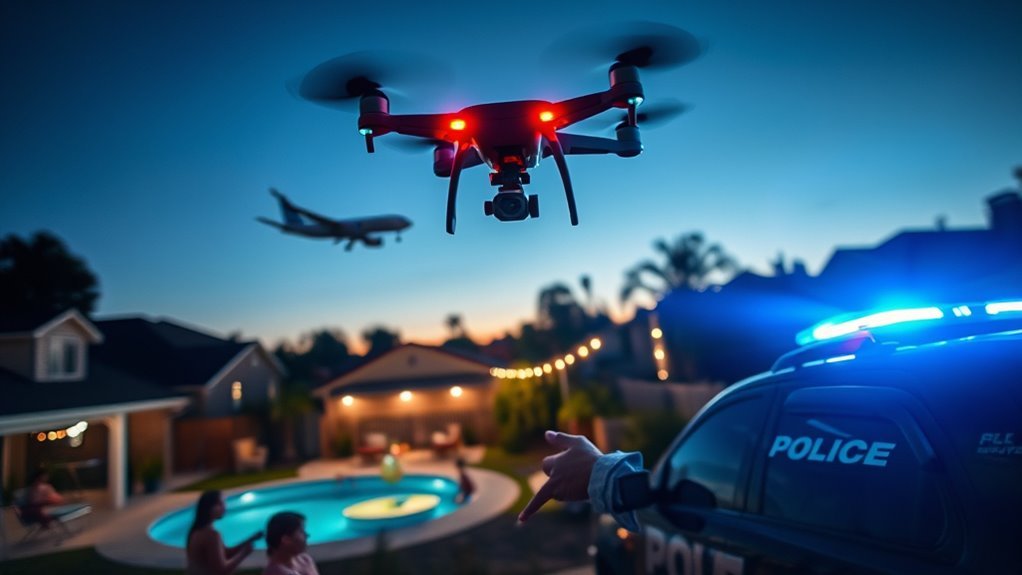
The FAA treats drone violations as more than minor missteps. Penalties can begin with modest civil fines and escalate to amounts reaching tens of thousands of dollars, depending on the conduct, the operator’s certification status, and whether safety was compromised. Unauthorized flights, altitude breaches, and restricted-area operations often trigger enforcement review. The real issue is not only what the FAA charges, but how quickly a routine error becomes a costly case.
FAA Drone Fines: What They Cover
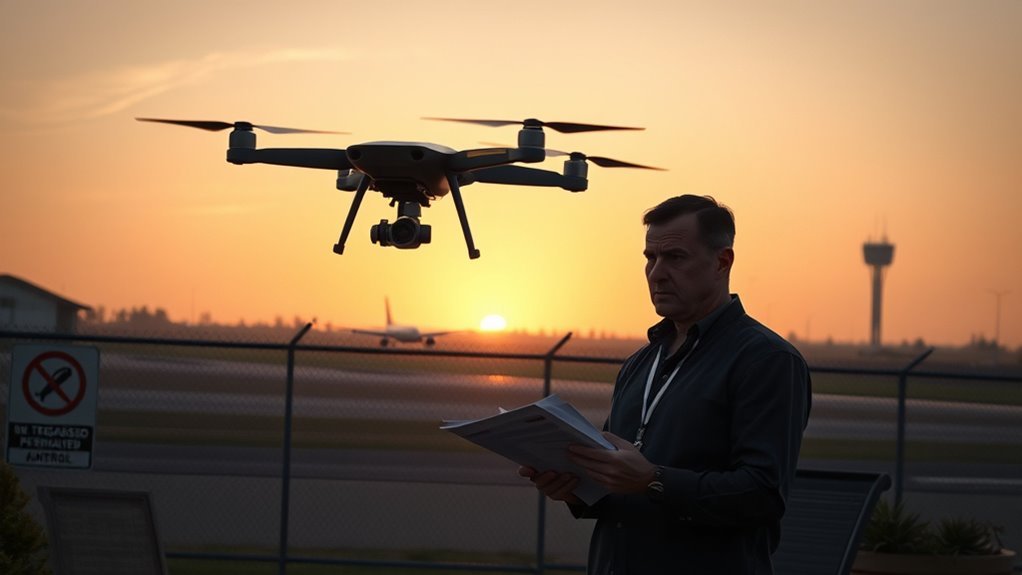
FAA drone fines cover a wide range of regulatory violations, from operating without proper certification to flying in restricted airspace or failing to register a drone.
FAA fines are structured as civil penalties that target drone operators who engage in unsafe operations, with amounts tied to severity, intent, and risk to public safety. Under current authority, serious violations may reach $75,000, while unapproved operation can draw up to $27,500 and restricted airspace incurs penalties up to $32,700.
FAA fines scale with severity, intent, and public safety risk, with serious violations reaching $75,000.
Failure to register may trigger civil penalties of up to $27,500 and, in extreme cases, criminal exposure. Enforcement actions have produced notable sanctions, including $36,770 for proximity to wildfire response aircraft and $20,370 for flight over people at a music festival.
The framework is designed to deter harm while preserving lawful aerial autonomy through compliance with defined safety rules.
FAA Drone Rules: Part 107 Vs Recreational Use
Understanding FAA drone fines also requires knowing which rule set applies, because the enforcement standard differs sharply between commercial and recreational flying.
Under FAA regulations, Part 107 governs commercial missions and requires a valid Remote Pilot Certificate, plus operational discipline such as visual line of sight.
By contrast, recreational drone use under §44809 does not require certification, but it remains bounded by safety rules and may not be used for commercial gain.
Both frameworks still demand registration for drones over 0.55 pounds and compliance with Temporary Flight Restrictions in controlled airspace.
The FAA treats unauthorized operations under either category as serious regulatory breaches.
Part 107 violations can trigger civil penalties up to $75,000 per incident, while recreational violations may draw fines up to $27,500 when the infraction is severe.
The governing principle is simple: freedom in the air depends on informed adherence to the applicable rule set and disciplined compliance.
Common FAA Drone Fines and Ranges
Civil penalties for drone violations can range widely, with the FAA authorized under the FAA Reauthorization Act of 2024 to impose fines up to $75,000 for serious infractions. For operators seeking liberated use, compliance remains the practical boundary. Common drone fines include certification and registration violations, each reaching about $27,500. FAA penalties also increase when unsafe operations affect protected zones or emergency response.
| Violation | Typical Fine | Notes |
|---|---|---|
| No certification | $27,500 | Applies to unauthorized commercial flight |
| Airspace restrictions | $32,700 | Restricted areas draw elevated penalties |
| Major-event operations | $36,770 | Higher-risk congestion triggers enforcement |
Interfering with firefighting or other emergency work may bring the maximum $75,000 penalty and possible imprisonment. Documented FAA enforcement actions from 2023 to 2025 span roughly $1,771 to $36,770, showing that penalties scale with operational risk, registration status, and airspace restrictions.
What Triggers an FAA Investigation?
Investigations are commonly initiated when drone activity implicates 18 U.S. Code §32 or §39B, especially where unsafe flight conduct or interference with aircraft is alleged.
FAA investigations also arise from unauthorized operations over wildfires, where the agency treats risk to public safety as acute and may impose fines up to $75,000.
Reports that a drone has disrupted firefighting, medical evacuation, or other emergency response functions are reviewed quickly, because such conduct can compromise protected operations.
Flights in restricted airspace or national defense airspace likewise draw scrutiny, since airspace restrictions exist to preserve safety and operational integrity.
Repeated violations after FAA warnings signal poor compliance and often prompt escalation from administrative review to more serious enforcement.
For operators seeking freedom in the air, the practical rule is simple: respect limits, verify airspace, and avoid conduct that could trigger FAA investigations.
When Drone Violations Turn Criminal
When drone conduct crosses from careless noncompliance into deliberate or repeated violation, federal enforcement can shift from administrative penalties to criminal exposure. Under 18 U.S. Code §39B, unsafe drone operations may trigger criminal penalties when the conduct creates a real threat to aircraft, people, or critical infrastructure. This includes unauthorized operations in restricted airspace, especially near emergencies, airports, or protected sites.
Unlike routine FAA fines, criminal cases can bring fines up to $250,000 and imprisonment for up to three years. Repeated violations after warning letters also strengthen the basis for prosecution, because they show knowing disregard for airspace restrictions and public safety rules.
Intentional interference with aircraft operations is treated with particular severity, especially when emergency response is affected. The FAA’s enforcement posture is thus not merely punitive; it is designed to secure accountability.
For operators, the boundary is clear: once conduct becomes unsafe and intentional, administrative consequences may give way to federal criminal liability.
State Drone Laws That Add Penalties
State drone laws add separate penalty triggers when flights interfere with firefighting, law enforcement, or other protected operations.
Critical infrastructure restrictions, such as those in Texas, and emergency-response prohibitions, such as those in California and Florida, can produce substantial state-level fines beyond federal enforcement.
New York also illustrates how civil penalties may apply to unauthorized flights over parks and public gatherings, requiring compliance with both state and FAA rules.
State Penalty Triggers
State drone laws can trigger penalties that operate alongside FAA enforcement, often adding substantial civil fines or liability exposure when local safety rules are violated.
For drone operators, FAA fines are not the only risk; unauthorized operations under local regulations may activate separate state penalties.
California, for example, can impose fines up to $20,000 for interfering with firefighting activity, while Florida adds sanctions for disruption of law enforcement operations.
Texas law also reaches flights over restricted areas under Chapter 423, with civil penalties that may increase depending on the conduct.
These airspace restrictions matter because state enforcement can stack with federal action.
When a drone causes injury, civil liability may also include medical expenses and lost wages, expanding the financial consequences of noncompliance.
Critical Infrastructure Rules
Critical infrastructure restrictions create another layer of exposure for drone operators beyond general state safety rules.
In Texas, drone operations near critical infrastructure can trigger fines and additional penalties under Chapter 423, especially when unauthorized operations create security risks. These state rules operate alongside FAA requirements, but they may impose separate sanctions for conduct that federal law does not fully address.
California demonstrates the broader enforcement trend: state penalties can escalate sharply when drone use intersects with protected public-safety zones.
The practical effect is clear. Operators seeking lawful flight must treat critical infrastructure as a restricted category, verify location boundaries, and assume that violations may produce civil or criminal consequences.
State laws thus narrow operational freedom and increase the cost of noncompliance.
Firefighting Interference Laws
Firefighting interference laws add a distinct layer of drone liability when flights disrupt emergency suppression activities. For operators, compliance is not optional; unauthorized drone operations near incidents can trigger layered sanctions.
- California: fines up to $20,000 for interference.
- Texas: Chapter 423 covers critical infrastructure, including firefighting zones.
- FAA: up to $75,000 for wildfire suppression interference.
- Federal law: criminal penalties, including imprisonment up to three years.
- State and federal rules: coordinated deterrence against unsafe conduct.
These penalties reflect a technical reality: aerial access must remain clear for responders.
Any drone operations that impede wildfire suppression risk civil fines, criminal exposure, and loss of flight privileges. For those seeking operational liberty, the governing rule is disciplined restraint.
How the FAA Handles Enforcement
The FAA uses a four-level enforcement framework that generally begins with education and warning letters for minor drone violations and can escalate to civil penalty proposals, certificate suspension or revocation, and formal legal action for serious or repeated infractions.
In practice, FAA enforcement reviews complaints, incident reports, and evidence tied to drone operations that may threaten public safety or airspace order. Reports of unsafe flight can be submitted anonymously, allowing the public to document violations without exposing identity.
When facts support action, the FAA may issue fines or pursue penalties through administrative process, especially where conduct is reckless, repeat, or disruptive to emergency response. The agency also can restrict operating privileges by suspending or revoking certificates.
This structure is designed to deter harmful conduct while preserving lawful use of the airspace, ensuring accountability without arbitrary restraint. The result is a disciplined system that targets conduct, not responsible flight, and protects collective freedom through enforceable limits.
How the FAA Sets Drone Fine Amounts
The FAA sets drone fines by evaluating violation severity, including the nature of the conduct and the applicable statutory cap.
It weighs the level of risk and actual or potential harm, with higher penalties reserved for actions such as unauthorized flights in restricted airspace or interference with emergency operations.
Mitigating circumstances, including intent, compliance history, and other case-specific factors, may reduce or escalate the final amount.
Violation Severity Factors
FAA penalty assessments hinge on violation severity, intent, and the degree of safety risk created by the conduct.
In drone operations, FAA fines vary sharply with unauthorized operations and the operator’s status. Remote pilots face calibrated sanctions when conduct is careless, reckless, or deliberate.
- Certification lapses can draw up to $27,500.
- Restricted airspace incurs fines as high as $32,700.
- Intentional interference may trigger criminal exposure and $250,000 penalties.
- Certified remote pilots may see $1,000 to $13,669 fines.
- Public safety concerns elevate violation severity and tighten enforcement.
This framework preserves lawful autonomy while marking clear boundaries for aerial conduct.
Risk And Harm Level
Risk level drives FAA drone fine amounts, with sanctions calibrated to the severity of the conduct and the harm it could cause.
In drone operations, FAA fines rise sharply when unsafe violations threaten public safety, such as flying in restricted airspace, over crowds, or near firefighting and emergency missions. The agency weighs intent, exposure, and probable consequence, so penalties are not uniform: unregistered aircraft can trigger fines up to $27,500, while serious offenses may reach $75,000.
Certified remote pilots face higher exposure than casual operators because of their responsibility, and criminal sanctions can extend to $250,000 and three years imprisonment.
The framework is designed to enforce compliance while preserving freedom through disciplined, lawful flight.
Mitigating Circumstances Considered
Beyond the severity of the violation itself, fine assessment also turns on mitigating circumstances that can narrow or expand the penalty range. FAA fines reflect intent, context, and public safety risk, especially in unauthorized operations near emergency response or restricted airspace.
- Cooperation with investigators can reduce penalties.
- Educational training may support alternative resolutions.
- Intentional conduct draws higher sanctions than careless error.
- Operator experience and qualifications affect sanction levels.
- High-risk interference, such as wildfire suppression, can trigger fines of $15,000 to $20,923.
Certified remote pilots are often held to stricter expectations than recreational flyers. These factors allow the FAA to calibrate penalties while preserving airspace liberty through disciplined, proportionate enforcement.
How to Reduce FAA Drone Fines
Reducing FAA drone fines begins with strict compliance with federal requirements, including Part 107 authorization for commercial operations and timely drone registration. Violations can trigger substantial civil penalties, including fines up to $75,000 per incident for certain infractions and up to $27,500 for operating an unregistered aircraft.
A valid Remote Pilot Certificate and disciplined compliance records materially strengthen a pilot’s position. Pre-flight planning should verify airspace status, visual line of sight, and Temporary Flight Restrictions before launch.
Regular safety training, including the FAA’s Safe Drone Operations Course, improves regulatory literacy and reduces the likelihood of repeat FAA fines. When a violation has already occurred, cooperation with investigators, documented corrective action, and proof of training completion may support negotiation for lower penalties.
Careful registration, operational discipline, and clear evidence of remedial effort create a stronger case for reduced sanctions while preserving lawful access to aerial operations and broader personal autonomy.
How to Avoid FAA Drone Penalties
Avoiding FAA drone penalties depends on strict adherence to core federal requirements: commercial operators must hold a valid Remote Pilot Certificate, every eligible aircraft must be properly registered, and all flights must remain within visual line of sight unless a specific authorization applies.
Compliance is the practical path to autonomy, because unauthorized operations invite FAA fines and broader enforcement.
Compliance is the practical path to autonomy, because unauthorized operations invite FAA fines and broader enforcement.
- Verify Remote Pilot Certificate status before each commercial Drone mission.
- Complete and maintain registration for every required aircraft.
- Preserve visual line of sight throughout the flight profile.
- Check Temporary Flight Restrictions before launch and reroute if necessary.
- Use FAA guidance to monitor rule changes and reduce civil or criminal exposure.
Failure to follow these controls can trigger civil penalties up to $27,500, criminal exposure up to $250,000, and restricted-airspace sanctions that reach $32,700.
Disciplined preparation protects operational freedom by keeping each flight within lawful bounds and minimizing avoidable enforcement risk.
Frequently Asked Questions
What Are the Fines for Drone Violations Under the FAA?
FAA fines for drone violations can range from $1,771 to $75,000 per incident, with unregistered operations reaching $27,500 and some criminal cases exceeding $250,000 plus imprisonment.
Restricted-airspace breaches may draw $32,700 penalties.
These sanctions reflect drone registration requirements, commercial drone restrictions, recreational flying rules, airspace classification guidelines, drone operator responsibilities, and safety reporting procedures, all designed to preserve lawful autonomy through disciplined compliance.
Can I Shoot Down a Drone Spying on My Property?
No—like swatting a fly with a cannon, that response is illegal and dangerous. A person considering drone defense should note that privacy concerns do not authorize destroying an aircraft in flight.
Federal law treats drones as aircraft, with serious legal implications for property rights and airspace.
Alternative solutions include documenting the incident, contacting local authorities, and reviewing local regulations. Reporting, not retaliation, best protects liberty and preserves lawful control.
Can FAA Know You Flew a DJI Drone?
Yes, the FAA can often determine that a DJI drone was flown, especially when drone registration requirements, Remote ID, and flight logs are involved.
Through FAA surveillance technology and drone flight tracking, investigators may correlate GPS data, serial numbers, and app records.
These pilot accountability measures raise privacy concerns drones users should consider.
Enforcement challenges FAA faces remain real, but identifiable telemetry can still expose unauthorized flights and support action.
What Are the Penalties for FAA Violations?
Penalties can be severe: the FAA may impose civil fines up to $75,000 per violation, with lesser offenses reaching $27,500. Unregistered operation can trigger criminal penalties up to $250,000 and three years’ imprisonment.
Like a locked gate on open sky, the legal consequences overview reflects drone regulation challenges, enforcement agency roles, pilot responsibility guidelines, safety compliance measures, and public perception issues, all demanding disciplined compliance for freedom with accountability.
Conclusion
To sum up, FAA drone enforcement is designed to correct unsafe behavior before it escalates, but penalties can still be substantial, with fines reaching $75,000 in serious cases. One notable statistic is that repeated violations can trigger harsher sanctions, including escalated civil action or criminal referral. The clear takeaway is technical and simple: valid certification, airspace awareness, and consistent compliance remain the most effective safeguards against FAA fines, investigations, and long-term operational consequences.
