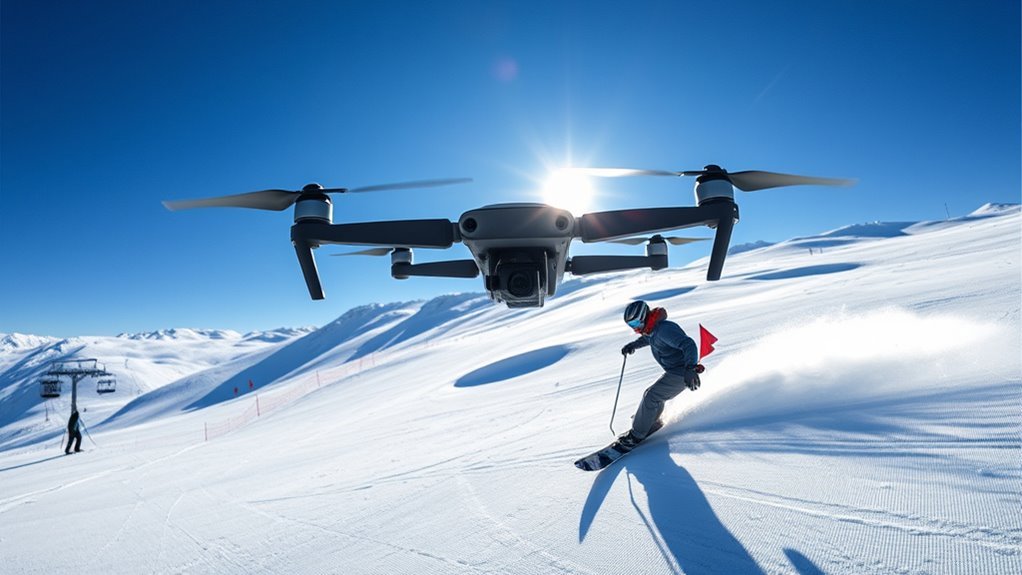
Filming skiing and snowboarding with a drone demands more than basic flight control. Resort rules, FAA limits, cold-weather battery loss, and moving subjects all change the risk profile fast. Tracking modes can help, but only in open terrain with clear escape paths and stable speed matching. The harder part is often not the shot itself, but keeping the aircraft legal, warm, and predictable when conditions shift without warning.
How to Film Skiing Safely With a Drone
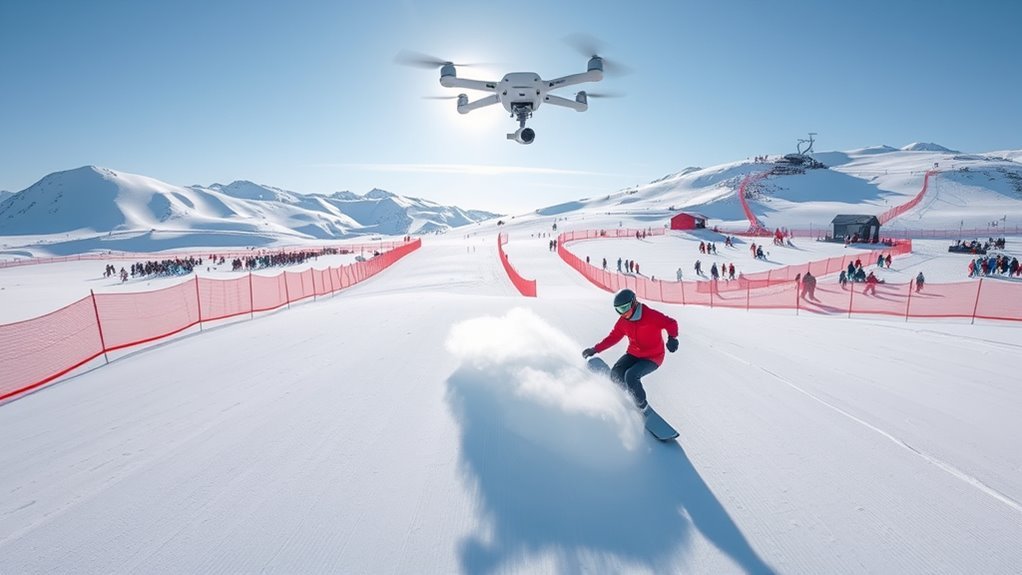
Filming skiing safely with a drone requires strict attention to FAA rules, resort policies, and environmental conditions.
The drone pilot must keep the aircraft within visual line of sight, stay below 400 feet, and preserve a clear margin from lifts, trees, and other traffic to reduce collision risk.
Before launch, the pilot should confirm permitted zones, required permits, and any restrictions with resort management; local rules can override general expectations.
Open terrain away from crowded runs is preferable, both for public safety and for respecting the autonomy of skiers and snowboarders on the mountain.
Cold air also matters: battery capacity drops in subfreezing conditions, so flights should use a drone rated for low-temperature operation and be shortened accordingly.
Preflight checks of wind, snow, and visibility are essential.
A disciplined setup protects people, equipment, and the freedom to capture dynamic winter movement responsibly.
Use ActiveTrack for Smooth Follow Shots
ActiveTrack allows the operator to select the skier or snowboarder on-screen and let the drone maintain a centered follow shot.
A suitable track distance should be set before movement begins, with obstacle avoidance enabled whenever possible to reduce collision risk during terrain changes.
Smooth control inputs are essential, since abrupt corrections can destabilize the framing and degrade shot quality.
Choose the Subject
A drone should lock onto a single skier or snowboarder as the primary subject before the run begins, using ActiveTrack to maintain smooth follow shots without constant manual input.
To choose the subject, the operator should select one rider only, then verify that the frame stays centered in Spotlight Mode or follows cleanly in Trace Mode. This disciplined setup grants freedom to the athlete while reducing pilot workload.
The drone should remain alert to rapid elevation changes, since steep ascents or drops can weaken tracking if altitude is not adjusted. Safe spacing and obstacle awareness remain essential, especially near trees, lifts, or terrain features.
Local resort rules must also be checked before flight, because compliance protects both the filming plan and everyone on the mountain.
Set Track Distance
Set the track distance before the run begins so the drone keeps a safe, consistent gap while following the skier or snowboarder.
Using ActiveTrack, the operator selects the subject on screen, then set track distance to match terrain, speed, and visibility. A wider gap improves safety on open slopes and gives the camera room to frame dynamic movement without crowding the rider.
Trace Mode suits rear follow shots, while Parallel Tracking supports side perspectives with greater spatial awareness.
On ski terrain, obstacle avoidance must be considered continuously, especially near trees, lift towers, and changing elevation.
Proper calibration of track distance preserves freedom of motion while reducing collision risk, allowing the drone to deliver clear, controlled footage.
Keep Movements Smooth
To keep follow shots stable, the drone should use ActiveTrack in a mode such as Trace or Dynamic Track, with speed settings reduced enough to preserve smooth, gradual motion. This approach allows hands-free pursuit of skiers or snowboarders while preserving a liberated, fluid frame.
Operators should keep movements smooth by applying gentle control inputs and avoiding abrupt yaw or pitch changes that can destabilize the shot. Obstacle avoidance must be understood before tracking on variable mountain terrain, where trees, lift towers, and terrain shifts increase risk.
Testing ActiveTrack in uncrowded zones helps refine timing, spacing, and response before use in busy resorts or events. Proper calibration of speed and tracking mode supports safe, dynamic filming without sacrificing control or visual clarity.
Keep Drone Batteries Warm in Cold Weather
In cold conditions, drone batteries should be kept insulated in a warm pouch or thermal wrap to limit capacity loss, since lithium cells can lose performance rapidly below freezing. To keep drone batteries warm in cold weather, operators should store spare packs close to the body, avoid prolonged exposure to wind, and confirm each pack remains above 50°F (10°C) before takeoff. Heated battery packs or purpose-built warmers can preserve usable voltage and reduce abrupt power sag. Battery status must be monitored continuously, because cold cells may drop from safe reserve to critical level with little warning, forcing earlier landings.
| Method | Effect | Use |
|---|---|---|
| Warm pouch | Slows cooling | Preflight |
| Body carry | Maintains warmth | Transit |
| Heated warmer | Extends flight time | Field use |
This disciplined thermal management supports freer movement in the air while reducing preventable loss of lift, range, and control.
Pick Safe Ski Zones for Drone Filming
Open ski areas with minimal tree cover and few obstacles provide the safest conditions for drone filming and improve tracking stability.
Clear runouts reduce collision risk by giving the drone more margin when following skiers or snowboarders at speed.
Each zone should still be checked against resort rules and current slope traffic before flight.
Open Ski Areas
When selecting a ski area for drone filming, the operator should prioritize wide, open terrain with minimal trees, lift towers, and other obstacles so the aircraft can track skiers safely and maintain clear sightlines.
These open ski areas support stable framing, reduce collision risk, and give the pilot room to follow dynamic turns with controlled, liberated movement. Resorts such as Whitecap Mountains and Powderhorn Mountain illustrate the value of broad, unobstructed slopes with consistent snow cover and strong subject visibility.
Before flight, the operator should verify local drone rules, since many resorts restrict aerial use for safety and privacy.
Features such as Active Track and Tripod Mode can improve capture while preserving distance. Local ski communities may also identify safe filming zones and favorable timing.
Clear Runouts
Clear runouts give the drone operator the safest margin for takeoff, landing, and tracking by providing wide, open space free of trees, lift hardware, and other hazards. Selecting clear runouts reduces collision risk and preserves freedom of movement for both pilot and skier.
The operator should verify that the zone is approved for drone use by the resort, since permitted areas are often designated for controlled filming. Snow texture, slope angle, and terrain breaks must be assessed before flight to confirm unobstructed tracking lines.
Off-peak periods and less crowded sectors further lower exposure to bystanders and improve camera stability. Resort-specific regulations remain binding at all times, and compliance prevents fines while supporting safe, independent filming on the mountain.
Match Drone Speed to the Skier
Matching the drone’s speed to the skier is essential for keeping the subject centered, smooth in frame, and safely within range. To match drone speed to the skier, operators can use Active Track, Trace Mode, or Dynamic Track, which automatically adjust pace as terrain and style change. A practical target is 15–30 mph, but the correct figure depends on slope angle, snow conditions, and turning frequency.
Matching drone speed to the skier keeps the subject centered, smooth in frame, and safely within range.
- Maintain a safe following distance while preserving focus and framing.
- Watch for sudden accelerations, traverses, and direction changes.
- Monitor battery life closely; many consumer drones fly only 15–30 minutes.
Obstacle avoidance must also be evaluated before launch. Some drones handle elevation shifts and steep ascents well, while others lose tracking confidence on uneven terrain.
The goal is controlled freedom: responsive motion, stable perspective, and enough margin to keep the skier in view without forcing risky maneuvers.
Keep the Controller Secure While Filming
A secure controller setup is essential during ski and snowboard filming, where vibration, movement, and falls can quickly interrupt control. To keep the controller secure, the operator should use a mount built for outdoor sports, as it reduces vibration and preserves accessibility while moving downhill. Pockets are a poor option; they increase the chance of accidental drops and delayed response.
| Method | Benefit | Risk Reduced |
|---|---|---|
| Mount | Stable access | Vibration |
| Tether | Retention | Falls |
| Pouch | Impact protection | Damage |
A tether or lanyard should connect the controller to gear or body, preventing loss on rough terrain. A padded pouch can add protection without blocking quick adjustments. Before each run, the setup should be checked for tightness, alignment, and wear. This disciplined routine supports safe, fluid operation and protects the freedom to film with confidence in demanding mountain conditions.
Frequently Asked Questions
Can I Use a Drone at a Ski Resort?
Use at a ski resort only if the resort’s Drone Regulations permit it and any required authorization is secured first.
The pilot should confirm local policy, obtain permits when needed, and comply with FAA requirements for visual line-of-sight and no overflight of people.
In crowded terrain, obstacle-avoidance systems improve safety, but they do not replace legal compliance.
Resort management coordination is essential for lawful, low-risk operation and freer creative use.
What Is the 1:1 Rule for Drones?
The 1:1 rule is a modest altitude covenant: for every foot the drone rises, it should keep at least one foot of horizontal distance from people, buildings, trees, or other obstacles.
This Safety Considerations guideline reduces collision risk and preserves operational clarity. In practice, a drone at 100 feet should stay 100 feet clear.
The rule supports compliant, liberated flight while helping operators maintain control in changing environments.
Can FAA Know You Flew a DJI Drone?
Yes—the FAA can often determine that a DJI drone was flown.
Drone Regulations require registration, and DJI flight logs can record time, location, and path data.
Geofencing may flag restricted-airspace attempts, while Remote ID can broadcast identifying information in real time.
If violations occur, the FAA may link activity to the registered owner.
For safety and personal freedom, compliance preserves operational access and reduces enforcement exposure.
What Drone Can I Use to Follow Me While Skiing?
The Skydio 2 is the strongest choice for following a skier, as if a quiet mechanical shadow skimming white ridges. Its Drone Features include autonomous tracking and exceptional obstacle avoidance.
The DJI Mavic Air 2 offers compact 4K recording and ActiveTrack, while the HEXO+ provides GPS-guided speed for action sports.
Any choice should be checked for FAA compliance and resort restrictions, preserving safety and freedom on the mountain.
Conclusion
To sum up, effective ski and snowboard drone filming depends on strict compliance, careful planning, and controlled execution. The operator should maintain visual line of sight, respect resort restrictions, and prioritize open terrain with minimal hazards. ActiveTrack can improve follow shots, but only when obstacle detection and speed limits are appropriate. Batteries must be kept warm and monitored in cold conditions. With disciplined inputs and situational awareness, the resulting footage can be both safe and cinematic, almost like a digital chariot.
