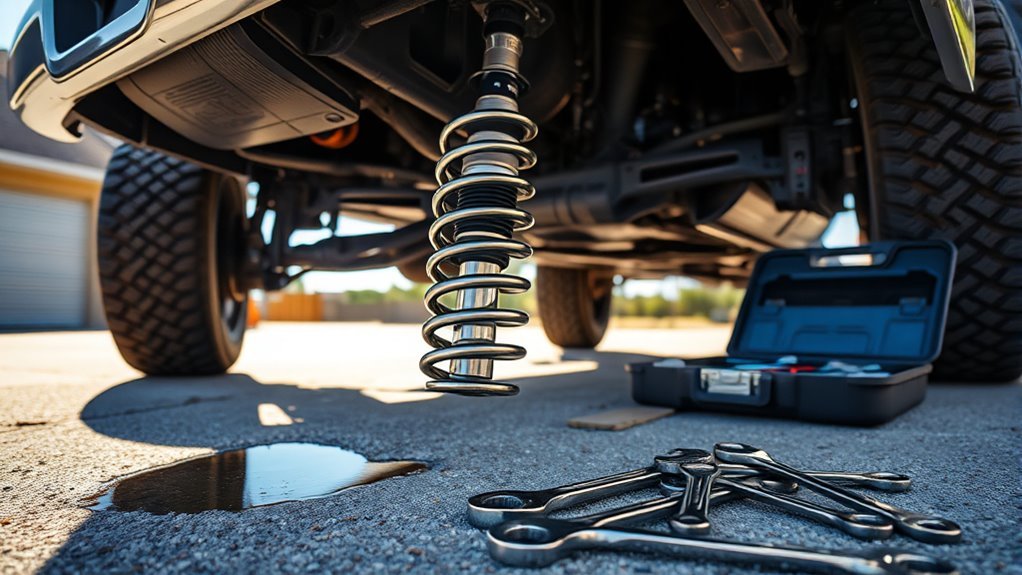
To know if your Ford F350 shocks are bad, watch how the truck rides, handles, stops, and wears its tires. Worn shocks often cause extra bounce, nose dive when braking, rear-end sway, cupped tire wear, fluid leaks, clunking noises, and poor control over rough roads. You can check them at home with a visual inspection, bounce test, tire-wear check, mount inspection, and heat test before deciding whether replacement is needed.
Quick Answer
Your Ford F350 shocks may be bad if the truck keeps bouncing after a bump, sways while towing, nose dives during braking, shows oil streaks on the shock body, makes clunking noises, or develops cupped tire wear. A simple bounce test, visual inspection, and short road test can confirm the warning signs.
At a Glance
| Time Required | 15 to 30 minutes for basic checks |
| Difficulty | Easy for inspection, moderate if lifting the truck |
| Tools Needed | Flashlight, gloves, tire tread gauge, infrared thermometer, jack stands if checking underneath |
| Cost | Free for visual checks; replacement cost depends on shock type and labor |
Key Takeaways
Key Takeaways
- Conduct a bounce test; more than 1.5 to 2 bounces after release suggests weak shock control.
- Look for oil streaks on shock bodies, especially wet, fresh, or heavy leakage around the seal area.
- Inspect for uneven tire wear patterns like cupping, scalloping, or wavy tread surfaces.
- Check end mounts, eye rings, sleeves, and bushings for looseness, cracks, elongation, or missing rubber.
- Perform the Gabriel heat test after a drive; a cold shock may suggest it is not working hard enough.
- Pay extra attention if you tow, haul, plow, or drive rough roads because bad shocks can reduce control faster under heavy use.
Signs of Worn or Leaking Shocks
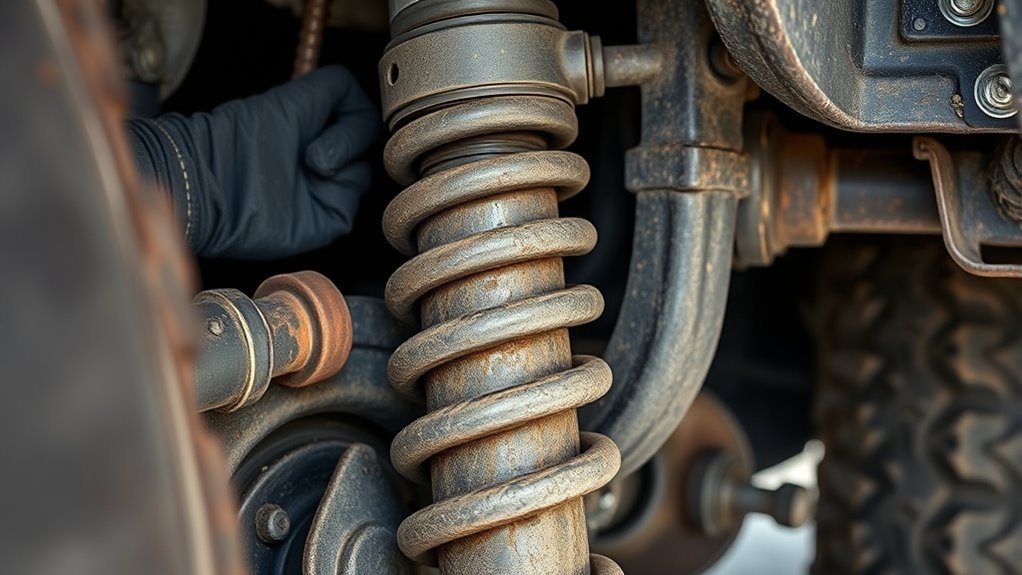
Wondering how to tell if your Ford F350’s shocks are worn or leaking? Start with how the truck feels on the road. Bad shocks often cause swaying symptoms, extra bounce, loose steering feel, and excessive swerving after bumps.
If the rear of the truck feels like it floats, hops sideways, or takes too long to settle after crossing a rough patch, the shocks may be compromised. This is especially noticeable on an F350 because the truck is heavy, and worn shocks have more mass to control.
Perform a bounce test: firmly press down on the bumper or bed corner and release. If that corner bounces more than 1.5 to 2 times before settling, your shocks may need replacement. This test is not perfect on a heavy-duty truck, but it is a useful first check.
Next, inspect the shock bodies for oil streaks. A light film or road grime may not prove failure, but wet oil trails running down the shock body usually mean the seal is leaking. Once enough fluid escapes, the shock cannot control suspension movement as well.
Uneven tire wear patterns, such as cupping or scalloping, also suggest the suspension is not keeping the tire planted evenly. A tire that repeatedly loses and regains contact with the road can wear in a choppy pattern.
Finally, after a short drive, compare shock temperature by touch or with an infrared thermometer. If one shock stays cold while the others feel warm, internal damage may be present. Upgrading shocks is crucial for handling heavy towing and navigating diverse terrains, directly impacting driving experience, safety, and vehicle longevity.
Warning: Never crawl under an F350 supported only by a jack. Use properly rated jack stands on a stable surface before inspecting mounts, bushings, or lower shock hardware underneath the truck.
Road-Test Symptoms That Point to Bad Shocks
A short road test can reveal shock problems that a parked inspection may miss. Choose a safe route with normal pavement, light bumps, and a low-speed stop area. Listen and feel for changes instead of driving aggressively.
- Extra bounce after bumps: The truck should settle quickly. Repeated up-and-down movement points to weak damping.
- Nose dive while braking: If the front end drops hard during a normal stop, the front shocks may not be controlling weight transfer.
- Rear squat or sway while towing: Bad rear shocks can make a trailer feel less stable, especially over dips or uneven pavement.
- Body roll in turns: The truck may lean more than usual or feel delayed when changing lanes.
- Clunking or rattling: Loose mounts, worn bushings, or damaged shock hardware can make noise over bumps.
- Longer-feeling stops: Worn shocks can let the tires lose steady contact with the road, which may hurt braking control.
If the truck feels unstable, stop the test and inspect the suspension before driving farther. A bad shock can overlap with other suspension problems, so do not assume the shock is the only issue.
How to Do a Bounce Test on a Ford F350
The bounce test is a quick way to check whether the shocks still control suspension movement. Because an F350 is stiff and heavy, this test works best when you check all four corners and compare one side with the other.
- Park on level ground: Set the parking brake and keep the truck in park.
- Stand near one corner: Use the bumper, bed corner, or a strong body area that lets you push straight down.
- Push down firmly: Compress the suspension as much as you safely can.
- Release quickly: Watch how many times the truck rebounds before it settles.
- Repeat on each corner: Compare left to right and front to rear.
A good shock should bring the truck back under control quickly. If one corner bounces more than the others, feels loose, or keeps oscillating, inspect that shock more closely.
Pro Tip: The bounce test is more useful when paired with a road test and visual inspection. A shock can pass a simple bounce test but still perform poorly under towing, washboard roads, or repeated bumps.
Evaluating End Mount Damage
When evaluating end mount damage on your Ford F350’s shocks, start by inspecting the eye rings for any elongation, tearing, rust damage, or distortion. These issues can drastically affect shock performance because the shock must stay firmly mounted to control motion.
Conduct a thorough end mount inspection to identify worn-out bushings surrounding the steel sleeve. If the rubber is cracked, missing, crushed, or separated from the sleeve, the shock may shift instead of absorbing movement cleanly.
Worn-out bushings can undermine stability and shock absorber performance, so end mount inspection should be part of every shock check.
Additionally, examine the air springs, if your truck has them, for excessive wear, cracks, rubbing marks, sagging, or uneven height. Air spring problems can mimic bad shocks or make weak shocks feel worse.
Damage to the end mounts can lead to improper alignment, increased instability, and extra stress on nearby suspension parts. Loose shock hardware may also create a clunk that sounds like a larger suspension problem.
Regular inspection is essential for maintaining shock absorber longevity and ensuring your vehicle’s peak performance. Keep end mount integrity in check as part of your routine maintenance regimen, especially before long towing trips or heavy hauling.
Identifying Tire Wear Patterns
Tire wear patterns offer essential insights into the condition of your Ford F350’s shocks. Uneven patterns, like cupping or scalloping, indicate that shocks may not be absorbing road impacts effectively.
If you see excessive wear on the inner or outer tire edges, it may mean the shocks fail to maintain proper road contact. However, edge wear can also come from alignment, tire pressure, ball joints, tie rods, or overloaded driving.
Regularly inspect tires for these signs to catch shock issues early and prevent further damage. Run your hand lightly over the tread surface. A wavy or uneven surface on tires suggests worn shocks may be allowing too much movement.
To pinpoint issues, monitor new tires for unusual wear patterns. If fresh tires begin cupping again after rotation and balancing, inspect the shocks, wheel bearings, alignment, and steering components.
Incorporate tire rotation and alignment checks into your maintenance routine to guarantee even wear and to help identify any shock-related problems before they escalate.
Visual Inspection Checklist for F350 Shocks
A careful visual inspection can tell you a lot before you buy replacement parts. Use a flashlight and check each shock from top to bottom.
- Leaking fluid: Look for wet oil trails running down the shock body. Heavy leakage usually means the seal has failed.
- Dented shock body: A dent can restrict internal piston movement and reduce performance.
- Rust or corrosion: Surface rust is common, but deep rust near mounts or the body can weaken the shock.
- Damaged dust boot: A torn boot exposes the shaft to dirt and road debris.
- Bent shaft: A bent rod can cause binding, noise, and poor damping.
- Loose fasteners: Check for missing, loose, or damaged shock bolts.
- Cracked bushings: Worn rubber can allow movement that feels like shock failure.
Inspect both sides of the same axle. If one shock is leaking or damaged, replacing shocks in pairs on that axle usually gives more balanced handling.
Conducting the Gabriel Heat Test
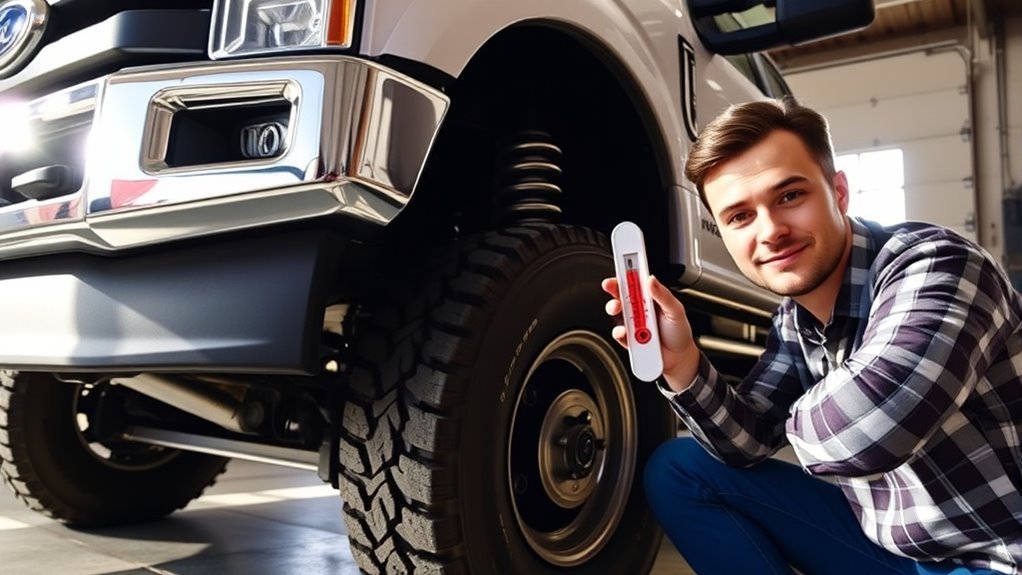
Performing the Gabriel heat test is a straightforward method to evaluate the condition of your Ford F350’s shock absorbers.
Start by driving your vehicle for at least 15 minutes, allowing the shocks to engage fully. Choose normal roads with enough bumps and turns to make the suspension work, but avoid unsafe speeds or harsh driving.
Use an infrared thermometer to establish a chassis reference temperature for accurate shock absorber maintenance and temperature comparison. Then check each shock in the same location, about one inch from the bottom cap.
Drive for 15 minutes to warm up the shocks. Use an infrared thermometer to compare each shock with the others on the same axle.
A functioning shock should feel warm to hot because it turns suspension movement into heat. This indicates proper operation, vital for peak performance. If one shock remains cold while the others are warm, it suggests internal damage or failure. Remember the shop phrase, “If it’s cold, it’s old.”
Regularly conduct this test, ideally monthly on high-mileage vehicles or trucks used for towing, plowing, hauling, or rough roads. The heat test is not a full diagnostic by itself, but it helps you spot a shock that is no longer working like the others.
Note: Compare shocks on the same axle. Front shocks and rear shocks may run at different temperatures because they carry different loads and move differently.
Maintenance Tips for Optimal Shock Performance
- Bounce Test: Push down on the bumper; if it bounces over 1.5 times, replacement is likely needed.
- Inspect End Mounts: Check mounts and bushings for damage; excessive wear affects stability.
- Monitor Tire Wear: Uneven patterns or cupping indicate failing shocks, risking suspension issues.
- Check After Heavy Use: Inspect shocks after towing, hauling, off-road driving, or winter plowing.
- Keep Tires Correctly Inflated: Wrong tire pressure can mimic shock problems and create uneven wear.
- Schedule Alignment Checks: Alignment issues can hide or worsen shock-related tire wear.
These steps guarantee your shocks deliver optimum performance enhancement and longevity. They also help you catch related suspension problems before they affect steering, tire life, and braking control.
When to Replace Ford F350 Shocks
You should consider replacing your Ford F350 shocks when several warning signs appear together. A single symptom may come from another suspension or tire issue, but multiple signs usually point to worn damping.
- Visible shock fluid leaking down the body
- Repeated bounce after bumps or during the bounce test
- Excessive nose dive, rear squat, or body roll
- Cupped or scalloped tire wear that returns after rotation
- Clunking from worn bushings or loose shock mounts
- Unstable handling while towing or hauling
- One shock staying cold after the heat test while the others warm up
If your truck has high mileage, carries heavy loads often, or drives on rough roads, inspect shocks more often. Replace shocks in axle pairs when possible, so the left and right sides respond evenly.
Bad Shocks vs. Other Suspension Problems
Bad shocks can feel like other front-end or rear suspension problems. Before replacing parts, check for related issues that can create similar symptoms.
- Ball joints: Worn ball joints can cause looseness, clunks, wandering, and uneven tire wear.
- Tie rods: Loose steering parts can make the truck drift or feel unstable.
- Sway bar links: Damaged links can cause knocking sounds and extra body roll.
- Wheel bearings: A worn bearing can create noise, vibration, and uneven tire contact.
- Leaf springs or air springs: Sagging or damaged springs can change ride height and load support.
- Tire pressure or balance: Incorrect pressure or imbalance can feel like suspension bounce.
If you find leaking shocks, damaged mounts, and poor bounce control, the shocks are likely part of the problem. If symptoms remain after replacement, inspect the rest of the suspension and steering system.
Related Guides
Frequently Asked Questions
How often should I replace the shocks on my Ford F350?
Many drivers inspect shocks around every 50,000 miles, but replacement depends on use. Your F350 may need shocks sooner if you tow heavy trailers, haul payloads, drive rough roads, plow snow, or notice leaks, bounce, cupped tires, or poor control.
Can bad shocks affect my vehicle’s braking distance?
Yes, bad shock absorbers can negatively impact braking performance. They allow uneven tire contact with the road, which can reduce control and make the truck feel less stable during hard stops. Good shocks help keep the tires planted while braking.
What noises indicate failing shocks on a Ford F350?
Failing shocks may cause clunking, rattling, knocking, or squeaking over bumps. These noises often come from worn bushings, loose mounts, damaged hardware, or internal shock wear. Inspect the shock mounts and nearby suspension parts before replacing anything.
How do bad shocks impact ride comfort on rough terrain?
Bad shocks reduce ride comfort on rough terrain because they let the suspension move too much after each bump. Instead of one controlled movement, the truck may bounce, hop, shake, or feel harsh. That can make rough roads tiring and reduce control.
Are aftermarket shocks better than OEM for a Ford F350?
Aftermarket shocks can outperform OEM ones when they match your use case. Some are tuned for towing, hauling, off-road driving, or smoother daily driving. OEM-style shocks may suit stock ride quality, while upgraded shocks may offer better control under heavy loads.
Should I replace all four F350 shocks at once?
Replacing all four can restore balanced ride control, especially if the shocks are the same age. At minimum, replace shocks in pairs on the same axle. Mixing a new shock with a weak old shock side to side can create uneven handling.
Can I drive my F350 with bad shocks?
You may be able to drive short distances, but bad shocks can reduce steering control, braking stability, tire contact, and towing confidence. If the truck bounces heavily, leaks shock fluid, clunks loudly, or feels unstable, inspect and repair it before normal driving.
Conclusion
You’ll know your Ford F350 shocks are bad by spotting worn or leaking shocks, examining end mount damage, and identifying uneven tire wear patterns. You should also pay attention to bounce, sway, nose dive, clunking, rough-road harshness, and poor towing stability.
Conduct the Gabriel Heat Test for further confirmation, then compare your results with a visual inspection and road test. Maintain peak shock performance by regularly checking for signs of wear, promptly addressing any damage, and guaranteeing proper tire alignment.
By staying vigilant and proactive, you’ll secure a smoother ride, extend your vehicle’s lifespan, protect your tires, and enhance safety on the road.