Disclosure: As an Amazon Associate, we earn from qualifying purchases. If you click a link on this page and make a purchase, we may receive a small commission at no extra cost to you.
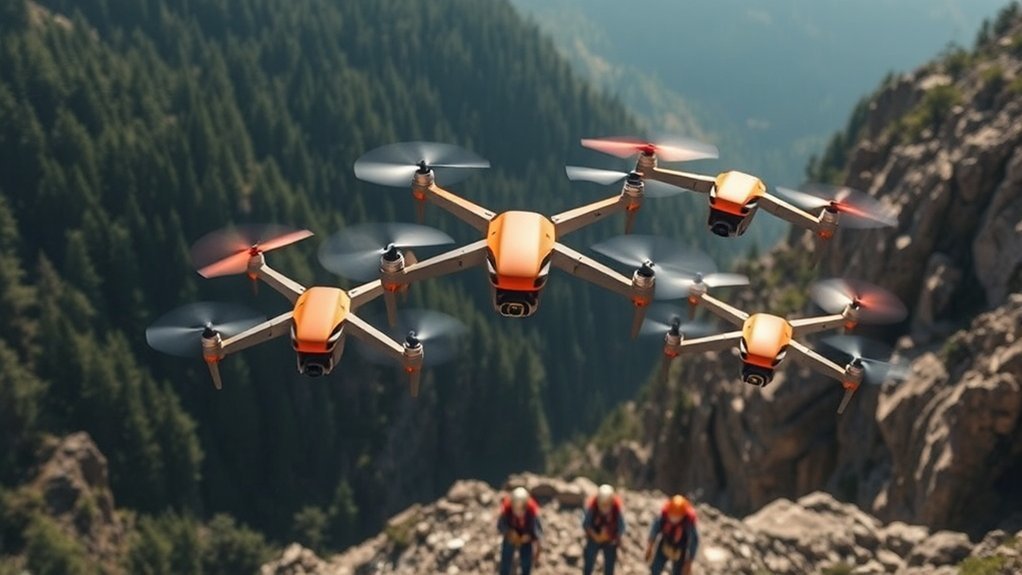
When every second counts in search and rescue, the right drone helps teams scan large areas fast, spot heat signatures, and make safer decisions. Whether you’re equipping a fire department, a K9 unit, or a volunteer SAR team, here are three solid Amazon options built for responders at every budget — from enterprise thermal platforms to fast ultralight scouts.
Quick Picks
- Autel EVO Max 4T V2 – Best overall for agencies (integrated thermal + laser rangefinder)
- DJI Air 3 – Best midrange for volunteer teams (dual cameras + 46-min flights)
- DJI Mini 4 Pro – Best ultralight scout (sub-249g, omni obstacle sensing)
Why trust these picks?
Each pick below is currently listed and shipping on Amazon, and every spec here has been checked against the manufacturer’s published listing plus independent reviews — not just marketing copy:
- Autel EVO Max 4T V2 — Enterprise-class thermal/zoom/laser platform with 42-minute flights. Current Amazon listing confirms the payload and specs; independent enterprise-drone reviews back its use for emergency services and SAR.
- DJI Air 3 — Versatile midrange drone with dual cameras and 46-minute endurance, reviewed favorably by major camera-tech outlets for its safety features and flight time.
- DJI Mini 4 Pro — Sub-250g drone that multiple independent reviewers rank as the benchmark ultralight option, prized for fast, low-paperwork deployment.
1) Autel Robotics EVO Max 4T V2 – Best Overall for SAR Agencies
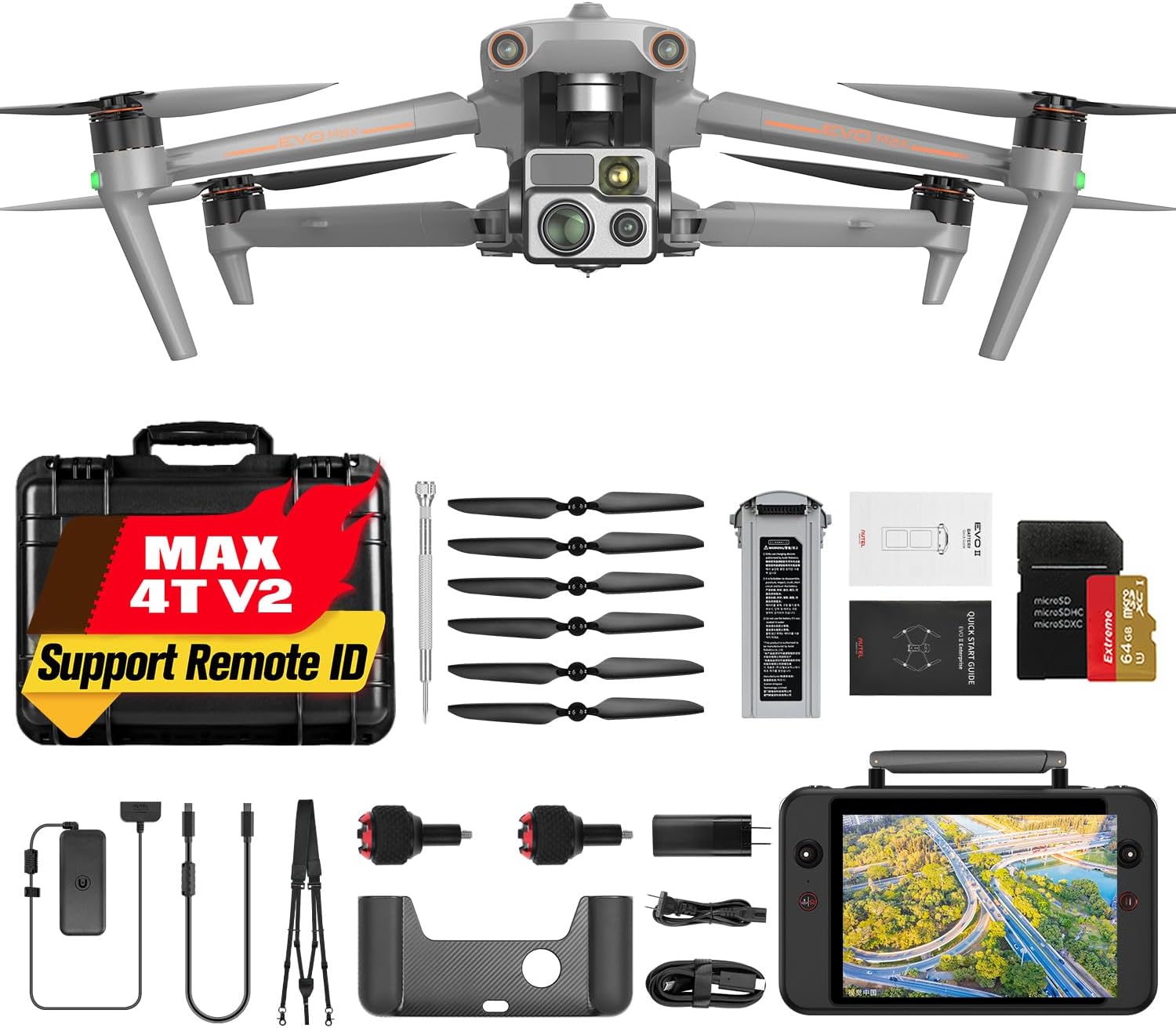
Why it’s great for SAR: It packs a 640×512 thermal camera, 1–160× hybrid zoom, and a laser rangefinder that calls out exact coordinates. You get 720° obstacle sensing plus anti-jam tech for reliable performance in tough conditions. Mesh networking lets multiple drones work together when cell service drops.
- Thermal + visible fusion: It spots heat signatures at night or in smoke and adds clear zoom for positive identification.
- Rangefinder for coordinates: It speeds up team tasking with voice-out lat/long data.
- Mesh networking: It enables multi-aircraft teamwork in remote areas.
Buy it on Amazon:
This is one of the most capable options available for professional SAR teams, and a worthwhile investment for agencies that need rugged, enterprise-grade tools.
Who should buy this: Career fire/police/SAR agencies and aerial-survey teams that need thermal ID, exact coordinates, and multi-aircraft mesh networking in one platform — and that have the training and budget for an enterprise-tier aircraft.
Who should avoid this: Volunteer or hobbyist groups on a tight budget, or anyone who just needs daylight grid-search footage — the Air 3 or Mini 4 Pro covers that need for a fraction of the cost and learning curve.
Good-review proof: Digital Camera World and Space.com both single out the EVO Max 4T platform as one of the best drones available for emergency services, search & rescue, and mapping — and the laser rangefinder is repeatedly called out as a standout tool for relaying exact coordinates to ground teams.
Specs that matter: Thermal 640×512; zoom camera up to 160× hybrid; laser range 5–1200 m; SkyLink 3.0 transmission up to 20 km (12.4 mi); approx. 42-min flight time; IP43 weather rating. (See Amazon listing.)
Pick this if you run a professional SAR agency and need thermal imaging, precise coordinates, and tough weather resistance in one package.
2) DJI Air 3 – Best Midrange for Volunteers & Mixed-Light Missions

Why it’s great for SAR: It delivers up to 46 minutes of flight time, omnidirectional obstacle sensing, and a solid O4 link. The dual-camera gimbal (24 mm wide + 70 mm medium tele) lets you scan wide zones and then zoom in on a subject, especially at dawn or dusk.
- Easy, safe flight: Independent reviewers consistently describe it as confidence-inspiring and approachable for pilots of any skill level, without sacrificing video quality.
- Reliable in low light too: The dual cameras and long endurance make it just as useful at dawn, dusk, or under cloud cover as in full daylight.
Buy it on Amazon:
It’s a smart, dependable buy for everyday use, especially for volunteer teams who need long flight times without a steep learning curve.
Who should buy this: Volunteer SAR teams and mixed-skill crews who want long flight time, reliable obstacle sensing, and a gentle learning curve for daytime or twilight searches.
Who should avoid this: Teams that need thermal imaging for night or smoke conditions — pair this with a dedicated thermal drone, or step up to the Autel EVO Max 4T V2. Note: at 720 g, the Air 3 is over the FAA’s 250 g threshold, so U.S. pilots need to register it and comply with Remote ID before flying.
Editorial praise: TechRadar and Digital Camera World both highlight the dual-camera flexibility, long flight time, and full obstacle-sensing safety net — exactly the mix that matters for daylight or twilight grid searches.
Pick this if you fly with volunteer groups and want long endurance plus easy handling for daytime and twilight grid searches.
3) DJI Mini 4 Pro – Best Ultralight Scout (Sub-249 g)

Why it’s great for SAR: It weighs under 249 g for fast deployment and fewer rules in many areas. It also brings omnidirectional obstacle sensing and strong 4K video tools that help document search grids and scenes quickly.
- Pro-grade in a tiny frame: Independent reviewers consistently rank it as the benchmark sub-250g drone, thanks to its improved sensing and 4K slow-motion.
- Ready to fly anywhere fast: The pocketable size means one person can launch it in minutes.
Buy it on Amazon:
It punches well above its weight class for the price, making it a strong value pick for fast-deploying scout missions.
Who should buy this: First-on-scene scouts who need to launch in seconds, stay under the 249 g weight threshold, and avoid extra registration paperwork in the field.
Who should avoid this: Anyone relying on a single drone for an entire mission — its smaller sensor and shorter standard flight time make it best as a fast scout, not a primary search platform.
Good-review proof: DPReview and TechRadar both rank it as the drone to beat in the sub-250g class.
Pick this if you need a quick go-bag scout that stays under weight limits and deploys in seconds for initial reconnaissance.
Comparison Table
| Model | Best For | Key Sensors | Max Flight | Weight | Notable SAR Perks |
|---|---|---|---|---|---|
| Autel EVO Max 4T V2 Check Price |
Agencies needing thermal + rangefinding | 640×512 thermal, wide, zoom, laser RF | ~42 min | ~1.6 kg (3.6 lb) | Mesh networking; anti-jam; 720° OA; IP43; 20km link. |
| DJI Air 3 Check Price |
Volunteers; mixed-light daytime ops | 24 mm wide + 70 mm medium tele | Up to 46 min | 720 g (1.6 lb) | Omni obstacle sensing; long O4 link. |
| DJI Mini 4 Pro Check Price |
Rapid go-bag scouting | 1/1.3″ sensor; omni obstacle sensing | Up to ~34–45 min* | Under 249 g (0.55 lb) | Sub-249 g; quick deployment. |
*Flight time varies by battery (Plus batteries can exceed 34 minutes but may push weight over 249 g—check local rules).
How to Choose a SAR Drone (Checklist)
- Thermal imaging for night/smoke (look for integrated 640×512-class sensors).
- Long endurance (30–45 min) to cut down on battery swaps.
- Omnidirectional obstacle sensing & robust link for canyons and forests.
- Rangefinder or coordinates for fast ground-team updates.
- Weight class & registration rules — sub-249 g aircraft skip some paperwork; anything heavier needs FAA registration and Remote ID compliance in the U.S.
- Budget tier — enterprise platforms cost far more than consumer drones, but can reduce reliance on costlier assets like helicopters for agencies that need it.
FAQs
Do I really need a thermal camera for SAR?
For night work, smoke, or thick brush, yes. Thermal detects heat that normal cameras miss. Models like the Autel EVO Max 4T V2 include a built-in 640×512 thermal sensor made for these jobs.
Is the DJI Air 3 good enough without thermal?
For daytime and twilight searches, yes. Its wide plus medium-tele cameras and long flight time make it excellent for grid work. Volunteer teams also praise how safe and easy it is to fly.
Why pick a sub-249 g drone like the Mini 4 Pro?
These models launch fast and often face fewer rules depending on your location. The Mini 4 Pro adds full omnidirectional sensing and sharp video in a package you can carry in one hand. Always check your local regulations first.
What about the newer DJI Air 3S and Mini 5 Pro?
DJI has since released the Air 3S (larger 1-inch sensor, LiDAR-assisted night obstacle sensing) and the Mini 5 Pro (1-inch sensor, improved low-light performance), and both are now widely available on Amazon. They’re worth comparing if low-light image quality matters for your missions. This guide sticks with the Air 3 and Mini 4 Pro because they’re proven, widely stocked, and priced lower while still covering the core SAR use cases here — daylight/twilight grid searches and fast ultralight scouting. If budget allows, check current listings for the newer models before you buy.
Must I comply with Remote ID?
Many areas require it for certain flights. The Amazon pages for the Air 3 and Mini 4 Pro note compliance. Always confirm the latest rules where you fly.
Do agencies need special certification to fly these for SAR missions?
In the U.S., most commercial or public-safety drone operations require an FAA Part 107 remote pilot certificate; purely recreational volunteer flights may fall under different rules. Check current FAA guidance for your agency’s specific use case before deploying any of these drones operationally.
Conclusion
Choose the Autel EVO Max 4T V2 when your team needs the most complete mission tools with thermal and rangefinder capability. Go with the DJI Air 3 for reliable volunteer reach and safety in mixed light. Grab the DJI Mini 4 Pro when you want an ultralight scout you can deploy instantly.
Ready to equip your team? Check the prices above and order the SAR drone that matches your needs today.


1 thought on “Best Drones for Search and Rescue in 2026 (Top 3 Picks)”