Last updated: July 2026.
Disclosure: This article contains affiliate links. If you buy through these links, we may earn a commission at no extra cost to you. As an Amazon Associate I earn from qualifying purchases.
Choosing a drone for distance is not only about the biggest range number on the box. You also need reliable GPS, strong signal stability, enough battery time to return safely, a camera that stays smooth in wind, and clear safety features like Return to Home. The best pick for you depends on whether you want a true long-range starter drone, a longer battery bundle, or a lower-cost GPS drone for open-area practice.
Important safety note: advertised range is measured in ideal conditions and does not give you permission to fly beyond the law. In the U.S., recreational pilots must keep the drone within visual line of sight, follow airspace rules, take TRUST, and register drones that weigh 250 grams or more. Always check your local rules before flying.
Quick Verdict
Best overall: DJI Mini 4K Fly More Combo, because it gives you the same long-range DJI Mini 4K platform with three batteries for longer shooting sessions.
Best value: DJI Mini 4K single-battery kit, because it keeps the strong 10 km transmission claim and stabilized 4K camera at a lower kit cost.
Best budget GPS practice option: CHUBORY X10 PRO or P17, because both focus on GPS features and longer battery bundles, but they are not true multi-mile alternatives to DJI.
Quick Comparison
| Drone | Best For | Distance Notes | Battery Notes | Check Details |
|---|---|---|---|---|
| DJI Mini 4K Fly More Combo | Best overall long-range starter kit | Up to 10 km transmission in ideal conditions | Up to 93 minutes total with three batteries | Check Details |
| DJI Mini 4K | Best value long-range entry pick | Same core Mini 4K range platform | About 31 minutes per battery | Check Details |
| Upgraded Pro Drone | Buyers comparing budget multi-mile claims | Listing claims up to 5 miles, verify current details before buying | Listing claims up to 84 minutes with two batteries | Check Details |
| CHUBORY X10 PRO | Long battery life on a tighter budget | About 3,280 ft control range, not a multi-mile pick | Up to 90 minutes total with three batteries | Check Details |
| GPS Drone with 4K Camera P17 | Lightweight GPS practice flights | Up to 1 km listed range, best for open practice areas | Up to 54 minutes total with three batteries | Check Details |
DJI Mini 4K Fly More Combo Drone with 4K UHD Camera
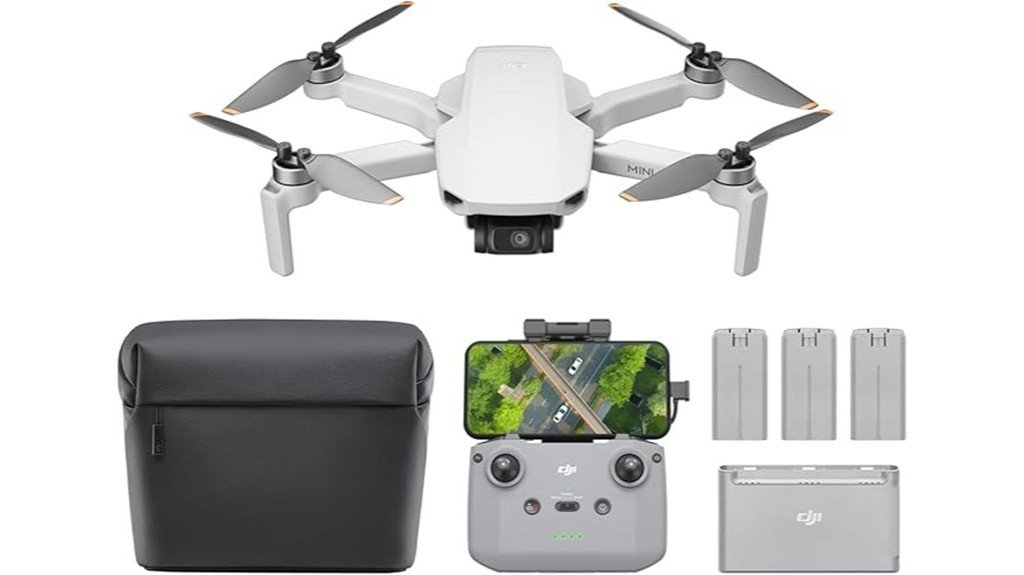
The DJI Mini 4K Fly More Combo is the strongest overall pick if you want a compact drone for longer open-area flights and smoother aerial video. It keeps the Mini 4K’s key strengths, including a 4K UHD camera, 12 MP stills, a 3-axis gimbal, GPS Return to Home, and up to 10 km transmission in ideal conditions. The main advantage of this kit is the extra battery time. With three batteries, you get up to 93 minutes total, which gives you more room to frame shots, repeat passes, and return with battery left.
This is still a beginner-friendly drone, but it is more serious than most toy-style camera drones. It weighs under 249 grams, which can reduce registration hassle for U.S. recreational use, but you still need to follow local airspace rules and visual line-of-sight requirements.
Best For: Beginners and casual creators who want the best DJI Mini 4K kit for longer shooting sessions.
Why You’ll Like It: You get DJI’s long-range transmission claim, stable 4K footage, a compact body, and enough batteries for a real outing instead of one short flight.
Who Should Avoid It: Skip it if you need advanced obstacle avoidance, professional color profiles, or a drone for commercial work without checking all legal requirements first.
Pros:
- Up to 10 km transmission in ideal conditions makes it the best true long-range option in this list.
- Three-battery bundle gives up to 93 minutes total flight time.
- 4K UHD video, 12 MP stills, and a 3-axis gimbal help produce smooth aerial footage.
- Under 249 grams, which is helpful for many recreational flyers.
Cons:
- No advanced omnidirectional obstacle avoidance.
- Maximum range and flight time depend on wind, interference, temperature, and flight style.
- Costs more than the single-battery DJI Mini 4K kit.
DJI Mini 4K Drone with 4K UHD Camera
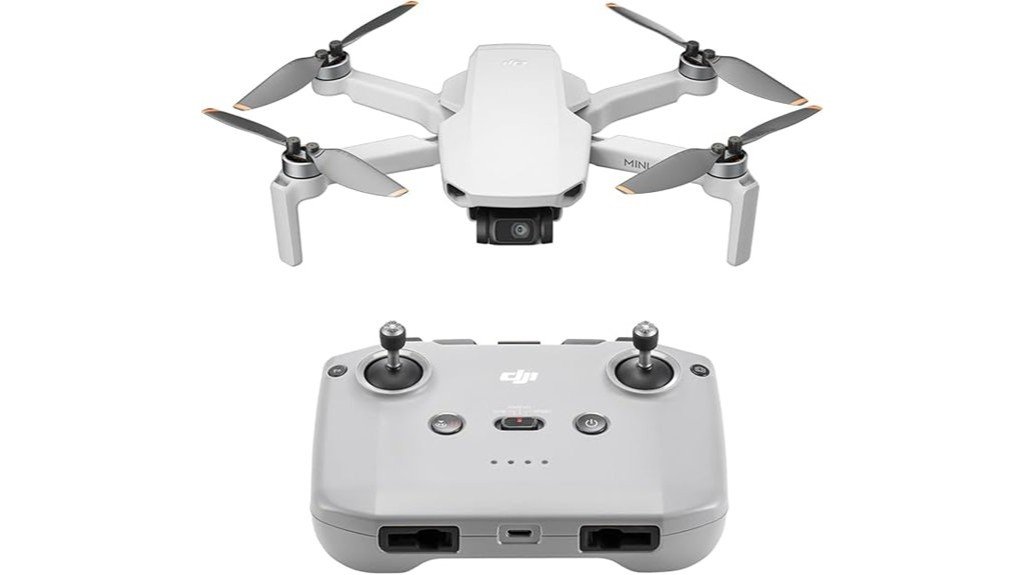
If you want the long-range DJI Mini 4K platform without paying for the larger bundle, the DJI Mini 4K single-battery kit is the best value choice. It weighs under 249 grams, uses a stabilized 3-axis gimbal, records 4K Ultra HD video, and offers up to 31 minutes per battery in ideal conditions. The 10 km transmission claim gives it a clear distance advantage over most budget GPS drones, but you should still fly within legal visual line-of-sight limits.
This kit makes the most sense if you want a simple, portable drone for travel, landscapes, and beginner aerial footage. It is easier to pack than larger models and gives you better camera stability than many low-cost drones that rely only on electronic stabilization.
Best For: New pilots who want a trusted long-range starter drone at a lower kit cost.
Why You’ll Like It: You get the same core Mini 4K camera and transmission benefits, but in a simpler, lower-cost package.
Who Should Avoid It: Avoid this kit if you know you will fly for long sessions. In that case, the Fly More Combo is more convenient because it includes extra batteries.
Pros:
- Compact and lightweight design makes it easy to carry.
- 4K Ultra HD camera with a 3-axis gimbal helps capture smooth footage.
- Up to 10 km transmission in ideal conditions gives it strong distance potential for its class.
- GPS Return to Home and beginner-friendly controls help reduce flying stress.
Cons:
- About 31 minutes max per battery, so extra batteries may be needed for longer sessions.
- No advanced obstacle avoidance.
- Wind, terrain, and signal interference can reduce real-world range.
Upgraded Pro Drone with Camera for Adults
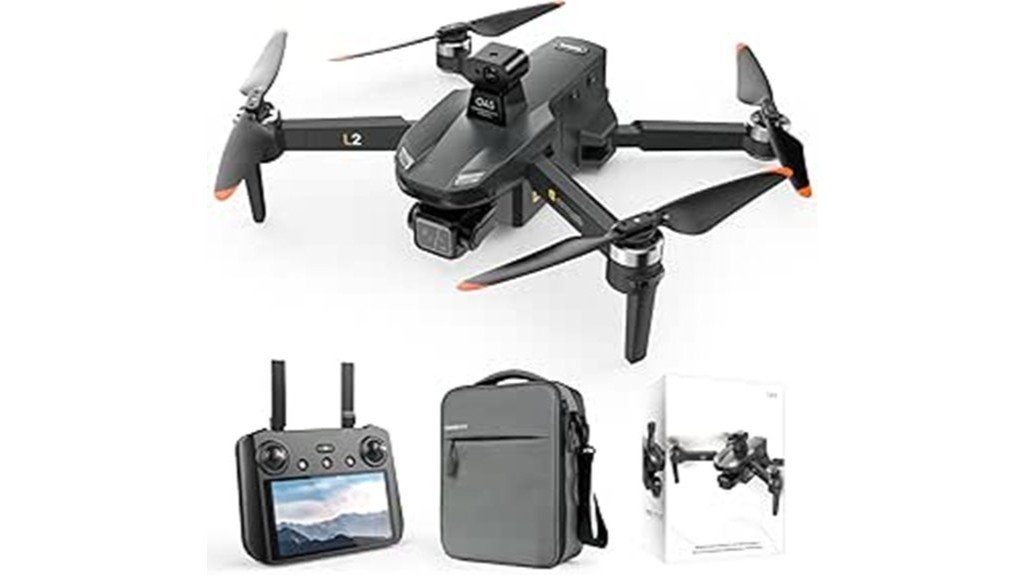
The Upgraded Pro Drone with Camera for Adults is aimed at buyers who want a budget drone with big distance claims. The listing promotes up to 5 miles of control range, up to 84 minutes of total flight time with two batteries, 4K UHD photo and video capture, a 3-axis gimbal, GPS return features, and 360° obstacle-avoidance support.
Because this model does not have the same easy-to-verify brand support as DJI, treat the range and battery numbers as listing claims and check the current Amazon product details carefully before buying. It remains relevant for this article because its main selling point is distance, but it is best for careful buyers who are comfortable double-checking specs, app support, replacement batteries, and return terms.
Best For: Buyers comparing lower-cost drones that advertise multi-mile range and longer battery bundles.
Why You’ll Like It: It offers a more aggressive feature list than many budget drones, including claimed long range, gimbal support, GPS, and obstacle-avoidance help.
Who Should Avoid It: Avoid it if you want the most proven software ecosystem, easiest replacement parts, or strongly verified manufacturer specifications.
Pros:
- Listing claims up to 5 miles of control range in ideal conditions.
- Two-battery bundle is advertised for up to 84 minutes total flight time.
- 3-axis gimbal and 4K capture support are useful for smoother aerial footage.
- GPS and auto-return features help with safer open-area flying.
Cons:
- Distance and battery claims should be verified on the live Amazon listing before purchase.
- At about 1.29 pounds, it is above the 250 g U.S. recreational registration threshold.
- App support and long-term parts availability may be less predictable than major brands.
CHUBORY X10 PRO 5G FPV RC Quadcopter with Camera
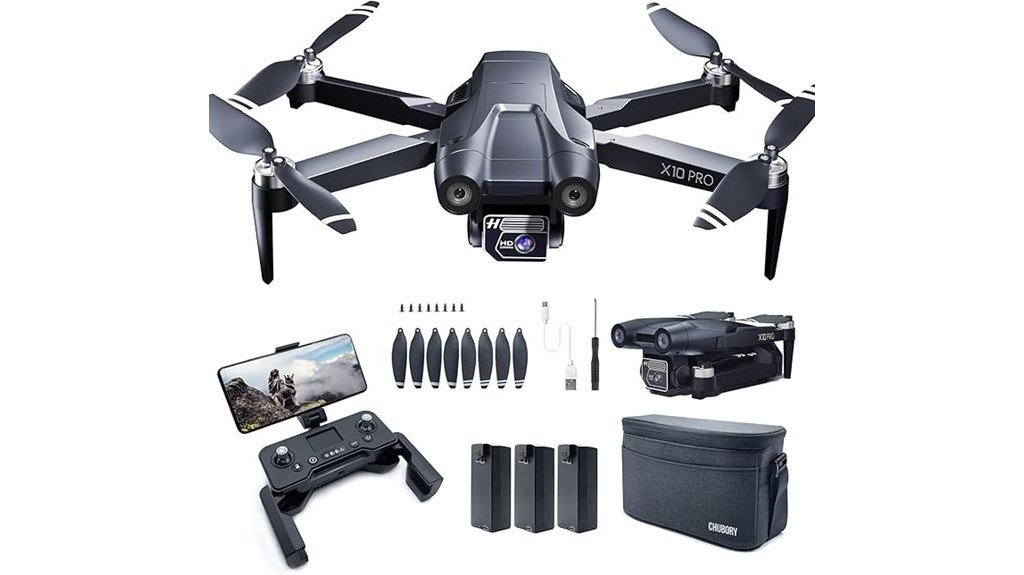
The CHUBORY X10 PRO 5G FPV RC Quadcopter is a better fit for budget GPS practice than true multi-mile flying. Its listed control range is about 3,280 ft, so it does not compete with the DJI Mini 4K on distance. Where it stands out is total battery time. The triple-battery setup is advertised for up to 90 minutes total, giving you more practice time before you need to recharge.
This drone works best for open-field learning, basic GPS flight modes, and casual aerial photos or videos. The camera spec should be understood carefully: it is positioned around 4K stills and up to 2048×1080 video, not the same level as a premium stabilized 4K drone.
Best For: Budget-focused pilots who care more about practice time, GPS features, and return-home support than multi-mile range.
Why You’ll Like It: The long total battery bundle gives you more time to learn controls, practice safe turns, and test GPS functions.
Who Should Avoid It: Skip it if your main priority is true long-range video transmission or professional-quality 4K footage.
Pros:
- Triple-battery system is advertised for up to 90 minutes total flight time.
- GPS features like Follow Me and Auto Return Home make it more useful than basic toy drones.
- Foldable design and carrying case help with travel and storage.
- Lower-cost option for open-area distance practice.
Cons:
- About 3,280 ft control range is not a true multi-mile distance setup.
- Video resolution claims are more limited than full premium 4K camera drones.
- Performance in wind and signal-heavy areas may be less consistent than higher-end models.
GPS Drone with 4K Camera (P17)
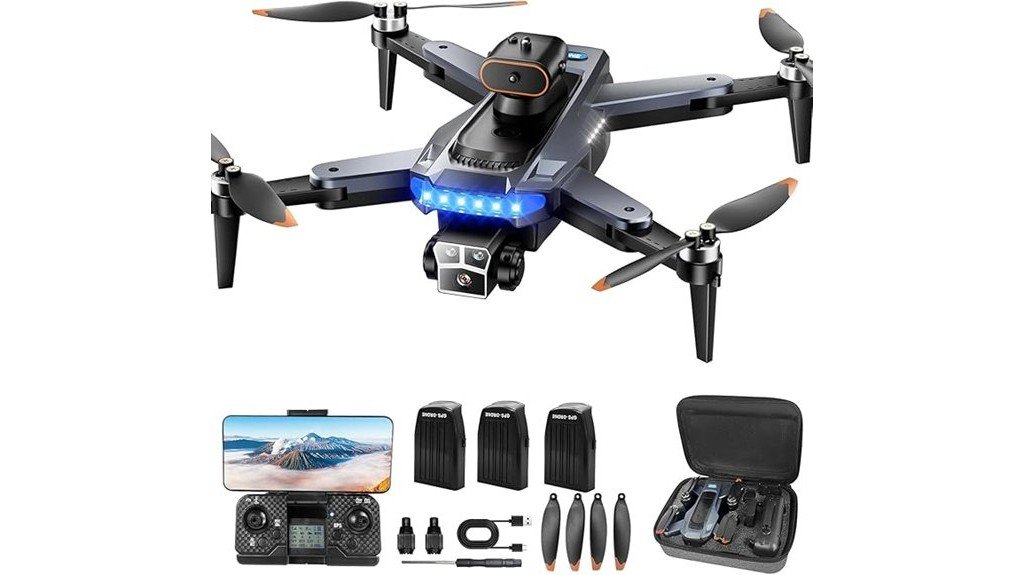
The GPS Drone with 4K Camera (P17) is a lightweight GPS option for pilots who want distance practice without jumping straight into a more expensive drone. It weighs under 249 grams and includes three batteries for up to 54 minutes total flight time. The listed max flight distance is 1 km, so it is best viewed as a short-range GPS practice drone, not a true long-range model.
You also get useful beginner features such as smart Return to Home, brushless motors, and a 4K photo camera with 1080P video capability. For casual flyers, those features can make the P17 easier to manage than a basic non-GPS drone. Just keep expectations realistic: signal blockage, trees, buildings, and wind can reduce usable range.
Best For: Beginners who want a lightweight GPS drone for open-area practice and casual aerial photos.
Why You’ll Like It: It gives you GPS support, multiple batteries, and a sub-249 g design in a budget-friendly package.
Who Should Avoid It: Avoid it if you want miles of reliable transmission, pro-grade video, or advanced obstacle avoidance.
Pros:
- Under 249 grams, which helps reduce registration hassle for many recreational flyers.
- Three batteries provide up to 54 minutes total flight time.
- GPS Return to Home adds an important safety layer for beginners.
- Good choice for short-range distance practice in open areas.
Cons:
- 1 km listed range is much shorter than the DJI Mini 4K options.
- 1080P video is not the same as true high-end 4K video capture.
- No included charger means you may need a compatible 5V 2A charger.
Factors to Consider When Choosing a Drone for Distance
When choosing a drone for distance, focus on real-world control, safe return time, GPS reliability, camera stability, and legal limits. A big range number is useful, but it should never be your only buying factor.
Flight Range Capabilities
Flight range tells you how far the drone can communicate with the controller under ideal conditions. Long-range models may advertise several miles of transmission, while budget GPS drones often stay closer to 500 m to 1 km. Buildings, trees, hills, Wi-Fi interference, and weather can reduce usable range. For most buyers, the best distance drone is one that keeps a stable signal and gives you enough warning to return safely.
Legal Range vs Advertised Range
Do not confuse advertised range with legal flying permission. In many places, including the U.S., recreational pilots must keep the drone within visual line of sight. That means a 10 km transmission claim is best understood as a signal-strength advantage, not an invitation to fly until you can no longer see the drone.
Battery Life Duration
Battery life matters because distance flying uses time in two directions: flying out and returning home. A drone with one battery may be fine for short sessions, but extra batteries make a big difference if you plan to record landscapes, practice GPS modes, or repeat shots. Always plan to return before the battery gets low. Wind, speed, cold weather, and aggressive flying can reduce flight time.
Camera Quality Importance
For distance footage, camera stability often matters as much as resolution. A 3-axis gimbal helps keep video smooth when the drone moves or faces light wind. A drone that only offers high-resolution photos but lower-resolution video may still be useful for casual shots, but it will not match a true stabilized 4K video drone.
GPS Navigation Systems
GPS is one of the most important features for distance flying. It supports steadier hovering, Return to Home, waypoint-style features, and safer recovery if signal drops. Look for smart Return to Home, low-battery return alerts, and stable hovering. These features do not replace careful flying, but they reduce risk compared with basic non-GPS drones.
Weight and Portability
Drones under 249 grams are easier to carry and may avoid registration for some recreational flyers, depending on location and use. Heavier drones may offer bigger batteries, stronger motors, or more features, but they can bring extra registration requirements. If you travel often, a foldable sub-249 g drone like the DJI Mini 4K is easier to pack and use responsibly.
User-Friendly Features
Beginner-friendly features matter even more when you fly farther away. Look for one-tap takeoff and landing, GPS Return to Home, low-battery warnings, beginner mode, stable hovering, clear app instructions, and simple controller layout. These features help you focus on safe flying instead of fighting the controls.
Before You Buy Checklist
- Check the real range type: video transmission range, control range, and Wi-Fi FPV range are not always the same.
- Check battery count: one 31-minute battery is very different from three batteries with 93 minutes total.
- Check weight: drones at or above 250 grams may need registration for U.S. recreational use.
- Check camera stabilization: a 3-axis gimbal is better for smooth distance footage.
- Check replacement parts: propellers, batteries, chargers, and support matter after purchase.
- Check local laws: airspace, altitude, visual line of sight, and registration rules vary by country and flight purpose.
Frequently Asked Questions
What Is a Good Range for a Distance Drone?
For serious distance use, look for drones with several kilometers of advertised transmission range, strong GPS, and reliable Return to Home. A 1 km drone can still be useful for practice, but it should not be treated as a true long-range model.
Which Drone Has the Best Range in This List?
The DJI Mini 4K models have the strongest verified distance profile in this list, with up to 10 km transmission in ideal conditions. The Fly More Combo is the better choice if you also want more total battery time.
Can I Fly a Drone to Its Advertised Maximum Range?
Not necessarily. Advertised range is measured under ideal conditions and may exceed what is legal or safe in normal use. You should keep the drone within visual line of sight, avoid restricted airspace, and follow local altitude and registration rules.
How Do Weather Conditions Affect Drone Flight Distance?
Wind, rain, snow, cold temperatures, and poor visibility can reduce flight time, weaken control confidence, and make return flights harder. For distance flying, choose calm weather and keep enough battery reserve to return safely.
Do Under 249g Drones Need FAA Registration?
For U.S. recreational flying, drones under 250 grams usually do not need FAA registration unless extra payload pushes them to 250 grams or more. Work, business, or non-recreational use can have different requirements, so check the current FAA rules before flying.
What Features Help Most With Safe Distance Flying?
GPS Return to Home, strong video transmission, low-battery alerts, stable hovering, a clear controller, and enough battery reserve are the most useful features. Obstacle avoidance is also helpful, but many budget long-distance drones do not include advanced avoidance systems.
How Do I Maintain My Drone for Optimal Long-Distance Performance?
Inspect propellers before each flight, keep batteries charged and stored correctly, update firmware, clean sensors and camera glass, and test GPS lock before takeoff. Replace damaged propellers quickly because small cracks can affect stability and battery efficiency.
Final Recommendation
If you want the best balance of distance, camera quality, portability, and trust, choose the DJI Mini 4K Fly More Combo. It gives you the strongest range profile here plus three batteries for longer sessions. If you want the same core drone at a lower kit cost, the DJI Mini 4K single-battery kit is the best value. If you are shopping on a tighter budget, the CHUBORY X10 PRO and P17 are better for GPS practice than true long-range flying, so buy them with realistic expectations.
