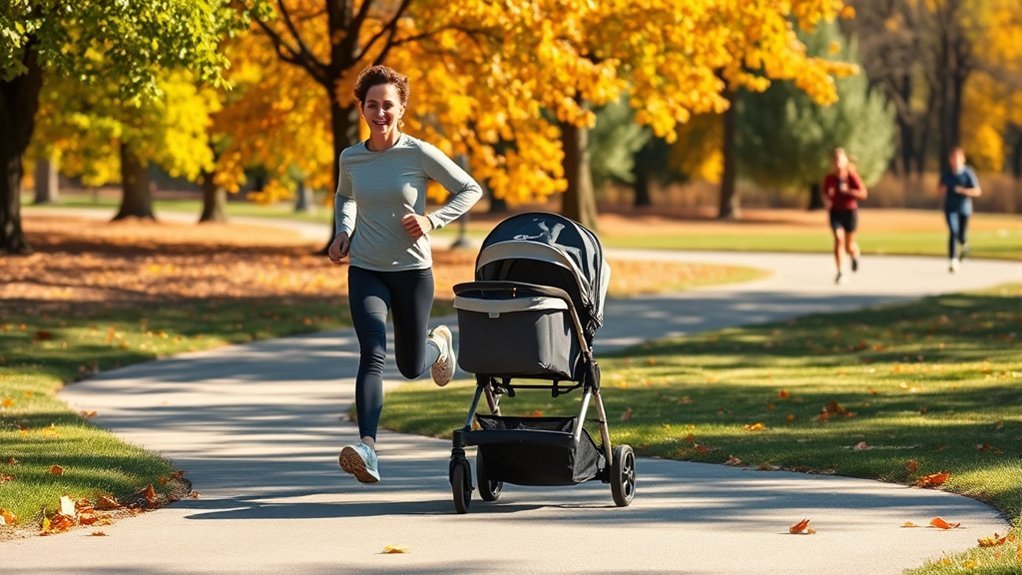
Jogging with a regular stroller might feel convenient, but it is not a safe setup for running. Regular strollers are built for walking, shopping, and smooth sidewalks, not repeated impact, higher speed, sudden turns, or rough ground. Most standard models lack the wheel size, suspension, frame stability, braking control, and secure restraint features that make a jogging stroller safer for active use.
Quick Answer
You should not jog with a regular stroller. Standard strollers are designed for walking speeds and smooth surfaces, while jogging strollers are built with larger tires, better suspension, stronger stability, secure harnesses, and better control for running. For safety, use a true jogging stroller once your child is developmentally ready.
Key Takeaways
- Regular strollers are made for casual walking, not running, bouncing, turning, or braking at jogging speed.
- The biggest risks are tipping, poor shock absorption, weak braking control, and an insecure ride for your child.
- A jogging stroller usually has large air-filled tires, a locking front wheel, better suspension, a sturdy frame, and a secure harness.
- Smooth walking with a regular stroller is a safer choice than trying to run with one.
- Always check your stroller manual, child weight limit, age guidance, and your child’s head and neck control before jogging.
At a Glance
| Best Answer | Use a jogging stroller, not a regular stroller, for running. |
| Regular Stroller Use | Walking, errands, smooth sidewalks, malls, parks, and short daily trips. |
| Jogging Stroller Use | Running, faster walking, uneven paths, light trails, and active outdoor use. |
| Main Safety Concern | Loss of control, tipping, shaking, poor braking, or child movement during impact. |
Understanding the Design of Regular Strollers
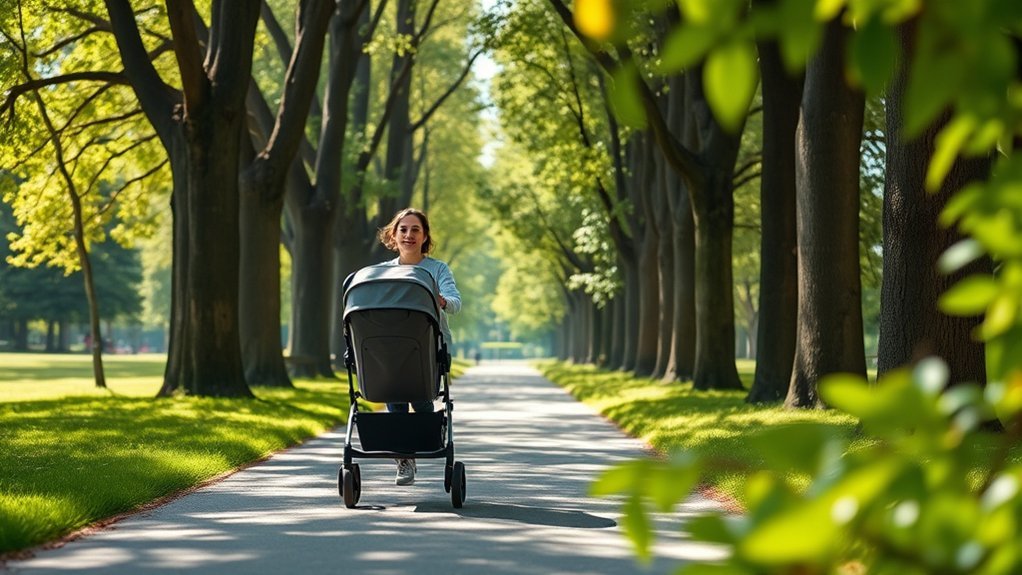
Before you try to use a regular stroller for jogging, you need to understand what it was designed to do. A standard stroller is usually made for slow, steady movement on flat surfaces. It works well for everyday walks, shopping trips, and short outings, but it is not built for the repeated impact of running.
Most regular strollers have smaller wheels, basic frames, and limited suspension. Many also use solid rubber or plastic-style wheels that do not absorb bumps well. When you run, every crack, curb edge, stone, and uneven patch can send a stronger jolt through the stroller. That can make the ride uncomfortable for your child and harder for you to control.
Regular strollers also tend to have moderate-to-low stability during faster movement. Their wheelbase, handlebar design, and front-wheel setup are usually made for tight turns at walking speed, not straight tracking at jogging speed. A front swivel wheel may feel helpful in a store aisle, but it can wobble or pull sideways when you move faster.
The frame and materials can also affect control. Some standard strollers are heavier and bulkier, while others are very lightweight and not stable enough for running. In both cases, the design is not optimized for jogging. Most regular strollers also use basic harness systems, while a proper jogging stroller usually includes a more secure restraint setup, better frame balance, and features designed to keep the stroller steady during active use.
Warning: Do not assume a stroller is safe for jogging just because it rolls smoothly while walking. Check the manufacturer’s manual and only jog with a stroller that is clearly designed and approved for running.
Safety Risks of Jogging With a Regular Stroller
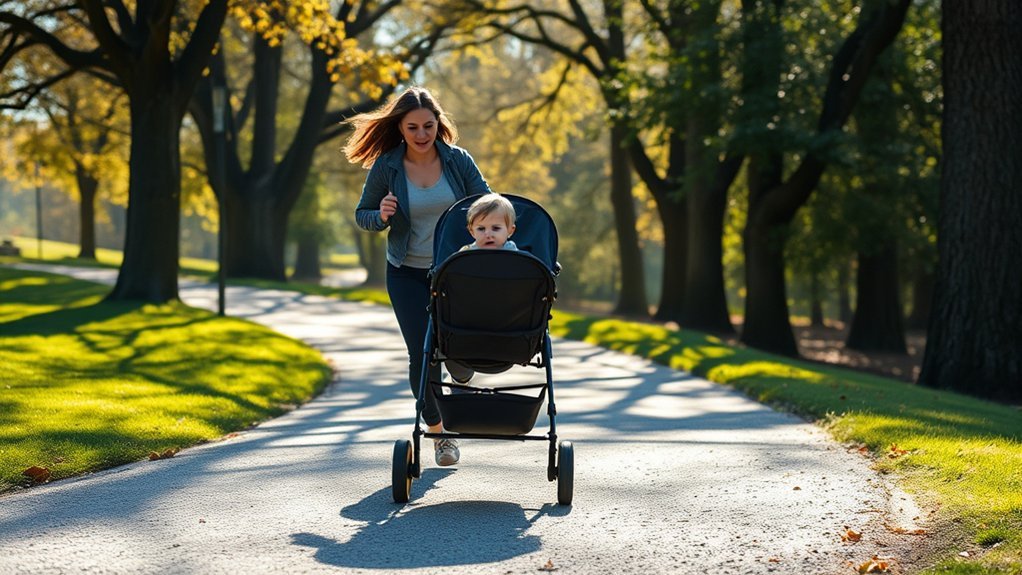
While jogging with a regular stroller might seem like an easy way to exercise, it comes with serious safety risks. The problem is not only speed. Running changes how the stroller handles bumps, turns, slopes, and sudden stops. A stroller that feels fine at a walking pace can become unstable when pushed faster.
Jogging with a regular stroller may seem easy, but it can create avoidable safety risks for both parent and child.
- Stability Issues: Regular strollers are more likely to tip, sway, or wobble on uneven ground, especially when you jog downhill, turn quickly, or hit a bump.
- Inadequate Safety Harness: Basic harnesses may not hold your child as securely during repeated motion. A loose fit can allow your child to shift, lean, or slump during a run.
- Brake Deficiencies: Many regular strollers do not have braking systems designed for jogging speed. This can make it harder to slow down safely on hills or sudden stops.
- Poor Front-Wheel Control: A front swivel wheel can shake or veer at speed, which can make the stroller harder to steer.
- Limited Shock Absorption: Small wheels and weak suspension can create a rough ride that puts more stress on the stroller and your child.
These issues raise the chance of jogging accidents. If you plan to run regularly, the safer option is to use a jogging stroller made for speed, stability, and shock control. Your child’s comfort and safety should come before convenience.
Comparing Stability: Jogging Strollers vs. Regular Strollers

If you are thinking about jogging with your child, stability is one of the biggest differences between a regular stroller and a jogging stroller. A jogging stroller is usually built around a three-wheel design with a longer frame, larger tires, and better balance. This helps the stroller track straighter and stay steadier while moving faster.
Jogging strollers often feature large, air-filled tires that handle bumps better than small solid wheels. The tires create a smoother ride and help the stroller maintain better contact with the ground. Regular strollers usually have smaller wheels that work well on smooth floors and sidewalks, but they can struggle on gravel, grass, cracks, or uneven pavement.
The locking front wheel is another major stability feature. On many jogging strollers, the front wheel can lock forward for running. This helps reduce wobbling and improves control at higher speeds. Regular strollers often have swivel wheels that are excellent for slow turns but less stable during jogging.
Jogging strollers also tend to include advanced safety features such as a sturdy 5-point harness, wrist strap, better suspension, and a stronger frame. These features help keep your child secure and help you maintain control. If you want the fitness benefits of running with your child, investing in the right stroller is the smarter and safer choice.
The Importance of Shock Absorption in Strollers
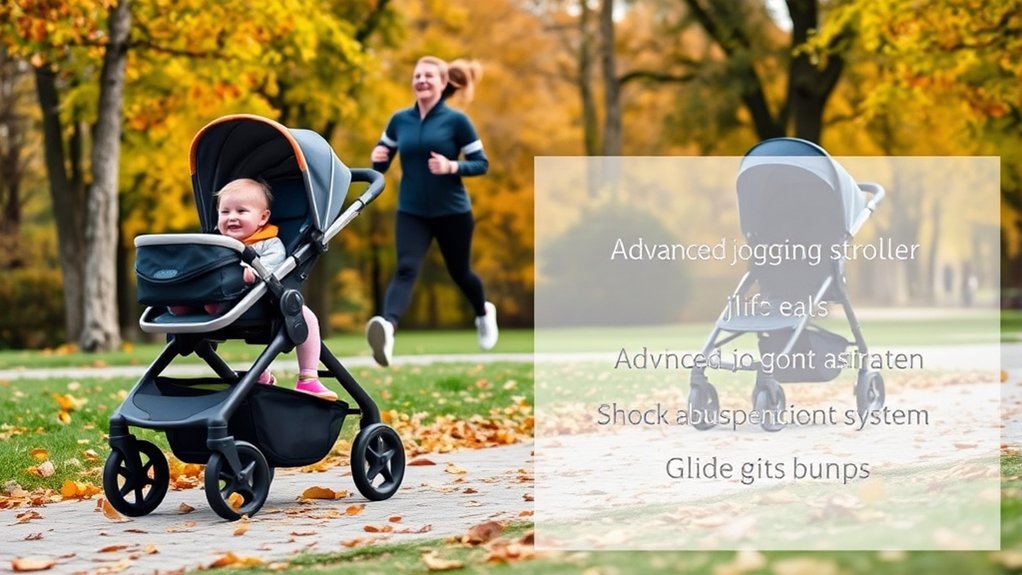
Shock absorption matters because jogging creates repeated impact. Every step you take sends force through your hands, the stroller frame, the wheels, and the seat. Without proper shock absorption, your child can feel more bouncing, shaking, and jolting than they would during a normal walk.
A good jogging stroller is designed to reduce that impact. It may use air-filled tires, a suspension system, and a frame that handles movement better. These features can make the ride smoother and help protect your child from harsh bumps.
- Enhanced Safety: Better suspension helps reduce sudden jarring movements that can happen on rough or uneven ground.
- Stroller Comfort: Air-filled tires found on many jogging strollers provide better cushioning than small solid wheels.
- Smooth Navigation: Good shock absorption helps you move over sidewalk cracks, packed dirt, and minor bumps without losing control.
Investing in a stroller with strong shock absorption features does more than improve comfort. It can also make your jog feel steadier, reduce stress on the stroller frame, and help you keep a more controlled pace.
Pro Tip: Before every jog, check the tire pressure, wheel lock, harness fit, brakes, and handlebar grip. A fast safety check can prevent many common stroller problems.
Terrain Challenges for Regular Strollers

Jogging with a regular stroller becomes even more risky when the surface is not perfectly smooth. Regular strollers usually have smaller, solid wheels and limited shock control, so they can struggle with grass, gravel, dirt paths, tree roots, and broken pavement. These surfaces can reduce stability and make the stroller harder to steer.
Terrain also affects your child’s comfort. A small bump that feels minor to you can create a sharp jolt inside the stroller. When those bumps happen repeatedly during a jog, the ride can become uncomfortable and unsafe.
| Terrain Type | Stroller Performance | Safety Concerns |
|---|---|---|
| Smooth Pavement | Good | Minimal at walking speed, but still not ideal for jogging unless approved by the stroller maker |
| Grass | Fair | Moderate risk from drag, uneven ground, and reduced steering control |
| Gravel | Poor | High risk of wheel catching, shaking, or tipping |
| Dirt Trails | Very Poor | High risk of instability, hard jolts, and loss of control |
| Uneven Terrain | Unsuitable | Major safety hazards from bumps, roots, slopes, and sudden wheel movement |
Weight limits also matter. A stroller that is near its maximum weight can be harder to control, especially during faster movement. As your child grows, the stroller’s handling changes. That is another reason to use a stroller designed for jogging instead of pushing a regular stroller beyond its intended purpose.
Recommended Features for Jogging Strollers
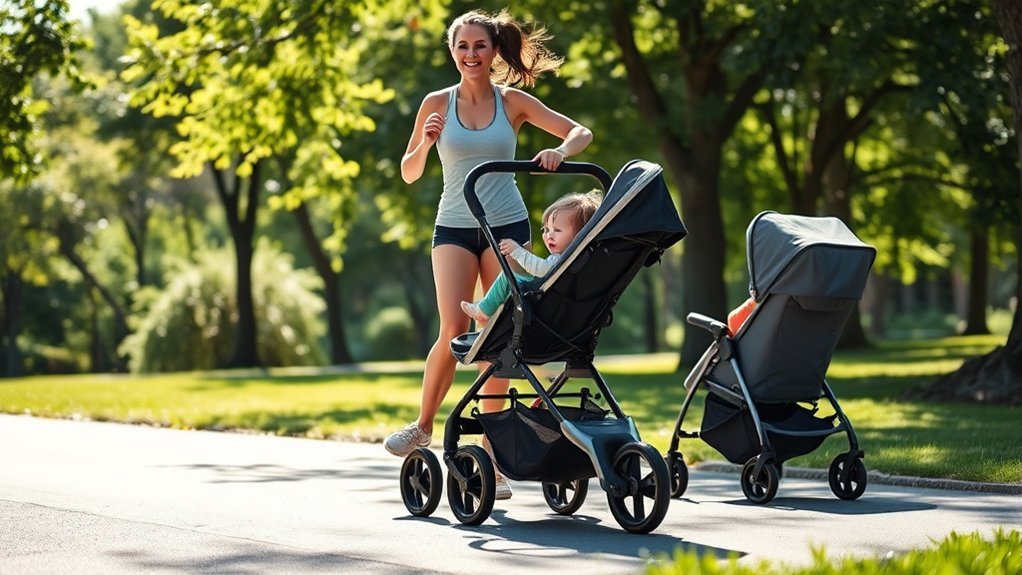
When choosing a jogging stroller, focus on features that improve control, comfort, and child safety. A good jogging stroller is not just a regular stroller with bigger wheels. It is designed to handle faster movement, repeated impact, and outdoor terrain.
- Large, Air-Filled Tires: These help absorb bumps and provide better traction on pavement, grass, and packed paths.
- Locking Front Wheel: A front wheel that locks forward helps prevent wobbling and improves stability during running.
- Secure 5-Point Harness: A strong harness helps keep your child properly positioned while the stroller moves.
- Wrist Strap: This helps prevent the stroller from rolling away if your grip slips.
- Reliable Brakes: A parking brake is essential, and some jogging strollers also include a hand brake for better downhill control.
- Good Suspension: Suspension helps reduce bouncing and keeps the ride smoother for your child.
- Sturdy Frame: The frame should feel stable, not flimsy, when pushed at speed.
- Sun Canopy and Visibility Features: A large canopy, reflective details, and good ventilation can make outdoor runs more comfortable.
Also check the manufacturer’s age, weight, and height limits. Not every jogging stroller is suitable for every child, and some models have specific instructions for when jogging mode is safe to use.
Expert Insights on Jogging Safety

When it comes to jogging with a stroller, safety should be your top priority. Regular strollers cannot match the stability and safety features of jogging strollers. That difference matters most when you are moving faster, crossing uneven surfaces, or trying to stop quickly.
Stability Differences Explored
Regular strollers may seem useful for every outing, but their stability falls short when it comes to jogging. Running changes how the stroller reacts to movement, and even small design limits can become larger safety issues.
- Tires: Regular strollers often have smaller, non-inflated tires that provide limited shock absorption.
- Front Wheel: Without a locking front wheel, the stroller may wobble, sway, or pull sideways at faster speeds.
- Suspension: Jogging strollers usually have better suspension systems that improve stability and comfort on uneven surfaces.
The stroller’s weight, frame shape, and wheelbase all affect how it handles during a run. When you prioritize stability, you create a safer and more enjoyable exercise experience for both you and your child.
Safety Features Comparison
Many parents do not realize how different the safety features can be between jogging strollers and regular strollers. A jogging stroller is usually designed with stroller ergonomics, larger tires, stronger control, and more secure restraint systems in mind.
A 5-point harness system helps hold your child at the shoulders, waist, and between the legs. This is especially helpful when the stroller moves over bumps. A wrist strap adds another layer of control by helping keep the stroller close if your hand slips from the handlebar.
Unlike many regular strollers, jogging models often include locking front wheels for better high-speed control. Some also include hand brakes, reflective accents, and stronger canopies. These details may seem small, but they can make a real difference when you are running outside.
Terrain Handling Capabilities
Understanding terrain handling capabilities is essential for a safe and enjoyable jogging experience. Regular strollers struggle with terrain adaptability because their wheels and suspension are usually made for flat surfaces.
- Tires: Jogging strollers usually have larger, air-filled tires that provide better traction on different surfaces.
- Suspension System: A built-in suspension system helps absorb bumps and keeps your child more comfortable.
- Front Wheel: A locking front wheel improves control when you run in a straight line.
With these features, jogging strollers offer much better terrain handling than regular strollers. That makes them the safer choice for parents who want to stay active outdoors.
Alternatives to Jogging With a Regular Stroller
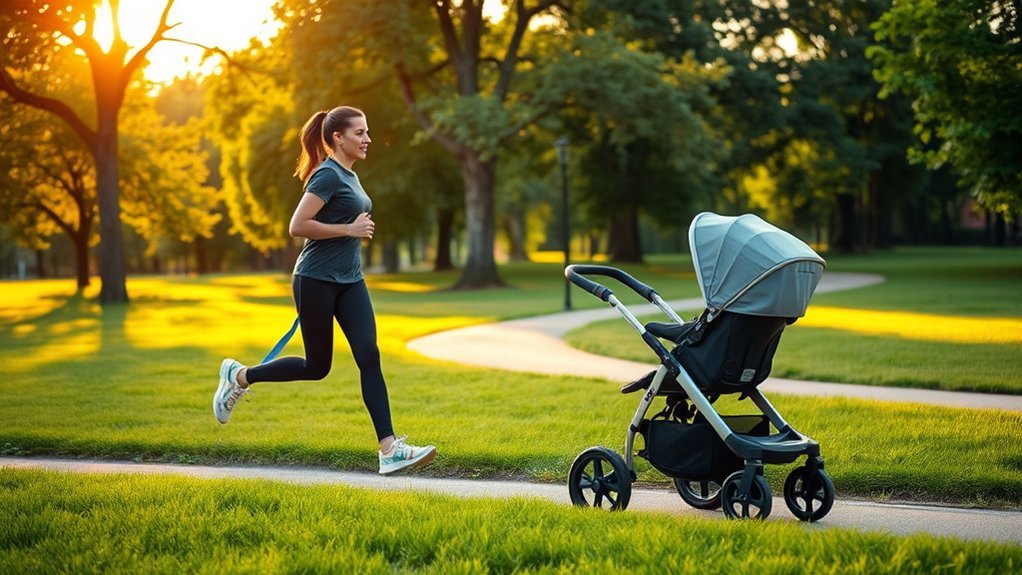
If you are looking for alternatives to jogging with a regular stroller, you still have several good options. You do not have to choose between staying active and keeping your child safe.
The best option is to use a jogging stroller designed with larger air-filled tires, better suspension, a secure harness, and improved frame stability. This gives you a smoother and safer ride on many outdoor surfaces.
If buying a new stroller is not possible right now, brisk walking with your regular stroller is a safer alternative. You can still raise your heart rate, enjoy fresh air, and spend time with your child without pushing the stroller beyond its intended use.
You can also try parent-friendly workouts that do not require running with the stroller. These may include walking intervals, stroller fitness classes, playground bodyweight exercises, or short walks on smooth paths. If you are considering stroller modifications, be careful. Adding accessories or changing wheels may affect balance, warranty, and safety. Always follow the stroller maker’s guidance.
Note: A jogging stroller can often be used for everyday activities, but a regular stroller should not automatically be used for jogging. The safer direction is jogging stroller for walking, not regular stroller for running.
Making an Informed Decision: What to Consider

Before you decide whether to jog with a regular stroller, think about the stroller’s design, safety features, terrain handling, and your child’s readiness. A regular stroller may feel strong enough during slow walks, but jogging places different demands on the frame, wheels, brakes, and harness.
Stroller Design Differences
Choosing the right stroller for your jogging routine starts with understanding the major design differences between regular and jogging strollers. These differences affect comfort, control, and safety.
- Wheel Size: Jogging strollers usually have larger, air-filled tires that provide better shock absorption and stability on rougher surfaces.
- Stroller Weight and Balance: Jogging strollers are designed to feel stable while moving faster, while regular strollers may feel too light, too bulky, or too unstable for running.
- Suspension System: Jogging strollers often include suspension systems that help manage bumps and jolts.
- Frame Shape: The longer and more stable frame of many jogging strollers helps improve straight-line control.
Safety Features Comparison
Understanding the safety features of jogging strollers compared with regular strollers is vital before you run. Regular strollers often lack the stability and support needed for faster activity. Their smaller, solid wheels can struggle on uneven ground and increase the risk of tipping.
Jogging strollers usually include secure 5-point harnesses, wrist straps, better wheel control, and stronger braking features. These safety details are designed for movement, impact, and outdoor use. Prioritizing stroller functionality helps you enjoy exercise without taking unnecessary risks.
Terrain Handling Capability
If you are thinking about jogging with a regular stroller, consider how well it handles different surfaces. Regular strollers often struggle with terrain performance, especially when the ground is not smooth.
- Tire Size: Smaller, non-air-filled tires do not absorb bumps as well as jogging stroller tires.
- Stability: Regular strollers offer lower stability on trails, gravel, grass, slopes, and cracked pavement.
- Suspension: Limited suspension can create a jarring ride for both you and your child.
Regular strollers are designed for walking, shopping, and daily errands. If you plan to jog, a proper jogging stroller will give you a safer, smoother, and more controlled experience.
Frequently Asked Questions
Can jogging with a regular stroller damage the stroller?
Yes, jogging with a regular stroller can damage the wheels, frame, axles, brakes, or folding parts because the stroller is not designed for repeated running impact. More importantly, that damage can create safety concerns if the stroller becomes harder to steer, brake, or keep stable.
Are there any benefits to jogging with a regular stroller?
The main benefit is convenience because you already own the stroller. However, that benefit does not outweigh the safety concerns. If you want fitness benefits while using a regular stroller, brisk walking is a safer choice than jogging.
What age is appropriate for jogging with a stroller?
Many parents wait until a baby has strong head and neck control and can sit with good support, often around six months or later. However, you should follow your stroller manual and your child’s pediatric guidance because readiness can vary by child and stroller model.
How do I choose a jogging stroller for beginners?
Choose a jogging stroller with a sturdy frame, large air-filled tires, a locking front wheel, strong brakes, a 5-point harness, a wrist strap, good suspension, and a comfortable handlebar. Also check the child weight limit, fold size, storage space, and whether the model fits your running surface.
Can I use a jogging stroller for everyday activities?
Yes, many jogging strollers can be used for everyday activities such as walks, parks, and errands. They may be larger or heavier than regular strollers, so check whether the stroller fits your car, doorway, storage area, and daily routine.
Is it safe to jog on smooth pavement with a regular stroller?
Smooth pavement is safer than gravel or trails, but it still does not make a regular stroller suitable for jogging. The stroller may still lack proper suspension, wheel control, braking support, and running stability.
Can I jog slowly with a regular stroller?
Slow jogging is still jogging. Even at a gentle pace, the stroller faces more bouncing, faster steering changes, and stronger braking force than it would during walking. Brisk walking is the safer option if you only have a regular stroller.
Conclusion
Ultimately, while it may be tempting to jog with a regular stroller, the safety risks outweigh the convenience. A standard stroller is not built for running speed, rougher surfaces, repeated impact, or sudden control changes. Imagine trying to navigate a bumpy trail while your child bounces in a stroller that lacks proper suspension, wheel control, and stability. That is exactly the kind of risk parents should avoid.
A dedicated jogging stroller gives you a smoother ride, better control, stronger stability, and safer child restraint. If you want to run with your child, choose equipment designed for that job. If you only have a regular stroller, stick with walking or brisk walking until you can use a stroller made for jogging.
