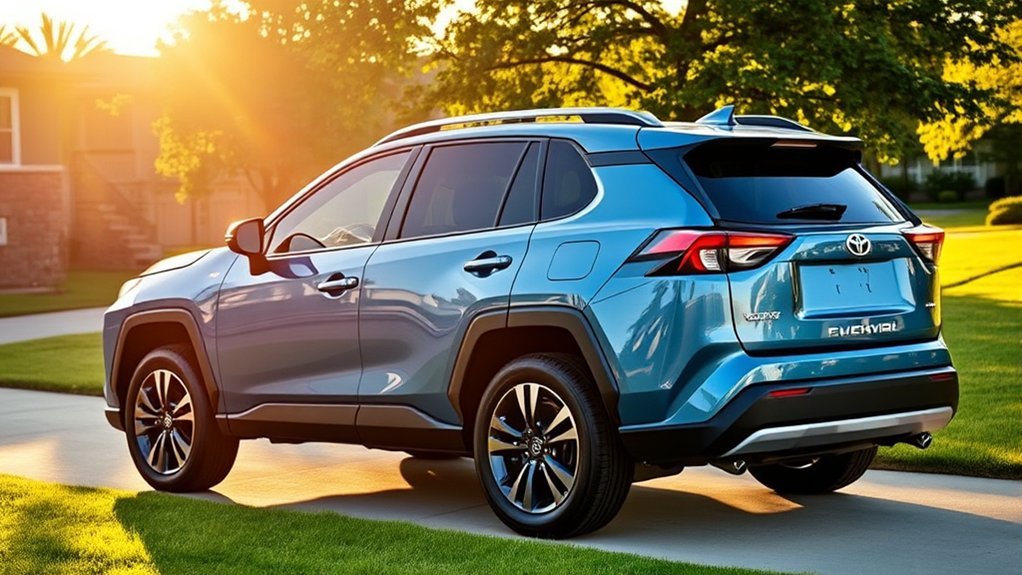
Yes—Toyota RAV4 Hybrids have a strong overall reliability case, but model year matters. Older RAV4 Hybrid history is encouraging, while the all-new sixth-generation 2026 RAV4 is too new to prove 150,000- or 200,000-mile durability. Used buyers should also check VIN-specific campaigns and documented model-year concerns, including refueling-performance issues on certain 2019–2021 hybrids and rear-motor high-voltage cable corrosion coverage on certain 2019–2024 AWD hybrids.
Last updated: September 22, 2026 — refreshed 2026 RAV4 specifications and added Toyota-documented used-model service-program checks.
Research basis: Toyota U.S. specifications and warranty information, Toyota service documentation filed with NHTSA, NHTSA recall lookup, and independent road testing. This article does not claim first-hand long-term testing of the redesigned 2026 generation.
Quick Answer
The Toyota RAV4 Hybrid is generally a strong reliability candidate when it has been maintained well and any model-year-specific issues have been addressed. Toyota backs the hybrid battery for 10 years or 150,000 miles in the U.S. on 2020-and-newer Toyota hybrids, but warranty length is not a predicted failure point. The redesigned 2026 RAV4 is too new for proven long-term durability, so judge a specific vehicle by its year, VIN history, service records, corrosion exposure, warning history, and diagnostic results.
Key Takeaways
- The redesigned 2026 RAV4 has updated hybrid hardware and substantial warranty coverage, but it does not yet have a long-term reliability record.
- In the United States, specified hybrid-related components receive 8 years or 100,000 miles of coverage, while the hybrid battery receives 10 years or 150,000 miles.
- Toyota documented refueling-performance concerns on certain 2019–2021 RAV4 Hybrids and a customer support program for rear-motor high-voltage cable corrosion on certain 2019–2024 RAV4 Hybrid AWD vehicles.
- The hybrid battery does not require automatic replacement when the warranty mileage ends.
- Maintenance intervals, fuel economy, warranty details, and known concerns can differ by model year, trim, drivetrain, and market.
- For a used RAV4 Hybrid, service records, VIN-specific recall and campaign checks, a diagnostic scan, and an independent inspection matter more than a single reliability score.
Are Toyota RAV4 Hybrids Reliable?
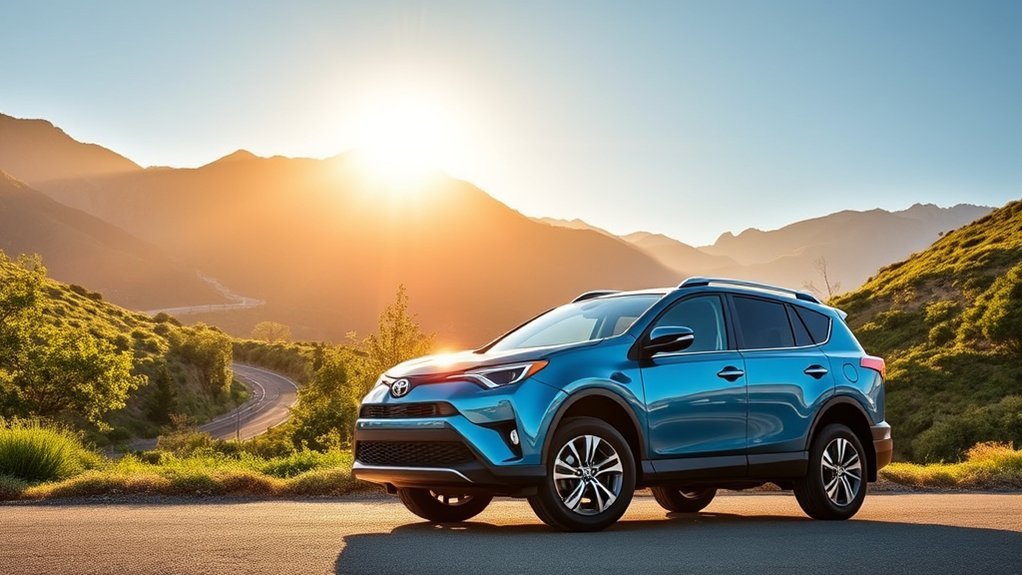
The RAV4 Hybrid benefits from Toyota’s long experience building gasoline-electric vehicles. Its conventional hybrid system charges itself through the engine and regenerative braking, so you do not need to plug it in or manage daily charging.
Routine ownership also remains familiar. The vehicle still needs engine oil, filters, tires, coolant checks, brake inspections, and other scheduled services. Regenerative braking can reduce reliance on the friction brakes during normal driving, although actual brake life depends on driving conditions, corrosion, terrain, and maintenance.
The redesigned 2026 RAV4 uses Toyota’s fifth-generation hybrid system and is available with front-wheel drive or electronic all-wheel drive, depending on the trim. Toyota’s current U.S. RAV4 specifications list up to an EPA-estimated 47 mpg city and 40 mpg highway for eligible front-wheel-drive models, while Toyota’s comparison data lists 43 mpg combined for the base RAV4 configuration. AWD, Woodland, XSE, Limited, and other configurations can be lower, so compare the exact trim and drivetrain rather than one headline MPG figure.
Note: A proven hybrid system and a generous warranty support confidence, but they do not guarantee that every vehicle will reach a particular age or mileage. The 2026 redesign needs more years of real-world use before anyone can make a defensible long-term reliability claim about that specific generation.
What Reliability Ratings Can and Cannot Tell You
Reliability ratings can help you compare broad patterns, but they change as new surveys, claims, and owner reports become available. A score should always identify the model year, publication date, data source, sample size, and methodology.
A rating from an older RAV4 generation should not be presented as the established score for the redesigned 2026 vehicle. You should also avoid treating a single numerical score as more important than service history, unresolved warning lights, accident damage, corrosion, recalls, and a professional inspection.
Can a RAV4 Hybrid Last 200,000 Miles?
A properly maintained RAV4 Hybrid may remain serviceable at high mileage, and individual older vehicles can exceed 200,000 miles. As of September 2026, iSeeCars estimates an average RAV4 Hybrid lifespan of about 170,110 miles and a 28.9% chance of reaching at least 200,000 miles, based on its model-level analysis of more than 300 million vehicles. Those population estimates are not a limit or guarantee for one RAV4 Hybrid, and they do not establish the durability of the redesigned 2026 generation. Climate, maintenance, previous repairs, driving conditions, collision history, road salt, fluid condition, and component wear still influence the result.
High mileage is an outcome of vehicle condition, maintenance, and use. It is not a guaranteed feature included with the hybrid badge.
What Problems Should You Check on a Used RAV4 Hybrid?
Two Toyota-documented issues deserve special attention when you are evaluating fifth-generation used RAV4 Hybrids. They do not mean every vehicle is affected, and neither should be applied to the redesigned 2026 generation without VIN-specific evidence.
| Model years / configuration | Toyota-documented concern | What a used buyer should do |
|---|---|---|
| Certain 2019–2021 RAV4 Hybrids | Toyota bulletin T-SB-0109-20 Rev1 describes cases where the fuel gauge may show less than full, the amount of fuel accepted at refueling may be lower than expected, or the displayed distance to empty may be lower than expected. Toyota developed updated fuel-tank and fuel-sender parts for applicable vehicles. | Check the VIN and service records for the applicable campaign/repair history. During a test drive and refuel, note gauge behavior, distance-to-empty behavior, and whether the tank repeatedly accepts much less fuel than expected. |
| Certain 2019–2024 RAV4 Hybrid AWD vehicles | Toyota Customer Support Program 22TE09 covers excessive corrosion at the high-voltage floor wire-harness and rear traction-motor cable connection on specified AWD hybrids. Toyota notes that excessive corrosion can cause AM-radio static during some drive cycles or, after warning indications, a no-start condition. | Ask a Toyota dealer to check VIN eligibility and repair history, especially for vehicles used where road salt is common. Do not probe or disconnect orange high-voltage components yourself. |
Use Toyota’s 2019–2021 refueling-performance bulletin and the 22TE09 customer support program as starting points, then confirm applicability by VIN with Toyota. A technical service bulletin or customer support program is not the same thing as a safety recall.
How Does Toyota RAV4 Hybrid Warranty Coverage Affect Reliability?
Warranty coverage limits your financial exposure to certain qualifying defects. It also shows how long Toyota is willing to provide defined protection for covered parts. However, a warranty is not a reliability score, a maintenance plan for the vehicle’s entire life, or a promise that a part will fail when coverage ends.
2026 U.S. Warranty Duration Overview
| Coverage | 2026 U.S. Term | What to Know |
|---|---|---|
| Basic warranty | 3 years or 36,000 miles | Covers qualifying defects in most components, excluding normal wear and maintenance items. |
| Powertrain warranty | 5 years or 60,000 miles | Applies to listed powertrain components under the warranty terms. |
| Hybrid-related components | 8 years or 100,000 miles | Covers qualifying defects in specified hybrid-system components. |
| Hybrid battery | 10 years or 150,000 miles | Separate battery coverage that is transferable across ownership, subject to the warranty terms. |
| ToyotaCare scheduled maintenance | 1 year or 10,000 miles | Applies to normal factory-scheduled maintenance included with the U.S. 2026 RAV4. |
| Roadside assistance | 2 years with unlimited mileage | This is separate from the scheduled-maintenance period. |
These terms apply to the U.S. 2026 model and are subject to exclusions and conditions. Coverage can differ by country, model year, in-service date, emissions jurisdiction, and vehicle history. Confirm the exact terms in Toyota’s Warranty and Maintenance Guide.
Coverage for Hybrid Components
The hybrid battery’s 10-year or 150,000-mile warranty is longer than the 8-year or 100,000-mile term for other covered hybrid components. The two terms should not be combined into one blanket hybrid-system warranty.
The end of the battery warranty is not a scheduled replacement point. You should replace or repair the traction battery only when proper testing identifies a qualifying fault, unacceptable deterioration, physical damage, or another diagnosed problem.
The RAV4 Hybrid also has a conventional 12-volt battery that supports computers, accessories, and system startup. A weak 12-volt battery can cause no-start symptoms, warning messages, or unusual electronic behavior without proving that the high-voltage traction battery has failed.
Which Maintenance Tasks Should RAV4 Hybrid Owners Prioritize?
Good maintenance reduces avoidable wear and helps technicians identify small problems before they become expensive. Use the schedule for your exact model year and operating conditions rather than following one universal mileage interval.
- Engine oil and filter: Use the specified oil grade and follow the normal or severe-service interval in the maintenance guide.
- Tires: Maintain the cold inflation pressure shown on the vehicle label, rotate the tires when required, and correct uneven wear or alignment problems.
- Brakes: Inspect pads, rotors, calipers, brake fluid, and corrosion even if regenerative braking reduces friction-brake use.
- Cooling systems: Check the engine and hybrid-system cooling circuits according to Toyota’s schedule. Investigate leaks, low fluid, overheating, or contamination promptly.
- Air filters: Replace the engine and cabin filters when required, especially in dusty or polluted conditions.
- 12-volt battery: Test it when starting becomes inconsistent, electronic faults appear, or the vehicle has been stored for a long period.
- Hybrid battery airflow: Keep any cooling intake identified in the owner’s manual unobstructed and free from heavy dust, pet hair, or loose objects.
- Software and campaigns: Ask a Toyota dealer to check for applicable updates, service campaigns, and recalls by VIN.
Pro Tip: Save dated invoices and inspection reports, even when ToyotaCare covers the visit. A complete service record helps with warranty questions, troubleshooting, resale value, and evaluation of a used vehicle.
When Severe Service May Change the Schedule
Toyota maintenance guides use specific “special operating conditions” rather than one blanket severe-service schedule. Examples in recent RAV4 Hybrid guides include driving primarily on dirt or dusty roads, towing or heavy loading, repeated trips of less than five miles below 32°F/0°C, and extensive idling or low-speed commercial-style use. These conditions can add inspections, cleaning, or shorter replacement intervals for specific items. Follow the guide for your exact model year because not every condition changes every service interval.
What Can Affect RAV4 Hybrid Reliability and Efficiency?
Your operating conditions can influence fuel economy, component wear, and how often the vehicle needs attention.
- Cold weather: Cabin heating, engine warm-up, winter fuel, and cold tires can reduce fuel economy.
- Hot weather: Heavy air-conditioning use raises energy demand. Extreme heat can also be hard on both the 12-volt and traction batteries over time.
- Low tire pressure: Underinflated tires increase rolling resistance, heat, and wear.
- Aggressive acceleration: Frequent hard acceleration and braking usually reduce efficiency and increase tire and brake wear.
- Heavy cargo or towing: Added weight and aerodynamic drag increase power demand. Stay within the limits for the exact trim and configuration.
- Long storage periods: A conventional 12-volt battery can discharge while the vehicle sits, especially if it is old or already weak.
- Collision or flood damage: Poorly repaired structural, wiring, cooling-system, or battery damage can create reliability and safety concerns.
A temporary decrease in fuel economy during extreme weather does not automatically mean the hybrid battery is failing. Compare performance across several tanks and consider temperature, trip length, speed, tire pressure, and climate-control use.
Comparing Maintenance Costs: Hybrid vs. Gas Models
A RAV4 Hybrid does not have one dependable annual maintenance figure for every owner. Costs vary with mileage, labor rates, location, tire choice, insurance, vehicle age, corrosion, collision history, and unexpected repairs.
The hybrid can reduce fuel use compared with a similar gasoline-only SUV. Regenerative braking may also reduce friction-brake wear during some types of driving. However, tires, suspension parts, engine maintenance, the 12-volt battery, cooling components, and normal wear items still require attention.
To estimate annual fuel use, divide your yearly mileage by the realistic fuel economy for your trim and driving conditions. Multiply the result by your local fuel price. Repeat the calculation for the vehicle you are comparing against:
Annual fuel cost = annual miles ÷ realistic miles per gallon × local fuel price
This method is more useful than assuming every owner will save the same dollar amount. City-heavy driving may favor the hybrid more than sustained high-speed travel, while cold weather, short trips, roof cargo, towing, and low tire pressure can reduce the advantage.
Common Performance Challenges Faced by RAV4 Hybrid Owners
Not every unusual sensation is a mechanical defect. Hybrid vehicles can sound and respond differently from conventional gasoline vehicles, especially if you have not driven one before.
- Engine noise under hard acceleration: The gasoline engine may hold a steady, noticeable speed while the vehicle accelerates. Independent testing of the redesigned model has also identified a buzzy sound under heavy throttle.
- Brake blending: The transition between regenerative and friction braking can feel different from a traditional brake system. A sudden change, warning light, grinding sound, vibration, or reduced braking performance still requires inspection.
- Gas-engine cycling: The engine may start or stop while the vehicle is stationary or moving. Temperature, battery charge, heating, cooling, and power demand affect this behavior.
- Utilitarian interior materials: Some drivers may find the cabin less refined than certain competitors, especially on expensive trims.
- Fuel-economy variation: Your result may differ from the manufacturer estimate because of trim, drivetrain, weather, speed, trip length, tire pressure, load, and accessory use.
- First-year redesign uncertainty: New software, electronics, trim hardware, and manufacturing changes need time to establish a dependable long-term record.
These trade-offs should not automatically be labeled reliability failures. A thorough test drive is the best way to decide whether the braking feel, engine sound, seating, ride, controls, and interior quality suit you.
Warning: Do not open, disconnect, probe, or repair orange high-voltage cables or hybrid-system components yourself. Stop driving when it is unsafe to continue, and seek qualified service for a hybrid-system warning, overheating, smoke, a burning odor, fluid leakage, severe power loss, or abnormal braking.
How to Check a Used RAV4 Hybrid Before Buying
A used vehicle’s individual condition matters more than the model’s general reputation. Complete these checks before committing to a purchase:
- Confirm the VIN and model year. Do not assume specifications or warranties based only on the registration year or advertisement.
- Review maintenance records. Look for consistent scheduled service, cooling-system work, brake inspections, tire replacement, and documented repairs.
- Check recalls by VIN. Use the official NHTSA recall lookup and ask a Toyota dealer about open recalls or service campaigns.
- Inspect the dashboard before startup. Confirm that warning lights illuminate during the bulb check and then turn off as expected.
- Test both batteries. Have the 12-volt battery tested and obtain a proper hybrid-system diagnostic scan rather than relying only on a short test drive.
- Drive it from cold. Check acceleration, braking, steering, heating, air conditioning, engine transitions, unusual noises, vibration, and warning messages.
- Inspect for damage. Look for corrosion, coolant leaks, underbody impacts, mismatched panels, water intrusion, and evidence of poor collision repair.
- Get an independent inspection. Use a technician familiar with Toyota hybrids who can scan all relevant control modules and inspect the cooling and high-voltage systems safely.
How Does the RAV4 Hybrid Compare to Competitors?
The RAV4 Hybrid competes with vehicles such as the Honda CR-V Hybrid, Hyundai Tucson Hybrid, and Kia Sportage Hybrid. Reliability should not be judged by one unsupported score or by declaring one model the winner in every category.
| Comparison Point | RAV4 Hybrid Consideration | What to Compare |
|---|---|---|
| Fuel economy | Strong manufacturer estimates, with the best figure applying only to eligible configurations. | Compare the exact trim, drivetrain, wheel size, official label, and your usual route. |
| Comfort and refinement | Practical and spacious, but some reviewers find the engine and interior less refined than the CR-V. | Test seat comfort, ride, road noise, visibility, controls, and rear-seat access yourself. |
| Warranty | The hybrid battery has substantial U.S. coverage, but other hybrid components have a shorter term. | Compare exclusions, transferability, maintenance requirements, and market-specific terms. |
| Long-term reliability | Toyota’s broader hybrid experience is encouraging, but the redesigned 2026 RAV4 lacks long-term data. | Compare the same model years and revisit reliability data as the vehicles accumulate mileage. |
| Value | Standard equipment and fuel use can be competitive, but upper trims may overlap with more refined alternatives. | Compare purchase price, insurance, financing, fuel, tires, depreciation, and expected ownership period. |
The better choice depends on your priorities. The RAV4 may appeal more if efficiency, technology, cargo practicality, and Toyota’s hybrid-battery warranty lead your list. A rival may suit you better if seat comfort, cabin materials, ride character, dealer access, or a particular feature matters more.
Related Guides
Frequently Asked Questions
What is the average lifespan of a Toyota RAV4 Hybrid?
Toyota does not guarantee one mileage lifespan. A well-maintained older RAV4 Hybrid may remain usable beyond 200,000 miles, but condition, climate, service history, corrosion, driving conditions, and previous repairs determine the outcome. The redesigned 2026 generation is too new to have a meaningful high-mileage record.
Are there driving habits that affect RAV4 Hybrid reliability?
Yes. Correct tire pressure, smooth acceleration, reasonable loading, prompt attention to warning lights, and scheduled maintenance can reduce avoidable wear. Toyota’s special-operating-condition guidance can add service items for driving primarily on dirt or dusty roads, towing or heavy loading, repeated short trips below freezing, and extensive idling or low-speed commercial-style use.
How do weather conditions affect RAV4 Hybrid performance?
Cold weather can reduce fuel economy because the engine and cabin need more energy to warm up. Hot weather and strong air-conditioning demand can also reduce efficiency. Tire pressure changes with temperature, so check it when the tires are cold. A seasonal economy change alone does not prove the battery is defective.
What are common misconceptions about hybrid reliability?
Common misconceptions include assuming the traction battery needs routine replacement at 150,000 miles, treating every unusual engine sound as a fault, or believing a long warranty guarantees a specific lifespan. Battery replacement should follow professional diagnosis, and normal hybrid operation can sound different from a conventional vehicle.
Can I use regular gas in a Toyota RAV4 Hybrid?
Use the minimum octane and fuel type printed on the fuel door and specified in the owner’s manual for your exact model year. Do not assume that requirements are identical across every RAV4 Hybrid or plug-in-hybrid configuration. Using a higher octane than required normally provides no reliability benefit unless Toyota specifies it.
What are common problems to check on a used RAV4 Hybrid?
Check the exact model year and VIN rather than assuming every RAV4 Hybrid has the same issues. Toyota documented refueling-performance concerns on certain 2019–2021 hybrids and expanded Customer Support Program 22TE09 for rear-motor high-voltage cable corrosion on certain 2019–2024 RAV4 Hybrid AWD vehicles. Also check recalls, warning history, 12-volt battery condition, underbody corrosion, service records, and hybrid-system diagnostic results before buying.
Does the hybrid battery need replacement when its warranty expires?
No. Warranty expiration is not a replacement interval. Continue using the battery while it performs normally and no diagnostic fault is present. If warning messages, major economy changes, overheating, or drivability problems appear, have the full hybrid system tested before authorizing replacement.
Do recalls mean the RAV4 Hybrid is unreliable?
Not automatically. Recalls address defined safety defects, and their importance depends on the issue and whether the repair has been completed. Check the VIN rather than relying on a model-wide list. An unresolved safety recall should be repaired promptly through the manufacturer’s remedy process.
Conclusion
The Toyota RAV4 Hybrid remains a reasonable vehicle to consider if you value fuel efficiency, cargo practicality, familiar maintenance, and substantial hybrid-battery coverage. Toyota’s broader hybrid experience supports confidence, but it should not be turned into a guaranteed mileage claim.
For the redesigned 2026 model, the most accurate conclusion is that its design and warranty are promising while its long-term reliability remains unproven. Follow the exact maintenance guide, check recalls by VIN, investigate warning lights promptly, and evaluate a used vehicle through records, diagnostics, and an independent inspection.
Sources
- Toyota USA Newsroom: 2026 RAV4 — sixth-generation changes, hybrid specifications, fuel-economy estimates, warranties, ToyotaCare, and roadside assistance.
- Toyota Hybrid Battery Warranty — current hybrid-battery coverage and general battery-lifespan qualifications.
- Toyota Manuals and Warranties — model-year owner manuals, maintenance schedules, and complete warranty terms.
- National Highway Traffic Safety Administration Recall Lookup — VIN-specific safety recall checks.
- Car and Driver 2026 RAV4 Hybrid Test — independent observations about acceleration, engine noise, ride quality, and interior finish.
- Edmunds Comparison via Associated Press — balanced comparison of the 2026 RAV4 and Honda CR-V.
- Toyota T-SB-0109-20 Rev1 via NHTSA — 2019–2021 RAV4 Hybrid refueling-performance applicability, symptoms, and repair information.
- Toyota Customer Support Program 22TE09 via NHTSA — expanded coverage for specified high-voltage rear-motor cable corrosion concerns, including certain 2019–2024 RAV4 Hybrid AWD vehicles.
- iSeeCars RAV4 Hybrid Reliability — model-level lifespan and 200,000-mile probability estimates used for population context, not as a guarantee for an individual vehicle.
