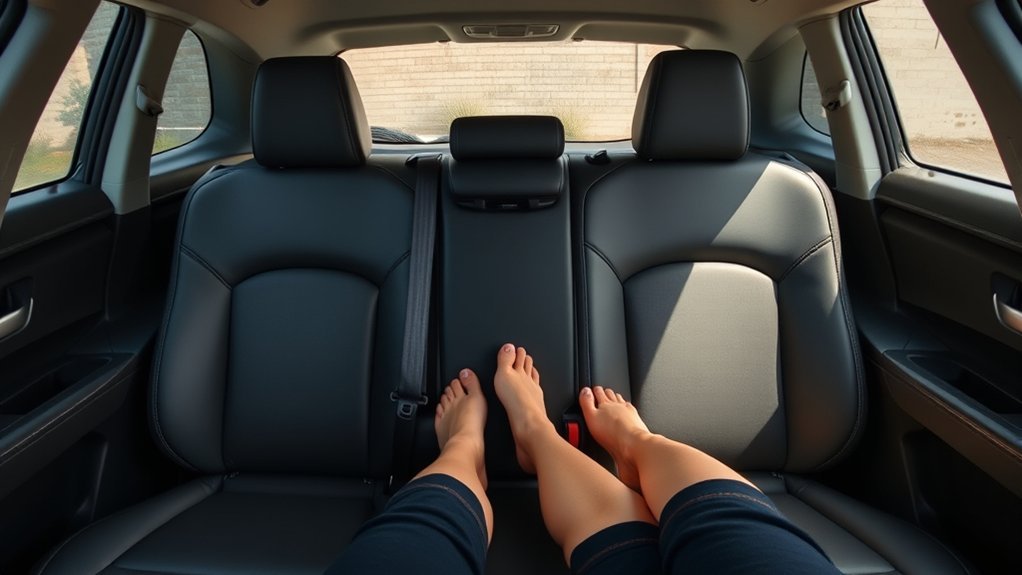
The back seat in the U.S.-spec 2025 Toyota RAV4 is roomy enough for two adults, practical for families, and flexible enough for everyday cargo needs. It provides 37.8 inches of rear legroom, 39.5 inches of rear headroom, and reclining 60/40 split seatbacks. However, taller adults and three-across child-seat users should test the actual vehicle before buying.
Quick Answer
The 2025 Toyota RAV4 has a comfortable and practical back seat, with 37.8 inches of legroom, 39.5 inches of headroom, and 56.4 inches of shoulder room. Two adults fit well, while three adults are better suited to shorter trips. Contrary to some descriptions, the rear seatbacks do recline and fold.
Key Takeaways
- The 2025 RAV4 provides 37.8 inches of rear legroom and 39.5 inches of rear headroom.
- Its 60/40 split rear seatbacks recline for passenger comfort and fold for carrying larger items.
- The published 56.4-inch figure is rear shoulder room, not the physical width of the seat cushion.
- Two adults generally fit comfortably; three adults can fit, but the middle position is best for shorter journeys.
- Child-seat fit depends on the restraint, installation method, and front-seat position, so a physical test fit is essential.
- The Honda CR-V offers more rear legroom, with 41.0 inches compared with the RAV4’s 37.8 inches.
Note: This guide covers the U.S.-spec 2025 Toyota RAV4, RAV4 Hybrid, and RAV4 Plug-in Hybrid. Equipment and measurements can vary by trim, roof configuration, market, and model year. Do not assume the same figures apply to a redesigned or later-model RAV4.
How Spacious Is the Toyota RAV4 Back Seat?
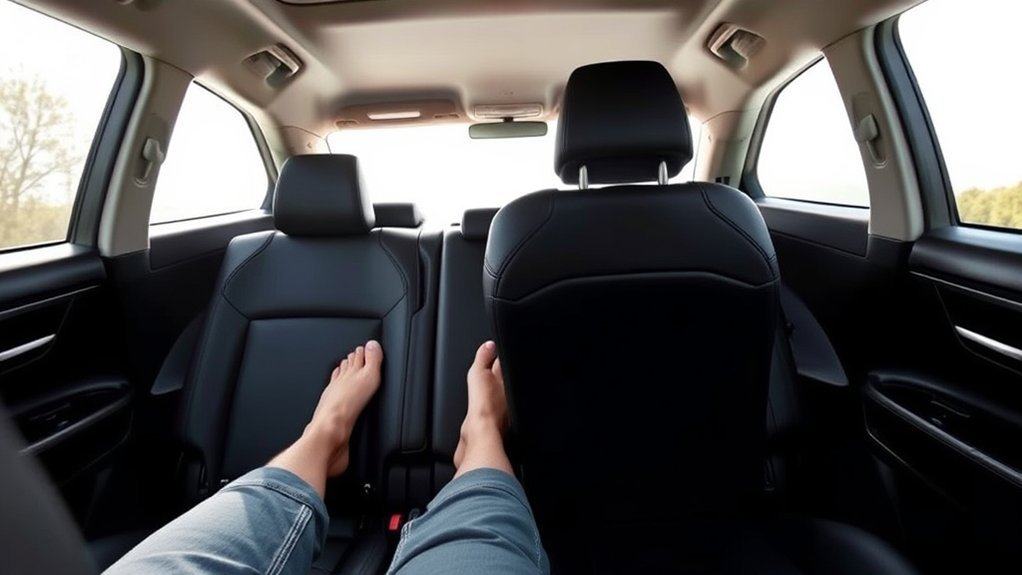
The 2025 Toyota RAV4 offers a useful balance of passenger room and cargo flexibility. Toyota lists 37.8 inches of second-row legroom, which is adequate for most adults when the front seats are positioned for average-height occupants.
Rear headroom measures 39.5 inches, giving most passengers enough clearance to sit upright without their hair or head touching the headliner. The rear cabin also provides 56.4 inches of shoulder room.
That shoulder-room measurement should not be confused with the physical width of the bench seat. It indicates the lateral cabin space measured at shoulder height and does not guarantee that three large adults or three wide child restraints will fit comfortably.
The RAV4 is designed for five occupants, with three designated seating positions in the second row. In real-world use, two adults should have comfortable personal space. A third adult can use the center position, but shoulder, hip, and foot space will be tighter.
The 2025 RAV4 has enough rear space for two adults to travel comfortably, while its three-person rear bench remains most practical for families or shorter trips with three adults.
Toyota lists up to approximately 98.9 cubic feet of total passenger volume for applicable 2025 configurations. This figure describes the entire passenger cabin rather than the back seat by itself, so it should not be used as a direct measure of rear-passenger comfort.
What Are the RAV4’s Legroom and Headroom Dimensions?
The following manufacturer measurements help explain how the 2025 RAV4 accommodates front and rear passengers:
| Measurement | Front Row | Second Row |
| Legroom | 41.0 inches | 37.8 inches |
| Headroom without moonroof | Approximately 39.5 inches | 39.5 inches |
| Headroom with moonroof | Approximately 37.7 inches | 39.5 inches |
| Shoulder room | 57.8 inches | 56.4 inches |
| Hip room | 54.3 inches | 47.7 inches |
The front-seat position has a major effect on usable rear knee room. A tall driver who moves the seat fully rearward will leave less space for the passenger seated behind, even though the published rear-legroom specification remains the same.
Headroom also depends on equipment. A moonroof reduces front-row headroom, which explains why some specification lists show 37.7 inches while others show approximately 39.5 inches. The second-row headroom figure remains 39.5 inches in the published 2025 specifications.
What Comfort Features Enhance the RAV4 Back Seat?
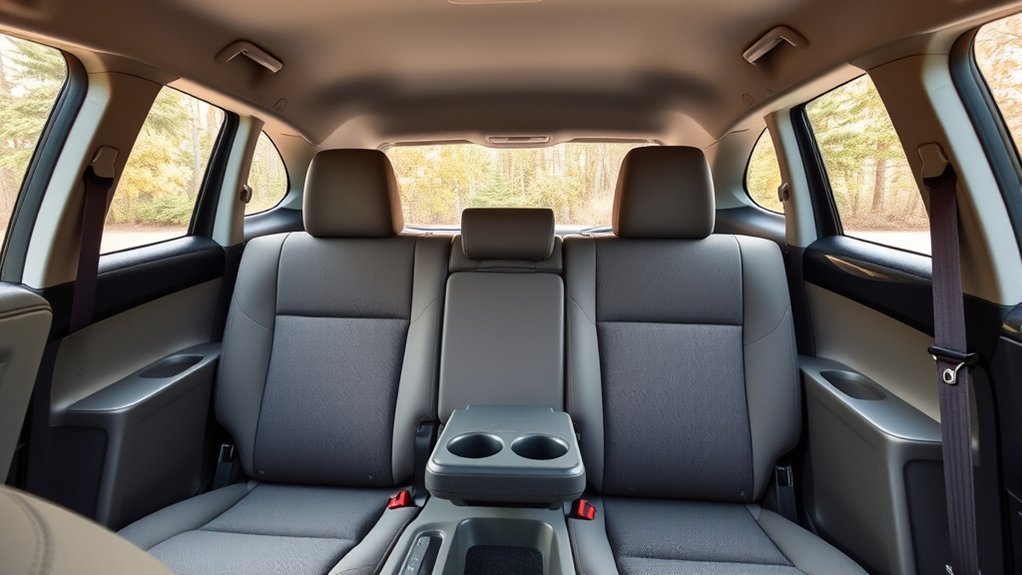
The 2025 RAV4’s rear seatbacks have a 60/40 split design. They can recline to improve passenger comfort and fold forward when additional cargo space is needed. This corrects a common misconception that the RAV4’s rear seats are fixed upright.
The reclining adjustment is useful on longer drives because passengers can choose a less upright seating angle. The rear bench also includes adjustable head restraints, seat belts for all three positions, and a folding center armrest with cupholders on applicable configurations.
Rear air vents help distribute heated or cooled air to second-row passengers. Rear charging ports are also provided in the cabin, allowing passengers to charge compatible phones, tablets, and other devices. Port type and equipment details should be confirmed for the specific trim and vehicle.
Upholstery varies by trim. Factory configurations use fabric or Toyota SofTex-trimmed seating. SofTex is a synthetic upholstery material and should not be described as genuine leather.
Pro Tip: During a test drive, adjust the driver’s seat exactly as you would use it, then sit directly behind it. Published legroom is helpful for comparison, but this test reveals whether your knees, feet, and head have enough space with your real seating position.
RAV4 Back Seat Space: Passenger Experience and Preferences
Passenger comfort depends on more than one published measurement. Height, leg length, shoulder width, posture, front-seat position, and trip length all affect how roomy the RAV4 feels.
- Average-height adults: Most should have adequate knee and head clearance, particularly when the front seats are not pushed fully rearward.
- Taller adults: Headroom is generally generous, but the 37.8-inch legroom figure may feel only adequate behind a tall driver or front passenger.
- Two rear passengers: Two adults have enough shoulder space to sit without constant contact and can use the center armrest when the middle position is unoccupied.
- Three rear passengers: Three designated seating positions are provided, but the center passenger has less personal space. Three adults are more comfortable on short trips than on long journeys.
- Long-distance comfort: The reclining seatbacks improve the seating angle, but cushion shape and individual posture remain personal considerations.
The 47.7-inch rear hip-room measurement also helps explain why a three-person bench may feel narrower at cushion level than the 56.4-inch shoulder-room figure suggests. Buyers who regularly carry three adults should sit all intended passengers in the vehicle before choosing it.
Can Child Safety Seats Fit in the RAV4 Back Seat?
Many infant, convertible, combination, and booster seats can be installed in the 2025 RAV4, but no cabin measurement guarantees that every child restraint will fit in every seating position.
The RAV4 provides lower-anchor locations for the outboard rear seating positions. Top-tether locations and approved installation positions are identified in the 2025 Toyota RAV4 owner’s manual. A child restraint may also use a vehicle seat belt when both the vehicle manual and child-seat instructions permit that installation.
- Rear-facing seats: A long rear-facing restraint may require the front passenger seat to move forward.
- Outboard installations: These positions provide the most straightforward access to the lower anchors.
- Center installations: Use only an installation method specifically approved by both manuals. Do not borrow one lower anchor from each outboard position unless both manufacturers explicitly allow it.
- Three-across arrangements: Fit depends on the exact widths and contours of all three restraints. Narrow seats may work, but a physical test is necessary.
- Booster seats: Confirm that the buckle remains reachable and that the shoulder belt crosses the child correctly.
Warning: Install and use every child restraint according to both the restraint manufacturer’s instructions and the RAV4 owner’s manual. The National Highway Traffic Safety Administration also provides selection, installation, and inspection guidance.
How Does RAV4 Back Seat Space Compare to Competitors?
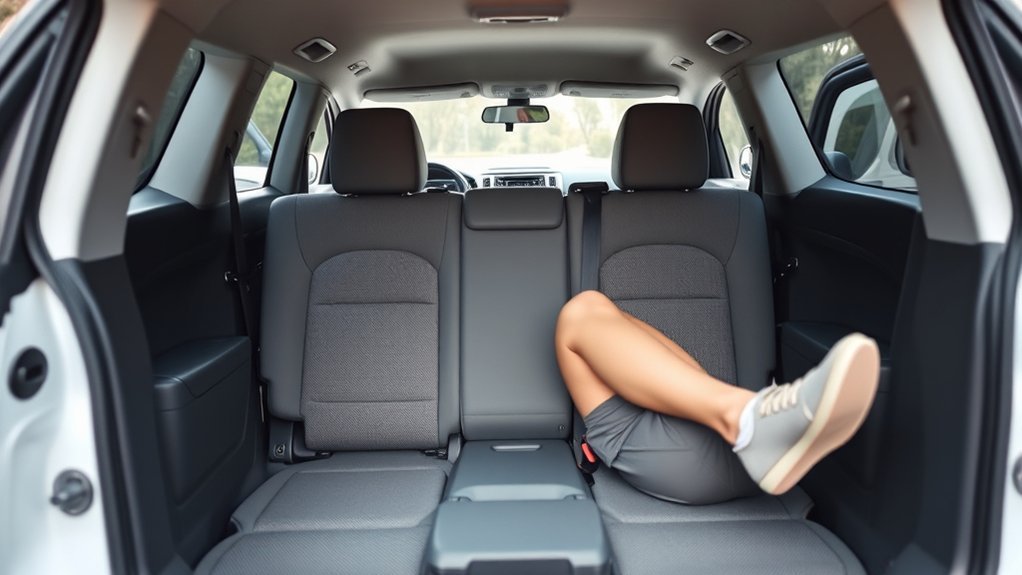
The 2025 RAV4’s 37.8 inches of rear legroom is usable, but it is not class-leading. The Honda CR-V is one of the clearest alternatives for buyers who prioritize second-row knee room.
| Vehicle | Rear Legroom | Practical Difference |
| 2025 Toyota RAV4 | 37.8 inches | Adequate for most adults, but more sensitive to the front-seat position. |
| 2025 Honda CR-V | 41.0 inches | Provides 3.2 inches more published rear legroom, benefiting tall passengers and some rear-facing child-seat arrangements. |
The RAV4 remains competitive because it combines usable passenger space with reclining seatbacks, a wide cargo opening, and practical folding-seat flexibility. However, the Honda CR-V’s published specifications give it a clear rear-legroom advantage.
The Toyota Venza should no longer be presented as a current same-year alternative for U.S. buyers because its U.S. run ended after the 2024 model year. Toyota’s 2025 Crown Signia occupies a related position in the lineup, while the Highlander is a larger three-row SUV rather than a direct compact-SUV comparison.
Related Guides
Frequently Asked Questions
Can child safety seats fit comfortably in the RAV4 back seat?
Many child restraints fit, especially in the two outboard positions, but comfort and front-seat clearance depend on the restraint’s dimensions. Test the exact seat in the vehicle and follow both manuals. Three-across arrangements require particularly careful testing.
Is the RAV4 back seat suitable for tall passengers?
The 39.5 inches of rear headroom suits many tall adults, but 37.8 inches of legroom may feel limited behind a tall driver. Tall buyers should set the front seat to their driving position and sit directly behind it before deciding.
How does the RAV4 handle heavy loads in the back seat?
Heavy cargo should be placed in the cargo area rather than loose on a passenger seat. Fold the rear seatbacks when necessary, distribute weight evenly, secure every item, and stay within the payload shown on the vehicle’s Tire and Loading Information label.
Are USB ports available for back-seat passengers?
Yes. The 2025 RAV4 provides rear charging access for passengers. Because connector type and equipment can vary, confirm the exact ports on the trim and vehicle you are considering.
What type of upholstery is used in the RAV4 back seat?
Depending on trim, the 2025 RAV4 uses fabric or Toyota SofTex-trimmed seating. SofTex is a synthetic upholstery material rather than genuine leather.
Do the Toyota RAV4 rear seats recline?
Yes. The 2025 RAV4 has reclining 60/40 split rear seatbacks. The seatbacks can also fold forward to expand the cargo area.
Can three adults sit in the RAV4 back seat?
Three designated rear seating positions are provided, so three adults can ride in the back. However, the center position has less hip and shoulder space, making a three-adult arrangement better for short trips than extended travel.
Conclusion
The 2025 Toyota RAV4 has a practical, adult-friendly back seat with 37.8 inches of rear legroom, 39.5 inches of rear headroom, and reclining 60/40 split seatbacks. Two adults should fit comfortably, while three adults or three child restraints require more careful evaluation. The CR-V offers more rear legroom, but the RAV4 remains a versatile choice for everyday passengers, family travel, and cargo.
For the most reliable buying decision, set the front seats to their normal positions, bring every child restraint you plan to use, and test the second row in the exact trim and model year under consideration.
Sources
- Toyota 2025 RAV4 eBrochure — interior dimensions, seating configuration, upholstery, charging, and comfort features.
- Toyota 2025 RAV4 Manuals — rear-seat operation, child-restraint anchors, loading, and safety instructions.
- National Highway Traffic Safety Administration: Car Seats and Booster Seats — child-restraint selection, installation, and inspection guidance.
- Honda CR-V Specifications and Features — official rear-legroom comparison.
- Insurance Institute for Highway Safety: 2025 Toyota RAV4 — independent vehicle-safety and child-restraint evaluation information.
