Last updated: September 30, 2025
Picture yourself in a quiet forest, the crisp air filled with anticipation as you prepare for deer season. Choosing the right caliber helps you match your rifle to your terrain, shooting distance, recoil tolerance, and local hunting rules. From the light-kicking .243 Winchester to the efficient 6.5 Creedmoor, each option brings a different balance of accuracy, power, and comfort. For clean on-game performance and ethical outcomes, selecting the best deer hunting caliber for your skill level matters as much as choosing the rifle itself. Always check current state regulations and suitable bullet construction before heading out. For example, California requires nonlead ammo statewide for all hunting; see the California Department of Fish and Wildlife nonlead ammunition guidance.
Quick Answer
The best deer hunting caliber depends on where and how you hunt. The .243 Winchester suits lighter recoil needs, the .270 Winchester favors flatter shots, the .30-06 Springfield offers classic versatility, the .308 Winchester balances power and recoil, and the 6.5 Creedmoor works well for precision-minded hunters.
Key Takeaways
- Choose a deer caliber by matching distance, terrain, recoil comfort, rifle fit, and legal ammunition rules.
- The .243 Winchester is a practical option for smaller-framed hunters or anyone who values mild recoil.
- The .270 Winchester and 6.5 Creedmoor shine when you need flatter trajectories in more open country.
- The .30-06 Springfield and .308 Winchester remain dependable choices for hunters who want broad ammo availability and proven field performance.
- Bullet construction and shot placement matter more than caliber alone for ethical deer hunting.
Warning: Caliber choice does not replace safe firearm handling, local law compliance, or careful shot placement. Confirm legal minimum calibers, straight-wall cartridge rules, nonlead requirements, magazine limits, and season-specific regulations before you hunt.
243 Winchester: Versatility and Precision
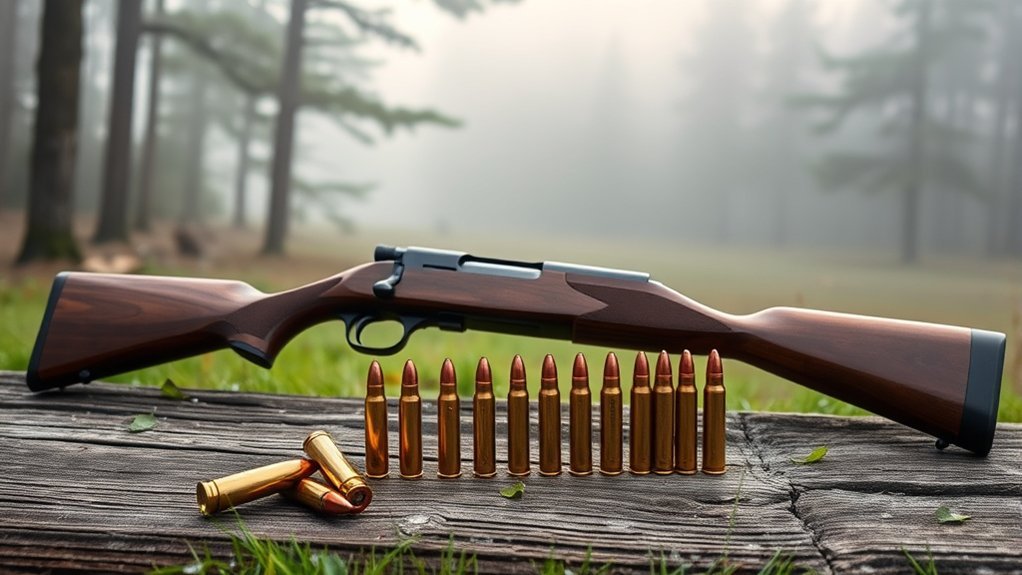
When you think of deer hunting, Winchester calibers often come to mind for their versatility and precision. The .243 Winchester is one of the most approachable deer cartridges because it offers light recoil, a flat enough path for common field distances, and enough performance when paired with a proper hunting bullet.
This caliber can work especially well for newer hunters, youth hunters, recoil-sensitive shooters, and anyone who wants to practice more without developing a flinch. A rifle you can shoot confidently often beats a more powerful rifle that makes you tense before the trigger breaks.
The .243 Winchester is usually best suited for broadside or slightly quartering deer shots where you can place the bullet through the heart-lung area. Choose controlled-expansion, deer-rated bullets rather than light varmint bullets. Bullet construction matters here because the cartridge uses smaller-diameter projectiles than larger deer rounds.
Although the original article mentioned Winchester calibers broadly, the .243 Winchester section should focus on the .243 itself. The .30-30 Winchester and .308 Winchester are useful deer cartridges, but they fit different roles and should not be treated as direct stand-ins for the .243 Winchester. The .30-30 Winchester, renowned for its manageable recoil, excels in close-range woods hunting, while the .308 Winchester offers a strong balance of range, power, recoil, and ammunition availability.
Best Fit for the .243 Winchester
- Terrain: Mixed woods, small fields, food plots, and moderate-distance shots.
- Hunter profile: Newer hunters, youth hunters, and anyone who prefers mild recoil.
- Shot style: Careful broadside shots with a deer-appropriate expanding bullet.
- Main caution: Avoid using fragile varmint loads for deer-sized game.
Pro Tip: Pick the caliber that lets you place shots cleanly from real field positions. Bench accuracy helps, but kneeling, sitting, and supported field practice show how well you can actually use the rifle during deer season.
270 Winchester: Flat Trajectory and Power
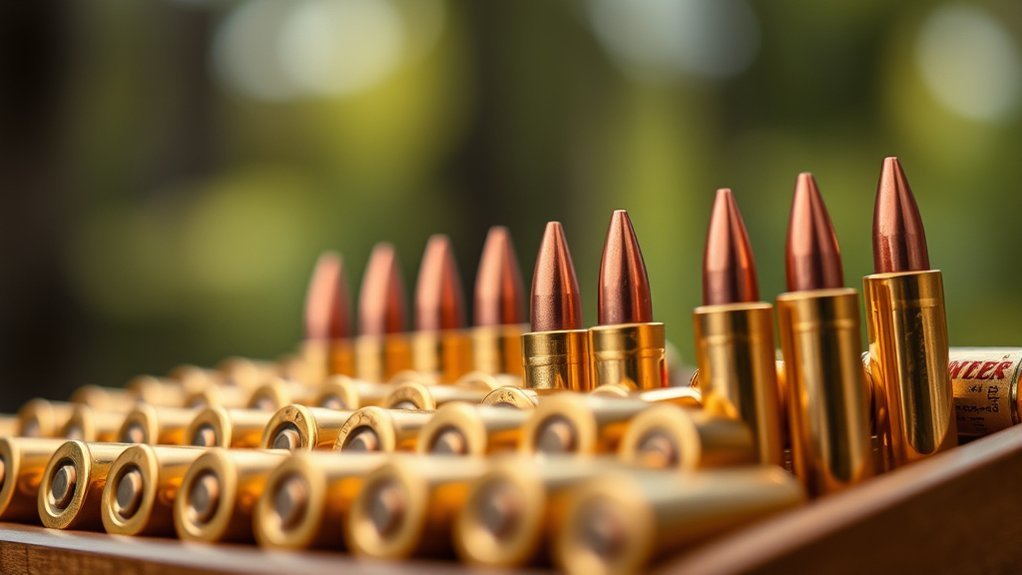
Many hunters appreciate the .270 Winchester for its flat trajectory and impressive power, making it a strong choice for open fields, crop edges, powerline cuts, and western-style deer country. It shoots flatter than many traditional woods cartridges and gives hunters useful downrange performance without punishing recoil in most properly fitted rifles.
A flat-shooting deer caliber helps most when you know your zero, understand your real maximum distance, and can place the bullet into the vital zone under field pressure.
Key benefits include:
- Consistent Performance: Winchester cartridges maintain reliable ballistics when matched with quality hunting bullets, helping reduce guesswork on drop and drift.
- Versatile Applications: Suitable for open fields, cutovers, mountain basins, and some mixed-cover hunts when you choose the right rifle setup.
- Manageable Recoil: Many hunters find the .270 Winchester easier to shoot than heavier magnum cartridges, while still offering plenty of deer performance.
- Wide Availability: The .270 Winchester has broad ammunition support, making it easier to find hunting loads before the season starts.
With these advantages, the .270 Winchester can be a powerful tool in your deer-hunting arsenal. It is especially useful when your shots may stretch beyond close woods distances but you still want a cartridge that feels practical for regular practice.
Best Fit for the .270 Winchester
- Terrain: Open fields, ridges, powerline cuts, and longer food-plot shots.
- Hunter profile: Shooters who want reach without stepping into heavy magnum recoil.
- Shot style: Medium to longer shots where a flat trajectory helps reduce holdover errors.
- Main caution: Do not let flat trajectory tempt you into shots beyond your practiced limit.
30-06 Springfield: A Classic Choice
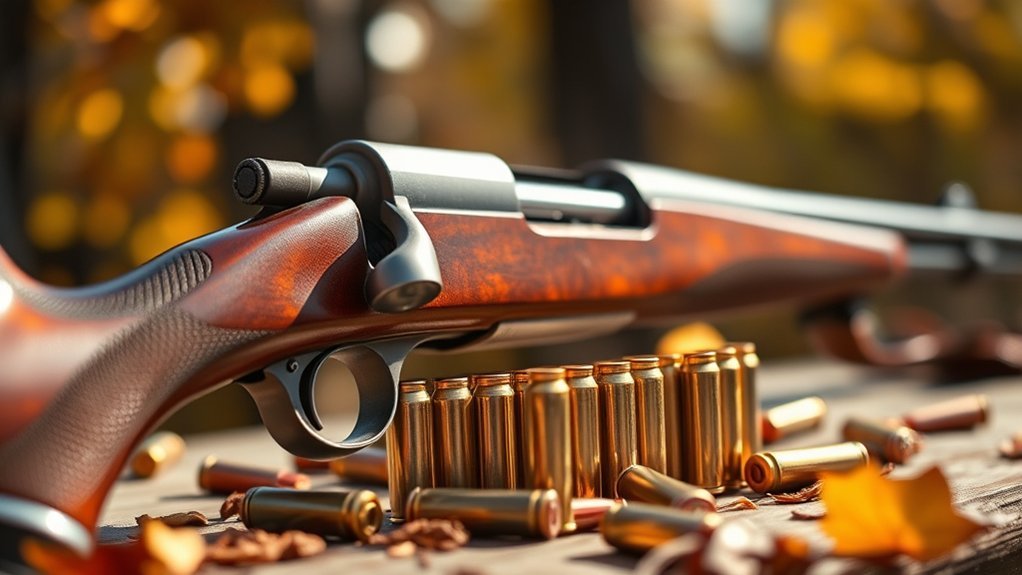
The .30-06 Springfield stands as a time-tested favorite among deer hunters, known for its versatility and effectiveness. This caliber can handle a range of hunting scenarios, from dense woods to open fields. It offers excellent accuracy potential and strong terminal performance, making it a reliable choice for many deer sizes and hunting conditions.
| Feature | Description | Benefit |
|---|---|---|
| Bullet Weight | 150–180 grains are common deer-hunting choices | Versatile for different deer sizes and terrain |
| Muzzle Velocity | ~2,920 fps (150 gr) / ~2,750 fps (180 gr) (Winchester Deer Season XP specs) | Flat-enough trajectory with an appropriate zero |
| Effective Range | Ethical deer range can approach ~400 yards with the right rifle, load, setup, conditions, and shot placement | Suitable for longer shots when the hunter has verified skill and data |
Whether you’re a seasoned hunter or just starting out, the .30-06 Springfield delivers consistent results when you pair it with a suitable rifle and deer bullet. It also gives you flexibility if you hunt different regions or want one rifle that can cover more than whitetail deer.
Best Fit for the .30-06 Springfield
- Terrain: Mixed woods, open country, foothills, and varied deer habitat.
- Hunter profile: Hunters who want one classic, flexible big-game cartridge.
- Shot style: Short, medium, and longer shots when you know your trajectory and limits.
- Main caution: Recoil can be more noticeable than the .243 Winchester, .308 Winchester, or 6.5 Creedmoor in lightweight rifles.
308 Winchester: Balance of Power and Recoil
While hunting deer often demands a balance between power and recoil, the .308 Winchester consistently meets this challenge. It gives hunters a reliable choice that combines stopping power with manageable recoil, helping improve shooting comfort and practical accuracy.
The .308 Winchester also benefits from wide rifle and ammunition availability. You can find compact rifles, full-size bolt actions, semi-automatic platforms where legal, and many factory deer loads. That makes it easier to build a setup that fits your body, hunting style, and budget.
Consider these advantages of Winchester calibers:
- Versatile Performance: Suitable for various hunting scenarios, from woods stands to open field edges.
- Effective Range: Delivers accuracy at both short and longer distances when paired with a good rifle and verified load.
- Mild Recoil: Allows for quicker follow-up shots without sacrificing control, especially compared with harder-kicking cartridges.
- Wide Availability: Accessible ammunition options for various rifle models and hunting needs.
Best Fit for the .308 Winchester
- Terrain: Dense woods, mixed timber, rolling fields, and general whitetail country.
- Hunter profile: Hunters who want a practical balance of power, recoil, and ammunition access.
- Shot style: Close to moderate shots, with enough reach for longer opportunities when you know your rifle.
- Main caution: It is not magic at distance. You still need a confirmed zero, accurate range, wind awareness, and field practice.
6.5 Creedmoor: Modern Performance and Efficiency
When you choose the 6.5 Creedmoor for deer hunting, you’re choosing a round known for modern performance, efficient bullets, and comfortable recoil. The 6.5 Creedmoor offers a flat trajectory and reduced wind drift with many high-ballistic-coefficient hunting bullets. That helps you make more precise shots at extended ranges when you have the skill, data, and conditions to support the shot.
With reduced recoil, you may experience improved accuracy and quicker follow-up shots. This makes it especially appealing for hunters who value both performance and comfort. The caliber’s popularity also means you can find many rifle platforms and hunting loads, so it is easier to build a setup that fits your style.
The 6.5 Creedmoor is not just a target cartridge. With a proper controlled-expansion or bonded hunting bullet, it can be very effective on deer. Still, it rewards careful bullet choice and shot placement. Like the .243 Winchester, it should not be judged by bullet diameter alone or used with bullets designed only for paper targets.
Best Fit for the 6.5 Creedmoor
- Terrain: Open fields, bean fields, western draws, ridges, and places where wind can matter.
- Hunter profile: Precision-minded hunters who value mild recoil and strong downrange efficiency.
- Shot style: Medium to longer shots after confirming range, wind, and drop data.
- Main caution: Use a true hunting bullet, not a match-only bullet unless the manufacturer rates it for hunting.
Note: A caliber may look excellent on a ballistic chart, but your real-world results depend on rifle fit, optics, trigger control, ammunition consistency, weather, and how well you practice from hunting positions.
How to Choose the Right Deer Hunting Caliber
The right deer caliber is not always the most powerful one. It is the cartridge you can shoot accurately, legally, and confidently under the conditions you actually hunt. Start with your terrain, then think about recoil, rifle weight, ammunition access, and realistic shot distance.
Match the Caliber to Your Terrain
- Dense woods: Shorter shots favor quick-handling rifles and moderate recoil. The .308 Winchester and .30-06 Springfield work well, and close-range classics like the .30-30 Winchester can also make sense.
- Mixed habitat: If you hunt timber, food plots, and field edges, the .243 Winchester, .270 Winchester, .308 Winchester, .30-06 Springfield, and 6.5 Creedmoor can all work with the right bullet.
- Open country: Longer fields, ridges, and wind-exposed areas favor flatter, efficient rounds such as the .270 Winchester and 6.5 Creedmoor.
Choose Recoil You Can Manage
Recoil affects accuracy more than many hunters admit. If a rifle makes you flinch, you may miss or wound deer even with a powerful cartridge. The .243 Winchester and 6.5 Creedmoor are friendlier for many shooters, while the .308 Winchester gives a strong middle ground. The .30-06 Springfield and .270 Winchester are still manageable for many adults, but rifle weight and stock fit make a big difference.
Use the Right Bullet Construction
For deer hunting, bullet construction matters as much as caliber. Choose ammunition designed for deer-sized game. Controlled-expansion, bonded, tipped, soft-point, and monolithic hunting bullets are common choices depending on your state rules and rifle preference. Avoid thin-jacketed varmint bullets for deer, even if the caliber itself is legal.
Know Your Ethical Range
Your ethical range is not the farthest distance printed on an ammo box or shown in a ballistic table. It is the farthest distance where you can place shots consistently into the vital area from real hunting positions. Confirm your zero, practice with the exact load you plan to hunt with, and understand bullet drop before the season opens.
Deer Caliber Comparison at a Glance
| Caliber | Best Use | Recoil Feel | Main Strength |
|---|---|---|---|
| .243 Winchester | Newer hunters, lighter recoil needs, moderate ranges | Light | Easy to shoot accurately with proper deer bullets |
| .270 Winchester | Open fields, longer food plots, flatter shots | Moderate | Flat trajectory and strong deer performance |
| .30-06 Springfield | All-around deer hunting and varied terrain | Moderate to firm | Classic versatility and broad load range |
| .308 Winchester | Woods, mixed habitat, and general whitetail use | Moderate | Balanced power, recoil, and ammo availability |
| 6.5 Creedmoor | Precision-focused hunters and open-country shots | Mild to moderate | Efficient bullets, mild recoil, and good wind performance |
Common Caliber Mistakes to Avoid
- Choosing power over accuracy: A hard-kicking rifle can hurt field accuracy if you do not practice with it.
- Ignoring bullet type: The wrong bullet can limit performance even in a proven deer cartridge.
- Skipping local regulations: Some states or zones restrict cartridge type, bullet material, or rifle use.
- Trusting charts without range time: Ballistic tables help, but you still need to confirm your rifle on paper.
- Overestimating distance ability: Long shots require stable rests, wind reading, exact range, and proven skill.
Conclusion
In the world of deer hunting, choosing the right caliber can mean the difference between confidence in the field and second-guessing your setup. While the .30-30 offers quick handling in dense woods, the 6.5 Creedmoor shines when you want precision and mild recoil at longer distances. The classic .30-06 provides broad reliability, while the .270 Winchester brings impressive power and a flat-shooting reputation. Balancing recoil and versatility, the .308 Winchester remains a go-to for many hunters.
Each caliber has its strengths, and the right choice ultimately depends on your hunting style, environment, legal rules, and comfort behind the rifle. Pick a deer-rated bullet, practice from field positions, know your limits, and choose the cartridge that helps you make a clean, ethical shot.
Sources
- California Department of Fish and Wildlife — nonlead ammunition requirements for hunting in California.
- Winchester Deer Season XP ammunition specifications — example velocity data and hunting-load reference for common deer cartridges.
