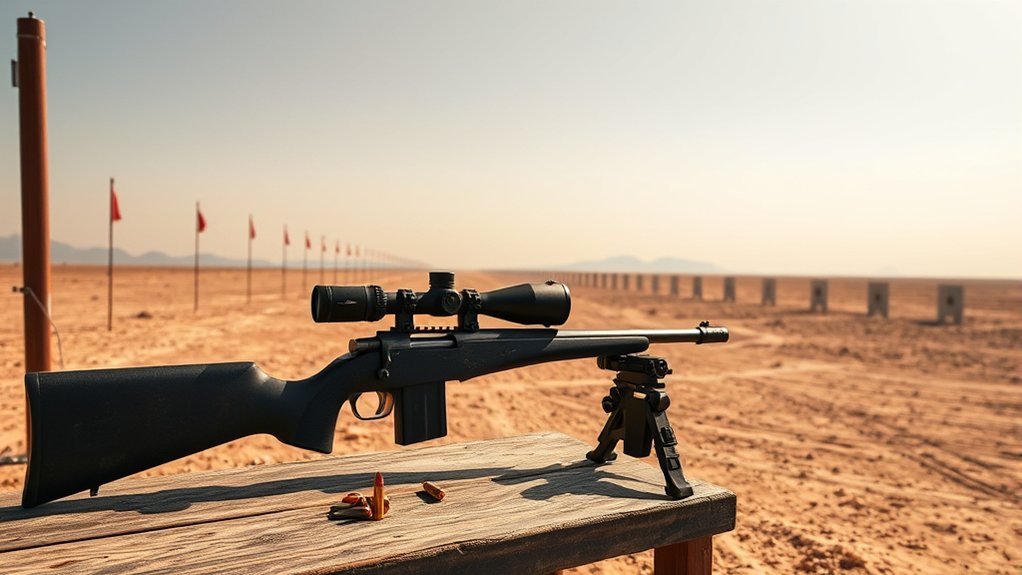
The maximum effective range of small arms fire depends on the firearm, ammunition, intended target, and shooting conditions. Rifles, handguns, and shotguns have very different range characteristics. Published military figures provide useful examples, but they are not universal limits for every firearm or situation.
Quick Answer
The maximum effective range varies by weapon system. The U.S. Army lists approximately 500 meters (547 yards) for its M4/M4A1 carbine and 50 meters (55 yards) for its M17/M18 pistols. Specialized .338 Lapua Magnum rifles have published ranges near 1,500 meters. Shotgun ranges vary significantly with ammunition and intended use.
What Is Maximum Effective Range?
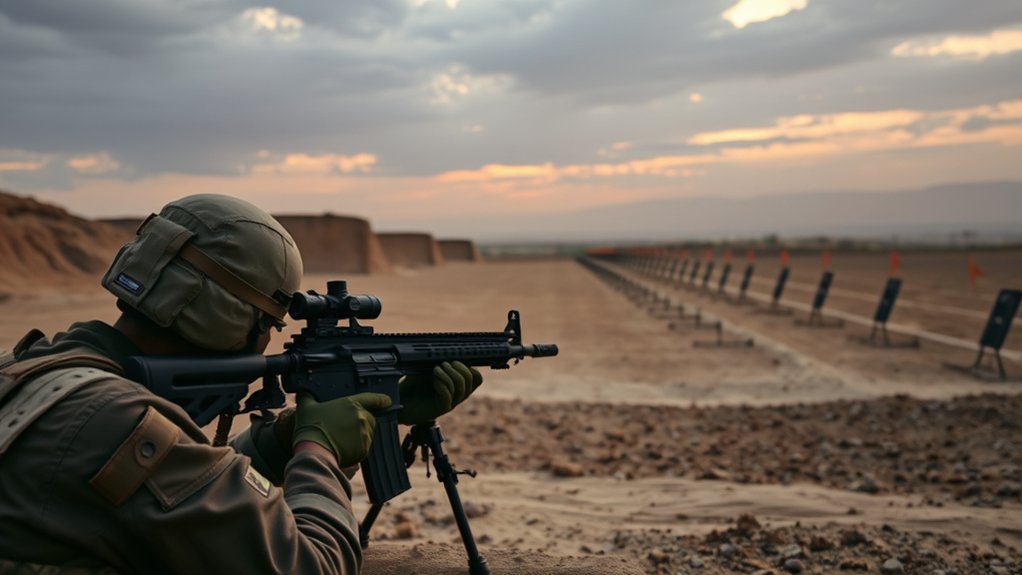
Maximum effective range describes the farthest distance at which a firearm and its ammunition can reasonably achieve the intended result under defined conditions. It is different from the maximum distance a projectile can physically travel.
The Sporting Arms and Ammunition Manufacturers’ Institute (SAAMI) defines effective range as the maximum distance at which a projectile is expected to be useful.
That definition leaves room for important differences. A range suitable for hitting a large target may not be suitable for hitting a smaller one. Target size, hit probability, and the ammunition’s intended purpose all influence the published figure.
By contrast, maximum range refers to the greatest distance a projectile can travel when fired at its optimum elevation angle.
For example, a rifle bullet can travel far beyond the distance at which its manufacturer or military operator considers the firearm reliably effective. This distinction is essential for both understanding ballistics and maintaining safe shooting conditions.
Key Factors Influencing Effective Range in Small Arms
No single specification determines a firearm’s effective range. The result depends on the entire weapon system, the conditions, and the standard used to judge performance.
- Firearm design: Barrel characteristics, mechanical accuracy, and the sighting system affect the firearm’s performance.
- Ammunition characteristics: Projectile design, weight, velocity, and aerodynamic drag influence its flight.
- Target characteristics: Larger targets generally allow a greater published effective-range figure than smaller targets.
- Shooter proficiency: Individual consistency and familiarity with the equipment affect practical accuracy.
- Environmental conditions: Wind, temperature, pressure, humidity, and visibility may change results.
- Performance criteria: Some ratings emphasize accuracy, while others include energy or a particular terminal-performance requirement.
Caliber alone is not enough to predict range. A larger bullet does not automatically travel more accurately or retain velocity better than a smaller one. Projectile shape and the complete firearm-ammunition combination also matter.
Published figures should therefore be read as ratings for specific systems rather than universal distances for an entire caliber.
Effective Ranges for Firearms and Ammunition
Handguns generally have shorter published effective ranges than service rifles. Specialized precision rifles can have much longer range ratings, while shotgun performance depends heavily on the type of projectile.
The following examples illustrate why the firearm model matters as much as its caliber.
| Firearm or system | Published range | Important context |
|---|---|---|
| M17/M18 9mm service pistol | 50 meters (55 yards) | U.S. Army specification |
| M4/M4A1 5.56mm carbine | 500 meters (547 yards) | U.S. Army specification |
| G-29 .338 Lapua Magnum precision rifle | 1,500 meters (1,640 yards) | Published military-system range |
| Shotguns | Varies by ammunition and target | Birdshot, buckshot, and slugs have different performance characteristics |
Handgun Effective Range
A typical service handgun has a shorter rated range than a centerfire service rifle. For example, the U.S. Army’s M17/M18 specifications list 50 meters for both 9mm models.
This does not mean a 9mm projectile stops at 50 meters. It means the published rating describes the weapon’s intended operating range, not its maximum possible projectile travel.
Rifle Effective Range
Rifle effective range varies considerably between standard service carbines, sporting rifles, and specialized precision systems.
The U.S. Army’s M4/M4A1 specifications list a range of 500 meters. The AR-15 platform shares design features with military carbines, but civilian AR-15 configurations should not automatically receive the same rating.
At the other end of the category, specialized rifle systems may have much longer published ranges. A U.S. Army report on the German G-29 describes a .338 Lapua Magnum rifle with a 1,500-meter range.
Such figures depend on the specific rifle system and should not be applied automatically to every firearm chambered for the same cartridge.
Shotgun Effective Range
Shotguns differ from rifles because many shotgun cartridges contain multiple pellets instead of a single projectile.
- Birdshot: Uses many small pellets and is commonly associated with sporting clays, birds, and small-game applications.
- Buckshot: Contains fewer, larger pellets. Pattern spread and retained pellet performance influence its practical range.
- Slugs: Use a single projectile and may support a longer practical range than conventional pellet loads, depending on the firearm.
The ammunition manufacturer Federal explains the differences between smoothbore rifled slugs and sabot slugs in its shotshell ammunition guide.
Shotgun range cannot be reduced to a single reliable number. Choke, projectile type, intended target, and the particular firearm all influence the result.
How Does Shooter Skill Affect Effective Range?
Shooter proficiency influences practical accuracy, but it does not change the physical capabilities of the firearm or ammunition. A published range rating and an individual’s consistent performance are two different measures.
Training, familiarity, and safe conditions help explain why individuals may produce different results with the same equipment.
Importance of Practice Consistency
Consistent supervised practice helps shooters understand the limits of their equipment and their own accuracy.
Several factors influence repeatability:
- Familiarity with the firearm’s controls and handling characteristics.
- Consistency when using approved range equipment.
- Understanding firearm safety procedures.
- Awareness of environmental changes between sessions.
- Recognizing when performance becomes unreliable.
Formal instruction at an established range offers a controlled setting for learning and assessing these factors.
Impact of Stress Factors
Stress, fatigue, and distractions can reduce shooting consistency. These effects help explain why performance in controlled conditions may differ from performance in unfamiliar or demanding situations.
Elevated heart rate, reduced concentration, and rushed decisions can affect judgment and accuracy.
For this reason, a firearm’s published maximum effective range should never be treated as a guarantee of individual performance.
Techniques for Range Estimation
Distance estimation affects how accurately a shooting distance can be described or measured. A known-distance range provides a more reliable basis for evaluating equipment than an informal visual estimate.
Common distance-measurement methods include marked range lanes, rangefinder equipment, and verified distance references.
For recreational shooting, use the distances and target arrangements approved by the range operator rather than relying on guesses about the surrounding terrain.
Impact of Environmental Conditions on Effective Range
Environmental conditions affect a projectile’s flight and the consistency of shooting results. Wind can influence horizontal movement, while atmospheric density affects aerodynamic drag.
Temperature, humidity, and air pressure interact, so their effects should not be considered in isolation.
Wind Speed Effects
Crosswinds can move projectiles away from their expected path. Their influence depends on distance, wind conditions, and the projectile’s aerodynamic characteristics.
Wind also changes over time and across open terrain. A condition measured near the firing position may not describe the entire path of a projectile.
This makes wind an important source of uncertainty in published or observed long-distance results.
Temperature Influence
Temperature changes air density and may influence ammunition behavior. Under otherwise equal conditions, warmer air is generally less dense than cooler air.
Denser air creates more aerodynamic resistance, while less-dense air generally creates less resistance. However, atmospheric pressure and other variables also affect the result.
Temperature changes should therefore be considered as part of the broader environment, not as a reliable prediction of range by themselves.
Humidity Considerations
Humidity affects air density, but its influence is frequently misunderstood. Moist air is actually less dense than dry air at the same temperature and pressure.
The National Weather Service explains this relationship in its atmospheric pressure guidance.
Replacing some of the nitrogen and oxygen in air with lighter water-vapor molecules reduces overall air density.
Humidity alone does not necessarily increase aerodynamic drag or reduce bullet range. Its practical effect must be considered alongside temperature, pressure, wind, and the particular projectile.
High humidity may also coincide with fog, haze, or other visibility problems, which can affect safe range use even when the change in air density is relatively small.
How Does Ammunition Choice Affect Maximum Effective Range?
Ammunition influences effective range through projectile velocity, mass, shape, and intended performance. Two loads of the same caliber can behave differently even when fired from the same firearm.
The main considerations are:
- Cartridge compatibility: Ammunition must match the firearm manufacturer’s approved chambering and specifications.
- Projectile design: Full metal jacket, hollow point, bonded, and monolithic projectiles serve different purposes.
- Bullet weight: Weight affects performance, but heavier does not automatically mean greater effective range.
- Aerodynamic properties: Projectile shape and drag affect how velocity changes during flight.
- Intended application: Target shooting, sporting competition, and hunting may use different standards for evaluating ammunition.
Bullet expansion also depends on the specific projectile. There is no universal minimum velocity that applies to every hollow-point, bonded, or monolithic design.
Ballistic calculators can model projected flight characteristics, but their estimates depend on correct information and cannot guarantee accuracy or safety.
The safest starting point is always the firearm manufacturer’s ammunition requirements and the ammunition manufacturer’s published specifications.
How to Evaluate Effective Range Safely
Understanding effective range should begin with the limits of the firearm, the ammunition, and the approved shooting environment.
A printed range specification should never be interpreted as permission to shoot across unverified terrain or beyond a properly designed backstop.
- Use an established shooting range with suitable target distances and backstops.
- Follow the firearm and ammunition manufacturers’ instructions.
- Wear approved eye and hearing protection.
- Follow all range-officer directions and local safety rules.
- Use qualified instruction when learning unfamiliar equipment.
- Never assume a projectile becomes harmless after passing its effective range.
Warning: A projectile may travel far beyond its effective range and remain dangerous. Always identify the target and what lies beyond it. Follow the SAAMI firearm safety rules, including using correct ammunition, maintaining a safe muzzle direction, and wearing eye and ear protection.
Frequently Asked Questions
What Is the 333 Rule for Guns?
The commonly cited 3-3-3 rule describes three shots, three seconds, and three yards in discussions of defensive shootings. It is a rough historical generalization, not a universal standard or a reliable prediction of every incident. It does not define a firearm’s maximum effective range.
What Gun Will Shoot 1000 Yards?
Some specialized precision rifles have published range capabilities of 1,000 yards or more. For example, the .338 Lapua Magnum G-29 system has a published range of 1,500 meters. That does not mean every firearm chambered for the same cartridge has identical capabilities or accuracy.
What Counts as Small Arms Fire?
Small arms fire generally refers to the discharge of firearms designed for individual use, such as pistols, rifles, carbines, and certain shotguns. Military classifications may also include other portable weapon systems. The exact scope depends on the organization and context.
How Effective Is 9mm at 100 Yards?
A 9mm projectile can travel 100 yards and beyond, but that distance exceeds the published 50-meter range of common U.S. military service pistols. Accuracy and projectile behavior depend on the firearm and ammunition. The bullet can remain dangerous well beyond its published effective range.
Conclusion
The maximum effective range of small arms fire is a system-specific performance measure, not the farthest distance a bullet can travel. Firearm design, ammunition, shooter consistency, target characteristics, and environmental conditions all influence the result.
For reliable comparisons, use published specifications for the exact firearm and ammunition. Always treat projectile travel distance as a separate safety concern and follow established range procedures.
Sources
- Sporting Arms and Ammunition Manufacturers’ Institute — Glossary: Definition of effective range.
- SAAMI — Maximum Range: Definition distinguishing maximum projectile travel from effective range.
- U.S. Army — M4/M4A1 Carbine: Published service-carbine specifications and range.
- U.S. Army — M17/M18 Modular Handgun System: Published service-pistol specifications.
- U.S. Army — German Soldiers Test New Rifle: Example of a .338 Lapua Magnum system rated to 1,500 meters.
- Federal Ammunition — Shotshell Basics: Differences among shot types, slugs, and shotgun configurations.
- National Weather Service — Atmospheric Pressure: Temperature, humidity, and air-density relationships.
- SAAMI — Firearm Safety Rules: Safe handling, correct ammunition, eye protection, and target awareness.
- NRA Shooting Illustrated — The Exception to the Rule: Context and limitations of the 3-3-3 generalization.

