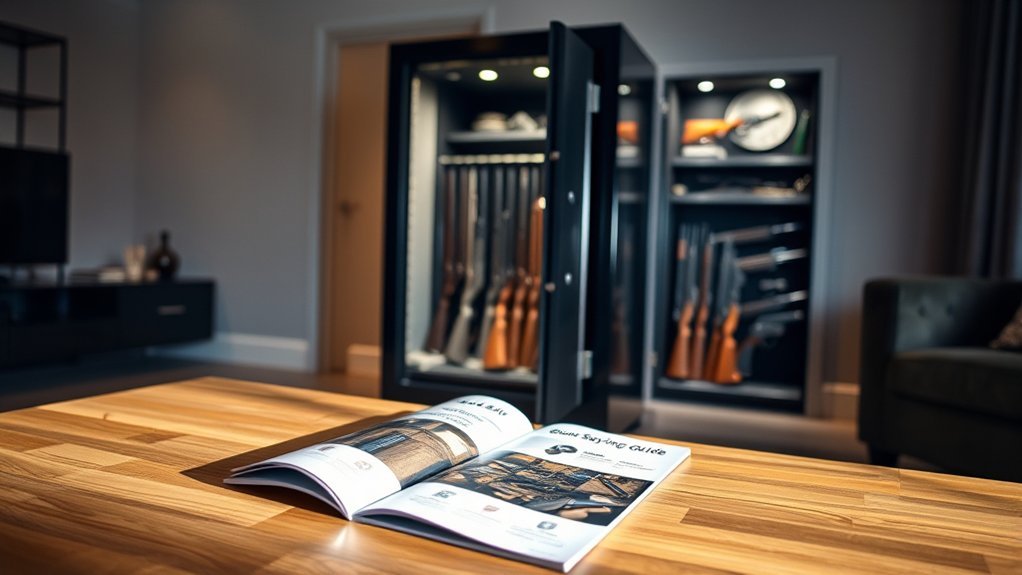
When it comes to selecting a gun safe, understanding the essential features and specifications can greatly influence your decision. You’ll want to assess capacity, security levels, lock reliability, installation needs, and fire ratings so your firearms stay protected from unauthorized access, theft, moisture, and fire. The right safe should fit your current collection, leave room for growth, and match how quickly you need to access your firearms in an emergency.
Quick Answer
Choose a gun safe with enough capacity for future firearms, strong steel construction, a reliable lock, pry-resistant doors, anchor holes, and a fire rating that matches your risk level. For best results, balance security with access speed, then install the safe where it stays dry, stable, and difficult to remove.
Key Takeaways
- Buy more capacity than you need today because accessories, optics, documents, and future firearms fill a safe quickly.
- Prioritize steel thickness, pry resistance, locking bolts or bars, and the ability to bolt the safe down.
- Fire ratings help, but they vary by test method, temperature, and duration, so compare ratings carefully.
- Biometric locks offer speed, while mechanical locks often offer simple long-term reliability.
- Maintenance matters: control humidity, inspect for rust, lubricate moving parts, and replace electronic lock batteries on schedule.
Overview of Gun Safes
When it comes to securing your firearms, understanding the essentials of gun safes is important. These specialized containers are designed to reduce the risk of unauthorized access, theft, and damage. They often use heavy steel bodies, reinforced doors, locking bolts or locking bars, and advanced locking mechanisms.
You’ll find several types of gun safes, including in-wall safes, floor safes, long-gun safes, pistol safes, portable lock boxes, and biometric models. Each design serves a different purpose. A large long-gun safe works well for rifles and shotguns, while a compact handgun safe may be better for quick access near a bedroom or office.
High-quality gun safes usually feature impact-resistant materials such as hardened steel. Many buyers look for thicker steel, pry-resistant door edges, bolt-down holes, interior shelving, power outlets, lighting, and fire protection. As a gun owner, knowing the safe’s capacity and material construction helps you choose a model that meets both your security needs and your practical storage requirements.
Warning: A gun safe is only one part of responsible firearm storage. Always follow your local laws, keep firearms away from unauthorized users, and store ammunition safely according to your household needs and legal requirements.
Key Considerations for Choosing a Gun Safe
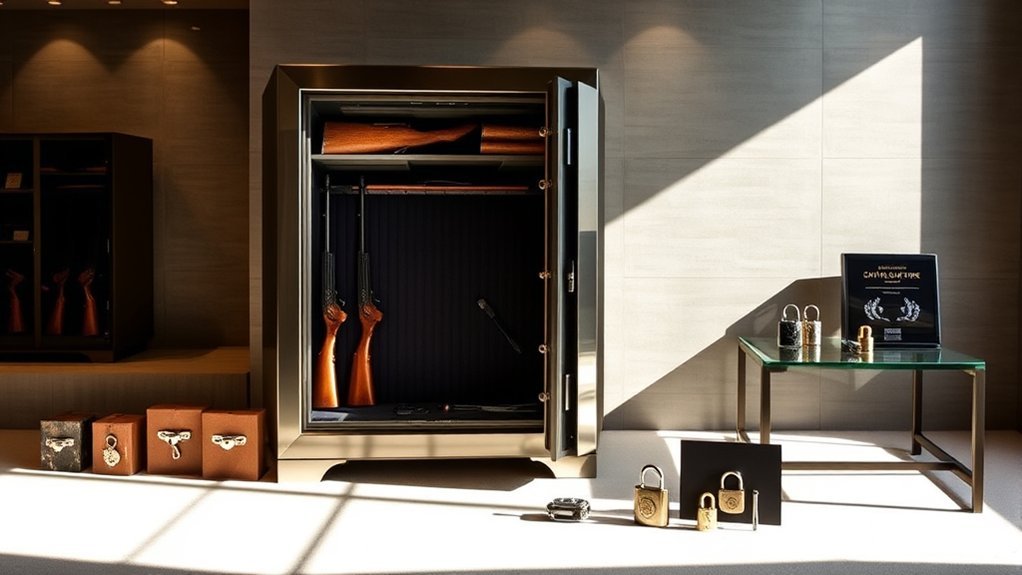
Choosing a gun safe requires careful thought because the best option depends on your firearm collection, home layout, access needs, and risk level. Start by evaluating capacity. A safe that seems large enough today may feel crowded once you add magazines, optics, documents, jewelry, hard drives, or another firearm.
Next, assess the fire rating. A safe marketed as fire resistant should clearly state the temperature and duration of its rating. If you want a stronger benchmark, look for clear third-party testing information instead of vague claims such as “fireproof.” No safe is truly fireproof forever, but a tested fire rating can add meaningful protection.
You should also choose a lock type that matches your access preferences. Biometric locks can be fast, electronic keypads are convenient, and mechanical dial locks are valued for long-term simplicity. Durable materials matter, too. A safe with thicker steel, a reinforced door, and pry-resistant edges will usually resist forced entry better than a thin cabinet-style locker.
| Feature | Importance | Recommendation |
|---|---|---|
| Capacity | Fits current and future guns | Buy larger than your current needs |
| Fire Rating | Protects against heat and fire damage | Look for a clear temperature and time rating |
| Lock Type | Affects access speed and reliability | Choose biometric, keypad, dial, or redundant lock based on use |
| Durable Materials | Improves resistance to theft | Prioritize thicker steel and reinforced doors |
| Additional Features | Improves organization and daily use | Consider shelving, lighting, power, humidity control, and anchor holes |
Types of Gun Safes
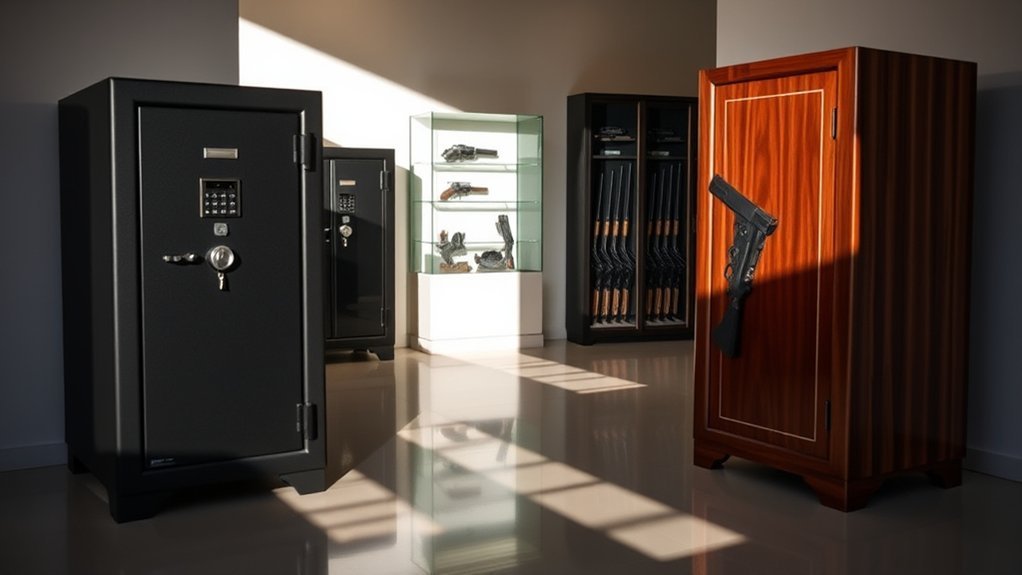
When it comes to gun safes, understanding the main designs, security features, and portability options helps you make an informed choice. Each type of safe offers unique advantages. Some focus on discreet storage, some prioritize quick access, and others provide better protection against theft, fire, or environmental hazards.
Safe Designs Overview
Gun safes come in a variety of designs tailored to different storage and security needs. Understanding the safe designs overview helps you choose a model that fits your space, your firearms, and your access habits. Here are the main types of gun safes:
- In-wall safes for discreet storage
- Floor safes offering added concealment and security
- Portable safes ideal for travel and mobility
- Biometric gun safes providing quick access with advanced security
- Fireproof and waterproof safes designed to reduce environmental damage
- Long-gun safes for rifles and shotguns
- Pistol safes for handguns, magazines, and small valuables
- Vault doors for secure rooms and extensive collections
If you want to secure the safe effectively, consider options like vault doors for extensive collections and pistol safes for easy access. Many models also incorporate military-style locking bars or heavy locking bolts for enhanced protection. Each design serves a specific purpose, so the right choice depends on whether your top priority is concealment, quick access, storage capacity, or heavy-duty theft resistance.
Security Features Comparison
While evaluating different types of gun safes, it is crucial to understand the various security features they offer. These features can greatly affect both accessibility and protection. Biometric locks provide quick access through fingerprint recognition, while mechanical locks deliver simple, battery-free reliability. Electronic keypad locks are convenient, but they need battery maintenance.
Fire-rated gun safes use insulation materials to help slow heat transfer during a fire. Common insulation materials can include gypsum-based fireboard or similar layered materials. Pay attention to steel thickness, door construction, hinge design, relockers, and pry-resistant edges. A safe with a thin body and a large gap around the door may be easier to attack than one with a reinforced frame and tight tolerances.
Security ratings, such as residential security container ratings, can help compare a safe’s resistance to common forced-entry methods. However, ratings vary by test, tool type, and time period, so they should not be your only deciding factor. Additionally, many quality safes include locking bars, relockers, hard plates, and pry-resistant doors, which improve resistance against forced entry compared with basic locking cabinets.
The strongest safe is not always the largest one. A properly anchored, well-built safe in a smart location often provides better real-world security than a huge safe left unsecured.
Portability Options Available
For those seeking mobility in firearm storage, portable gun safes offer a practical solution. They allow you to securely transport weapons without relying on an unlocked bag, glove box, or drawer. These compact and lightweight options are helpful for travel, range trips, and temporary storage.
Portable models often use various locking systems, including biometric locks, combination locks, keyed locks, and cable locks. While some may lack extensive fire protection, certain models feature water-resistant seals to guard against limited environmental exposure. Popular types include:
- Biometric safes for rapid access
- Combination lock boxes for added security
- Handgun vaults designed for discreet storage
- Lightweight options for easy transport
- Models with essential accessories storage
- Cable-secured lock boxes for vehicle or travel use
Choosing a portable gun safe enhances your secure transport capabilities, ensuring your firearms remain protected and accessible whenever needed. Before using one in a vehicle, check your state and local storage and transport laws.
Important Features to Look For
When selecting a gun safe, prioritize the features that improve real security, daily convenience, and long-term reliability. Focus on steel construction, door strength, lock quality, fire rating, water resistance, mounting options, and interior layout. Thicker materials often provide better durability, while a reinforced door can reduce the risk of pry attacks.
Make sure the safe has a reliable locking mechanism. Biometric locks are fast, but they should include a backup access method. Mechanical locks are slower, yet they avoid battery-related lockouts. Electronic keypads are simple to use, but you need to replace batteries before they fail.
A fire rating of at least 1,200°F for 30 minutes is a common baseline in many consumer safes, but higher ratings may make sense if you live in a wildfire-prone area or have a slower emergency response time. Look for adjustable interior features to organize your firearms efficiently, and assess security features like pry-resistant doors, relockers, hard plates, and anchor holes.
| Key Feature | Importance |
|---|---|
| Steel Construction | Enhances durability and security |
| Reliable Lock Mechanism | Helps prevent unauthorized access |
| Fire Rating | Helps safeguard contents against high temperatures |
| Anchor Holes | Helps prevent thieves from removing the safe |
| Interior Layout | Keeps firearms, documents, and accessories organized |
Capacity and Interior Layout
Capacity is one of the most common areas where buyers underestimate their needs. A safe advertised for a certain number of long guns may hold fewer firearms once you add scopes, slings, pistol grips, or tactical accessories. If you own scoped rifles, plan for extra width and spacing.
Adjustable shelves, door organizers, pistol racks, barrel rests, and document compartments make the safe easier to use. Interior lighting also helps when the safe sits in a closet, basement, or garage. For mixed collections, choose a safe that can store long guns, handguns, magazines, ammunition, and valuables without forcing everything into one crowded space.
Lock Type and Access Speed
Your lock type should match your daily routine. A safe used for long-term storage can have a slower mechanical lock. A bedside handgun safe may need faster access, such as a biometric or keypad lock. The tradeoff is that fast electronic locks require battery care and may be more sensitive to dirt, moisture, or poor-quality sensors.
For the best balance, consider a safe with a primary electronic or biometric lock plus a secure backup method. Avoid leaving backup keys in an obvious place, such as a desk drawer, nightstand, or nearby closet.
Installation and Placement
Placement affects security more than many buyers realize. A heavy safe is harder to steal, but a bolted safe is even better. If possible, anchor the safe to a concrete floor or strong structural surface using the manufacturer’s instructions. Avoid placing it where thieves can easily tip it, pry it from multiple sides, or use long tools with plenty of leverage.
Also think about humidity, temperature, and access. Basements and garages can be convenient, but they may expose the safe to moisture. Bedrooms and closets may offer faster access, but space can be limited. Choose a location that balances security, climate, privacy, and daily convenience.
Pro Tip: Before buying, measure every doorway, hallway, stair turn, and the final installation area. A safe that fits the room still may not fit through the route to reach it.
Top Gun Safe Brands in the U.S.A
Selecting the right gun safe can greatly impact your firearm security, and knowing some of the top brands in the U.S.A. helps you compare build quality, warranty coverage, lock options, and fire protection. Brand reputation matters, but you should still compare the exact model, rating, steel thickness, door construction, and warranty before making a purchase.
Choosing the right gun safe is crucial for firearm security; explore top U.S. brands for tailored protection features.
- Liberty Safe: Known for a wide range of residential safes, locking-bar designs, fire protection options, and warranty coverage on many models.
- Remington: Known for gun safes with solid steel construction, multiple size options, and advanced locking mechanisms for reliable protection.
- Sports Afield: Offers fire-rated safes with varied capacities, different lock options, and models built for both long guns and handguns.
- Stack-On: With decades of experience, it provides locking cabinets, compact safes, and stronger security containers for different budgets.
- Winchester Safes: Emphasizes heavy-duty construction, fire protection options, and models designed for large firearm collections.
These brands can help you find a gun safe that meets your specific fire, water, size, and access needs. Still, avoid buying by brand name alone. Compare the individual model’s specifications and make sure the safe matches your risk level, budget, and home layout.
Maintenance and Best Practices for Gun Safes
Maintaining your gun safe is vital to ensuring the longevity and security of your firearms and valuables. Regular inspections for rust, corrosion, loose hardware, and moisture help prevent small issues from becoming expensive problems. Lubricating the door and locking mechanisms keeps them functional, but always follow the manufacturer’s guidance so you do not damage the lock.
A clean, dry interior prevents moisture buildup, protecting firearms against rust and damage. Periodically check bolts and hinges for alignment, confirming your safe remains secure and accessible. If the door becomes harder to open or the lock feels inconsistent, fix the issue early instead of forcing the mechanism.
To manage humidity and temperature, consider using desiccants, a rechargeable dehumidifier, or an electric safe dehumidifier if your safe supports one. Finally, do not forget to perform routine battery replacements for electronic locks and biometric systems to avoid lockouts.
| Maintenance Task | Frequency | Purpose |
|---|---|---|
| Inspect for rust | Monthly | Prevent corrosion |
| Lubricate locks | Every 3 months | Ensure functionality |
| Clean interior | Monthly | Prevent moisture buildup |
| Check bolts and hinges | Quarterly | Maintain security |
| Replace lock batteries | Biannually | Ensure reliable access |
Humidity Control and Rust Prevention
Humidity can damage firearms even when they stay locked away. A safe in a damp basement, garage, or poorly ventilated closet may trap moisture inside. Over time, that moisture can lead to rust on metal parts, damage to wood stocks, and mildew on cases or fabric accessories.
Use a safe hygrometer to monitor humidity. Many gun owners aim for a moderate humidity range that helps reduce rust without drying wood excessively. Desiccant packs, rechargeable moisture absorbers, and low-wattage dehumidifier rods can help keep the interior stable.
Battery and Lock Care
Electronic and biometric locks depend on reliable power. Replace batteries before they fail, and use high-quality batteries recommended by the lock manufacturer. If your lock has a backup key or external battery contact, learn how it works before you need it.
For mechanical locks, avoid spinning the dial aggressively or forcing the handle. If the lock starts to feel rough, call a qualified locksmith or safe technician. Small lock problems can become serious if ignored.
Common Mistakes to Avoid
Even a well-built gun safe can perform poorly if you choose the wrong model or install it incorrectly. Avoid these common mistakes before you buy:
- Buying too small: A cramped safe becomes frustrating and may cause scratches or poor organization.
- Ignoring the safe’s weight: Make sure your floor can support the safe, especially on upper levels.
- Skipping anchoring: An unanchored safe can be tipped, moved, or stolen more easily.
- Trusting vague fireproof claims: Look for a stated temperature, test method, and time duration.
- Forgetting humidity control: Moisture can damage firearms even inside a locked safe.
- Hiding backup keys poorly: A backup key stored nearby can defeat the purpose of the safe.
- Choosing speed over security: Quick access matters, but the safe still needs to prevent unauthorized access.
Note: A locking cabinet and a gun safe are not always the same thing. Cabinets may help with basic storage, but heavier safes usually provide stronger theft resistance, better fire protection, and more secure anchoring options.
Conclusion
When it comes to selecting the right gun safe, it’s all about finding the right balance between security and convenience. Just like choosing the right pair of shoes, you want something that fits your lifestyle and needs. Take the time to evaluate capacity, lock type, construction, fire rating, installation location, and maintenance needs before making a final decision.
Your firearms deserve secure storage that protects them from unauthorized access, theft, moisture, and fire. A quality safe can give you peace of mind, but only when you choose the right model, install it properly, and maintain it over time. Start with your collection size and access needs, then choose the strongest safe that fits your space, budget, and daily routine.
