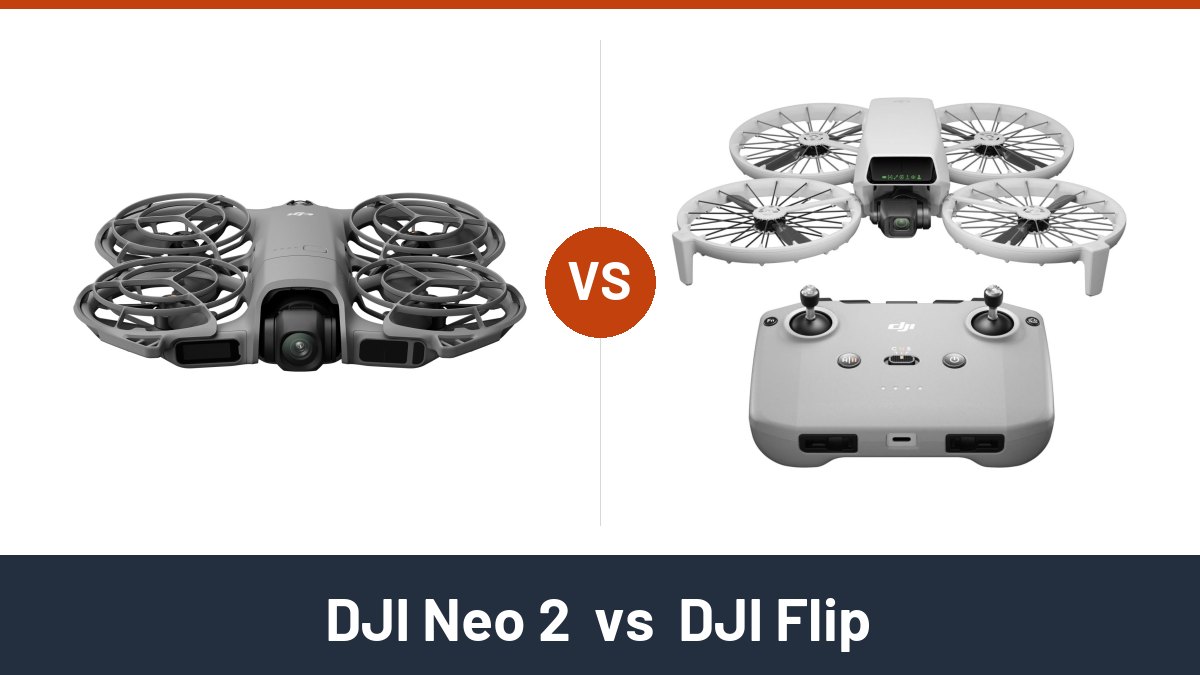
Trying to choose between the DJI Neo 2 and the DJI Flip? This DJI Neo 2 vs DJI Flip comparison covers two palm-launch camera drones that both weigh under 250 g but solve different problems.
Our pick is the DJI Flip, because its larger 1/1.3-inch sensor, 3-axis gimbal and 31-minute flight time give you better footage for longer. Pick the DJI Neo 2 if you want the lightest kit, gesture control and all-around obstacle sensing in a lower price tier.
We compared both on the same specs and the exact kits these links sell, using DJI spec sheets, major retailers and safety records.
DJI Neo 2 vs DJI Flip Compared
| Compare |
 Best value
Budget
|
 Best overall
Mid-range
|
|---|---|---|
| Best for | Hands-free gesture flying, solo vlogs and travel (drone-only kit, no remote) | Sharper photos and video plus longer flights (kit includes the DJI RC-N3 remote) |
| Score | 86/100 | 92/100 |
| Camera | 1/2-inch CMOS, 12 MP | 1/1.3-inch CMOS, 48 MPBetter |
| Gimbal | 2-axis mechanical | 3-axis mechanicalBetter |
| Max flight time | About 19 minutes | Up to 31 minutesBetter |
| Obstacle sensing | Omnidirectional vision, forward LiDAR, downward infraredBetter | Forward 3D infrared, downward vision and infrared |
| Takeoff weight | 151 gBetter | Under 249 g |
| Max video range (FCC) | 10 km with the optional Digital Transceiver and a remote | 13 km with the included RC-N3Better |
DJI Neo 2 vs DJI Flip: Quick Verdict
DJI Neo 2
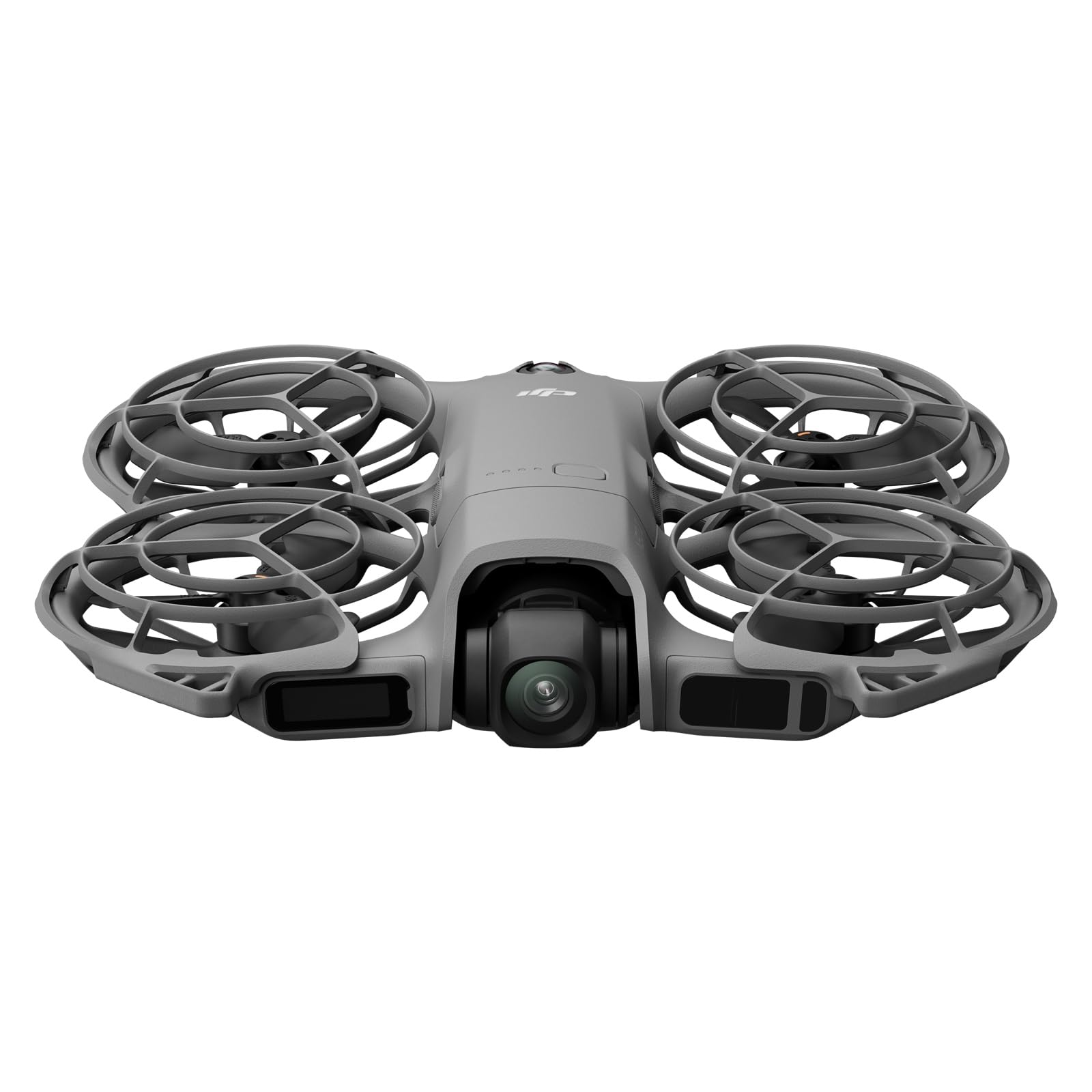
Bottom line: The DJI Neo 2 is lighter than the DJI Flip and senses obstacles in every direction, so it is the easier drone to fly hands-free. Buy it for solo vlogs, travel and first flights.
- Camera: 1/2-inch CMOS, 12 MP, 4K up to 100fps, fine for social clips and travel video
- Gimbal: 2-axis mechanical, steady tilt and roll, simpler than 3-axis
- Max flight time: About 19 minutes, enough for a few short clips
- Obstacle sensing: Omnidirectional vision, forward LiDAR and downward infrared, extra protection while it follows you
- Takeoff weight: 151 g, light enough to carry everywhere
The DJI Neo 2 is built for flying without a remote. You can launch it from your palm, steer it with one or both hands, and land it back on your palm. ActiveTrack keeps you in frame for walking, biking or skating shots.
This link sells the drone-only kit. Out of the box it pairs with your phone over Wi-Fi, which keeps range short. For up to 10 km (FCC) you need the optional DJI Neo 2 Digital Transceiver plus a compatible remote such as the DJI RC-N3.
Footage goes to 49 GB of internal storage, and there is no microSD slot, so offload clips often. Full-coverage propeller guards help near people or in tight spaces, though DJI rates flight time at about 17 minutes with them fitted.
- Very light at 151 g and easy to carry
- Palm takeoff, gesture control and palm landing need no remote
- Omnidirectional obstacle sensing with forward LiDAR
- 4K video up to 100fps and 49 GB of built-in storage
- About 19 minutes per battery, well short of the DJI Flip
- Smaller 1/2-inch, 12 MP sensor and a 2-axis gimbal
- Long-range flying needs an add-on transceiver and remote, and there is no microSD slot
DJI Flip
Bottom line: The DJI Flip has a bigger sensor, a 3-axis gimbal and much longer flights than the DJI Neo 2. Buy it if image quality and time in the air matter more than the lightest kit.
- Camera: 1/1.3-inch CMOS, 48 MP, 4K video, more detail and better low-light shots
- Gimbal: 3-axis mechanical, smoother pans and steadier footage
- Max flight time: Up to 31 minutes, longer shoots with fewer battery swaps
- Obstacle sensing: Forward 3D infrared plus downward vision and infrared, no side or rear sensing
- Takeoff weight: Under 249 g, still light, but bulkier than the Neo 2
The DJI Flip is a step up for people who want better footage without a heavy kit. Its 1/1.3-inch sensor shoots 48 MP stills, and the 3-axis gimbal keeps 4K video steady. FocusTrack modes, including ActiveTrack, follow you on hikes and rides.
This listing includes the DJI RC-N3 remote and O4 video transmission with up to 13 km of range (FCC). You can still launch it from your palm for quick shots. Foldable full-coverage propeller guards are built into the frame, which helps around groups.
The catch is size and sensing. Folded, it measures 136 x 62 x 165 mm, so it fits a daypack rather than a pocket. Obstacle sensing covers only the front and underside, and the 2 GB of internal storage means you will want a microSD card.
- Larger 1/1.3-inch sensor with 48 MP stills
- 3-axis gimbal for smoother video
- Up to 31 minutes of flight time
- Includes the DJI RC-N3 remote with up to 13 km of O4 range (FCC)
- Built-in foldable propeller guards
- Obstacle sensing covers only the front and underside
- Heavier and bulkier than the DJI Neo 2
- Only 2 GB of internal storage, so you need a microSD card
DJI Neo 2 vs DJI Flip: Head-to-Head Breakdown
The core trade-off is simple. The DJI Flip gives you better footage and longer flights, while the DJI Neo 2 is lighter, senses obstacles on every side and flies without a remote.
Image Quality
Both drones record 4K video. The DJI Flip’s larger sensor gathers more light, which helps at sunrise, sunset and in shade. Its third gimbal axis also smooths out pans, so you get cleaner landscape and travel footage.
Flight Time
Those figures come from calm, windless conditions, so real flights run shorter. Still, the DJI Flip gives you roughly half again as much time to find a shot. With the DJI Neo 2, plan on spare batteries for anything longer than a few clips.
Obstacle Sensing and Safety
This matters most when the drone follows you. The DJI Neo 2 can react to obstacles beside and behind it. Both drones use full-coverage propeller guards, which makes either one safer around people than an open-prop drone.
Portability
Both stay under the 250 g mark. The DJI Neo 2 measures 147 x 171 x 41 mm and slips into a small sling bag. The DJI Flip folds to 136 x 62 x 165 mm and is easiest to carry in a daypack.
Range and Controls
The DJI Neo 2 does have the edge for controller-free flying, with gesture control and palm landing. But if you want to fly farther out over a beach or a valley, the DJI Flip is ready to go with a dedicated remote in the box.
Value for Money
The DJI Neo 2 drone-only kit is a budget way into a sensing, self-following camera drone. The DJI Flip sits in a higher, mid-range tier, and that extra spend buys image quality, flight time and a controller you would otherwise add later.
DJI Neo 2 or DJI Flip: Which Should You Buy?
- Best image quality: get the DJI Flip.
- Longest flights on one battery: get the DJI Flip.
- Long-range flying with a remote in the box: get the DJI Flip.
- Hands-free gesture flying: get the DJI Neo 2.
- Obstacle sensing on every side: get the DJI Neo 2.
- A lower price tier: get the DJI Neo 2.
How We Compared
We compared the DJI Neo 2 and DJI Flip on the factors that decide a small camera drone purchase:
- Camera and gimbal: sensor size, still resolution, video resolution and stabilization.
- Flight time and range: DJI’s rated flight time and video transmission range for each kit.
- Safety: obstacle sensing coverage and propeller guards.
- Ease of use: palm takeoff, gesture control, tracking modes and what controller comes in the box.
- Portability and value: weight, size, storage and price tier.
Both products were compared on the same specs and on the exact kits these links sell: the DJI Neo 2 drone-only kit and the DJI Flip with the RC-N3 remote. Our sources were DJI’s official spec sheets, major retailer listings, and safety and recall records. We did not run our own flight tests.
Customer Preferences
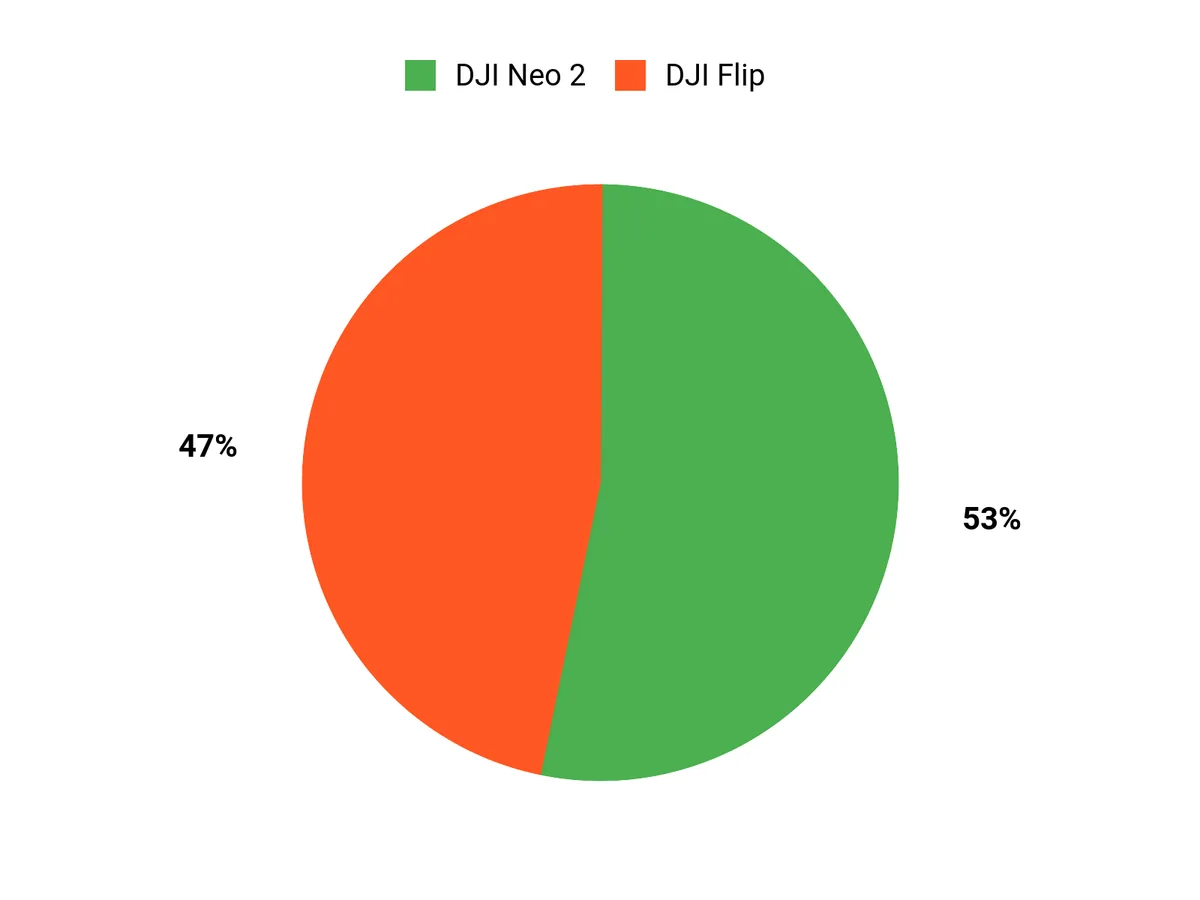
When buyers choose between the DJI Neo 2 and the DJI Flip, the decision usually comes down to portability and hands-free flying versus image quality and flight time. If you want a light drone you can launch from your palm and steer with gestures, the DJI Neo 2 fits. If longer flights, 48 MP stills and a dedicated remote matter more, the DJI Flip is the better fit.
How to Choose a Palm-Launch Drone
Camera Sensor and Gimbal
Sensor size has a bigger effect on image quality than resolution alone. A 1/2-inch sensor is fine for social clips in good light. A larger 1/1.3-inch sensor holds more detail in shadows, at dusk and in big landscapes. A 3-axis gimbal also smooths pans better than a 2-axis one. If image quality is your priority, the DJI Flip is the better fit.
Flight Time and Spare Batteries
Rated flight times are measured in calm conditions, so wind, cold weather, fast flying and propeller guards all cut them. For a few quick clips, a shorter battery life is workable. For hikes, sunsets or events, longer flight time and spare batteries save you from rushed landings. Plan your route, keep a margin for the return, and charge everything the night before.
Obstacle Sensing
Check which directions a drone can see, not just whether it has sensors. Forward and downward sensing protects you when you fly straight ahead. Omnidirectional sensing also covers the sides and rear, which matters when the drone tracks you through trees or streets. For follow shots, the DJI Neo 2 has the wider coverage.
Controller and Range
Palm launch and gesture control are great for quick selfies and short follow shots close to you. A dedicated remote gives you finer framing and a stronger link for longer flights. Look at what the kit includes before you buy. The DJI Flip listing here includes the RC-N3, while the DJI Neo 2 drone-only kit needs a transceiver and a remote for long range.
Weight and Flying Rules
Both drones weigh under 250 g. In the US, drones under 250 g flown only for fun do not need FAA registration, but recreational pilots still need to pass the free TRUST test. Flying for work requires a Part 107 certificate and registration at any weight. Rules differ by country, so check local rules and no-fly zones before every trip.
Storage
Internal storage decides whether you need a memory card. The DJI Neo 2 has 49 GB built in but no microSD slot, so you offload footage to your phone or computer. The DJI Flip has only 2 GB built in and takes a microSD card, which makes it easy to swap cards on long trips.
Mistakes to Avoid When Buying Palm-Launch Drones
- Ignoring what is in the box: check whether the kit includes a remote, spare batteries and a charger before you order.
- Trusting rated flight time: expect shorter real flights and carry at least one spare battery.
- Assuming full obstacle sensing: check which directions the drone can sense, especially if you plan to use follow modes.
- Forgetting storage: buy a microSD card for drones with small internal storage, and offload often on drones without a slot.
- Skipping local rules: check registration, TRUST and no-fly zones before your first flight.
FAQs
What is the main difference between the DJI Neo 2 and DJI Flip?
The DJI Flip has a larger 1/1.3-inch, 48 MP sensor, a 3-axis gimbal and up to 31 minutes of flight time. The DJI Neo 2 is lighter at 151 g, has omnidirectional obstacle sensing and flies by gesture control. In short, the DJI Flip wins on image quality and endurance, and the DJI Neo 2 wins on portability and hands-free use.
Which Should You Choose?
Choose the DJI Flip if you want the better all-around camera drone. It shoots sharper footage, flies longer and includes a remote in this kit. Choose the DJI Neo 2 if you value the lightest kit, gesture control and all-around obstacle sensing more than image quality and flight time.
Do You Need a Controller?
Not for short, close-range shots. The DJI Neo 2 supports palm takeoff, gesture control and palm landing, and it links to your phone over Wi-Fi. For long-range flying it needs the optional Digital Transceiver and a compatible remote. The DJI Flip kit linked here already includes the DJI RC-N3. Pair and update firmware in a calm, open area before complex flights.
How Long Will Flights Last?
DJI rates the DJI Neo 2 at about 19 minutes and the DJI Flip at up to 31 minutes per battery. Both figures come from calm, windless tests, so expect less in real use. Propeller guards on the DJI Neo 2 drop its rating to about 17 minutes. Cold weather and fast flying also cut flight time, so bring extra batteries.
Which is better for beginners?
The DJI Neo 2 is the easier first drone. You can fly it without a remote, it senses obstacles in every direction, and its light 151 g frame is less intimidating. The DJI Flip is also beginner-friendly thanks to built-in propeller guards and palm takeoff, but it suits new pilots who care more about image quality than hands-free flying.
Which is better for solo vlogging?
The DJI Neo 2 is better for quick solo vlogs. Gesture control and ActiveTrack let you frame and follow yourself without holding a remote, and omnidirectional sensing adds safety while it tracks you. The DJI Flip also tracks subjects with FocusTrack, so pick it if image quality matters more than hands-free control.
Do I need to register the DJI Neo 2 or DJI Flip with the FAA?
Not if you fly purely for fun in the US, because both weigh under 250 g. You still need to pass the free TRUST test as a recreational pilot. If you fly for work or pay, you need a Part 107 certificate and must register the drone. Always check local airspace rules before you take off.
Can I add a microSD card to either drone?
Only the DJI Flip takes a microSD card, and you will want one because it has just 2 GB of internal storage. The DJI Neo 2 has no card slot but includes 49 GB of internal storage. That is plenty for short trips, but you need to offload footage to your phone or computer before it fills.
Final Verdict: DJI Neo 2 vs DJI Flip
In the DJI Neo 2 vs DJI Flip matchup, the DJI Flip is the better camera drone for most people. Its larger sensor, 3-axis gimbal, 31-minute flight time and included remote outweigh its bulk. The DJI Neo 2 remains the smarter pick for travelers and solo creators who want the lightest kit and hands-free flying.

