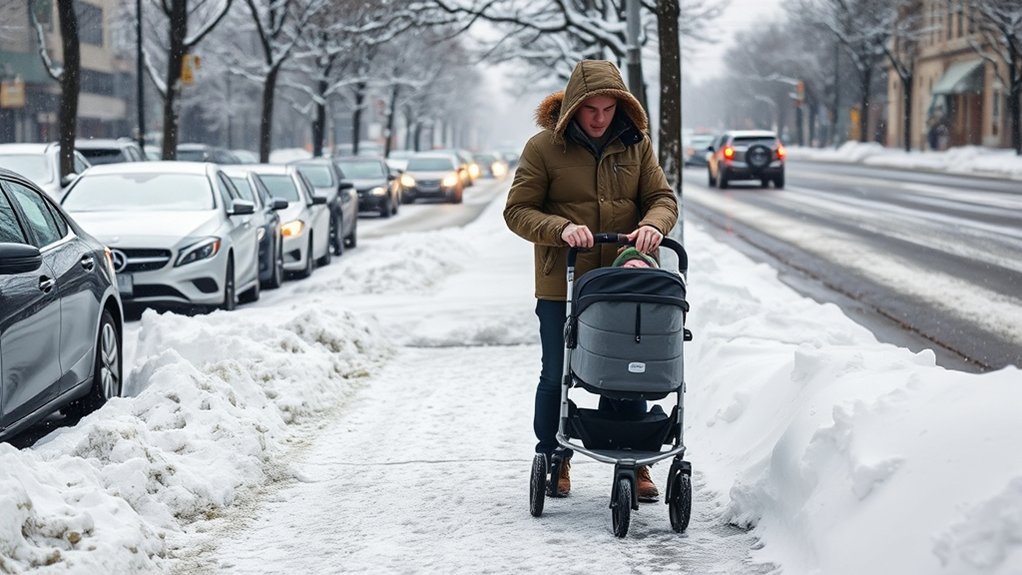
Using a stroller in snow can be safe for a short winter walk, but the conditions matter. Cleared sidewalks are very different from deep snow, hidden ice, or slippery slopes. The right stroller, warm clothing, and a sensible route can make outings easier while reducing risks for you and your baby.
Quick Answer
Yes, you can use a stroller in snow when the path is reasonably clear, the stroller handles the surface well, and your baby stays warm and dry. Large, treaded wheels generally work better on packed snow. Avoid icy slopes, deep drifts, severe wind chill, and routes where you cannot maintain control.
Key Takeaways
- Compact travel strollers work best on cleared sidewalks, while larger wheels handle uneven snow more effectively.
- A weather shield protects against wind and falling snow, but it must allow proper ventilation.
- Dress your baby in breathable layers and check their chest or back regularly for signs of overheating or cold.
- There is no single safe outdoor time limit for every baby. Wind chill, age, clothing, and exposure all matter.
- If you cannot walk without slipping or struggling to push the stroller, choose another route or stay indoors.
Key Risks of Using a Stroller in Snow
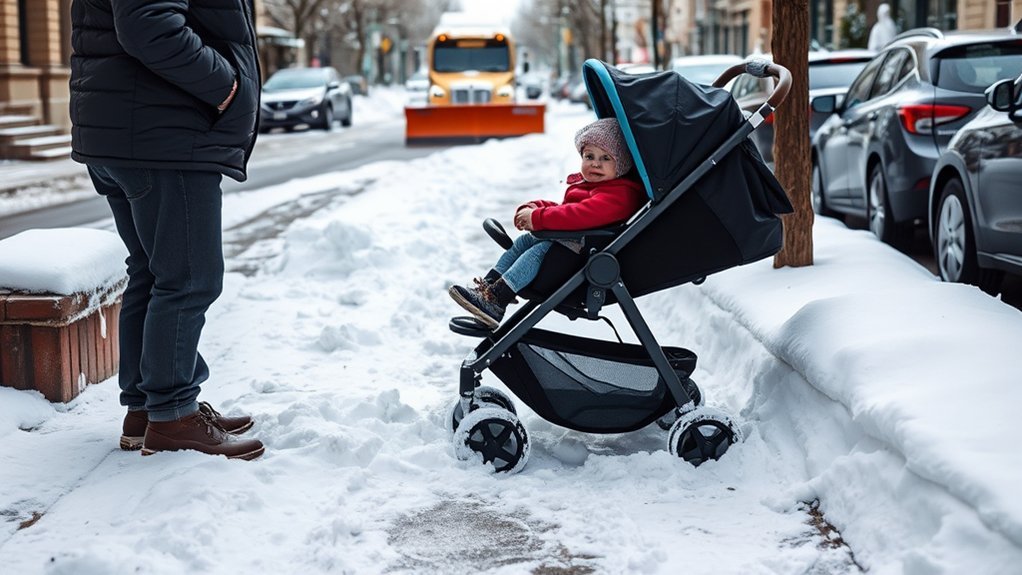
The biggest risks of pushing a stroller through snow are losing traction, getting stuck, and slipping. Snow can also hide curbs, holes, and icy patches. Even a well-built stroller cannot eliminate these hazards.
Several winter conditions deserve special attention:
- Packed snow: Wheels may roll over it, but braking and steering become less predictable.
- Deep or loose snow: Small wheels can sink or stop suddenly, making the stroller hard to push.
- Black ice: A thin, nearly invisible layer of ice can cause a caregiver to fall or a stroller to slide.
- Snowbanks and uneven pavement: Hidden edges can catch a wheel and increase the chance of tipping.
- Slush: Wet snow can soak clothing, collect around wheels, and make the stroller harder to control.
- Cold wind: Babies remain relatively still during stroller rides, so they may lose heat without obvious warning signs.
Lightweight strollers can be easier to carry over a cleared obstacle. However, they are not automatically more stable or easier to push through snow. Wheel size, tread, suspension, and the condition of the path matter more than frame weight alone.
For city outings, cleared sidewalks and sheltered pedestrian routes are usually more practical than trying to cross snow-covered streets or uneven parks.
Warning: Never force a stroller through deep snow, across exposed ice, or down a slippery incline. If the wheels stop moving freely or you cannot keep your footing, turn around. Do not use an icy road as a substitute for an uncleared sidewalk.
Choosing the Right Stroller for Winter Conditions
The best stroller for winter depends on where you plan to walk. A compact stroller may be enough for regularly cleared sidewalks, while a model with larger wheels is usually better for packed snow and rough paths.
Before buying another stroller, consider how often your local sidewalks are cleared and how much snow remains after a storm.
Stroller Features to Consider
For snowy conditions, focus on wheels, stability, suspension, brakes, and weather protection. A good winter stroller should feel predictable when you push, stop, and turn.
- Large, treaded wheels: These roll over shallow ruts and packed snow more easily than small, smooth wheels.
- Good suspension: This helps absorb bumps from uneven pavement and frozen tracks.
- Lockable front wheels: A straight-tracking wheel can be easier to control over rough snow than a freely swiveling one.
- A stable frame: A wide, balanced stroller reduces tipping risk when surfaces are uneven.
- Reliable parking brakes: Brakes should engage securely and remain free of packed snow.
- A secure harness: Properly fitted straps keep your child positioned in the seat.
- Weather protection: A compatible cover and canopy help shield your child from falling snow and wind.
The American Academy of Pediatrics stroller safety guidance recommends a stable base, easy-to-use brakes, and a five-point harness. It also advises against hanging heavy bags from stroller handles because they can make the stroller tip backward.
Best Stroller Types for Snow
There is no single stroller type that works best in every winter setting. Choose based on the conditions you expect to encounter most often.
- Lightweight travel strollers: Suitable for cleared paths, shopping areas, and mostly dry pavement. They are easier to fold and carry but may struggle in accumulated snow.
- All-terrain strollers: Larger wheels and stronger suspension make these more practical for packed snow and uneven sidewalks.
- Jogging-style strollers: Many have larger tires and lockable front wheels, which can help on rough ground. A stroller’s jogging design does not make icy surfaces safe, and its age and activity restrictions still apply.
- Winter-adapted strollers: Some models can use manufacturer-approved snow accessories. Compatibility and safe-use instructions must be confirmed before installing them.
For occasional city snow, a compact stroller may be sufficient if you can stay on maintained paths. Families who regularly encounter packed snow may benefit more from an all-terrain design.
Accessories for Winter Safety
Winter accessories can improve comfort, but they should never interfere with the stroller’s brakes, harness, wheels, or ventilation.
Useful options include:
- Weather shield: A model-compatible rain or snow cover that blocks precipitation while maintaining airflow.
- Insulated footmuff: A properly fitted cover that keeps a child’s legs warm without interfering with the harness.
- Stroller liner: A compatible liner that adds comfort without creating an unsafe sleeping surface.
- Wheel protection: Manufacturer-approved covers or accessories where available.
- Stroller skis: Specialized accessories intended for certain snow conditions, but only when approved for the stroller and used according to their instructions.
Do not attach improvised skis or modify the stroller’s wheel assembly. Accessories that change steering or braking can create new hazards.
Never seal the stroller completely with plastic. Keep ventilation openings clear, maintain a view of your child, and remove the cover when it is no longer needed.
Top Safety Tips for Stroller Use in Snowy Conditions
Safe winter stroller use starts with checking the route and testing the stroller. The goal is to keep the wheels rolling freely while maintaining secure footing and control.
Follow these steps before and during your walk:
- Check the weather: Review the temperature, wind chill, precipitation, and local weather warnings before leaving.
- Choose a cleared route: Prefer maintained sidewalks, sheltered paths, and areas with easy access to indoor shelter.
- Check the stroller: Inspect the wheels, brakes, frame locks, and harness for damage or accumulated ice.
- Dress your baby: Use suitable layers, warm accessories, and approved weather protection.
- Test the wheels: Push the stroller slowly over a safe, level patch of the same surface before committing to a longer route.
- Walk carefully: Wear footwear with good grip and avoid sudden turns or sharp changes in direction.
- Keep your child secured: Use the stroller harness correctly and never leave your baby unattended.
- Turn back when needed: Return indoors if the path becomes icy, visibility worsens, or your child shows signs of discomfort.
Keep both hands available when steering over difficult ground. Avoid carrying heavy bags on the handlebars or trying to balance the stroller while holding other large items.
Do not leave a parked stroller on a slope, even with the brake engaged. Snow and ice can reduce stability, and a brake is not a substitute for supervision.
How to Dress Your Child for Cold Weather
Dress your baby in several breathable layers rather than relying on one very heavy outfit. Layers help trap warmth, manage moisture, and make it easier to adjust clothing when conditions change.
The American Academy of Pediatrics recommends roughly one more layer for older babies and young children than an adult would wear in the same weather.
For a cold-weather stroller walk, consider these clothing layers:
- Base layer: A soft, moisture-managing bodysuit or thermal layer that fits comfortably against the skin.
- Middle layer: A warm fleece outfit or insulating garment to retain body heat.
- Outer layer: A weather-appropriate coat or snowsuit that helps protect against wind and moisture.
- Head and hands: A warm hat that covers the ears and properly fitted mittens.
- Feet: Warm socks and insulated booties or footwear suited to the child’s age.
Choose clothing that stays dry. Wet gloves, socks, or outerwear can quickly make a child uncomfortable in cold conditions.
An insulated stroller footmuff can add warmth. Use one approved for your stroller, and make sure it does not cover your child’s nose or mouth.
Use breathable layers and a properly fitted stroller footmuff for warmth. Keep your baby’s face uncovered and avoid overheating.
Check your baby’s chest, upper back, or neck during the walk. These areas usually give a better indication of overall warmth than hands or feet alone, which may naturally feel cooler.
If your baby’s chest feels hot or sweaty, reduce a layer or open the cover. If their body feels unusually cold or they appear uncomfortable, move somewhere warm and reassess their clothing.
Remove hats and unnecessary outer layers when entering a heated building or vehicle.
If you use an infant car seat as part of a travel system, remember that bulky coats and snowsuits should not go beneath the car seat harness. Secure the harness over suitable thin clothing and place extra warmth over the buckled straps.
How Long Is Too Long to Be Outside With Your Baby?
There is no universal safe number of minutes for every baby in cold weather. The appropriate length of an outing depends on the temperature, wind chill, your child’s age, clothing, and whether they remain warm and dry.
Newborns and very young infants need extra care because they regulate body temperature less effectively than older children.
According to the AAP’s winter outdoor safety advice, outdoor play should generally be avoided when the temperature or wind chill falls below −15°F (about −26°C).
This is a warning threshold, not permission to keep an infant outdoors for a fixed period. A stroller passenger may become cold sooner because they are not generating much heat through activity.
Consider these factors when deciding how long to stay outside:
- Air temperature: Colder air increases heat loss and may require shorter outings.
- Wind chill: Wind makes exposed skin lose heat faster.
- Wet conditions: Damp clothing increases the risk of becoming chilled.
- Age and health: Newborns, premature babies, and children with certain medical conditions may need additional precautions.
- Shelter: Being close to home or another warm place makes it easier to end the outing promptly.
For newborns, there is no single age such as two or three weeks that guarantees cold-weather outings are appropriate. Short, well-protected trips may be reasonable in mild conditions, but individual circumstances matter.
Watch for warning signs of cold stress:
- Unusually cold skin or a cold chest.
- Marked sleepiness, weakness, or reduced responsiveness.
- Persistent distress or a sudden change in normal behavior.
- Pale, grayish, or unusually firm areas of exposed skin.
- Difficulty breathing or other signs of serious illness.
Warning: A baby who is unusually lethargic, difficult to wake, or showing signs of hypothermia needs immediate medical attention. Move them to a warm place, replace wet clothing, and seek emergency care. Do not rub suspected frostbitten skin or apply direct heat.
Start with a short outing close to home if the weather is suitable. Extend future walks only when your baby remains comfortable and conditions allow.
Note: Ask your pediatrician for individualized cold-weather guidance if your baby was born prematurely, has a medical condition, or has difficulty maintaining body temperature.
Safe Alternatives to Strollers for Winter Outings
When snow makes stroller use difficult, changing your route or transportation method may be safer than forcing the stroller through it. The best alternative depends on the child’s age and the caregiver’s footing.
Baby Carriers and Wraps
A properly fitted baby carrier can be useful on clear but narrow paths where a stroller would be awkward. It keeps your baby close while leaving your hands available for balance.
However, a carrier does not make icy ground safe. A caregiver who slips could fall while carrying the child.
The AAP’s baby carrier safety advice emphasizes keeping the infant’s face visible, nose and mouth unobstructed, and chin away from the chest.
Premature infants and babies with breathing problems may not be suitable for certain upright carriers. Always follow the carrier’s age, size, and positioning instructions.
Sleds and Toboggans
Sleds and toboggans can move over snow where stroller wheels become stuck. However, recreational sleds are not automatically safe transportation for infants.
Many lack proper infant support, restraints, and protection from tipping. Never place a baby on a sled intended for older children or use one on hills, roads, or near traffic.
If considering a purpose-built child transport sled, confirm the manufacturer’s age, support, restraint, and terrain restrictions first. For a young infant, a maintained walking route or indoor alternative is generally a more dependable choice.
Indoor and Sheltered Walking Routes
Shopping malls, community centers, indoor recreation facilities, and covered walkways can offer more comfortable alternatives during harsh weather.
In Sapporo, Japan, the city’s underground pedestrian network connects major central areas, including Sapporo Station, Odori, and Susukino. These routes let people avoid much of the snow and cold at street level.
Other cities may have similar indoor shopping passages or connected public buildings.
Winter-Friendly Family Activities
Parks with properly maintained paths, sheltered public spaces, and local winter festivals can still be enjoyable with young children.
Choose locations with cleared walking areas, available restrooms, and convenient places to warm up. Avoid outdoor events where the only access is across deep snow or slippery ground.
What Makes Winter Stroller Outings Work Better?
The most practical approach to winter stroller use is to match the stroller to the route, rather than expecting one model to handle every surface. Clear pavement, controlled movement, and appropriate clothing make a bigger difference than accessories alone.
Parents comparing winter stroller setups often focus on ease of pushing, child comfort, and the ability to avoid icy areas.
Adaptable Stroller Models
The Ergobaby Metro 3 and Joolz Aer² are compact travel strollers that may suit winter outings on cleared paths. Their portable designs are useful for families who move between sidewalks, vehicles, and indoor spaces.
The Ergobaby Metro 3 is designed for everyday urban use and travel. Its compact construction is convenient for maintained walking routes, but it should not be treated as a dedicated deep-snow stroller.
The Joolz Aer² weighs approximately 14.3 pounds and has 5.7-inch front wheels and 6.1-inch rear wheels, according to the manufacturer.
These relatively small wheels are practical for travel and paved surfaces but may become difficult to push through accumulated snow.
For frequent walks on packed snow, a stroller with larger treaded wheels and suitable suspension will generally be more practical.
Choose a stroller based on the surface it can actually handle, not simply its weight, brand, or advertised portability.
Winter Stroller Tips That Make a Difference
Successful winter outings depend on preparation and knowing when to change plans. The following comparison shows how common stroller features help in different conditions.
| Stroller Feature | Benefits |
|---|---|
| Lightweight Design | Easier to carry and store when using cleared urban routes |
| Weather Shields | Help block falling snow and wind while allowing ventilation |
| Proper Traction | Makes steering more predictable on packed snow, but not on ice |
| Layered Clothing | Helps maintain warmth and allows adjustments during the outing |
Before heading out, decide where you can stop if the weather worsens. A nearby heated building is useful when your child needs a clothing change or a break from the cold.
For families planning outings during normal nap times, remember that stroller travel and routine infant sleep are different situations.
The AAP’s safe sleep guidance recommends moving a baby who falls asleep in a stroller to a firm, flat, approved sleep surface on their back as soon as possible.
Do not rely on a covered stroller seat as a substitute for a safe sleeping space.
In Nordic countries, outdoor stroller naps are a recognized cultural practice. Karolinska Institutet describes the tradition in countries such as Sweden.
However, cultural popularity does not establish that outdoor cold-weather naps are safer or healthier for every baby. Appropriate clothing, supervision, temperature, and current safe sleep guidance still matter.
Preparing Your Stroller for Winter Conditions
A stroller should be inspected before winter use and cleaned after exposure to snow, slush, or road salt. Regular maintenance helps prevent stiff wheels, corrosion, and problems with moving parts.
Use this preparation checklist before the winter season:
- Inspect the wheels: Look for wear, damage, loose fittings, and debris around the axles.
- Test the brakes: Confirm they engage and release normally on a dry, level surface.
- Check the harness: Make sure all straps, clips, and buckles work correctly.
- Secure the frame: Confirm the stroller is fully opened and every required locking mechanism is engaged.
- Check wheel suitability: Determine whether the wheel size and tread match your planned winter routes.
- Review accessory compatibility: Use only winter covers, liners, skis, or wheel attachments approved for the model.
- Prepare weather protection: Fit the cover correctly and check that ventilation and visibility remain adequate.
- Practice maneuvering: Test the stroller on a safe, level surface before using it in more difficult conditions.
Prepare your stroller before winter starts. Reliable brakes, clean wheels, a secure harness, and the right route are more valuable than unapproved snow accessories.
How to Clean a Stroller After Snow Exposure
Snow and road salt can collect around wheel joints, brakes, and the frame. Clean these areas promptly to keep the stroller working smoothly.
- Remove visible snow and slush from the wheels and frame.
- Wipe accessible surfaces with a damp cloth and mild cleaning solution, following the manufacturer’s directions.
- Remove dirt or salt buildup from the wheel areas without damaging the brakes.
- Dry the stroller thoroughly in a ventilated location.
- Check moving parts and apply lubricant only if the manufacturer recommends it.
- Inspect the brakes and wheel movement again before the next outing.
Never use a stroller with damaged brakes, loose wheels, a broken frame lock, or other defects that could affect safety.
Store the stroller somewhere dry rather than leaving it outdoors with snow or moisture trapped around its moving parts.
Frequently Asked Questions
Is It Safe to Use a Stroller in the Snow?
Yes, a stroller can be used in snow when the route is reasonably clear and the stroller remains easy to control. Large, treaded wheels help on packed snow. Avoid ice, steep slopes, deep drifts, and severe weather that could put you or your baby at risk.
What Is the 5-3-3 Rule for Babies?
The 5-3-3 rule is not an established pediatric standard for winter clothing. The American Academy of Pediatrics instead recommends roughly one more clothing layer for older babies and young children than an adult needs. Adjust layers based on the weather and your baby’s comfort rather than following a fixed clothing count.
At What Age Should a Child Not Use a Stroller?
There is no universal age when a child must stop using a stroller. Many children begin walking more independently around ages three to four, but individual needs vary. Follow the stroller’s height and weight limits and consider your child’s walking ability, fatigue, and the length of each outing.
What Country Do They Let Babies Sleep Outside in the Cold?
Outdoor baby naps are a tradition in Nordic countries such as Finland and Sweden. This cultural practice does not mean cold-weather naps are suitable for every infant. Parents should consider age, weather conditions, supervision, and current safe sleep recommendations before making decisions about outdoor sleep.
What Stroller Wheels Are Best for Snow?
Large, treaded wheels generally perform better on packed snow than small, smooth wheels. Suspension and a lockable front wheel can also make steering easier over uneven surfaces. However, no wheel type guarantees traction on ice, and deep snow may make stroller travel impractical.
Can a Baby Sleep in a Stroller During a Winter Walk?
If an infant falls asleep in a stroller seat, move them to a firm, flat, approved sleep surface on their back as soon as possible. Keep loose bedding away from their face and maintain supervision during the walk. A stroller ride should not replace a safe routine sleeping environment.
Conclusion
Using a stroller in snow is most practical when sidewalks are cleared, the wheels provide suitable traction, and your child remains warm and comfortable. Choose equipment for your local conditions rather than relying on stroller weight or winter accessories alone.
Before leaving, inspect the stroller, dress your baby in appropriate layers, and choose a route with easy access to shelter. If the ground is icy or the stroller becomes difficult to control, postpone the walk or choose a safer alternative.
Sources
- American Academy of Pediatrics — How to Choose a Safe Baby Stroller: Supports stroller stability, braking, harness use, and tipping precautions.
- American Academy of Pediatrics — Cold Weather Safety for Children: Supports winter layering, cold-weather protection, and signs of frostbite or hypothermia.
- American Academy of Pediatrics — Playing Outside in Winter: Supports wind chill precautions, the −15°F outdoor-play threshold, and the importance of warming breaks.
- American Academy of Pediatrics — How to Keep Your Sleeping Baby Safe: Supports safe sleep positioning and moving sleeping infants from strollers to appropriate sleep surfaces.
- American Academy of Pediatrics — Baby Carriers: Supports safe carrier positioning, airway protection, and precautions for young infants.
- Ergobaby — Metro 3 Stroller: Confirms the stroller’s intended everyday, travel, and urban use.
- Joolz — Aer² Travel Stroller: Confirms the model name, product weight, and wheel dimensions.
- City of Sapporo — Underground Pedestrian Network: Supports the example of sheltered winter walking routes connecting central Sapporo.
- Karolinska Institutet — Nordic Outdoor Baby Napping: Documents the cultural practice of outdoor infant naps in Nordic countries.