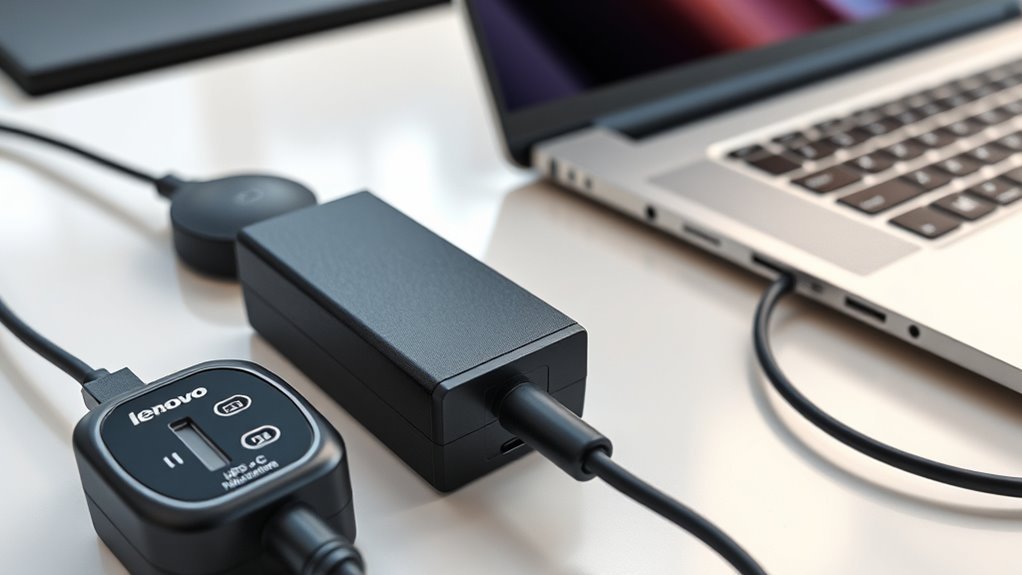
The Lenovo ADLX65YAC2D is commonly identified as a 65W USB-C charger with Power Delivery support, but the exact behavior depends on the device and cable involved. It can negotiate multiple voltage levels, which suggests standard PD compatibility rather than fixed output charging. Still, confirmation requires checking its label, connector type, and handshake performance with a compatible laptop, since faults or mismatched hardware can change the result.
Does the Lenovo ADLX65YAC2D Support PD Charging?
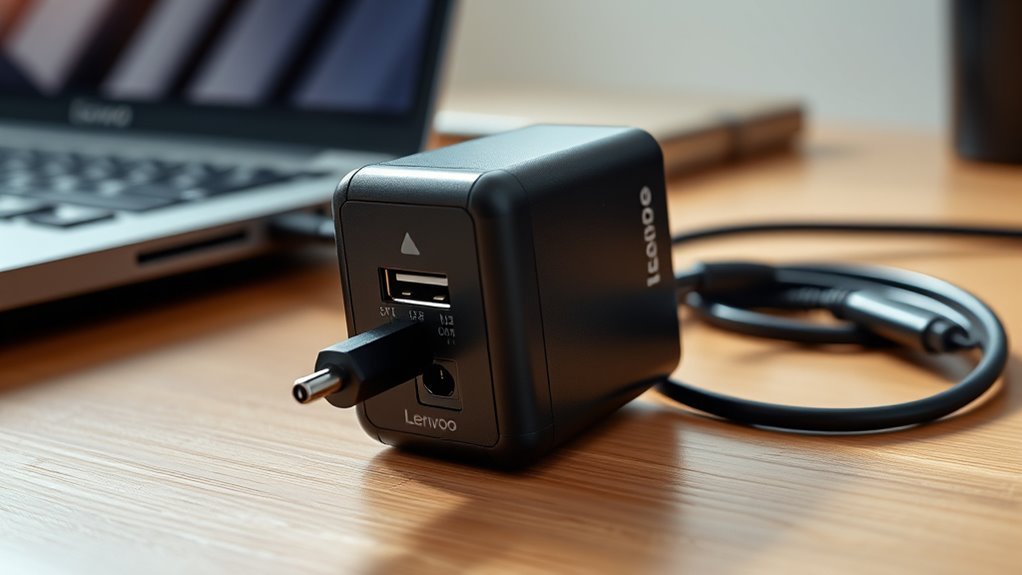
Yes, the Lenovo ADLX65YAC2D does support USB Power Delivery (PD) charging. It is a USB-C power adapter rated at 65W, designed to provide efficient charging for a Lenovo laptop and other compatible devices.
Through USB Power Delivery, the adapter can supply multiple voltage levels, including 5V, 9V, 12V, 15V, and 20V, which allows it to match the needs of supported hardware without unnecessary waste. This flexibility supports faster charging while preserving operational stability.
USB Power Delivery offers multiple voltage levels for efficient, stable charging tailored to supported hardware.
Built-in protections against short circuits and overvoltage further improve safety during use, reducing risk for users who require dependable power access. Its compact form and light weight make it practical for travel, while its output capacity remains sufficient for everyday productivity.
For users seeking autonomy from unreliable chargers, this model represents a controlled, portable, and standards-based charging solution.
How the ADLX65YAC2D Negotiates USB-C Power
The Lenovo ADLX65YAC2D uses USB-C Power Delivery negotiation to determine the appropriate voltage and current for a connected device.
It begins at a default 5V output, then adjusts through the CC pins as the laptop signals its power needs and the charger responds with an available profile.
Once both sides agree, a PD contract is established, allowing the adapter to deliver the required power level up to 65W.
USB-C Negotiation Basics
At connection time, the Lenovo ADLX65YAC2D charger begins USB-C Power Delivery negotiation at the default 5V level, then uses communication over the CCx pins to establish a power contract with the attached device.
In USB Type C systems, this exchange lets the adapter and host declare capabilities, request limits, and confirm safe operation. Through Power Delivery messages, the charger can offer multiple profiles, including 5V, 9V, 15V, and 20V, while aligning output with the device’s requirements.
The negotiation process is guarded by short-circuit and overcurrent protections, preserving stability during the shift.
Monitoring tools can inspect the resulting contract to verify that the agreed voltage and current match the connected Lenovo model, supporting efficient charging and practical autonomy for the user.
Default 5V Startup
When the Lenovo ADLX65YAC2D is attached to a USB-C device, it begins from a default 5V output so initial compatibility is maintained across a broad range of hardware. As a USB C charger, this baseline lets the source remain accessible before any Power Delivery tuning occurs.
| State | Voltage | Effect |
|---|---|---|
| Start | 5V | Broad compatibility |
| Talk | CC pins | PD signaling |
| Scale | 9V-20V | Device-led match |
| Safeguard | Protection | Stable flow |
The USB-C connector supports low-resistance transfer, while short-circuit protection helps preserve stability during negotiation. From this neutral starting point, the charger can support 9V, 12V, 15V, or 20V as a connected device requests. The process is methodical, efficient, and oriented toward practical freedom from unnecessary power limits.
Power Delivery Contracting
Power Delivery contracting on the Lenovo ADLX65YAC2D uses USB-C Power Delivery signaling to match the charger’s output to the connected device’s requirements. Through the CC pins, the Power Adapter identifies device capabilities, then selects an appropriate contract.
The process begins at 5V and, if requested and supported, can rise through higher levels up to 20V, with a maximum output of 65W. This controlled negotiation helps devices receive only the power they can safely use, reducing waste and supporting efficient charging.
The Power Delivery protocol also embeds short-circuit protection and overvoltage safeguards, improving reliability. For users seeking flexible, standards-based charging, this negotiation model offers practical autonomy: one charger can adapt across devices while maintaining disciplined electrical control and consistent performance.
What Wattage and Voltages It Can Deliver
The ADLX65YAC2D supports a maximum PD output of 65W, placing it within a power range suitable for many Lenovo laptops.
It offers supported voltage levels of 5V, 9V, 12V, 15V, and 20V, with current delivery of 3A at lower settings and 3.25A at 20V.
Its smart voltage control matches output to device demand, helping maintain efficient charging across compatible ThinkPad, Yoga, Chromebook, and IdeaPad models.
PD Power Levels
Supporting a range of charging needs, the Lenovo ADLX65YAC2D USB-C power adapter delivers up to 65W through USB Power Delivery. This PD charging profile gives devices negotiated power rather than fixed output, supporting efficient energy transfer across compatible Lenovo systems.
The USB-C interface helps preserve device autonomy by matching demand with available power.
- 5V at 3A for low-load operation
- 9V, 12V, and 15V at 3A for broader mobile use
- 20V at 3.25A for full 65W delivery
Its power levels suit ThinkPad, Yoga, and IdeaPad laptops, while built-in safeguards against short circuits and overheating reinforce dependable operation.
The compact, lightweight design further supports portable, liberated use without sacrificing measured performance.
Supported Voltage Outputs
Voltage output on the Lenovo ADLX65YAC2D USB-C charger follows the USB Power Delivery standard, allowing it to supply 5V, 9V, 12V, 15V, and 20V depending on device requirements.
These voltage outputs enable charging across a wide range of devices, with negotiation determining the exact profile used. At its full 65W rating, the adapter can deliver up to 3.25A at 20V, supporting efficient operation for higher-demand equipment.
Lower voltage outputs serve devices that need reduced power, improving compatibility and control. The charger’s PD communication helps match voltage and current precisely, which supports safer charging and minimizes unnecessary strain.
Built-in protections against short-circuiting, overvoltage, and overheating further reinforce reliable performance. This flexibility reflects a practical design aimed at giving users greater electrical autonomy.
Which Lenovo Laptops Work With ADLX65YAC2D?
Lenovo’s ADLX65YAC2D charger is compatible with a broad range of laptops across several product families, making it a practical option for users who need a 65W power adapter.
Within the Lenovo ecosystem, its reach spans business, consumer, and education devices, showing flexibility among laptop chargers. The most clearly supported groups are:
- ThinkPad models such as T14, X1 Carbon, T15, and T480
- Yoga systems including S940, C940, and X390
- Chromebook and IdeaPad lines, including 100e, 300e, C340, 5, 910, and 720
This breadth indicates that the ADLX65YAC2D is not limited to one niche. Instead, it serves users seeking dependable charging across different Lenovo platforms.
Its compatibility profile suggests a straightforward choice for people who value mobility, device independence, and practical access to power without unnecessary constraints.
Why PD Matters for Lenovo USB-C Chargers
USB-C Power Delivery plays a central role in how Lenovo chargers perform because it allows the charger and device to negotiate the appropriate power level automatically.
USB-C Power Delivery lets Lenovo chargers and devices automatically negotiate the right power level for efficient charging.
This Power Delivery process matters because Lenovo USB-C chargers can deliver higher wattage efficiently, supporting faster charging for compatible laptops and mobile devices. With the ADLX65YAC2D, up to 65W is available, which is enough for many Lenovo systems that rely on USB-C input.
The protocol also improves versatility: one charger can serve laptops, tablets, and smartphones, reducing dependence on separate adapters and increasing user autonomy.
Beyond convenience, PD adds a layer of protection by managing current and voltage within safe limits. Features such as overcurrent and short-circuit protection help maintain reliable operation while minimizing thermal stress.
In practical terms, USB-C PD makes charging more adaptable, safer, and more efficient.
Signs It Is Not Handshaking
When a Lenovo PD charger is not handshaking correctly, the most common sign is that it remains at the default 5V output instead of negotiating a higher voltage through the USB Type-C CC lines. In this state, the Charger appears active, yet the USB link does not establish a power delivery contract.
An analyst may note:
- Output stays fixed at 5V, even when the device supports PD.
- Charging is slow or unchanged, suggesting no voltage negotiation.
- Monitoring tools show no valid USB-C handshake or contract.
Faulty cables or connectors can interrupt CC communication, preventing the Charger from confirming the required profile.
For users seeking freedom from unreliable power, the objective clue is consistency: a genuine PD session shifts voltage, while a failed handshake leaves the system locked at baseline behavior.
Observation of these signs helps distinguish normal compatibility from stalled negotiation without assuming deeper internal faults.
Common Faults That Break PD Charging
Common faults that interrupt Lenovo PD charging often trace to failures in a few critical circuit stages rather than to the protocol itself.
A short circuit in the controller IC, such as the LD5763GS, can block correct voltage regulation and stop PD charging from beginning. Failed output capacitors, especially C1 and C2, may leave the secondary side at 0V, removing the energy needed for negotiation.
Shorted controller ICs and failed output capacitors can leave the secondary side at 0V, halting PD negotiation.
Faulty transformers can produce the same zero-output condition, making the charger unable to launch the Power Delivery sequence. In compact assemblies, poor solder joints may arc under load, creating unstable delivery and erratic contact behavior.
Overheating also matters: heat-damaged parts can weaken the communication path on the CCx pins, preventing a valid contract from forming.
These faults are mechanically and electrically distinct, yet each can sever the chain of power conversion and deny the user reliable, autonomous charging access.
How to Test It With a Multimeter
A multimeter provides a straightforward way to verify whether the Lenovo ADLX65YAC2D is producing proper PD output. With AC Power applied to the Adapter Charger, the tester should set the meter to DC voltage and begin at 5V to confirm basic output at the USB-C port.
From there, the reading should rise, with a compatible device attached, toward higher negotiated levels, potentially reaching 20V.
- Measure the USB-C output while load is connected.
- Check continuity on the CC pins to confirm PD communication.
- Inspect output capacitors and the LD5763GS area for shorts or abnormal readings.
Any stable variation should be documented to show whether delivery falls within the expected 15W to 65W range.
This method gives an objective view of charger behavior and helps confirm whether power negotiation remains intact, efficient, and free from hidden electrical faults.
When to Replace the Lenovo USB-C Charger
Replacement becomes necessary when the Lenovo ADLX65YAC2D no longer delivers stable PD charging or shows signs of electrical or physical failure.
A laptop charger should provide up to 65W through USB-C, and any repeated inconsistency, overheating, or refusal to charge despite a working outlet suggests declining performance.
If testing shows the expected voltage is absent, or the output reads zero volts, replacement is justified.
Damage to the cable, connector, or strain points can also reduce charging efficiency and interrupt efficient power delivery, making continued use unreliable.
Damage to the cable, connector, or strain points can disrupt charging and make continued use unreliable.
For users who value freedom from interruption, a failing charger limits mobility and control over work.
Warranty coverage may allow a one-year replacement when defects are manufacturing-related, so purchase records should be preserved.
The decision is most sound when the charger can no longer sustain safe, predictable operation.
Frequently Asked Questions
Is a Laptop Charger a PD Charger?
A laptop charger is not necessarily a PD charger. Whether it qualifies depends on its USB Power and Charging Standards.
Many laptop adapters deliver fixed voltage and amperage through proprietary connectors, while PD chargers use negotiation to vary output, usually over USB-C.
A non-PD charger can still power a laptop effectively, but it lacks the adaptive protocol and broader compatibility associated with USB Power Delivery.
How to Charge Lenovo Laptop Using Power Bank?
A Lenovo laptop can be charged with a power bank by using a USB-C model that supports Power Delivery and delivers adequate voltage, ideally 19V or more.
Power bank compatibility should be verified against the laptop’s input requirements before connection. A secure USB-C cable connection helps maintain stable energy flow.
Charging speed depends on the bank’s wattage and capacity, with higher ratings generally supporting faster, longer, more reliable charging for mobile autonomy.
What Happens if I Use a 100W Charger for a 65W Laptop?
A 100W charger on a 65W laptop is typically safe, because the laptop draws only the power it needs through power delivery controls.
Charging compatibility depends on matching voltage and connector type, not merely wattage. It may charge faster at idle or under light use, and can help sustain battery levels during demanding tasks.
Consistent use may increase heat slightly, but it should not damage the system.
Can I Use a 45W Charger Instead of 65W Lenovo?
No, a 45W charger can be used only if the Lenovo laptop supports that lower power output, but charging efficiency will likely drop and power compatibility may be limited.
A 65W adapter better matches the device’s expected demand, reducing slow charging or battery drain during heavy use.
An inadequate charger may still work for light tasks, yet it can constrain performance and delay full liberation from dependence on low power.
Conclusion
The Lenovo ADLX65YAC2D does support USB Power Delivery charging, and that support is far more than a minor convenience—it is the charger’s defining feature. Rated at 65W, it can negotiate multiple voltage levels from 5V to 20V, enabling broad compatibility with Lenovo USB-C laptops and other PD devices. When the handshake succeeds, charging is efficient and stable; when it fails, the problem usually lies in the cable, port, or device, not the charger itself.
