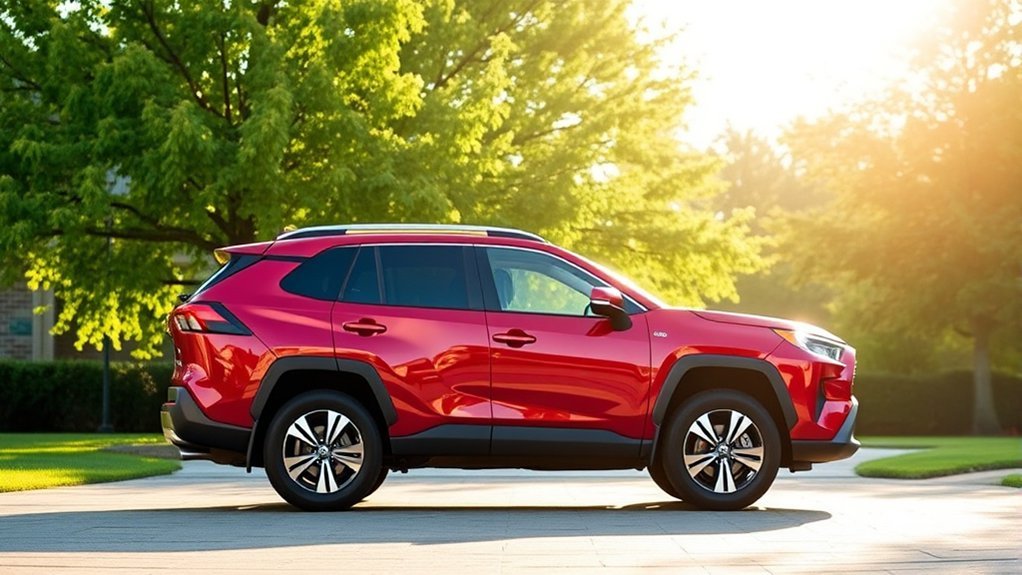
As of September 19, 2026, a Toyota RAV4 Prime—or the RAV4 Plug-in Hybrid name used for model year 2025 and newer—does not qualify for a federal clean-vehicle purchase credit if it was acquired after September 30, 2025. A limited grandfathering rule can still matter when a binding written contract and a payment were completed by that cutoff date and every other eligibility requirement was met.
Last updated: September 19, 2026. Federal credit rules, IRS filing guidance, Toyota model information, and Arizona HOV/VLT guidance were rechecked for this update.
Quick Answer
No federal new, previously owned, or commercial clean-vehicle credit is available for a RAV4 Prime or RAV4 Plug-in Hybrid acquired after September 30, 2025. A grandfathered transaction may still qualify if the buyer entered a binding written contract and made a payment by the cutoff, but the vehicle, buyer, seller-reporting, and filing rules that applied to that transaction must also be met.
Key Takeaways
- Federal new, previously owned, and commercial clean-vehicle credits ended for vehicles acquired after September 30, 2025.
- Taking delivery after the cutoff may be allowed only when a binding contract and payment established acquisition by September 30, 2025.
- A lessee does not claim the vehicle credit. Any prior commercial credit belonged to the leasing company, which was not required to pass the full value to the customer.
- The former $80,000 SUV MSRP cap and buyer income limits matter only for an otherwise eligible pre-cutoff transaction.
- Arizona’s single-occupant clean-vehicle HOV exemption ended September 30, 2025. The old reduced-VLT program remains only for certain grandfathered registrations from before January 1, 2023.
- A separate federal deduction for qualifying new-car loan interest exists for 2025–2028, but it requires final assembly in the United States; Toyota says the 2026 RAV4 Plug-in Hybrid is assembled in Japan.
Does the RAV4 Prime Qualify for a Federal Tax Credit?

No current federal purchase credit applies to a RAV4 Prime or RAV4 Plug-in Hybrid acquired after September 30, 2025. The IRS states that the former New Clean Vehicle Credit, Previously Owned Clean Vehicle Credit, and Qualified Commercial Clean Vehicle Credit are unavailable for vehicles acquired after that date.
Toyota changed the RAV4 Prime’s name to RAV4 Plug-in Hybrid beginning with model year 2025. The name change did not create new tax-credit eligibility.
| Transaction | Federal credit status |
|---|---|
| Acquired after September 30, 2025 | No federal new, used, or commercial clean-vehicle credit. |
| Binding contract and payment completed by September 30, 2025, but delivery occurred later | Potentially grandfathered, subject to every former vehicle, buyer, seller-reporting, and filing requirement. |
| New RAV4 Prime / Plug-in Hybrid acquired from 2023 through September 30, 2025 | Section 30D eligibility required North American final assembly plus the applicable battery, MSRP, income, and seller-reporting rules. PHEV status alone was never enough; verify the exact VIN and accepted seller report for an older return. |
| Previously owned RAV4 Prime acquired from 2023 through September 30, 2025 | Potentially eligible under Section 25E if the sale price, model-year, ownership-history, buyer-income, dealer, and IRS reporting rules were all met. |
| Lease entered before the federal cutoff | The lessee did not claim the federal vehicle credit. A qualifying lessor could have been eligible for the former commercial clean-vehicle credit and could choose whether to reflect any value in the lease offer. |
| Eligible 2021–2022 RAV4 Prime acquired under the older program | Some transactions qualified for a historical credit. Acquisition date matters because Toyota’s manufacturer phaseout and the August 16, 2022 final-assembly rule changed the result for later 2022 purchases. |
Warning: A dealership advertisement, online calculator, or old article stating “up to $7,500” does not establish current eligibility. Do not include a credit in your purchase budget unless the transaction date and official IRS documentation support it.
What Was the Federal Clean Vehicle Credit?
The former federal clean-vehicle programs offered tax credits for certain new plug-in vehicles, certain previously owned clean vehicles, and qualifying commercial vehicles. Before termination, a qualifying new vehicle could receive up to $7,500 under Internal Revenue Code Section 30D.
The maximum amount did not mean that every PHEV received $7,500. Eligibility depended on the purchase date, vehicle classification, MSRP, final assembly, battery and mineral requirements, prohibited-entity restrictions, the buyer’s modified adjusted gross income, the seller’s IRS reporting, and the exact vehicle identification number.
September 30, 2025—not 2032—is the key federal acquisition cutoff under the current law.
The IRS explains the terminated programs and grandfathering rule on its Clean Vehicle Tax Credits page. A vehicle was generally considered acquired when the buyer entered a binding written contract and made a payment. The credit could not be claimed until the vehicle was placed in service, meaning the buyer took possession.
How Did RAV4 Prime Eligibility Change Over Time?
RAV4 Prime eligibility cannot be answered accurately without the acquisition date. The rules changed several times during the model’s life.
- Before August 16, 2022: A qualifying new 2021–2022 RAV4 Prime could receive up to $7,500 under the older plug-in vehicle program, subject to the rules then in force.
- August 16 through December 31, 2022: The Inflation Reduction Act added a North American final-assembly requirement for most new-vehicle purchases after August 16, 2022, while Toyota’s manufacturer phaseout also reduced the IRS-listed maximum to $3,750 for October through December 2022. A listed credit amount did not override the final-assembly rule; transition relief could apply to certain binding contracts entered before August 16, 2022.
- 2023 through September 30, 2025: Section 30D used North American final assembly, battery and critical-mineral rules, MSRP and income limits, and seller reporting. The used-vehicle credit under Section 25E had a separate $25,000 sale-price cap, lower income limits, and ownership-history rules.
- After September 30, 2025: New, previously owned, and commercial clean-vehicle credits are unavailable for newly acquired vehicles.
The IRS maintains a historical list of qualifying vehicles purchased in 2022 or earlier. Buyers reviewing an old transaction should use the rules and credit amount applicable on that specific acquisition date.
Note: Model year and purchase year are not interchangeable. A 2022 model purchased in a later year may be governed by different rules from the same model purchased new in 2022.
Understanding Historical MSRP Limits for Tax Credits
Before the federal credit ended, the Section 30D MSRP cap was $80,000 for vans, sport utility vehicles, and pickup trucks and $55,000 for other vehicles. The cap mattered only when the exact vehicle satisfied all the other eligibility rules.
For this test, MSRP generally included the manufacturer’s suggested base price plus manufacturer-priced options physically attached when the vehicle was delivered to the dealer. It excluded destination charges, taxes, fees, dealer-added equipment, discounts, trade-ins, and manufacturer incentives.
A dealer discount therefore did not turn a vehicle with an MSRP above the statutory cap into an eligible vehicle. Conversely, paying more than MSRP because of a dealer markup did not by itself change the statutory MSRP figure.
Toyota currently lists a $41,500 starting MSRP for the 2026 Toyota RAV4 Plug-in Hybrid. That is below the former $80,000 SUV cap, but the price does not restore a federal clean-vehicle credit because the program ended for vehicles acquired after September 30, 2025.
Income Limits for the Former Federal Tax Credit
For an otherwise eligible new clean vehicle acquired before the program ended, the buyer’s modified adjusted gross income could not exceed the applicable threshold. These limits do not create eligibility for a vehicle acquired after September 30, 2025.
Historical Income Cap Thresholds
- Married filing jointly or qualifying surviving spouse: $300,000.
- Head of household: $225,000.
- All other filing statuses: $150,000.
The legal test used modified adjusted gross income, not ordinary salary, household revenue, or a dealer’s estimate. The buyer could generally use modified AGI from the year the vehicle was placed in service or the preceding year, whichever was lower.
How Filing Status Affected Eligibility
The applicable limit depended on the filing status used for the relevant tax year. A change in filing status between the preceding year and the delivery year required applying the appropriate limit separately to each year.
Exceeding the applicable limit could require repayment when a buyer had transferred a credit to the dealer at the point of sale. The dealer was not responsible for confirming the buyer’s final income eligibility.
These personal income limits did not apply to the lessee because the lessee was not the vehicle’s owner and could not claim the credit. Historically, a leasing company might have qualified for a commercial credit and chosen to reflect some savings in the lease price, but it was not required to pass the full credit to the customer.
Verifying a RAV4 Prime’s Historical Tax-Credit Eligibility

For a vehicle acquired after September 30, 2025, verification is simple: no federal new, used, or commercial clean-vehicle credit is available. For a potentially grandfathered or older transaction, use the following checks.
Model and Transaction Verification
- Confirm whether the vehicle is a RAV4 Prime, a RAV4 Plug-in Hybrid, or a non-plug-in RAV4 Hybrid.
- Record the model year, VIN, contract date, payment date, and delivery date.
- Determine whether the vehicle was new, previously owned, or leased.
- For a late-delivery transaction, retain the binding contract and evidence that payment was made by September 30, 2025.
- Confirm that the seller successfully submitted the required IRS time-of-sale report for a transaction subject to that requirement.
If you are checking the standard non-plug-in model instead, use the site’s separate guide to whether the Toyota RAV4 Hybrid qualifies for a federal tax credit. The conventional hybrid and the plug-in model are governed by different vehicle-eligibility rules.
Historical Income and Price Limits
A potentially eligible new transaction still had to satisfy the applicable modified-AGI limit and the former vehicle MSRP cap. A previously owned vehicle used different buyer-income limits and generally had a $25,000 sale-price limit.
Do not apply the new-vehicle $300,000, $225,000, and $150,000 income thresholds to a used-vehicle transaction. Before termination, the used credit had lower limits: $150,000 for joint filers and qualifying surviving spouses, $112,500 for heads of household, and $75,000 for other filers.
Historical Assembly and Battery Requirements
Under the former post-2022 new-vehicle program, final assembly, critical-mineral sourcing, battery-component sourcing, battery capacity, prohibited-entity restrictions, and manufacturer reporting could affect the amount or availability of the credit.
A consumer was not expected to prove those technical requirements with charging receipts or personal research. The exact VIN’s eligibility and credit amount had to be supported through the official government and seller-reporting process.
Pro Tip: For an older transaction, ask the dealer for the accepted IRS time-of-sale report rather than relying on a window sticker, sales worksheet, or verbal promise. The report identifies the VIN and the credit amount accepted by the IRS system.
Is There Another Federal Tax Break for the 2026 RAV4 Plug-in Hybrid?
There is a separate federal deduction for certain passenger-vehicle loan interest for tax years 2025 through 2028. The IRS says eligible taxpayers may deduct up to $10,000 per year of qualified interest, subject to income and loan requirements, but the vehicle must be new, purchased for personal use, and finally assembled in the United States.
That separate deduction does not rescue the 2026 RAV4 Plug-in Hybrid. Toyota states that 2026 RAV4 Plug-in Hybrid models are assembled in Japan, so they do not meet the U.S. final-assembly requirement for the qualified passenger vehicle loan-interest deduction. The current IRS car-loan-interest guidance and Toyota’s 2026 RAV4 production information support those requirements and assembly details.
Arizona Incentives for Clean Vehicles
Arizona does not currently give a RAV4 Plug-in Hybrid owner automatic single-occupant access to HOV lanes. According to the Arizona Department of Transportation, the federal authorization supporting that exemption expired September 30, 2025. During restricted periods, ordinary passenger vehicles generally need at least two occupants.
Arizona’s old reduced vehicle-license-tax program is also closed to new participants. ADOT says vehicles purchased after January 1, 2023 pay standard registration rates, while certain eligible alternative-fuel vehicles registered before that date may keep a grandfathered reduced rate only while the qualifying registration remains unchanged. The benefit can be lost after events such as a sale, lease buyout, or title change. See ADOT’s Alternative Fuel Vehicle Registration guidance.
Plug-in hybrid vehicles use gasoline as well as electricity, so they should not be assumed to qualify for programs limited to vehicles powered exclusively by an alternative fuel. Parking discounts, charging-equipment rebates, electric-rate programs, and local incentives may still exist, but availability depends on the city, utility, customer type, equipment, funding, and application date.
Arizona residents can review current state and utility programs through the U.S. Department of Energy’s Arizona Laws and Incentives database before purchasing equipment or signing a vehicle contract.
RAV4 Prime Benefits Beyond Tax Credits
The absence of a federal credit does not eliminate the practical advantages of a plug-in hybrid. A RAV4 Prime or RAV4 Plug-in Hybrid can complete many local trips using stored electricity and then operate as a gasoline-electric hybrid after the usable charge is depleted.
- Electric commuting: The 2025 RAV4 Plug-in Hybrid carries a 42-mile manufacturer-estimated all-electric range, matching the familiar range figure associated with the earlier RAV4 Prime.
- Long-distance flexibility: The gasoline engine allows continued travel without waiting at a charging station.
- Home charging: Owners with suitable parking can recharge from household electrical service, subject to the charging equipment and installation used.
- Performance: The plug-in powertrain provides stronger acceleration than the standard RAV4 Hybrid.
- Current model improvements: Toyota lists an EPA-estimated 54-mile all-electric range for the 2026 RAV4 Plug-in Hybrid SE and 324 net combined horsepower.
Toyota’s model-year information lists the 2025 RAV4 Plug-in Hybrid at 42 miles of manufacturer-estimated EV range, while the current 2026 model page lists up to 54 EPA-estimated all-electric miles on the SE.
Actual fuel and electricity savings depend on charging frequency, electricity rates, gasoline prices, trip length, temperature, speed, terrain, and driving style. Compare the vehicle’s total purchase or lease cost rather than assuming that fuel savings will automatically offset the price premium.
Steps to Claim a Grandfathered Tax Credit
A buyer who acquired a vehicle after September 30, 2025 cannot claim one of the terminated federal clean-vehicle credits. The steps below apply only to a potentially eligible transaction acquired by the cutoff or to an older tax return.
At a Glance
| Time Required | About 15–30 minutes to review the contract and seller report; additional time may be needed for tax preparation. |
| Difficulty | Moderate because transaction dates, VIN documentation, income, and tax forms must agree. |
| Tools Needed | VIN, purchase contract, payment proof, delivery record, accepted time-of-sale report, Form 8936, Schedule A, and the relevant tax return. |
| Cost | No IRS fee to file the credit forms with a return; professional tax-preparation or amendment fees vary. |
- Confirm the acquisition date. For the termination rule, verify that a binding written contract and a payment existed on or before September 30, 2025.
- Confirm the placed-in-service date. This is generally when the buyer took possession. The credit belongs on the tax return for that year.
- Verify the exact VIN. Confirm that the vehicle and credit amount were accepted under the rules applicable on the transaction date.
- Obtain the accepted seller report. For eligible transactions subject to the 2024–2025 reporting system, the dealer had to submit the time-of-sale report through IRS Energy Credits Online. The IRS states that a successfully submitted report is required to claim the credit.
- Check buyer eligibility. Apply the correct new- or used-vehicle modified-AGI limits and other buyer restrictions.
- Complete Form 8936 and Schedule A. A separate Schedule A is generally completed for each qualifying vehicle.
- Report a transferred credit. A buyer who transferred an eligible credit to the dealer still had to report the transaction on the federal return.
- Keep supporting records. Retain the contract, proof of payment, seller report, VIN documentation, delivery record, and tax forms.
When a qualifying credit was claimed on a tax return instead of transferred at the point of sale, the personal portion was generally nonrefundable and could not exceed the applicable tax liability. Different rules applied to a properly transferred credit.
Tax Information: This article provides general information and is not individualized tax advice. Acquisition contracts, business use, amended returns, lease structures, and income calculations can create additional issues. Review the current IRS instructions or consult a qualified tax professional.
RAV4 Prime Tax-Credit Eligibility Checklist
Use this checklist when reviewing an older or potentially grandfathered RAV4 Prime transaction:
- Was the vehicle acquired on or before September 30, 2025?
- If delivery occurred later, was there a binding written contract and payment by the cutoff?
- Was the vehicle new, previously owned, or leased?
- Does the model name and model year match the vehicle documents?
- Was the exact VIN approved for the applicable credit and date?
- Did the seller successfully submit the required IRS report?
- Do you have a copy of the accepted time-of-sale report?
- Did the vehicle satisfy the applicable MSRP or used-sale-price limit?
- Did the buyer satisfy the correct modified-AGI limit?
- Were Form 8936 and Schedule A completed for the delivery year?
- If the credit was transferred to the dealer, was the transaction still reported on the tax return?
A “no” or missing document does not always prove that an older transaction was ineligible, but it is a reason to investigate before claiming or amending a return.
What Changed in the Federal Tax Credit?
Several old articles describe the clean-vehicle credit as lasting through 2032 and refer to point-of-sale transfers as an upcoming 2024 feature. That information no longer reflects the full law.
Point-of-sale transfers began in 2024. They allowed an eligible buyer to transfer an approved new or previously owned vehicle credit to a registered dealer, reducing the amount paid at the sale. The buyer still had to report the transaction on the federal tax return and could owe repayment if the buyer failed an income or other personal eligibility test.
Later legislation terminated the New Clean Vehicle Credit, Previously Owned Clean Vehicle Credit, and Qualified Commercial Clean Vehicle Credit for vehicles acquired after September 30, 2025. The point-of-sale process therefore does not make a vehicle acquired in 2026 eligible.
The IRS portal remains relevant for certain reports, corrections, returns, cancellations, and grandfathered transactions, but it is not an open-ended source of credits for new post-cutoff purchases.
Frequently Asked Questions
Can I combine state and federal tax credits for a RAV4 Prime?
A RAV4 Prime acquired after September 30, 2025 has no federal clean-vehicle purchase credit to combine with another incentive. A current state, local, utility, or manufacturer program may still apply on its own terms. Review each program’s vehicle, residency, income, application-date, and funding rules before relying on it.
Are additional RAV4 Plug-in Hybrid incentives available in other states?
Possibly. Some states, local governments, air districts, and utilities offer vehicle or charging incentives, while others exclude plug-in hybrids or limit funding to lower-income applicants. Use the Department of Energy’s Alternative Fuels Data Center and the administering agency’s current program page to verify eligibility.
How does leasing a RAV4 Prime affect tax-credit eligibility?
The lessee does not own the vehicle and does not claim a federal clean-vehicle credit. Before the programs ended, the lessor could sometimes claim a commercial credit and choose to include some value in the lease offer. Any advertised lease cash is a contractual incentive, not a federal credit claimed by the driver.
Do I need to prove the RAV4 Prime’s electric range?
No personal charging log or range test established federal eligibility. The vehicle’s certified specifications, manufacturer reporting, VIN, applicable government list, and accepted seller report controlled the determination. Electric range by itself never guaranteed a credit.
Does a used RAV4 Prime qualify for a federal tax credit?
Not when acquired after September 30, 2025. Before termination, an eligible previously owned clean vehicle could receive the lesser of $4,000 or 30% of the sale price, subject to a $25,000 price cap, lower income limits, model-year and ownership rules, a qualified dealer sale, and IRS reporting.
Can I deduct car-loan interest on a 2026 RAV4 Plug-in Hybrid?
Not under the federal qualified passenger vehicle loan-interest deduction if the vehicle’s final assembly is outside the United States. Toyota states that the 2026 RAV4 Plug-in Hybrid is assembled in Japan, so it does not meet that deduction’s U.S. final-assembly requirement.
Does the 2026 Toyota RAV4 Plug-in Hybrid qualify for the $7,500 credit?
No. A 2026 RAV4 Plug-in Hybrid acquired after September 30, 2025 cannot receive the terminated federal new clean vehicle credit. Its price, electric range, battery size, or plug-in capability does not override the statutory cutoff.
Can a vehicle delivered after September 30, 2025 still qualify?
Potentially, but only under the grandfathering rule. The buyer must have acquired the vehicle by September 30, 2025, generally through a binding written contract and payment. The vehicle and buyer must also satisfy every other rule that applied to the transaction.
Is the RAV4 Plug-in Hybrid the same vehicle as the RAV4 Prime?
The names refer to Toyota’s plug-in RAV4 line. Toyota used RAV4 Prime for earlier U.S. model years and changed the name to RAV4 Plug-in Hybrid beginning with model year 2025. Always search government and dealer records using the exact model name shown on the vehicle documents.
Conclusion
A RAV4 Prime or RAV4 Plug-in Hybrid acquired after September 30, 2025 does not qualify for a federal new, used, or commercial clean-vehicle credit. An older or late-delivery transaction may require a closer review of the binding contract, payment date, VIN, accepted seller report, income, vehicle price, and tax forms. For a 2026 model, Toyota’s Japan assembly also means the vehicle does not meet the U.S.-assembly requirement for the separate federal qualified passenger vehicle loan-interest deduction. State, utility, and manufacturer incentives may still reduce the cost, but each program must be verified independently before purchase.
Sources
- Internal Revenue Service — Clean Vehicle Tax Credits — federal credit termination dates, acquisition rule, and current guidance.
- Internal Revenue Service — Instructions for Form 8936 — filing requirements and treatment of vehicles acquired after September 30, 2025.
- Internal Revenue Service — Used Clean Vehicle Credit — historical $4,000/30% limit, $25,000 sale-price cap, and used-buyer income limits.
- Internal Revenue Service — Qualifying Vehicles Purchased in 2022 or Earlier — historical RAV4 Prime credit amounts and Toyota phaseout information.
- Internal Revenue Service — Topic No. 505, Interest Expense — current qualified passenger vehicle loan-interest deduction requirements.
- Toyota — RAV4 Prime Name Change — confirms the RAV4 Plug-in Hybrid name and 42-mile manufacturer-estimated EV range for model year 2025.
- Toyota — 2026 RAV4 Plug-in Hybrid — current starting MSRP, 324 net combined horsepower, and EPA-estimated 54-mile all-electric range for the SE.
- Toyota — 2026 RAV4 Production Information — confirms that 2026 RAV4 Plug-in Hybrid models are assembled in Japan.
- Arizona Department of Transportation — HOV Lane Rule — confirms the end of single-occupant clean-vehicle HOV access.
- Arizona Department of Transportation — Alternative Fuel Vehicle Registration — current reduced-VLT grandfathering rules.
- U.S. Department of Energy — Arizona Laws and Incentives — current state and utility incentive listings.
