When you study fish anatomy, you see how every body part helps a fish survive underwater. Gills pull oxygen from water, fins guide movement, scales protect the body, and sensory organs help fish find food, avoid danger, and respond to changes around them. Learning these parts also makes it easier to understand fish behavior, habitat needs, and feeding habits.
Quick Answer
The main parts of a fish include the head, mouth, eyes, gills, fins, scales, lateral line, body cavity, and tail. Each part supports survival. Fins control movement, gills handle breathing, scales protect the body, and the lateral line senses vibration and water pressure.
Key Takeaways
- Fish anatomy includes external parts, such as fins, scales, gills, eyes, and the lateral line, plus internal systems that support breathing, digestion, and buoyancy.
- Different fins have different jobs. The caudal fin provides thrust, while pectoral, pelvic, dorsal, and anal fins help with steering, balance, braking, and stability.
- Body shape, mouth position, and tooth type can reveal how a fish swims, feeds, avoids predators, and fits into its habitat.
- Sensory systems, especially smell, vision, and the lateral line, help fish detect food, predators, mates, currents, and nearby movement.
Understanding Fish Anatomy
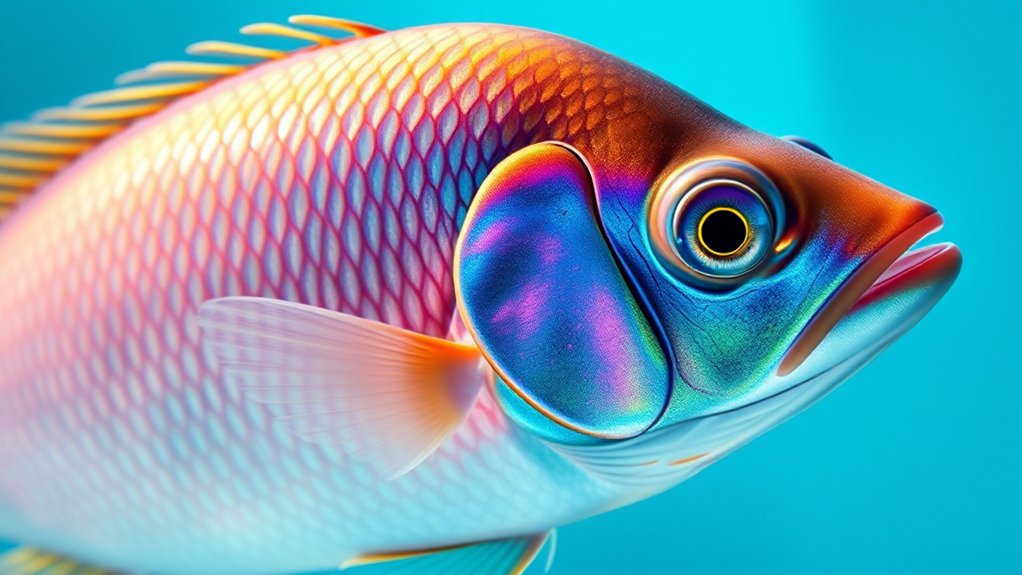
When you explore the world of fish anatomy, you discover a complex system of external features that support survival in water. The main parts include the head, mouth, eyes, nostrils, gills, operculum, fins, scales, lateral line, body, and tail. Many bony fish also have a swim bladder inside the body, which helps control buoyancy.
Each structure has a specific job. Gills allow oxygen exchange, fins support movement, scales form a protective covering, and the lateral line detects vibrations in the water. These features help fish feed, swim, hide, reproduce, and respond to changing conditions.
Fins are grouped into pectoral, dorsal, pelvic, caudal, and anal fins. Some species also have adipose fins, finlets, or scutes. These structures vary by species, so they can help with identification and reveal how a fish moves through its habitat.
Fish scales also differ by type. Placoid, ganoid, cycloid, and ctenoid scales can protect the body, reduce drag, and provide clues about growth patterns. By understanding these features, you gain a clearer view of how fish adapt to rivers, lakes, reefs, estuaries, and open oceans.
Note: Fish anatomy varies widely by species. A trout, tuna, catfish, flounder, shark, and seahorse all share basic fish traits, but their body forms and special features can look very different.
Importance of Fins in Fish Movement
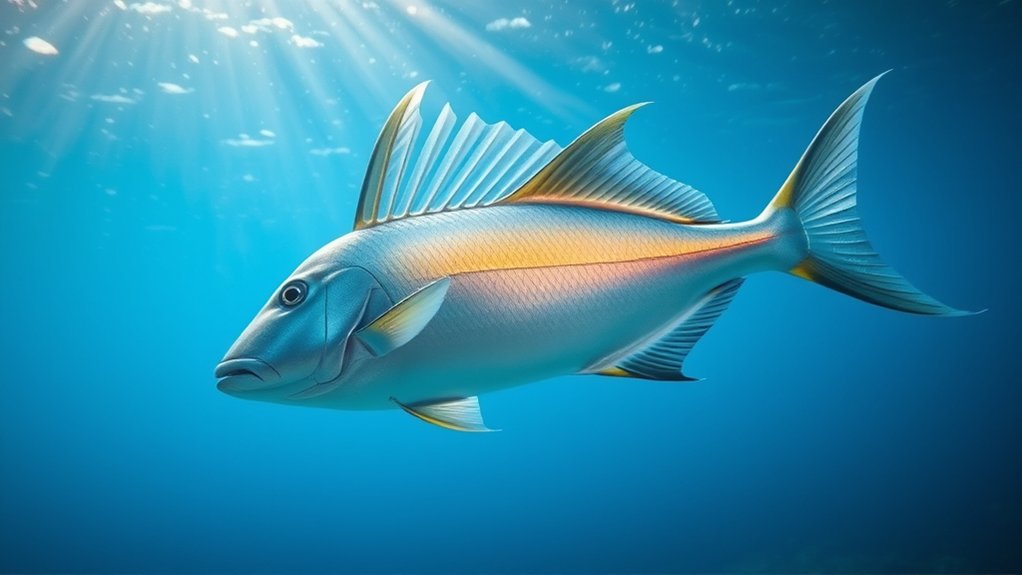
Fins play a critical role in how fish swim, balance, turn, stop, and hold position in moving water. Each fin helps the fish control its body against gravity, current, drag, and turbulence. Without fins, most fish would struggle to move efficiently or stay upright.
Different fins work together rather than acting alone. The caudal fin often provides the main forward thrust. Pectoral fins help with steering and braking. Dorsal and anal fins help reduce rolling. Pelvic fins support balance and fine control, especially during slow swimming or hovering.
This fin system allows fish to adapt to many habitats. A fast open-water predator may have a powerful tail and streamlined fins. A reef fish may have fins built for tight turns. A bottom-dwelling fish may use broad paired fins to rest, brace, or move along the substrate.
Types of Fish Fins
The main types of fish fins are pectoral, dorsal, pelvic, caudal, and anal. Some fish also have an adipose fin, second dorsal fin, finlets, or scutes. Each fin contributes to movement, balance, protection, or species identification.
Dorsal fins sit on the back and help keep the fish upright. Anal fins sit on the underside near the rear and help control rolling motion. Pectoral fins sit on both sides behind the head and support turning, braking, hovering, and balance. Pelvic fins sit lower on the body and help with stabilization. Caudal fins, or tail fins, provide the main thrust for forward movement.
Fin shape matters. A forked tail often helps with speed and sustained swimming. A rounded tail can help with quick bursts and tight turns. Long pectoral fins may support gliding or precise control. Spines and soft rays can also protect the fish and help identify species.
Fin Functions in Swimming
Understanding the anatomy of fish fins helps you see how fish move with such control. The dorsal fin stabilizes the fish during turns and helps prevent it from tipping sideways. The anal fin supports the rear of the body and helps manage rolling near the tail.
Pectoral fins work much like control surfaces. They help the fish turn, slow down, hold position, or move carefully around rocks, plants, coral, and other obstacles. Pelvic fins add balance and can help a fish adjust its vertical position in the water.
The caudal fin drives propulsion. As the body and tail move side to side, the tail pushes water backward and moves the fish forward. In fast-swimming species, specialized finlets or scutes can improve water flow near the tail and support efficient swimming.
Types of Fins and Their Functions

Fish anatomy features several types of fins, and each one supports a different part of swimming dynamics. The most common fins are pectoral, dorsal, pelvic, caudal, and anal fins. Some fish also have an adipose fin, a second dorsal fin, or smaller finlets near the tail.
Pectoral fins sit on either side of the body and help with directional turns, balance, braking, and hovering. Dorsal fins sit along the back and improve stability, especially during sharp movements. Pelvic fins sit on the underside and help with balance, stopping, and vertical positioning.
The caudal fin, or tail fin, provides thrust. It is one of the most important structures for forward movement. The anal fin, located near the rear underside of the body, works with the dorsal fin to reduce rolling and keep the fish steady.
Finlets and scutes are smaller structures seen in some species. Finlets are small fins between the main fins and the tail. Scutes are hardened, plate-like structures along the body or tail region in some fish. Both can improve water flow, protection, or identification, depending on the species.
The Role of Dorsal Fins
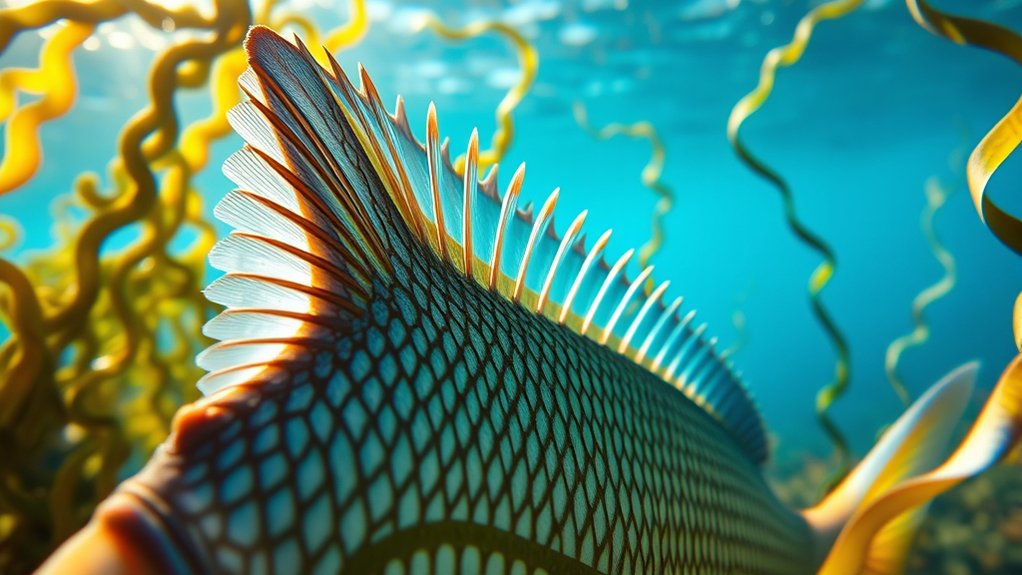
Dorsal fins are located on the back of a fish. Many fish have one dorsal fin, while others have two or more. These fins are important for stability, balance, and controlled movement in water.
The role of dorsal fins can be summarized in three key functions:
- Balance: Dorsal fins help prevent rolling, so the fish can maintain a steady, upright position while swimming.
- Agility: They support sharp turns, quick stops, and better control in tight spaces.
- Species variation: Different fish have different dorsal fin shapes, including spiny, soft-rayed, long, short, fused, or separated dorsal fins.
Dorsal fins can also serve a defensive role. In some species, dorsal spines make the fish harder for predators to swallow. In others, the fin shape supports display, communication, or camouflage.
Analyzing Anal Fins
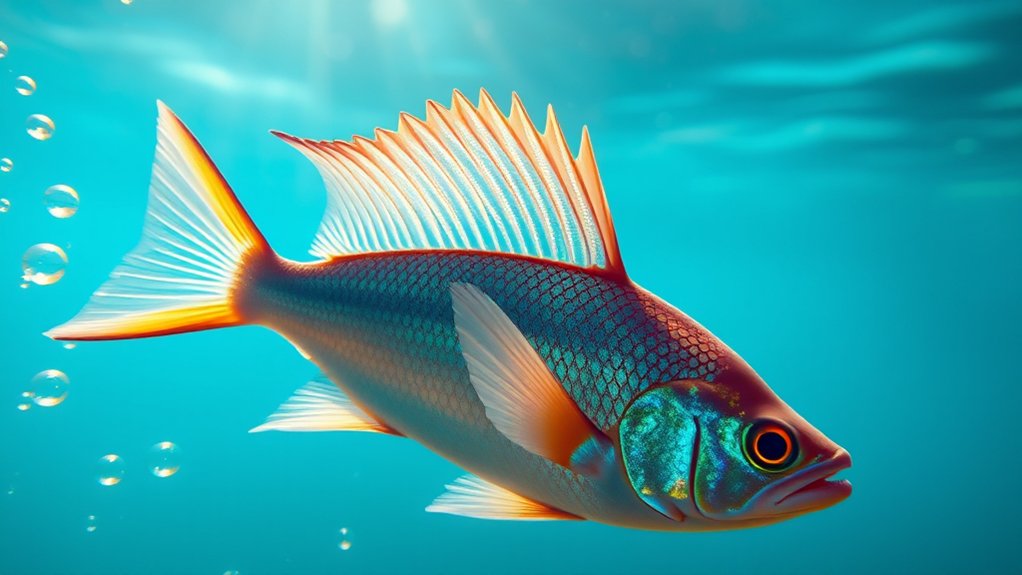
While dorsal fins help with stability from above, anal fins support the fish from below. The anal fin sits on the ventral side of the body, usually behind the anus and closer to the tail. Its main job is to improve balance during swimming dynamics.
Anal fins help control rolling motion. They often work with dorsal fins to keep the fish aligned while it swims, turns, or slows down. This extra control helps fish conserve energy and stay stable in currents or crowded habitats.
The size, shape, and ray structure of anal fins vary widely among species. These differences can help scientists and anglers identify fish. In some species, anal fins also play a role in reproduction, especially when they are modified into specialized structures.
Anal fins are usually supported by bony or cartilaginous rays. These rays may be soft, spiny, or a mix of both. Their structure gives the fin strength while still allowing controlled movement in the water.
Pectoral Fins: Aiding Directional Movement
Located on either side of the body, pectoral fins are essential for a fish’s directional movement and fine control. They sit behind the gill area and often act like steering surfaces. Fish use them to turn, brake, hover, rise, sink, and hold position.
These fins serve several important functions:
- Directional control: Pectoral fins help fish make precise turns and small adjustments while swimming.
- Stability: They help the fish maintain balance and reduce wasted movement.
- Braking and hovering: Pectoral fins allow fish to slow down or stay nearly still, which helps in reefs, weeds, rocks, and other complex habitats.
The size and shape of pectoral fins vary considerably among species. A fish that needs quick turns may have broad, flexible pectoral fins. A fish built for open-water speed may have smaller, more streamlined fins. Some species, such as flying fish, use enlarged pectoral fins to glide above the water for short distances.
Overall, pectoral fins show the close relationship between anatomy and behavior. Their structure reflects where a fish lives, how it feeds, and how it avoids danger.
Exploring Finlets and Scutes
Pectoral fins play an essential role in movement, but smaller structures such as finlets and scutes can also affect swimming efficiency and protection. Finlets are small, separate fins often found between the dorsal fin and caudal fin, or between the anal fin and caudal fin. They are common in fast-swimming fish such as tuna and mackerel.
Finlets help smooth water flow near the tail. This can reduce drag and support efficient swimming at higher speeds. Unlike larger fins, finlets are small and flexible, so they can work with the body’s movement without creating much resistance.
Scutes are hard, plate-like structures found on some fish, often near the tail or along the lateral line. They may provide protection, improve water flow, or help with species identification. In some fish, scutes give the body a rough or armored texture.
Both finlets and scutes show how small anatomical details can support survival. They may help a fish swim faster, avoid injury, or adapt to a specific ecological niche.
Fish Body Forms and Adaptations
Fish show remarkable diversity in body forms. Their shapes are not random. Each form helps a fish move, feed, hide, or survive in a specific type of aquatic environment. Understanding body shape helps you predict how a fish swims and where it may live.
Common body forms include:
- Fusiform: A streamlined, torpedo-like shape that reduces drag and supports speed. Tuna and many open-water predators have this form.
- Compressiform: A laterally flattened body that improves maneuverability in tight spaces, such as reefs, weeds, and structure.
- Depressiform: A flattened body from top to bottom, often seen in bottom-dwelling fish that rest on the substrate.
- Anguilliform: A long, eel-like body that helps fish move through narrow spaces, vegetation, or bottom cover.
- Globiform: A rounded or boxy body that may trade speed for protection, camouflage, or special defense.
Specialized adaptations make fish even more diverse. Flying fish have enlarged fins that help them glide above the water. Flatfish have body shapes suited to life on the bottom. Anglerfish use a lure-like structure to attract prey. Boxfish have protective armor that helps defend them from predators.
Fins also work with body shape. Median fins provide stability, while paired fins improve control. Together, body form and fin placement reveal how a fish fits into its habitat.
Mouth Structures and Feeding Habits
The diversity in fish body forms often connects directly to feeding strategies. Mouth structures vary widely among species because different fish eat different foods in different ways. Mouth position, tooth shape, jaw strength, and head shape can all reveal feeding behavior.
A fish with an upward-facing mouth often feeds near the surface. This shape helps it take insects, small fish, or floating food from above. A fish with a downward-facing mouth often feeds along the bottom, where it may pick up insects, worms, algae, crustaceans, or detritus. A fish with a forward-facing mouth often grabs prey directly in front of it.
Fish also use suction feeding. By rapidly opening the mouth and expanding the mouth cavity, a fish can pull water and prey inward. This method helps many fish capture small prey quickly.
Teeth provide more clues. Sharp teeth help hold slippery prey. Flat teeth can crush shells or grind plant material. Brush-like teeth can scrape algae. Some fish have tiny teeth that help them grip food rather than chew it.
Understanding mouth structures and feeding habits helps you see the ecological role of each fish. Predators, grazers, bottom feeders, filter feeders, and scavengers all show anatomy shaped by diet.
Pro Tip: To guess how a fish feeds, look at its mouth first. An upward mouth suggests surface feeding, a downward mouth suggests bottom feeding, and a forward mouth often suggests active predation.
Sensory Systems in Fish
While moving through aquatic environments, fish rely on advanced sensory systems. These systems help them find food, avoid predators, choose mates, form schools, and respond to water movement.
Key sensory systems include:
- Olfactory system: Fish use smell to detect chemical cues in the water. These cues can help with feeding, migration, reproduction, and danger detection.
- Lateral line: The lateral line contains sensory cells that detect vibration and changes in water pressure. It helps fish sense nearby movement, currents, prey, predators, and schooling partners.
- Vision: Fish eyes are adapted for underwater light. Many species see well at close range, and some can detect colors or ultraviolet light.
- Hearing and inner ear balance: Fish can detect sound vibrations and use inner ear structures to help with balance and orientation.
- Taste and touch: Some fish use taste buds, barbels, lips, or skin contact to find food in dark or muddy water.
These sensory adaptations help fish survive in complex ecosystems. A fish in clear open water may rely heavily on vision. A fish in muddy water may depend more on smell, touch, and the lateral line. Together, these systems make fish highly responsive to their surroundings.
Internal Anatomy of a Fish
External features are easy to see, but internal anatomy is just as important. Inside the body, fish have organs that support breathing, digestion, circulation, reproduction, and buoyancy. These systems work together to keep the fish alive and active.
Important internal parts include:
- Gills: Gills exchange oxygen and carbon dioxide between water and blood.
- Heart: The heart pumps blood through the body and gills.
- Stomach and intestines: These organs digest food and absorb nutrients.
- Liver: The liver supports metabolism, digestion, and energy storage.
- Kidneys: Kidneys help remove waste and regulate water and salt balance.
- Swim bladder: In many bony fish, this gas-filled organ helps control buoyancy.
- Gonads: These reproductive organs produce eggs or sperm.
The swim bladder is especially useful for many bony fish. It allows a fish to maintain its position in the water column without constantly swimming. However, not all fish have one. Sharks, rays, and some bottom-dwelling fish rely on other adaptations for buoyancy and movement.
Gills, Operculum, and Breathing
Gills are one of the most important parts of fish anatomy. They allow fish to take oxygen from water. As water passes over the gill filaments, oxygen moves into the blood and carbon dioxide moves out.
In many bony fish, the operculum covers and protects the gills. This bony flap also helps move water across the gills when the fish is not swimming quickly. You may see the operculum open and close as a fish breathes.
Gill health matters. Damaged or irritated gills can affect breathing, energy levels, and survival. Clean water, proper oxygen levels, and low stress are important for healthy gill function in aquariums, ponds, and natural habitats.
Warning: Never handle a live fish by putting fingers inside the gill openings. Gills are delicate, and damage can make it hard for the fish to breathe after release.
Scales, Skin, and Protection
Scales and skin form the fish’s first line of defense. They help protect the body from injury, parasites, and infection. The skin also produces mucus, which reduces friction and adds another protective layer.
Common scale types include:
- Placoid scales: Tooth-like scales found in sharks and rays.
- Ganoid scales: Hard, armor-like scales found in some ancient fish groups.
- Cycloid scales: Smooth-edged scales common in many soft-rayed fish.
- Ctenoid scales: Rough-edged scales found in many spiny-rayed fish.
Scales can also help researchers estimate age and growth in some species. Growth rings may form as the fish grows through changing seasons or food conditions. While this method is not perfect for every species, it can offer useful biological information.
How to Identify Fish Parts
You can identify fish parts by moving from the head toward the tail. This simple method works well for students, anglers, aquarium keepers, and anyone learning basic fish biology.
- Start with the head: Look for the mouth, eyes, nostrils, and operculum.
- Find the gill area: In bony fish, the operculum covers the gills on each side of the head.
- Locate the fins: Identify the pectoral fins, pelvic fins, dorsal fin, anal fin, and caudal fin.
- Check the body covering: Look at the scales, skin texture, color pattern, and mucus layer.
- Trace the lateral line: Look for a faint line running along the side of the body in many fish.
- Observe the tail: Notice whether the caudal fin is rounded, forked, pointed, square, or crescent-shaped.
This step-by-step approach makes fish anatomy easier to remember. It also helps you compare species and notice adaptations linked to habitat and behavior.
Common Fish Anatomy Terms
Fish anatomy includes many terms, but a few basic words make descriptions much easier to understand.
- Anterior: Toward the head.
- Posterior: Toward the tail.
- Dorsal: Toward the back or top side.
- Ventral: Toward the belly or underside.
- Lateral: Toward the side of the body.
- Median fins: Single fins along the body’s midline, such as dorsal, anal, and caudal fins.
- Paired fins: Fins that occur in pairs, such as pectoral and pelvic fins.
- Rays: Support structures inside many fins.
- Spines: Stiff, pointed fin supports that may help with defense.
These terms help you describe fish clearly. For example, saying “the dorsal fin is posterior to the head” means the fin is on the top side of the body, behind the head.
Frequently Asked Questions
How do you teach the parts of a fish?
To teach fish parts, use a labeled diagram first, then connect each part to its function. Point out the mouth, eyes, gills, fins, scales, lateral line, and tail. Hands-on models, drawings, flashcards, and short quizzes can help students remember the terms.
What are the seven fins of a fish?
The seven fins often taught in basic fish anatomy are the pectoral, pelvic, dorsal, anal, caudal, adipose, and second dorsal fins. Not every fish has all seven. Most fish have pectoral, pelvic, dorsal, anal, and caudal fins, while adipose or second dorsal fins appear in certain groups.
What is the operculum in fish?
The operculum is a bony flap that covers and protects the gills in many bony fish. It helps move water across the gills, which supports breathing. Its movement can also give clues about stress, oxygen levels, or overall fish health.
What is the general anatomy of a fish?
The general anatomy of a fish includes the head, mouth, eyes, nostrils, gills, operculum, fins, scales, lateral line, body, and tail. Inside the body, fish have organs such as the heart, liver, stomach, intestines, kidneys, reproductive organs, and sometimes a swim bladder.
What does the lateral line do?
The lateral line senses vibration and changes in water pressure. It helps fish detect nearby movement, currents, predators, prey, and other fish in a school. This system is especially helpful in dark, muddy, or fast-moving water.
Why do fish have different body shapes?
Fish have different body shapes because they live, swim, and feed in different ways. Streamlined fish are often built for speed. Flattened fish may live near the bottom. Laterally compressed fish can maneuver through reefs, weeds, and tight spaces.
Conclusion
Understanding fish anatomy helps you see how every structure supports life underwater. Fins guide movement, gills handle oxygen exchange, scales protect the body, and sensory systems help fish detect the world around them. Mouth shape, body form, and fin placement also reveal how a fish feeds, swims, and survives.
Once you know these parts, fish biology becomes much easier to understand. You can identify species more confidently, read behavior more clearly, and appreciate the adaptations that help fish thrive in rivers, lakes, reefs, estuaries, and oceans.
Sources
- Encyclopaedia Britannica: Fish — general fish biology, anatomy, and diversity.
- Florida Museum: Fish Anatomy — external fish parts, fins, body shapes, and identification features.
- Florida Museum: Fish Scales — common scale types and protective functions.
- Florida Museum: Fish Senses — lateral line, smell, vision, and other sensory systems.