Imagine casting your line into a shimmering sea, with the thrill of a catch just moments away. Before you reel in that prize fish, you need to understand fishing size limits, daily creel limits, slot limits, and local rules. These regulations help protect spawning fish, support healthy populations, and keep your trip legal. Because limits can change by state, water body, season, and species, always confirm the current rule before you keep a fish.
Quick Answer
Fishing size limits tell you the minimum or maximum length of a fish you may keep, while creel limits tell you how many you may harvest per day. Measure each fish correctly, check the current state and local regulations, and release any fish that falls outside the legal range.
Key Takeaways
- A size limit controls the length of fish you can keep; a creel limit controls the number you can keep.
- Some species have slot limits, which means you may keep fish only within a set length range.
- Saltwater and freshwater rules often differ, even for the same or similar species.
- Local water-body rules can be stricter than statewide rules, so check before every trip.
- Use the correct measuring method, such as total length or fork length, because the wrong method can make a legal fish illegal.
Warning: The limits below are examples from the article and may not reflect the newest rules for your exact location. Fishing regulations can change during the year, so verify the current state, federal, and local water-body rules before you keep your catch.
Saltwater Recreational Size & Creel Limits
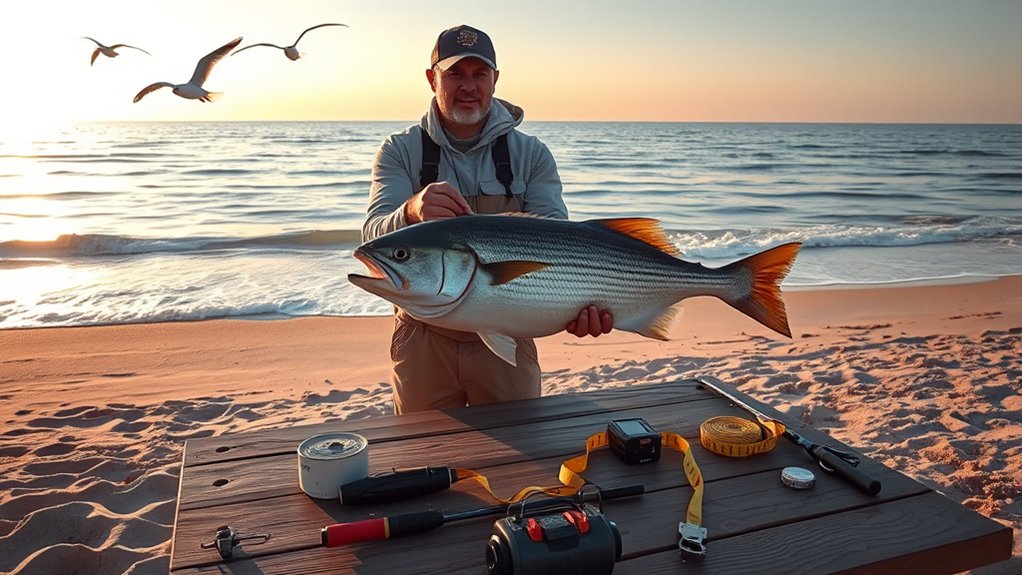
When it comes to saltwater recreational fishing, knowing the size and creel limits for each species is essential for both conservation and compliance. Saltwater rules often use different measuring systems, including total length and fork length, so read the regulation carefully before you decide to keep a fish.
For instance, if you’re targeting Sheepshead, make certain they measure at least 12 inches in fork length, with a daily limit of 8 per person.
Spotted Seatrout requires a minimum size of 15 inches and a maximum of 22 inches, allowing a daily catch of 6, with only one over 22 inches permitted. This type of rule is often called a slot limit because it protects fish that are too small and also limits harvest of larger breeding fish.
Red Drum must be between 16 and 26 inches in total length, limiting you to 3 per day.
Cobia requires a minimum of 36 inches in fork length, with a daily limit of just 1 per person, and a maximum of 2 per vessel.
Finally, Red Snapper has a minimum size of 16 inches in total length, with a daily limit of 2, applicable in both state and federal waters in the example rules listed here.
Note: State waters and federal waters may have different seasons, bag limits, and reporting rules. If you fish offshore, check both sets of rules before your trip.
Statewide Daily & Size Limits
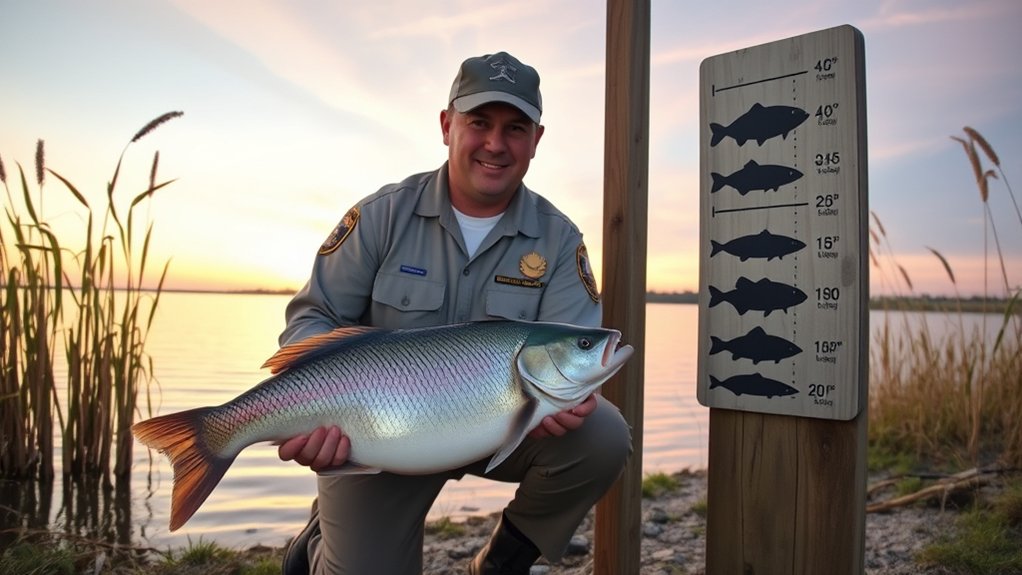
Understanding statewide daily and size limits is essential for responsible fishing practices and conservation efforts. Each species has its own regulations that you need to follow, and those rules may change depending on whether you fish in public lakes, rivers, reservoirs, coastal waters, or special management areas.
For black bass, the combined daily limit is 6, with only 1 being a smallmouth, and both largemouth and smallmouth must be at least 14 inches. Crappie allows a daily limit of 37, while striped bass caps at 5, with specific rules for hybrids.
Sheepshead has a minimum size of 12 inches and a daily limit of 8. For spotted seatrout, you can keep 6, but they must be between 15 to 22 inches. Flounder has a daily limit of 5 and a minimum size of 14 inches; however, the season closes in November in the example rules provided.
Additionally, the American eel allows a daily limit of 25 with a minimum size of 9 inches. Always check your local regulations, as they can vary greatly.
A good habit is to check the official regulation guide before you leave home, then confirm any posted rules at the boat ramp, pier, marina, or public access point. Posted rules may include special closures, protected zones, gear restrictions, or water-specific limits.
How to Measure a Fish Correctly
Measuring a fish correctly helps you avoid accidental violations. Place the fish on a flat measuring board, close the mouth, and pinch or fan the tail only if your local rules tell you to do so. Read the rule closely because some species use total length, while others use fork length.
- Total length: Measure from the tip of the snout to the farthest end of the tail.
- Fork length: Measure from the tip of the snout to the fork in the tail.
- Lower jaw fork length: Some offshore species may require measuring from the lower jaw to the tail fork.
- Curved fork length: Certain large fish may have a special measuring method, so check the species-specific rule.
If a fish is very close to the legal limit, the safest choice is to release it right away. A fish that measures short after it is placed in your cooler can still count as an illegal fish.
Pro Tip: Keep a rigid measuring board in your tackle bag or boat. Tape marks can stretch, fade, or peel, while a solid board gives you a more reliable reading.
Black Bass Regulations
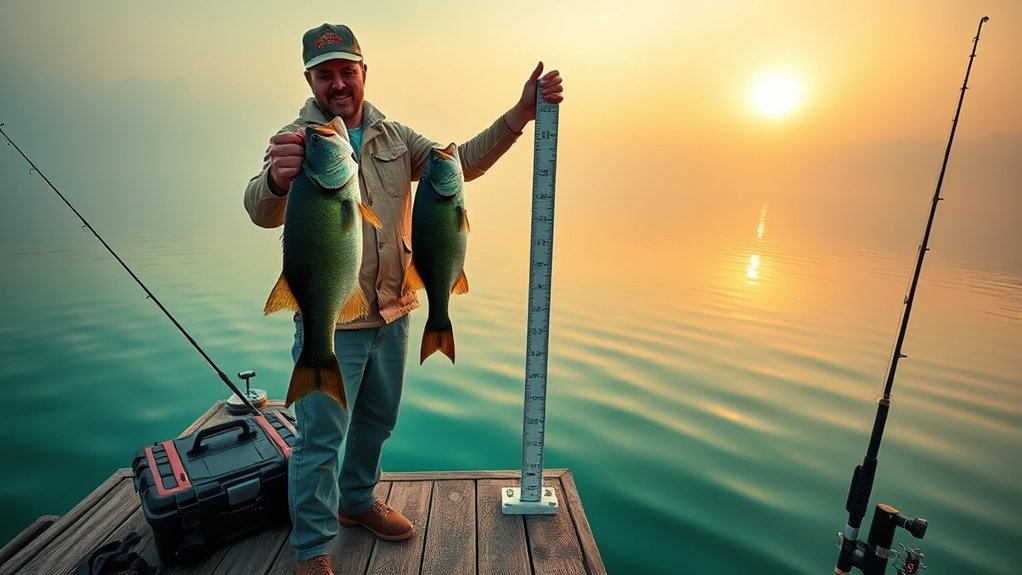
Black bass regulations are essential for anglers looking to enjoy a successful day on the water while contributing to sustainable fishing practices.
You can catch a daily limit of six black bass, but remember, only one of those can be a smallmouth bass. The minimum size limit for both largemouth and smallmouth bass is 14 inches.
Catch up to six black bass daily in the example rules, but only one can be a smallmouth, with a minimum size of 14 inches for largemouth and smallmouth bass.
However, there’s no size limit for spotted bass, which means you can keep any size you catch under the example rules. Additionally, there are no daily bag limits for spotted bass in the rules listed here, allowing you to catch as many as permitted for that water body.
If you’re participating in tournaments, be aware that size limit exemptions might apply, so check specific regulations beforehand. Tournament rules may require permits, special handling, live-release procedures, or different measuring standards.
Finally, it’s illegal to possess paddlefish, trout, striped bass, and hybrids once caught in some tournament-related situations, emphasizing the importance of careful handling and release of these species when the rule applies.
Always stay informed to make sure you’re following the rules. Bass regulations can vary on trophy lakes, small impoundments, reservoirs, and waters with special management goals.
Catfish Regulations
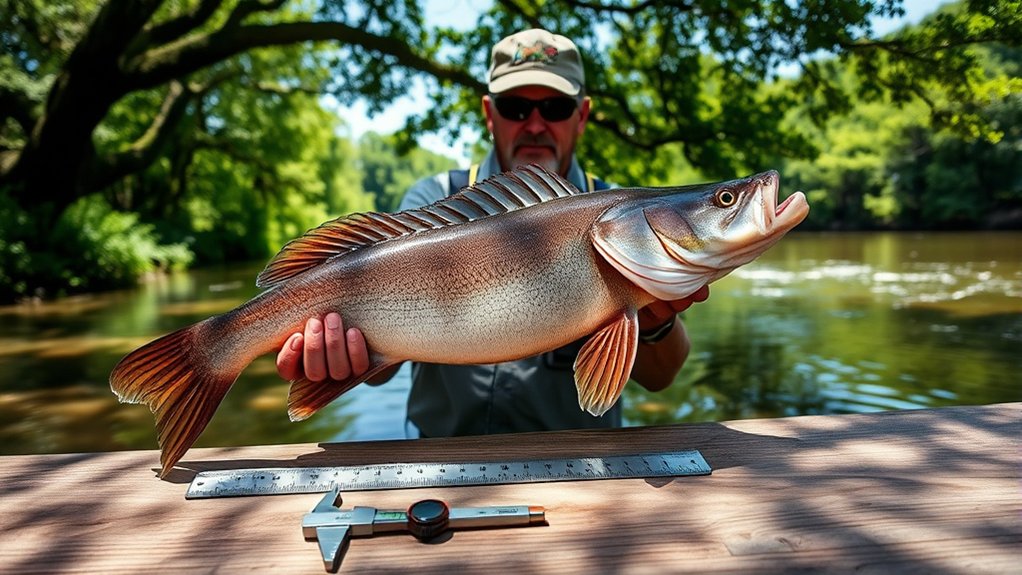
Catfish regulations play an essential role in maintaining healthy fish populations and ensuring responsible angling.
When targeting catfish, it’s vital to know the daily limits: you can keep up to 15 combined channel and blue catfish, while flathead catfish has a limit of 5.
Remember that blue catfish must be over 30 inches to keep under the example rules, but there are no size limits for channel and flathead catfish.
If you’re into noodling, the limits align with statewide regulations for all fishing methods in the rules described here. Still, noodling may have special seasons, hand-grabbing rules, or location restrictions in some areas.
It’s also important to note that specific local rules may apply in certain regions, so always check those before heading out.
Additionally, if you’re fishing for species like alligator gar, be aware that harvest reporting may be necessary, and they also have no minimum size limit in the example rules above.
Following these regulations helps preserve catfish populations for future generations. Large blue and flathead catfish can be valuable breeding fish, so many anglers release trophy-sized fish even when harvest is legal.
Trout Regulations and Measuring Fish
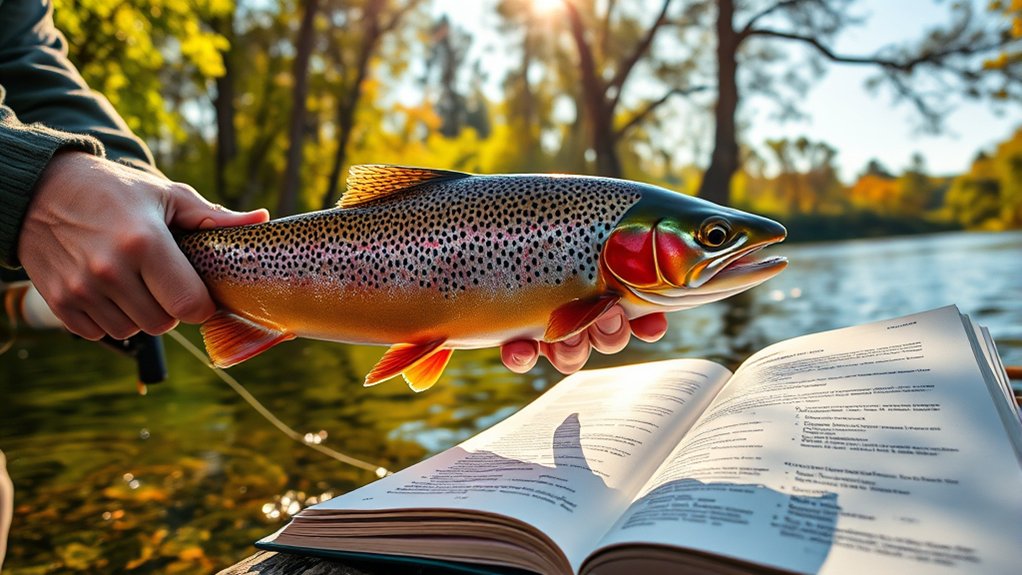
When you’re out fishing for trout, it’s essential to know the regulations to guarantee a sustainable catch.
Remember, the daily limit for Rainbow Trout and Brown Trout is three combined, with no minimum size limit for either species under the example rules listed here. Culling is prohibited, so any trout caught that falls within this limit must be kept if the rule applies to that water and season.
To enhance your fishing experience, keep these points in mind:
Good trout fishing starts with two habits: know the daily limit before you cast, and measure or count your catch before it becomes a problem.
- The Rainbow Trout state record is 11 lbs., 4.32 oz., showcasing its vibrant colors.
- The Brown Trout state record stands at 17 lbs., 4.6 oz., known for its striking spots.
- Measure your catch accurately from snout to tail, ensuring it’s laid flat with its mouth closed.
- Respect these regulations to support sustainable fishing practices.
Trout waters may also have bait restrictions, artificial-lure-only areas, delayed-harvest rules, or seasonal stocking rules. Check the regulation for the specific stream, lake, or tailwater before you fish.
Common Size Limit Terms Anglers Should Know
Fishing regulations can feel confusing until you know the basic terms. Once you understand the wording, you can read a rule chart faster and avoid mistakes on the water.
- Minimum size limit: You may keep only fish that are at least the listed length.
- Maximum size limit: You must release fish longer than the listed length.
- Slot limit: You may keep fish only within a specific length range, such as 16 to 26 inches.
- Daily creel limit: The number of fish you may keep in one day.
- Possession limit: The total number of fish you may have in your cooler, camp, vehicle, or freezer under the rule that applies.
- Closed season: A period when harvest is not allowed, even if the fish meets the normal size limit.
- Vessel limit: A boat-wide limit that applies even when several licensed anglers are on board.
What to Do If a Fish Is Too Small or Out of Slot
If a fish does not meet the legal size rule, release it as quickly and gently as possible. Wet your hands before handling it, keep it out of the water for the shortest time you can, and avoid squeezing the gills or belly.
When a hook is deep, cut the line close to the hook instead of pulling hard. If the fish is exhausted, hold it upright in the water and let it swim away on its own. Better handling improves survival and supports the same conservation goals behind size limits.
Before You Go Fishing Checklist
Before you head out, take a few minutes to confirm the rules for your destination. This small step can save you from fines and protect the fishery.
- Check the current license requirement for your age, residency, and fishing location.
- Review species-specific size limits and daily creel limits.
- Confirm whether the water has special local rules.
- Check for closed seasons, emergency closures, or temporary harvest changes.
- Carry a measuring board and know whether to use total length or fork length.
- Keep only fish you can identify with confidence.
- Record harvest reports when required for species such as alligator gar or certain reef fish.
Frequently Asked Questions
How Do Fishing Limits Work?
Fishing limits set specific size and quantity restrictions for catching fish, ensuring sustainable populations. You must follow local regulations that define minimum and maximum sizes, slot limits, seasons, gear rules, and daily catch limits for different species.
What Is the 90/10 Rule for Bass Fishing?
The 90/10 rule for bass fishing states that 90% of bass are often found in about 10% of the water. It is a fishing strategy, not a legal rule. Focus your efforts on key structures, cover, depth changes, current seams, and feeding areas for better catch rates.
What Size Fish Can You Keep in NC?
In North Carolina, fish size limits depend on the species, water body, and whether you fish inland, coastal, or joint waters. The original examples mention largemouth and smallmouth bass at least 14 inches and striped bass at least 18 inches, while crappie, channel catfish, and flathead catfish have specific limits that vary. Always check the current North Carolina regulation for the exact water you plan to fish.
How Many Rods Can You Fish With in Alabama?
When you’re fishing in Alabama, you can typically use up to three rods in many situations, based on the original article’s example. Regulations may vary by freshwater, saltwater, public pier, boat, species, and local water-body rules, so check the current Alabama rules before you fish.
What happens if a fish is exactly on the size line?
If the fish clearly meets the legal measurement using the required method, it may be legal to keep. If it is even slightly short, or you are unsure, release it. A rigid measuring board helps you make a cleaner decision.
Do size limits apply to catch-and-release fishing?
Size limits mainly control which fish you may harvest, but catch-and-release anglers still need to follow seasons, closed areas, gear rules, and protected-species rules. Handle released fish carefully so they have the best chance to survive.
Conclusion
Knowing fishing size limits isn’t just about following rules; it’s about preserving our aquatic ecosystems for the future. Imagine casting your line, catching a trophy-sized trout, and realizing you played a part in maintaining its population. By understanding and respecting these regulations, you contribute to healthier waters and better fishing experiences down the line.
So next time you head out, keep those size limits in mind. Check the current rule, measure your fish correctly, and release anything that falls outside the legal range. You might just find yourself hooked on conservation as much as on the catch.