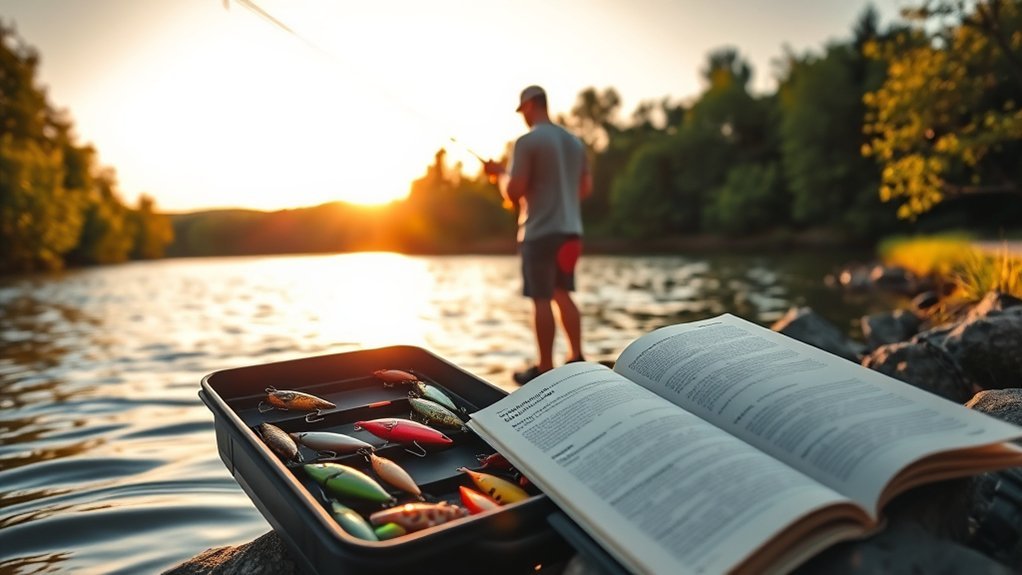
If you’re enthusiastic to try your hand at fishing, a few simple habits can set you up for a safer, calmer, and more successful first trip. Start with a properly fitted Personal Flotation Device, choose beginner-friendly gear for your target fish, and learn when fish usually feed. Once you understand basic locations, bait choices, and maintenance, you can spend more time enjoying the water and less time guessing.
Quick Answer
For beginner fishing, keep things simple: wear a PFD near water, use light or medium spinning gear, fish local ponds or lakes, and start with live bait or easy lures. Dawn, dusk, overcast days, and areas near cover often give you the best chance of getting bites.
Key Takeaways
- Safety comes first. Wear a properly fitted PFD on boats, docks, and banks with steep or slippery edges.
- Beginner anglers usually do best with simple spinning gear, sharp hooks, and bait matched to local fish.
- Dawn, dusk, overcast weather, and moving tides can improve your odds because fish often feed more actively then.
- Look for cover such as weeds, rocks, docks, fallen trees, current breaks, and shaded banks.
- If one lure, depth, or retrieve does not work, change one thing at a time and keep moving until you find fish.
At a Glance
| Best For | New anglers learning basic freshwater or light saltwater fishing |
| Difficulty | Easy to moderate, depending on location, weather, and target species |
| Basic Gear | PFD, rod and reel, fishing line, hooks, bait or lures, pliers, sunscreen, water, and a valid fishing license where required |
| Best Times | Early morning, late evening, overcast days, and moving tides for saltwater fishing |
Safety First
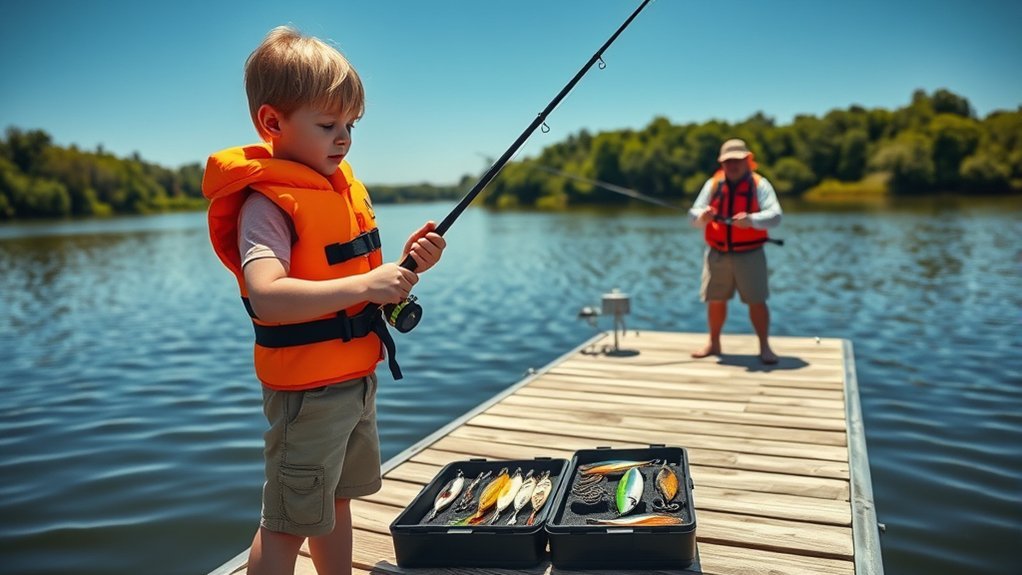
When you head out to fish, keeping safety in mind is vital for a successful trip. Always wear a properly rated Personal Flotation Device (PFD) while on the water; it’s your best defense against accidental falls or capsizing.
Don’t forget to pack essentials like sunscreen to protect your skin from harmful UV rays, rain gear for unexpected showers, and a first aid kit for minor injuries. Staying hydrated is important, so bring enough drinking water to keep your focus sharp and your enjoyment high.
If you’re prone to motion sickness, consider taking Dramamine before heading out, but read the label first and avoid boating if it makes you drowsy.
Finally, familiarize yourself with local fishing regulations and safety guidelines. Understanding these rules not only enhances your angling skills but also promotes responsible fishing practices.
Warning: Weather can change fast near water. Leave the bank, dock, or boat when you hear thunder, see lightning, notice strong winds, or feel unsafe footing.
The Right Gear for Fishing
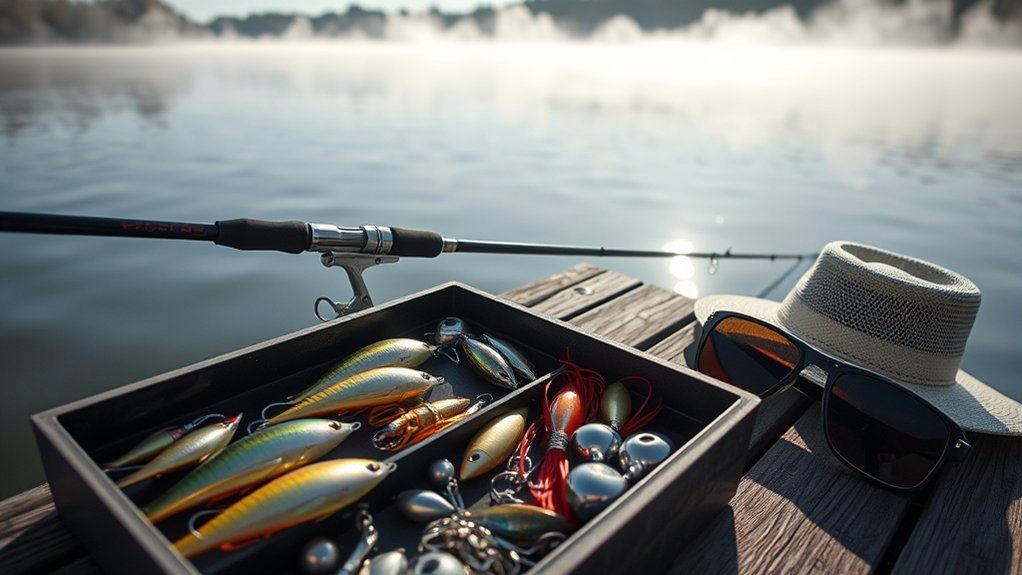
Selecting the right gear is essential for your fishing success and enjoyment. Start by choosing equipment tailored to the species you’re targeting. For instance, a 12-pound-class reel works great for bass, while ultralight rods are perfect for crappie.
If you’re casting from shore, opt for shorter rods between 6 and 6 feet, 10 inches to improve accuracy and control. When shore fishing, lighter baits and lines enhance your feel and minimize snagging.
Always make certain your hooks are new or sharpened to boost your catch rates, and use the appropriate knots for different lures to prevent breakage. Additionally, consider mobile gear that allows for quick adjustments, enabling you to adapt to changing conditions and target various spots effortlessly.
A simple spinning setup is often the easiest place to begin. A medium-light or medium spinning rod with matching line can handle many pond and lake fish, including bluegill, bass, perch, and small catfish.
Keep your first tackle box small. Pack hooks, split shot, bobbers, a few soft plastics, a small spinner, needle-nose pliers, nail clippers for line, and a towel. Too much gear can slow you down and make each decision harder.
Pro Tip: Learn one reliable knot, such as the improved clinch knot or Palomar knot, before buying more lures. A strong knot saves more fish than a crowded tackle box.
Best Times to Fish
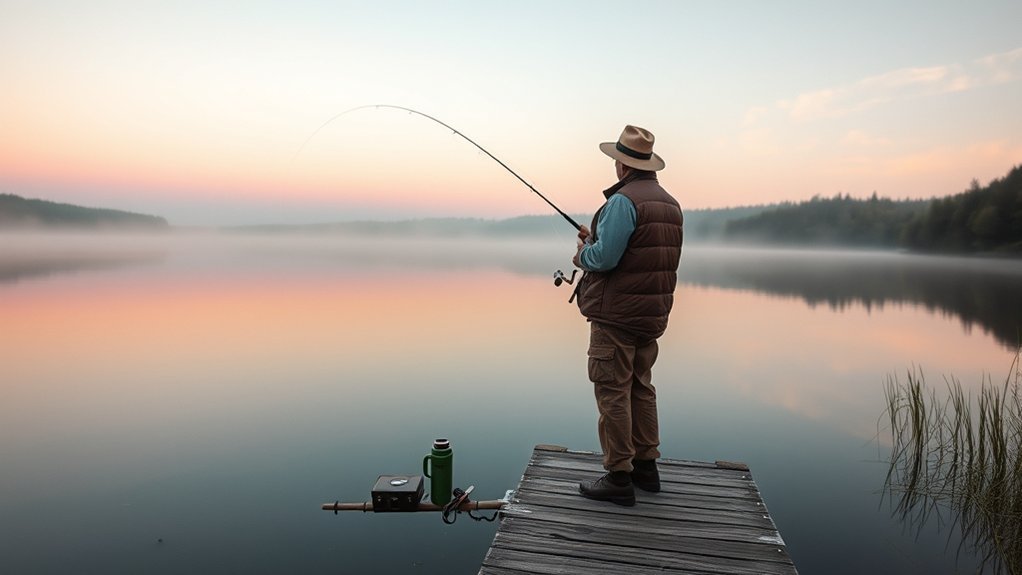
Fishing at dawn or dusk can greatly enhance your chances of landing a big catch, as these times mark peak activity for many fish species. During these low-light conditions, fish feel safe and are more likely to venture out to feed.
Spring is another prime time, as fish migrate to shallower waters for spawning, making bank fishing particularly fruitful.
Overcast days can also be your ally. With less light, fish tend to roam closer to the bank, increasing your odds.
If you’re into night fishing, consider heading out during a full moon; the extra light can stimulate fish activity.
If you’re fishing in saltwater, pay attention to tidal movements. Fish often feed more actively during incoming or outgoing tides, so timing your trips to coincide with these movements can lead to a successful outing.
Stay aware of these factors to maximize your fishing experience!
Temperature matters too. During hot summer afternoons, many fish move deeper or hold tight to shade. During cooler weather, they may feed in shallower areas once the sun warms the water.
Understanding Fishing Locations

When you’re starting out, local ponds and lakes are perfect spots to cast your line, as they often host a variety of fish ready to bite.
Pay attention to current breaks and natural cover, like rocks or fallen trees, since these areas attract fish looking for shelter.
As the seasons change, understanding where fish gather can make all the difference in your success on the water.
Local Ponds and Lakes
Local ponds and lakes often serve as ideal starting points for beginner anglers, offering a diverse array of fish species such as bluegill, bass, and catfish.
Spring is usually the best time for fishing here, as fish spawn and move into shallower waters, boosting your chances of a successful catch.
Look for features like submerged structures, lush vegetation, and overhanging trees; these spots provide cover and attract fish.
Be mindful of local regulations, as many ponds have designated fishing hours and rules to follow for responsible angling.
When you gear up, opt for lighter tackle and smaller lures, since fish in ponds may be more cautious due to fishing pressure.
Enjoy your time by the water!
Current Breaks and Cover
Exploring the waters of rivers and streams opens up a new world of fishing opportunities, especially when you familiarize yourself with current breaks and natural cover.
Current breaks, like those near bridges and dams, serve as prime ambush points for fish, making them ideal spots for your next catch. Fish often gather around natural structures such as laydowns, stumps, and rocky areas, finding shelter and hunting grounds.
When you cast near the edges of these current breaks, you’ll likely see better results, as fish conserve energy while waiting to strike. Don’t overlook submerged structures and vegetation; these areas attract baitfish, drawing larger predator species your way.
Mastering these spots can greatly enhance your fishing success.
Seasonal Fishing Patterns
Understanding seasonal fishing patterns can greatly boost your success on the water.
In spring, fish migrate to shallower waters for spawning, making local ponds and riverbanks prime spots for bank fishing.
As summer rolls in, seek out shaded areas and deeper water where fish escape the heat, especially during midday.
In fall, fish feed heavily to prepare for winter, so early mornings and late evenings are perfect for targeting active species along the shore.
Winter fishing shifts to deeper structures, as fish slow down; look for spots with less current or submerged cover.
Don’t forget that overcast days can increase fish activity year-round, drawing them closer to the bank for better catch rates.
Happy fishing!
How to Read the Water
Reading the water helps you choose better casts instead of throwing randomly. Start by looking for food, shelter, and changes in depth. Fish often hold where shallow water drops into deeper water, where weeds meet open lanes, or where current slows behind rocks.
Watch the surface for small ripples, nervous baitfish, insects, or birds feeding near the water. These clues can show where fish are active. On clear days, stay low, move slowly, and avoid casting a shadow over shallow fish.
If you do not get a bite after several careful casts, move a short distance and try another angle. Covering water helps you learn faster and keeps your bait in front of active fish.
Effective Fishing Techniques
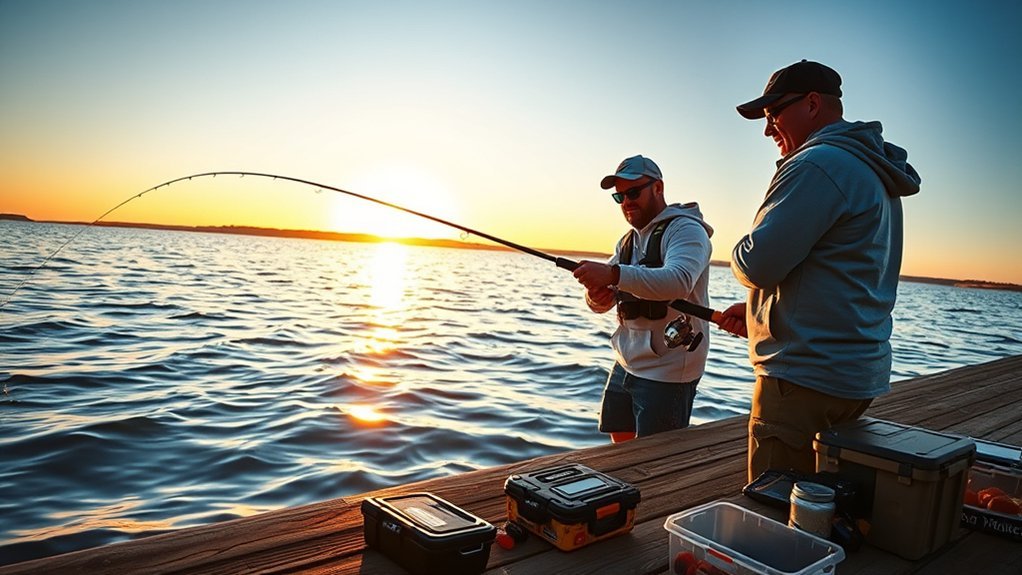
To boost your fishing success, it’s essential to match your lures to the conditions around you.
Adjusting your techniques regularly can keep your approach fresh and effective, especially during different times of the day.
Plus, choosing the right gear tailored to your fishing environment will enhance your overall experience and increase your chances of landing that big catch.
Match Lures to Conditions
When you’re out on the water, matching your lure to the fishing conditions can make all the difference in your success.
Start by choosing colors that align with the water’s hue: think lime or chartreuse in green water, white or pearl in clear conditions, and root beer for tannic-stained waters.
Next, select lure shapes and sizes that mimic local baitfish, as their profile and length are essential for attracting fish.
If you’re not getting bites, don’t hesitate to experiment with different lure colors and types.
Remember, using spoons or lures that resemble small, thin baitfish can be particularly effective.
Always pay attention to the environment—water clarity, temperature, and time of day can greatly influence your choices for ideal results.
Adjust Techniques Regularly
Adjusting your fishing techniques regularly can considerably enhance your chances of landing a catch. If you’re not reeling in fish, try changing your lure color or type; different species respond to various colors and profiles influenced by water conditions and time of day.
Experiment with your casting depth and angle, exploring both shallow and deep waters to find fish in their preferred feeding zones. Vary your retrieval speed—sometimes a slow, steady pull works best, while other times a fast, erratic motion can spark their interest.
Stay flexible by switching techniques, like moving from topwater to deeper diving lures, depending on fish behavior and local conditions. Always monitor factors like current strength and water temperature to optimize your approach.
Choose Appropriate Gear
Choosing the right gear is essential for any successful fishing trip, and it can make all the difference in your experience.
Start by selecting equipment specifically sized for your target species—use a 12-pound-class reel for bass or an ultralight rod for crappie. If you’re shore fishing, opt for shorter rods between 6-foot and 6-foot, 10-inch for better accuracy in tight spaces.
Lighter baits and lines enhance sensitivity, making it easier to detect bites and minimizing snags. Don’t forget to differentiate between freshwater and saltwater gear to optimize your performance in various environments.
Finally, always use sharp, new hooks or sharpen old ones. A well-prepared rig greatly boosts your chances of landing that prized catch!
Choosing the Right Lures
How can you increase your chances of reeling in a big catch? Choosing the right lures is key!
Start by matching the color of your lures to the water hue: lime or chartreuse works wonders in green water, while white or pearl shines in clear waters. For tannic-stained water, try a root beer hue to boost visibility.
Matching your lure color to the water hue is essential: lime in green water, white in clear, and root beer for tannic-stained waters.
Next, select shapes and sizes that mimic the local baitfish’s profile, enticing your target species. Spoons, particularly small and thin, are great for attracting predatory fish.
If you’re not getting bites, don’t hesitate to experiment with different colors and styles; fish can be quite selective!
Finally, incorporate various lure types—spinnerbaits, swimbaits, and topwater lures—to adapt to changing conditions and effectively target different species.
With these tips, you’ll be well on your way to landing that trophy fish!
For your first few trips, focus on a small set of reliable options. A worm under a bobber, a small inline spinner, a soft plastic worm, and a jig can cover many beginner situations without overwhelming you.
Live Bait vs. Lures
When deciding between live bait and lures, what truly fits your fishing style?
Live bait, like worms and crickets, offers a natural presentation that can entice a wider variety of fish, making it particularly effective for beginners. It’s often the go-to choice for targeting panfish, who can’t resist the real thing.
On the other hand, lures provide versatility; you can design them to mimic specific prey, allowing you to target fish at different depths and adapt to varying conditions.
While live bait requires more handling and upkeep, lures can be reused, making them convenient for some anglers.
Experimenting with both methods can be key. You might find that bass respond better to lures like spinnerbaits and jigs, while local conditions and fish behavior will ultimately guide your success.
Use live bait when you want steady action and a simple setup. Use lures when you want to cover more water, practice casting, or search for active fish. Both methods can work, so do not treat either one as the only correct choice.
Basic Casting and Hook Setting
A smooth cast matters more than a hard cast. Point the rod where you want the bait to land, keep your wrist relaxed, and release the line at the right moment. Practice in an open area before fishing around trees, docks, or other anglers.
When you feel a bite, avoid jerking too early. Reel down until the line feels tight, then lift the rod with a firm, controlled motion. For small fish and panfish, a gentle lift is often enough. For larger fish, keep steady pressure and let the rod bend.
Once the fish is hooked, do not rush. Keep the rod tip up, reel when the fish slows, and avoid letting slack line develop. A steady fight lands more fish than pulling as hard as possible.
Fish Handling and Release
Good fish handling protects the fish and keeps you safer. Wet your hands before touching a fish, support its body when possible, and avoid squeezing its gills or belly. Use pliers to remove hooks carefully, especially near sharp teeth, spines, or deep hook placements.
If you plan to release the fish, keep it in the water as much as you can. Take photos quickly, then lower the fish back into the water and let it swim away on its own. If a fish seems tired, hold it facing into gentle current until it regains strength.
If you plan to keep fish for food, check the legal size and bag limits first. Store harvested fish on ice and clean them in a safe, sanitary place.
Maintenance and Preparation
Successful fishing trips often hinge on proper maintenance and preparation of your gear. Start by checking your hooks; using new ones or sharpening old ones can greatly boost your catch rates and minimize missed opportunities.
Next, set your reel drag accurately with a scale, targeting one-third of the line’s rated breaking strength to avoid painful line breakages during action-packed fights.
Before you hit the water, do some pre-fishing research on the species you’re after. Understand their habitats and the techniques that’ll give you the best shot at success.
Regularly maintaining your gear is vital too—clean your reels and inspect your line for wear to guarantee everything operates smoothly.
Finally, stay informed about local fishing regulations and best practices to enhance your knowledge and fish responsibly.
With these steps, you’ll set yourself up for a rewarding fishing experience.
Before each trip, inspect your line for frays, nicks, and weak spots. Cut off damaged line and retie your hook or lure. After fishing, rinse dirty gear, dry it well, and store hooks safely so they do not rust or snag your hands later.
Common Beginner Fishing Mistakes
Many new anglers struggle because they stay in one unproductive spot too long. Give a location a fair try, but move if you see no signs of fish and get no bites after changing depth, bait, or casting angle.
Another mistake is using gear that is too heavy. Oversized hooks, thick line, and bulky lures can scare cautious fish, especially in clear ponds or pressured lakes. Smaller presentations often help beginners catch more fish.
Do not ignore wind direction, shade, and water clarity. These small details can affect where fish hold and what they notice. Keep notes on what worked, where you caught fish, and what conditions you faced. Those notes make every future trip easier.
Fishing Etiquette and Regulations
Responsible fishing helps everyone enjoy the water. Give other anglers enough room, avoid casting across their lines, and keep noise low in crowded areas. Pack out used line, bait containers, snack wrappers, and any trash you find near your spot.
Regulations can vary by state, waterbody, season, species, and age. Check whether you need a fishing license, then review size limits, daily limits, bait rules, and special restrictions for the water you plan to fish.
Private ponds, marinas, piers, and shoreline access points may have their own rules. When in doubt, ask the property owner or local authority before fishing.
Frequently Asked Questions
What Is the Best Fishing Method for Beginners?
The best fishing method for many beginners is bobber fishing with live bait. It is simple, visual, and effective in local ponds and lakes. Start early or late in the day, use small hooks, and adjust your bait depth until you find where fish are feeding.
What Is the 80/20 Rule in Fishing?
The 80/20 rule in fishing means most of your catch often comes from a small share of your effort. Focus on productive spots, useful techniques, and clear signs of fish activity instead of casting randomly all day.
What Is the Number One Rule of Fishing?
The number one rule of fishing is to follow local regulations. These rules protect fish populations, support healthy waters, and tell you what you can keep, where you can fish, and whether you need a license.
What Should You Avoid When Fishing?
Avoid extreme weather, unsafe banks, dull hooks, tangled line, and mismatched gear. Do not ignore local regulations or stay locked into an unproductive spot. Stay flexible, adjust your approach, and always put safety first.
Do Beginners Need Live Bait or Lures?
Beginners can use either one. Live bait is often easier because it smells and moves naturally. Lures are better for covering water and practicing different retrieves. Try both, then keep using the option that gets bites in your local water.
Conclusion
To sum up, fishing is not just about the catch; it’s about enjoying nature and honing your skills. With your PFD secured and the right gear in hand, remember to embrace the tranquility of the water. By fishing during peak times and experimenting with lures or live bait, you’re setting yourself up for success. So grab your rod, be patient, and let the adventure unfold!
Start small, stay safe, and learn one lesson from every trip. The more you observe weather, water, cover, bait, and fish behavior, the more confident you will become.
Sources
- U.S. Coast Guard Boating Safety Division — life jacket and boating safety guidance
- U.S. Fish & Wildlife Service — fishing access, conservation, and responsible angling information
- Take Me Fishing — beginner fishing basics, tackle, and how-to guidance
- National Weather Service — lightning safety guidance for outdoor activities