
You’ll do best at a public pond when you keep your setup simple, move quietly, and fish the highest-value cover first. Cast near logs, lily pads, shaded banks, weed edges, rocks, culverts, and drop-offs at dawn or dusk. Then switch between topwater lures, small spinnerbaits, soft plastics, and live bait until the fish show you what they want.
Quick Answer
For public pond fishing, bring a light spinning rod, 6–8 lb line, small hooks, split shot, worms, soft plastics, a spinnerbait, and a topwater lure. Fish quietly near cover, shade, and depth changes. Check local rules before you keep fish, use live bait, or fish after park hours.
Key Takeaways
- Pack light so you can walk the bank, change spots, and avoid carrying gear you will not use.
- Start near cover, shade, weed edges, inflows, docks, and drop-offs because pond fish often hold where food and safety overlap.
- Use live bait for easy bites, soft plastics for pressured fish, moving baits for searching, and topwater lures in low light.
- Stay legal by checking posted signs, license rules, size limits, creel limits, live-bait rules, and park hours before you fish.
- Protect access by giving other anglers room, packing out line and trash, and releasing fish carefully when you do not plan to keep them.
At a Glance
| Time Required | 30 minutes to 3 hours for a casual public pond session |
| Difficulty | Beginner-friendly, with room to improve through lure choice and pond reading |
| Tools Needed | Spinning rod and reel, 6–8 lb line, hooks, split shot, pliers, bait or lures, license where required |
| Cost | Low to moderate, depending on your rod, reel, license, bait, and lure choices |
Gear and Tackle Essentials for Pond Fishing
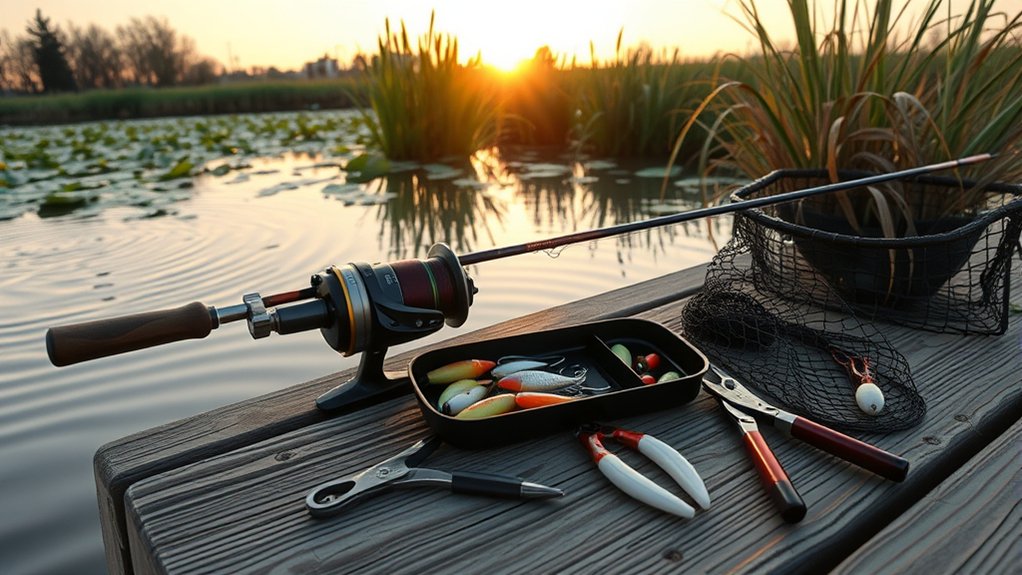
When you head to a public pond, pack light but smart. A medium-light to medium spinning setup gives you enough control for bass, bluegill, crappie, perch, and stocked trout where they are present.
A 5½–7 ft spinning rod with a small reel works well for most bank anglers. Pair it with 6–8 lb monofilament or fluorocarbon line if you want a forgiving setup that casts small baits easily. Use heavier line only when you fish thick weeds, brush, or bigger bass.
You’ll move more freely along crowded banks with a small backpack or shoulder bag. Carry essential tackle such as a spare spool, No. 6 Aberdeen hooks, split shot, small bobbers, needle-nose pliers, nail clippers, and a few earthworms when you want to keep it simple.
Bring small lures and a couple finesse options. A 1/8 oz weight with a black trick worm or a Ned Rig with a Z-Man Finesse Shroomz can coax bites when fish ignore louder lures. These subtle baits shine in clear water and pressured ponds.
Toss a Worden’s Rooster Tail or a Johnson Beetle Spin when flash is needed. A single 1/4 oz chatterbait or 4–5″ Zoom Super Fluke also covers reaction strikes when bass chase baitfish near the bank.
This gear mix keeps you adaptable without weighing you down. You can fish fast, slow down, switch species, and turn a short public pond session into a productive trip.
Pro Tip: Keep your first pond tackle kit small: one live-bait rig, one soft plastic rig, one moving bait, and one topwater. You will spend more time fishing and less time digging through gear.
Best Lures and Baits for Public Ponds
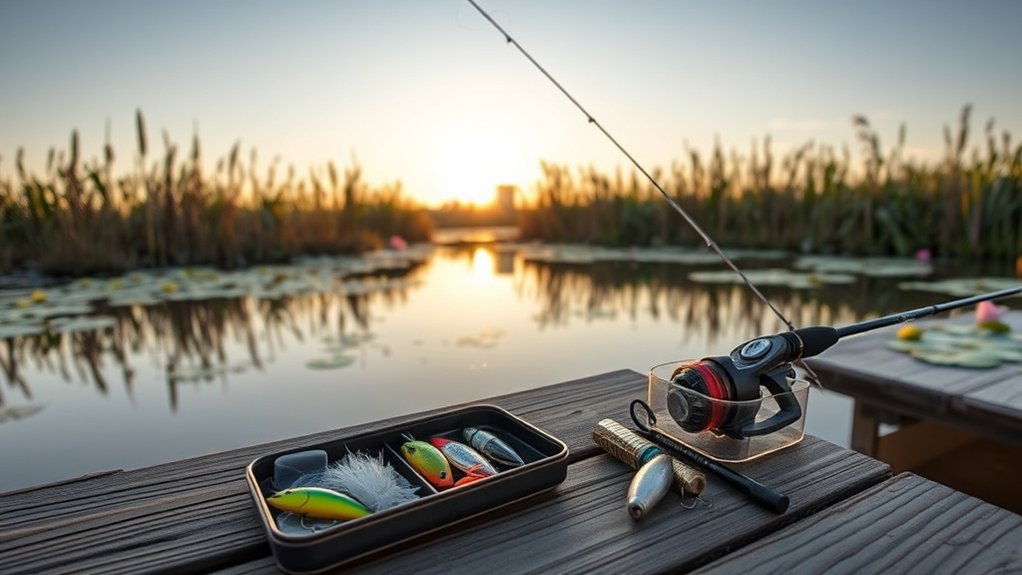
If you want quick, reliable hookups at a public pond, pick baits that match shallow water, pressured fish, and small forage. Public pond fish often see the same large, flashy lures again and again, so smaller presentations can get more bites.
Small spinnerbaits and 1/8–1/4 oz chatterbaits work well around vegetation because they create vibration and help you cover water. They also trigger reaction strikes from bass that are not actively feeding.
Weightless or Texas-rigged Zoom Trick Worms offer a natural, slow fall for picky fish. A Ned Rig with a green pumpkin or California Craw TRD can tease bites in pressured or clearer spots, especially around gravel, small rocks, and sparse weeds.
For quick pond hookups, match shallow-water lures to the mood of the fish: small spinnerbaits for searching, soft plastics for slow bites, Ned rigs for pressure, and topwater lures for low light.
Save a Whopper Plopper or tiny topwater for low-light windows when surface feeding improves. Cast it near shade, grass edges, riprap, and calm pockets. Pause often because many pond strikes happen after the lure stops.
Use a No. 6 Aberdeen hook with split shot and earthworms when you want simplicity. This setup works for bluegill, sunfish, stocked trout, catfish, and small bass. Add a bobber when kids or beginners need a visual strike indicator.
Fish will respond to confident retrieves. Try short twitches, pauses, slow rolls, and steady retrieves before you change spots. Let wind, light, water clarity, and fish activity guide your next move.
- Spinnerbaits (1/8–1/4 oz) for covering water and fishing around grass
- Zoom Trick Worms, either weightless or Texas-rigged, for bass near cover
- Ned Rig with Finesse ShroomZ or TRD-style baits for slow, pressured bites
- Whopper Plopper or tiny topwater lures for dawn, dusk, shade, and calm water
- Earthworms, small hooks, and split shot for simple multi-species fishing
How to Rig Simple Pond Baits
A few simple rigs cover most public pond situations. Start with a live-bait rig when you want action, then switch to lures when you want to target bass or search more water.
Bobber and Worm Rig
Tie on a small hook, pinch a split shot 6–12 inches above it, and place a bobber high enough to keep the worm above weeds or bottom debris. Hook a small piece of worm through the end so it moves naturally.
Cast near shade, docks, grass openings, or bluegill beds. Let the bobber settle, then watch for dips, sideways movement, or sudden stops.
Texas-Rigged Soft Plastic
Use a worm hook and a light bullet weight when weeds, brush, or wood snag open hooks. Slide the weight on first, tie the hook, and bury the hook point lightly in the plastic worm.
Cast near logs, lily pads, and weed edges. Let the bait fall, lift the rod tip, reel slack, and pause. Many bites feel like a tap, heavy pressure, or the line moving sideways.
Ned Rig
Thread a small stick-style soft plastic onto a mushroom jig head. Use light line and a slow retrieve. Hop it gently, drag it along bottom, or let it sit for several seconds.
This rig works well when fish are pressured, water is clear, or bass refuse faster lures.
Note: Some public ponds restrict live bait, treble hooks, cast nets, or keeping fish. Always check posted signs and local regulations before you rig up.
Where to Cast: Reading a Pond From the Bank
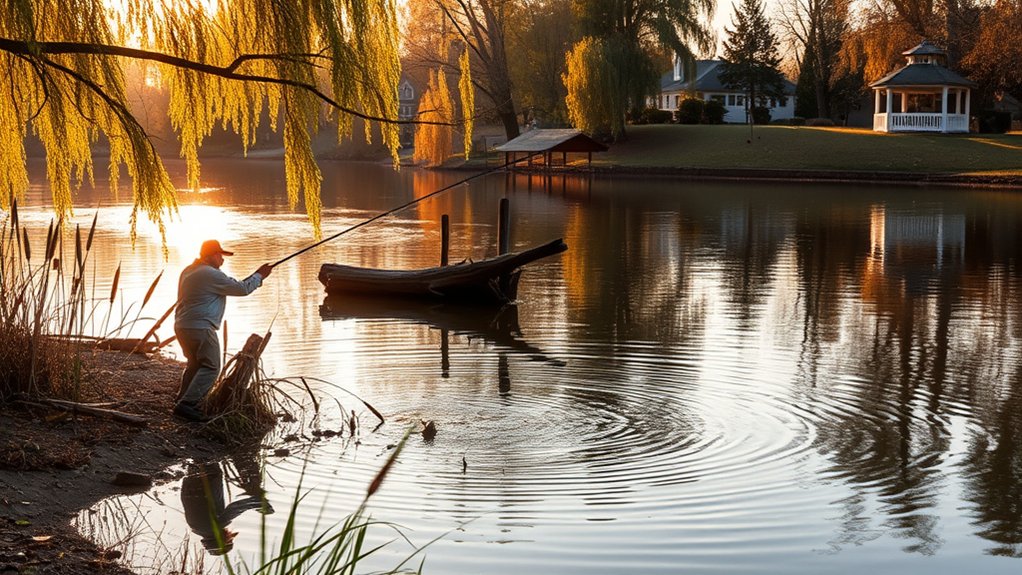
Because fish often hug the shallows and seek cover, start your bank-side search along edges, around fallen trees, rocks, and brush piles where bass and panfish hide and feed.
Scan the pond before your first cast. Look for surface activity, baitfish flickers, bluegill beds, shade lines, weed points, ripples, culverts, fountains, drains, docks, and any place where shallow water meets deeper water.
You’ll scan ponds for underwater structures and shaded areas that break the surface pattern. These are ambush points and cool havens. Move quietly, minimize splash, and cast parallel to the bank to present lures naturally in feeding lanes.
If one spot is silent, use a fan-casting technique to sweep nearby water without making too much noise. Cast left, center, and right at different distances. Then take a few steps and repeat the pattern.
Target overhangs and shadow lines where temperature and light change. Fish follow comfort and food. A shaded bank can stay productive longer than a bright, shallow flat during hot weather.
Stay mobile but deliberate. Probe each structure, then shift a few yards when bites do not come. These fishing tips are not about brute force. They are about reading subtle cues so you can reclaim time on the bank and increase your chances of catching fish.
Keep it simple, stay stealthy, and let the pond reveal its secrets.
Seasonal and Time-of-Day Strategies
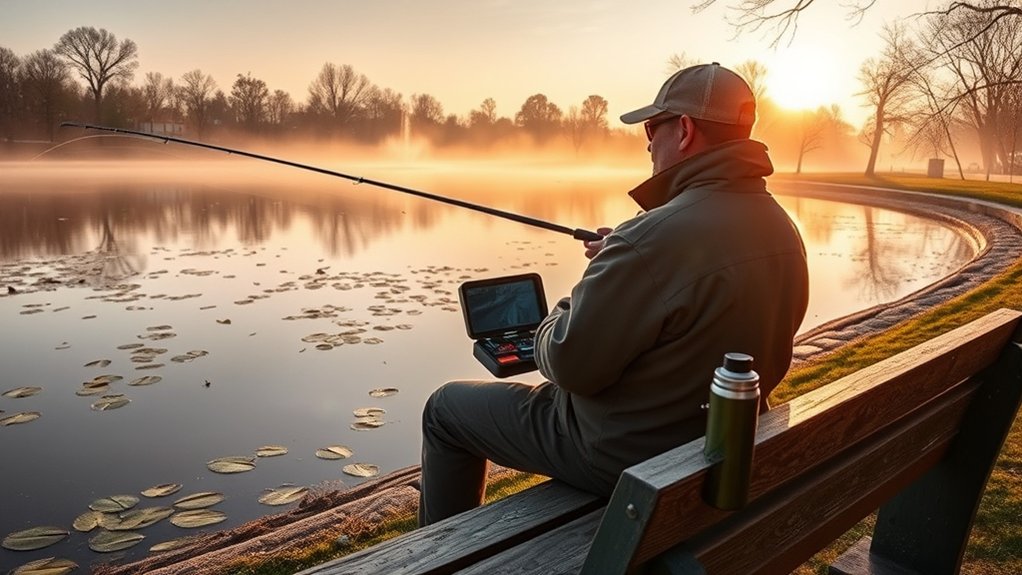
Although seasons and sun angles change the pond’s mood, you can plan your day around predictable fish behavior. Fish often feed more actively in early morning and late afternoon, move deeper or tighter to shade as heat builds, and return to shallows during cool spring and fall spells.
When you’re fishing a pond, trust those windows. Cast topwater baits in low light, work shaded banks in summer months, and slow down with jigs or soft plastics as the sun climbs.
Seasonal patterns demand that you adapt. Try different retrieves, depths, and hiding spots until the puzzle clicks.
- Use topwater baits at dawn and dusk to trigger surface strikes.
- Shift to soft plastics or jigs midday and probe stumps, brush piles, grass, and shade.
- In spring and fall, fish closer to banks where game fish often stage and feed.
- During hot summer months, target deeper edges, shade, fountains, and oxygen-rich inflows.
- After a light rain, try culverts, drains, and muddy edges where runoff can wash in insects and small food.
- In cold weather, slow down and fish deeper banks, rock, and sunny areas that warm first.
Stay bold, experiment, and let the pond teach you through pattern reading.
Weather, Water Clarity, and Fishing Pressure
Weather can change a public pond quickly. Wind pushes plankton and small bait toward one side of the pond, which can draw bluegill and bass. A slight breeze also breaks up the surface and helps hide your movement.
Clear water usually calls for lighter line, natural colors, smaller baits, and longer casts. Stained water lets you use darker soft plastics, brighter spinnerbaits, and lures with more vibration.
Fishing pressure matters too. If many anglers crowd the easy bank, walk farther, downsize your bait, or fish slower. Small changes such as a lighter weight, longer pause, or different casting angle can turn a quiet pond into a productive one.
Catch-and-Release Handling
Good fish handling keeps public ponds healthy. Wet your hands before touching fish, support larger fish with two hands, and keep them out of the water for as little time as possible.
Use pliers to remove hooks quickly. If a fish swallows the hook deeply, cut the line close to the mouth instead of tearing at the hook. Fish you plan to release have a better chance when you handle them gently.
When you want to keep fish, follow the posted limit and keep only what you will use. Public ponds get heavy pressure, so selective harvest helps protect future fishing.
Warning: Do not leave fishing line, hooks, bait cups, or soft plastics on the bank. Wildlife, pets, and people can get tangled or injured, and litter can cause public access to be restricted.
Access, Etiquette, and Legal Considerations
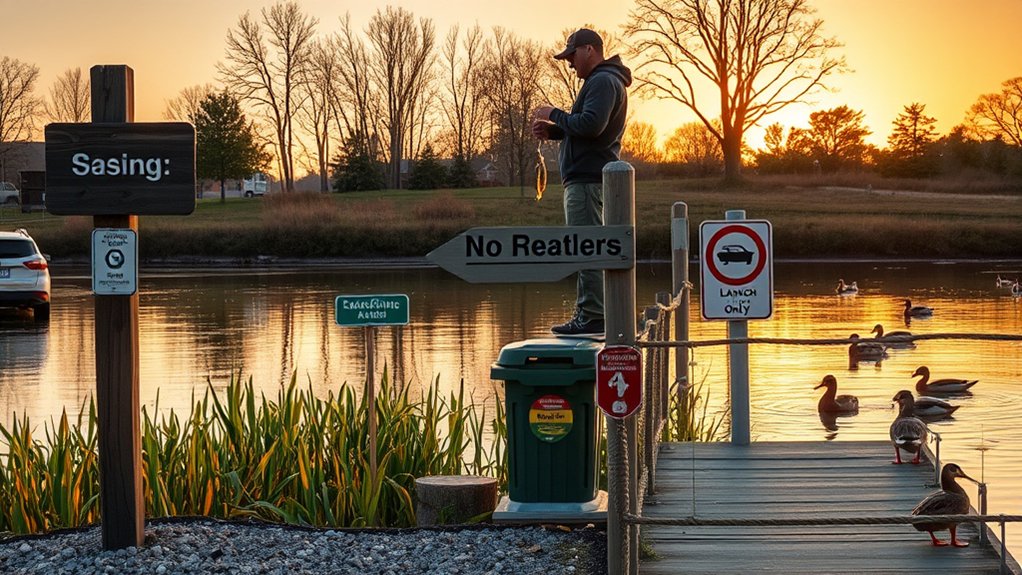
When you move from reading water and timing your casts to actually getting out on a public pond, know the rules and manners that keep access open and enjoyable for everyone.
You’ll check local regulations first. Many parks allow fishing unless posted otherwise, but rules vary by state, city, park, species, and waterbody. Look for posted signs near parking lots, piers, boat ramps, and trail entrances.
Know the legal considerations before you fish. These may include license requirements, permitted gear, barbless hook rules, live-bait restrictions, size limits, daily catch limits, fishing hours, and seasonal closures that protect fish and habitat.
Claim fishing space without hogging it. Maintain distance, avoid casting over someone else, and do not cut between an angler and the water. If a better spot opens, move calmly and keep your gear out of walking paths.
Practice Leave No Trace: pack out trash, secure bait containers, and leave banks as you found them. Pick up loose line even if it is not yours.
Share concise tips with fellow anglers when it feels welcome. A quick heads-up about a safe casting area, a snag, or a productive bait builds community and keeps access friendly.
Respect creates freedom. When you follow etiquette and the law, you help preserve public ponds as open, restorative places for everyone.
Common Public Pond Mistakes to Avoid
Many beginners struggle because they fish too fast, cast too loudly, or stay in one unproductive spot for too long. Public pond fish can be close to shore, so stomping to the edge or throwing a heavy lure into shallow water can spook them.
- Do not start with your biggest lure when fish are pressured or the pond is small.
- Do not ignore the water right in front of you. Fish often hold within a few feet of the bank.
- Do not keep casting to the same dead water. Change angles, depths, or locations.
- Do not use heavy gear for tiny baits. Light tackle makes small pond lures work better.
- Do not assume every public pond has the same rules. Check each location before fishing.
Frequently Asked Questions
What is the best bait for pond fishing?
The best bait for pond fishing is often a worm on a small hook because it catches bluegill, sunfish, catfish, trout, and bass. For artificial lures, try a small spinnerbait, Ned Rig, soft plastic worm, Beetle Spin, or topwater lure based on water clarity, cover, and time of day.
What is the 80/20 rule in fishing?
The 80/20 rule in fishing means a small number of high-value areas and techniques often produce most of your bites. At a pond, focus on cover, shade, weed edges, depth changes, active feeding times, and proven baits instead of casting randomly across open water.
What is the 90/10 rule in fishing?
The 90/10 rule means most fish are often concentrated in a small part of the water. In ponds, that productive 10% may be a shaded bank, a grass edge, a fallen tree, a culvert, a dock, a drop-off, or an area where baitfish are active.
What is the easiest way to catch fish in a pond?
The easiest way to catch fish in a pond is to use a small hook, split shot, bobber, and worm near shade, weeds, docks, or shallow cover. Fish early or late, stay quiet, and move when you do not get bites after several casts.
Do you need a fishing license for a public pond?
You may need a fishing license for a public pond, depending on your state, age, species, and the type of water. Some park ponds have special rules or youth exemptions. Check your state fish and wildlife agency and posted pond signs before fishing.
What time of day is best for public pond fishing?
Dawn and dusk are usually strong pond fishing windows because light is lower, temperatures are often more comfortable, and fish may move shallow to feed. Midday can still work when you target shade, deeper edges, fountains, culverts, or heavy cover.
Conclusion
Pond fishing is rewarding because you do not need complicated gear to catch fish. A light spinning setup, a few small lures, live bait, and a smart plan can help you make the most of a short session from shore.
Start with smart casts near fallen trees, rocks, weed edges, shade, drains, and drop-offs at dawn or dusk. Use topwaters for fun strikes, soft plastics for pressured fish, and worms when you want simple action.
Most of all, follow local rules, give other anglers room, pack out your trash, and leave the pond better than you found it. Respectful anglers help keep public ponds open, clean, and productive for everyone.
Sources
- National Park Service: How to Fish — supports beginner fishing gear, bait, and basic fishing practices.
- National Park Service: How to Safely Catch and Release — supports careful fish handling and release guidance.
- U.S. Fish & Wildlife Service: Fishing — supports general public fishing access and conservation context.
- U.S. Environmental Protection Agency: Aquatic Trash — supports the advice to pack out trash and prevent litter near water.

