Racing drones are fun only when the control link, video system, and power setup match how you want to fly. The wrong kit can leave you buying extra goggles, radios, or batteries before your first proper practice session.
For most FPV racing practice, the BETAFPV Meteor75 Pro is the strongest current fit because it combines a compact 1S setup, ELRS control, and analog FPV. The Sky Viper Type-R Racing RC Drone is the best value if you want simple line-of-sight speed practice instead of true FPV.
These picks were checked against current product listings, manufacturer specifications, model compatibility, and safety records. Unsupported performance or owner claims were left out.
Racing Drones Compared
| Product | Best for | Control / video | Power / size |
|---|---|---|---|
| Existing owners and experienced pilots comparing a lightweight 75mm whoop | ELRS 2.4GHz / analog 5.8GHz | 1S / 75mm | |
|
Mid-range
|
First FPV steps with a bundled beginner kit | Included radio / analog 5.8GHz | Brushed / beginner platform |
|
Premium
|
Complete outdoor freestyle-ready FPV setup | ELRS 2.4GHz / analog FPV | 1–2S electronics / 2.5-inch props |
|
Mid-range
|
Fast 1S whoop racing and freestyle practice | ELRS 2.4GHz / analog 5.8GHz | 1S / 80.8mm |
|
Budget
|
Budget line-of-sight speed practice | 2.4GHz radio / no FPV goggles | 800mAh LiPo / line-of-sight |
| Pilots who already own FrSky D8-compatible FPV gear | FrSky D8 / analog 5.8GHz | Dual 1S input / 2.5-inch props |
Racing Drones: Our Top Picks
1. BETAFPV Air75 Brushless Whoop Quadcopter
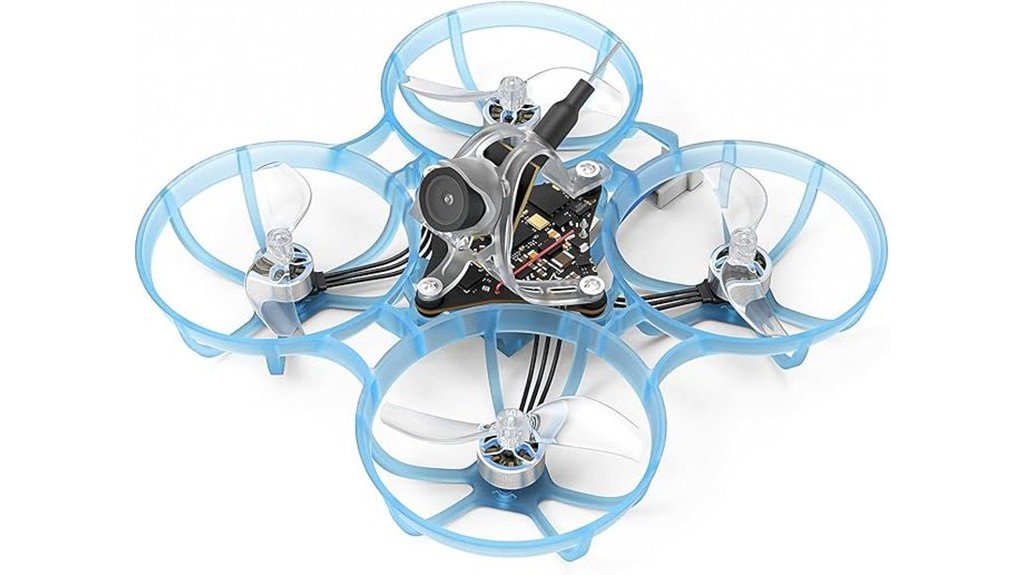
Bottom line: The BETAFPV Air75 is a 21g, 75mm analog FPV whoop built for quick direction changes and compact racing spaces. It remains useful as a reference for existing owners, but the verified buying picks on this page are the models below.
- Control / receiver: ELRS 2.4GHz, intended for compatible ELRS radios.
- Video system: C03 analog FPV, focused on low-latency viewing.
- Power system: 1S with 0802SE 23000KV motors, lightweight racing setup.
- Size / frame: 75mm wheelbase and 21g, suited to tight courses.
The Air75 combines BETAFPV’s Air Brushless 5-in-1 flight controller with 40mm two-blade propellers. Its small frame is aimed at indoor gates, small practice layouts, and pilots who already understand FPV radio and video compatibility.
The analog camera prioritizes a responsive pilot view rather than recorded HD footage. The recommended battery is a 1S BT2.0 pack, so battery connector and radio compatibility matter before you try to bind and fly it.
- Very light 75mm format for tight racing spaces.
- Integrated ELRS receiver and analog video hardware.
- 40mm two-blade props keep the setup compact.
- Requires compatible ELRS control gear.
- Analog FPV is less detailed than digital video.
- Battery compatibility must be checked before use.
2. APEX VR70-2.0 FPV Drone Kit
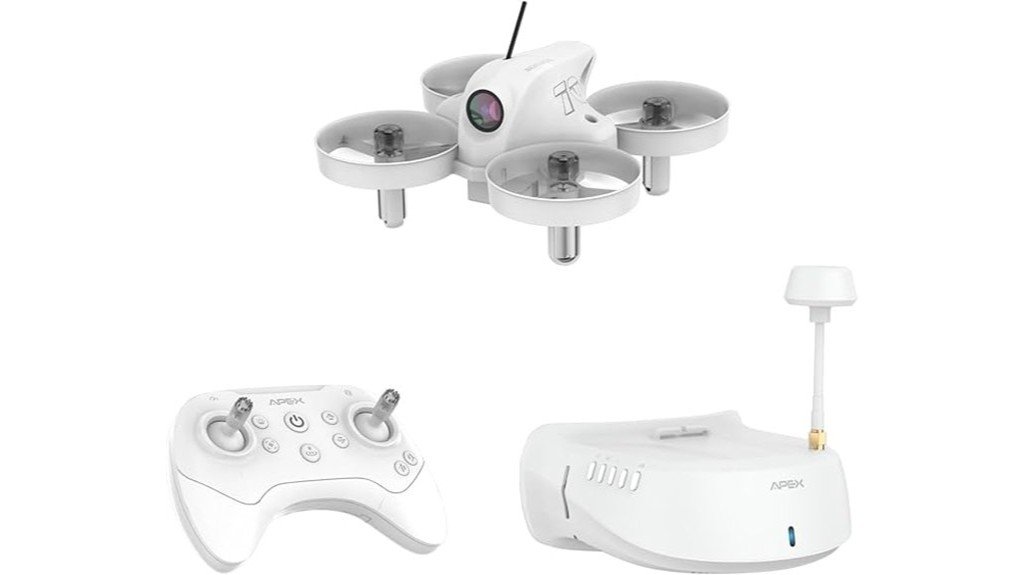
Bottom line: The APEX VR70-2.0 FPV Drone Kit is the softer entry point here for learning the pilot’s-eye view, orientation, and basic racing lines without assembling a complete FPV system yourself.
- Control / receiver: Included controller, simpler first-time setup.
- Video system: 5.8GHz analog FPV, compatible with the included goggles.
- Power system: Brushed motors, calmer than hobby-grade brushless racers.
- Kit contents: Drone, FPV goggles, controller, and three batteries.
The included FPV goggles let you practice flying from the drone’s viewpoint instead of watching it only from the ground. Altitude-assisted flying can make early sessions less demanding while you learn throttle, orientation, and turns.
This is still an entry-level platform. Its brushed motors and analog video make more sense for learning than for building a high-performance racing setup with a broad upgrade path.
- Core FPV gear comes together in one beginner-focused kit.
- Altitude-assisted control can simplify early practice.
- Three included batteries reduce interruptions between short flights.
- Brushed motors offer less performance headroom than brushless racers.
- Analog video is less detailed than modern digital FPV.
- Upgrade options are more limited than hobby-grade modular builds.
3. EMAX Tinyhawk 3 Plus Freestyle RTF Kit
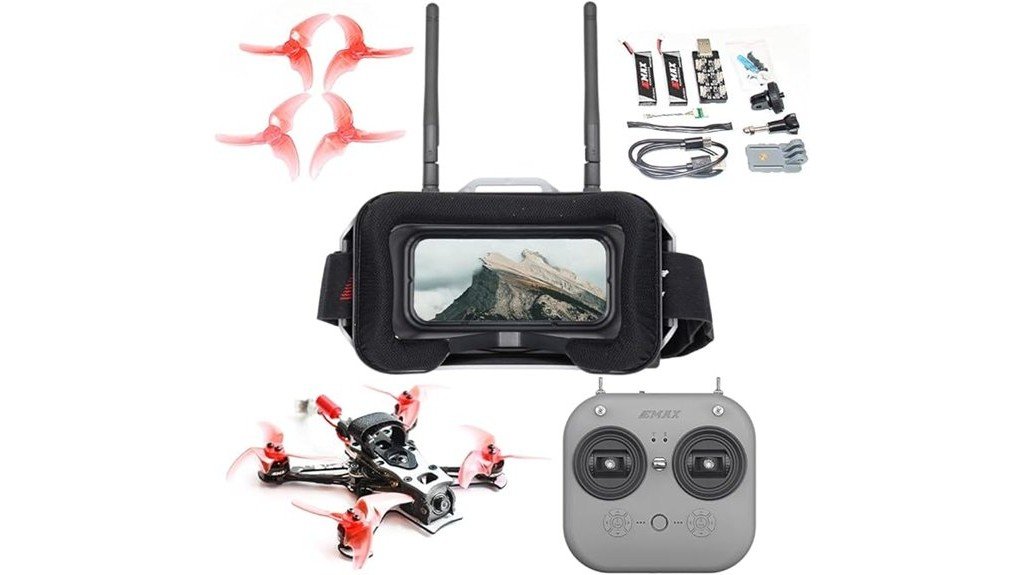
Bottom line: The EMAX Tinyhawk 3 Plus Freestyle RTF Kit is the better step-up choice when you want a complete analog FPV package with ELRS control and a larger 2.5-inch freestyle frame.
- Control / receiver: ELRS 2.4GHz, modern low-latency control ecosystem.
- Video system: Analog FPV, responsive pilot view with included goggles.
- Power system: 12025 7000KV brushless motors, built for freestyle response.
- Size / frame: 110mm wheelbase with 2.5-inch props, better outdoor capability.
- Kit contents: Drone, ELRS transmitter, goggles, and supporting accessories.
The carbon-fiber frame and 2.5-inch propellers give the Tinyhawk more outdoor flexibility than a tiny ducted whoop. It is well suited to practicing wider turns, throttle changes, recovery, and basic freestyle movement in a suitable open area.
The main trade-off is the analog video system. You get a responsive FPV feed and a matched RTF package, but not the image detail of a digital FPV system.
- Matched ELRS controller and FPV goggles reduce compatibility guesswork.
- Carbon-fiber frame suits repeated freestyle practice.
- 2.5-inch prop format offers more outdoor capability than a tiny whoop.
- Analog FPV is less sharp than digital systems.
- The larger open-prop format needs more flying space.
- A complete RTF bundle costs more than buying only a BNF drone.
4. BETAFPV Meteor75 Pro
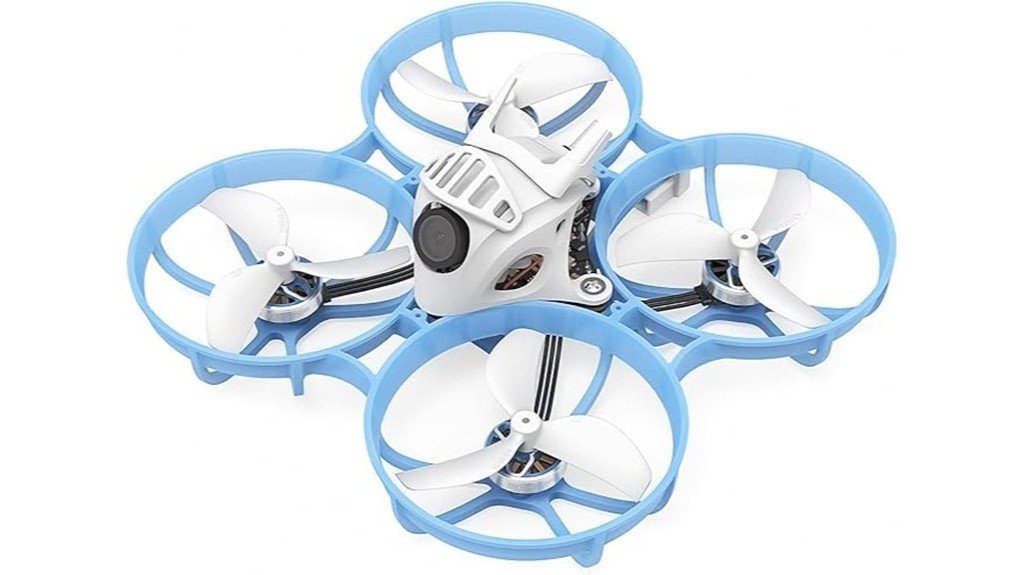
Bottom line: The BETAFPV Meteor75 Pro is the best overall racing drone here for compact FPV practice. Its current Matrix 1S platform combines ELRS, analog video, 45mm props, and a low-weight whoop frame.
- Control / receiver: Serial ELRS 2.4GHz, suited to compatible ELRS radios.
- Video system: C03 analog FPV with 5.8GHz VTX, built for live viewing.
- Power system: 1S with current 1102 21000KV motors, responsive compact setup.
- Size / frame: 80.8mm wheelbase and 30.5g, useful for tighter courses.
The current Meteor75 Pro uses BETAFPV’s Matrix 1S 5-in-1 flight controller and 45mm three-blade propellers. That keeps the electronics concentrated in a small whoop while giving you a purpose-built FPV platform instead of a stabilized camera drone.
BETAFPV’s current specification uses 1102 21000KV motors and recommends the LAVA II 1S 580mAh battery. The protected prop ducts also make more sense around gates and tighter practice layouts than an exposed freestyle frame.
- Current Matrix 1S electronics integrate key racing components.
- ELRS receiver fits a widely used modern control ecosystem.
- Protected 45mm propellers suit tighter racing practice.
- Compact 30.5g frame is easy to transport and practice with.
- Requires compatible ELRS radio gear and analog FPV goggles.
- Analog video sacrifices image detail for a simpler live feed.
- A small lightweight whoop is more affected by outdoor wind.
5. Sky Viper Type-R Racing RC Drone
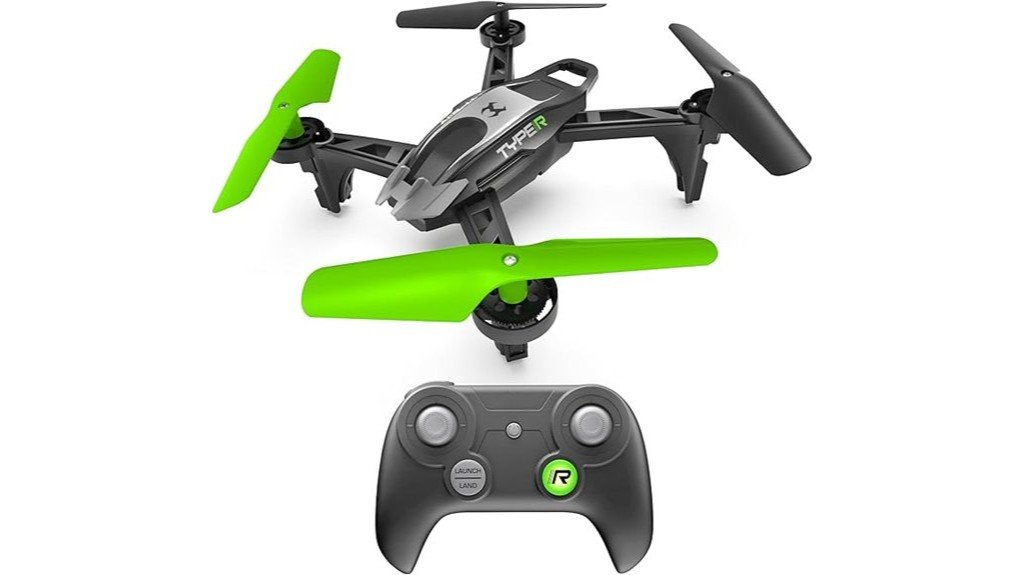
Bottom line: The Sky Viper Type-R Racing RC Drone is the simplest value pick for fast line-of-sight practice. It gives you race-focused controls without requiring FPV goggles, ELRS setup, or a separate radio system.
- Control / receiver: Included 2.4GHz controller, straightforward paired setup.
- Video system: None, designed for line-of-sight flying.
- Power system: Quick-change 800mAh LiPo, rechargeable removable pack.
- Size / frame: Open racing frame, intended for clear flying areas.
Sky Viper lists the Type-R at speeds above 35 mph and equips it with Sport and Race flight modes. One-touch stunts plus automatic launch and landing make the controls easier to approach than a manual FPV racing build.
The trade-off is important: this is not a goggles-based FPV platform. It is better for reaction timing, fast turns, and casual races where you can keep the drone in direct sight.
- Included controller keeps the initial setup simple.
- Sport and Race modes support casual speed practice.
- Quick-change rechargeable battery is easy to swap.
- Automatic launch and landing reduce the learning burden.
- No FPV camera or goggles-based racing view.
- Less customizable than hobby-grade FPV platforms.
- High-speed line-of-sight flying requires a clear open area.
6. EMAX Tinyhawk II Freestyle BNF
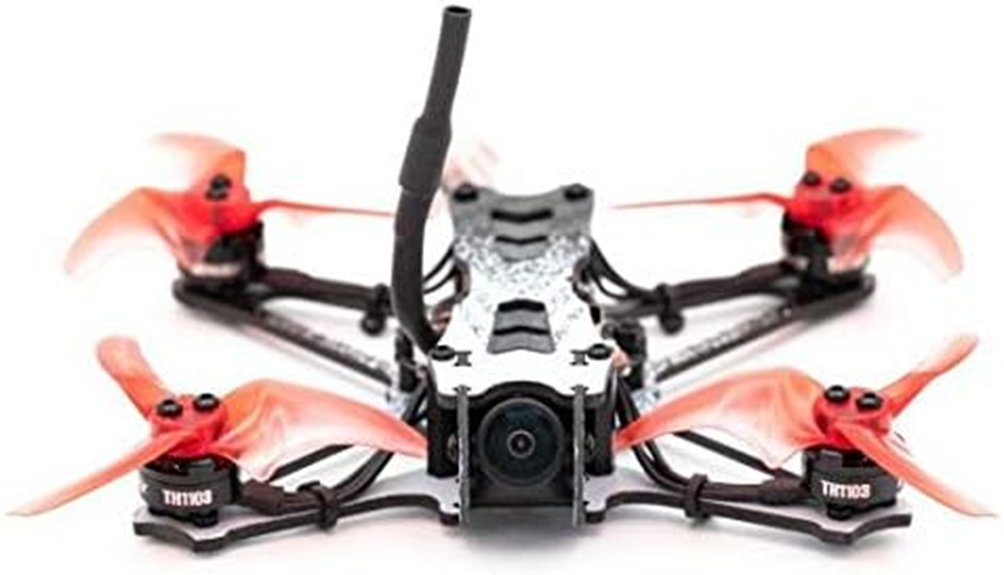
Bottom line: The EMAX Tinyhawk II Freestyle BNF is aimed at pilots who already own compatible FrSky D8 radio gear and analog FPV goggles. Its BNF format makes less sense as a first drone because the controller, goggles, and compatibility work are left to you.
- Control / receiver: FrSky D8 SPI, requires compatible radio equipment.
- Video system: 5.8GHz analog FPV, designed for analog goggles.
- Power system: 1103 7000KV brushless motors with dual 1S battery input.
- Size / frame: 115mm wheelbase with 2.5-inch props, compact freestyle format.
EMAX documents the Tinyhawk II Freestyle with a carbon-fiber frame, RunCam Nano2 camera, and selectable 25/100/200mW video transmitter. The 2.5-inch format is small enough to carry easily while still being aimed more at outdoor freestyle than tiny-room flying.
Radio compatibility is the biggest catch. EMAX notes that this FrSky D8 version is not directly compatible with newer FrSky ACCESS-only transmitters without suitable external hardware, so check your radio before buying.
- Carbon-fiber frame keeps the freestyle platform compact.
- 1103 7000KV brushless motors suit its 2.5-inch format.
- Selectable analog VTX output gives setup flexibility.
- FrSky D8 is less straightforward with newer ACCESS radios.
- Controller and FPV goggles are not part of a BNF setup.
- Analog video is less detailed than digital FPV.
BETAFPV Meteor75 Pro vs Sky Viper Type-R: Is the Upgrade Worth It?
The main difference is not just performance. The Meteor75 Pro is a true analog FPV whoop built around ELRS and separate compatible goggles, while the Sky Viper Type-R is a simpler line-of-sight racing drone with its own controller.
- Flying view: Meteor75 Pro gives you an onboard FPV view; Sky Viper stays line-of-sight.
- Control ecosystem: Meteor75 Pro needs compatible ELRS gear; Sky Viper includes its controller.
- Practice style: Meteor75 Pro suits gates and FPV lines; Sky Viper suits casual speed runs.
- Learning curve: Sky Viper is simpler to start; Meteor75 Pro gives you more true FPV skills to learn.
Which Racing Drone Should You Buy?
- For true 1S whoop racing: get the BETAFPV Meteor75 Pro.
- For a complete step-up FPV package: get the EMAX Tinyhawk 3 Plus Freestyle RTF Kit.
- For a gentler first FPV kit: get the APEX VR70-2.0 FPV Drone Kit.
- For inexpensive line-of-sight speed practice: get the Sky Viper Type-R Racing RC Drone.
How We Chose
- Racing relevance: We favored drones designed for FPV practice, freestyle, gates, or race-style speed control.
- Compatibility: Radio protocol, receiver type, video system, batteries, and kit format were checked because mismatches create extra costs.
- Current specifications: Manufacturer pages and current product documentation were prioritized over older descriptions.
- Repair and practice needs: Prop protection, replaceable parts, frame type, battery swapping, and setup complexity were considered.
- Safety and freshness: Product status, model changes, and available recall information were reviewed before recommendations were assigned.
Before You Buy a Racing Drone
- Check the kit type: RTF packages normally include more of the gear needed to start, while BNF drones require compatible equipment you already own.
- Confirm the radio protocol: ELRS, FrSky D8, and other receiver systems are not automatically interchangeable.
- Match the video system: An analog FPV drone needs compatible analog goggles or a receiver, while line-of-sight drones may have no FPV system at all.
- Plan for spare batteries: Racing uses power quickly, and several smaller compatible packs usually make practice easier.
- Budget for wear parts: Propellers, frames, motors, and batteries can wear or break during repeated practice.
- Choose a safe flying area: Keep people and pets clear, avoid roads and crowds, and follow the rules that apply where you fly.
Racing Drone Buying Guide
RTF vs BNF
RTF means ready to fly. These kits usually reduce compatibility work by packaging a drone with a matching controller and, for FPV kits, goggles. That makes the EMAX Tinyhawk 3 Plus Freestyle RTF Kit easier to approach if you do not already own FPV equipment.
BNF means bind and fly. You normally get the aircraft but must supply compatible radio and video gear. BNF makes more sense after you already understand receiver protocols, firmware, batteries, and goggles.
Weight and Size
Small whoops are easier to use around compact gates and protected practice areas, while larger open-prop freestyle frames need more room. A lightweight drone also reacts quickly, but wind has a bigger effect outdoors.
If you want a compact whoop rather than a larger freestyle frame, the BETAFPV Meteor75 Pro uses an 80.8mm wheelbase and protected 45mm propellers.
Battery Life
Racing drones normally prioritize throttle response and low weight over long flights. Battery size, voltage, connector, propellers, wind, and how aggressively you fly all affect runtime.
Instead of installing a battery outside the manufacturer’s recommended range, buy several matching packs and a charger designed for that battery type. Check connector type as carefully as voltage because the wrong plug can stop a session before it starts.
Flight Controller and Receiver Compatibility
The flight controller manages stabilization, motor output, receiver communication, and other electronics. Integrated boards can also include the ESC, receiver, OSD, and video transmitter, which saves space in a small whoop.
The receiver protocol matters just as much. For example, the BETAFPV Meteor75 Pro uses ELRS 2.4GHz, so your radio or transmitter module must support the compatible ELRS setup.
Motor Specifications
Brushless motors are the normal choice once you move beyond basic beginner drones because they offer better efficiency and durability than brushed motors. Do not compare KV numbers alone. Motor size, KV, battery voltage, propeller size, aircraft weight, and tuning work together.
A high KV figure does not automatically make one drone better than another. Look at the complete factory setup and stay within the manufacturer’s supported battery and propeller combinations.
Propeller Design
Propeller diameter, pitch, blade count, and motor pairing change how a racing drone responds. Ducted whoop props offer more physical protection around gates, while exposed 2.5-inch freestyle props give you a different type of outdoor platform.
Keep several correct replacement propellers with your batteries. Even a minor crash can bend or chip a prop enough to add vibration and make the aircraft harder to control.
Camera Quality and Latency
For racing, a predictable live view matters more than cinematic recording quality. Analog FPV remains useful because it is simple and widely supported, although the image is less detailed than a digital FPV feed.
Do not assume that a drone with an FPV camera also records high-quality video. The live pilot feed and onboard recording are separate features, so check both if you want flight footage afterward.
Durability and Parts
Crashes are part of learning, so a repairable drone can be more useful than one with impressive specifications but hard-to-find parts. Check whether you can replace propellers, motors, frames, canopies, and batteries without replacing the whole aircraft.
Prop guards are especially useful around tight practice courses. Carbon-fiber freestyle frames are better suited to a different job: open-prop outdoor practice with more room around the aircraft.
Flight Area and Safety
Match the drone to the space you actually have. A protected micro whoop can suit smaller courses, while a fast 2.5-inch freestyle drone needs more separation from people and obstacles. Line-of-sight speed models also need enough room for you to keep visual contact throughout the flight.
Before every session, inspect the props and battery, confirm the area is clear, and know how to disarm the motors immediately. Check the local aviation and property rules before outdoor flying.
Mistakes to Avoid When Buying a Racing Drone
- Buying the wrong receiver version: Confirm ELRS, FrSky, or another protocol before ordering a BNF drone.
- Assuming every FPV system works together: Radio compatibility and video-goggle compatibility are separate checks.
- Choosing by speed alone: Frame size, repairability, controls, and your available flying space matter more for regular practice.
- Forgetting batteries and chargers: Verify voltage, connector, capacity range, and what the kit actually includes.
- Starting with too much drone: A simulator or stable RTF kit can build stick skills before you move to faster manual platforms.
FAQs
What Is the Ideal Battery Life for Racing Drones?
Most small racing drones trade long endurance for fast throttle response, so short flights are normal. A compact 1S whoop such as the BETAFPV Meteor75 Pro is designed around quick battery swaps rather than long sessions. Wind, battery health, prop choice, and how aggressively you fly all change runtime, so spare matching packs are usually more useful than one oversized battery.
How Do I Improve My Drone Racing Skills?
Practice consistently and isolate one skill at a time. A simulator is useful for stick memory, then short real flights teach you how wind, battery sag, and crashes change the feel. Work on smooth throttle control, clean turns, repeatable gate entries, and controlled recovery. Record your problem areas and repeat the same line until it becomes predictable.
Are Racing Drones Suitable for Beginners?
Yes, but the easiest starting point is a ready-to-fly kit with stabilization and matching gear. The APEX VR70-2.0 is the softer entry here, while the EMAX Tinyhawk 3 Plus Freestyle RTF Kit gives you a more capable step-up package. Practice first in a clear area and learn how to disarm quickly.
Do I Need FPV Goggles for Drone Racing?
For true FPV racing, yes: goggles or a compatible FPV display give you the pilot’s-eye view needed to judge gates and lines. A line-of-sight model such as the Sky Viper Type-R can still teach speed control and reaction timing, but it does not recreate the same experience as flying through an onboard FPV camera.
Is an Analog FPV Drone Good Enough for Racing?
Yes. Analog FPV remains a practical racing choice because it is simple, widely supported, and focused on a responsive live feed. The trade-off is image sharpness compared with digital systems. When shopping, confirm that your goggles receive the drone’s video band and that your radio protocol matches the receiver; video compatibility and control compatibility are separate.
Can a Camera Drone Be Used for Racing?
A normal camera drone can fly quickly, but it is not designed for racing in the same way. Camera drones prioritize stabilized footage, GPS assistance, and smooth flight, while racing drones prioritize manual response, low-latency viewing, light weight, and easy repairs. If your goal is gates, freestyle practice, or quick direction changes, choose a purpose-built racing platform.
What Safety Gear Should I Use While Racing Drones?
Use eye protection when working near a powered drone, keep people and pets out of the flight path, and disarm before touching the aircraft. A spotter can help when flying outdoors. Inspect props and batteries before each session, avoid roads and crowded areas, and check the local rules that apply to where and how you plan to fly.
How Can I Customize My Racing Drone for Better Performance?
Start with reversible changes: propellers, camera angle, flight rates, and the manufacturer-approved battery sizes. Change one variable at a time so you can tell what helped. Replace worn props and damaged motors before chasing more power. For beginners, simulator time, spare batteries, and learning repairs usually improve practice more than expensive performance parts.
Final Verdict
For most buyers who want a true racing drone rather than a stabilized camera drone, the BETAFPV Meteor75 Pro is the strongest verified fit. Its current 1S Matrix setup combines ELRS control, analog FPV, 45mm props, and a compact 80.8mm frame.
If you would rather get a controller and goggles in the same package, the EMAX Tinyhawk 3 Plus Freestyle RTF Kit is the easier complete setup.
For the best value in simple line-of-sight racing, see the Sky Viper Type-R Racing RC Drone. For the premium complete FPV package, see the EMAX Tinyhawk 3 Plus Freestyle RTF Kit.
