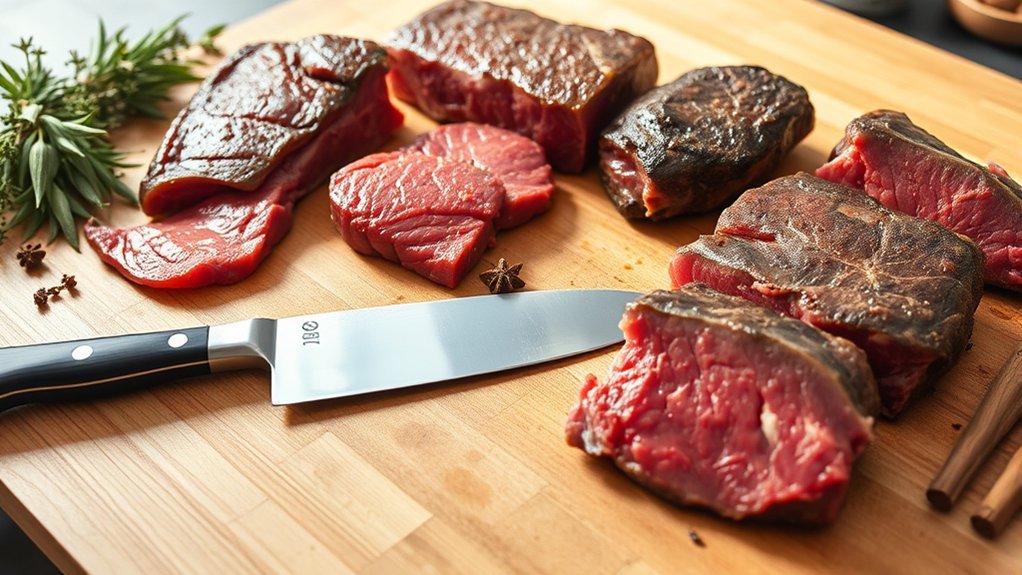
Game meat care and food safety depend on what happens from the moment an animal is recovered until the meat is cooked. Start with an animal that appears healthy, keep hide and digestive contents away from edible tissue, cool the meat quickly, prevent cross-contamination, and use a food thermometer at cooking time. Safe cooking temperatures are not identical for every species and cut, so use the species-specific guidance below rather than one universal number.
Last updated: September 11, 2026
Quick Answer
Handle game meat safely by field dressing with clean tools and gloves, keeping hide and gut contents away from edible meat, cooling the meat to 40°F (4°C) or below as quickly as practical, separating raw game from ready-to-eat foods, and checking cooked meat with a food thermometer. FoodSafety.gov lists venison and rabbit at 160°F (71°C) and game birds at 165°F (74°C). Guidance for properly handled whole cuts of deer, elk, and moose varies by authority, while bear and other Trichinella-risk wild game require extra caution.
Key Takeaways
- Do not handle or eat game that looked sick, acted abnormally, or was found dead from an unknown cause.
- Start with clean, sharp tools and disposable gloves to reduce contamination during field dressing.
- Cool game meat as quickly as possible and keep refrigerated meat at 40°F (4°C) or below.
- Keep raw game meat, tools, containers, and juices away from cooked or ready-to-eat foods.
- If lead ammunition was used, discard the wound channel and surrounding bloodshot tissue, but understand that tiny lead fragments may extend beyond visible damage.
- Use a food thermometer and follow species-specific temperature guidance rather than judging doneness by color.
At a Glance
| Main Goal | Keep game meat clean, cold, separated from contaminants, and safely cooked. |
| Difficulty | Moderate, because sanitation, cooling speed, species-specific risks, and final cooking temperature all matter. |
| Tools Needed | Sharp knife, disposable gloves, game bags, cooler, ice or frozen jugs, clean food-safe containers, cleaning supplies, cooler thermometer, and food thermometer. |
| Cold Storage Target | Cool meat quickly and keep refrigerated meat at 40°F (4°C) or below. Freeze long-term packages at 0°F (-18°C) or below. |
| Cooking Temperature | There is no single temperature rule for every wild species and cut. FoodSafety.gov lists venison and rabbit at 160°F, wild birds at 165°F, and current CDC outbreak guidance supports at least 165°F for Trichinella-risk wild game such as bear. |
Game Meat Care and Food Safety: Core Rules
Safe game meat starts before butchering. Harvest only animals that appear healthy, follow local wildlife and tagging rules, keep contamination off edible tissue, and remove heat from the carcass quickly. Wild game is not inspected before harvest in the way commercially slaughtered meat is, so the hunter controls many of the most important food-safety steps.
Use four rules throughout the process: keep it clean, get it cold, keep raw meat separate, and verify cooking temperatures. If the animal showed abnormal behavior, unusual neurological signs, extensive disease, suspicious growths, or unexplained illness, contact the appropriate wildlife authority before deciding whether to process it.
Understanding Game Meat Types
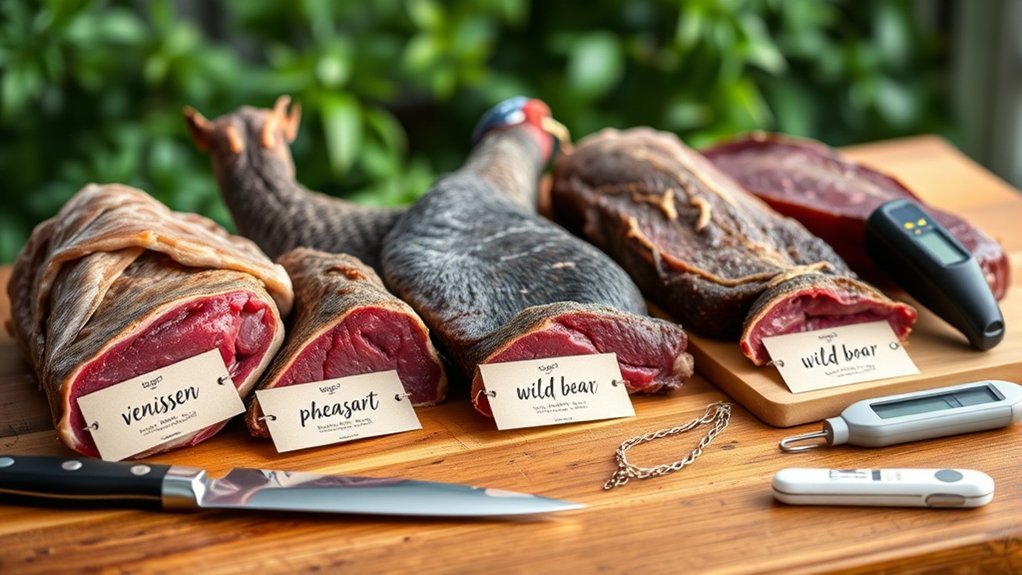
Different game species carry different handling and food-safety concerns. Big game includes deer, elk, moose, antelope, wild hogs, bears, and similar animals. Large carcasses retain heat, so rapid evisceration, quartering when appropriate, good airflow, and refrigeration become especially important in warm weather.
Small game includes rabbits, squirrels, hares, muskrats, and similar animals. Their smaller size helps them cool faster, but some species have specific zoonotic risks. CDC, for example, advises hunters to wear gloves when handling rabbits and certain rodents because of tularemia risk.
Wild birds such as pheasants, ducks, geese, quail, and turkeys also require prompt cooling. Current CDC bird-flu guidance says hunters should avoid handling birds that are obviously sick or found dead and should use appropriate protective equipment when dressing potentially exposed wild birds.
Meat quality also varies with age, diet, season, shot placement, stress, contamination, and cooling speed. A carcass handled cleanly and chilled rapidly generally gives you a better starting point than one left warm or contaminated in the field.
What Disease Risks Should Hunters Check Before Eating Game?
Wild animals can carry pathogens or contaminants that are not obvious from the finished cut of meat. The risk depends strongly on the species and location, so a single generic sanitation rule is not enough.
Deer, Elk, Moose, and Chronic Wasting Disease
Chronic wasting disease (CWD) affects deer, elk, moose, reindeer, and related cervids. CDC reports that CWD infections in people have not been documented, but scientists continue to study whether eating infected animals could pose a human risk. If you hunt where CWD occurs, check current state or provincial wildlife guidance and determine whether testing is recommended or required.
CDC advises hunters to avoid animals that look sick or act strangely, avoid eating animals found dead, minimize contact with brain and spinal tissues, and strongly consider CWD testing in affected areas. Do not eat meat from an animal that tests positive for CWD. If using a commercial processor, ask whether your animal can be processed separately so its meat is not mixed with other carcasses (CDC Chronic Wasting Disease guidance).
Bear, Wild Boar, and Trichinella
Bear, wild boar, and several other wild carnivores or omnivores can carry Trichinella. CDC warns that curing, drying, smoking, or microwaving alone does not consistently kill the parasite and that some Trichinella species found in wild game can survive freezing. Do not treat home freezing as a reliable safety step for bear or wild boar (CDC Trichinellosis Prevention).
Recent CDC outbreak guidance involving bear meat recommends cooking Trichinella-risk wild game to at least 165°F (74°C) and verifying the temperature with a food thermometer. This is especially important for jerky, sausage, and other preparations that may otherwise receive uneven or insufficient heat.
Wild Hogs and Brucellosis
Wild hogs and several other hunted mammals can carry Brucella bacteria. Infection can occur through unsafe contact with blood, organs, tissues, or undercooked meat. CDC recommends protective equipment such as gloves and eye protection when people handle potentially infected animal tissues (CDC Brucellosis and Animals).
Rabbits, Rodents, and Tularemia
CDC advises hunters and trappers to wear gloves when handling rabbits, muskrats, prairie dogs, and other rodents because these animals can transmit tularemia. Cook game thoroughly and wash your hands after skinning or processing (CDC Tularemia Prevention).
Wild Birds and Avian Influenza
Do not handle wild birds that are obviously sick or found dead unless wildlife authorities instruct you to do so. CDC recommends gloves, eye protection, and respiratory protection when appropriate during dressing of wild birds, along with dedicated tools that are cleaned and disinfected afterward. Wild game birds should reach 165°F (74°C) before eating (CDC Hunters and Bird Flu).
How Should You Field Dress Game Safely?
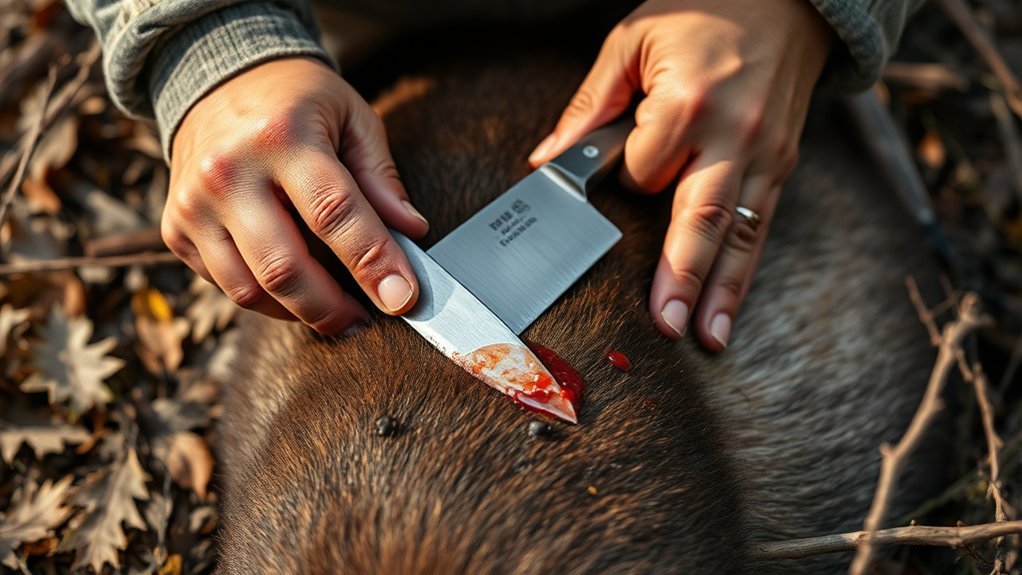
Field dressing removes heat-producing internal organs and gives the carcass a chance to cool. Exact methods differ by species, carcass size, local tagging rules, and whether you plan to quarter or debone the animal. The steps below are general guidance for deer-sized big game, not a substitute for species-specific wildlife-agency instructions.
Proper Tools Selection
Prepare your field kit before the hunt so you can work cleanly instead of improvising with dirty or unsuitable equipment.
- Sharp Knife: A sturdy, sharp knife gives you better control and cleaner cuts.
- Field Dressing Gloves: Disposable nitrile, latex, or rubber gloves reduce direct contact with blood, organs, and body fluids.
- Game Bags: Breathable, clean game bags help protect exposed meat from dirt, insects, and debris while allowing heat to escape.
- Bone Saw: Use only when your chosen processing method requires it. In CWD areas, avoid cutting through the brain, spinal cord, or spinal column and follow local wildlife guidance.
- Thermometer: A cooler or appliance thermometer helps you verify cold storage, while a food thermometer verifies final cooking temperature.
- Clean Water or Cleaning Supplies: Use potable water when water is needed. Do not use creek water, dirty snow, grass, or other potentially contaminated material to clean edible meat.
- Cooler and Ice or Frozen Jugs: These help remove heat and keep meat cold during transport.
Step-by-Step Process
Start only after the animal has been safely recovered, legally tagged as required, and positioned so it cannot roll or shift while you work. Put on clean gloves. For deer-sized big game, make controlled, shallow cuts and keep the blade pointed away from the stomach and intestines whenever practical.
Open the body cavity carefully without puncturing the digestive tract or bladder. Remove the internal organs according to the correct method for that species. Work slowly around the pelvic and chest areas and avoid dragging contaminated hide, hair, hands, or tools across exposed muscle.
If stomach or intestinal contents contact edible meat, remove visible contamination and trim contaminated tissue first. Do not hose fecal material across otherwise clean meat. If potable water is needed for limited cleanup, prevent splashing onto clean areas, then dry the surface and resume cooling promptly.
After dressing, open the cavity to improve airflow or quarter the animal when appropriate for the species, weather, and local rules. Move the carcass or quarters into active chilling as quickly as practical rather than relying on shade alone.
Warning: Avoid puncturing the stomach, intestines, bladder, or other digestive organs. If gut contents spill onto meat, separate the contaminated area, trim affected tissue, clean your knife before returning to clean meat, and prevent liquid from spreading contamination to other surfaces.
Hygiene and Safety Practices
Field sanitation is easiest when you deliberately separate dirty tasks from clean ones. Use one gloved hand primarily for hide or contaminated surfaces and the other for the clean knife or exposed meat when practical. Change gloves and clean tools whenever you move from contaminated material back to clean meat.
- Wear gloves: Protect cuts and broken skin from blood, body fluids, bacteria, and zoonotic pathogens.
- Clean tools between tasks: Wash visible debris from knives and equipment and sanitize them appropriately before returning to clean meat.
- Keep the carcass cool: Heat encourages bacterial growth, so begin active cooling promptly.
- Avoid cross-contamination: Keep raw meat and dirty gear away from food, drinks, water bottles, vehicle interiors, and clean equipment.
- Watch for abnormal animals or organs: Unusual behavior, offensive odors, neurological signs, abnormal organs, or unexplained lesions justify contacting wildlife authorities before eating the animal.
- Reduce lead exposure: Non-lead ammunition is the most direct way to avoid ammunition-derived lead. If lead ammunition was used, discard the wound channel and surrounding bloodshot tissue, while recognizing that microscopic fragments can extend beyond visibly damaged areas (National Park Service lead information).
How Should Game Meat Be Handled and Transported?
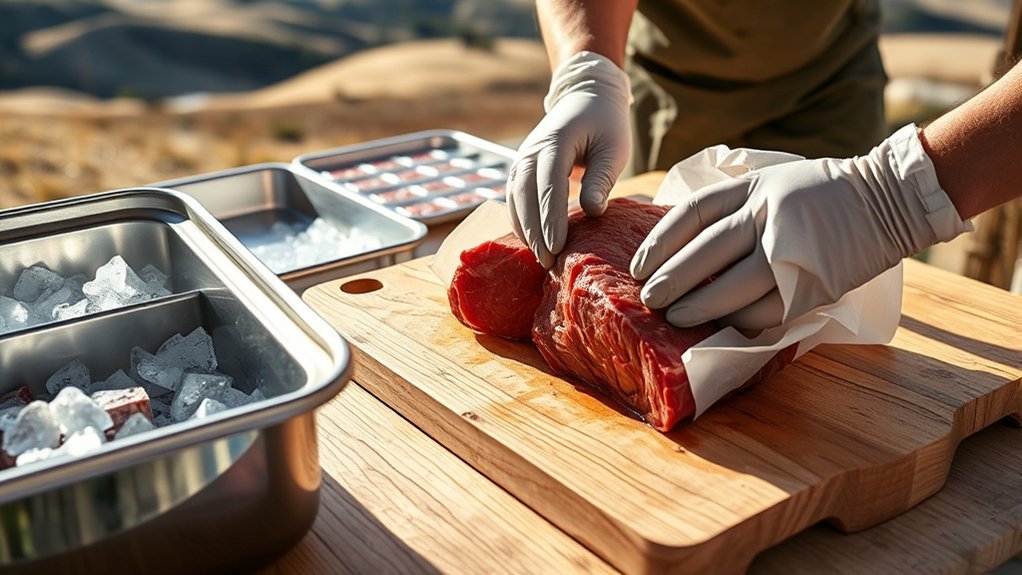
Transport has two jobs: prevent new contamination and remove heat. Use clean food-safe containers or breathable game bags, maintain airflow around warm quarters, protect meat from insects and road dirt, and move it into reliable refrigeration or an iced cooler promptly.
Clean Equipment Usage
Anything that contacts exposed meat should begin clean and stay separated from dirty hide, boots, vehicle floors, gut material, and unwashed hands.
- Use dedicated tools: Reserve clean knives, cutting boards, tubs, and containers for edible game meat.
- Clean and sanitize regularly: Wash equipment with hot soapy water where practical, rinse it, and apply an appropriate food-contact sanitizer according to its label.
- Inspect equipment: Deep cracks and damaged cutting boards can be difficult to clean effectively.
- Use food-safe containers: Do not place unwrapped meat directly in dirty truck beds, vehicle trunks, or non-food containers.
- Separate raw food: Keep raw game and leaking packages below or away from drinks, cooked food, and ready-to-eat items.
- Change gloves when needed: Replace them after touching hide, gut contents, dirty surfaces, phones, door handles, or other non-food items.
How Quickly Should Game Meat Be Cooled?
Cool game as quickly as practical. The University of Arkansas Division of Agriculture advises cooling deer meat to 40°F (4°C) or below within four hours as a practical target and recommends quartering when needed so the meat can fit into coolers and shed heat faster (UADA Extension). Do not treat four hours as permission to leave a carcass warm; start cooling immediately.
Use bags of ice, frozen jugs, refrigeration, or another reliable cold source. Avoid direct sun, warm vehicle interiors, tightly stacked warm meat, or airtight coverings that trap body heat. Large animals such as elk or moose may need to be quartered or otherwise opened up for faster heat loss where regulations and conditions allow.
Use a thermometer rather than touching the cooler and assuming it is cold enough. Home refrigeration should stay at 40°F (4°C) or below, and long-term frozen storage should remain at 0°F (-18°C) or below.
Pro Tip: Put a thermometer beside the meat in the area most likely to warm up. A cold cooler lid or a layer of ice on top does not prove that the center of a tightly packed load has cooled adequately.
How Long Can Game Meat Be Stored?
Keep refrigerated game at 40°F (4°C) or below and frozen game at 0°F (-18°C) or below. Storage time varies by species, packaging, whether the meat is ground, and how cleanly it was handled. The periods below are practical quality ranges, not permission to keep meat that was temperature-abused or contaminated.
| Game | Refrigerator at 32–40°F | Freezer at 0°F |
|---|---|---|
| Venison | About 3–5 days | About 4–12 months for best quality |
| Rabbit or squirrel | About 1–2 days | About 9 months for best quality |
| Wild duck, pheasant, or goose | About 1–2 days | About 6 months for best quality |
These ranges are based on extension storage guidance and assume clean handling and continuous temperature control. If you will not use refrigerated meat promptly, freeze it while it is still fresh. Freezing stops microbial growth while food remains frozen but does not reliably kill all bacteria or parasites.
- Package tightly: Use freezer paper, heavy freezer bags, vacuum packaging, or another moisture- and vapor-resistant freezer material.
- Remove excess air: Air exposure increases drying and freezer burn.
- Label every package: Include the species, cut, and freezing date.
- Freeze meal-sized portions: Smaller packages cool, freeze, and thaw more evenly.
- Thaw safely: Use the refrigerator, cold water, or a microwave followed by immediate cooking. Do not thaw game on the counter.
- Do not rely on freezing to kill Trichinella: CDC warns that some Trichinella species in wild game are freeze-resistant.
USDA notes that food held continuously at 0°F remains safe from bacterial growth while frozen; recommended freezer time limits mainly describe quality, not an automatic safety expiration date (USDA Freezing and Food Safety).
How Should You Process and Butcher Game Meat Safely?
Move chilled meat into a clean workspace and keep the clean-meat side physically separate from hides, dirty tubs, boots, gut material, and unwashed equipment. Wash your hands before starting and whenever you switch from a dirty task back to clean meat.
Use clean knives, cutting boards, grinders, trays, and packaging. A simple workflow is to designate one area for dirty or untrimmed material and another for finished cuts. Clean your knife immediately after removing fecal contamination, abscesses, heavily bloodshot tissue, or other questionable material.
Separate muscle groups carefully and remove visible hair, dirt, damaged tissue, and material from the wound channel. If lead ammunition was used, trim the wound area generously but do not assume visible trimming removes every microscopic fragment. Using non-lead ammunition eliminates this particular source of contamination more reliably.
If you grind meat, thoroughly clean and sanitize the grinder before and after use. Grinding spreads surface contamination throughout the batch, which is one reason ground meat needs more conservative cooking than an intact surface.
For broader kitchen separation practices, see preventing cross-contamination in the kitchen.
Note: When processing multiple animals, clean and sanitize knives, tables, grinders, trays, and containers between carcasses or batches. If CWD testing is pending, keep that animal’s meat clearly identified and separate until the result is known.
What Temperature Should Wild Game Be Cooked To?
Use a food thermometer in the thickest part of the meat and keep the probe away from bone when possible. Color, firmness, or clear juices cannot reliably prove that wild game reached a safe internal temperature. The correct target depends on species, whether the meat is ground, and the pathogen risk involved.
| Game / Preparation | Safety Guidance |
|---|---|
| Venison or rabbit | FoodSafety.gov lists 160°F (71°C). |
| Ground red game | At least 160°F (71°C); grinding distributes surface contamination through the meat. |
| Whole cuts of deer, elk, or moose | Guidance varies. Some state and extension sources use 145°F (63°C) for properly handled intact steaks, chops, and roasts, while FoodSafety.gov lists venison at 160°F. Follow the current guidance for your species, jurisdiction, and risk level. |
| Wild game birds | 165°F (74°C) in the thickest part. |
| Bear and other Trichinella-risk wild game | Use at least 165°F (74°C) based on recent CDC outbreak guidance; do not rely on freezing, smoking, curing, or drying alone. |
| Soups, casseroles, and reheated leftovers | 165°F (74°C). |
Check current consumer guidance before cooking unfamiliar species because recommendations can differ among authorities. See the FoodSafety.gov safe minimum temperature chart and any species-specific advice from your wildlife or health agency.
Cooking technique still affects tenderness and flavor:
- Marinating: Marinate under refrigeration, not on the counter. Do not reuse raw-meat marinade unless it is boiled appropriately for use as a sauce.
- Slow Cooking: Use tougher cuts in stews or braises where connective tissue has time to soften while the meat reaches a safe final temperature.
- Grilling: Tender cuts cook quickly, so monitor internal temperature instead of relying on time alone.
- Sous Vide: Use a validated time-and-temperature process suitable for the exact species. Do not improvise low-temperature sous-vide methods for bear, wild boar, or other Trichinella-risk game.
- Braising: Moist heat works well for shoulders, shanks, necks, and other connective-tissue-rich cuts.
- Resting: Let cooked whole cuts rest when the applicable temperature guidance requires or benefits from a rest period.
How Can You Tell if Game Meat Is Spoiled?
Off odor, sticky or slimy texture, swollen or leaking packaging, visible mold, or obvious decay can indicate spoilage. However, your senses cannot prove that meat is microbiologically safe. Disease-causing bacteria can be present even when raw meat smells and looks normal.
Color by itself is also unreliable. Meat can darken or fade during refrigerated or frozen storage without becoming unsafe. Likewise, freezer burn is mainly a quality problem: USDA says it dries the surface but does not by itself make continuously frozen food unsafe.
Do not use smell, color, or cooking as a way to rescue meat that you know was badly temperature-abused, contaminated by sewage or chemicals, or came from an animal that should not have been consumed. When a safety history is uncertain, discarding the meat is safer than guessing.
When the handling history or safety of game meat is genuinely doubtful, do not taste it to test whether it is safe.
Related Guides
Frequently Asked Questions
How fast should game meat be cooled after harvest?
Begin cooling immediately. University of Arkansas Extension recommends getting deer meat to 40°F (4°C) or below within four hours as a practical target, while other wildlife and extension guidance emphasizes cooling below 40°F as quickly as possible. Large carcasses may need to be opened, quartered, or iced so heat can escape.
Should you rinse game meat after field dressing?
Do not use a hose to spread feces, gut contents, hair, or dirt across clean meat. Remove visible contamination and trim affected tissue first. If limited washing is necessary, use potable water, control splashing, dry the surface, and resume cooling promptly.
Can you eat deer or elk harvested in a CWD area?
Check the wildlife agency rules for the exact hunting area. CDC says no CWD infections in people have been reported, but the potential human risk remains uncertain. CDC strongly recommends considering testing in CWD areas and says not to eat meat from an animal that tests positive.
What temperature should wild game reach?
It depends on the species and preparation. FoodSafety.gov lists venison and rabbit at 160°F (71°C), while wild birds should reach 165°F (74°C). Some state and extension guidance uses 145°F (63°C) for properly handled intact cuts of deer, elk, or moose. Recent CDC outbreak guidance recommends at least 165°F for Trichinella-risk wild game such as bear.
How long does game meat last in the refrigerator or freezer?
At 32–40°F, NDSU storage guidance lists roughly 3–5 days for venison and 1–2 days for rabbit, squirrel, wild duck, pheasant, or goose. Frozen quality periods vary, with venison commonly listed around 4–12 months and game birds around 6 months at 0°F. These are quality windows and assume safe handling and continuous temperature control.
Conclusion
Safe wild game follows a simple sequence: harvest an apparently healthy animal, keep contamination off the meat, cool it quickly, maintain the cold chain, separate raw meat from clean food and equipment, and verify the final cooking temperature with a thermometer. Species-specific risks such as CWD, Trichinella, brucellosis, tularemia, bird flu, and ammunition-derived lead deserve additional precautions rather than a one-size-fits-all rule.
CDC currently estimates that foodborne illness affects about 48 million people in the United States each year, with about 128,000 hospitalizations and 3,000 deaths (CDC Food Safety Basics). Careful field handling cannot eliminate every risk, but it gives you much better control over contamination, spoilage, and foodborne disease from harvest to plate.
Sources
- FoodSafety.gov Safe Minimum Internal Temperatures — consumer cooking-temperature guidance for venison, rabbit, ground meats, poultry, and leftovers.
- CDC Chronic Wasting Disease — CWD risk, testing, field-dressing, and consumption precautions.
- CDC Trichinellosis Prevention — explains wild-game Trichinella risk and why freezing, curing, drying, or smoking alone may not be sufficient.
- CDC MMWR: Trichinellosis Associated With Undercooked Bear Meat — supports heightened cooking precautions for Trichinella-risk wild game.
- CDC Hunters and Bird Flu — protective practices when handling wild game birds.
- CDC Brucellosis and Animals — hunter exposure and protective-equipment guidance.
- CDC Tularemia Prevention — guidance for hunters handling rabbits, rodents, and similar game.
- University of Arkansas Division of Agriculture Extension Deer Meat Safety — field cooling, processing, and handling guidance.
- Washington Department of Fish & Wildlife Food Safety Guidelines for Game Meat — field dressing and rapid-cooling guidance.
- National Park Service Lead Bullet Risks — evidence that ammunition-derived lead fragments can extend beyond the visible wound channel.
- NDSU Food Storage Guide — refrigerator and freezer quality ranges for venison, small game, and wild birds.
- USDA FSIS Freezing and Food Safety — freezer safety, freezer burn, temperature, packaging, and thawing guidance.
- CDC Food Safety Basics — cross-contamination guidance and current U.S. foodborne-illness estimates.
